
Who Was Casimir Pulaski, the Polish Revolutionary War Hero Honored with a Holiday and Street in Chicago?
Daniel Hautzinger
November 17, 2025
Ken Burns' The American Revolution is available to stream via the PBS app.
Find more at wttw.com/americanrevolution.
For decades, Chicago Public School students got off school on the first Monday in March in honor of Casimir Pulaski Day. A song on the history-full album Illinois by Sufjan Stevens is named after the holiday. One of Chicago’s main thoroughfares is called Pulaski. The Polish President Andrzej Duda celebrated the holiday at the Polish Museum of America in Chicago this year.
Why do Chicago and Illinois celebrate a Revolutionary War hero from Poland who never set foot anywhere near the state and died almost 40 years before it achieved statehood? In large part because of Chicago’s Polish population, one of the largest outside of Poland at about 130,000 Polish Chicagoans and more than 720,000 Polish residents in the Chicago area, according to the Census Bureau. Pulaski Day in Illinois uses the historical figure as a way to honor the broader contributions of Polish Americans here.
“Poles were involved in the history of the United States right from the scratch, right from the fight for independence of the country,” Duda said through an interpreter at the Pulaski Day event this year.
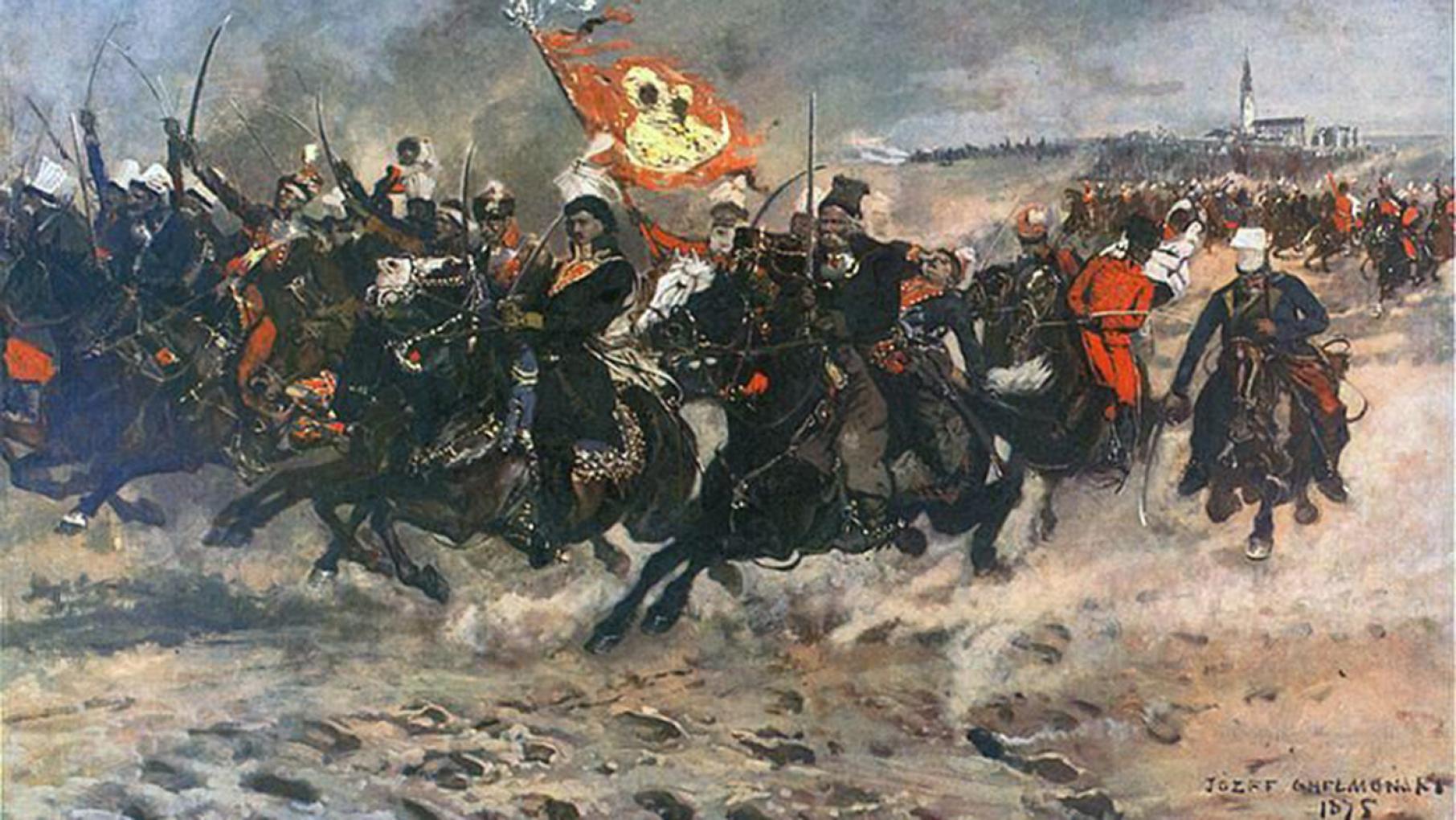
Kazimierz Pułaski, as is the Polish spelling, fought for freedom in his native Poland before coming to America to join another fight against a colonial power here. He led military units against Russian occupation of Poland and Poland’s Russian-allied king. After that rebellion failed, he eventually ended up in Paris, where he met Benjamin Franklin. He decided to join the nascent United States in its revolutionary war against Britain, landing in America in 1777 and serving under George Washington before being made a general himself by Congress.
He wasn’t the only foreigner or even Pole to achieve distinction in the war; Tadeusz Kościuszko also became a military hero for the U.S. Pulaski joined with the Hungarian nobleman Michael Kovats to train a U.S. cavalry and lead them with guerilla warfare tactics he had used in Poland. Pulaski ended up fighting in the South, dying from battle wounds near Savannah, Georgia in 1779.
The facts surrounding his death and his burial are contested, but a body was interred at a monument in his honor in Savannah decades after his death. Recent investigation into the remains suggest that the body is, in fact, Pulaski’s – but also raised other questions, since the skeleton appeared characteristically female in its pelvic bones and facial structure, as the Smithsonian chronicled in a documentary and magazine story. This has led experts to suspect that Pulaski was intersex.
Pulaski is honored nationally, with much less fanfare than in Chicago, in October, with a General Pulaski Memorial Day. The first statewide observance of Illinois’ Casimir Pulaski Day took place in 1986. “New holiday takes Illinois by surprise,” a Chicago Tribune article stated, noting that a state representative said he would try to repeal the holiday.
Pulaski had already been honored in Chicago – somewhat controversially – by Mayor Ed Kelly, who renamed Crawford Avenue on the West Side to Pulaski Road as a reward to his Polish supporters in 1933. Business owners on Crawford sought to block the name change; after the Illinois Supreme Court weighed in twice, the name stuck.
Today, honoring Pulaski offers less disruption than it once did. Chicago Public Schools are open on Pulaski Day now, as are post offices and banks. Only Chicago Public Library branches and Chicago and Cook County government offices are closed.