The Story of Humanity Through the Story of Art
Daniel Hautzinger
April 17, 2018
Civilizations airs Tuesdays at 8:00 pm and is available to stream.
“Humans are art-making animals. Art, in a way, is what defines us as humans. So what better way to tell the story of humanity than through the story of art?” This is one of the lofty premises behind the magisterial new series Civilizations, according to executive producer Denys Blakeway. “Art-making is a human urge which has characterized us since almost the very beginning – from 17,000 years ago – and it is an extraordinary manifestation of our humanity,” Blakeway continues. “There is this common bond in humanity, which is the urge to create.”
Humans’ urge to create is on rich display throughout the nine episodes of Civilizations. The series is inspired by the seminal 1969 BBC and PBS series Civilisation, which caused an upsurge in art museum attendance and was called by one reviewer “the best telly I have ever seen.” But whereas the original program surveyed the history of Western art through the perspective of one man, the art historian Kenneth Clark, the new series vastly expands the scope by examining the artistic achievements of cultures around the world.
To cover such a broad range, Civilizations enlists a multiplicity of voices, from its three principal hosts – art historian Simon Schama, classicist Mary Beard, and historian David Olusoga – to esteemed academics and experts from around the world. “We particularly tried to get the perspective of people from the culture which has produced these works of art,” Blakeway explains. “They talk about the artifacts from their own culture and extend them to us.”
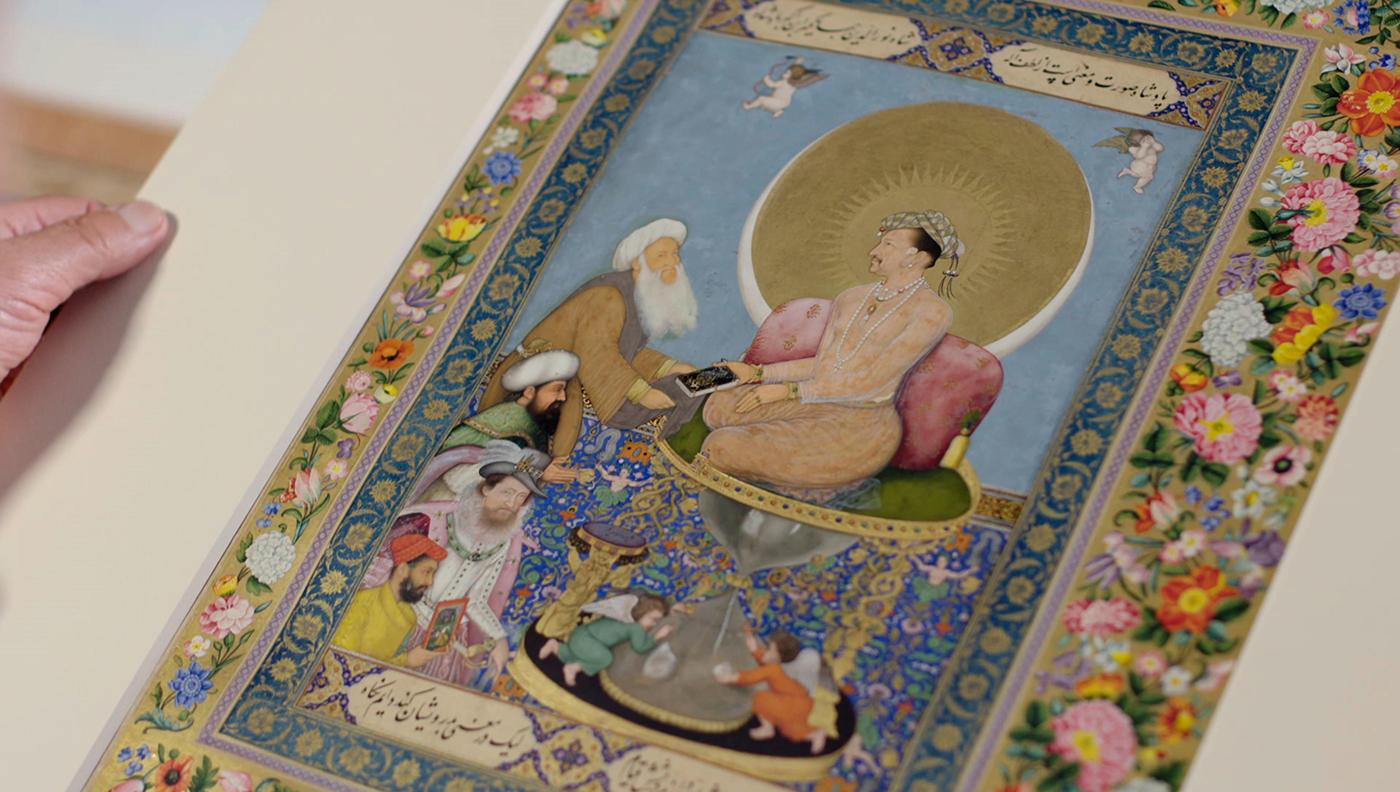 Jahangir Preferring a Sufi Shaikh to Kings (c. 1615 – 1618) Bichitr – Freer Gallery of Art, National Museums of Asian Art at the Smithsonian; Washington, DC. Photo: Nutopia Ltd
But while far-flung, distinct cultures produced the remarkable masterpieces scrutinized in Civilizations centuries and continents apart, there are still connections to be found between them, beyond the basic human impulse to make art. Each episode covers a certain typological category, finding common throughlines as the series moves forward in time: representation of the human form, the way in which cultural encounters influence art, the use of color and light, the obsession with “progress” and evolution.
Unlike the thinkers and artists examined in that latter episode about the cult of progress, Civilizations doesn’t portray all of art history as a slow march towards increasing mastery and complexity as it approaches the present day. “Something that I learned making this series was that the idea of progression in art is not true at all,” says Blakeway. “Works of art of incredible sophistication have been produced from the earliest moment, from the cave paintings onward. Art hasn’t developed so much as had different modes of expression.”
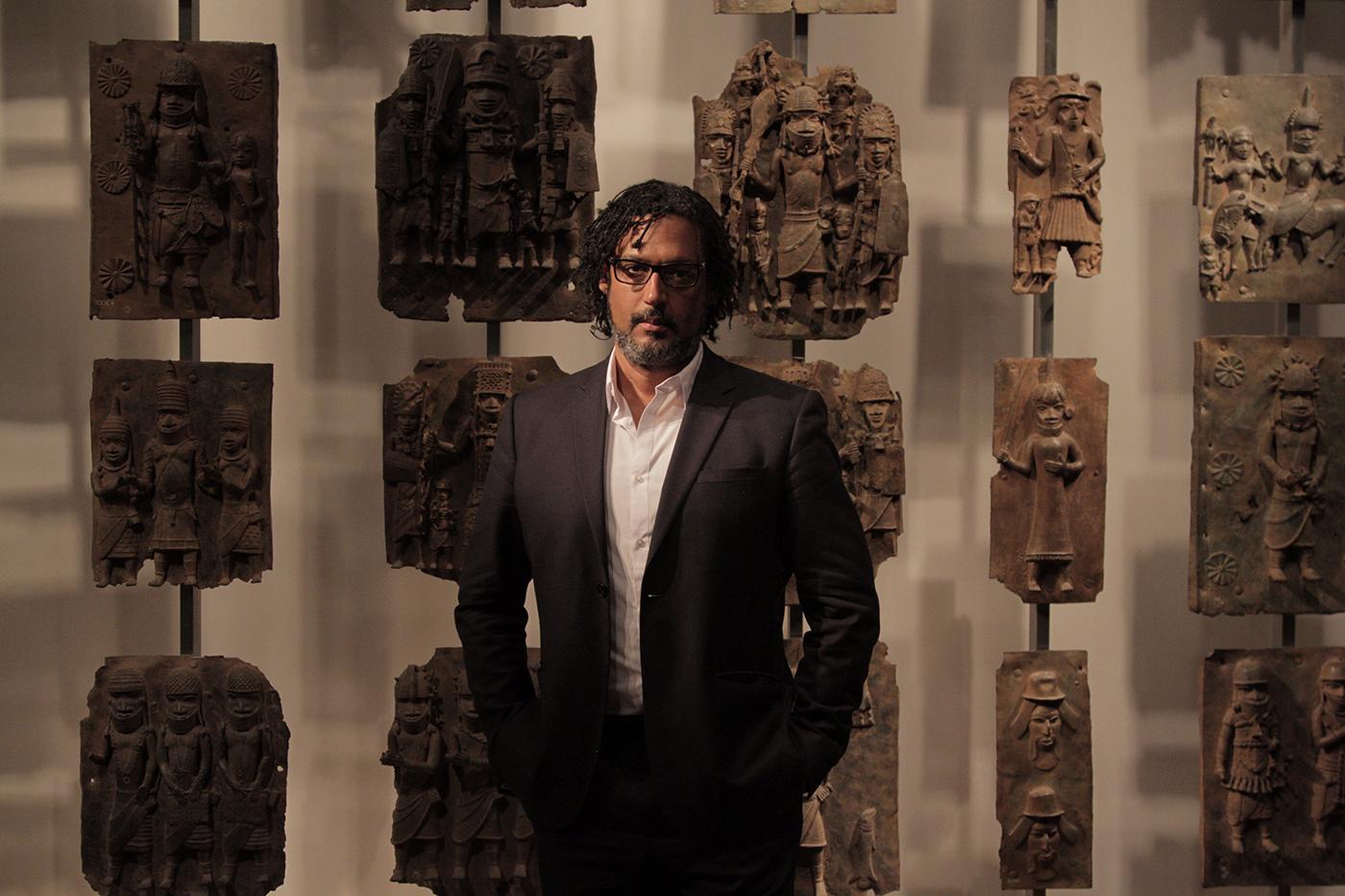 Presenter David Olusoga with various Benin Bronzes, Unknown Artist (c. 1550 – 1650) – British Museum, London. Photo: Nutopia Ltd
In illustration of that point, Blakeway offers some of the varied works that he learned about while making the series: “The extraordinary hand stencils” – some of the earliest known instances of art, found in caves around the world – “the mysterious Olmec structures” - some of the first sculpted images of the human form, located in Mexico – “the Chinese landscape scrolls that are astonishingly beautiful, created with incredible skill 1,000 years ago. Or the Boxer, a Greco-Roman statue of an old boxer seated, looking upwards towards the light as though he’s preparing for his final fight, that has amazing emotional power. These works were created thousands of years ago, yet you look at them now and see what incredible beauty was possible.”
And still is, and has been for millennia, as Civilizations abundantly demonstrates.