Follow the Fire: How Grilling Guru Steven Raichlen Cooked Up His Career
Daniel Hautzinger
June 20, 2023
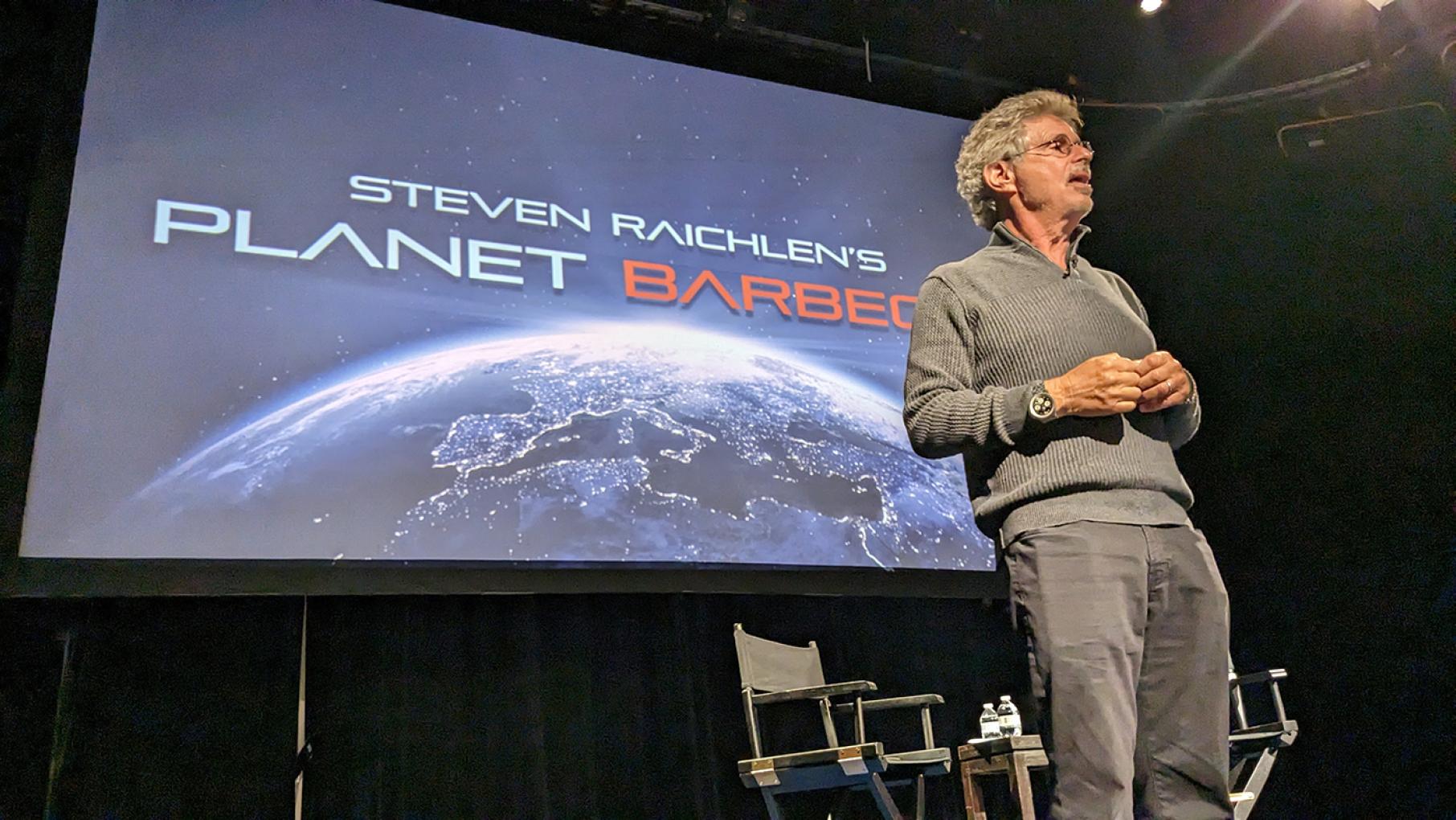
Planet Barbecue airs Saturdays at 1:30 pm on WTTW and is available to stream for free.
Get more recipes, food news, and stories by signing up for our Deep Dish newsletter.
The live-fire cooking guru Steven Raichlen could have been known for health-conscious cuisine if things had gone differently. He had been writing a string of well-received “high-flavor, low-fat” cookbooks in the 1990s when he received a “flash of insight or inspiration,” he recalled on a recent visit to WTTW for an event.
“I remember where I was sitting, and what I was wearing, and what the weather was like. I liken it to hearing a voice from God that said, ‘Follow the fire.’ But actually what the voice said is, ‘Wait a minute, grilling is the world’s most ancient and universal cooking method, yet everywhere it’s done differently. Wouldn’t it be cool to travel around the world and document how grilling is done in different countries and cultures?’”
And that was the origin of The Barbecue! Bible, which came out 25 years ago and set Raichlen onto a path to becoming a live-fire cooking expert. He has hosted numerous shows on public television, written books about everything from ribs to brisket, founded a Barbecue University, and launched a line of prepared meats under the name Planet Barbecue.
He did write a couple more healthy cookbooks after the publication of The Barbecue! Bible—four out of five of his James Beard Awards are for low-fat cookbooks—but his career soon focused entirely on exploring “Planet Barbecue”—which is also the name of his latest public television series, airing now on WTTW. Like The Barbecue! Bible, the show explores live-fire cooking techniques and dishes from around the world, including Argentina, Thailand, Texas, and Mexico.
Trawling the globe for recipes is no longer as daunting as it was back when Raichlen first had his “flash of insight.” “Being a person with a Y chromosome, I always assumed I was an expert at grilling,” he jokes. But doing the research and writing a whole book on it was something else.
“I dashed off a book proposal—honest to God, I think I wrote it in 24 hours—and had a contract back the next week, which shows both that the idea had legs and that the publisher, far more than I did, saw the potential of the book. And then I did a big gulp because I had pledged in the proposal to travel around the world to document barbecue, and how the heck was I going to do it?”
He obviously figured it out, and took to calling his travels for the book his “midlife Watson,” in reference to the Thomas J. Watson Fellowship he won to study medieval cooking in Europe after majoring in French literature in college. The fellowship “got me thinking about the intersection of food and history and culture, and I’ve really been doing that ever since,” he said.
“My dad was not happy that I majored in French literature,” Raichlen recalled. “But in fact, that really governed my career.” He has even hosted French-language barbecue TV shows in Canada, as well as a show in “sort of broken Italian” for Italy.
He continues to explore the world of live-fire cooking: he’s working on a second season of Planet Barbecue, as well as a new book about cooking on hot iron or griddles called Project Plancha. And he says that he still learns new things about grilling every day.
For instance, while he was in Chicago he had a “phenomenal meal” at Proxi in the West Loop, where he ate “wood grilled yuba,” which is thin, dried pieces of tofu skin. “‘How the heck do you grill paper, basically?’” he initially thought. “They basically grilled it crumpled up so that it was a big enough piece that you could grill it. I thought that was pretty cool.”
Raichlen knows that there are always such innovations and new chefs waiting to revolutionize cooking. “Any time you do something for 25 years, and in some sense you pioneer something, invariably there will be a second generation or third generation, and eventually there will be a generation that has not heard of Steven Raichlen,” he said.
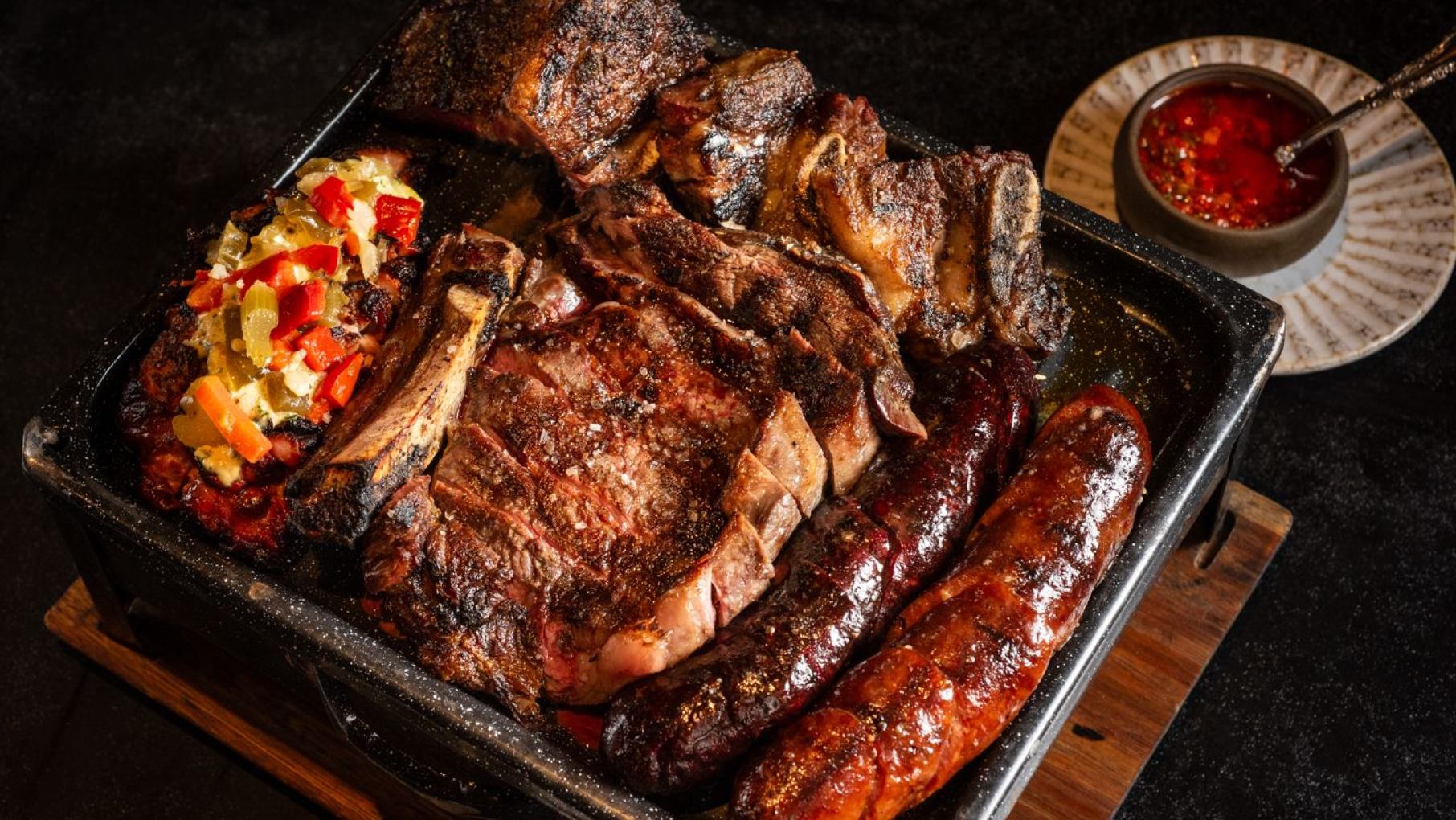
But for now he is still in demand, especially at this time of year: it’s cookout season. While “every day is grill day in the Raichlen household”—he has “probably ten grills” at each of his two homes—for summer holidays, he likes to cook “a big hunk of something,” like a brisket. “For entertaining, I love big hunks of meat that you carve, because everybody’s sharing the same thing,” he said.
That communal aspect is one of the things he loves about cooking over a fire. “It’s social, and you’re dealing with a subject that makes people happy,” he said. “If I were an expert on death and dying or insurance, I don’t think I’d feel, after 25 years, the same excitement.”