The photographer Diane Arbus is famous for photographing outsiders and everyday folk in their most familiar settings, including people who had not previously been seen as worthy subjects. “I would like to photograph everybody,” she once wrote.
"A Place for Everybody:" The Uptown Bar Big Chicks Has Been an LGBTQ+ Haven Filled with Fine Art for Almost 40 Years
Kathleen Hinkel
June 27, 2025
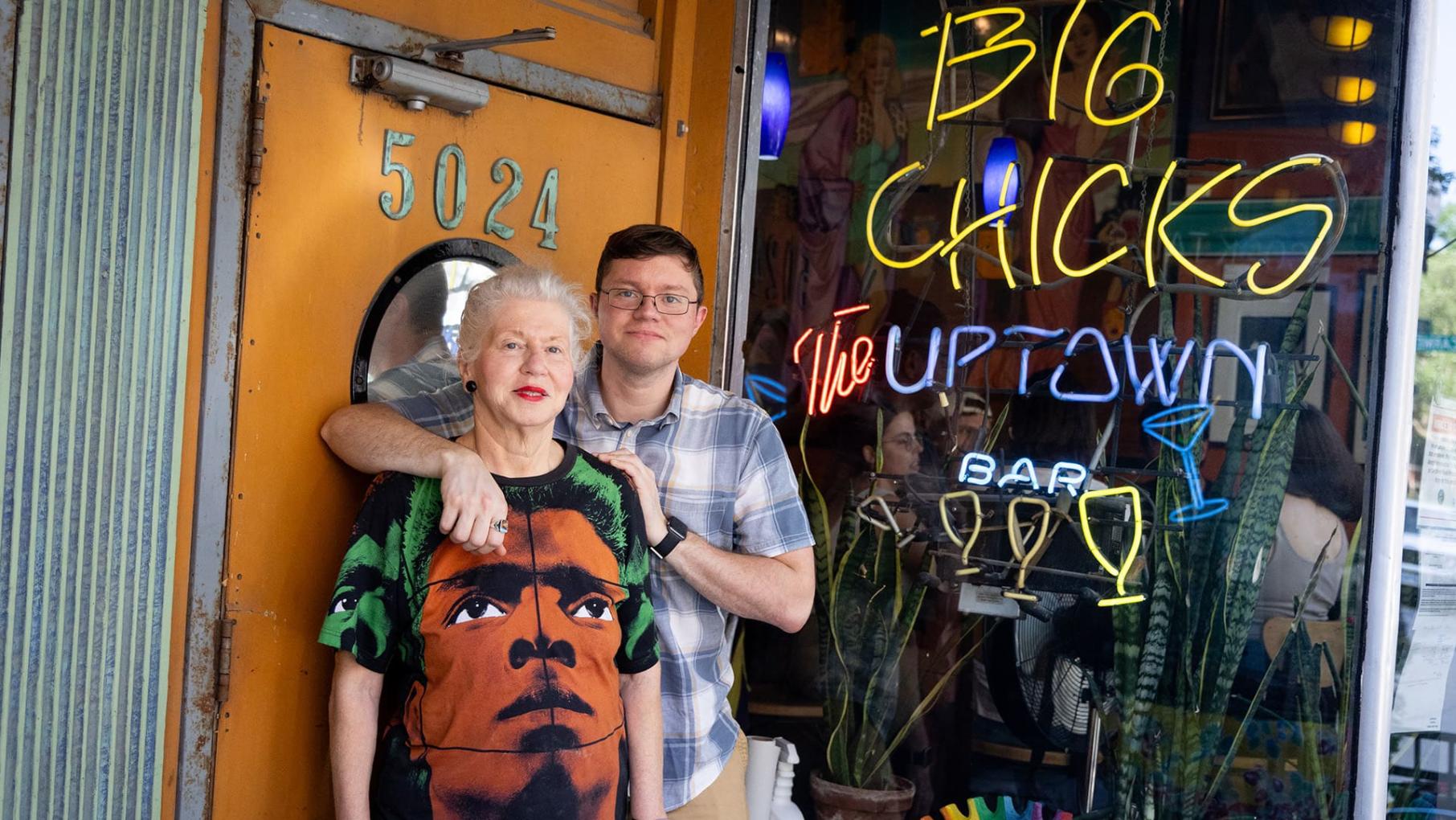
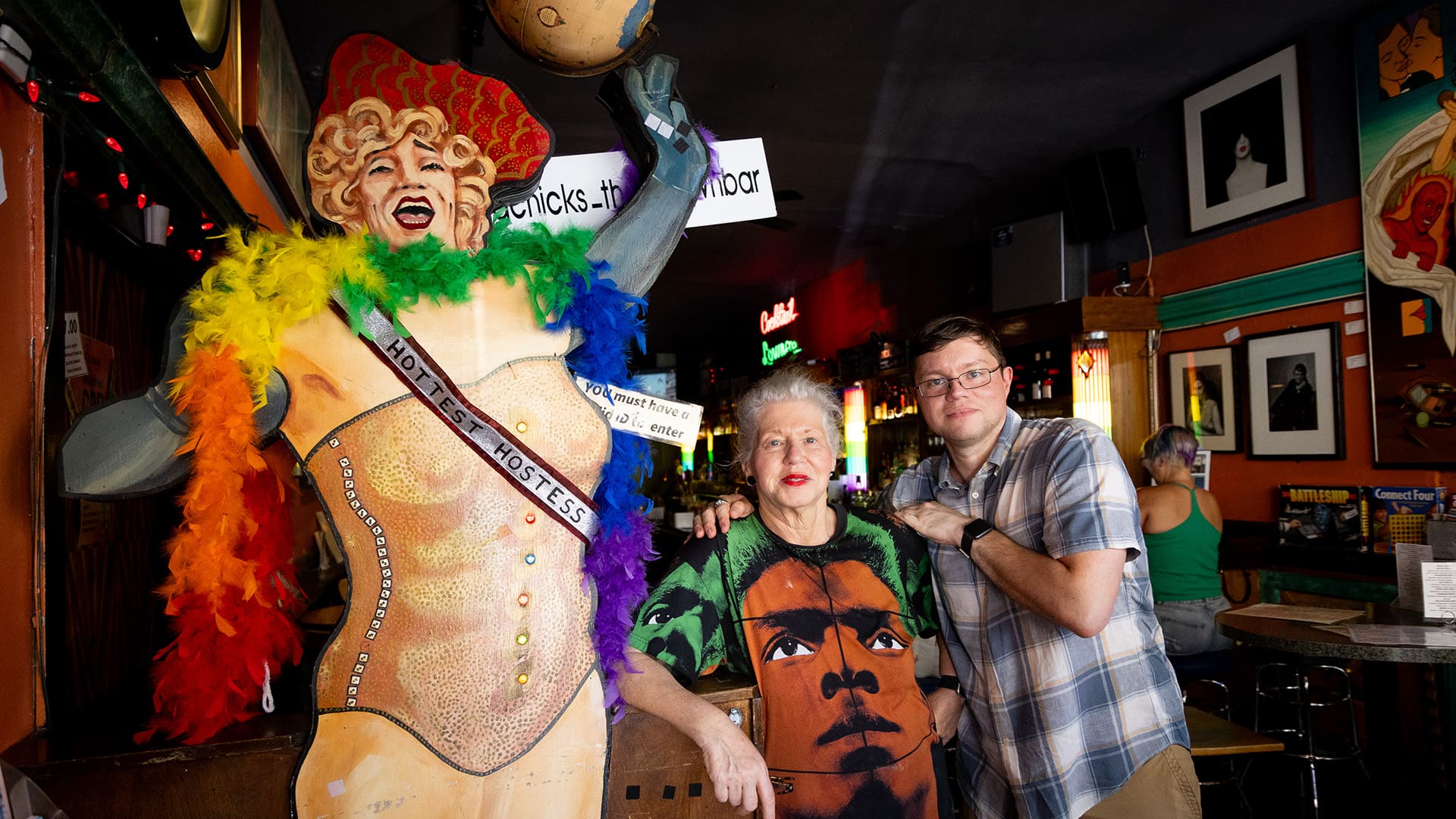
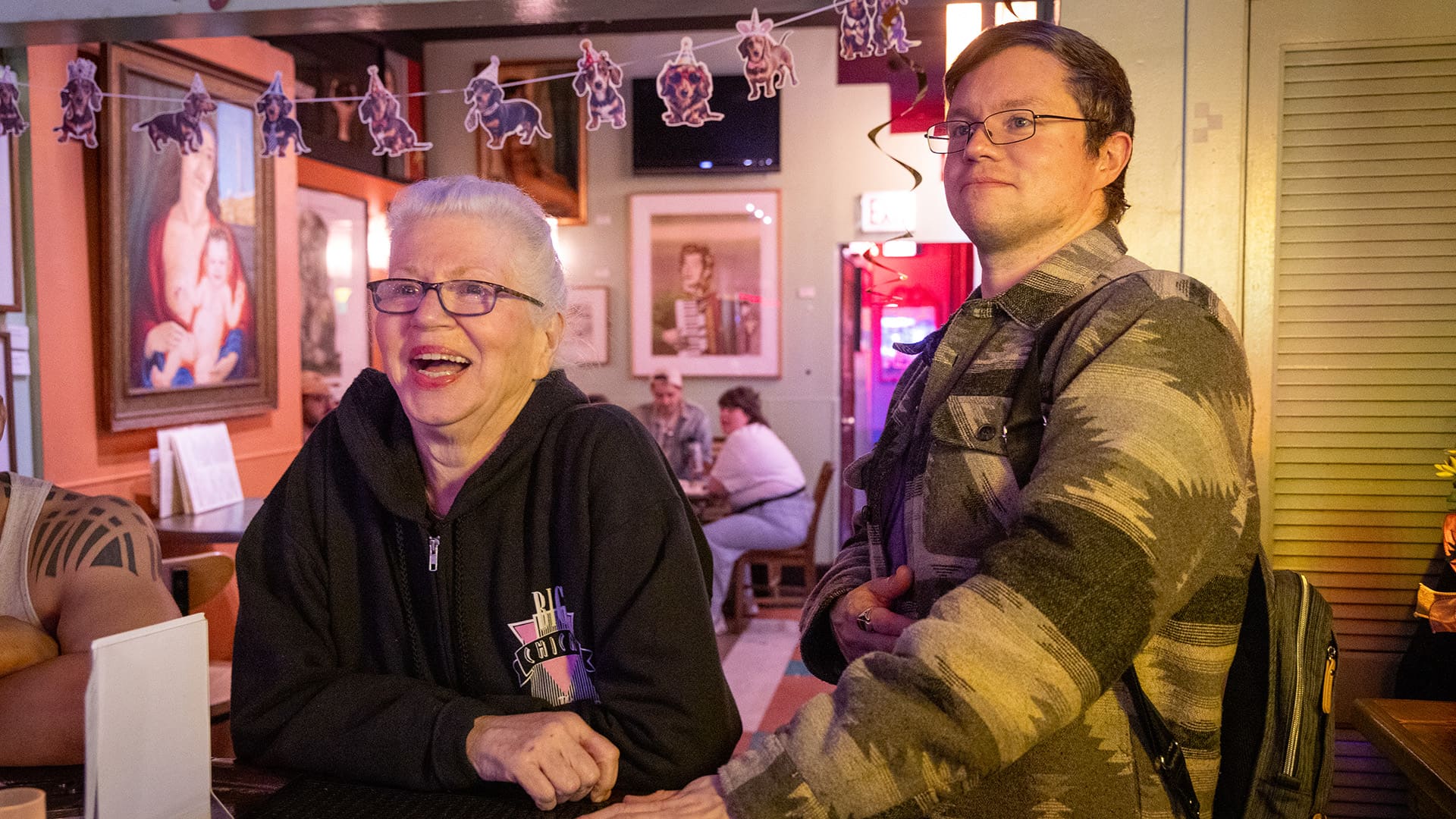
Big Chicks isn’t just a bar – it’s an art gallery, community center, and LGBTQ+ haven. Michelle Fire has run the establishment for decades, more recently with the help of her son, Michael Sanders. Credit: Kathleen Hinkel for WTTW
Get more recipes, food news, and stories at wttw.com/food or by signing up for our Deep Dish newsletter.
All photos and text by Kathleen Hinkel for WTTW.
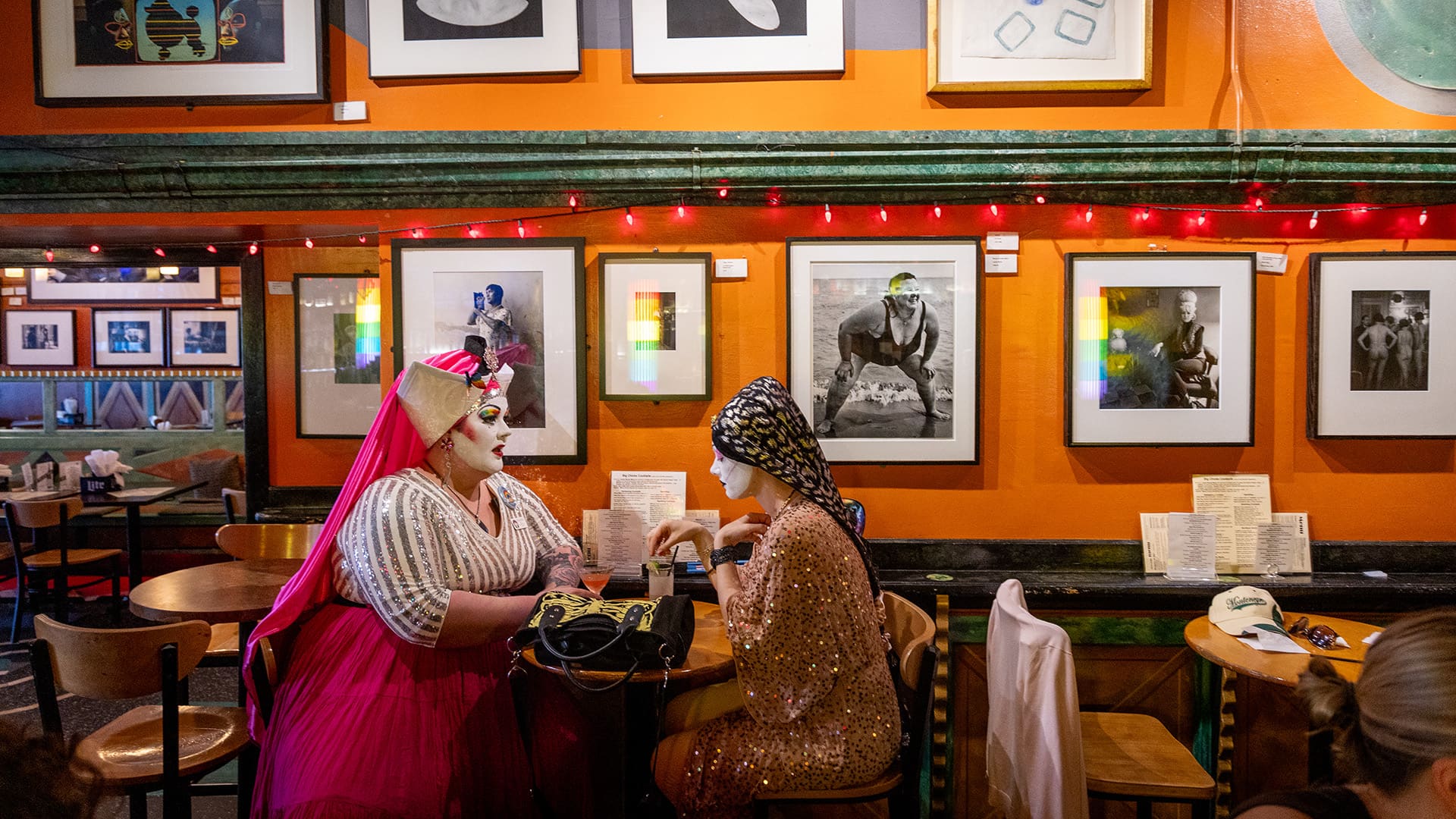
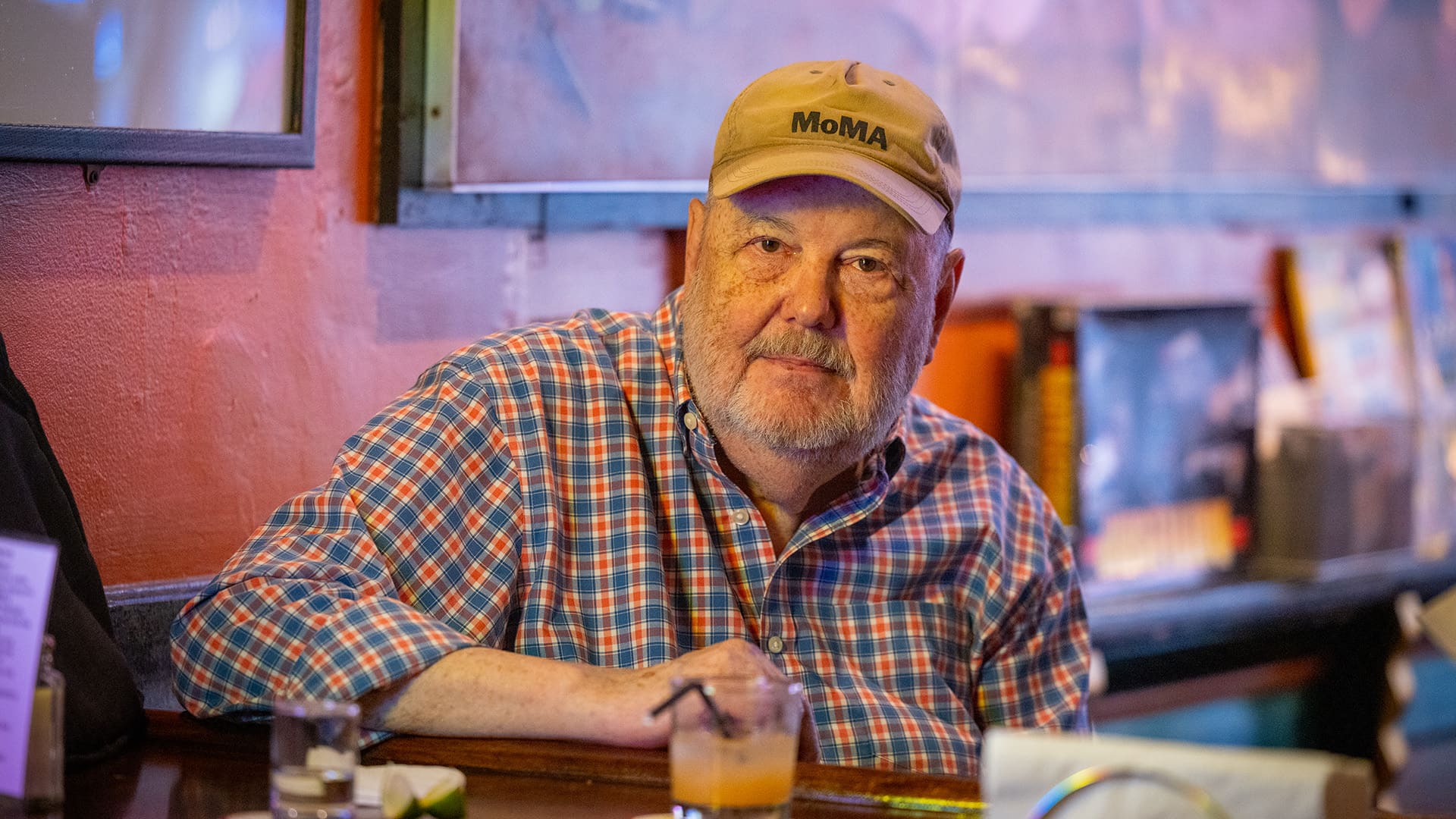
“I know who this woman is: she didn’t go for high-profile people, she went to bars and for ordinary people,” says Erick Gerrard about Arbus. Gerrard is sitting in a bar himself, near photographs by Arbus that are among dozens of photographs and other pieces of art cramming the walls – many of them by women, many depicting women, many proudly asserting a sense of identity and self. “As someone with an artistic background, I would say the whole place is a jewel box filled with wonderful things,” says Michelle Fire, the bar’s owner.
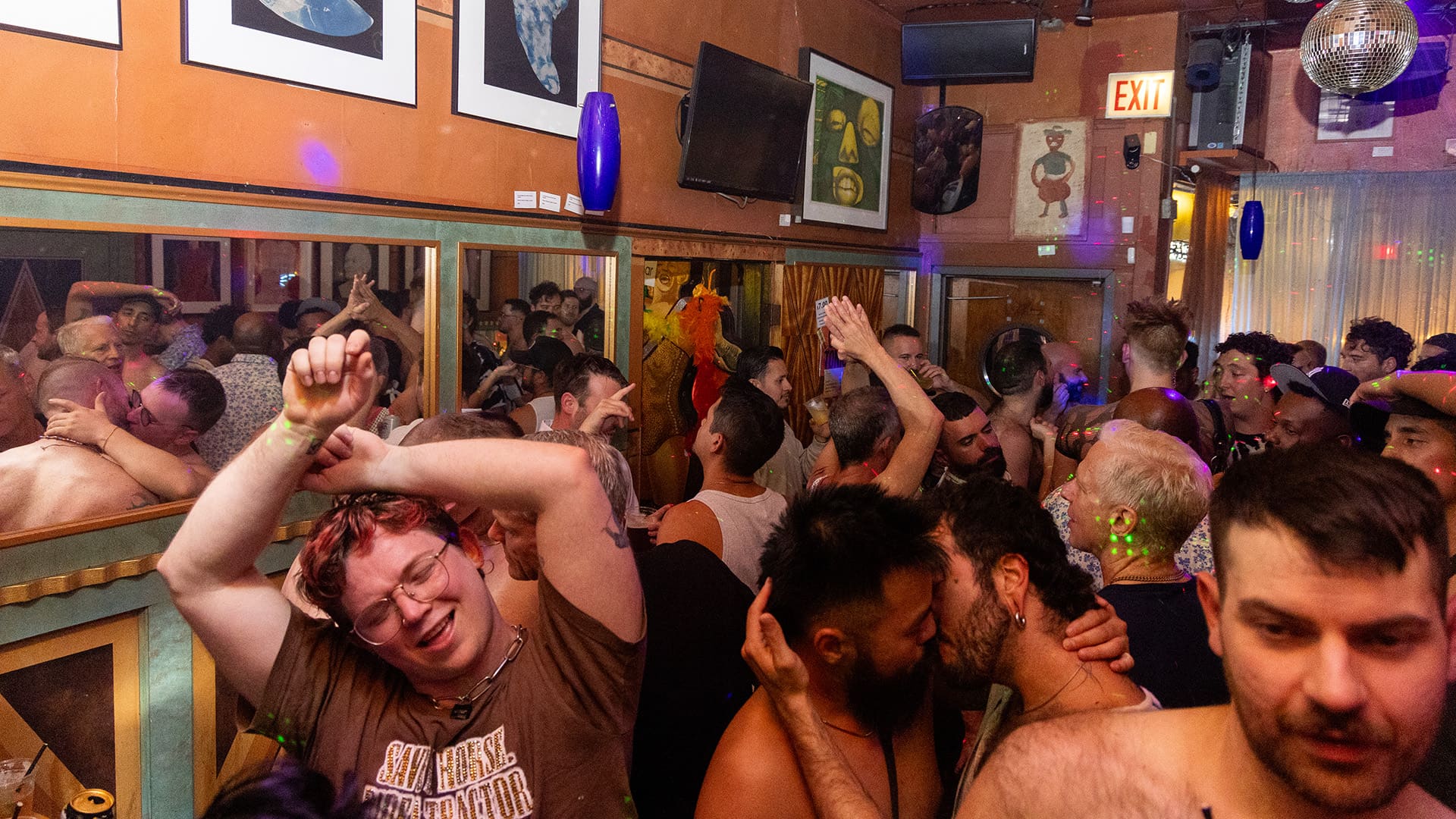
Gerrard has been coming to this bar at 5024 N. Sheridan Rd. in Chicago’s Uptown neighborhood since Fire (pictured here with her son, Michael Sanders) first opened it as Big Chicks, in 1986. “This is my social life,” Gerrard says. Big Chicks is one of the city’s most cherished LGBTQ+ bars, retaining a casual neighborhood feel away from the clubs and crowds of Northalsted’s gay nightlife.
“It doesn’t matter how old you are, what sex you are. Everybody’s always welcome,” says David Joseph, who bartended at Big Chicks for some 25 years and still returns to help on the busiest nights. “I moved to Chicago from San Francisco in 1993. I looked grungy. I’d go to [the gay bars on Halsted] and people would be in pressed shirts. I felt like an alien.” But he found his home when he discovered Big Chicks. “This is the land of misfit gays,” he says – exactly the kind of people Arbus photographed.
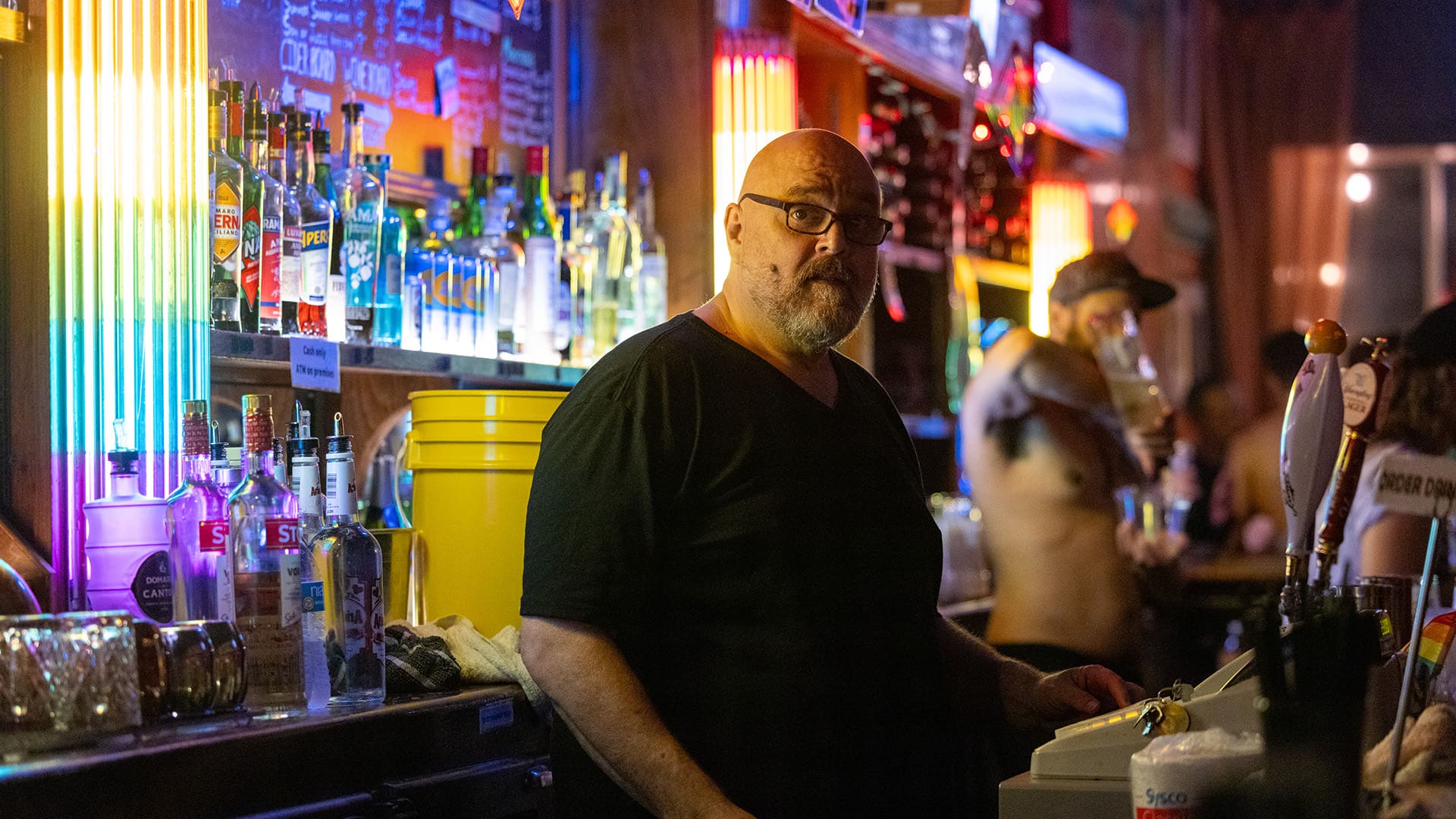
I understand what he means. I’d felt like an alien myself from an extremely young age. I didn't start coming out until I was around 30 – so I spent three decades not feeling comfortable in my own skin or walking into a space feeling truly relaxed. Finding places like Big Chicks where you have a community that deeply understands that experience is a gift.
The first time I walked into the space, I was astonished by the art collection. There were prints by photographers I had studied in school hanging everywhere – Arbus, Lee Friedlander, Dawoud Bey. When I heard a few years ago that Big Chicks needed a bartender, I decided to send Fire my resume, hoping to make a bit of extra money while being inspired by the artwork and spending time with people to whom I could easily relate. I got the job, and continue to pick up shifts whenever I can.
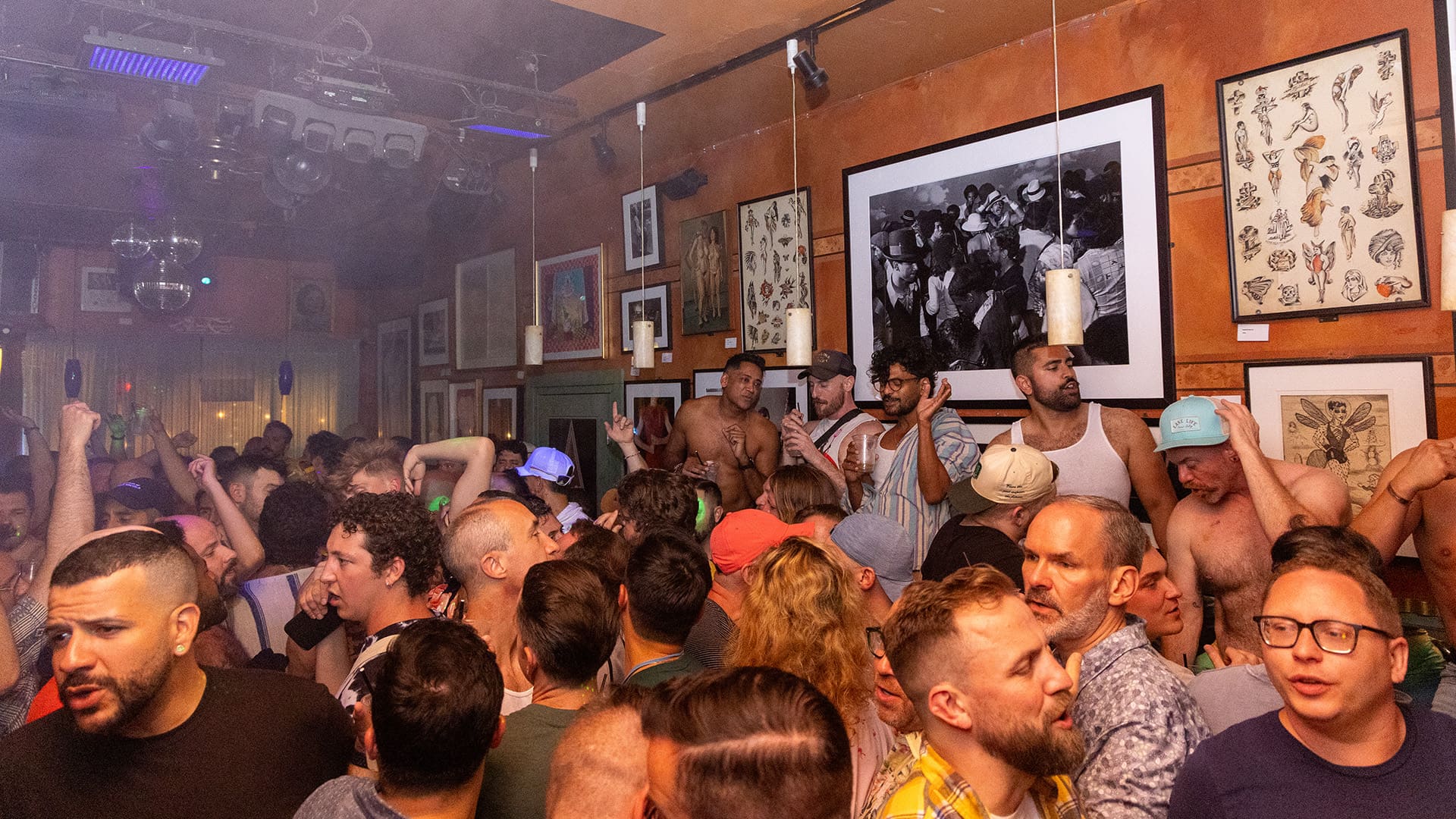
The way I feel at Big Chicks is how Fire wants people to feel there, she says: “At home and relaxed. At ease. Gobsmacked by the beautiful art and community they get to sit with and be with as part of their life.”
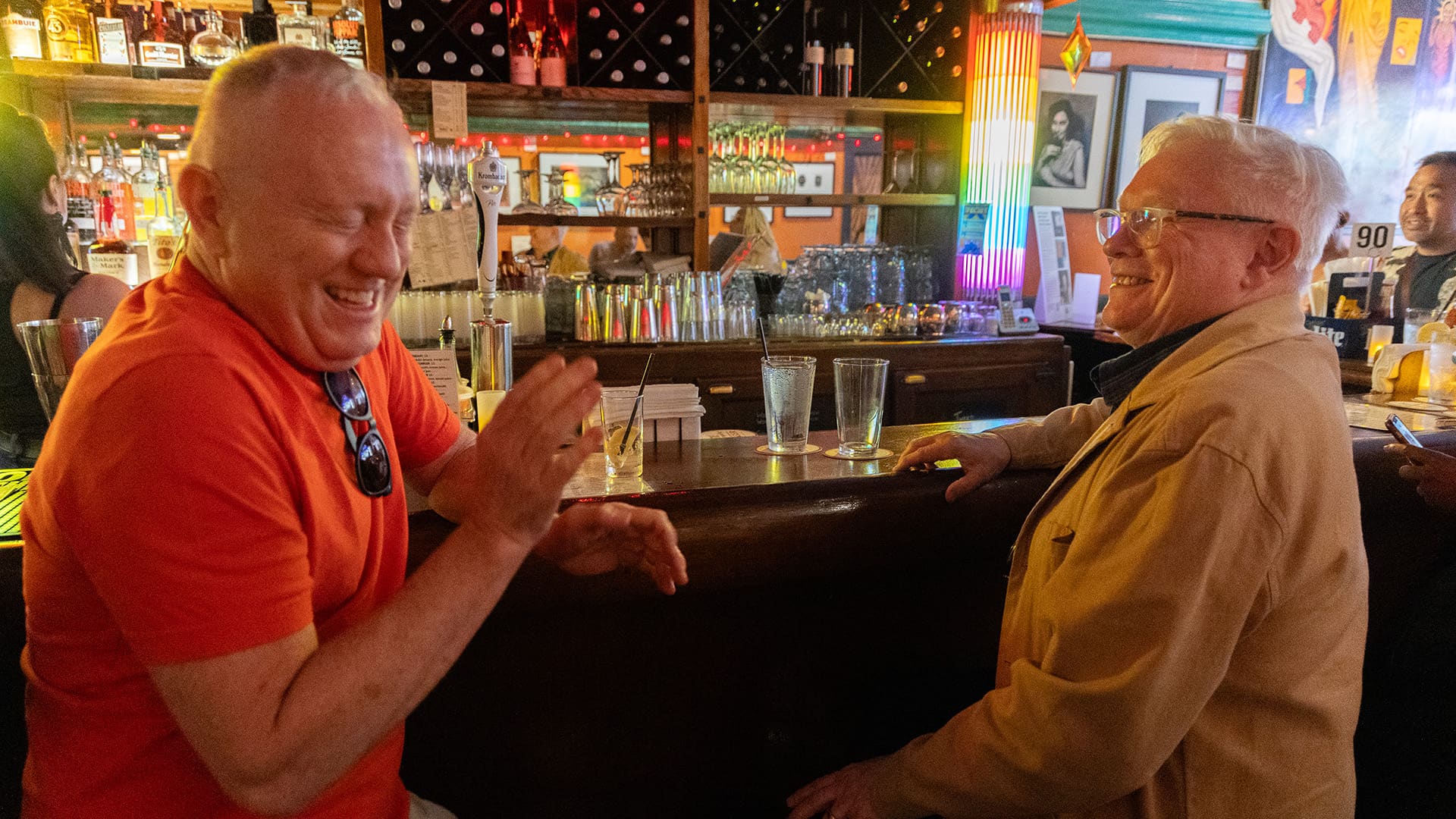
Fire was a 34 year-old artist when she opened Big Chicks. “It was her baby,” Joseph says – “Apart from Michael, her other baby.” Michael Sanders is about the age Fire was when she opened Big Chicks, and now helps her run it. “I’m always jealous of the older child,” Sanders jokes about the bar.
Fire decorated the space with art from her own collection, much of it made by friends and locals, drawing on Zuleyka Benitez to contribute to the bar’s design. “Trained as an artist, it was my vision of where I wanted to be and I was hoping other people would, too,” Fire says. And there are plenty of people involved in art who work and frequent the bar.
Joseph is an artist and the director of the Greenleaf Arts Center in Rogers Park. He’s an integral part of the Big Chicks experience for many regulars. John “Rex” Kearns remembers that Joseph was behind the bar when Kearns first set foot in Big Chicks, in 1996. Kearns himself has now worked there for 20 years, taking his first shift during the Pride Parade in 2005. “I’ve never felt so welcome and uplifted by my coworkers and my clientele,” he says. “It’s been a super welcoming place, like the best party you’ve been invited to”
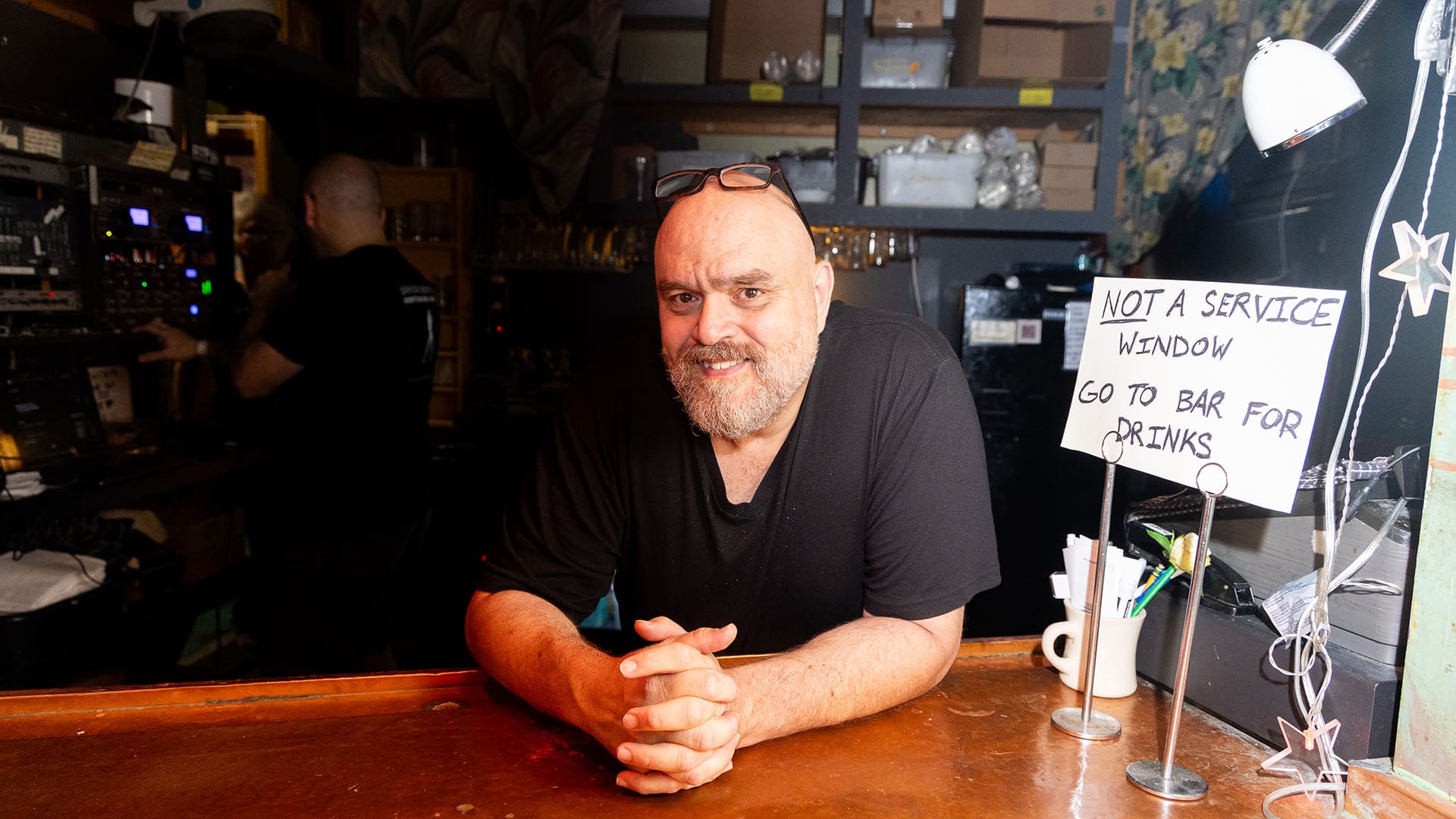
Big Chicks won Kearns over when he noticed a jukebox on that first visit. “This older queen came up behind me and said, ‘Hey doll, are you going to let me make a selection?’ And I was like, ‘Well, I put five dollars in,’ and she said, ‘Honey, the jukebox is free. All the money goes to AIDS charities.’ That set the tone for what kind of bar this was,” Kearns says. “It doesn’t announce the good it’s doing. It just does the good.”
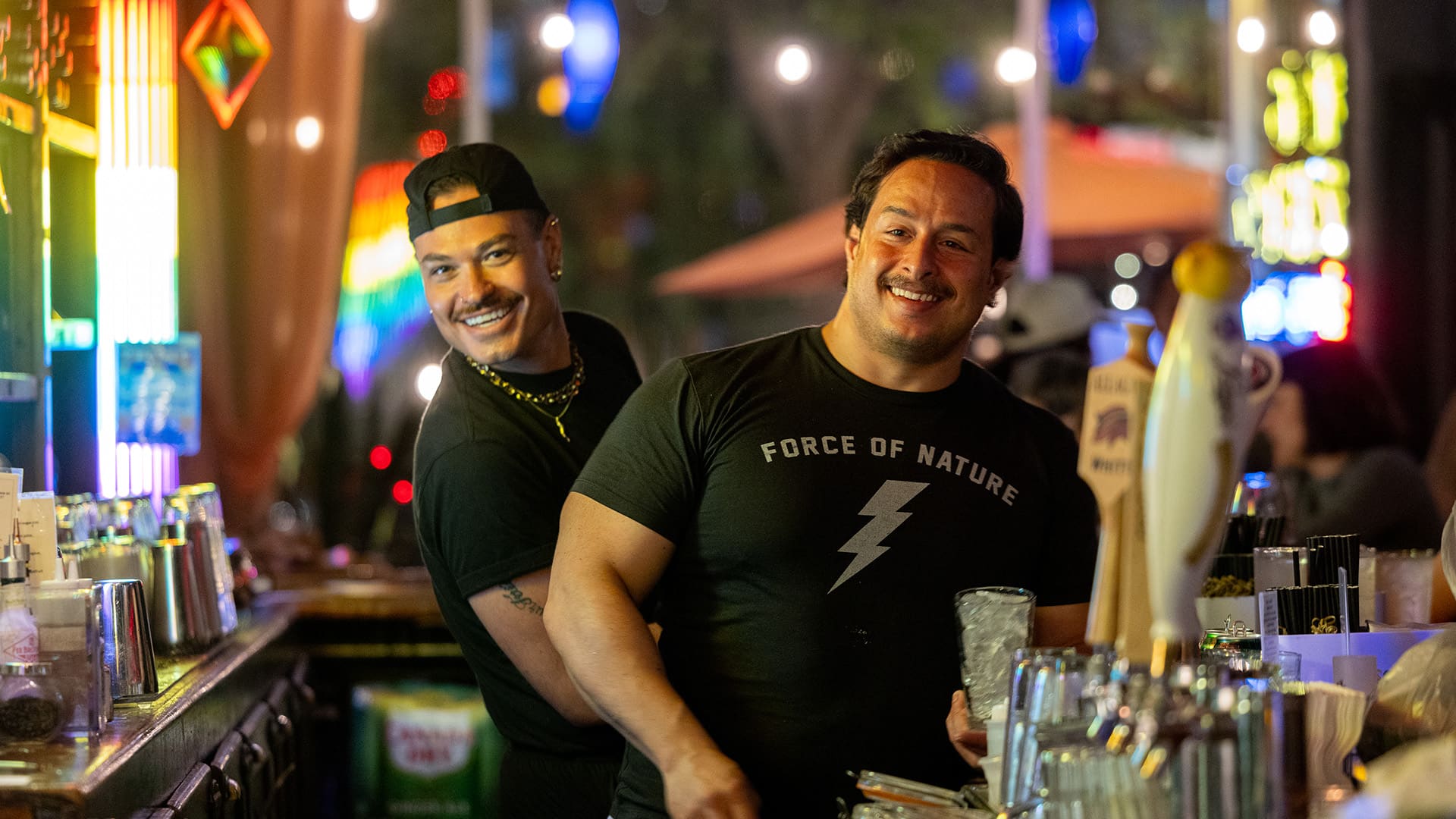
“Sometimes I forget this place is so historic,” says Brian Loshiavo. Most nights you’ll find either him or Mony Leon behind the bar. “I think queer spaces, and old-school gay bars, are becoming extinct. A lot of places are shutting down. Getting this job, I didn’t realize what it was. Michelle has built this from nothing. It was a gathering place during the HIV crisis.”
Leon is another patron-turned-staffer, thanks to Joseph. “I was sitting there as a patron and Michelle was saying to David Joseph that they needed a door guy,” Leon says. “He pointed out I’d applied three times and Michelle said, ‘You’ve got a job.’”
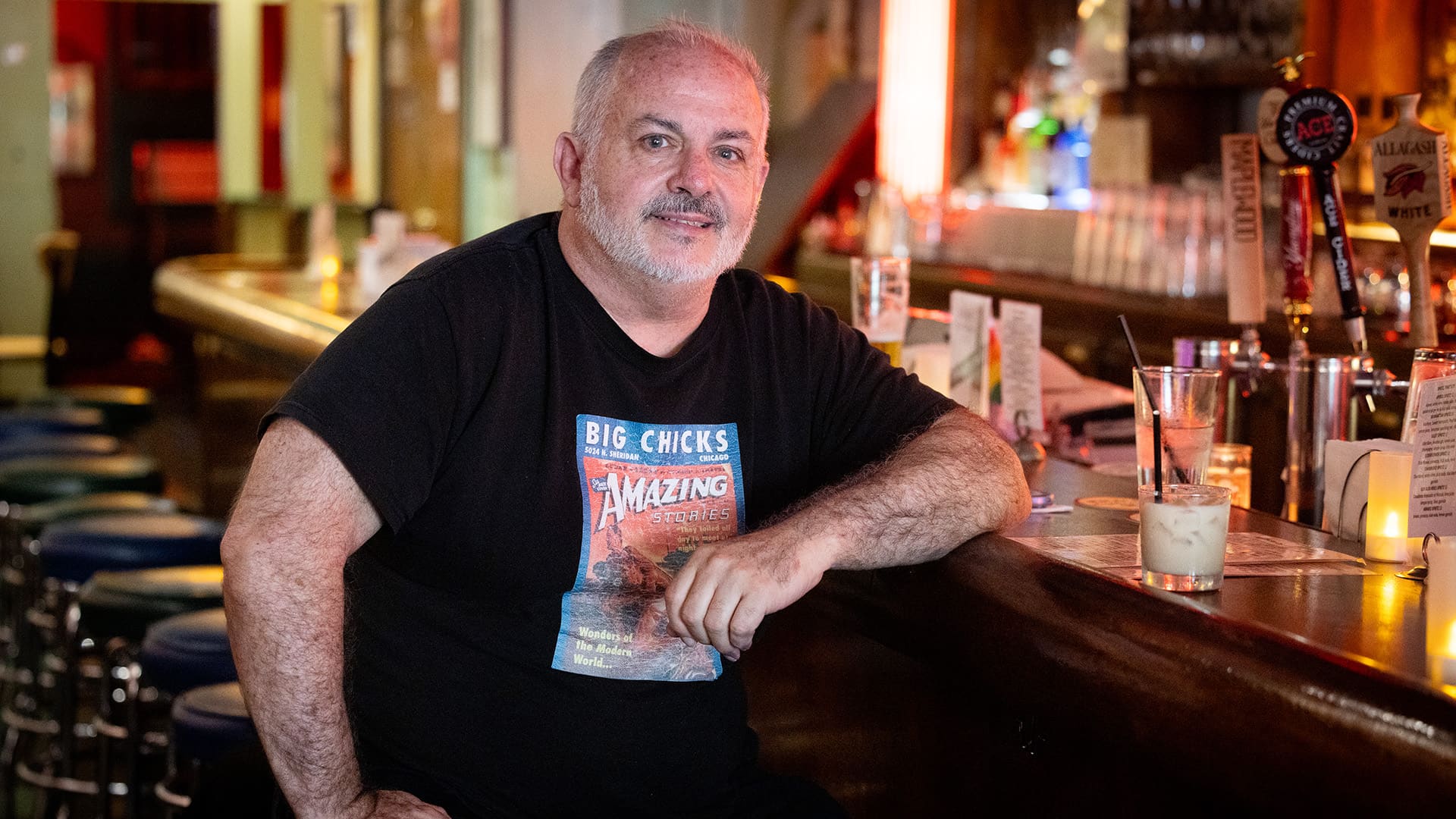
Like Joseph, Bill Borman and his husband Richard Thomas had just moved to Chicago from San Francisco when they first came to Big Chicks – and they still remember that Joseph was the first person they met at the bar. “I used to tell people that I have my name on a plaque on one of these stools ‘cause I kept it warm for a long time,” Borman says.
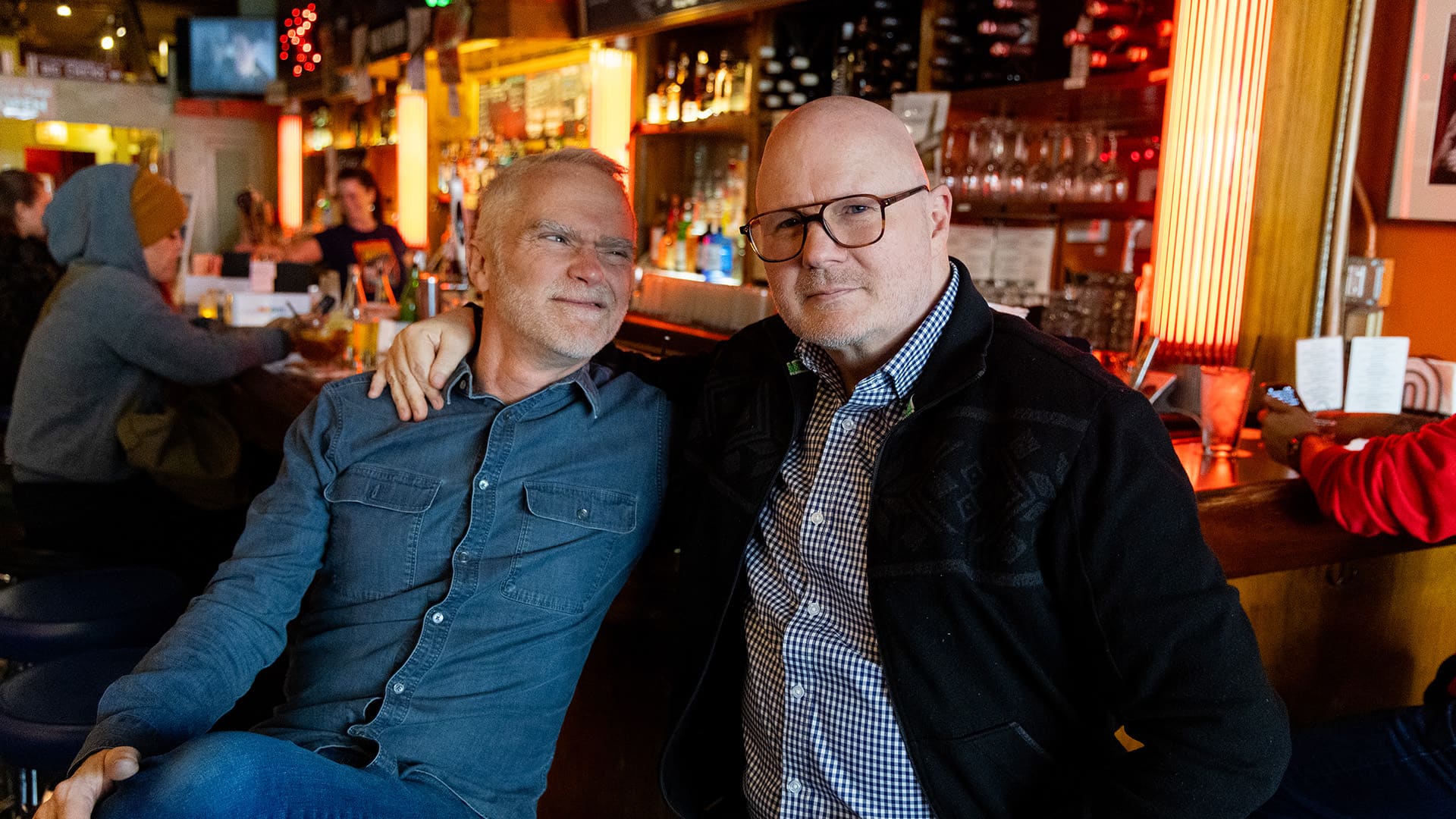
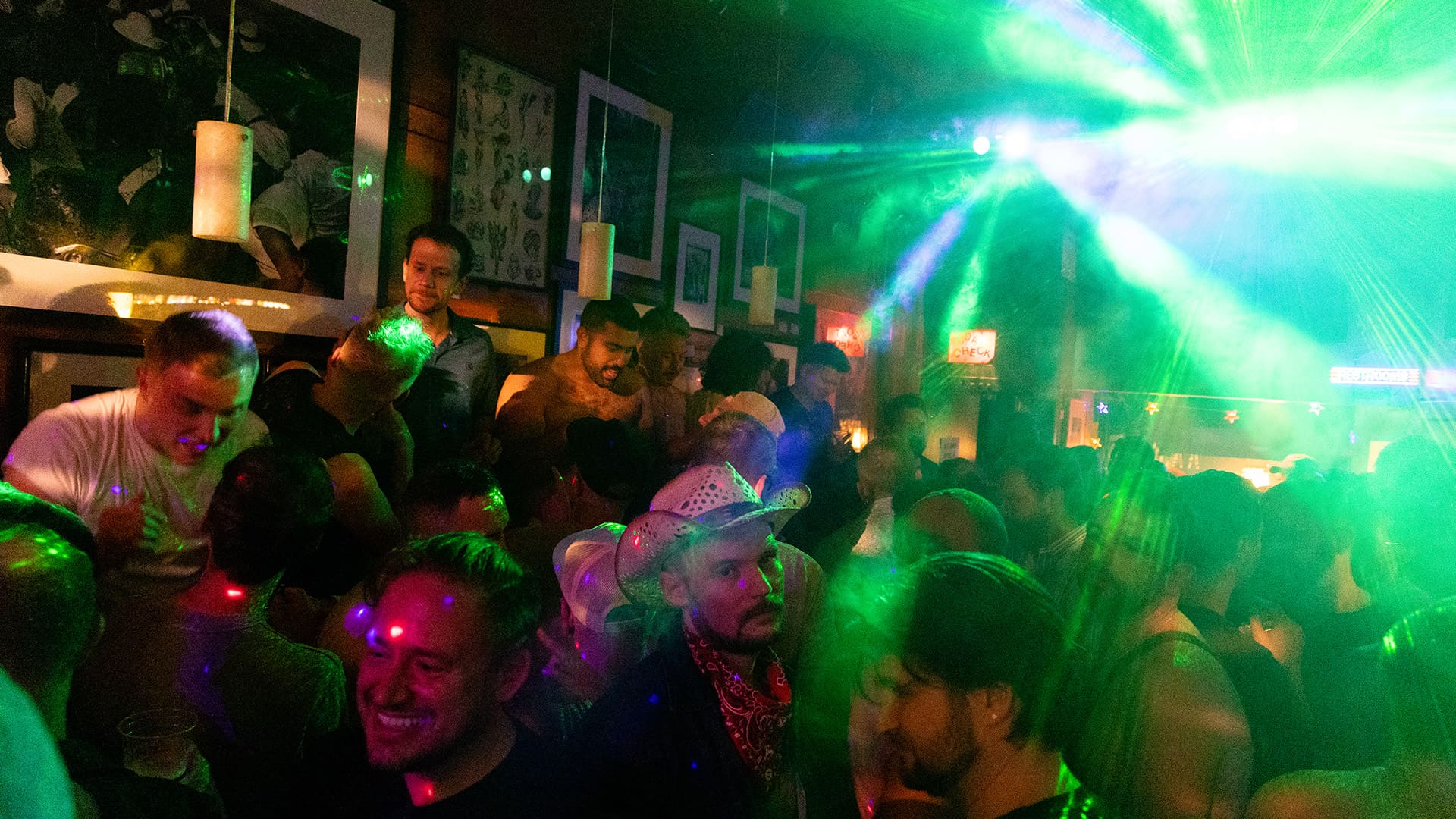
He fondly reminisces about dancing in the bar during the 2000s. After a long hiatus that started with the COVID pandemic, the dance parties have returned this year. “People need to dance right now,” Fire says.
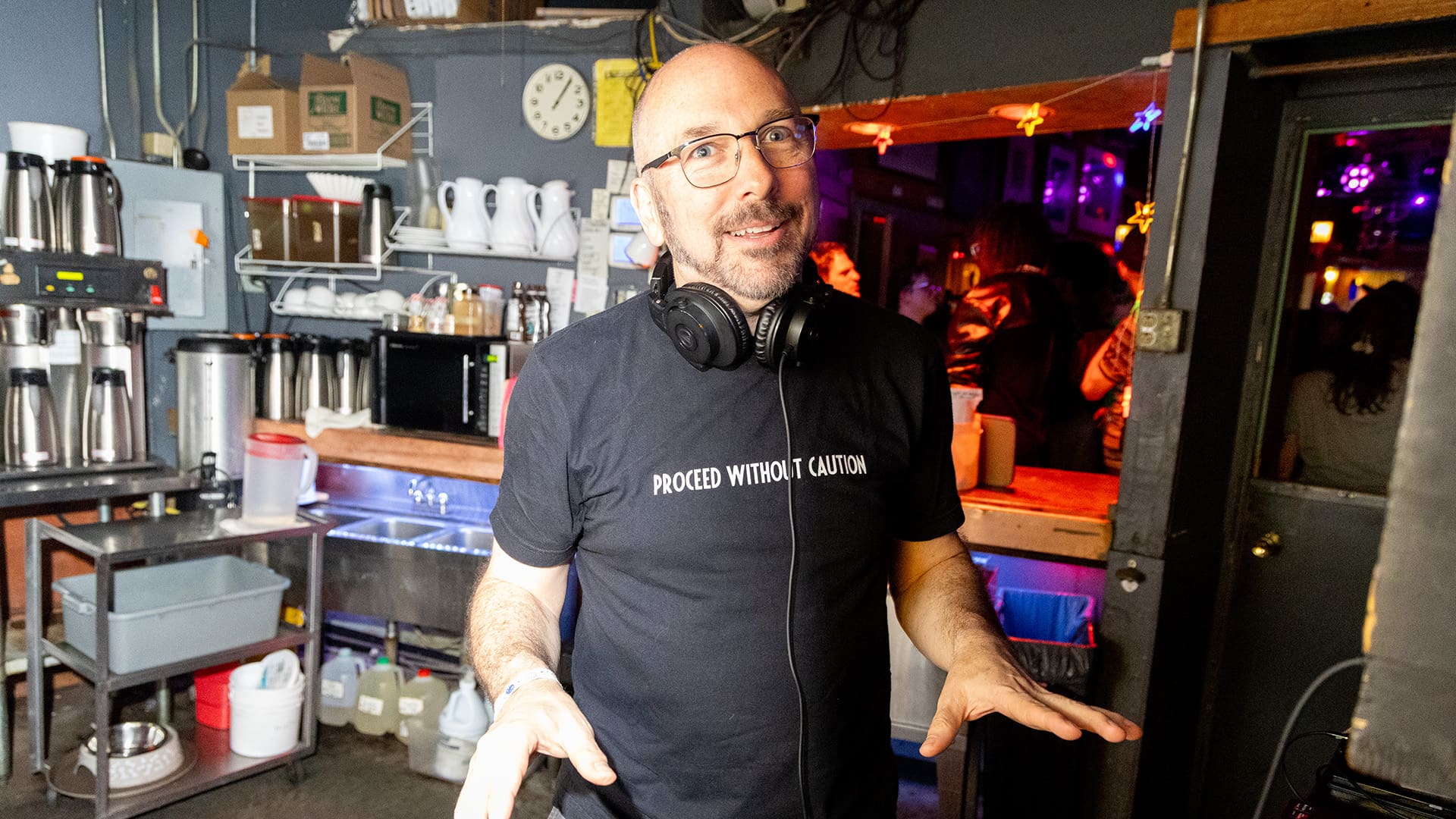
Don Bell started as a doorman at Big Chicks in 2003 and has DJed the dance parties since 2009. “What does Big Chicks mean to me? Family and community,” he says.
“Family” is a word often uttered by patrons and employees at Big Chicks. It’s commonly used in the LGBTQ+ community in reference to a chosen family and all folks living under the queer umbrella. “Some people think, ‘How can a bar be a family?’ But most families are on some level dysfunctional,” says Kennette Crockett. “I call it my other living room.”
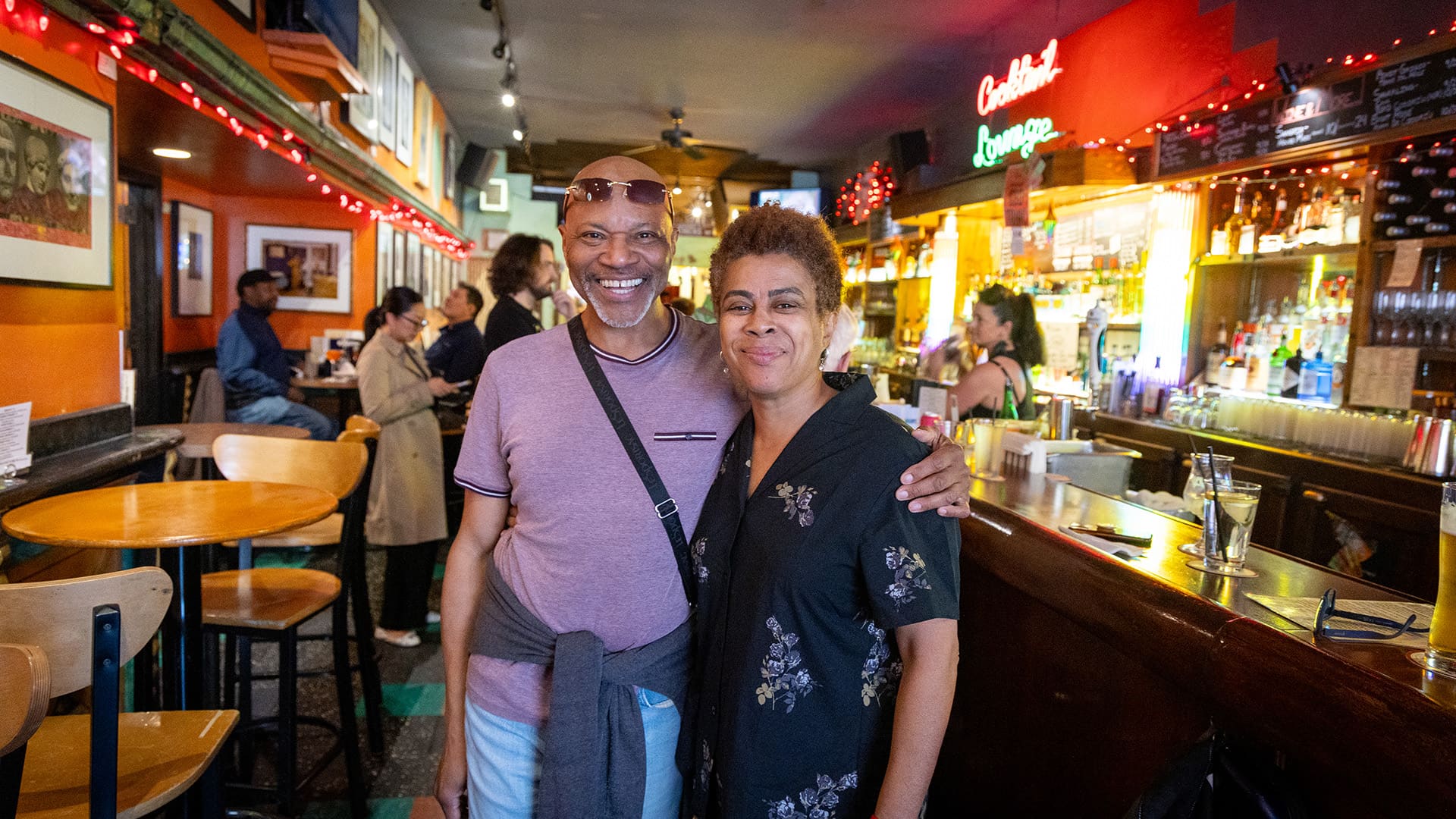
Crockett met and befriended Steven McCline at Big Chicks. He’s been coming to the bar since 1992; it’s such a comfortable place for him that he sought refuge there the night his mom died. “The whole staff was crying,” he says, and they later gave him a condolence card and a plant. “They comfort you. Now I come in and smile and comfort people and talk,” he says. Crockett says, “Michelle is here through everything and she cares about what’s happening and people’s experiences.”
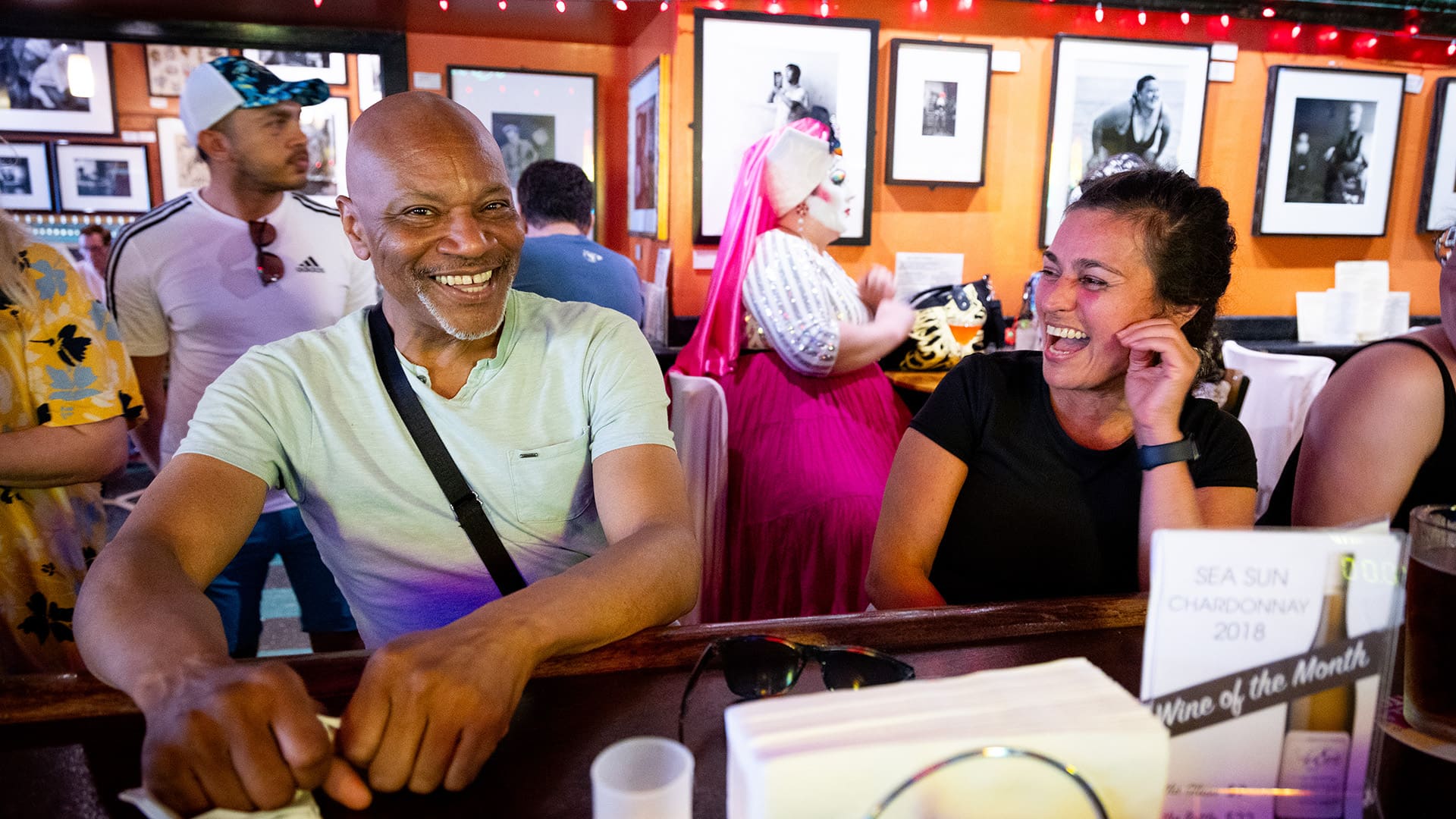
The bar continues to be a place for major life events, like Christopher Joyce’s birthday. “Big Chicks is the warmest place I’ve ever been,” says Joyce, who came to Chicago from Cincinnati a year ago. “When I moved here knowing no one, I was greeted like family. It’s the most genuine community I’ve ever been a part of.”
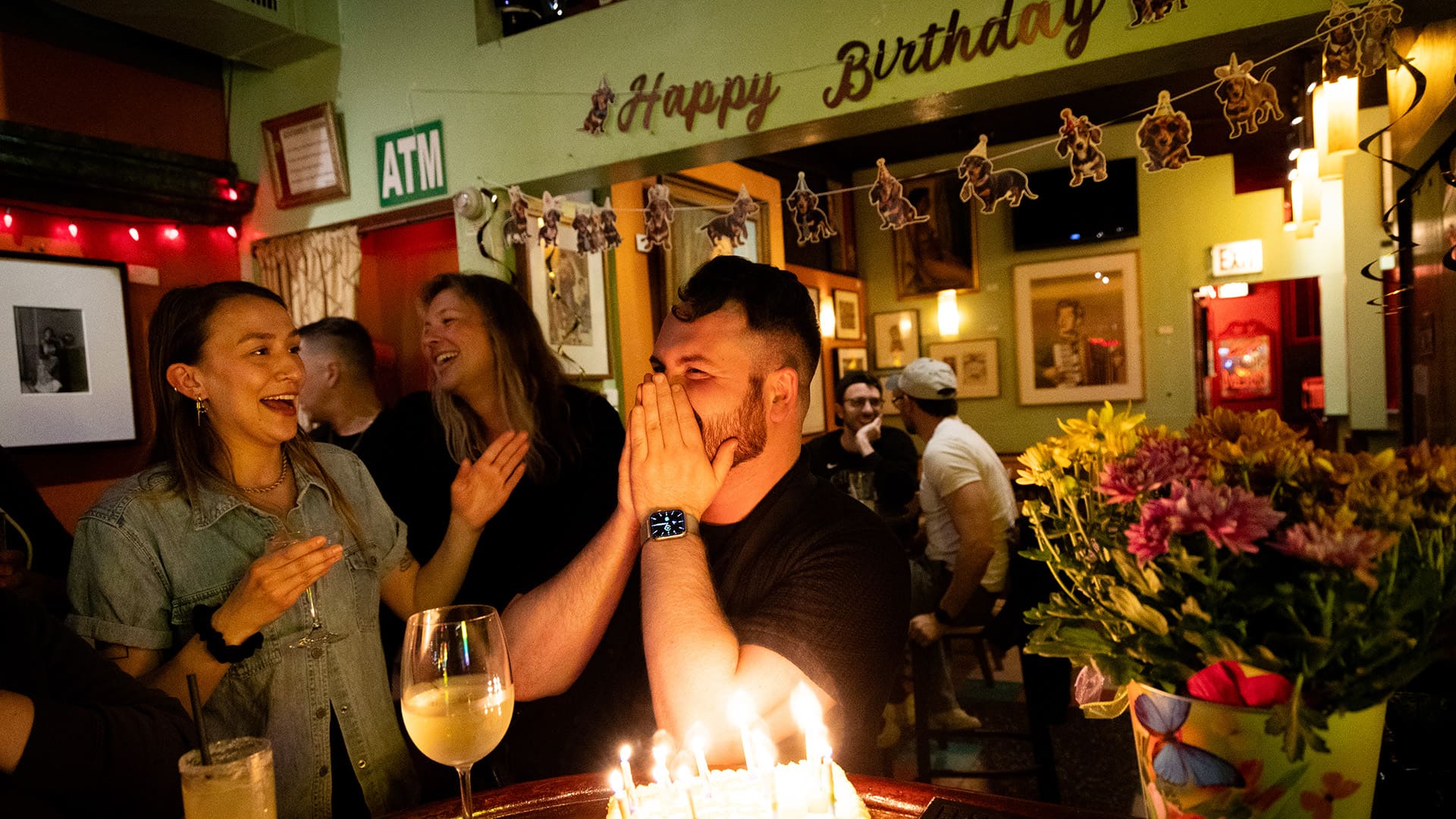
Bartender Janada Halbisen-Gibbs has been working at Big Chicks or its adjacent brunch spot Tweet since she moved to Chicago twenty years ago. Not only has she officiated the weddings of several customers; she met her own wife at the establishment. “It’s a place of love and shenanigans,” she says.
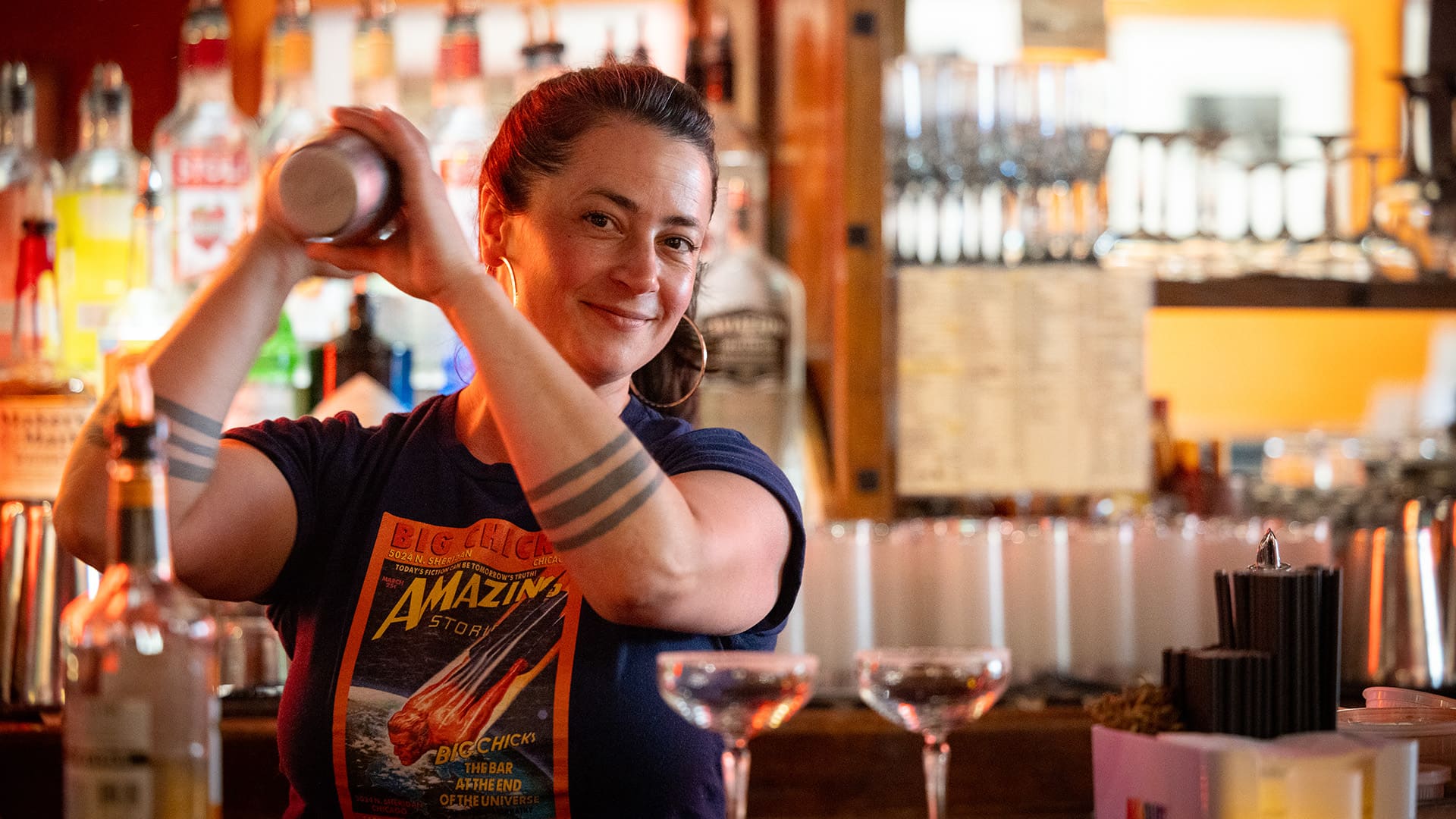
“Here we find people being able to be their ultimate selves,” says Rachel Drouillard. “There’s an energy at the bar that makes you want to talk to the person next to you at the bar and not be on your phone.”
"That sacredness of being unique and authentic seeps into the walls,” says Halbisen-Gibbs. It’s in the subjects of the thoughtfully curated art and the demeanors of the thoughtfully curated staff, and it’s also in the people you meet there. “Everything I did was with intent: curating the space and people, and then you get this charming, eclectic, magical place that is unique,” Fire says.
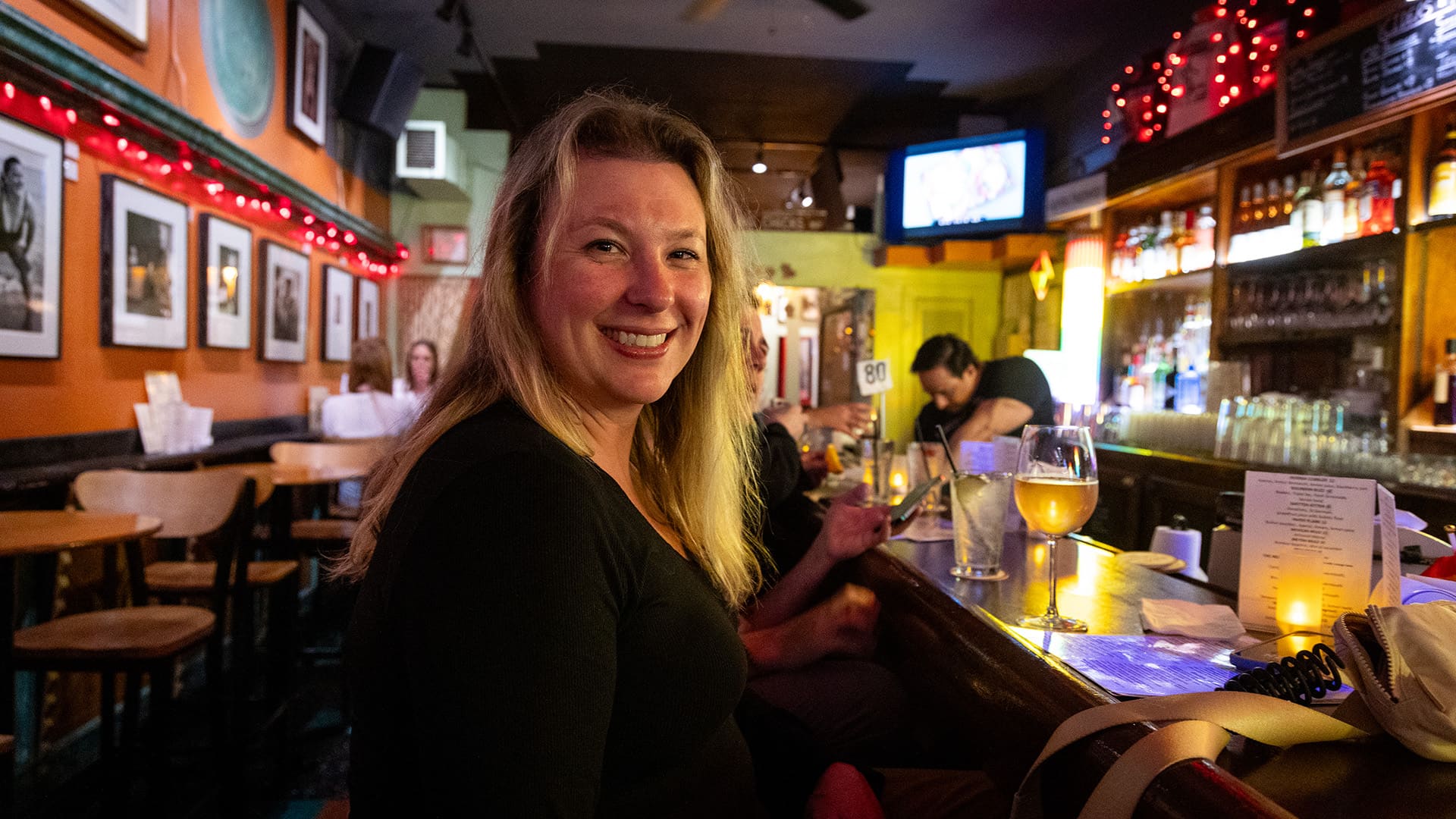
Leo Fitzgerald (left) lives down the street. He describes himself as a “straight guy ally” who didn’t have much exposure to gay culture before coming to Big Chicks the first time, but says that, “Everyone I’ve ever met here is interesting. It’s so easy to fall in love with this place and the staff.”
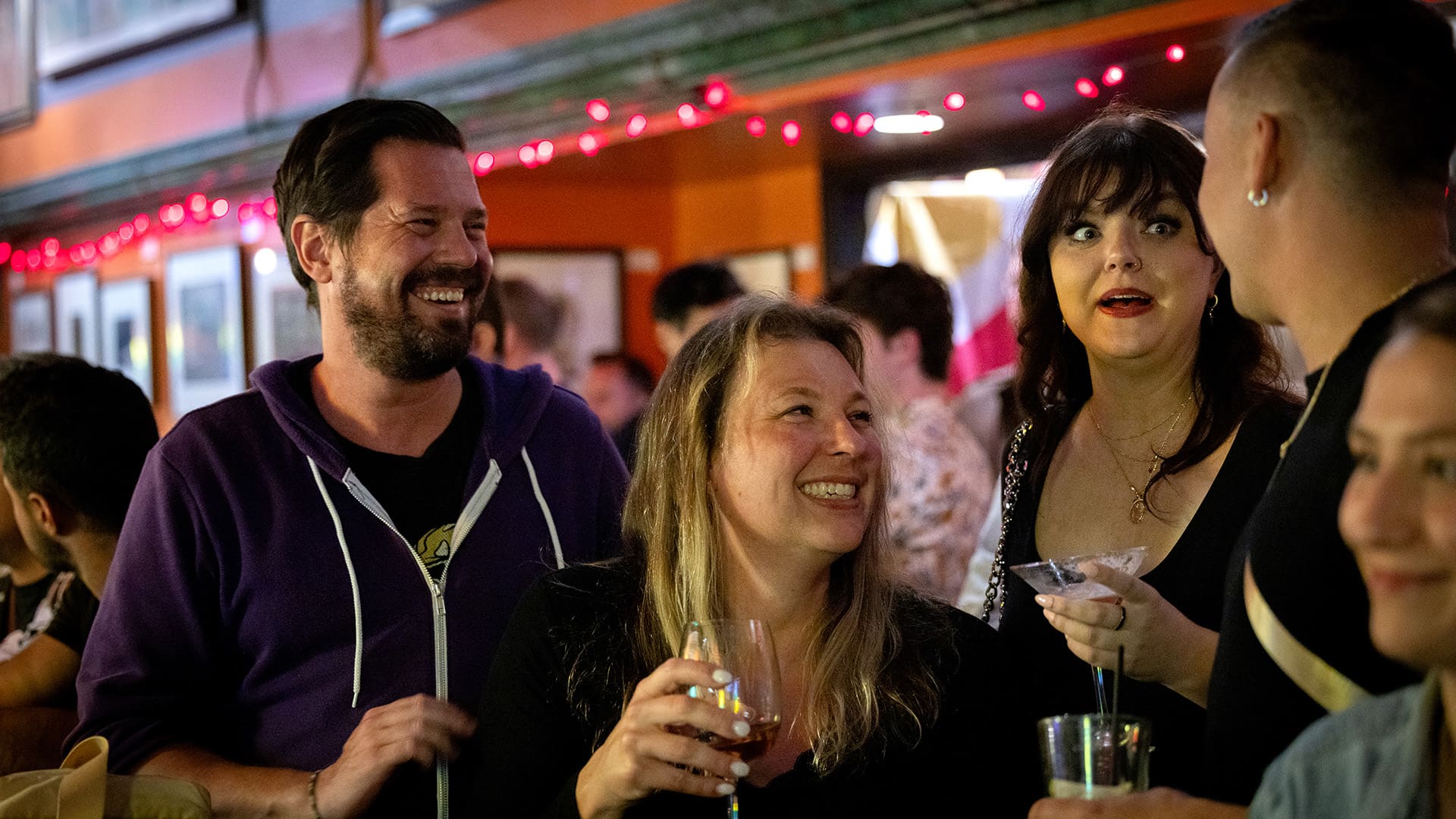
“It’s a straight-friendly gay bar,” Halbisen-Gibbs says with a laugh. “It’s the equivalent of a watering hole in nature. If you want to see diversity and community, you go to the watering hole and watch. You have people just turning 21, you have people who are elderly. I'm so happy to see trans and non-binary people. We really do our best to dissolve barriers.”
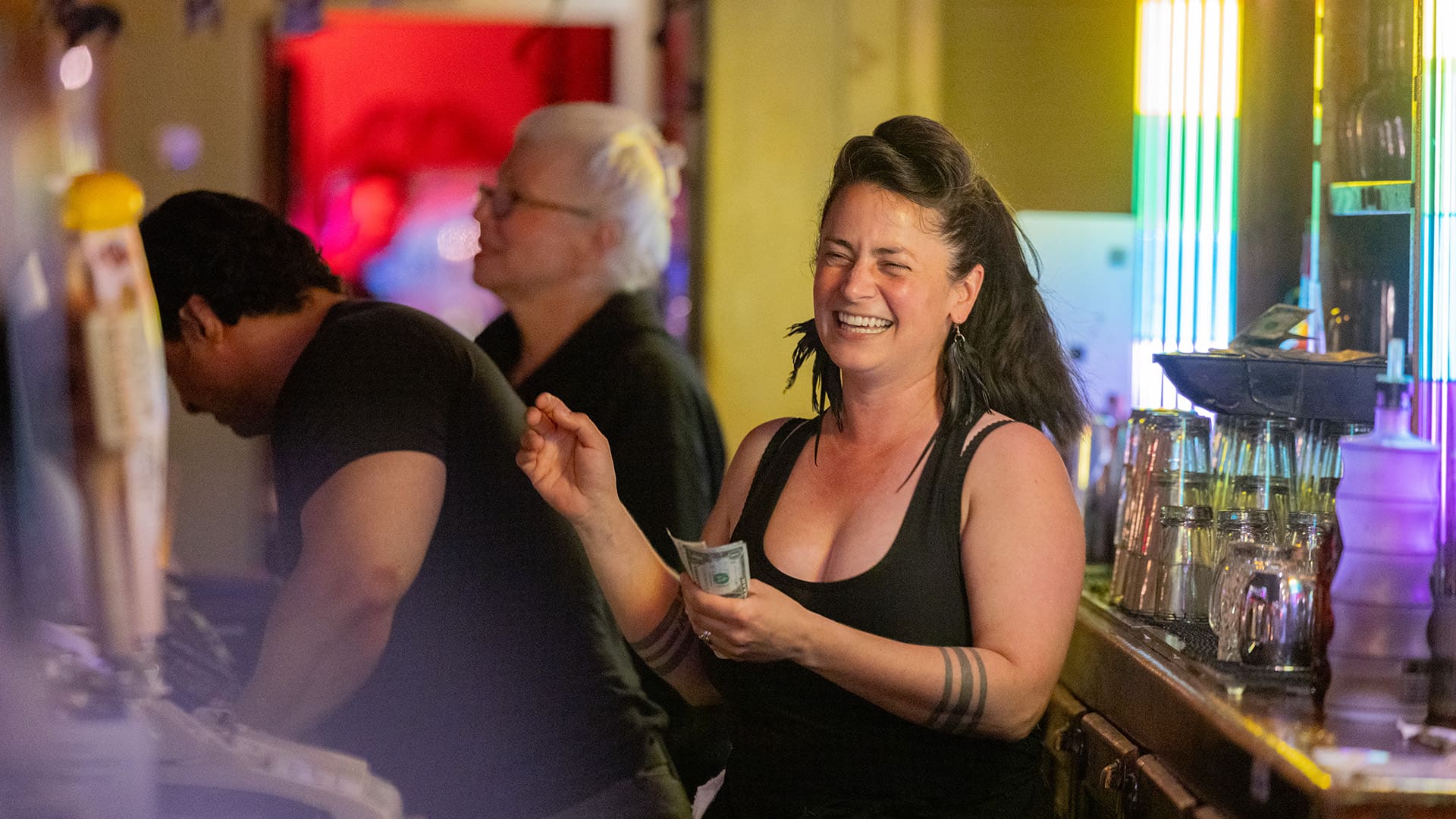
She credits that openness to both the community that hangs out and works at Big Chicks and Fire herself. “Everything is created to create connection,” she says of Fire’s decisions about the bar. “She’s done the impossible keeping this place open. There’s only a handful of gay bars that have remained open well into 30 years.”
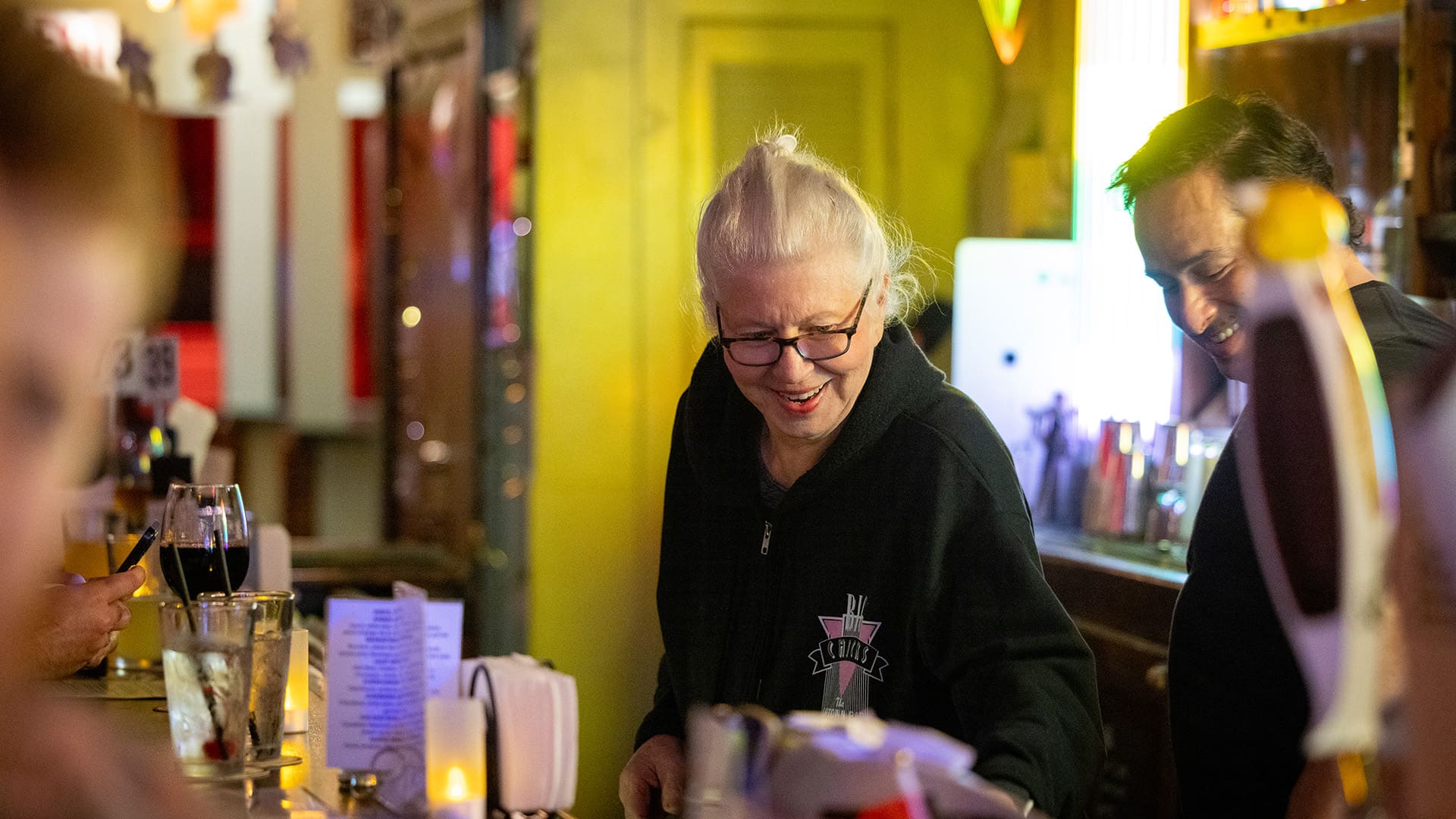
“I get people who come from out of town, places like Texas, Tennessee, and Ohio, and they can’t fathom having a place like this,” Halbisen-Gibbs says. “And I get to see them let their guard down and fill their cups. To see this community thriving with what’s being destroyed is powerful. Bartending the first dance party after the Pulse [nightclub] shooting, we were so scared. There’s this united determination to not let fear steal out joy. And that’s 100% true now.”
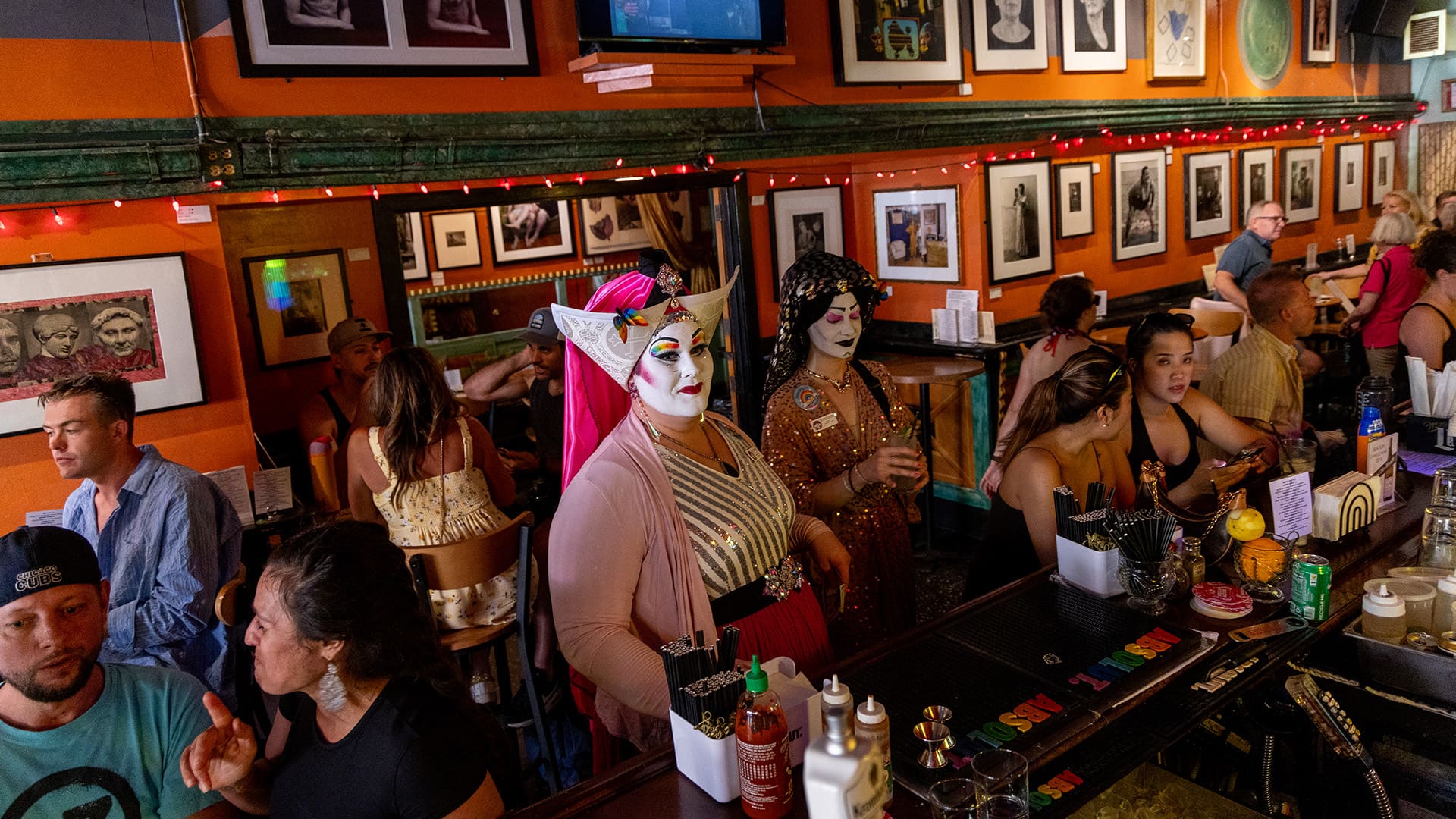
“When people asked me why I would work [at Big Chicks], I’d say I was going to be there anyway,” says Hal Barnett as he works the door. “Chicago’s home to me in part because of that space.”
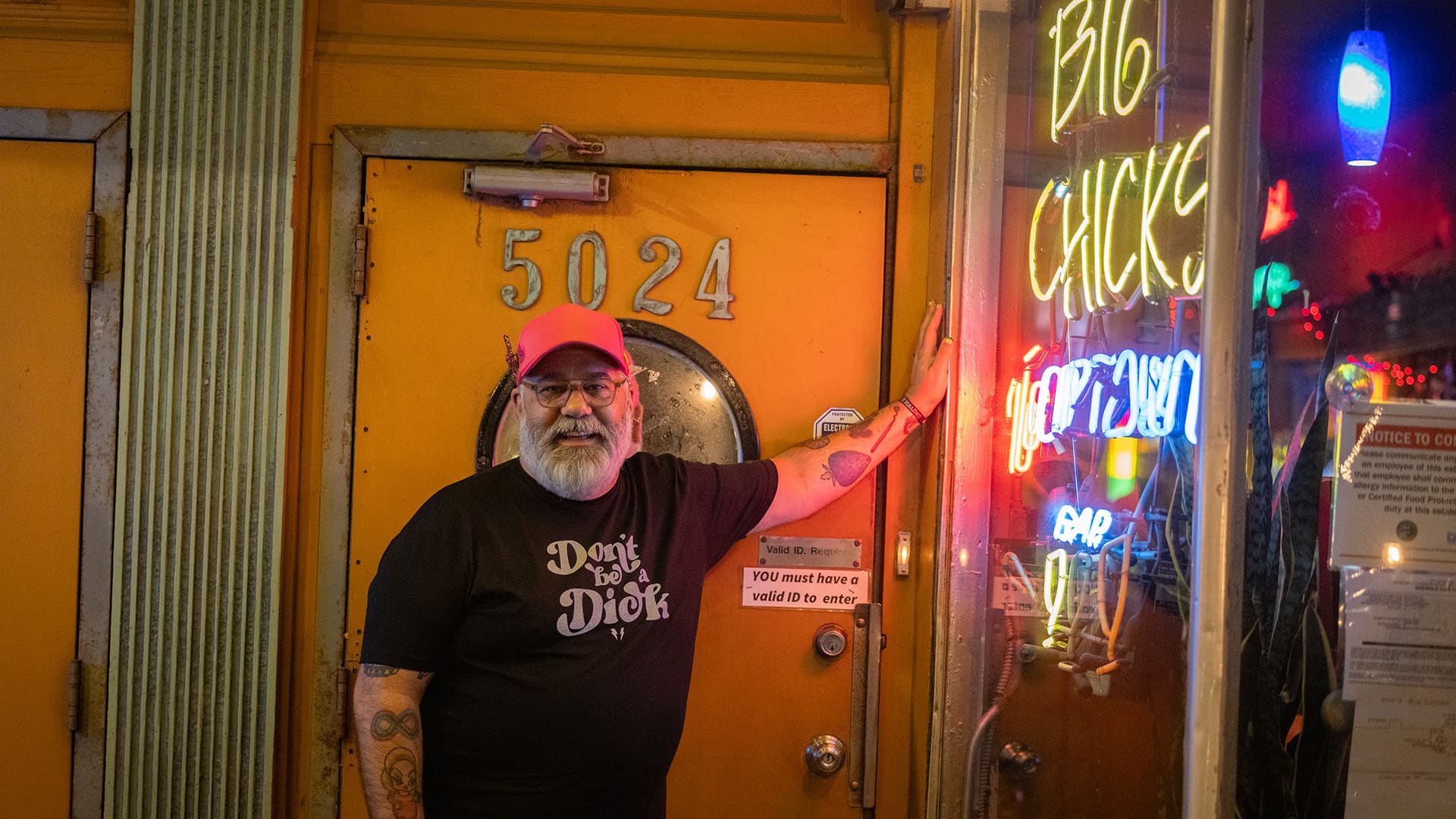
“Best little bar in Chicago, for sure,” says David Joseph. “I can’t think of a place like Big Chicks. The variety of people, the art…A place for everybody.”