A Producer of the PBS Series 'American Muslims' on How Muslim Stories Are "Deeply Embedded" in American History
Daniel Hautzinger
September 15, 2025
The 2023 Pulitzer Prize in Music was awarded to Rhiannon Giddens’ and Michael Abels’ opera Omar, which is based on the 1831 book A Muslim American Slave: The Life of Omar ibn Said. Said was a Muslim who was captured in his native West Africa and sold into slavery in America, where he wrote his autobiography and other works in Arabic.
His is just one of many remarkable yet little-known stories of Muslims whose lives were intertwined with American history throughout its course. The PBS Digital Studios series American Muslims: A History Revealed tells the stories of some of those people, including Mamadou Yarrow, another West African Muslim who was enslaved before gaining his own freedom. The Philadelphia Museum of Art has a portrait of him.
Or there’s Florence Watts, a woman who converted to Islam in Chicago and became a part of an early mosque in Bronzeville in the early twentieth century. She is the focus of the episode “How Islam Influenced Black Americans in 1920s Chicago,” which is the subject of a screening hosted by WTTW on Wednesday, September 17 at 5:00 pm at Impact House, 200 W. Madison St.
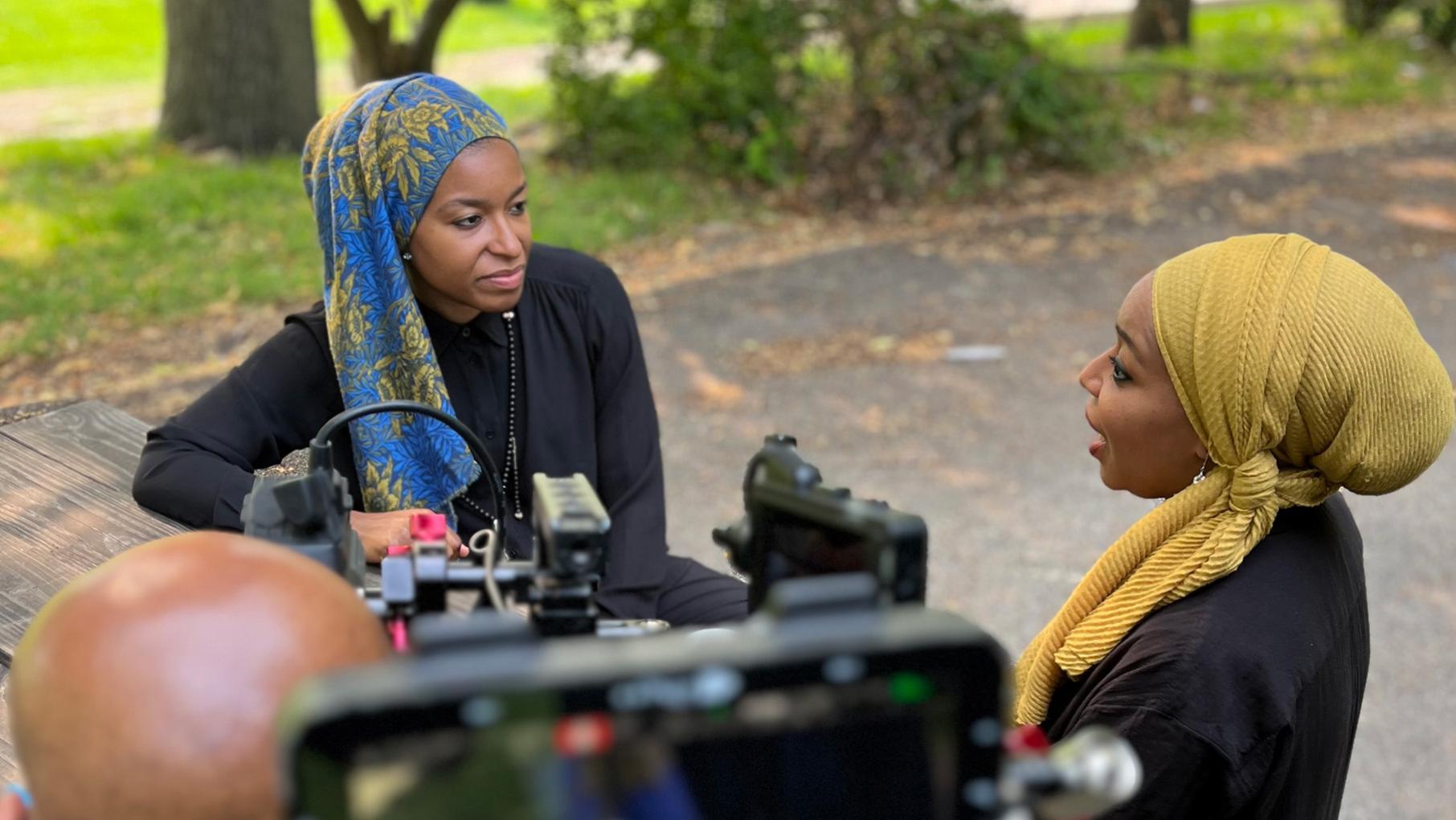
We spoke to Zaheer Ali, an executive producer of American Muslims, about the show.
This interview has been condensed and edited for clarity.
What was your goal in making this series?
Zaheer Ali: This is a series that explains America to all of us and says that we cannot understand America without understanding all of the people who make up America. That’s why all of the episodes focus on a significant moment or event in American history, and we explore those key moments through the lived experiences of Muslims who were part of that.
We had these five key pillars [not in any particular order]. One was to go from contributionism to transformation. We wanted to shift away from this idea of, “Look at all the things that Muslims have done or contributed to America,” to all of the ways that Muslims have been part of the transformation of America. So it’s not transactional, because everyone is deserving of dignity, regardless of what we think they have contributed.
The second was a shift from this narrative of becoming American to America’s becoming. Essential to America’s becoming what it is are all of these different peoples that make up America.
The third was from abstraction to lived experience. The fourth is from inclusive storytelling to expansive storytelling. We really wanted to be clear that this is not about including Muslims in an already existing narrative. This is about expanding the frame to reveal the stories that have always been there, but that we haven’t paid attention to.
And the last is from representation to authorship. This is not just about representing the stories of Muslims; this is about people who are Muslim telling those stories ourselves. Most of the team members involved in this project are actually Muslim.
What did it mean to you as a Muslim to make this series?
Ali: I never felt a sense of estrangement from America, having grown up here in communities that are very clear about a sense of belonging, but I come away from this series even more convinced that there is absolutely no way to talk about America without talking about Muslims. These stories are deeply embedded and intertwined in ways that are so entangled with America.
Why did you want to emphasize the historical process, showing visits to archives and how you traced these people’s lives through bureaucratic documents?
Ali: What I love about history that’s rooted in the archives is these are all incontrovertible. These are sources contemporaneous to that time. I didn’t make this up. You can’t erase the past. As the kids would say, the archives have the receipts. We’re not speculating, we’re not guessing.
What do you think these stories tell us about America?
Ali: This really challenges any singular narrative about America. This has always been a plural place of many people, and Muslims have been present at many different points in America’s history, at many different places that we would consider America, and in various communities, and show up in different ethnic groups. The history and lives of Muslims in America have been as expansive as America is.
What stands out to you about the Chicago episode?
Ali: Chicago was where these twentieth century Muslim communities flourished: the Ahmadi community was very significant, and almost contemporaneous to the Ahmadi community was the Moorish Science Temple. And then Elijah Muhammad moved [to Chicago] to build the Nation of Islam. Chicago just has all of these traces, these archival echoes, of that early history of Islam. Anyone wandering through various parts of Chicago, especially on the South Side, will see names, will see people, will see buildings that call back to that history and just how significant it was.