How an Acclaimed Restaurant Group Feeds – and Contributes to the Performance of – the Chicago Fire
Daniel Hautzinger
September 19, 2025
Get more recipes, food news, and stories at wttw.com/food or by signing up for our Deep Dish newsletter.
Have a food story or recommendation? Email us at [email protected].
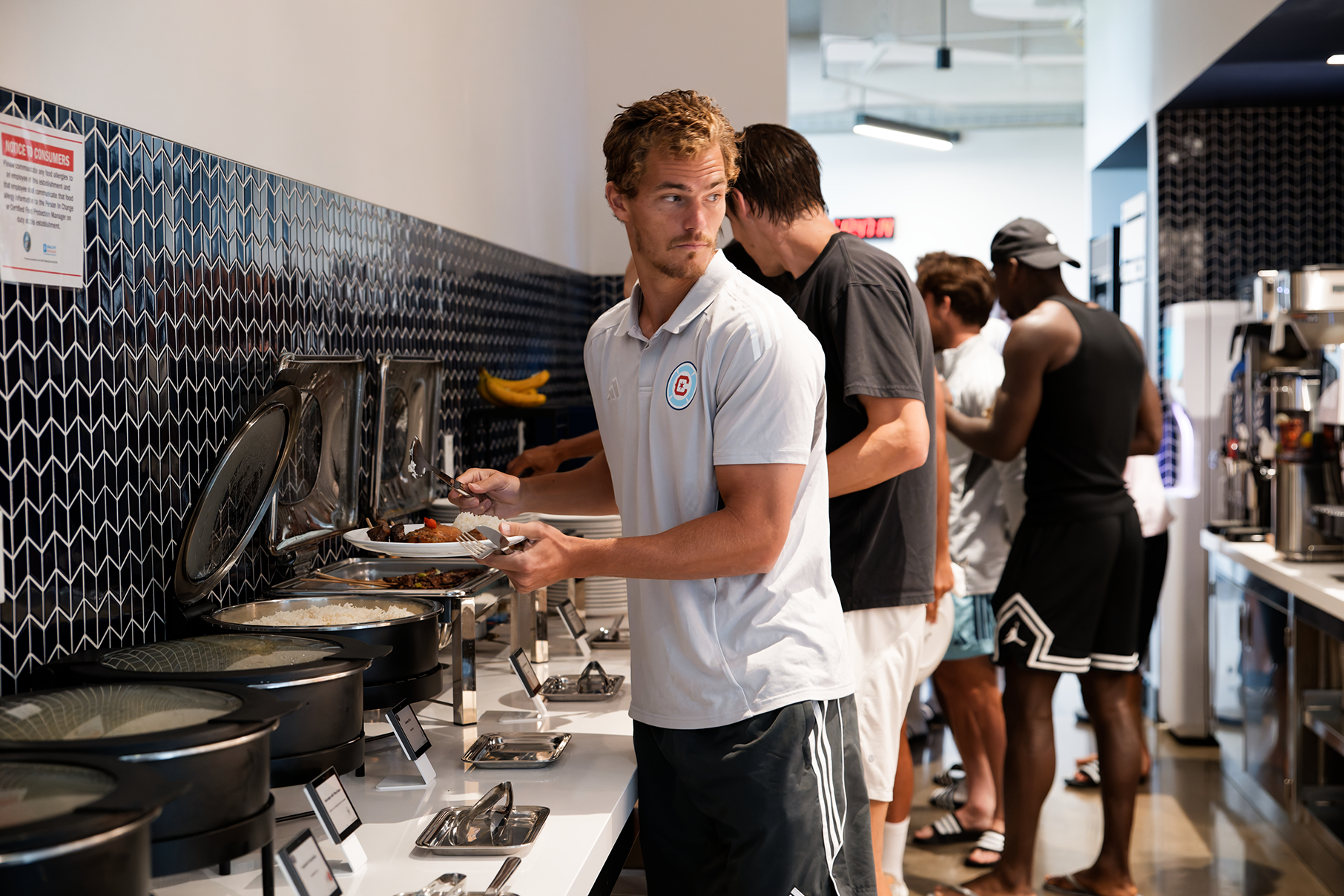
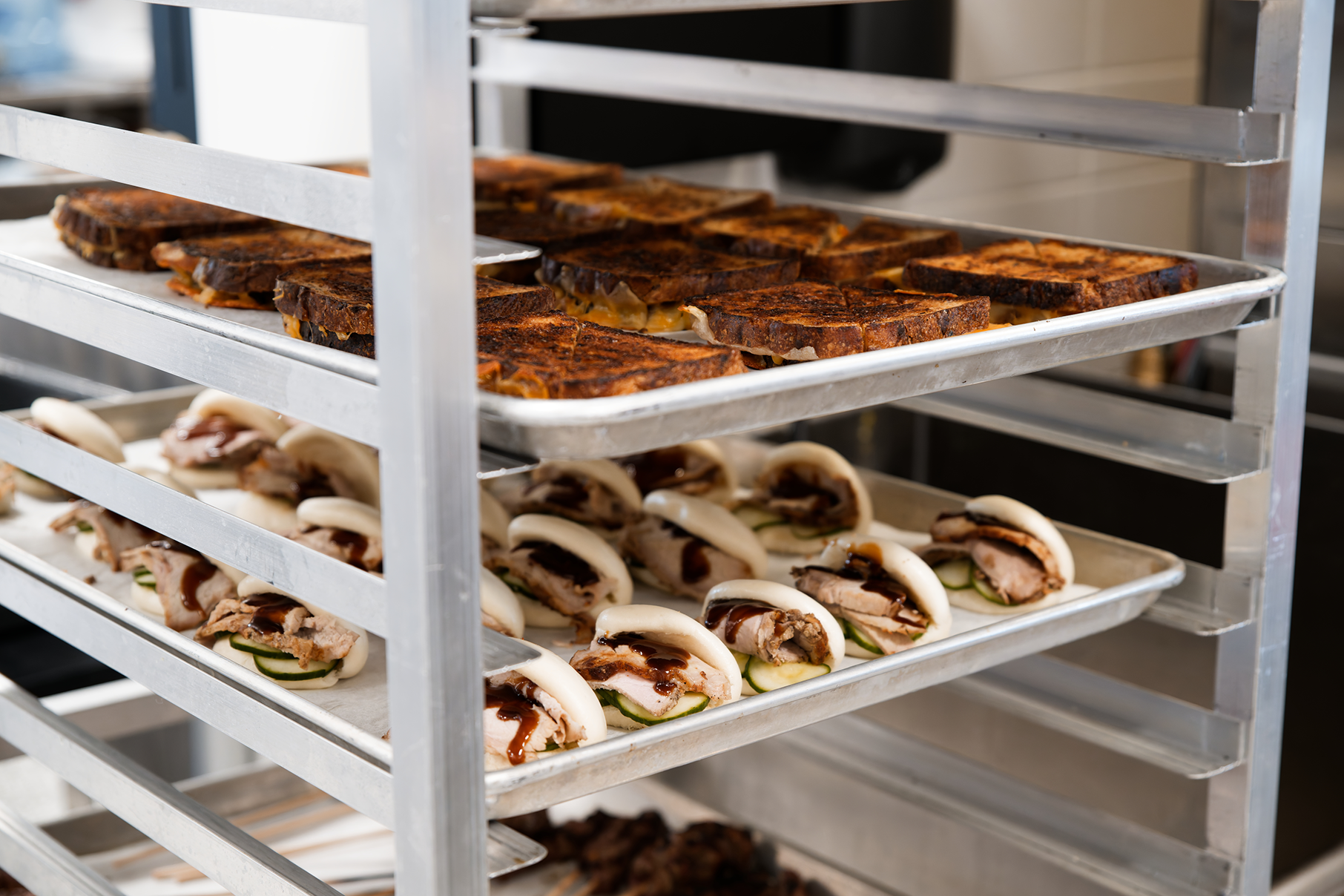
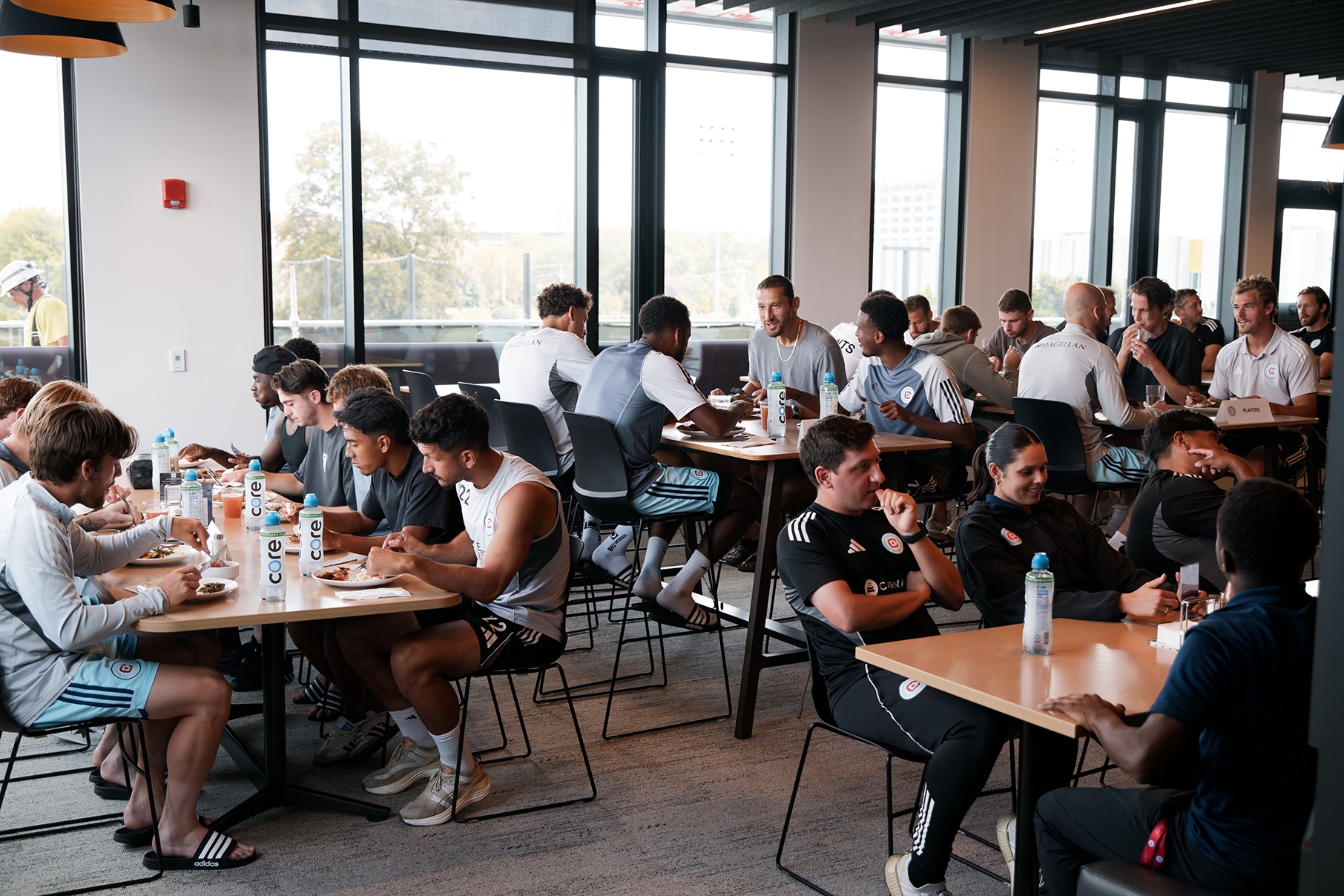
As a lawnmower cuts lines onto a green pitch with a view of the Chicago skyline and workers finish up an outdoor deck at the new Endeavor Health Performance Center on the Near West Side, the Chicago Fire gathers to eat lunch. Young soccer players in top physical condition file past chafing dishes and heated containers filled with asparagus seasoned with miso sauce and bao buns swaddling roast pork and cucumber. They reference small digital placards for allergens and symbols pointing out protein- or carb-heavy dishes to build a meal according to individual goals set for them by a team of experts dedicated to their health and performance.
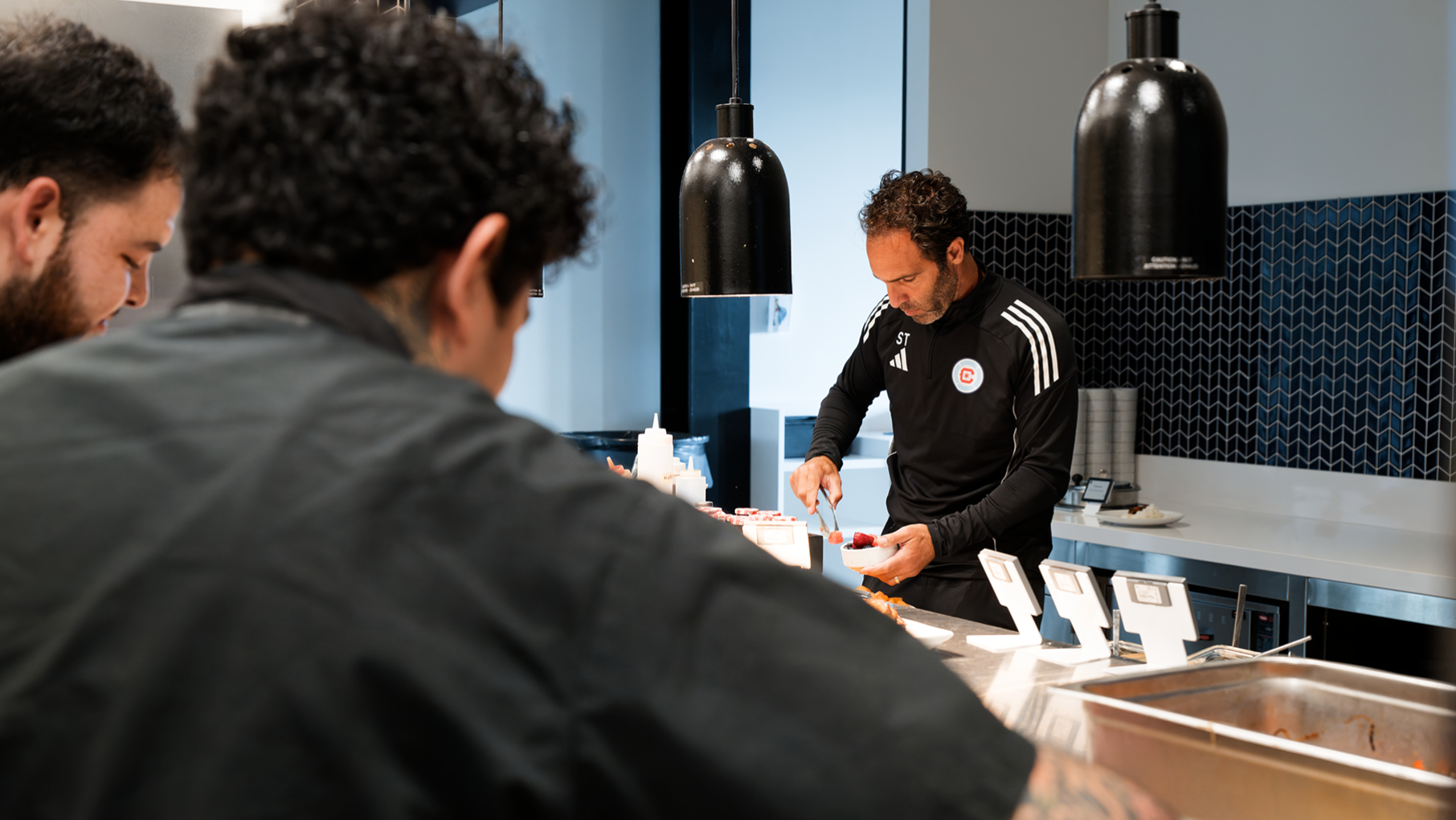
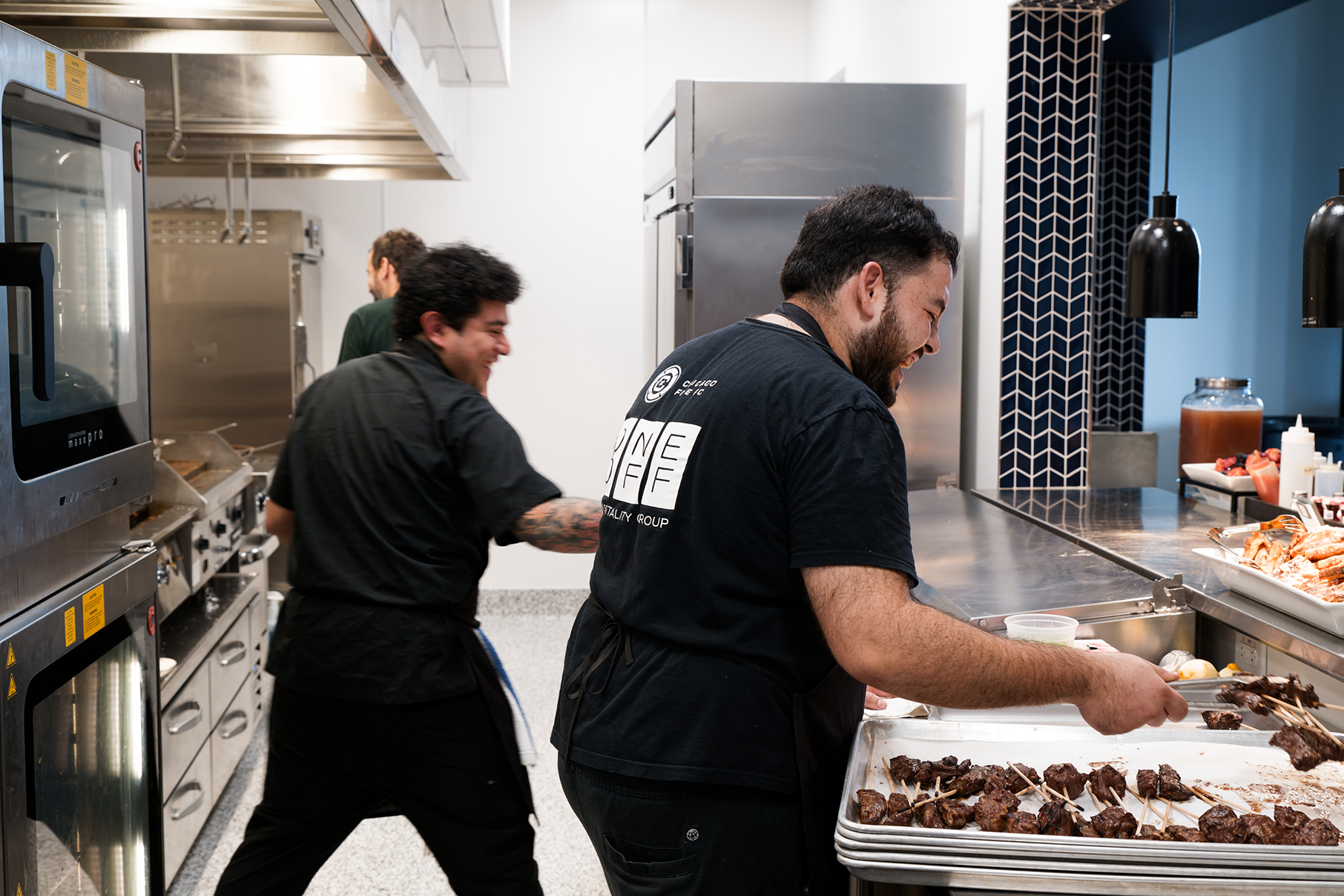
A staff nutritionist watches as they heap jasmine rice and grilled steak skewers with ponzu sauce onto their plates, while the cooks who prepared the food are visible through a pass open to the kitchen, chatting in both English and Spanish with players and making sure there are enough grilled cheese sandwiches and vegetable dumplings at the ready.
An institutional cafeteria is a familiar enough scene. But most cafeterias are not feeding professional athletes who consume 3,000 to 4,500 calories a day, according to a professor of sports nutrition’s estimate provided to NPR, or considered an integral part of a major league team’s performance. Nor are most run by an awarded restaurant group behind some of Chicago’s most acclaimed eateries. At the Fire’s training facility, the kitchen is operated by One Off Hospitality, the group behind The Publican, avec, Big Star, and more.
Food “is in the fabric of how we live and then how our bodies operate,” says Darcy Norman, the Fire’s director of physical performance and player wellness. “Your body is just one big chemical reaction, so what you put in is what you get out.”
Feeding a Team of Professional Athletes
What most people want to get out of dining at One Off Hospitality restaurants is pleasure: the luscious flavors of avec’s tomatoey bacon-wrapped dates, the heartiness of a loaf of Publican Quality Bread, the smoky grease of brisket hash at Dove’s Luncheonette. And enjoyment is part of feeding the Chicago Fire, too. “Things tend to get boring sometimes,” says Gregg Berhalter, the Fire’s head coach and director of football, and a former professional player himself. “So you need chefs with an imagination in keeping it fresh and keeping it flavorful.”
But food is also a utilitarian tool for the team, a fuel that they need in order to make it through a game, build muscle, and provide nutrients to keep them in good health. “They’re very aware of their diet,” says Gabriel Moya, the One Off chef de cuisine who leads the commissary kitchen at the training facility. “There’s a big difference in how they eat during the week [when they’re training] and how they eat before a game.”
The strictest meals are those before games; they’re primarily set by the Fire’s nutritionist. Energy-providing carbs are abundant in the form of pasta with sauce on the side and pancakes. (Pancakes are extremely popular among the players, as are French toast and grilled cheese – even players in their early twenties are already nostalgic for comforting childhood dishes.)
“That meal is very plain,” says Gabriele Ausraite, One Off’s executive chef in charge of catering and events, who oversees the partnership with Fire. It’s “very simple, easy to digest, a lot more carbohydrate-forward.”
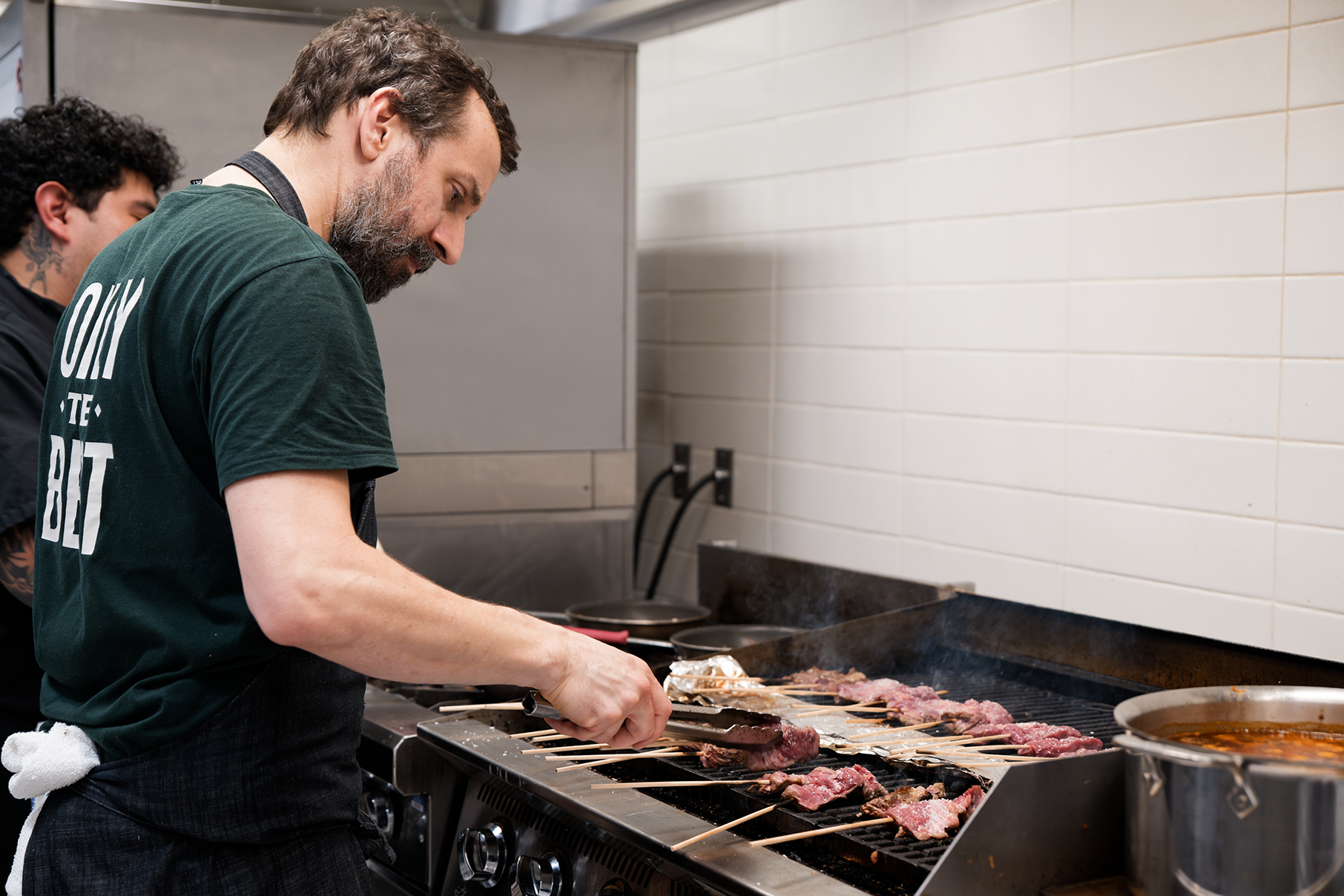
Post-game meals, on the other hand, are “where we get to have a little bit more fun,” she says. Players get to let loose a bit, with a burger or taco bar, or pizza, or barbecue. “Things that are quote-unquote a little bit more indulgent, not that it’s ever that indulgent, because these are professional athletes,” Ausraite continues with a chuckle.
“The food can also affect the mood of players,” says Berhalter. “And that’s why post-game we try to get experimental and get fun with the menu. We’re still trying to keep it geared towards recovery, but also trying to give the players a mental break sometimes.”
The post-game meal is eaten at Soldier Field during home games and comes from One Off’s catering commissary in West Town, which opened last year. (The Fire are planning to build their own stadium south of the Loop in the proposed 78 development.) Snacks and meals for the team’s travel – everything from yogurt parfaits to charcuterie to a sandwich – are also prepared at the West Town commissary.
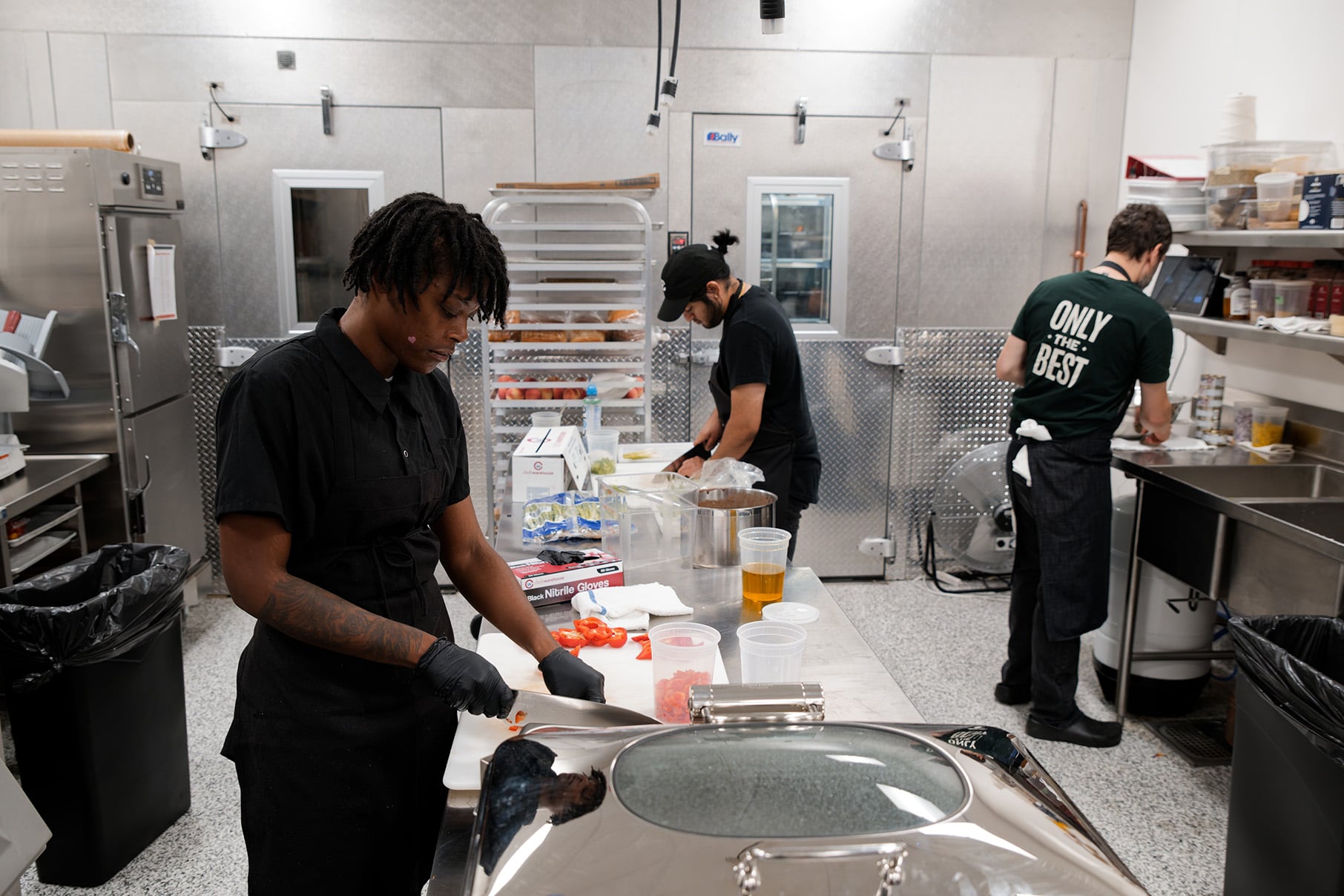
Moya and his five-person team at the Fire facility are responsible for everything else, including pre-match meals for home games. They serve around 55 people breakfast and up to 150 people lunch when the team is at the facility, including staff, the second team, and Chicago Fire Academy participants. Those day-to-day meals are where the imprint of a chef-driven restaurant group is most obvious.
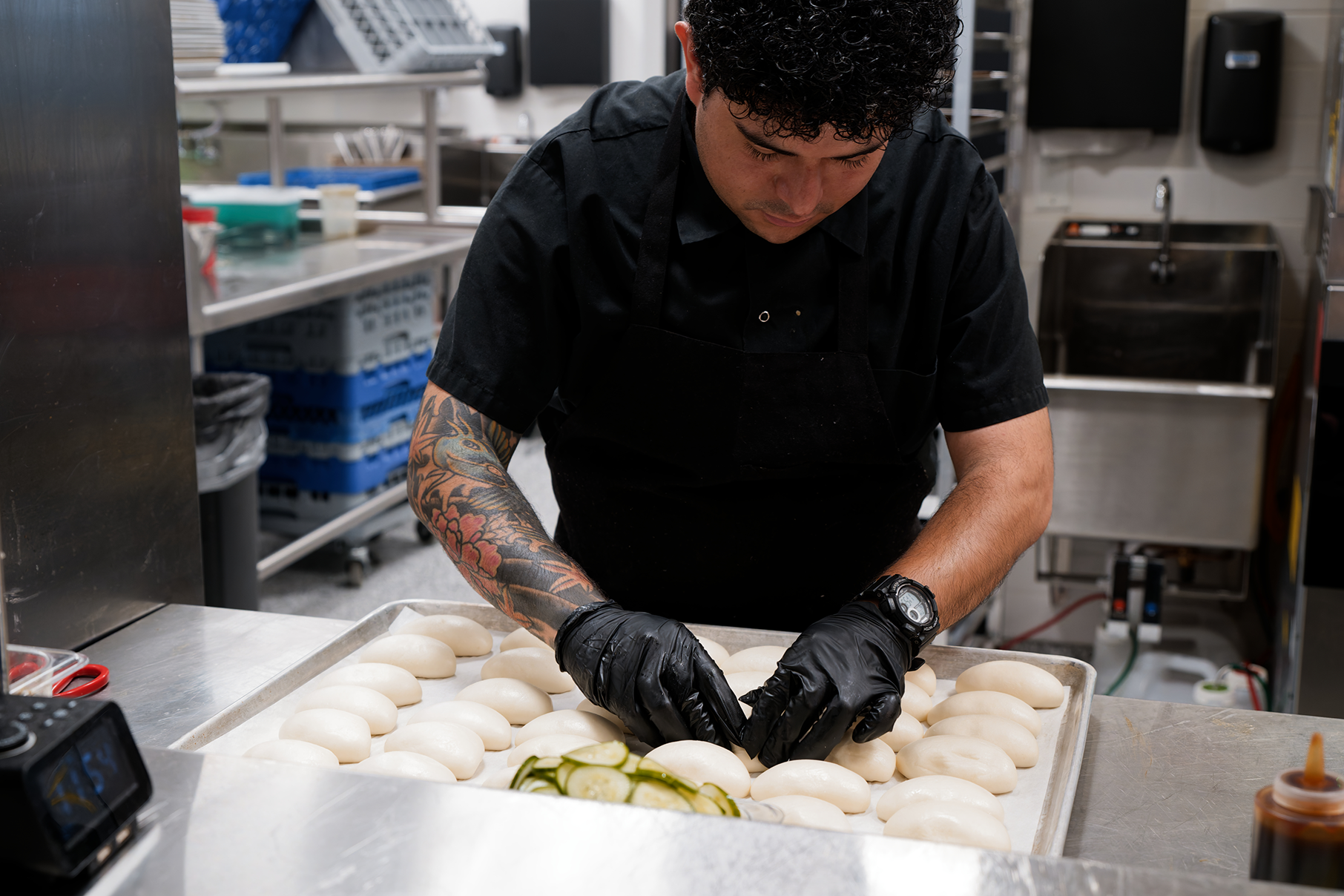
“You can’t feed them the same thing every day,” says Moya. In the months since he has taken over the kitchen – the partnership began earlier this year – he has noticed a difference. “I was like, ‘Are they training harder? ‘Cause they’re really going through a lot of food.’” he says. “It seems to me that they’re enjoying it more, and they’re more like, ‘We can trust this guy.’ So they’re eating things that they usually wouldn’t eat, in the past.”
While breakfast is relatively standardized – two egg options, a protein that might come from Publican Quality Meats, a starch, a yogurt bar, a cereal such as overnight oats, and lots of fruit – lunch has more room for variance: two proteins, two carbs, two vegetable sides, soup, and a sandwich. The yogurt bar and fruit return for lunch. Moya is amazed by how many berries they go through; he estimates the amount of fruit consumed as 50 to 100 pounds a week.
“The complexity aligns between players that want French toast and a nutritionist that wants a whole different thing,” says Karen Browne, the CEO of One Off. “It’s kind of a triangle of how we balance approachable food, things that are healthy, and hitting on the needs of the players so that they really are at their peak performance.”
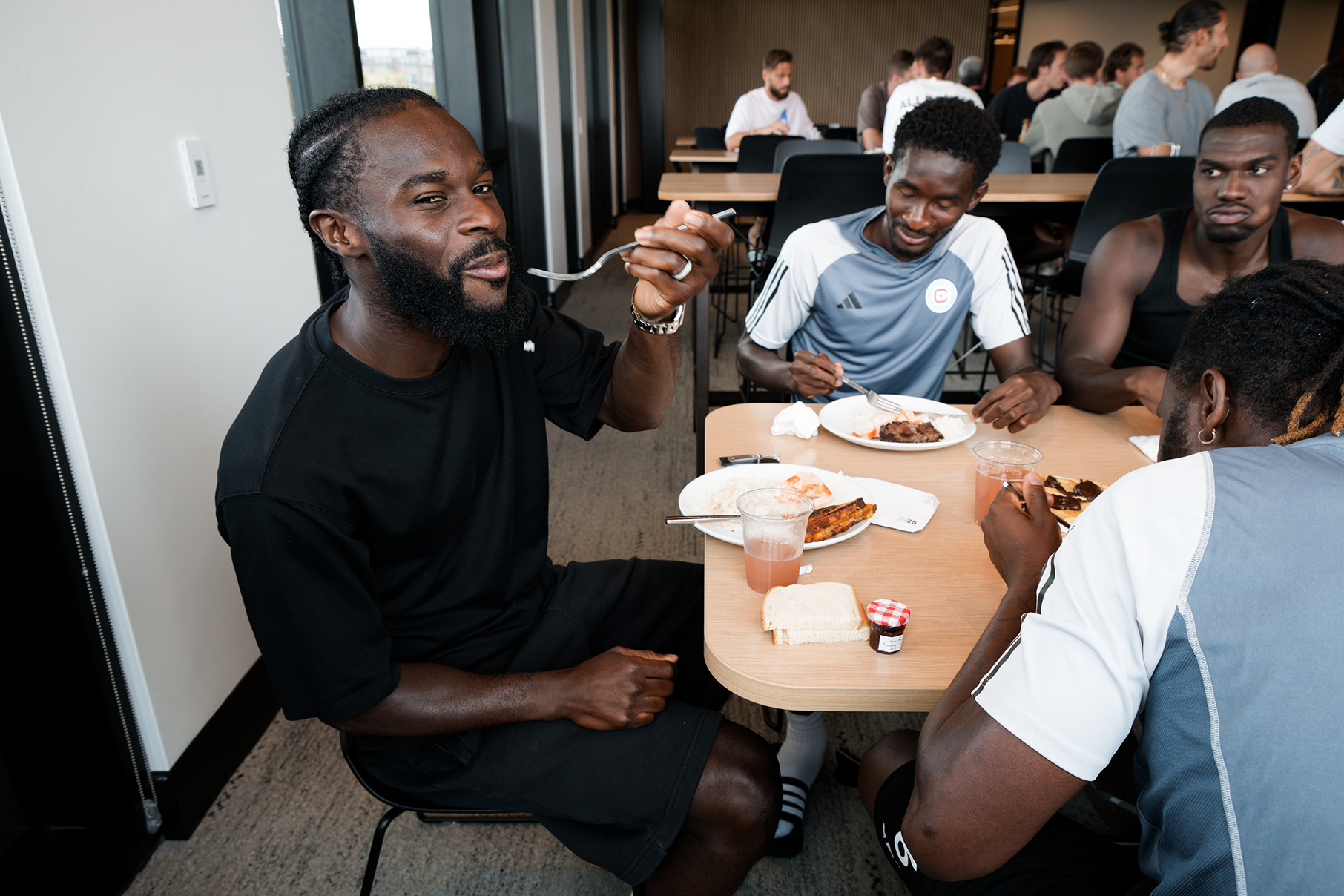
Berhalter is a self-described “foodie” who has loved avec for years, and one of his goals in having the young Fire players eat dishes prepared by One Off is “expanding their palates and then educating them on what’s healthy for them.”
While low-fat chicken is typically one of the protein options, Moya often serves something less familiar alongside it, like branzino or braised lamb. Anchovies might show up on a pizza bianca or in the dressing of a kale salad, and seasonings like vadouvan or mojo de ajo spice up chicken and shrimp. The biggest push to widen tastes comes in vegetables: broccolini, purple and orange cauliflower, cumin-coriander carrots.
“Sometimes they’ll see something on the buffet and be like, ‘What is that? I don’t want to eat that weird vegetable that I’ve never experienced,’” says Ausraite. But Moya answers questions and encourages people to try something new; the engagement with the players was part of what drew him to the job, as someone who used to play a lot of soccer.
“A lot of the time people will try it and be like, ‘Oh yeah, that’s really eye-opening,’” Ausraite says. “That’s been kind of awesome to see.”
A New Era of Food in Sports
How athletes eat has been a source of fascination for a while: just think about the obsession over Michael Phelps’ meals. But attention on sports nutrition has more recently shifted to values long present in the gastronomical zeitgeist, like sustainability, organic ingredients, and local sourcing. (The 2024 Paris Olympics somewhat controversially emphasized plant-based food.)
“This is an evolution of the game: really being meticulous about who you choose for your catering,” says Berhalter. “It’s really about the quality of the ingredient that we put into our bodies to help us perform at the highest level possible.” When he was head coach of the United States men’s national soccer team, they brought a chef with them to World Cup qualifying matches who worked with hotel staff to provide nutritionist-approved meals.
Berhalter is “super passionate about small farms, quality proteins, and nutrition for his team,” says Browne, adding that the team’s owner, Joe Mansueto, prioritized the same things. “It wasn’t just, ‘I want the cheapest food.’”
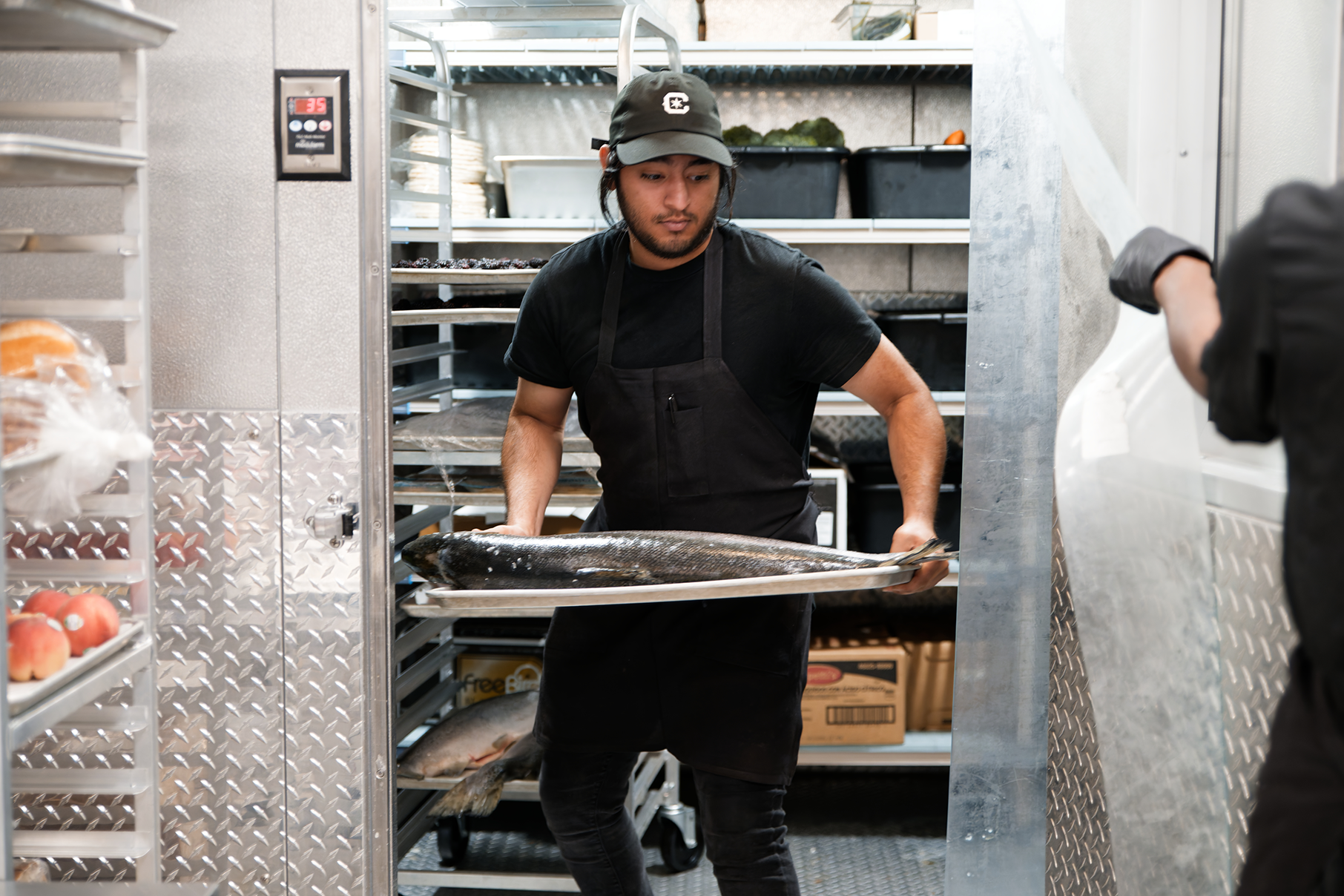
One Off sources as many seasonal ingredients as they can from the same sustainable, local farms it uses for its restaurants, although the extraordinary year-round popularity of berries, for instance, forces them to turn to other suppliers as well. Fish arrives whole rather than in pre-packaged cuts and is filleted in house. Pizza and focaccia dough is prepared in the commissary, and the buffet features Publican Quality Bread sourdough made from locally grown and milled grains – although the team had to cave to demand and offer commercial white bread in addition.
Norman, the director of physical performance and player wellness, argues that local ingredients from small farms taste better and thus help the players eat more healthily. He points to his own time working for soccer teams around the world as an example. “My kids would devour vegetables when we lived in Europe. When we came back to the States, not so much. A lot of times they didn’t have flavor,” he says. “The hardest challenge is finding good sourced food that has true flavor, doesn’t have a lot of pesticides, and all the crap processing stuff that happens.”
Cooking classes taught by the One Off team are being planned for the players, so that they can continue to feed themselves well even when they don’t have access to One Off’s food. “It’s a holistic approach to developing people,” says Berhalter. “We want them to avoid doing the quick fix thing, and preparing something healthy.”
“Instead of supplements, we look to food first, to supply us with our nourishment,” he says. “Then from there we look to supplements, but we’re really trying to get all of it from what we eat every day.”
Norman’s team designs nutritional plans for each player focused on different goals. “Some might want to lean out. Some might be trying to add lean body mass. Some might be low in iron, or vitamin D, or vitamin B, or whatever the case may be,” Norman says.
Some players are Muslim and fast while the sun is up during Ramadan, which requires careful planning so that they have enough energy for training. They take a meal before sunrise and have smoothies or protein shakes ready in the evening that are easy to digest overnight.
Nutritional aims for the whole team are different depending on the time of year and daily schedule, Norman explains. “Are you trying to prepare for the season? Do you need extra calories for recovery? Do you need extra carbohydrates for energy?” These goals are set out by the nutritionist, who convenes with Moya and Ausraite to sign off on menus.
One thing that is generally avoided is fat. “I cook with a lot less butter and fat than I did in restaurants,” says Christian Regalado, a cook on Moya’s team who was already a Fire season ticket holder before he got the job. On heavy training days, the menu might include a fattier protein – but that means chicken thighs, not pork belly.
Even weather affects things. Extra salt in a meal is useful during a heat wave, “because you get your sodium and potassium that helps draw the water into the muscle to help with hydration and cramping,” Norman says. (Tables in the cafeteria feature informational plaques about hydration next to the hot sauce and salt and pepper.)
Food is just one of many tools in Norman’s arsenal to keep the players at peak performance and wellness – but it’s an important one. You can live without cold plunges, but you have to eat.
“It is kind of just like the team: we have a bunch of guys out on the pitch that have certain qualities and roles and responsibilities,” he says. “It’s no different with One Off. They’re just another team member with the team behind the team that’s got really good skills to help execute on our goals of high performance.”