Oriana Kruszewski Lets Nature Take Its Course to Grow Rare Fruits for Chicago Restaurants and Farmers Markets
Daniel Hautzinger
October 23, 2025
Get more recipes, food news, and stories at wttw.com/food or by signing up for our Deep Dish newsletter.
Have a food story or recommendation? Email us at [email protected].
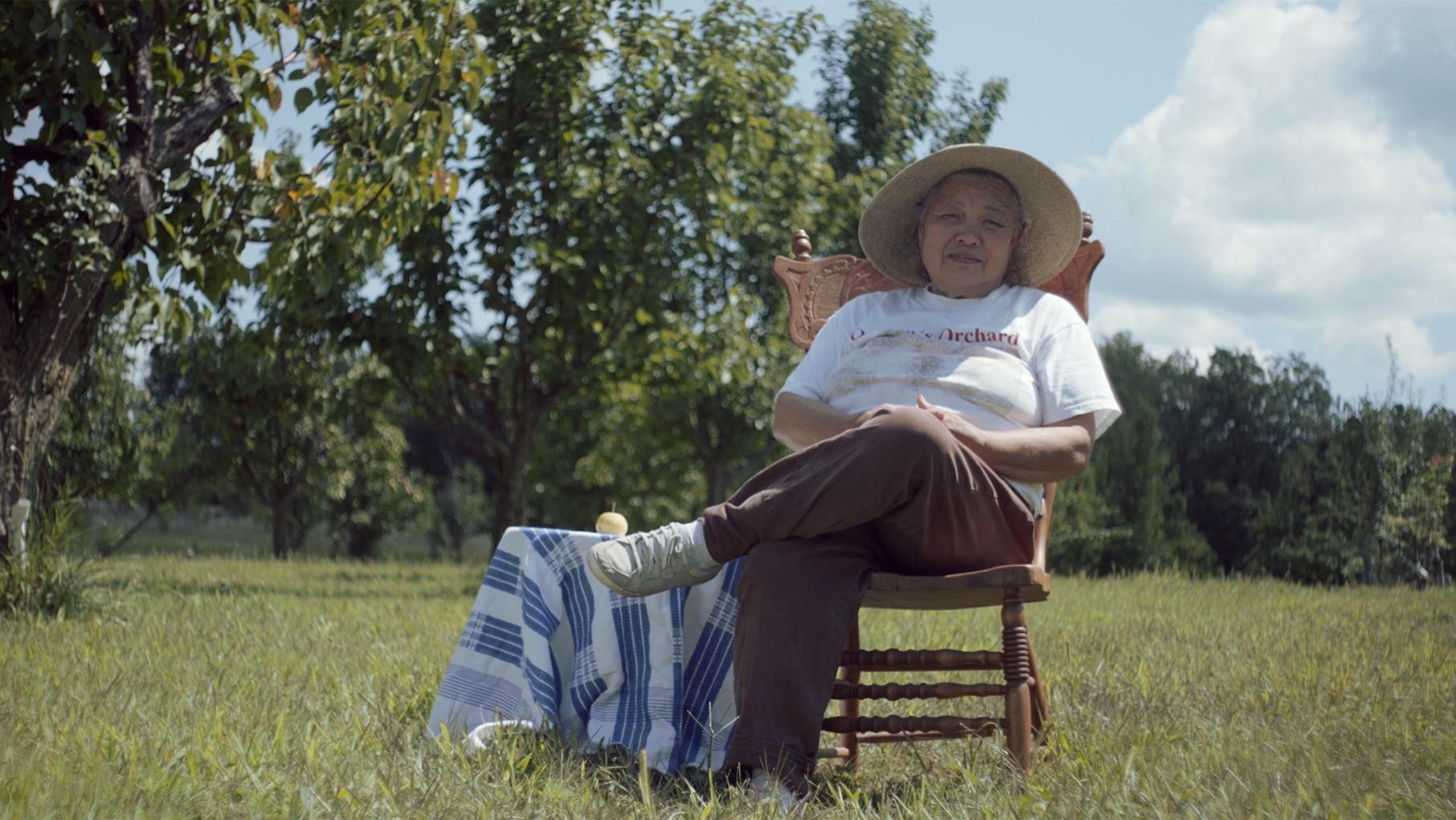
“I don’t know anything,” Oriana Kruszewski is wont to say when asked how she produces fruit that is in demand amongst top chefs (for example, César Murillo of North Pond, Devon Quinn of Eden) and farmers market attendees in Chicago alike. Her approach to growing Asian pears, pawpaws, persimmons, apples, black currants, and Chinese medicinal herbs on a 40-acre property in northwestern Illinois is to “just ignore it.” The fruit and trees she sells under the name Oriana’s Orchard are simply “nature’s select.”
There’s obviously a bit more to it than that. But the charming self-deprecation and relaxed outlook are characteristic of Kruszewski, as is immediately evident in a forthcoming short film about her, Oriana’s Orchard.
“I feel like for a lot of people that meet her, it’s clear how much depth of knowledge she has, and she’s so generous about it,” says Krista Kane, the filmmaker behind the documentary. “Hearing about how she farms, it was just captivating.”
Kruszewski started growing fruit as an adult because she longed for the Asian pears she had grown up eating in China as a kid, but they were too expensive in America. She planted her own trees in her backyard, eventually learning how to graft new shoots onto already established rootstocks, a technique that is both cost-saving – growing a shoot from seed is much cheaper than buying a sapling – and insurance-providing, giving new plants a better chance of surviving.
She generally left nature to its course, in part, she says in the documentary, because she didn’t know anything about spraying pesticides or fertilizers. “The ease in which she trusts that things will grow that are meant to grow,” Kane says, “because of that approach, she has really resilient pear and apple trees that she doesn’t spray, she doesn’t water.”
Kruszewski has a vivid way of illustrating the effects of industrial chemicals used in large-scale agriculture: in the film, she mentions that, when her dog drank from a part of the creek contaminated by a neighbor’s run-off, it would get horrible flatulence.
But she’s not dogmatic about agriculture, other than in her belief that everyone should try to grow something. After a crowd had sampled her pears and pawpaws on bread, in salad, on pizza, and with soft-serve ice cream at the film premiere at Bungalow at Middle Brow, she exhorted attendees to plant a seed from a pawpaw in their backyard – or a park if they didn’t have one. “Then you can go and dig it up in five years,” once you have the space for it, she said to laughs.
What, you may be wondering, is a pawpaw? It’s a fascinating outlier, a fruit native to the eastern United States that bears resemblance to tropical plants in its flavor, texture, and even the leaves that shade it – all while it grows in places that experience icy winters. “When ripe, the pawpaw is a beguiling fruit, with the texture of custard and aromas and flavors of banana, mango, strawberry, and forest floor, all rolled into something that fits in the palm of your hand,” writes Chicago chef Paul Fehribach in his book Midwestern Food.
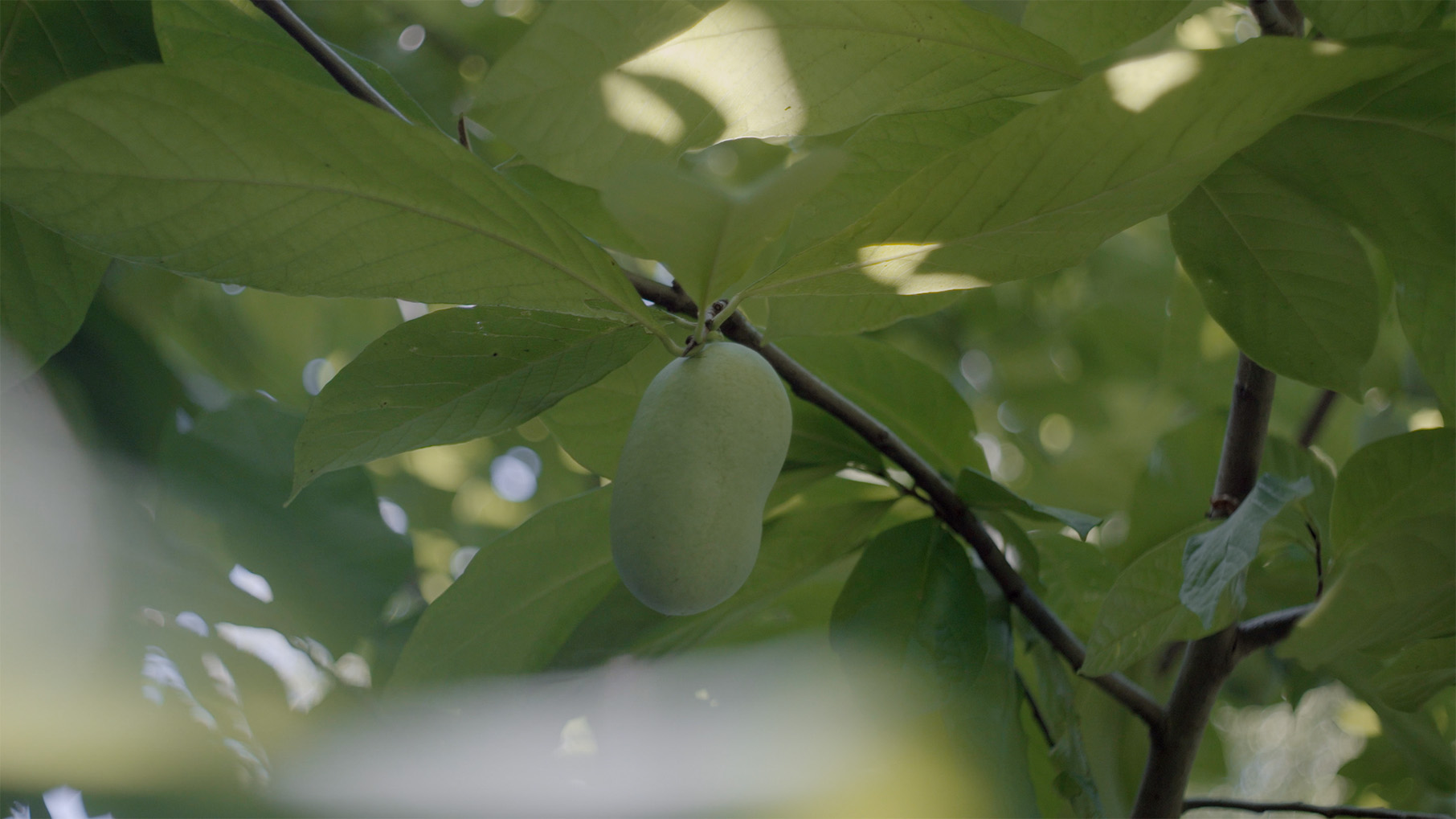
It’s much better known around in places like Pennsylvania, Ohio, and the Carolinas than Illinois; Kruszewski is the rare supplier of it near Chicago, which explains the rush to buy it from her during its short season in early fall. A short shelf life, easily bruised flesh, and an inability to ripen if harvested early are more reasons that it’s quietly in demand among those in the know, having resisted industrialization and the rise of national distribution networks. (Kruszewski also grows aronia berries, another native North American fruit that hasn’t ever caught on in mainstream agriculture.) Fehribach’s father would forage pawpaws when he hunted the forests for squirrels in southern Indiana.
At Middle Brow, pawpaw was available in a floral jam to be spread on bread or enjoyed over ice cream, as well as in a funky aged saison. Middle Brow’s artisans have made wine from pawpaw in the past, although this year’s batch didn’t turn out – which feels fitting for the fickle fruit. It’s frequently folded into soft dairy-based desserts such as mousse or panna cotta; Kruszewski confessed at the premiere that she doesn’t know how to make ice cream but simply buys the cheapest brand of vanilla available, mixes in pawpaw pulp, and then refreezes it.
Pears are Kruszewski’s favorite, however, and she grows numerous varieties, from the bright and citrusy Mongolian to the more tannic Korean Giant. “There’s just so many unique things that she’s planted over the years,” says Kane. “It’s kind of Willy Wonka-ish.”
Unlike Wonka’s secretive factory, Kruszewski’s orchard is open and welcoming, with her eager to have anyone from restaurant teams to farmers market customers visit, learn, and maybe help out. “If you want to learn, my door is open,” she said at the film premiere, explaining that she could demonstrate grafting in the spring and harvesting in the fall.
“There aren’t a lot of people to take over” the work of older farmers like Kruszewski, Kane says. “A lot of this generational knowledge – and this goes back to Indigenous communities – of how to care for the land is slowly passing away. Securing some of that information to hopefully inspire other people” is a large part of why she made the film – and why Kruszewski agreed to it.
“I never thought my life would be like this,” Kruszewski said at the premiere. “I’m getting old, but I hope this [orchard] will last forever because of this film.”