A New PBS Documentary Explores How the U.S. Government Tried to Cover Up the Effects of the Atomic Bomb
Daniel Hautzinger
January 6, 2026
American Experience: Bombshell premieres on WTTW and the PBS app Tuesday, January 6 at 8:00 pm.
“What has been done is the greatest achievement of organized science in history,” said United States President Harry Truman on August 6, 1945, in an address announcing the dropping of an atomic bomb on Hiroshima, the first use of a nuclear weapon in warfare in history. Despite the triumphal public announcement, the atomic bomb was shrouded in secrecy; Truman himself had only learned of its existence months earlier, upon his ascent to the presidency following the death of Franklin Delano Roosevelt in office.
The effects of the bomb and its successor dropped on Nagasaki three days later would also be kept under wraps, with the U.S. government trying to prevent any independent reporting of the aftermath and its deadly radiation from reaching American audiences, as the new American Experience documentary Bombshell shows. (American Experience has paused new productions due to the loss of federal funding for public media, but Bombshell was delayed from earlier in the season.)
“No one could report this. No one had access to this,” says Ben Loeterman, Bombshell’s filmmaker, of the atomic bomb. Under the direction of Leslie Groves, the director of the Manhattan Project that developed the atomic bomb, the government prevented information about the bomb from filtering out, even to Congress.
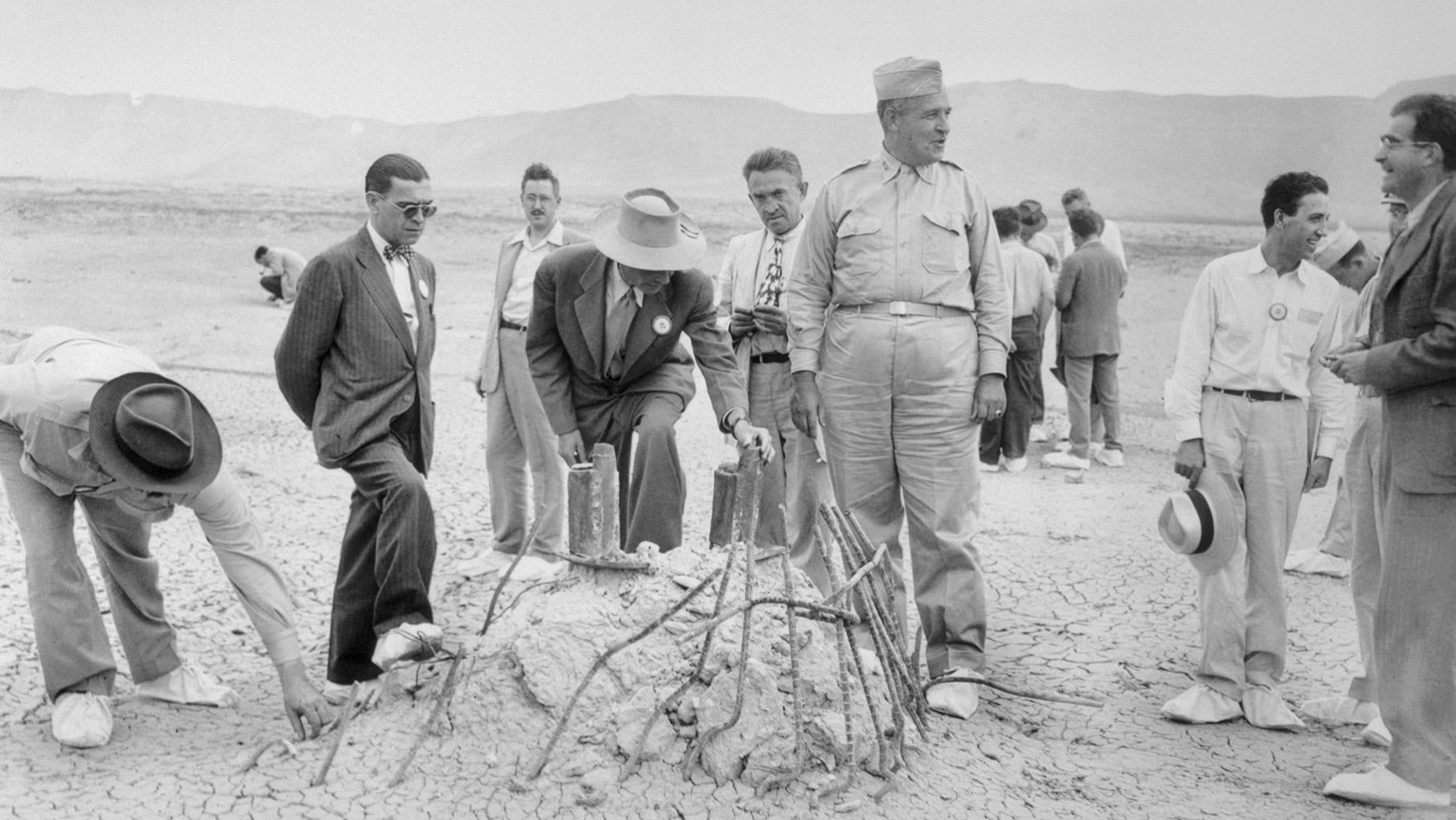
In preparation for the eventual use of the bomb, Groves brought in William Leonard Laurence, a Pulitzer Prize-winning science journalist at The New York Times, to Los Alamos, New Mexico to observe the Trinity test – the first detonation of a nuclear weapon – and learn about the bomb’s development. Laurence wrote a series of what were essentially press releases that the government sent after Hiroshima to newspapers, which printed them as articles.
“That’s what editors wanted and needed at that point, and were happy to print,” says Loeterman. Given the restrictions of the war, one historian in Bombshell says that he doesn’t fault journalists and editors for taking what they could get.
Laurence was also allowed to observe the dropping of an atomic bomb on Nagasaki from a plane and wrote an officially approved account. His reporting did not include growing evidence of the effects of radiation on the people near the bomb sites. He won another Pulitzer for his coverage of the atomic bomb.
Other journalists did try to get the on-the-ground, human story of the Japanese victims of the bomb. Douglas MacArthur, the American general who oversaw the occupation of Japan upon its surrender following the use of the atomic bombs, tried to keep reporters from Hiroshima and Nagasaki and forced them to file any stories through his office. (Despite restrictions on the press, the U.S. military hosted a football game between two Japanese teams in Nagasaki just months after the bombing, enlisting a Chicago Bears player in the Navy to lead one, as the PBS documentary Atomic Bowl shows.)
The Chicago Daily News’ George Weller, who had won a Pulitzer for his earlier coverage of the war, defied orders in visiting Nagasaki but still sent the articles he wrote through the government censorship office, which kept them. They weren’t published until after Weller’s death in 2002, when his son found and compiled them in a book.
Charles Loeb questioned the official narrative surrounding the bombs’ radioactivity for the Black newspaper the Cleveland Call and Post. The Japanese-American journalist Leslie Nakashima had built a reputation in Hawaii, but his eyewitness report from Hiroshima was edited as it was syndicated throughout the country.
And then there was John Hersey, who intertwined the first-person narratives of six survivors of the Hiroshima bombing in a celebrated New Yorker article that took up an entire issue of the magazine when it was published a year after the bombing. The issue sold out in a day, and was published as a book and broadcast over the radio. It is one of the most famous works of American journalism.
Hersey was a “childhood hero” of Loeterman, and was the filmmaker’s draw into making Bombshell. “It’s not that he was some superman who came out of nowhere,” Loeterman says of Hersey. “He was reacting to what he saw the coverage had been.”
Government officials responded with their own influential article, “The Decision to Use the Atomic Bomb.” It argued that the bombs were used to force Japan to surrender without a land invasion, which would have been costly for both sides. The bombs actually saved lives, they argued; they were the lesser of two evils.
“I think today, a poll would show that a majority of people would say, ‘Yes, of course the bombs ended the war.’ That’s not what the scholars we talked to for the film said. One said, ‘These were not the bombs that ended World War Two. These were the opening salvos of World War Three,’” or the Cold War, Loeterman says. There is debate over why a second bomb was dropped on Nagasaki at all.
As he worked on Bombshell over the past several years, Loeterman found his topic becoming increasingly relevant to contemporary events, he says. Russia, a nuclear power, invaded Ukraine. The film Oppenheimer drew popular attention to the Manhattan Project and one of its chief scientists. The U.S. bombed Iranian nuclear facilities during a conflict between Iran and Israel in 2025. The Pentagon issued strict measures restricting reporting that almost no traditional media organizations accepted.
“The film suddenly became more timely and more timely,” Loeterman says.
“I think it has a lot to say about today,” he adds. It raises “moral questions about how the public should think about the journalism we consume, and how journalists think about the journalism they create.”