How a Traditional Japanese Cleaning Ritual Helps a Restaurateur and Her Staff Reflect and Reset for the New Year
Lisa Shames
January 7, 2026
Get more recipes, food news, and stories at wttw.com/food or by signing up for our Deep Dish newsletter.
Have a food story or recommendation? Email us at [email protected].
During the days leading up to New Year’s Eve, most Chicago restaurants are getting ready for one of the busiest days of the year. Festive ingredients have been ordered, special menus printed, champagne is ready to chill, and decorations are up.
But at the West Loop’s Omakase Yume, TenGoku Aburiya, and Bonyeon, the trio of neighboring restaurants from husband-and-wife duo chef Sangtae Park and Kate Park, the staff and the owners have also spent those pre–holiday days deep cleaning the restaurants from top to bottom. It’s an annual activity they’ve undertaken since Omakase Yume opened in 2018, followed a few years later by their other two.
In Japan, this annual tradition is called ōsōji, which translates to “great cleaning.” With roots dating back thousands of years, ōsōji can be thought of as spring cleaning on steroids. Its end-of-the-year timing allows one to reflect on the last 12 months and reset for the future. It also has origins connected to the removal of evil spirits to make room for good ones such as Toshigami-sama, the New Year’s deity known for bestowing prosperity and good luck. Ōsōji is done throughout Japan in homes, businesses, and public spaces.
Many years back, when I worked at a Japanese restaurant in Los Angeles, missing the half-day ōsōji, usually held on the Sunday before New Year’s Eve, wasn’t an option. Managers cleaned alongside sushi chefs, servers, line cooks, dishwashers, busboys, and hosts. Staff hierarchy didn’t exist for those few hours when we all scrubbed every nook and cranny of the restaurant. Afterwards, a special family meal typically consisting of a tuna sashimi bowl and house-made mochi for dessert was prepared. Initially, I resented coming in on my day off, but I came around to the ritual, which served as a bonding activity and a personal pause of sorts. I’ve since adhered to my own version of ōsōji at home.
To get a more recent ōsōji readout at its source, I emailed my California-born nephew, who has made Japan his home for the last 15 years. “At my office, each department was assigned an area,” he wrote. When he worked at a kindergarten, teachers were responsible for cleaning their own classrooms, including washing curtains and cleaning the vents, and were also assigned common areas to clean. Most companies are closed at the end of the year, he added, giving employees that last week to get it done. He admits that at home, he and his wife might miss the December 31 deadline.
Back in Chicago, Kate Park oversees the annual cleaning at her restaurants. Rather than do it all at once, she parcels out the tasks over a few days, typically post-shift or between meal periods, so as not to disturb the extra-busy workflow of employees. As with my nephew, the cleaning might extend into the first few days of January, taking a more relaxed approach to the traditional deadline.
“Every day is a deep cleaning for us, but especially this time of year we are thinking about getting rid of the bad energy,” she says. “We need to be ready to welcome the new good energy.”
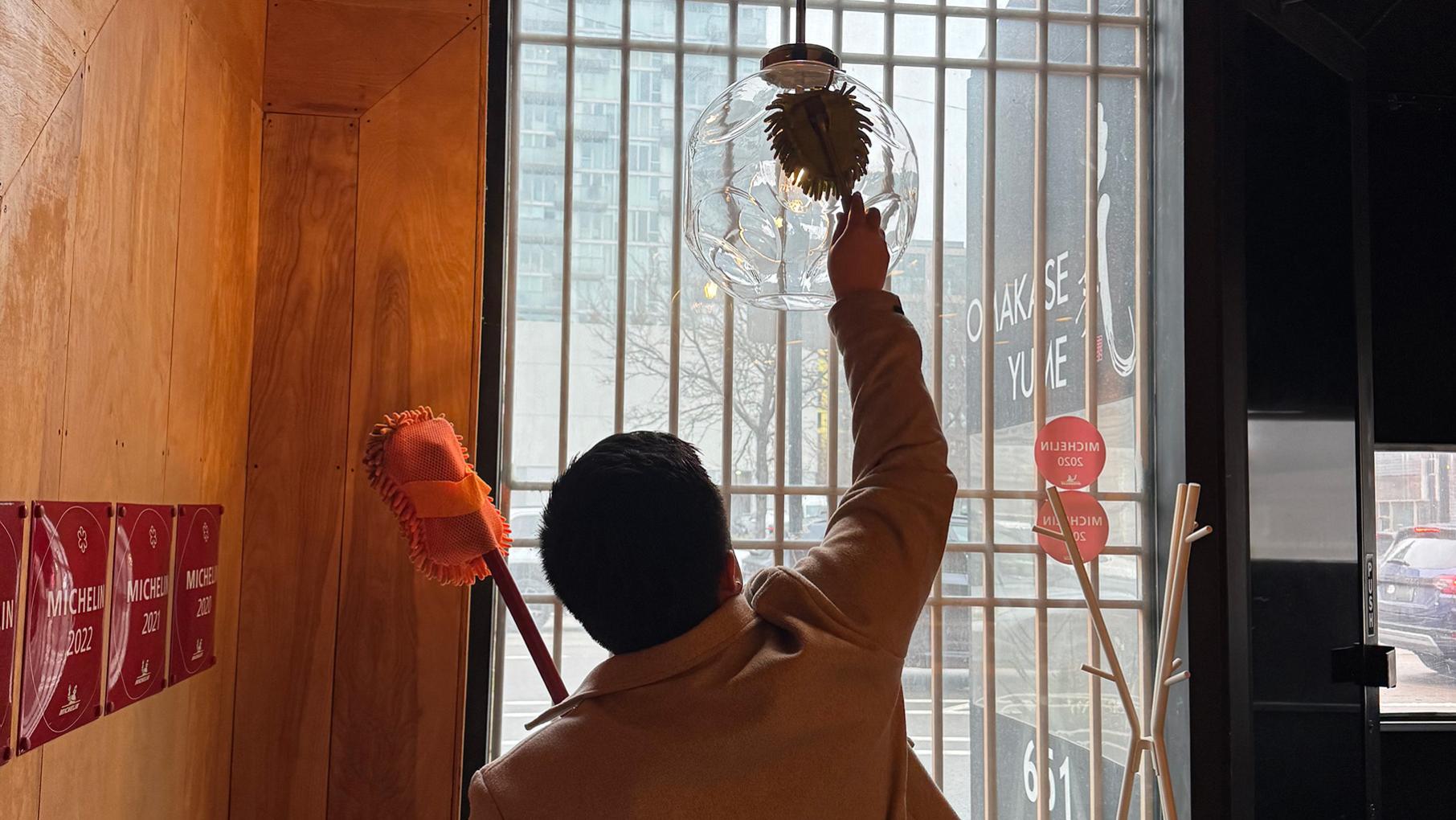
The day before New Year’s Eve, staff at TenGoku Aburiya, a casual Japanese-inspired izakaya, had spent a few hours deep cleaning. Once everything was taken off the shelves, each item was thoroughly scrubbed before being put back. Baseboards were meticulously wiped clean, too.
The next day, Park herself planned to take on the cleaning of Omakase Yume, the Michelin-starred restaurant that features six seats at its chef’s counter, where a 16-course sushi-focused meal is served in front of guests. The minimalist interior design and the small space make the task a bit easier. At Bonyeon, which is the newest of the trio of the restaurants and features a tasting menu spotlighting different cuts of beef, ōsōji was underway as well.
Born in South Korea but with a father and grandparents who spent time in Japan, Kate likens ōsōji to soje, a Korean word that means “cleaning” or “sweeping.” “It’s a term more commonly used by older generations like my parents or grandparents,” says Park. “For them, soje wasn’t just about tidying up, it meant clearing things out intentionally at the end of the year, both physically and mentally, to prepare for a new beginning.” For Park, the end-of-year ritual incorporates features of both Japanese and Korean cultures, just like her restaurants.
She recalls her mom deep cleaning their house in Daegu, South Korea, before the new year. “Cleaning the house together before the new year was a natural part of how we prepared for a fresh start,” says Park. On New Year’s Day, the entire family, sometimes up to 50 guests, celebrated at her house. “I always have good memories of that,” she says. The front door was kept open to let in fresh air and energy.
The annual deep cleaning isn’t limited to the Parks’ restaurants. They also went through their West Town home from top to bottom, donating clothing and other items as they cleaned the house.
Another Korean custom Park adheres to at the restaurants is a gathering of all the staff on the first day back after the holiday. Called simu-sik, which refers to a ceremonial New Year kickoff marking the official start of work for the year, it’s a moment of collective reset where the group reflects on the past year, expresses gratitude, and aligns their intentions and mindset as a team before moving forward.
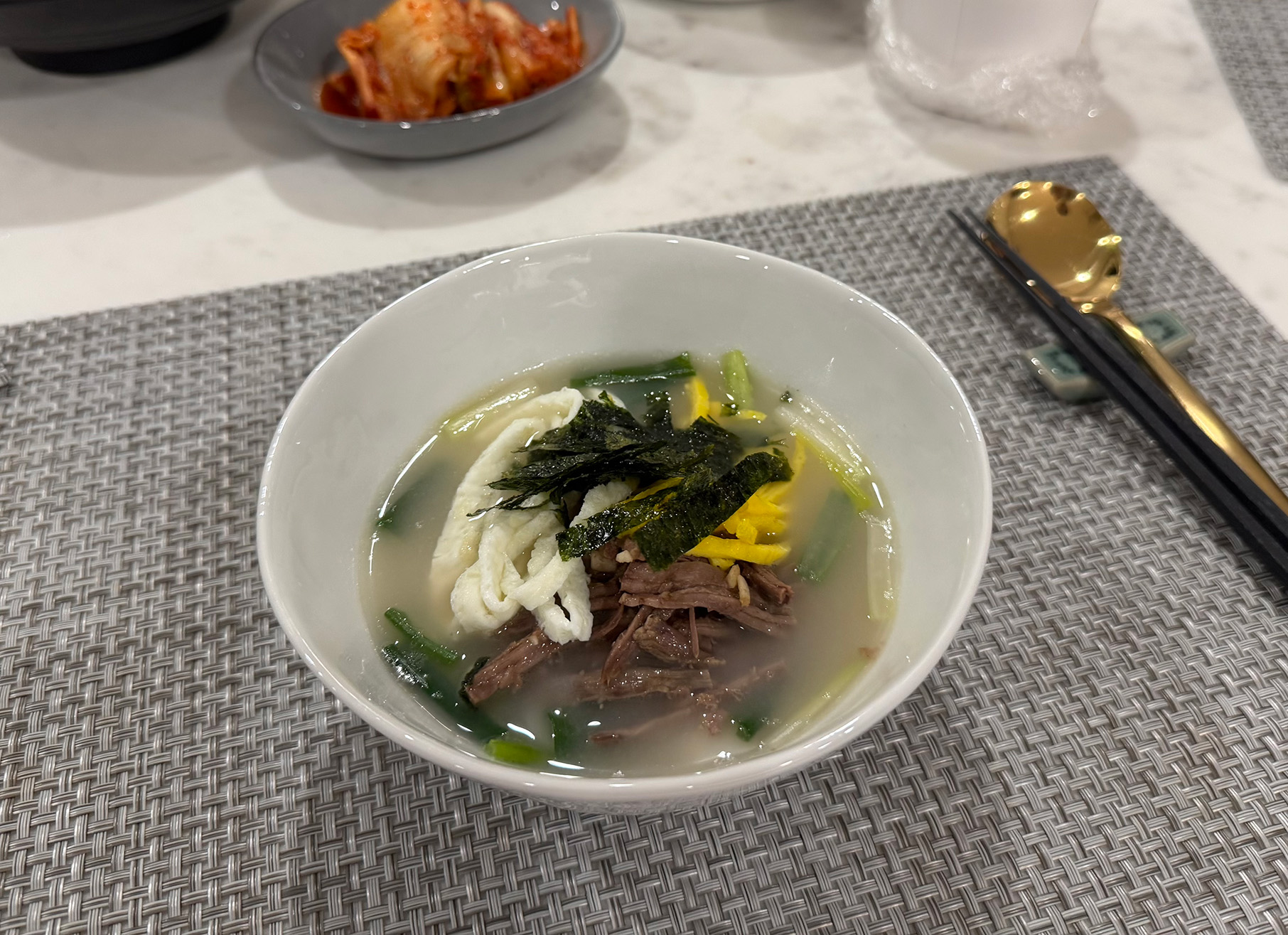
Post meeting, tteokguk (rice cake soup), traditionally eaten on the Korean New Year, is served. “Eating tteokguk symbolizes starting a new year and becoming one year older, but more importantly, it represents renewal, clarity, and wishing for a clean beginning. Serving it after the meeting reinforces the idea that we are entering the new year together with a shared purpose,” says Park. “Even though my daily environment has changed, many of the traditions I grew up with still influence how I lead my team and operate my restaurants.”