The Radical Publisher Who Helped Modernism Reach an Audience with a Magazine Started in Chicago
Daniel Hautzinger
February 12, 2026
A little over a year into the run of The Little Review – before it had gone to trial for publishing much of James Joyce’s Ulysses, or given page space to Ezra Pound, T.S. Eliot, Gertrude Stein, and other innovators – the literary magazine was in trouble.
“Editor Margaret Anderson explains that, though she lives in a tent to dodge a landlord, she lacks the $75 which a prosaic printer demands,” reported the Chicago Examiner on September 3, 1915. Anderson was living in an encampment on a Lake Michigan beach north of Chicago after being evicted for praising the infamous anarchist Emma Goldman in the pages of The Little Review.
“‘But you attend the opera – you eat sumptuously,’ she was reminded as she lunched at Ravinia,” the article continues.
“‘Well, even Pegasus must be fed,’ and she attacked afresh the chicken salad.”
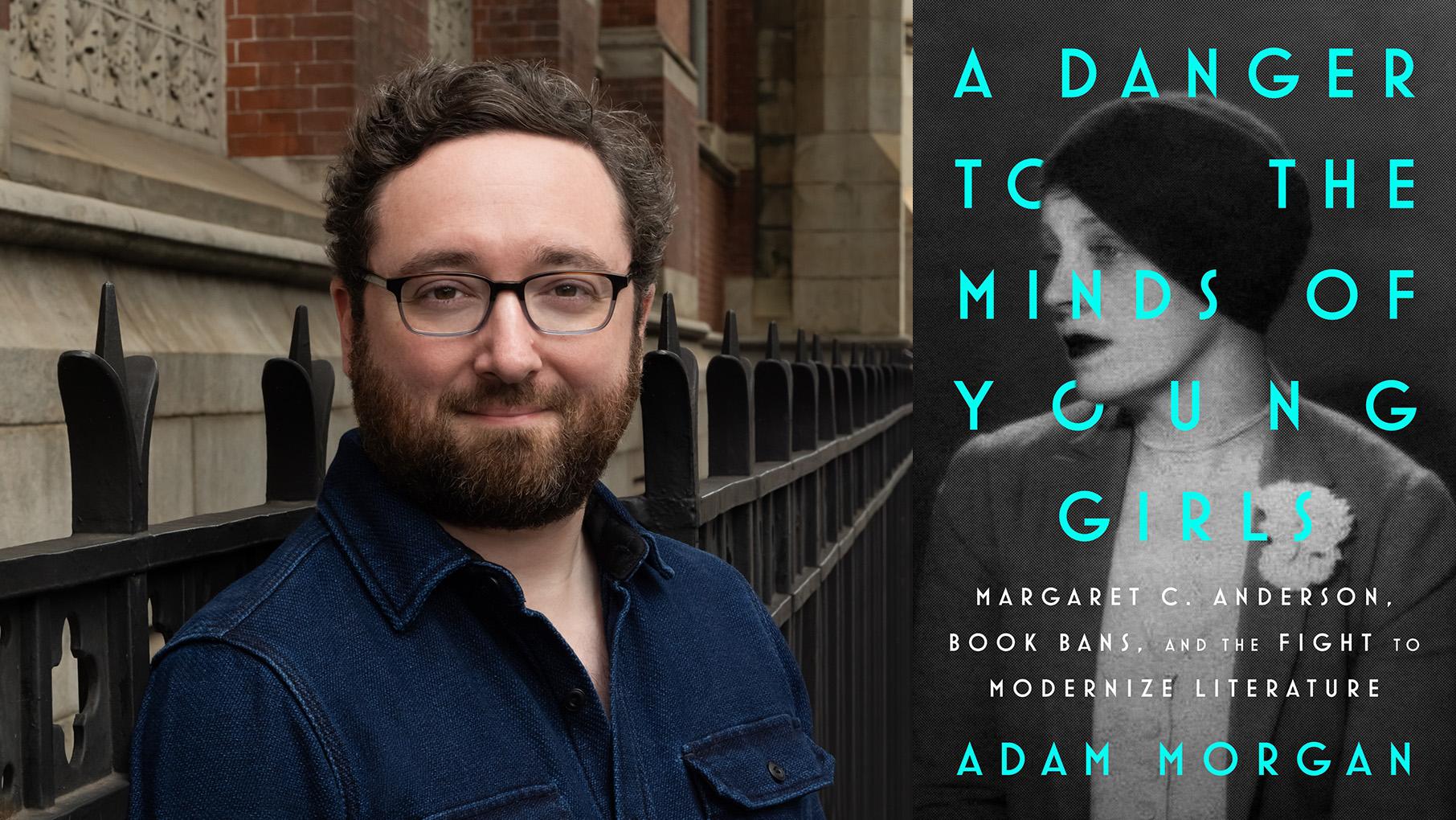
That was Margaret C. Anderson: a woman who broke into a house in California and convinced its owner, the local sheriff, to rent it to her instead of his friends; who often lacked furniture in her lodgings other than a free concert grand piano acquired in return for praising Mason & Hamlin in her magazine; who defended anarchism and homosexuality and birth control. She was radical, bohemian, bewildering, uncompromising, devoted to art and the good life and determined to find a way to make it work no matter what, as Adam Morgan shows in his new biography of Anderson, A Danger to the Minds of Young Girls: Margaret C. Anderson, Book Bans, and the Fight to Modernize Literature.
“This is such a romantic scene, where you have these now namebrand poets walking up to her tent and penning poems to be published in her magazine, and Emma Goldman, the ‘most dangerous woman in America,’ going up there and swimming with her,” says Morgan of Anderson’s summer living on the beach in a tony suburb.
Those poets wouldn’t be paid for their work, but their avant-garde modernism might not have been published otherwise, or so Anderson argued. “It’s a little better to remain unpaid than for him to remain unprinted,” she said on behalf of the Chicago-based author Sherwood Anderson.
“She made the literary magazine out of nothing, and she didn’t have money to pay her contributors,” Morgan explains.
“James Joyce, T.S. Eliot, Ezra Pound…I don’t want to say none of those people would be household names, but she was the first person to publish them and introduce them,” Morgan says. “I don’t know, if she hadn’t been there, if modernism would have had the same impact that it did.”
Even though she couldn’t pay, there was a price. After she began serializing Joyce’s Ulysses in 1918, she attracted the attention of federal censors, perhaps in part because of her association with Goldman. (The FBI still has not made public the dossier it compiled on her, decades after her death.) She and her co-editor and lover Jane Heap were sued for distributing “obscene” material through the U.S. post and found guilty. They were ordered to pay a fine and, much more significantly, to stop publishing Ulysses. The epochal novel was effectively banned from the U.S. for another decade.
“Margaret’s criminal trial for publishing Ulysses would be a crucial turning point in the battle between censorship and free expression,” writes Morgan.
“I think she’s a great reminder that to make good art, you have to take big risks,” Morgan says. Anderson’s publication of Ulysses and other modernist works confounded even her own readers, who sometimes cancelled their subscriptions in protest. “If she had listened to people who told her to stop publishing this weird stuff, then we wouldn’t have it today,” Morgan says.
He also believes Chicago played an important role in the incubation of such talent and Anderson’s ability to persist in the face of naysayers. New York “had all these gatekeepers and barriers,” he says, “where Chicago just felt like open prairie. Anyone with enough willpower and personality could come to Chicago and make something.”
He himself moved to Chicago a century after Anderson did, and found himself drawn to her and her legacy after seeing a plaque about The Little Review at the Fine Arts Building, where Anderson held offices for a time and also worked at a bookstore designed by Frank Lloyd Wright. (The architect also contributed financial support to The Little Review.) Like Anderson, Morgan started a literary outlet, the Chicago Review of Books.
“I was definitely inspired by her because she came to Chicago from a small town [Indianapolis] and wanted to make something of herself,” he says, adding that “I didn’t have the delusions of grandeur.”
Anderson was just one of a number of women who provided the infrastructure for a cultural flourishing in Chicago in the early twentieth century, hosting salons, as Margery Currey did, and publishing poets, as Harriet Monroe did in Poetry magazine. The cultural renaissance that took place with that support here in the 1910s was “a precursor of Paris and New York in the 1920s,” Morgan writes – and Anderson would move on to those two cities after starting The Little Review in Chicago.
“There’s just this sense of freedom and experimentation that was” in Chicago, Morgan says. Anderson and her cohort wanted to “try to make something like a new movement, something that was, for them, distinctly American, that wasn’t based on old traditions from Europe or from the Victorian era. They really wanted something new.”