From Southeast Asia to Yunnan, Chicago’s Cafes and Roasters Spotlight Under-Represented Asian Coffee
Mona Tong
March 5, 2026
Get more recipes, food news, and stories at wttw.com/food or by signing up for our Deep Dish newsletter.
Have a food story or recommendation? Email us at [email protected].
When Tuan Huynh tasted his first cup of robusta coffee from his family’s farm in Vietnam, he was stunned. “It was the best thing I ever drank, and it changed the whole trajectory of my life,” he says.
Hunyh was returning to the country for the first time since arriving in America as a toddler refugee. “I started importing the same month I came back, in July of 2019,” he says. “I was like, the U.S. needs to experience this.” Soon after, he opened Vietfive in Fulton Market in March of 2022, roasting robusta coffee grown and harvested at his family’s farm in Buôn Ma Thuột, a city in Central Vietnam known as the country’s coffee capital.
The presence of Asian-origin coffee in Chicago has grown significantly over the past few years, with Vietfive and FatMiilk bringing Vietnamese robusta to the city since 2022 and New Math Coffee sourcing and roasting specialty coffee from all around Asia since 2020. New Asian-owned cafes like Haibayô on Argyle Street and Del Sur Bakery & Cafe in Ravenswood use and carry New Math and/or Vietfive beans for their espresso drinks.
Robusta is the second-most grown species of coffee after arabica, comprising nearly 40% of global production. And Vietnam is the world’s largest producer of robusta coffee, driving more than 40% of global robusta output. Historically used primarily in lower-quality, commercial-grade coffee and blends, robusta – which has a fuller-bodied, lower acid flavor profile than arabica due to its higher caffeine and lower sugar content – is more disease-resistant than arabica and grown at lower altitudes with higher yields.
Robusta is therefore better positioned to adapt to climate change, which experts predict could reduce arabica production by 80% by 2050. Because of this and roasters’ growing interest in highlighting robusta’s unique flavor potential, robusta has commanded a growing share of the specialty market in recent years, though it continues to face the stigma of association with inferior, mass-produced coffees.
It’s not just robusta: roasters and cafes are increasingly highlighting other hardy coffee species and varieties like liberica and catimor, and the Asian regions that grow them. In Chicago, two new cafes have opened in the past year, further diversifying Chicago’s Asian-origin coffee space: CTRL Z Coffee in Bridgeport, which sources and roasts liberica coffee from the Philippines, and Luckycat in Lakeview, which offers catimor coffee from China. Four Letter Word, owned by Filipina American Ria Neri, in Logan Square, also occasionally imports and roasts coffee from Asia, most recently releasing a batch from the Philippines. Collectively, countries in Asia and Oceania produce 60% of the world’s robusta, nearly all of the world’s liberica, and a large share of global catimor production.
For his part, Huynh plans to keep boosting robusta and Asian coffee production. He wants to open a second Vietfive location in Chinatown this summer, further using coffee to strengthen community connection. As someone formerly incarcerated, he hopes to launch a roasting training and certification program there for other formerly incarcerated individuals.
While Americans are familiar with “Vietnamese coffee” in the form of the sweetened condensed milk drink, Huynh believes that conception is disconnected from true Vietnamese coffee: that is, coffee grown and harvested in Vietnam. He sees that kind of Vietnamese coffee as a way to tell his story: the story of himself, his family, and of Vietnamese culture and people. Through highlighting his coffee, he hopes to change the dominant perspective of products from Vietnam and Asia as “somehow lesser.”
CTRL Z Coffee
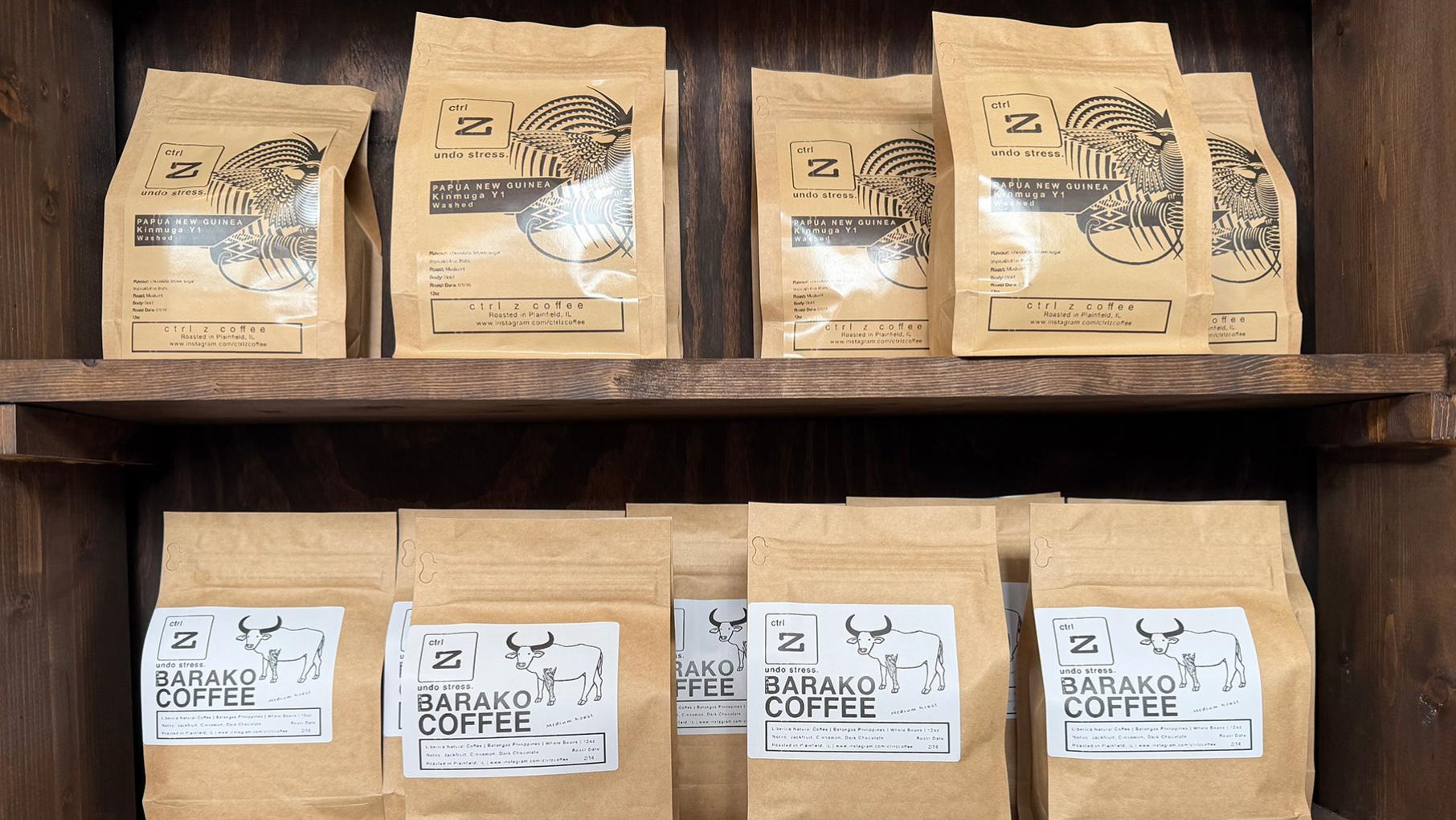
Like Huynh, Zandro Zafra was inspired to source Asian coffee by a connection to a family-owned farm. Zafra, who also owns Mano Modern Cafe in West Town and Kapwa Bakery & Cafe in suburban Niles, started CTRL Z in 2020 as a coffee brand selling canned cold brew. He began sourcing and roasting coffee from the Philippines a few years later, when a friend told him about his family farm that grew liberica coffee in Batangas, known as the coffee capital of the Philippines. He opened CTRL Z cafe in Bridgeport in June of 2025.
Liberica (known locally as kapeng barako) makes up less than 2% of the global coffee supply, but the majority comes from the Philippines, which constitutes only 0.3% of global coffee production. While still rare, liberica has gained ground in the U.S. over the past few years, thanks in part to roasters like Zafra, who partners with a California-based Filipino coffee roaster to import more Filipino coffee into the country.
Liberica beans are nearly twice as large as arabica and robusta beans and, like robusta, are hardier and more disease-resistant than arabica. Their flavor profile is sweet and fruity due to higher amounts of fruit sugars, as well as smoky and woody.
Zafra recalled that, when he first tried liberica coffee while growing up in the Philippines, it tasted bitter and burnt due to the roasting style of the time. Later, he realized that when processed and roasted well, liberica has a distinct flavor profile. Zafra roasts his beans medium to dark to highlight tobacco, bourbon, mango, and jackfruit notes.
“I’m really happy to be able to share liberica coffee with the public and talk with them about it,” Zafra says. “A lot of people say they’ve never heard about this coffee before having it here. It’s always cool to see people’s experience after drinking it.”
Luckycat
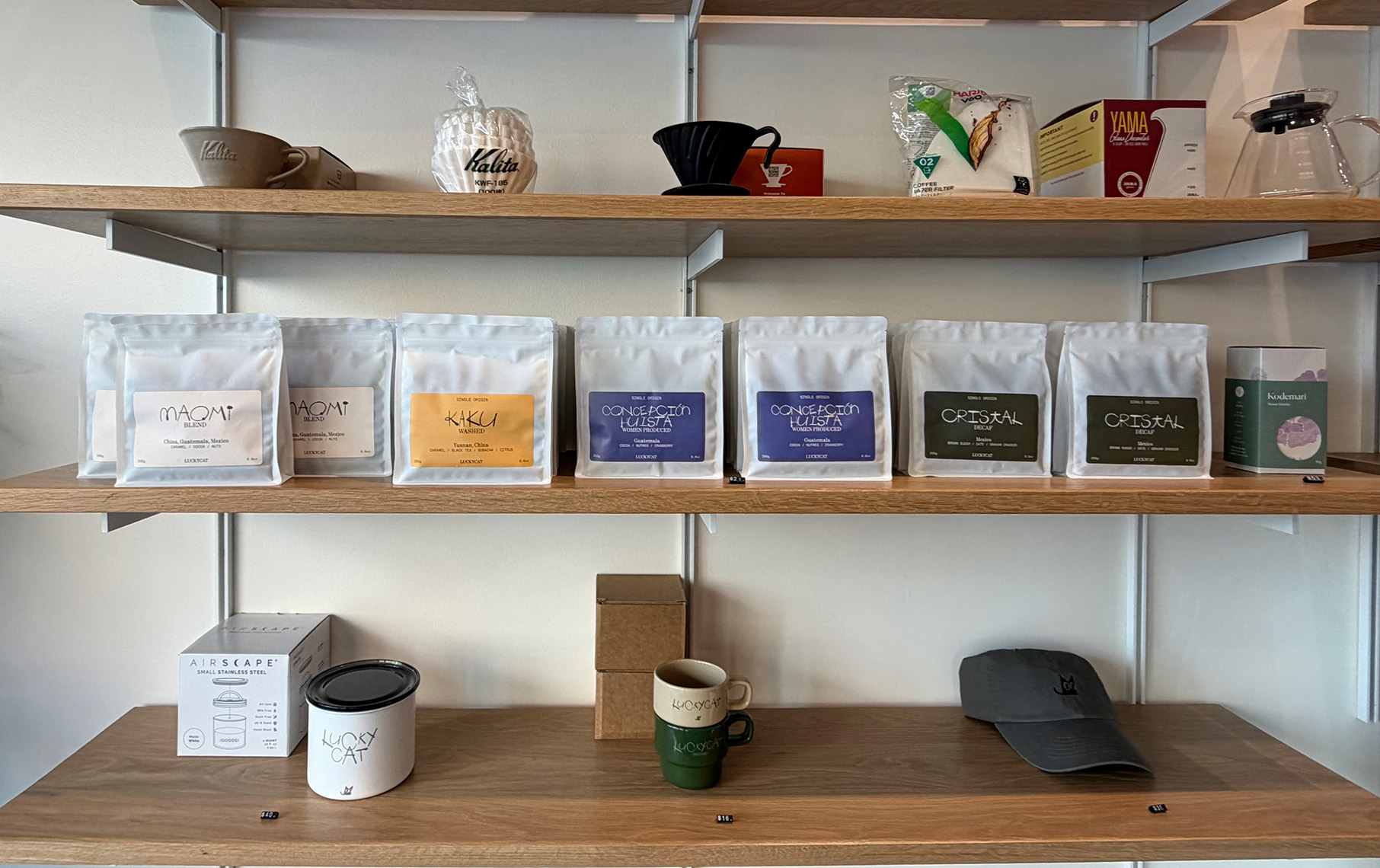
Luckycat opened in the Lakeview neighborhood in September of 2025, offering coffees sourced from a variety of regions including Yunnan, China. Owner Stephanie Bian was formerly a software engineer in the Bay Area before moving to Chicago, where she worked as a barista and first launched Luckycat as a pop-up out of Boonie’s, a Filipino restaurant in Lincoln Square.
As an Asian-owned coffee shop selling Asian-inspired drink creations, Bian says that it just made sense “thematically” to also try to bring in coffee from China. She says the region has been growing within the specialty scene for the past 15 years, but she didn’t try Yunnan coffee until recently and was pleasantly surprised by its strong citrus, tea-like notes. Bian works with a San Francisco-based importer to source Luckycat’s Yunnan coffee.
China is a relative newcomer to coffee production in general, and makes up 1.1% of global production. Yunnan, a high-altitude, geographically diverse region in southwest China, contributes over 95% of the country’s total coffee production. Historically known for its Pu’er and Dianhong black tea, Yunnan’s biggest tea-growing regions began ramping up catimor coffee production in the 1990s when leaf rust disease devastated coffee production globally.
Catimor is a high-yielding hybrid of arabica and robusta lineage resistant to leaf rust, with a fuller, sweeter flavor profile. While most production is for commercial-grade export, Yunnan’s specialty coffee output has surged over the past few years, increasing from less than 8% of its production in 2021 to over 30% in 2024.
New Math Coffee
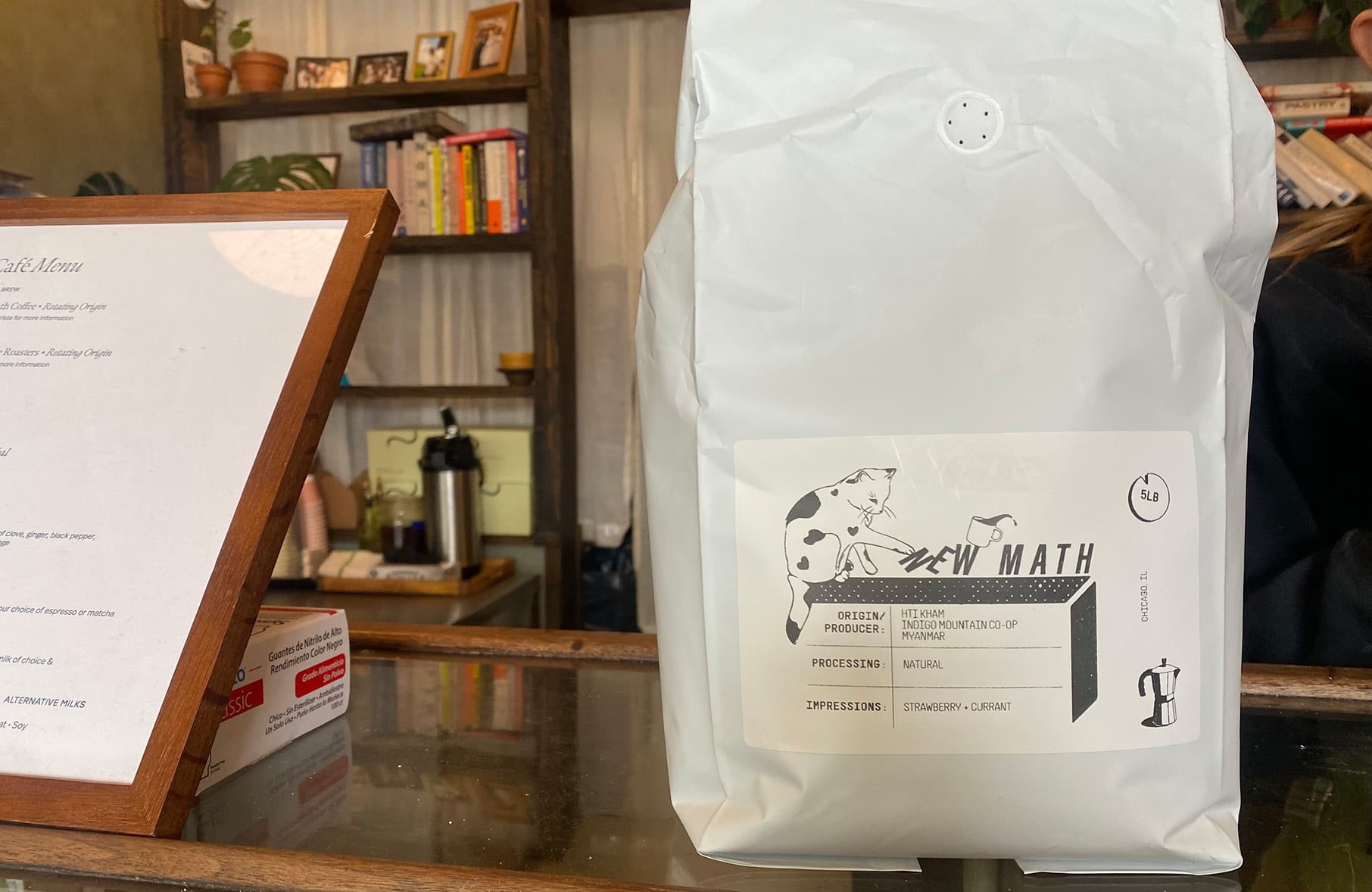
Among the earlier roasters bringing Asian coffee to Chicago, Mikey Rinaldo founded New Math Coffee in 2020 with the goal of highlighting specialty coffee from more “underdog” Asian regions. Born and raised in Indonesia, Rinaldo says their focus on Asian specialty coffee stems from a desire to not only represent their home region, but also to learn more about roasting and become a more well-rounded roaster.
“What keeps me interested in the long-term is finding different, underdog regions, rather than only sourcing the highest grade coffees from two or three well-known regions,” Rinaldo says. “A lot of roasters do that really well, but I feel like that doesn’t sustain me in the long run.”
Rinaldo works with small importers to source arabica, robusta, and liberica beans from a variety of Asian regions, including Myanmar, India, the Philippines, Vietnam, Indonesia, and Yunnan. Diversifying the species and origins of beans allows them more flexibility to highlight each bean’s inherent flavors in roasting.
Because of arabica’s special vulnerability to climate change, Rinaldo encourages roasters to start roasting and learning about non-arabica coffees. They point to Miguel Meza of Paradise Roaster, an early advocate for specialty robusta, who predicted that non-arabicas will be the future of coffee amid climate change, and that if we want better non-arabicas in 50 years, we had better start supporting them now.
Why Asian coffee remains underrepresented in the U.S.
Rinaldo notes that, historically, much of Vietnam’s robusta output has gone into instant coffee production, with little sorting and attention paid to quality. “The amount of allowable defects and foreign matter is a lot higher than what a standard commodity arabica would be,” they say. As a result, robusta carries a longstanding stigma of being cheap, low quality, and inferior to arabica.
Huynh says that when he first started Vietfive, he would find rocks and sticks mixed with freshly cultivated beans. He says that this is partly due to a lack of investment in the stages of the supply chain required to meet specialty coffee standards. “In Vietnam in particular, farmers may not feel the need for [specialty coffee],” he says. “But I think there’s now a momentum for wanting to elevate Vietnamese coffee as a specialty coffee, so there’s a lot of work that’s being done to improve [each stage].”
Huynh’s own brand is an example: his farm’s harvesting and sorting process has improved significantly since he started Vietfive.
Liberica, historically grown less and mostly consumed domestically in Southeast Asia, faces a similar lack of incentive to meet specialty coffee standards. “If you’re the farmer, why would you do all this extra legwork if you can sell coffee for the exact same price without the work that [specialty coffee] is asking for?” Zafra asks. To change that, he is partnering with nonprofits and philanthropists in the Philippines to create stronger incentives for farmers to meet specialty standards.
Bian speculates that Chinese-origin coffees remain underrepresented in specialty markets in part because of longstanding stigma around Chinese-made products, as well as the county’s relative newness to coffee production and importers’ reluctance to ship an unfamiliar origin from so far away.
Asian-origin coffee is further overlooked in the Western-dominated, third-wave specialty space, where preferences tend to favor arabica’s inherent brightness, acidity, and fruitiness. Robusta and other Asian-origin coffees tend to offer more earthiness and body, “an aesthetic that gets pushed aside in the specialty market,” Rinaldo says.
As a result, Rinaldo says there are still many roasters in the U.S. who don’t touch robusta. “My question is, why not?” they ask. When farmed, processed, and roasted well, robusta diversifies the flavor offerings beyond the fruit and acid prized in arabica coffees, Rinaldo says.
Another challenge facing Asian coffee is the volatile slew of tariffs enacted by President Donald Trump on U.S. imports including coffee, with particularly steep ones initially aimed at Asian exporters like China, Vietnam, Cambodia, and Laos.
In November of 2025, Trump signed an executive order exempting certain food products including coffee from the tariffs. Despite this, U.S. importers, cafes, and roasters have been significantly impacted. Many have had to raise prices or shift their business strategy to offset financial losses.
Due to the tariffs, New Math began offering more non-Asian coffees last year and is pausing imports from Yunnan this year, but its focus remains on Asian coffee. Luckycat was unable to import their last batch of Yunnan coffee due to the tariffs. While they still have enough in storage for now, Bian is uncertain whether they’ll be able to offer it in the future, though she hopes they can. Huynh says Vietfive can “hang on for a little bit longer” before raising prices, even though the tariffs have hurt.
Zafra says that liberica faces another challenge: it is currently more difficult to import than arabica or robusta, as limited overseas demand leaves many importers reluctant to stock it. To keep it available, he and his California-based partner often shoulder the upfront costs themselves and are working to expand their purchasing power.
What’s next for Asian coffee
Zafra believes that in the coming years, Asian coffee could either become a “trend” similar to ube or matcha, or remain at its current state, enjoyed by a niche audience. As Asian coffee becomes more known in the U.S. and demand for it grows, its price will rise. Huynh views this positively: “Normally you would complain about higher prices, but I’m like, import more. Let the price go up a little more. I think it elevates the robusta coffee narrative overall. We have higher value and higher recognition now,” he says.
Zafra questions the sustainability and integrity of Asian coffee as a trend: “What will happen if Asian coffee gets big? Who benefits?” he asks. “It comes down to, are people in it for the experience and sharing the culture, or are they in it to exploit it?”
This story has been corrected to refer to Ria Neri as Filipina American, not Indian American.