How the First Female Detective Helped Stop a Plot to Assassinate President Elect Abraham Lincoln
Meredith Francis
March 24, 2026
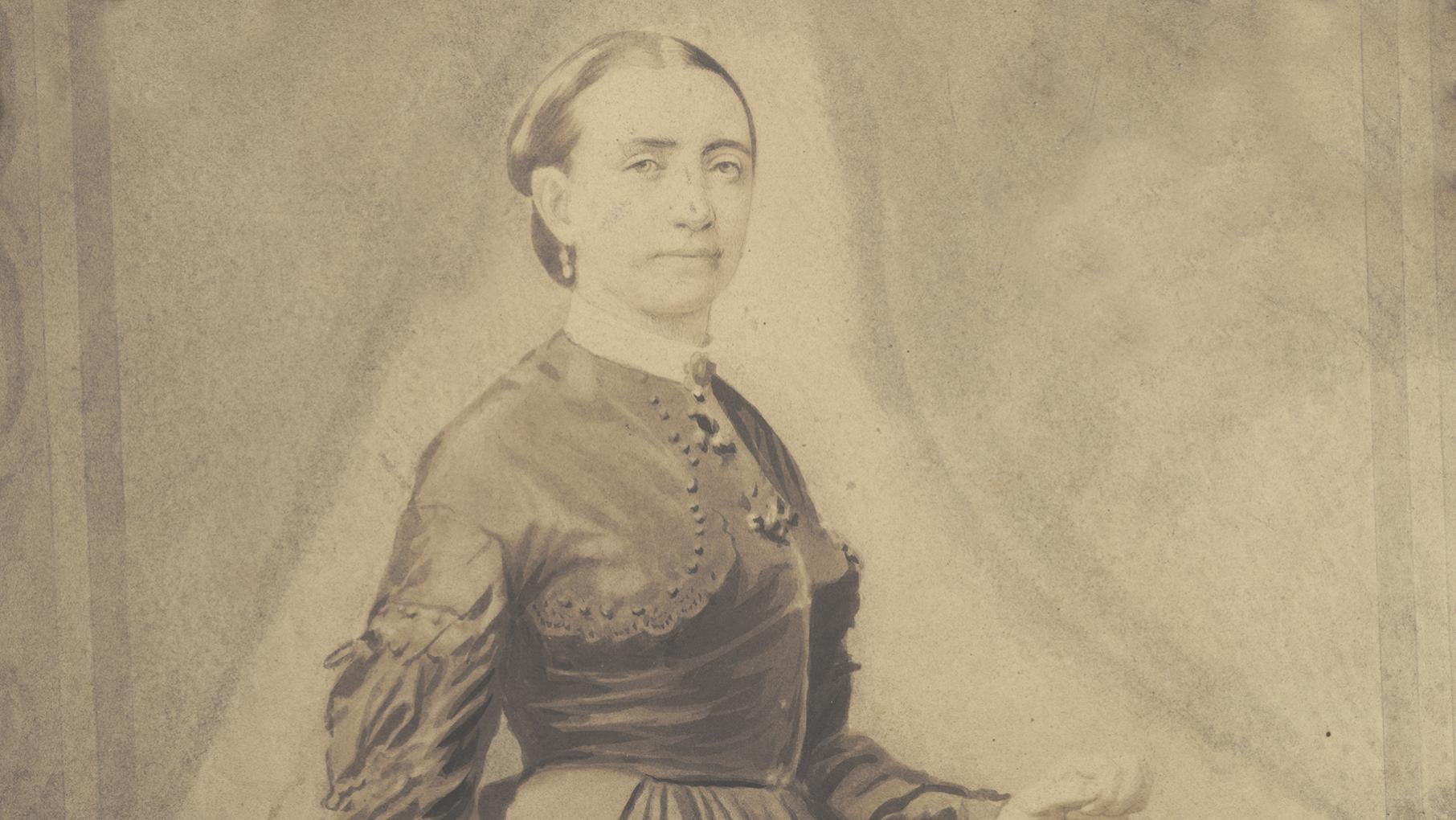
In 1856, a young widow walked into the Chicago offices of the Pinkerton National Detective Agency looking for work. The job she wanted didn’t yet exist – that is, not for women. But Kate Warne would change that when she became the nation’s first female detective, later playing a key role in foiling an apparent assassination plot against president-elect Abraham Lincoln.
At the time Warne walked in and asked for a job, the Pinkerton agency was growing its profile. Founded in 1850 by Scottish immigrant Allan Pinkerton, the agency became the most prominent private investigative force in the United States and was considered a forerunner to the Secret Service. Originally established to combat railroad theft and counterfeiting, the agency expanded into a wide range of services, including surveillance, undercover operations, and security work for businesses – especially railroad companies. According to the Encyclopedia of Chicago, Pinkerton’s work on behalf of railroads, including the Illinois Central Railroad, made it the “most feared and hated agency in the land” among labor unions.
Not much is known about Warne’s background before she began working as a detective, other than that she was born in New York, she was a widow, and she was about 23 at the time she responded to Pinkerton’s ad searching for a new private detective. Warne persuaded an initially hesitant Pinkerton to hire her, arguing that her social standing as a woman would cloak her true motives as a spy. As the National Park Service put it, she was “almost invisible,” as she could enter a room and gain the confidence of people and obtain secrets without anyone suspecting she was a detective.
“Of rather a commanding person, with clear-cut, expressive features, and with an ease of manner that was quite captivating at times, she was calculated to make a favorable impression at once,” Pinkerton wrote of Warne in his book, The Spy of the Rebellion. He added (in language reflective of 19th century attitudes toward women), “She was a brilliant conversationalist when so disposed, and could be quite vivacious, but she also understood that rarer quality in womankind, the art of being silent.” Warne was instrumental in solving a large embezzlement case in Alabama, in which she was able to gain the trust of the wife of a suspect. In 1860, Pinkerton made Warne the head of the agency’s Female Detective Bureau. Her prowess would soon prove invaluable as tensions between North and South escalated leading up to the Civil War.
In 1861, it fell to the Pinkerton agency to navigate an alleged plot by secessionists to assassinate president-elect Abraham Lincoln as he traveled east from Springfield, Illinois to Washington, D.C. on a tour ahead of the inauguration. The president of the Philadelphia, Wilmington and Baltimore Railroad sought Pinkerton’s help after hearing rumors of a plan from pro-slavery groups to kill Lincoln before his inauguration. Warne, who by this point had already used aliases and accents to spy in various capacities for the Pinkerton agency, posed as a Southern woman and wore a secession cockade pinned to her dress, attending parties of Confederate sympathizers to get information.
The most credible plot Warne and other detectives discovered was one that planned to assassinate Lincoln as he switched trains at stations a mile apart in Baltimore, the only city on his journey that fell within the borders of a slave state. Scholars today still debate whether or not the plot was credible. Lincoln himself was initially skeptical to change his plans, but after a separate source conveyed to the president-elect a threat against his life in Baltimore, he heeded the advice of Pinkerton and Warne to change his itinerary. Late at night on February 22, Lincoln quietly left for Baltimore, disguised as Warne’s brother. Warne handled the travel logistics.
“Mrs. Warne had succeeded in engaging the rear half of a sleeping-car for the accommodation of her invalid brother, and that portion of the car was to be entirely separated from the rest by a curtain, so arranged that no one in the forward part of the car would be aware of the occupants of the same coach,” Pinkerton later wrote.
Lincoln’s train arrived in Baltimore without incident at 3:30 in the morning, and Lincoln’s sleeper car was drawn by horses and successfully transported across the city to the other station. Other than the Pinkerton detectives, no one on either train knew the president-elect was on board. Warne reportedly stayed up all night to ensure Lincoln’s safe passage. That is said to have inspired the Pinkerton agency’s motto, “We never sleep,” as well as the agency’s eye logo.
Warne continued to lead the Female Detective Bureau during the Civil War, as the Pinkerton agency became involved in the Union’s military intelligence. She died at age 34 or 35 of pneumonia. She is buried at Graceland Cemetery in the Pinkerton family plot, though her tombstone incorrectly spells her last name as “Warn.”