A New Documentary from Ken Burns Reveals Thoreau Is More Than What You Learned in High School
Daniel Hautzinger
March 25, 2026
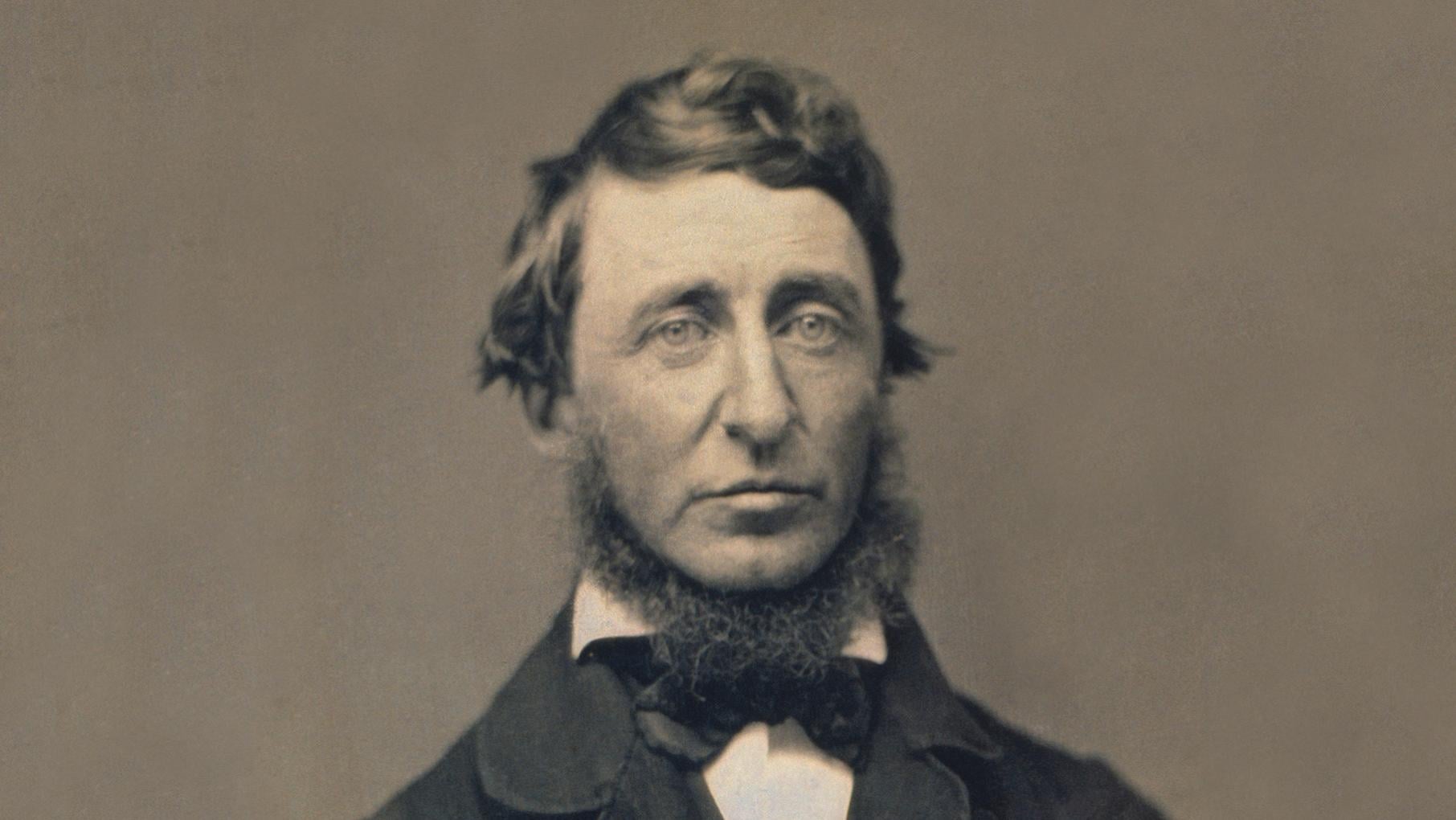
Henry David Thoreau premieres on WTTW Monday, March 30 and Tuesday, March 31 at 8:00 pm and will be available to stream via the PBS app.
Learn more at wttw.com/thoreau.
“I’ll tell you what Thoreau wasn’t,” says Christopher Loren Ewers. “He’s not what I was taught in my sophomore year of high school.”
With his brother Erik Ewers, Ewers is the director of the new three-part PBS documentary Henry David Thoreau, executive produced by Ken Burns and Don Henley. Like him, you may have read excerpts from the nineteenth-century author of Walden and “Civil Disobedience” in school and come away with a perception of the Transcendentalist as “a prophetic hermit who secluded himself and pondered his navel and wrote about it,” in Ewers’ words.
But Thoreau was “an incredibly full human being,” Ewers says, who has been flattened over the decades into a misunderstood caricature.
“Ultimately, his life would be reduced to legend, and his complex prose to one-liners,” intones George Clooney in the documentary’s narration. (Jeff Goldblum voices Thoreau, Ted Danson reads for Ralph Waldo Emerson, Meryl Streep takes on various women in Thoreau’s life, and Tate Donovan is William Ellery Channing.) Thoreau was a pencil-maker, a surveyor, a teacher; a philosophical thinker, a scientific chronicler of nature, and an abolitionist who participated in the Underground Railroad.
“He’s so much more than we had been exposed to,” Ewers says.
Take Thoreau’s abolitionism. His sisters and mother were founding members of the Concord Female Anti-Slavery Society, but Thoreau found their meetings a distraction from his writing when he first returned to the family home after graduating from Harvard. He eventually came to be influenced by their views and admire them for their activism, especially as he observed the wildness and freedom of nature and applied that to humanity. He began to write about and lecture on abolitionism, and even got arrested to protest the use of tax dollars to support slavery. It was after that arrest that he wrote his essay “Civil Disobedience,” which influenced activists from Martin Luther King, Jr. to Gandhi and Malcolm X.
“He evolves, like all human beings do,” Erik Ewers says. Contrary to a modern prevailing view of Thoreau, he was not a quietist simply observing nature and writing; he tried to live out the values he enumerated in his writing. “What I began by reading, I must finish by acting,” he wrote.
“We hope that, by witnessing Thoreau going through his own life and developing as a human being, viewers will start thinking about themselves, thinking about their own inaction or action, their own sense of ‘Am I really happy in my life?’” Erik Ewers says. The documentary is “an invitation to use his wisdom.”
To help explicate that wisdom, the Ewers enlist not just scholars of Thoreau but also leading essayists following in his footsteps – such as Rebecca Solnit and Pico Iyer – as well as contemporary writer-environmentalists, like Bill McKibben and Robin Wall Kimmerer. (The historian Douglas Brinkley calls Thoreau’s “Walking” the birth of modern environmental thinking in the documentary.)
“We tried to make a contemporary translation of what can be really dense prose,” says Christopher Loren Ewers, because he and his brother believe that Thoreau is as relevant as ever in an age of distraction, environmental degradation, consumerism, and debate over the power of the federal government and the ideals that drive it. “Thoreau invites us to imagine that life can be different. He implores us to realize that things don’t have to be this way. We don’t have to remain silent when we feel like, for instance, laws fall short of justice. We don’t have to remain complacent when we finally realize that we’re sleepwalking through a large portion of our lives.”
As the writer Michael Pollan says of Thoreau in the documentary, “His big project as a writer is to wake us up.”
That includes becoming aware not just of injustice or the expectations of society, but also paying closer attention to the natural world. During his famous two years living at Walden pond in a hut he built himself and throughout his life, Thoreau wrote in detail about nature, even as industrialization began to threaten it. His observations led him to solve a scientific question that had confounded Charles Darwin, while his precise records of seasonal changes provide data that climate scientists still draw on today.
Thoreau “forever altered how I appreciate the natural world,” says Christopher Loren Ewers. Ewers had to train himself to see the natural areas surrounding Concord, such as Walden pond, as Thoreau saw them – “because they’re not awe-inspiring vistas.”
“It’s like riding a bike: it’s difficult at first, but once you get it, you have it forever,” he continues.
Many of Thoreau’s lessons are like that, Erik Ewers says. “To be fulfilled, to be content, to live with purpose – it’s an effort…You have to continue to do it your whole life. That’s a beautiful, beautiful message that comes out of Thoreau.”