Frontline’s 'Caught in the Crackdown' Puts a Spotlight on Immigration Enforcement in Chicago
Meredith Francis
April 17, 2026
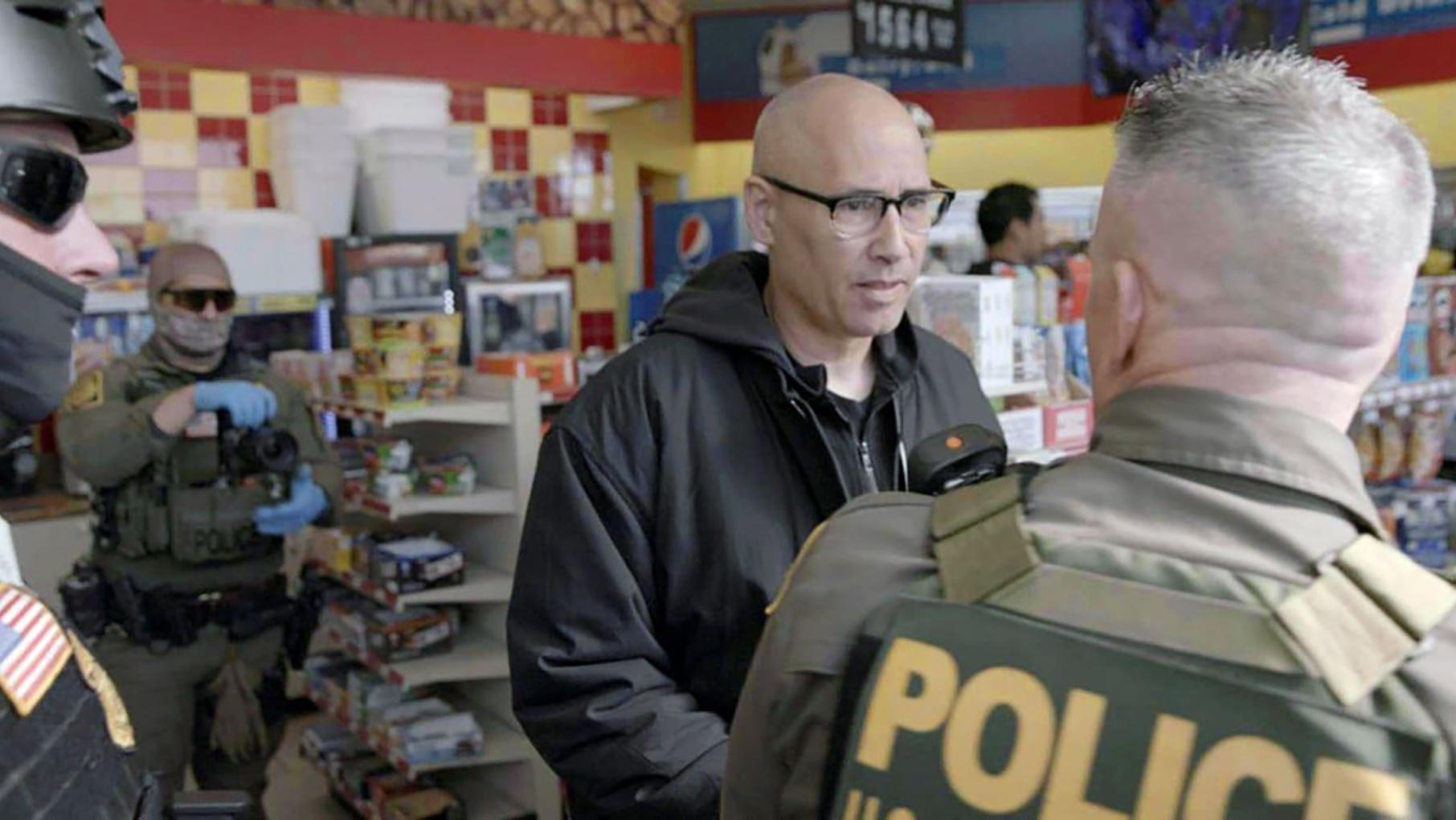
A new Frontline documentary, Caught in the Crackdown, examines the arrests, violence, and protests that followed federal immigration sweeps in Los Angeles, Chicago, and Minneapolis. Reported in partnership with ProPublica, the film – now streaming online and on the PBS app – explores the tactics used by federal agents, the crackdown on protesters, and the impact on the communities caught in the middle.
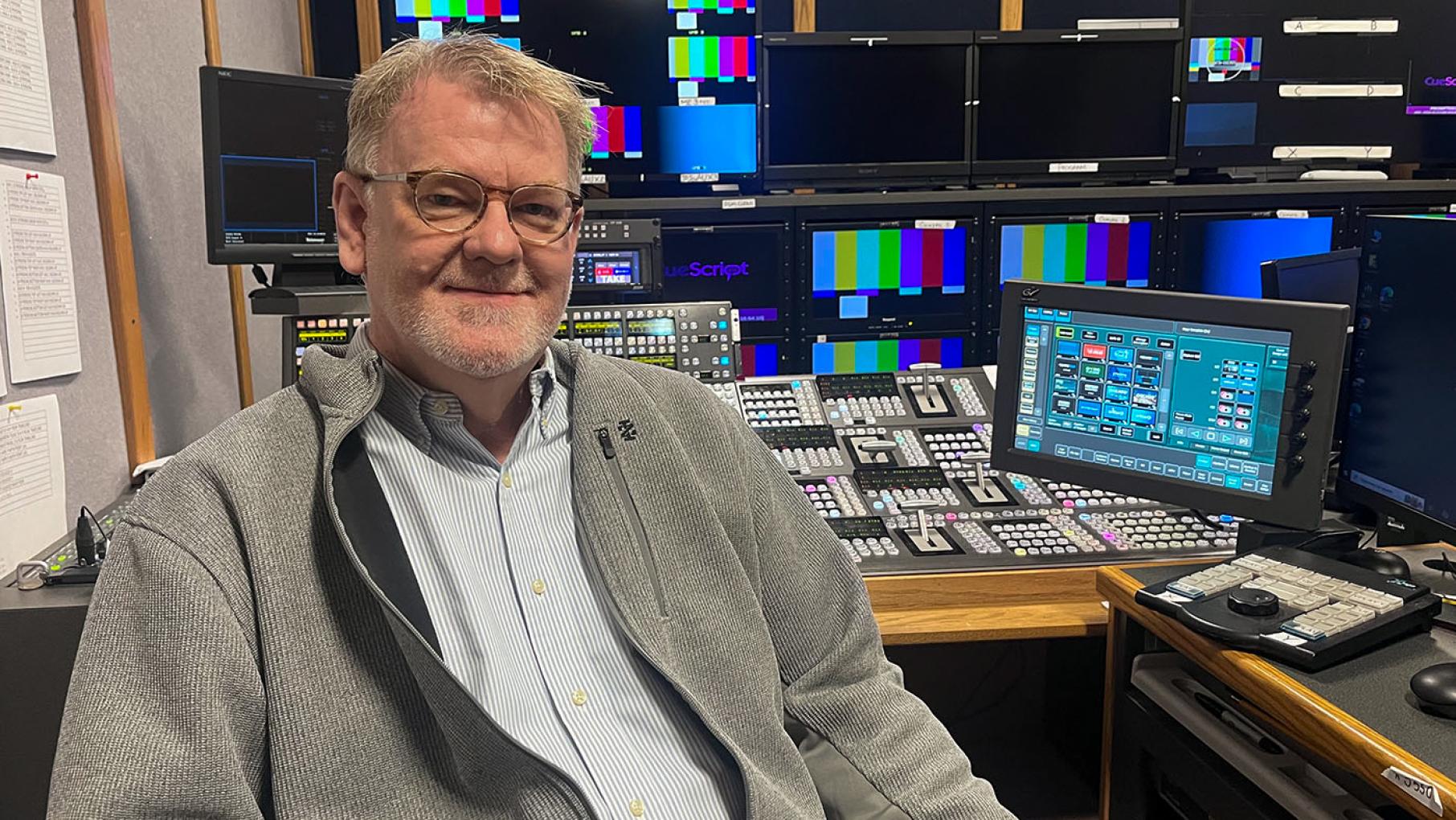
WTTW spoke with A.C. Thompson, a ProPublica staff reporter and Frontline correspondent, about how the story came together and what he witnessed on the ground.
This interview has been edited and condensed for clarity.
This is an ongoing story in many ways. How and when did your reporting first start on immigration enforcement activity, and why did you decide to tell this story now?
A.C. Thompson: My team and I started reporting on this in early June 2025 because there were the massive immigration sweeps going on in Los Angeles, and the National Guard was being mobilized and we didn't know what was going to happen, but it just seemed like a big important story to follow and to figure out what the deeper meanings were and what the the deeper story was there. So we were on the ground in Los Angeles from about June 10 on, and then proceeded to go to Portland, Chicago, Minneapolis and around the country.
There are many instances in the film where you are on the ground witnessing some of these confrontations between agents and protesters. How did you go about finding and following those moments?
Thompson: We could make a whole other film with all this great footage that we have. There’s very little of it in the film compared to what we actually documented. One of the cool things about doing this work was you found journalists working collectively and collaboratively to be on the scenes of these events where people were being arrested, where there was conflict between immigration agents and crowds. We did everything from tracking the DHS helicopter, to following live streams of activists and observers, to following social media posts, to being in various communications groups with the different activists. It was really difficult. At times it was scary.
When we were on the ground in Los Angeles…It was really hard to actually get to the action, actually see what was happening when the immigration agents were arresting people. LA’s a massive city; there was a relatively small number of agents on the ground. When we got to Chicago, our skills had gotten better, and that’s when we started talking to as many people as possible about how to do this. We really were able to watch [former senior Border Patrol commander] Gregory Bovino and his personnel arrest one person after another, day after day. We were able to follow them for hours at a time and watch what they were doing. And that was really revelatory for us. By the time we got to Minneapolis, it was a whole different deal, because there were 3,000 agents in a relatively small city, and you just were bound to run into them.
The film explores Gregory Bovino’s role in shaping these immigration sweeps. Can you explain what was different about his approach?
Thompson: Gregory Bovino was, until recently, the sector chief for a pretty short stretch of border in the Southern California desert. In January 2025, before Donald Trump had even been sworn in, he started doing some things that were really unusual in the history of the Border Patrol. He took a bunch of his agents away from the border and drove up to Bakersfield, California, which is about 300 miles away from his zone, and started apprehending people en masse there. The claims that the federal government were making at the time were that they had a targeted list of people and that they were apprehending bad, bad guys. What turned out to be true – and this was great reporting by Sergio Olmos from CalMatters, a nonprofit news organization – is that actually the border patrol agents didn't know who almost any of these people were, and most of these people had never had any contact with law enforcement or immigration authorities. That model is what Gregory Bovino then applied to Los Angeles, to Chicago, to Minneapolis, to North Carolina and Louisiana. And that’s the bringing out a bunch of agents and doing these roving street sweeps that are based less on intelligence and planning and more on sort of randomly stopping people.
Did you notice differences between LA, Chicago, and Minneapolis – both in how ICE operated and in how communities responded?
Thompson: What was remarkable to watch was the escalation in tensions as time progressed. In Los Angeles, the activists were not able to follow the immigration arrests very often. A lot times they were five minutes late, ten minutes late. But by the time things rolled over to Chicago, there was a higher level of organization on the part of the activists and the community and a better sense of how these operations unfold. The immigration agents behaved largely in the same way they had been in Southern California, but the response they got from the public was much more intense because the public was out there more often confronting them. In Minneapolis, that whole dynamic was stepped up even more, and everything was more tense and aggressive. There were more agents and there was a high level of anger before Renée Good got killed, and that ratcheted up massively after that.
I think what we saw in LA and Chicago was protesters, activists, and observers getting harmed by the federal agents, and at times doing harm to the federal agents. By the time you got to Minnesota the federal agents were killing the activists. There were major claims made by the federal government about this unprecedented surge in assault on federal agents, and there were some assaults. I saw some violent stuff, but it was remarkable to me how often [the federal government’s] allegations did not line up with what we saw in the streets.
The film shows an incident at the ICE detention facility in Broadview, Illinois in which former DHS Secretary Kristi Noem and Gregory Bovino arrive with camera crews. Can you explain the role of the federal government’s messaging throughout these immigration operations?
Thompson: On October 3 [2025], there was a protest with a couple hundred people there. Kristi Noem shows up. You have Greg Bovino on site leading the Border Patrol forces and the other federal agents. And you have a lot of cameras. You have the Homeland Security cameras, which are out there documenting all this. And then you have Benny Johnson, the podcaster, influencer, YouTuber, with his own camera crew embedded with the federal agents. That day, the immigration agents arrested like a dozen people, and at the time it was questionable whether these were appropriate arrests. They do not seem to have been. The government and Benny Johnson portrayed these individuals who'd been arrested as violent leftists who had attacked federal law enforcement. They put out images, they put this out on social media, and they’re claiming they are violent, leftist, extremist terrorists. The people in this group, for the most part, were tackled and wrestled to the ground by federal agents and didn't even defend themselves, and didn’t assault federal agents. That just didn't happen. But you had this phony messaging, this bogus messaging that went out to millions of people on social media, both from the federal government and from their allied influencers in social media.
When federal agents shot and killed Alex Pretti in Minneapolis, it seemed to be a turning point in the immigration operations. What is the current status of immigration enforcement operations?
Thompson: What we're seeing is that the immigration apprehensions are still going on at a lower level, but still proceeding forward. We know that the federal immigration agencies are still quite busy, but they’re doing things in a much quieter, low-profile way. It’s much more like the way they’ve done things in the past. So you’re not getting these streets-sweeping, roving operations where agents are just looking for anyone who’s doing landscaping, or anyone who is doing construction work, or anyone who happens to have brown skin. But there is still a significant number of apprehensions being made. Part of what’s changed though is the Border Patrol is not at the tip of the spear at this point.
What do you hope people take away from this documentary?
Thompson: What my team and I saw developing in these last months was a new era in American policing. We saw this hybrid policing apparatus that was part military, that was part law enforcement, part immigration enforcement, and was highly secretive. I've been covering policing and law enforcement for 30 years, and there has been a massive culture change in law enforcement. Modern police forces have become much more accountable, they’ve become much more transparent, they’ve become much more careful about the use of force, and these are lessons that modern law enforcement agencies have learned over decades in part because of experience and because of pressure from activists and the public and elected officials. What we saw with this hybrid enforcement really rolled back everything that we’ve learned in the last couple decades.
In addition to that, the use and abuse of propaganda and bogus information, false statements by the administration was highly, highly concerning. This is the kind of thing you get from an authoritarian state, and I’m not being histrionic here. The government put out statements repeatedly that were false, or they didn’t have enough information. At times we also saw incomplete or inaccurate statements coming from social media, from activists or live streamers or other people who were out in the streets, too. I think the thing that we were trying to do, and a lot of the great press corps on the ground in Chicago was trying to, is get beyond inaccurate statements and try to tell a real story with deep reporting.