Your Favorite Restaurants’ Menus Start with Farmers
Kim Kovacik
April 22, 2026
Get more recipes, food news, and stories at wttw.com/food or by signing up for our Deep Dish newsletter.
Have a food story or recommendation? Email us at [email protected].
When you go out to eat, it’s not just the chef who influences what ends up on your plate – farmers do, too. A recent event hosted by the sustainably focused farmers market Green City Market (GCM) showed how.
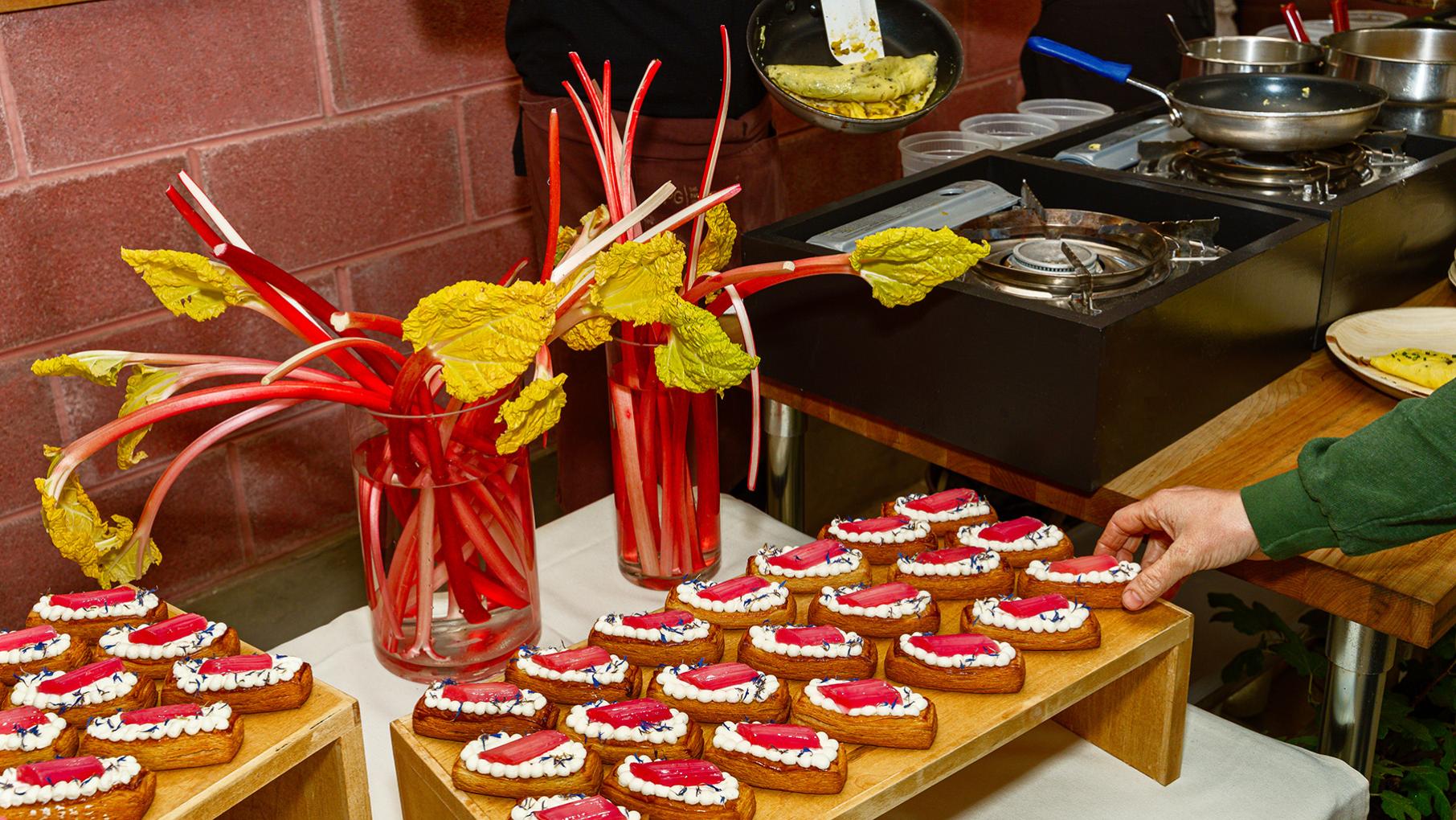
GCM’s Chef-Farmer Brunch brings together growers and the people who use their ingredients just as farmers market season approaches with spring produce like rhubarb, which was on display in the form of a rhubarb danish prepared by chef Devon Quinn of Eden. The goal is to “create lasting relationships between the people growing food and those cooking it,” as GCM describes the event.
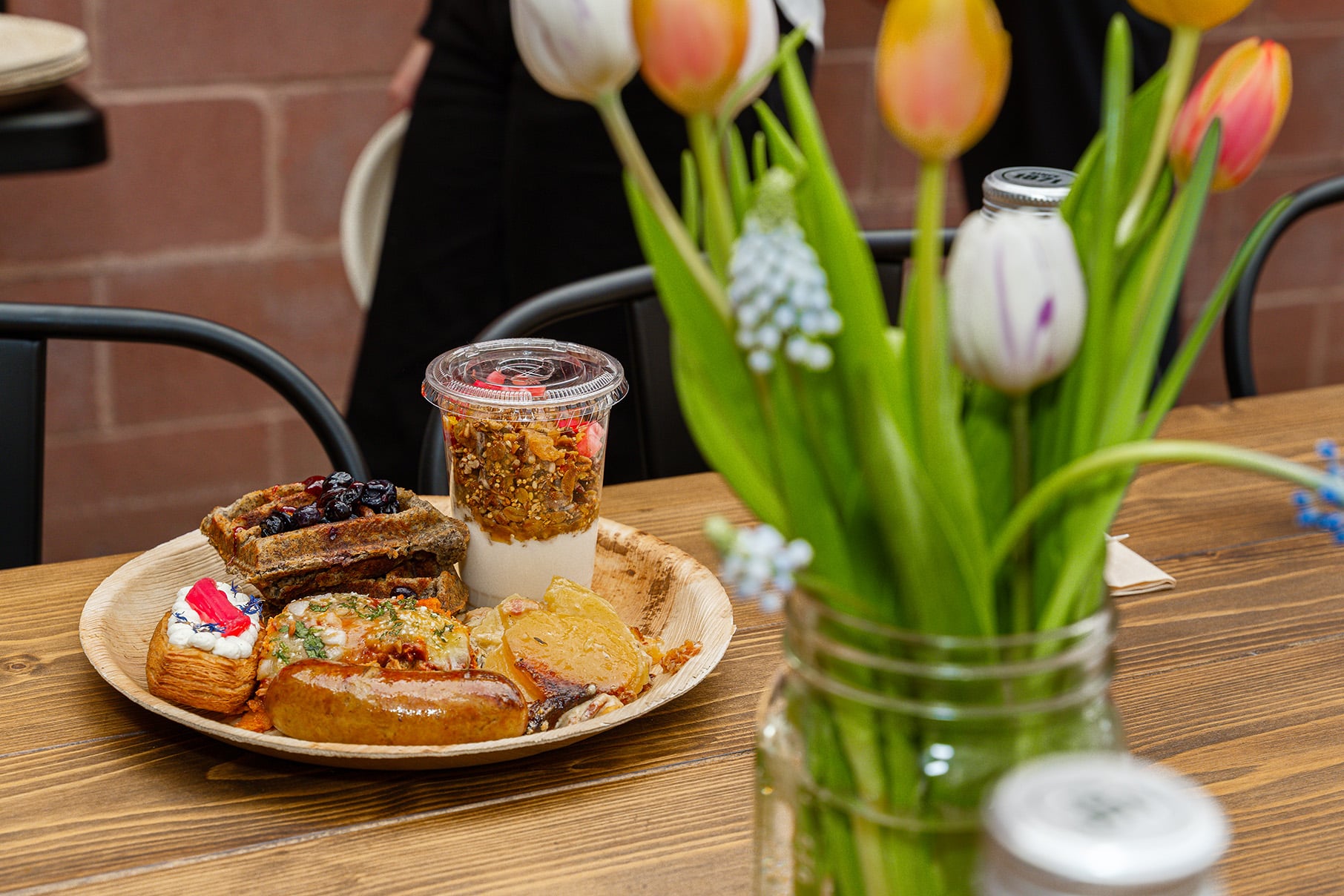
The early season brunch was a regular feature of GCM until the pandemic. This year marked its return, as well as an inauguration of a new permanent home for GCM at 2457 W. Montrose Ave. in Lincoln Square. Known as the Homestead, the building will host indoor markets over winter, educational space, offices, and events like the Chef-Farmer Brunch. It’s a fulfillment of the late GCM founder Abby Mandel’s dream of a permanent space.
Chefs like Sarah Stegner of Prairie Grass Cafe and Rick Bayless helped Mandel start GCM by encouraging local farmers with whom they already had relationships to participate. But 27 years later, the relationship between chefs and farmers “isn’t happening as deeply as it could,” Lula Cafe’s Jason Hammel said at this year’s Chef-Farmer Brunch.
“There’s a collective power in bringing us together,” Hammel said. “The power of connecting together is an act of resistance against a world that’s trying to pull us apart.”
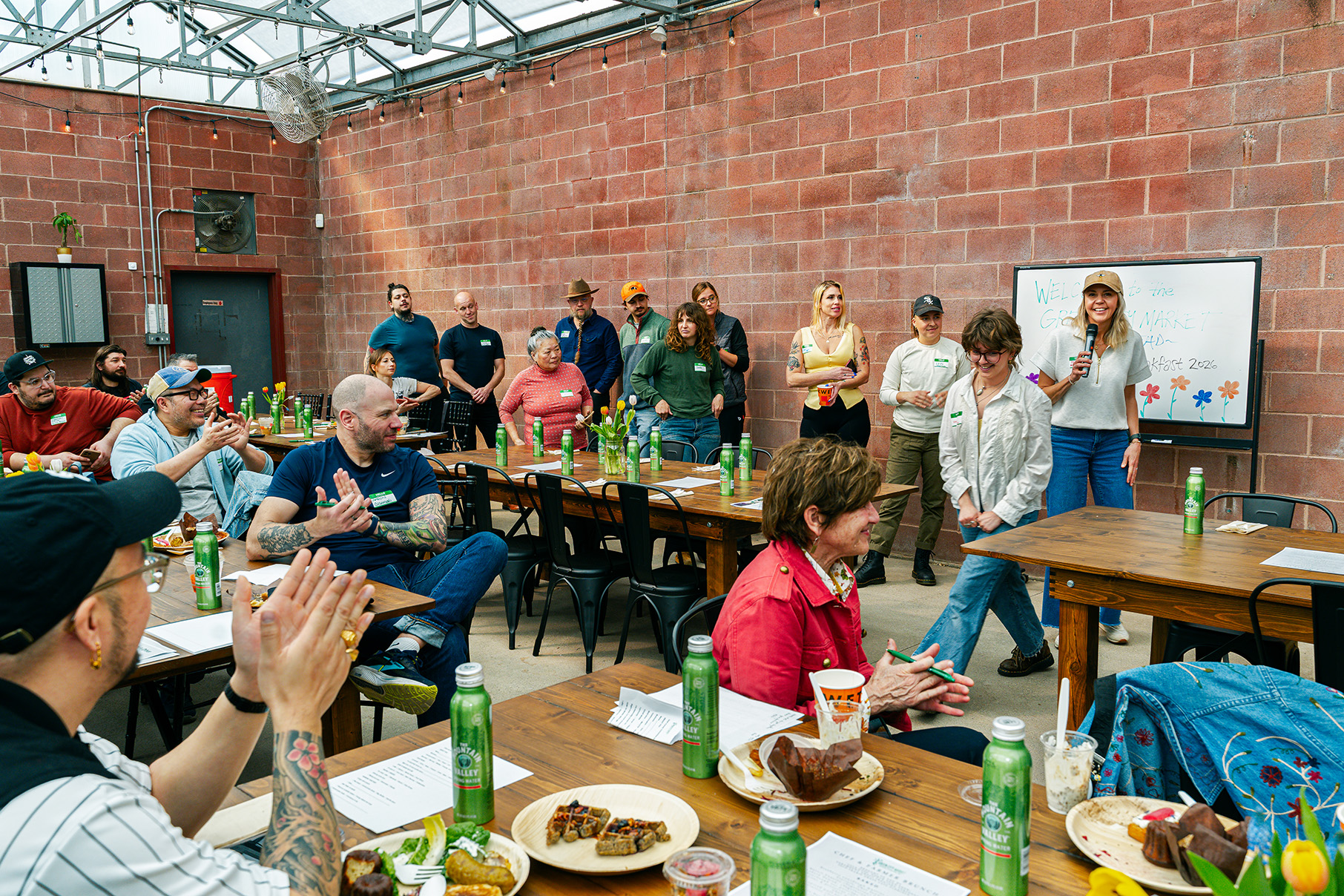
With events like the brunch and its regular farmers markets, GCM tries to promote a locally based circular economy, in which farmers who need consistent buyers for their ingredients find them in chefs who need access to ingredients grown with care.
Direct relationships can be mutually beneficial in other ways, too. At the brunch, Nicole Yarovinsky conferred with Joe’s Blues, an organic blueberry farm in Bangor, Michigan, about ingredients for the sustainable bar programs she leads at Daisies and The Radicle. She was looking for semisweet berries and high-acid produce that could replace lemons, which can’t be sourced locally in the Midwest except from greenhouses. Joe’s Blues suggested unripe blueberries and blueberry verjus, which is typically made from unripe grapes.
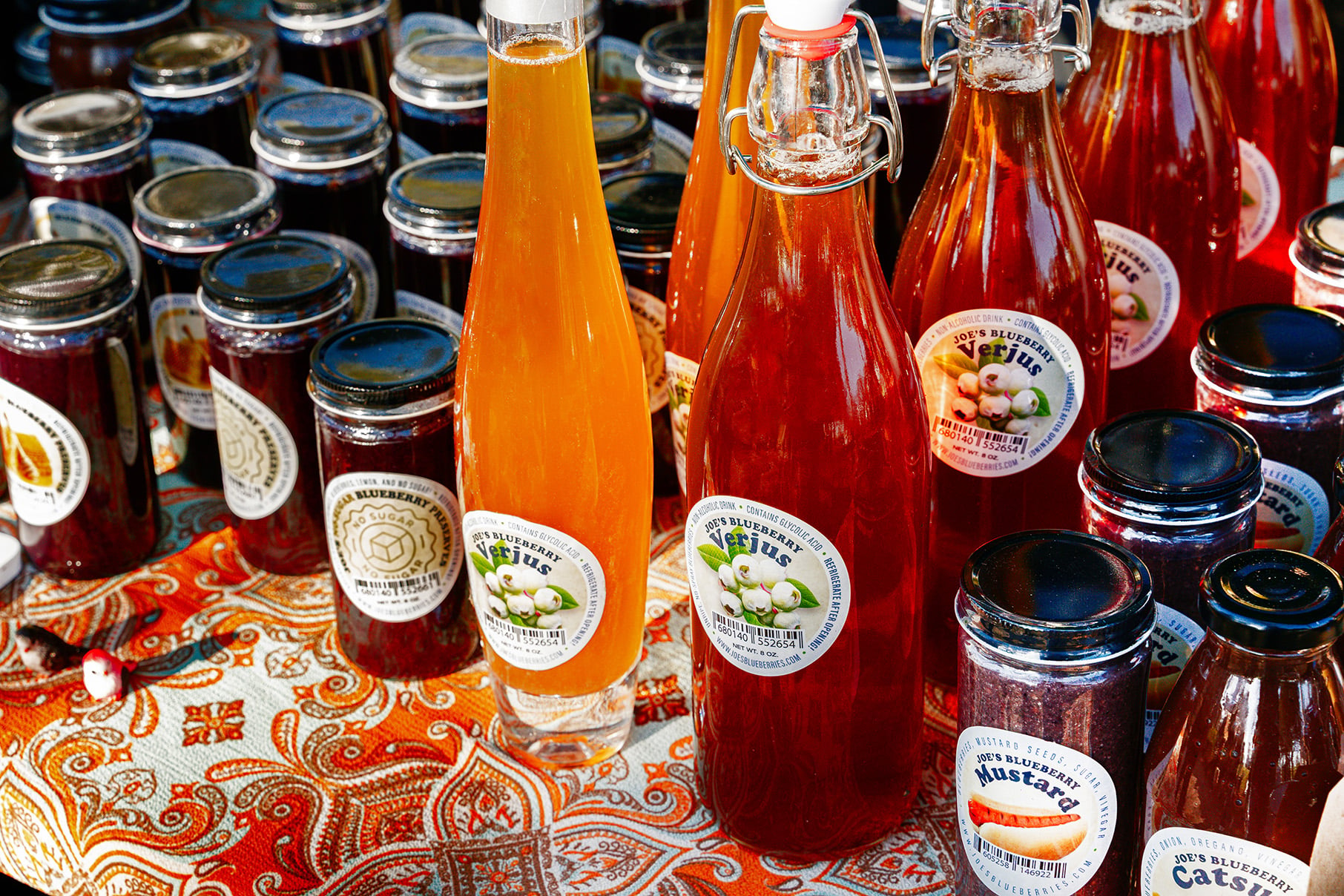
The brunch offered a chance for chefs to inquire after unusual ingredients, such as forced rhubarb, sweetgrass, spruce tips, and purslane. The last is often considered a weed in the U.S., but is commonly eaten in many other parts of the world, including Mexico; Rick Bayless has encouraged local farmers to supply it. Chefs’ interest in such ingredients can be beneficial to farmers, one representative of Mint Creek Farm pointed out. “It’s easy to sell things like bacon but much harder to sell things like pigs’ feet,” he said, urging chefs to purchase less commonly used products.
“It’s not always about what’s possible but what’s profitable,” a GCM representative reminded chefs who inquired about ingredients such as Kashmiri chilies and saffron that aren’t grown in the Midwest.
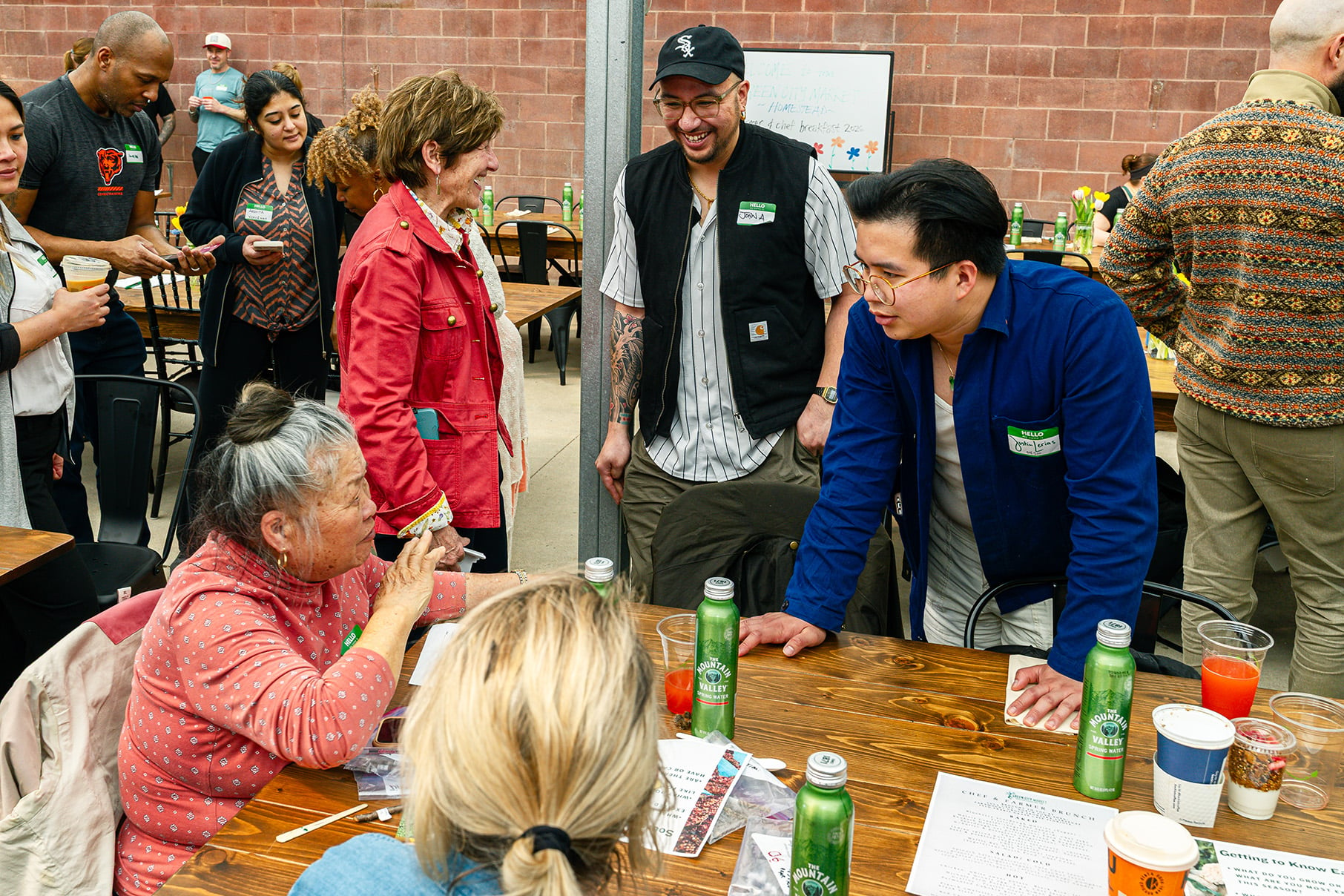
Jake Potashnick, who has built his restaurant Feld around the relationships he has with farmers, said that creativity and unexpected ideas can ensue from the constraints. “It might grow differently than you think,” he said of some ingredients, but that’s an opportunity to collaborate with the farmer and adjust a dish.
“Jake likes unusual ingredients,” said Fran Tuite of Flatweather Farms. She has supplied him with the tender, young vines of the hop plant, which he grilled for a course at Feld, pairing their nutty, bitter taste with goat butter.
Experimentation with the ingredients a farmer has is becoming increasingly necessary, as climate change affects how and how much of a crop can be grown. Flatweather Farms supplies Devon Quinn arugula for his Eden restaurant in Avondale, but last year’s heat meant their supply of the cool-weather crop was restricted.
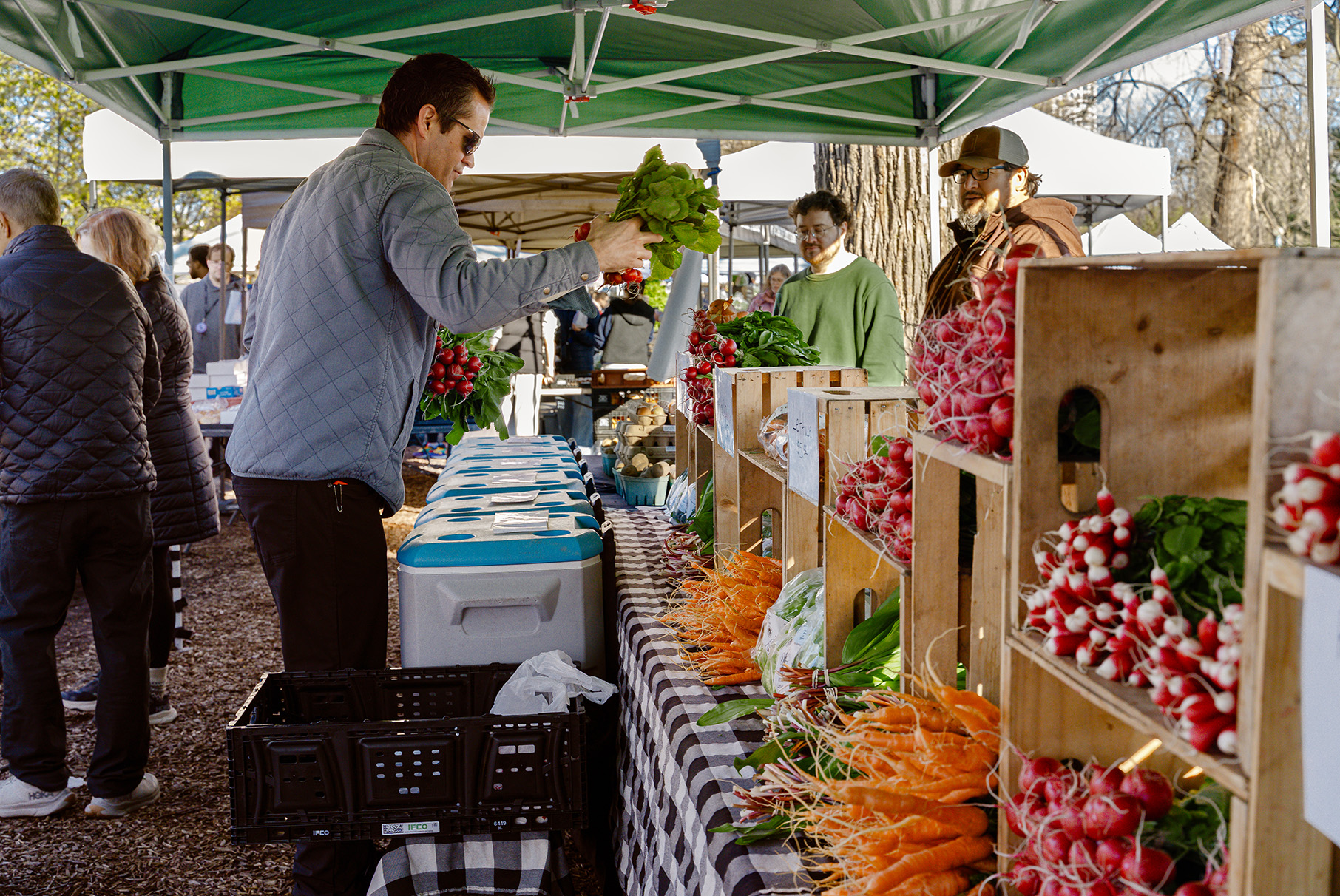
While GCM and the participants of the Chef-Farmer Brunch want more chefs to develop relationships with farmers, Kevin Hickey of the Duck Inn said at the brunch that the connection is stronger in Chicago than anywhere else he has lived, including the agricultural powerhouse of California. He has worked with Nichols and Mick Klüg farms – both participants in GCM since the very beginning – for 20 years.
“I write my menu based on what farmers have available,” Hickey said – even in winter, when that’s limited to root vegetables, hearty greens, and winter squash.
Most American consumers are not used to such constraints, thanks to refrigeration, globalization, and industrialized agriculture, all of which have made every type of produce cheaply available across the country year-round. But there are also costs in the form of greenhouse gas emissions, air and water pollution, and risks to public health – plus the transfer of money out of a local economy.
“The public need to understand why sourcing matter[s] – as stewardship of the land, of our health, and of our community,” GCM says in their description of the Chef-Farmer Brunch.
That’s why GCM tries to introduce farmers to not just chefs but everyday consumers, too, via its farmers markets. As Sarah Stegner put it, “Connect with farmers – now. That can make a difference in their life and in our land.”