A Documentary in a Chicago Film Festival Examines How Librarians Became Political Targets
Daniel Hautzinger
April 22, 2026
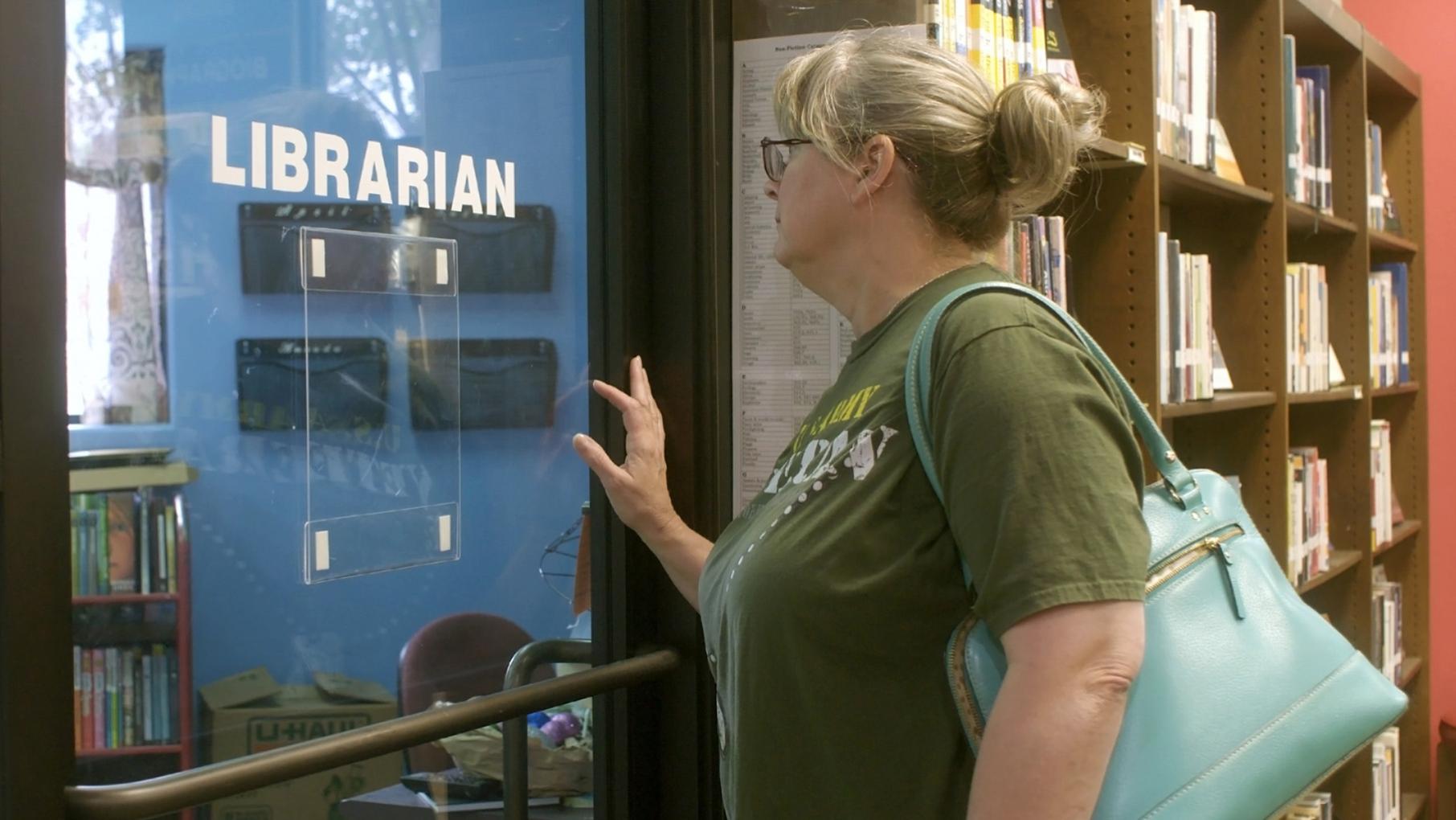
The Librarians is available to stream via the PBS app courtesy Independent Lens through May 9.
Being a librarian is supposed to be a quiet job. In the past few years in the U.S., it has been anything but. The documentary The Librarians – showing at The Davis Theater in Lincoln Square April 25 at 7:00 pm as part of the Doc10 Film Festival – shows how librarians have become the subject of political attacks, personal threats, vitriol, and firings as politicians and advocacy groups have tried to remove books from the shelves of school and public libraries for discussing gender identity, LGBTQ topics, abortion, race, and more.
“Four years ago, when we started, [a librarian in the film] said, “We in the school libraries are the canaries in the coal mine,’” says Kim Snyder, the director and producer of The Librarians. She will be at the Doc10 screening to take part in a panel moderated by Illinois state senator Laura Murphy featuring the actor and children’s author Henry Winkler, The Librarians subject Martha Hickson, and Chicago Public Libraries commissioner Chris Brown. This year, Doc10 (April 24 - May 3) is organized around the them "Speak Truth."
Snyder started making the film over four years ago, when she heard about a Texas lawmaker who inquired after a list of 850 books in schools that might “make students feel discomfort.” Governor Greg Abbott later demanded that the books be removed from schools, threatening prosecution.
“I immediately went [to Texas] and it was really instinctual: this is a really important story,” says Snyder.
She has made several films about gun violence, including the Newtown and Parkland school shootings and the Academy Award-nominated short Death by Numbers. “In general, all of my films have tended to lift up the voices of some contingent in society where there’s something that is terribly unjust around an issue that really threatens our rights. In that case it was the Second Amendment, and now I seem to have taken on the Frst Amendment,” she says.
“But the other thing they share is that they both really do affect the rights of our youth.”
While The Librarians primarily focuses on the job named in its title, it also includes scenes of youth testifying at school board hearings about the world-opening impact of books on them and a “banned book club” at a Texas school.
In hosting screenings and town hall conversations around the country, Snyder says, “I meet tons of young people where the books are really important to them. I think that especially for marginalized voices and what libraries mean to them as safe spaces when they might feel alone, or they can’t find representation of their feeling of otherness for any number of reasons except in a book, I think they do save lives, and I hear it every day from librarians.”
According to the American Library Association, which is headquartered in Chicago, 2025 saw the second highest number of library challenges on record, after 2023, with 40% of the challenged material being representations of LGBTQ people and people of color. Less than 3 percent of challenges originated from individual parents, while 92% “were initiated by pressure groups, government officials, and decision makers.”
“One voice sometimes, or bullies,” says Snyder, “have been able to dictate sweeping raids and removal of books from our shelves.”
She also points out the civic function of libraries as a place to vote, provide community services, and even just internet access, including in rural areas where WiFi might not be as accessible.
“There’s so many other things that have ramifications,” she says, “just the same way public television has had all kinds of ramifications. This is the whole freedom of access to information for all.”
But Snyder doesn’t approach her films from a point of advocacy, she says. “All of my films have started with character and story.”
She follows the stories of librarians from Texas, Florida, Louisiana, and New Jersey as they stand up against attempts to remove books from their libraries. Suzette Baker references the oath she took when she joined the U.S. Army, pointing out that “you protect the Constitution of the United States from attacks both external and internal.” Responding to a common accusation that books on the shelves of libraries were “pornographic,” Baker asks: how is a history of the Ku Klux Klan – one of the books that was objected to – pornographic? When a judge orders her Texas county to restore removed books, there is a proposal to shut down the entire library system rather than comply. It is rejected.
“We are living in a moment where criminalizing and arresting our librarians is something that is on the table,” says Snyder. One constable tried to bring felony charges against librarians and received a list of the names of minors who had checked out books on a list to be removed.
Snyder sees librarians as “on the front lines of trying to protect a fragile democracy right now and fight against censorship.”
Martha Hickson, The Librarians subject who will participate in the Doc10 panel, was inspired by a “freedom to read” bill passed in Illinois to contact her own state legislator and get a similar law passed in New Jersey; other states have enacted similar bans on book bans.
“She’s coming to Chicago because she has a special affection for the state of Illinois,” because it pioneered the bills, says Snyder. “There are other forces that are hopeful.”