
A History of Chicago Architecture with the Humble Brick as Guide
Daniel Hautzinger
May 4, 2026
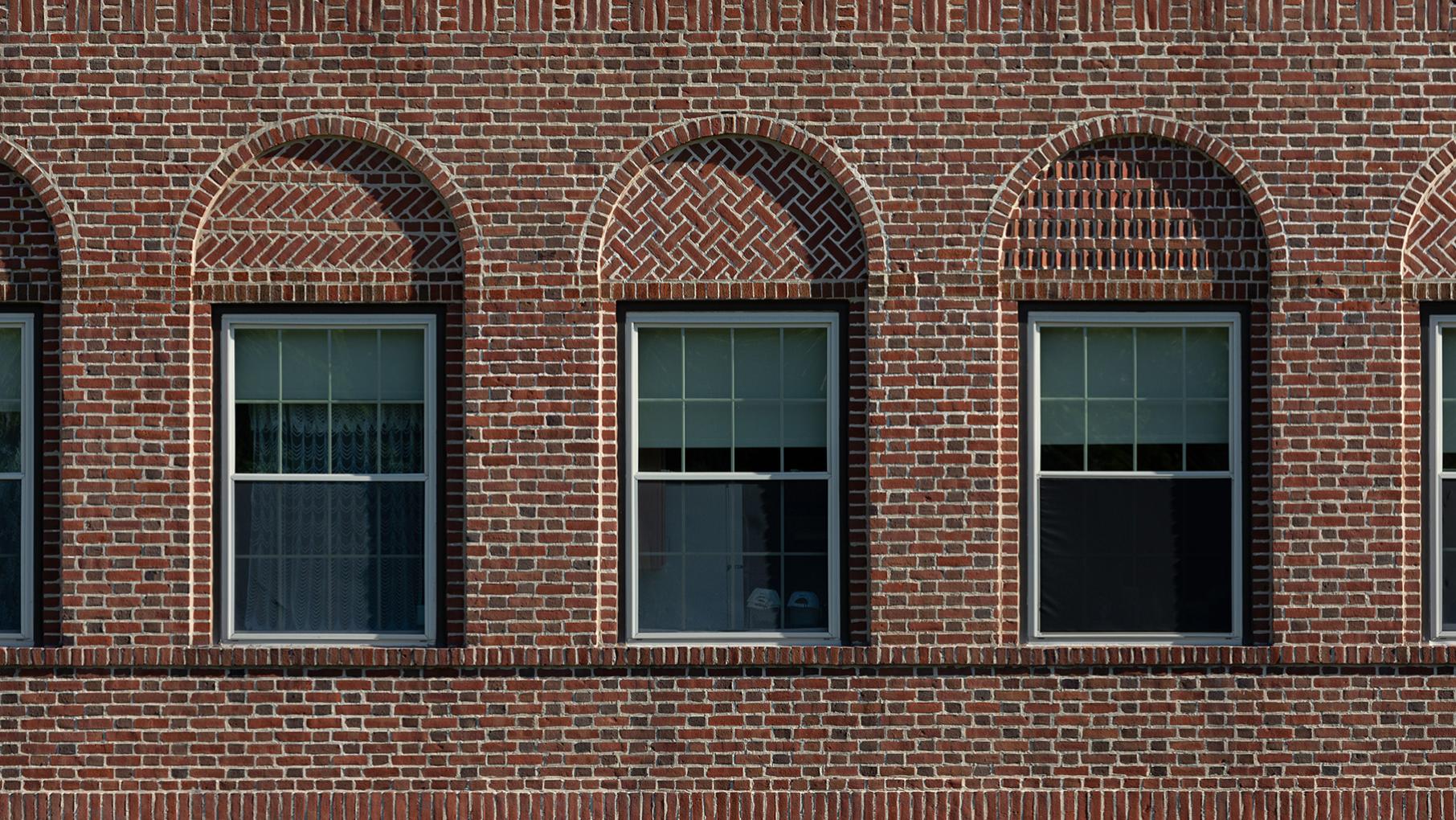
Will Quam will discuss his Fire and Clay with WTTW's Geoffrey Baer in a book launch event at the Driehaus Museum on Tuesday, May 5 at 6:00 pm.
Will Quam has a favorite brick. Not a favorite type of brick, but an individual brick in a wall on a specific house he shows on his Brick of Chicago tours.
“It’s a little out of reach,” he says, “so for this season I did buy an extending pointer, so I can actually now point that out.”
Quam has seen – and identified, and even pulled out of walls – a lot of bricks. In addition to leading tours in Chicago neighborhoods and sharing photographs and information on Instagram, he has now written a book that traces Chicago architecture through one of its literal building blocks.
Fire and Clay: How Bricks Reveal the Hidden History of Chicago narrates how brick has been used to construct Chicago from the city’s earliest days through today, tracking not just the evolution of brick over the past two centuries but also the emergence of different architectural styles and the expansion of the city itself, using buildings ranging from Oak Brook’s Graue Mill of 1852 all the way to the McDonald’s global headquarters that opened in 2018 in the West Loop.
“Chicago is the perfect brick city because we use so much of it,” Quam says. Clay – the material of brick – is abundant and easily accessible here, thanks to the Chicago River. The Great Chicago Fire of 1871 destroyed much of the city just as new technology had been adopted by brickmakers, allowing them to produce bricks quickly and extensively to rebuild the city. Chicago grew rapidly and is large, so there are plenty of buildings that needed to be built out of something, and brick has been an affordable and adaptable material. And Chicago’s location as a central railroad hub made it easy to bring the most exciting bricks from across the country here, offering a huge variety of colors, styles, and techniques.
Why use bricks from outside Chicago if there was such a productive brickmaking industry here? Because Chicago’s clay is unpredictable, producing perfectly usable bricks – but in a wide variation of colors and consistencies. “Chicago common brick,” as most of the brick made here was known, was considered to be some of the ugliest brick in the world. So it was used to provide the structure of buildings, while only the front or other prominent faces were covered in prettier “face brick,” makeup hiding a blemish.
“We made so much [brick] that we also then hated here, and that caused us to get really expressive and crazy with the rest of the brick that we imported,” says Quam.
Red bricks, blue bricks, green bricks, brown bricks; smooth faces, rough faces, glazed faces, textured faces; even colors, volcanic sheens, splotchy variations, stonelike naturalness – they can all be found in bricks in Chicago, and Quam has found them. He had already amassed a large inventory of photos and knowledge of brick buildings throughout the city for his tours, but writing Fire and Clay forced him to discover even more, since it covered the entire history of Chicago architecture.
“I’d taken so many pictures of 1920s buildings, because that was a time when the revival styles [imitations of historic architecture] called for these incredibly expressive buildings and really colorful, textural bricks that photograph so easily and are so popular,” he says. Writing the book “forced me to then look for the really interesting examples from the ’70s and ’80s, and I really loved it. I really fell in love with that era in particular, an era that is kind of ignored.”
That attention to unloved types and eras of architecture is both unexpected – if you picture a brick building, you’re likely not imagining a ranch house or blocky Lake Shore Drive tower – and somewhat unusual, as is Quam’s attempt to appreciate them on their own terms. He pored over every sort of architectural writing, from guides and criticism to trade journals like the Brick and Clay Record, to learn what buildings were seen as significant in their time. (He read the entire near century’s worth of the Chicago-based Brick and Clay Record, “which nobody else should do,” he says.)
“I am trying to get people to go outside and explore and appreciate the city, and brick is the way that I know how to best do that,” Quam says.
You can get more than simple pleasure out of observing Chicago’s bricks, too.
“Something beautiful about using just Chicago is you can see how [brick] has changed and evolved and repeated over a shorter period of time in this one place,” Quam says. “I think that makes it a lot more understandable and digestible as a material and as a design history.”
The history holds surprises and reversals. The Chicago common brick once relegated to the less visible parts of buildings is now valued enough that there’s a whole industry around repurposing them when a building is demolished. (The last common brick company closed in 1981.) There have even been instances of thieves pulling down abandoned buildings themselves in order to sell their common brick. While some of the weathered brick is used in Chicago, for instance to make a new space such as Goose Island’s barrel vaults look old, much of it is shipped to the South, where whole houses are clad in it for a historic look. Quam notes almost 200 hundred home real estate listings in the South that advertise Chicago brick.
In Chicago itself, changes in mortar technology are causing many older brick buildings to slowly crumble. Mortar has gotten too strong, thus preventing moisture from moving through it or the slight natural flexing that occurs as temperatures change. This causes the inevitable breakdown of the bricks held between it, as Quam explains in the final chapter of Fire and Clay.
“I worry all the time about Chicago’s brick,” Quam says. “But there are more and more people who are doing it the right way, and my hope is, through the book, that people will now understand that there is a right way.” He encourages homeowners to ask their masons questions, skip a cheap repair now in favor of a proper repair in the long run, and consult organizations like the Chicago Bungalow Association for help.
So what, after all his immersion in architectural history, is Quam’s favorite brick? It’s a particular ironspot on a house in Rogers Park. Yes, it’s in the book.