Kronos Quartet Celebrates "Glorious" Mahalia Jackson and Her Contributions to the Civil Rights Movement
Daniel Hautzinger
May 6, 2026
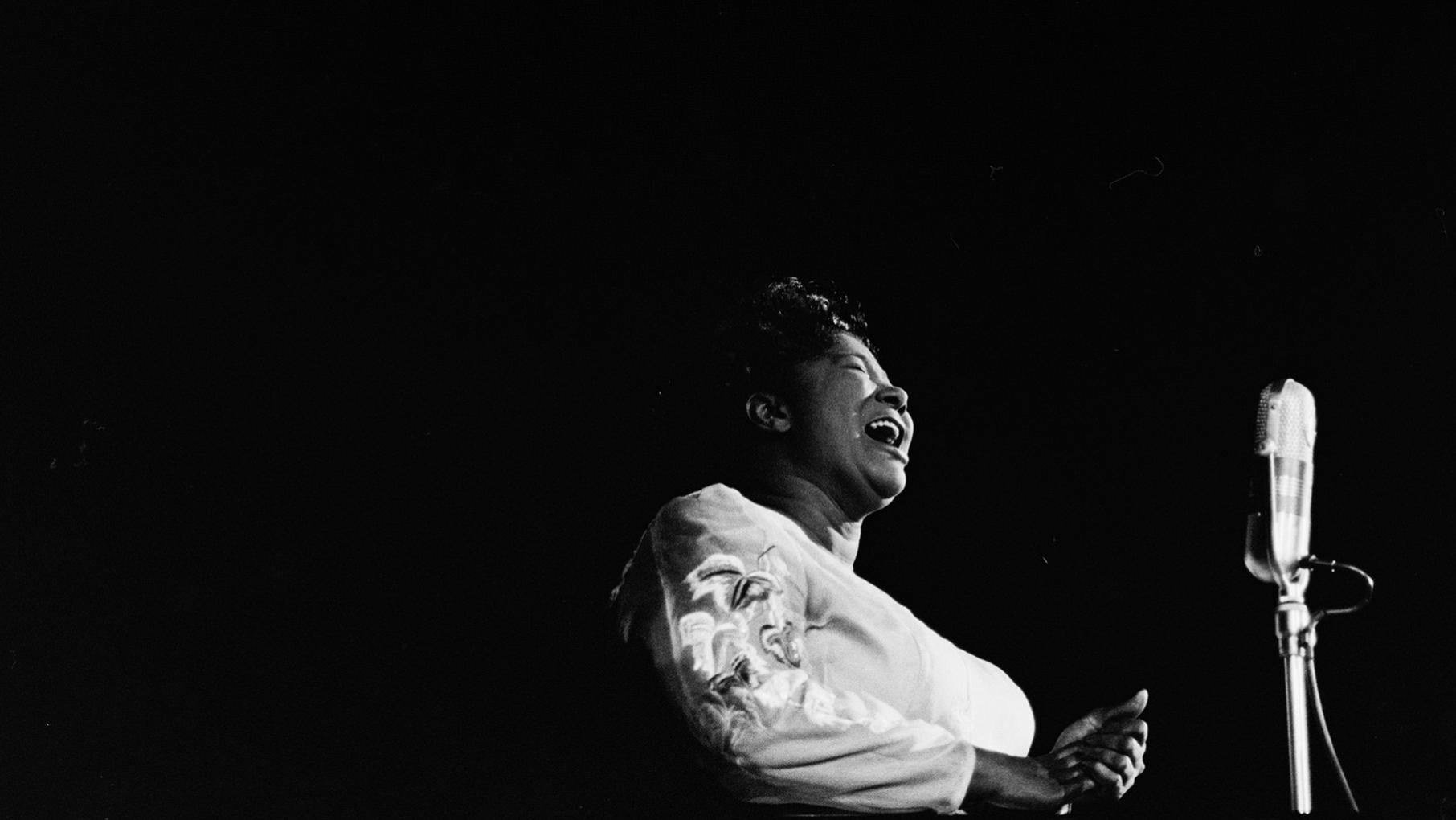
The violinist David Harrington has collaborated with many of the seminal talents of the past several decades as a member of the Kronos Quartet: Philip Glass, Astor Piazzolla, Laurie Anderson, Björk, Paul McCartney, Rhiannon Giddens. But he regrets missing the opportunity to perform with the gospel legend Mahalia Jackson, who died in 1972, the year before Harrington formed Kronos.
“Life will be more wonderful, more complete for me, if Kronos gets to perform with Mahalia Jackson,” he remembers thinking.
One option to summon the spirit of Jackson was to arrange one of her recordings for Kronos, as Jacob Garchik did with her 1937 performance of Antonio Haskell’s “God Shall Wipe All Tears Away,” working with the quartet to develop a sound that emulated the shimmery, reedy organ on the old recording. That arrangement originally featured the Malian singer Kassé Mady Diabaté taking on Jackson’s role on Kronos’ 2017 recording with her Trio Da Kali. But Kronos also performed the piece on tour without Trio Da Kali. Jackson’s rich alto part was played by violist Hank Dutt – the person who rekindled Harrington’s interest in Jackson by giving him a recording of hers in the early years of Kronos. The Kronos-only version of “God Shall Wipe All Tears Away” is on a new Kronos album centered on Jackson, Glorious Mahalia. (Dutt is on the recording along with John Sherba and Sunny Yang, but the three have since left Kronos and been replaced with new members.)
The album’s title is shared by a composition that allows Kronos to play with Jackson in a different way.
Harrington wanted Kronos “to be the back-up band for Mahalia Jackson,” says Stacy Garrop, the composer of that piece, “Glorious Mahalia.” He had an idea for the quartet to play along with a recording of the singer in real time. “It was like, ok, let’s figure out how to make that work.”
The fourth movement of the five-part “Glorious Mahalia” is the culmination of that idea. As a recording of Jackson singing “Sometime I Feel Like a Motherless Child” along with her accompanist Mildred Falls plays, the quartet provides its own additions: plucked notes that mimic Falls’ short piano chords, counter-melodies that slide along like Jackson’s own expressive phrases, bluesy riffs between lines.
Learn more about Mahalia Jackson and gospel music’s roots in Chicago in our documentary and companion website for Chicago Stories: The Birth of Gospel.
The recording of Jackson comes from a 1957 concert in Chicago, where she lived for much of her life and helped popularize the gospel music that originated here. The recording is in the Studs Terkel Radio Archive, which includes conversations Terkel had for his Chicago radio show that was broadcast on WTTW’s sister station WFMT for 45 years. (Many of the Terkel programs have been digitized and are available to stream.)
Terkel had been friends with Jackson since the 1940s, and hosted her numerous times on his show, including for a conversation in 1963 before a “freedom rally” at McCormick Place that included Jackson and her friend Martin Luther King, Jr., among other dignitaries of the civil rights movement. Garrop includes portions of this interview throughout the rest of “Glorious Mahalia.”
In the piece, as Jackson tells Terkel about the difficulty of adhering to nonviolent protest in the face of everyday racism, the strings become dissonant and agitated around her. “When there’s no more words to say, they moan and they groan,” Jackson says of the singing of spirituals like “Hold On,” which she hums and sings bits of in the first movement of the piece. Kronos slides between pitches in their own moans and groans, bringing back the “Hold On” motive at the end of the pained third movement before Jackson says, “The groan comes out of my soul for deliverance,” signaling a quiet turn towards hope in the piece.
“I don’t want to hate. I want to love,” Jackson says in the final movement, which follows “Motherless Child” with hymn-like music and talk of the future, the promised land, and working for it together.
Kronos had themselves been on Terkel’s show early in their career, so Harrington “was aware of his beautiful ability to elicit the best thoughts,” even though Harrington was nervous to speak on live radio. “It was what he said and what he asked, but also the way he looked right into my eyes,” he says.
Harrington wanted to spotlight the public friendship between the Black Jackson and the white Terkel during a time when such a friendship was uncommon. And he also wanted to celebrate the relationship between Jackson and Martin Luther King, Jr., since Jackson played a prominent role in the civil rights movement – including in King’s iconic “I Have a Dream” speech at the Lincoln Memorial during the March on Washington. On that historic day in 1963, Jackson performed – in the same location where Marian Anderson had sung after being refused the use of a venue due to her race 24 years earlier – before King stepped up to the podium to deliver a speech drafted by his lawyer Clarence B. Jones.
“Tell them about the dream, Martin!” Jackson shouted as he spoke. King closed his notebook and delivered one of the most famous speeches of all time. Jones and that speech, in addition to King’s famous “Letter from Birmingham Jail,” which Jones spirited out of the jail, are the subject of the third composition on Glorious Mahalia, “Peace Be Till” by Zachary James Watkins, which incorporates an interview with Jones. (Terkel interviewed King about the “I Have a Dream” speech at Jackson’s home in Chicago.)
“It felt to me like there was plenty of material to make something that could celebrate the power of Mahalia Jackson, both as a musician, but also as a friend,” Harrington says. When King was depressed, he would call Jackson on the phone and have her sing to him, according to Jones. “For anybody that has listened to Mahalia Jackson to imagine that – having her voice piped right into your brain – is back-chilling,” says Harrington.
He was inspired not just by Jackson’s musicality but also her modeling of what a musician could be in the broader social world, he says. “We can contribute to our society and the larger visions of what the world can become if we work at it.”