New Documentary Traces Katharine Graham’s Transformative Rise at 'The Washington Post'
Meredith Francis
June 16, 2026
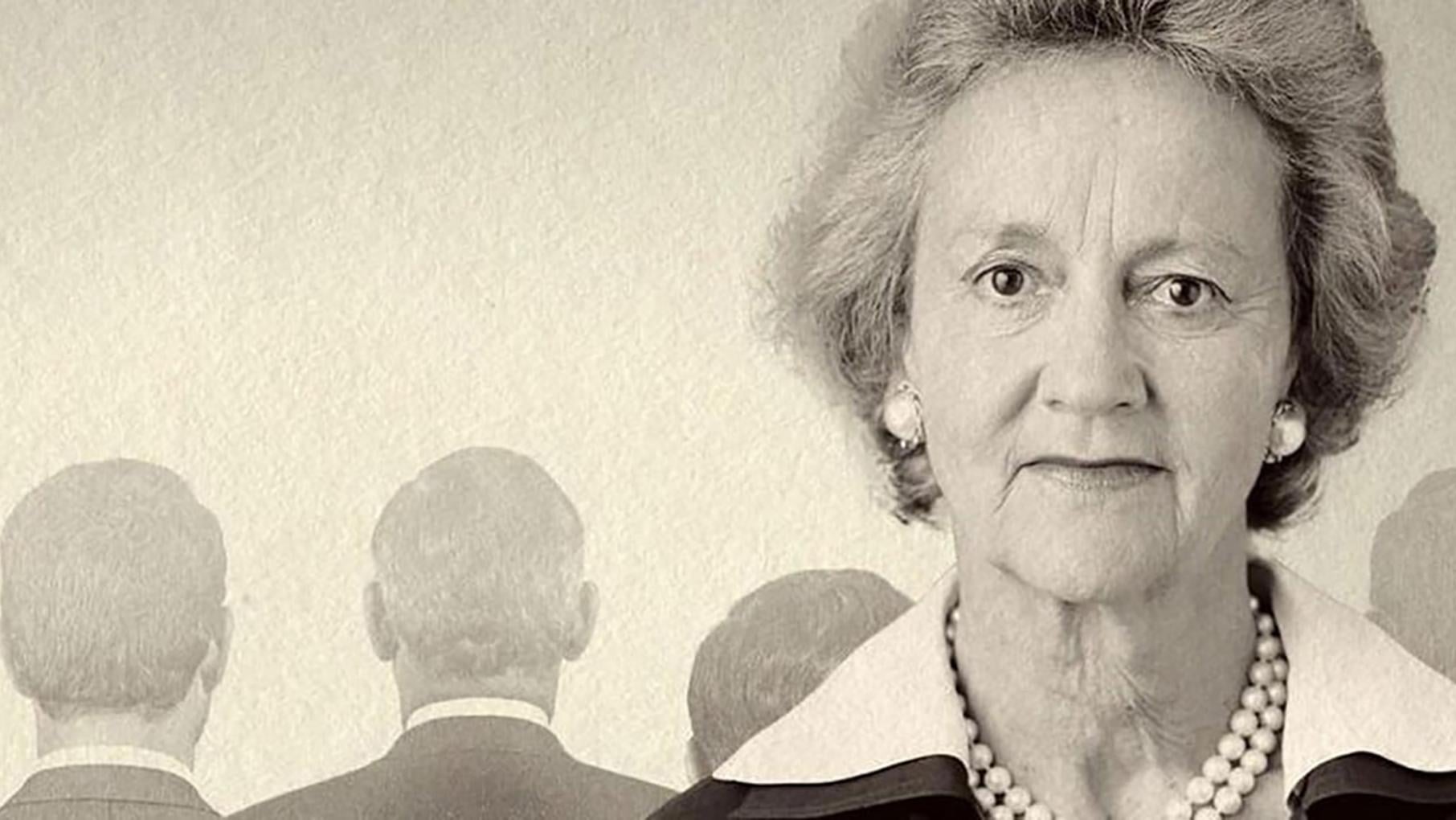
A new documentary, Becoming Katharine Graham, examines the evolution of the shy socialite who became the influential publisher of The Washington Post, guiding it through some of the most consequential stories in American journalism. Directed by George and Teddy Kundhart, the film, premiering June 16 at 8:00 pm on WTTW and on the PBS app, traces Graham’s unexpected rise to leadership after a family tragedy. As publisher, Graham navigated sexism as a woman leader in corporate America, saw the paper through the Pentagon Papers and Watergate, and oversaw a bitter labor dispute with the company’s pressmen.
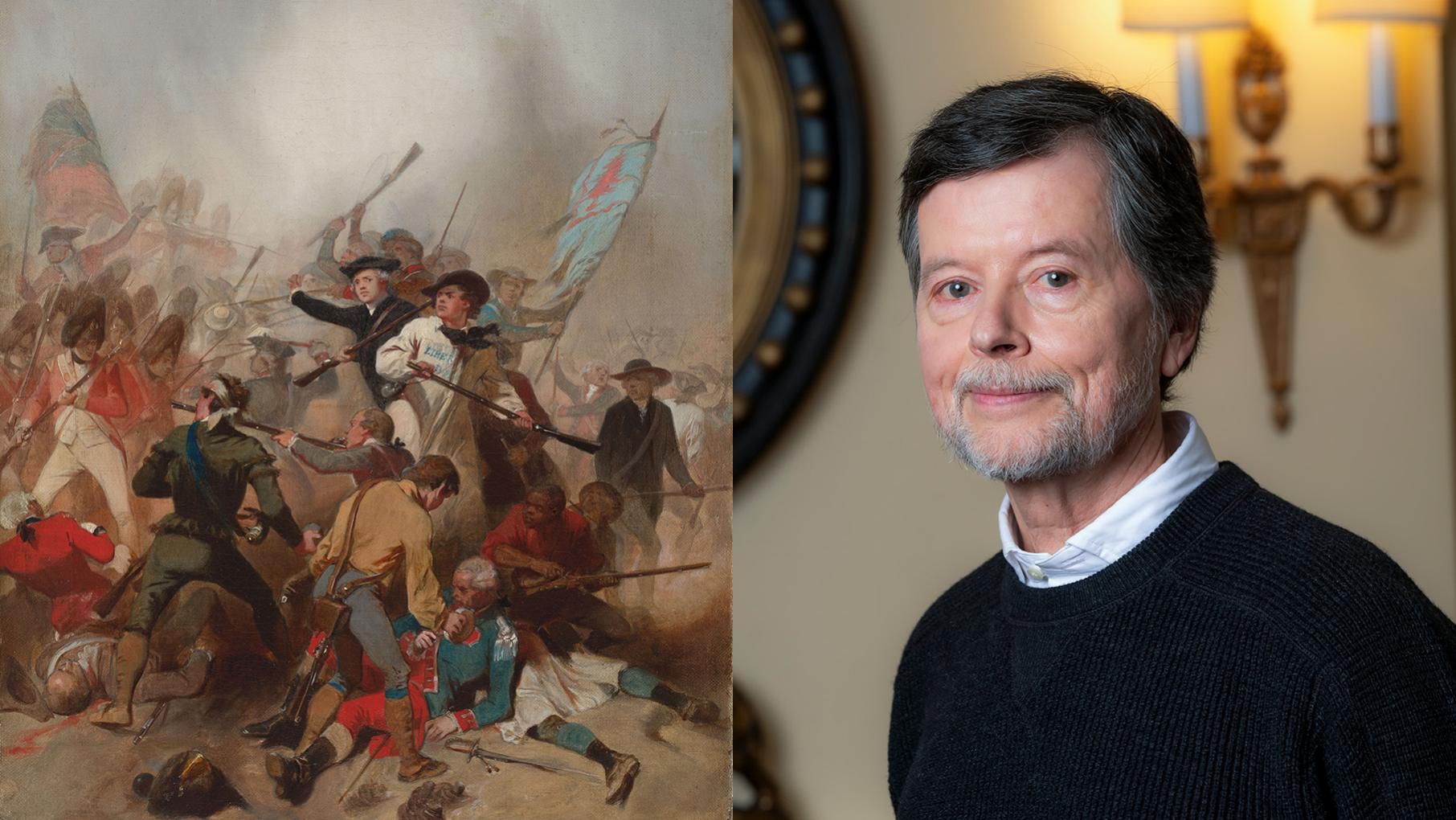
WTTW spoke to one of the directors and producers, Teddy Kunhardt, about the relevance of Graham’s story today and why her story was often overlooked.
This interview has been edited and condensed for clarity.
How did this documentary get started and what drew you to Katharine Graham’s story?
Teddy Kunhardt: Back in 2016, we did an HBO documentary called Becoming Warren Buffett. And a year later, we did a film called The Newspaperman: The Life and Times of Ben Bradlee. We knew Warren used to own Berkshire Hathaway and used to own some of the Post, so we sent him a link. He called us and said, “I just want to let you guys know I love the film. I think it’s great, but you missed the mark.” It was like an awkward silence, and my father [and fellow filmmaker] said, “What do you mean?” And Warren said, “You only briefly touched on Katharine Graham. She was the key to the success of Ben Bradlee and The Washington Post.” And a couple days later, he sent us his personal history. We all read it, and we all liked it. We have a big whiteboard with film ideas and we just wrote “Kay Graham” with a question mark next to it. It was there for years. We started a foundation, Life Stories, in 2018 because the writing was on the wall that big streamers were not going to be doing the kinds of films that we cared about. The Katharine Graham film was our first chance to do a full-length feature film from the foundation.
Katharine Graham described herself as a “doormat wife” for part of her life. Her parents and her husband had strong personalities. What was her life and disposition like before she took on a larger role at the Post?
Kunhardt: For her whole life, whether it was from her mother, her father, or her husband, she was told, and society at large told her, women were less than. Her father says it the most when he told her, “I'm giving two thirds of the company to [her husband] Phil and one third to you, Kay, because no man should work for his wife.” It wasn't until Phil died where Kay was finally put in a spot to make a decision of her own, and that was whether she was going to sell the paper or keep the paper. Ultimately, one of the most defining moments of her life was the decision to keep it. To the day that she died, she had that little voice in her head that still doubted her success, even though she had created a media empire, and even though she'd overseen the Pentagon Papers and Watergate, and built an amazing newspaper, I think she always had a little voice tormenting her in the back of her head.
Her husband, Phil, died from suicide in 1963, and she decided that she wanted to keep the Post in the family. What challenges did she face as a woman in taking on this role?
Kunhardt: I believe a picture can say a thousand words, and the picture of her in the boardroom surrounded by all those white men speaks for itself. She was alone. She was mocked. She was treated terribly. To her credit, she was quiet and she learned. She learned by watching. I really believe her decision to hire Ben Bradlee [as managing editor], who did not treat her less than, but treated her as an equal, was invaluable. So her two key decisions early on were keeping the Post, and hiring Ben Bradlee.
Graham saw the paper through some landmark moments like the Pentagon Papers and Watergate. How did those moments change the public’s perception of The Washington Post?
Kunhardt: I think it was journalist David Remnick in the film that said the decision to publish the Pentagon Papers was such a brave moment that it finally put The Washington Post in the same sentence as the New York Times. Before, they were seen as a local newspaper. Now, they were a national newspaper. And to complicate matters, that decision was right when she was taking the company public. So she was facing all these threats from the administration. And she believes in truth. She believes in truth over jeopardizing her business. The public at large realized that this was not just a small, local, Washington, D.C. newspaper. This was a big-time newspaper that’s going to go up against the administration.
In the film, we hear President Johnson speaking to her on the phone, calling her “sweetheart.” We hear President Nixon and his associates insulting her and calling her names. And she’s entirely left out of the famous film, All the President’s Men. Why do you think Graham has so often been underestimated and sidelined in the public telling of the story of the Washington Post?
Kunhardt: For All the President’s Men, we had a whole bigger section of the film originally. It was actually her daughter, Lally, that gave us insight that she was truly hurt by it, which we didn't know. But it was a Hollywood business decision and I think she was truly dismayed that she was ignored. I think she would be proud that Meryl Streep played her in The Post. I think she’s still underestimated to this day even. What we did with the film is we went deeper to see the pain and the struggle and the personal growth. I think that the fact that she inherited the paper at $6.50 a share, and when she left the Post to her son, it was at over $300 a share. This is a woman that never went to business school. She never went to journalism school. Yet somehow she figured out how to do it and stuck with it. She’s remarkable and I’m sad that history overlooks her time and time again.
The title of this film is Becoming Katharine Graham. Is there a particular point in her life where you believe she really stepped into herself?
Kunhardt: There are a few moments where she became Katharine Graham. I think the first time was when Phil said he was cheating on her and he was going to take the newspaper. And I believe she said, “That’s where I dug my heels in.” That was the first point where the paper meant more to her than anything. And then when Phil tragically dies, everyone just expected her to sell the paper and move on since she’s not a newspaper woman. She’s a housewife. In those two moments, she’s fighting that voice in her head. And again, when she decides to print the Pentagon Papers knowing that the Nixon administration is going to sue her and mess up her deal going public, all she cared about was truth at all costs. It didn't matter. The paper came first. I think it’s so refreshing watching it unfold as we sit here today and see some news organizations folding under pressure.
What do you hope people take away from this film?
Kunhardt: First and foremost, I hope they can teach the next generation about this remarkable human being. I have a young daughter of six and I've had her watch pieces of the film and I’ll make sure she knows who Katharine Graham is. I hope her legacy can continue. I hope that people in the press are reminded that power is important. We need to hold people accountable. Katharine did, and Ben Bradlee did, and Woodward and Bernstein did. It can be done.