
Facebook icon Twitter icon Instagram icon YouTube icon
Playlist Chicago Hot Dog

Chicago Hot Dog

Mount Auburn Cemetery


Mount Auburn Cemetery

In the early 1800s, small, dense, urban graveyards had become a problem in cities across America. Concerns about crowding, the potential spread of disease, and demand for valuable real estate in city centers cried out for a new solution.

Beyond that was the experience of the living: those visiting graves of departed loved ones. Dank, crowded churchyards in the middle of the city were not only unappealing, they posed health hazards.

Fairmount Park


Fairmount Park

It's logical to assume that today's large city parks resulted from a noble conservation vision, and that early city leaders had the foresight to preserve large swaths of green space solely for the recreation and enjoyment of urban residents.

But that wasn’t universally the motive, and it certainly wasn’t the case for Fairmount Park, a large urban park along the Schuylkill River in Philadelphia.

Fairmount Park was, rather, the result of a much more critical need: saving lives.

Squares of Savannah


The Squares of Savannah

The squares of Savannah serve as parks and public gathering places. They anchor the neighborhoods (locally known as "wards") that surround them. They are part of an exemplary early urban plan, and they act as windows into the history of the oldest city in Georgia - a city founded decades before there was a United States of America.

Glidehouse


Glidehouse

In 2002, Michelle Kaufmann had a problem. More precisely, she had a headache. It turned out that the house she was renting had a toxic mold problem that was causing her migraines.

Marina City


Marina City

Marina City is an innovative urban development with a very unique origin.

In the 1960s, decades before a return to city living came into vogue, Chicago's downtown was rapidly losing its middle class to the suburbs. Among the civic leaders focused on this issue was William McFetridge, president of the Building Service Employees International Union (BSEIU, often referred to as the Janitors’ Union). He worried that the downtown economy was headed in the wrong direction-and with it, the jobs his workers depended upon.

The Eames House


The Eames House

The husband-and-wife design team of Charles and Ray Eames defied categorization. They were celebrated as architects, as filmmakers, and as furniture, graphic, and textile designers.

Fallingwater


Fallingwater

Frank Lloyd Wright achieved fame with his Prairie School designs of the late nineteenth century. But by the time he was 67 years old, his career had faded significantly thanks to his own personal scandals - and due to the advent of the Modernists (despite the fact that he had influenced them).

Langston Terrace Dwellings


Langston Terrace Dwellings

In the mid-1930s, there were 20,000 architects in the United States. Only 20 of those architects were people of color. Among those 20 was a young black architect named Hilyard Robinson.

Gamble House


Gamble House

At the turn of the twentieth century, the Arts and Crafts Movement delivered an antidote to the perceived dehumanization of the Industrial Revolution. In Arts and Crafts homes, natural materials and simple designs provided a serene and artful oasis, worlds away from the mass-produced, impersonal world of industry and commerce.

The Tenement


The Tenement

In the nineteenth century, the Industrial Revolution spawned opportunity in America's cities. Waves of immigrants from Poland, Germany, Ireland, and beyond joined migrants from America's countryside, swelling urban populations. In New York City, the population grew more than 50-fold during the century - increasing from 79,000 in 1800 to more than 3.4 million by 1900.

Lyndhurst


Lyndhurst

When William Paulding moved to the Hudson River Valley in 1842, the former mayor of New York City was in good company. Wealthy people were leaving the increasingly dirty and congested city in droves. In the bucolic countryside just north of Manhattan, they built fashionable villas in the orderly and symmetrical architectural styles of the time: Neoclassical, Federal, or Georgian.

Monticello


Monticello

Thomas Jefferson is well known as the third U.S. president and as the author of the Declaration of Independence. He was also a talented architect and landscape designer, dedicated to experimentation and innovation.

Taos Pueblo


Taos Pueblo

The words "green" and "sustainable" might bring to mind images of sleek, modern, energy-efficient homes. But long before solar panels made their debut, the Taos Pueblo community in current-day New Mexico stood as a model for locally sourced, climate-conscious design and building methods.

10 That Changed America


Geoffrey Baer
Geoffrey Baer

Discover America’s built environment – the buildings, homes, parks, towns, streets, monuments, and modern marvels that reflect our nation’s history, values, ingenuity, and hopes for the future.

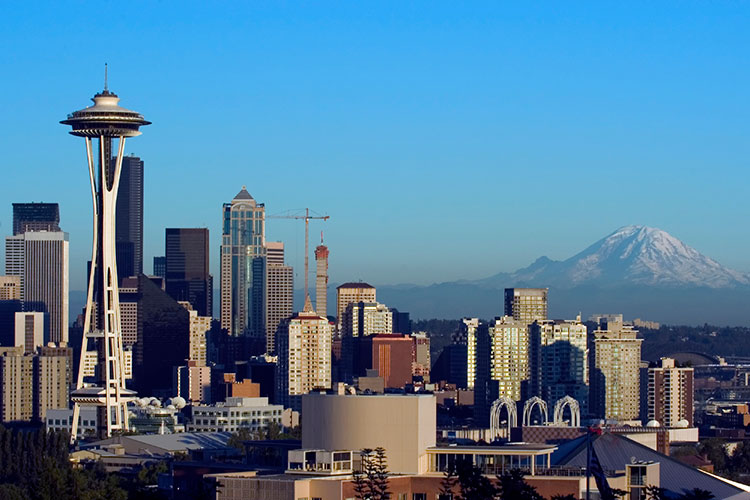
Seattle


Seattle

In Seattle, voters have approved a series of special tax levies that make it possible for the City’s Office for Education to target block grants for education improvements.

“The Family and Education Levy” program provides grants to specific schools and programs throughout the district each year.

Subscribe to Chicago Hot Dog