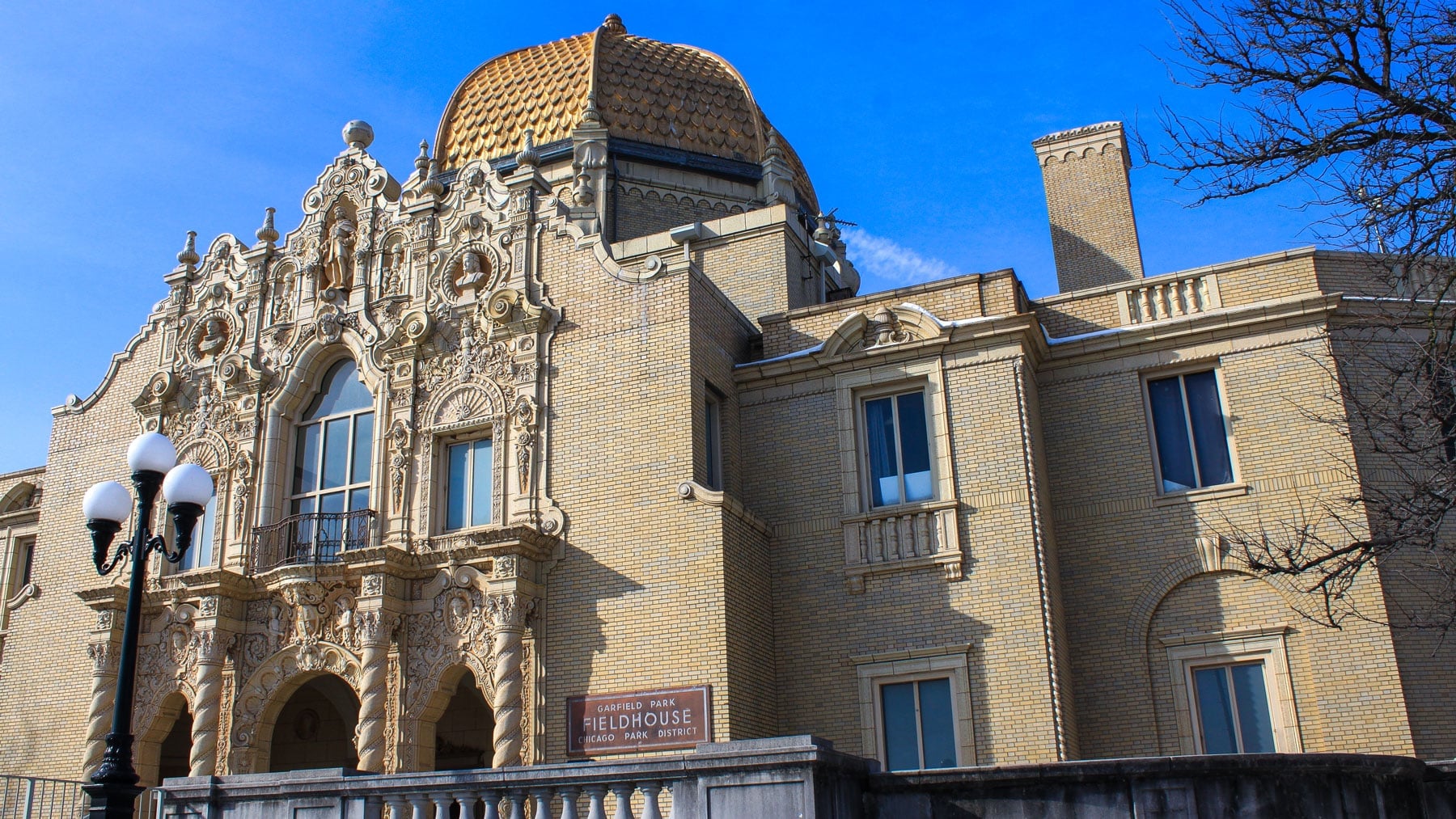
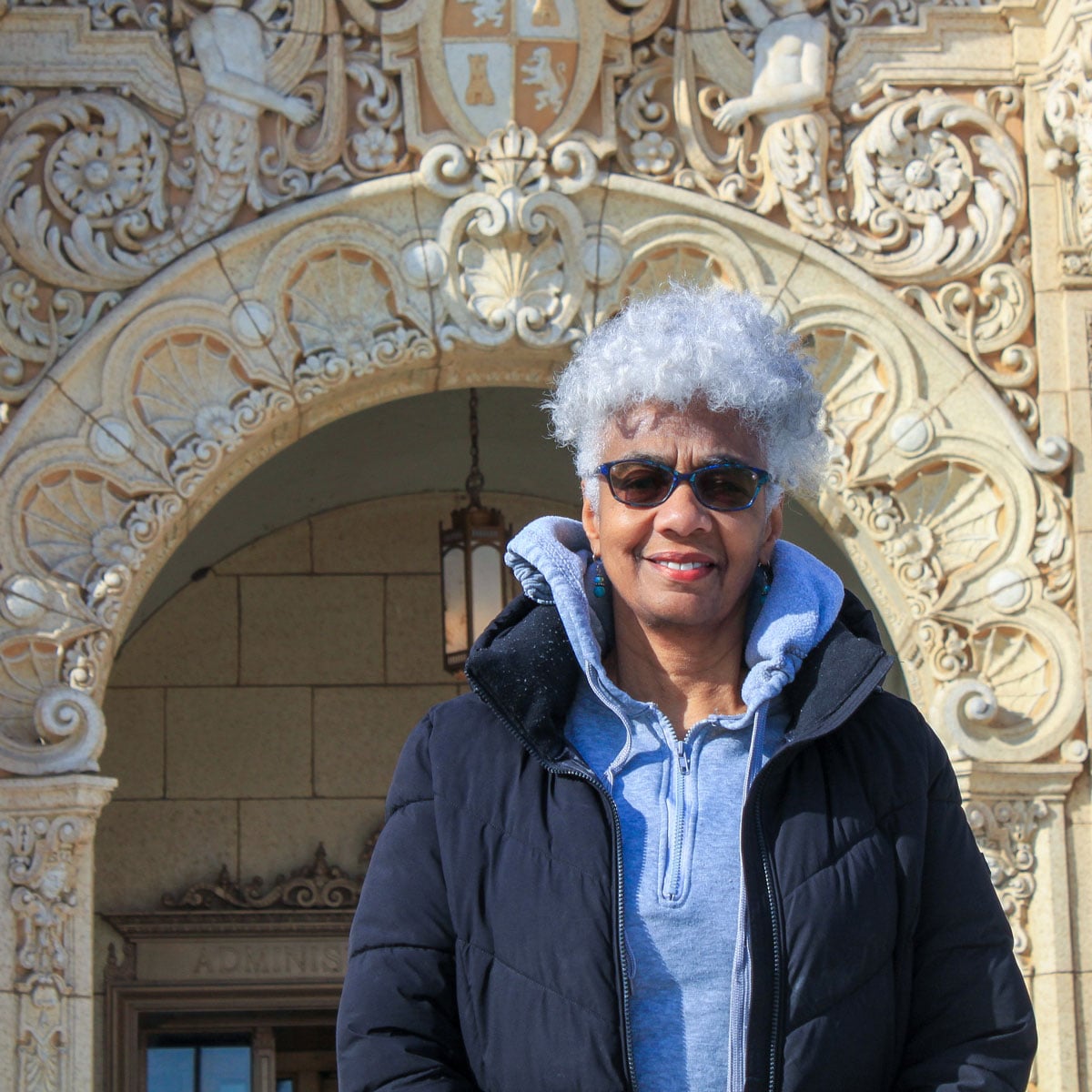
Gina Jamison, president of the Garfield Park Advisory Council, is pictured on Feb. 9. 2026. Photo: Dan Lambert / WTTW News
If a public meeting is happening anywhere in Garfield Park, there’s a good chance Gina Jamison will be in attendance.
“I need to know what’s going on in my community,” said the 77-year-old Jamison. “People will tell you, ‘Miss Gina’s everywhere.’”
That kind of visibility is about more than just satisfying her curiosity. For Jamison, it’s all part of the job of being president of the Garfield Park Advisory Council — an unpaid, volunteer position that she couldn’t take more seriously if she were mayor of Chicago.
There are connections to make, partnerships to forge and collaborations to nurture, all in the name of supporting and promoting the 184-acre West Side park.
While there’s only one Miss Gina, like-minded people are similarly rolling up their sleeves all across Chicago, advocating for their parks and representing their community’s voice when it comes to park governance. They serve as the Chicago Park District’s eyes and ears on the ground, Jamison said, while simultaneously holding the district accountable for stewardship of its facilities and natural resources.
“We are the grassroots,” Jamison said of park advisory councils, also known as PACs.
Extra Arm of Advocacy
At last count, 230 of the Chicago Park District’s 600-plus parks were represented by an elected park advisory council. (Some larger PACs have “adopted” smaller, neighboring parks.)
The oldest PACs — a distinction shared by the advisory councils for Jackson Park, Lincoln Park, Unity Park and Washington Park — date back to the early 1980s, and new PACs are constantly forming, according to Maria Stone, manager of community relations with the Chicago Park District.
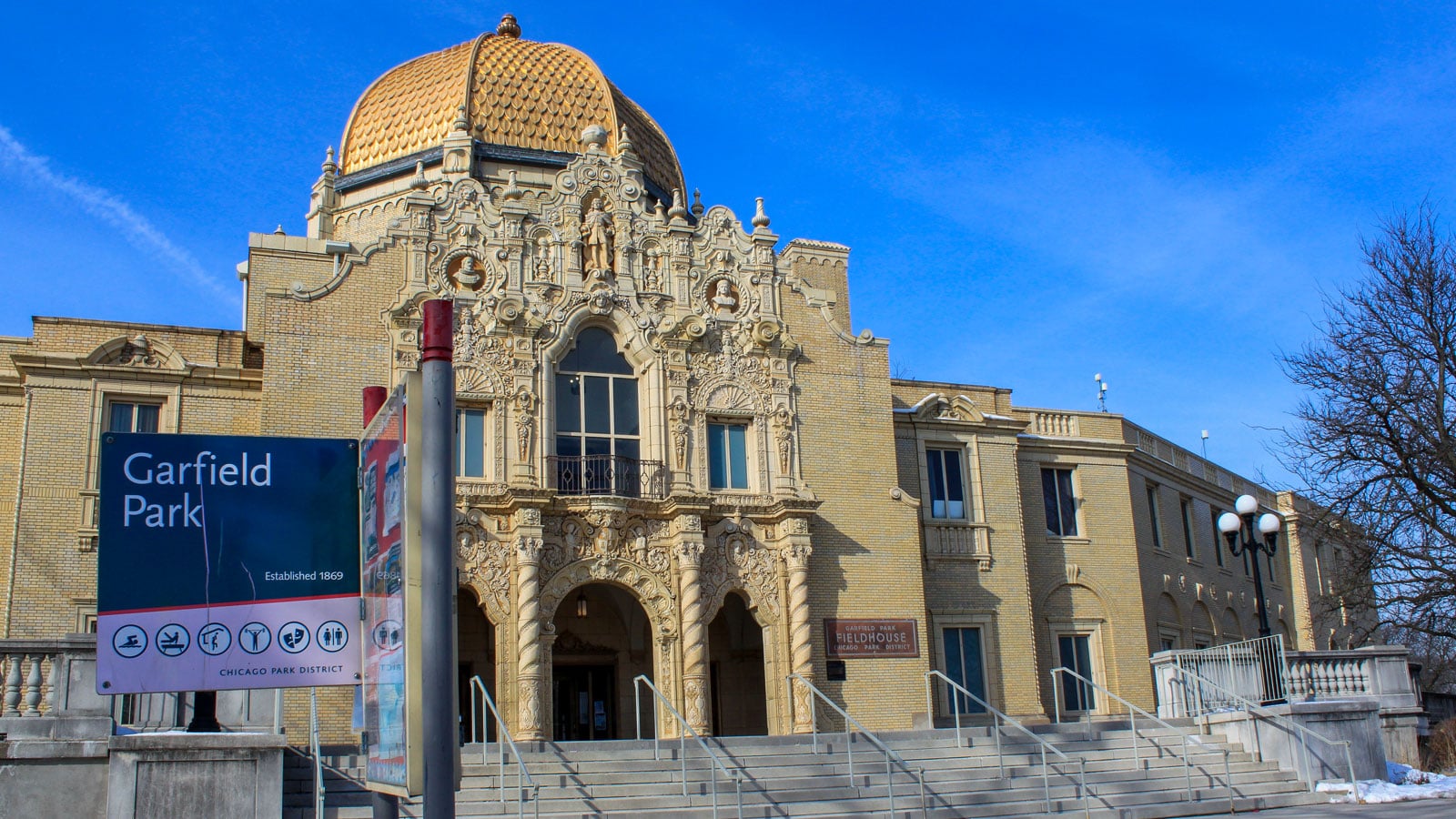
The Garfield Park fieldhouse is pictured on Feb. 9, 2026. Photo: Dan Lambert / WTTW News
In 2025, PACs experienced a mini-surge, with the creation of 10 new ones. And 2026 is starting off strong: One new PAC has already formed and three more are in the midst of the process, according to Stone.
The PAC concept, in Chicago, originated with the nonprofit advocacy organization Friends of the Parks as a mechanism for ensuring the public had a say in the spending of millions of federal dollars allocated for parks, according to Bronwyn Nichols Lodato, board president of Friends of the Parks and president of the Midway Plaisance Advisory Council.
Specifically, there was a concern money wouldn’t be spent equitably throughout the district. Indeed, in 1983, the U.S. Department of Justice issued a consent decree requiring the Park District to funnel 65% of capital improvements to parks in minority communities. The consent decree expired in 1989, but PACs have become a fixture of Chicago’s civic landscape.
“At their best, PACs are powerful venues for communities to gather and engage in a foundational democratic practice: speaking out,” Nichols Lodato said. “They serve as a forum for community members to use their voices to express how they wish for their parks to be maintained and protected equitably, with the common tie being a deep love of their parks.”
The community connection that PACs provide is invaluable to the Park District, Stone said.
PACs have helped the Park District identify trends, she said, like the rabid interest in pickleball — and the emerging push for disc golf courses. They push for programming that suits the demographics and cultural interests of the surrounding community. And PACs raise concerns about everything from staffing needs to deficient facilities or neglected natural areas.
“Without PACs, the Park District wouldn’t hear as much, … from ‘the Wi-Fi doesn’t work’ to ‘our supervisor needs a golf cart,’” said Leslie Recht, president of the Grant Park Advisory Council. “It sounds boring, but it makes the park work.”
Acknowledging that the Park District only has so much money and manpower to go around, Recht said active PACs are the proverbial squeaky wheel that gets the grease. It was a statement echoed by Jamison and Nichols Lodato. A PAC president’s presence at monthly board of commissioner meetings can make the difference between getting to the top of the district’s to-do list or falling between the cracks.
That relationship works both ways: When the Park District needs to raise money, PACs frequently get the call.
The councils are, in many cases, fundraising engines not unlike “Friends of” groups within Chicago Public Schools.
The Chicago Parks Foundation serves as the fiscal sponsor for some 70 PACs, lending its nonprofit, tax-exempt status and relieving the councils from setting up their own structures.
“We’re a good sounding board for realistic projects,” said Willa Lang, the foundation’s executive director.
The level of project a PAC can bite off varies, Lang said. Successes that sprung to her mind ranged from big-ticket items like Wicker Park creating a dog-friendly area to the Washington Square PAC fundraising for flower baskets to hang from light poles.
Intro to Politics
Though they work hand in hand with the Park District, advisory councils are very much independent bodies.
And like any democratic institution, PACs are no stranger to controversy or drama.
Some of the strife is internal. Conflict arises when members disagree about a PACs direction, or when the broader community suddenly takes an interest in the workings of a PAC that had largely flown under the radar.
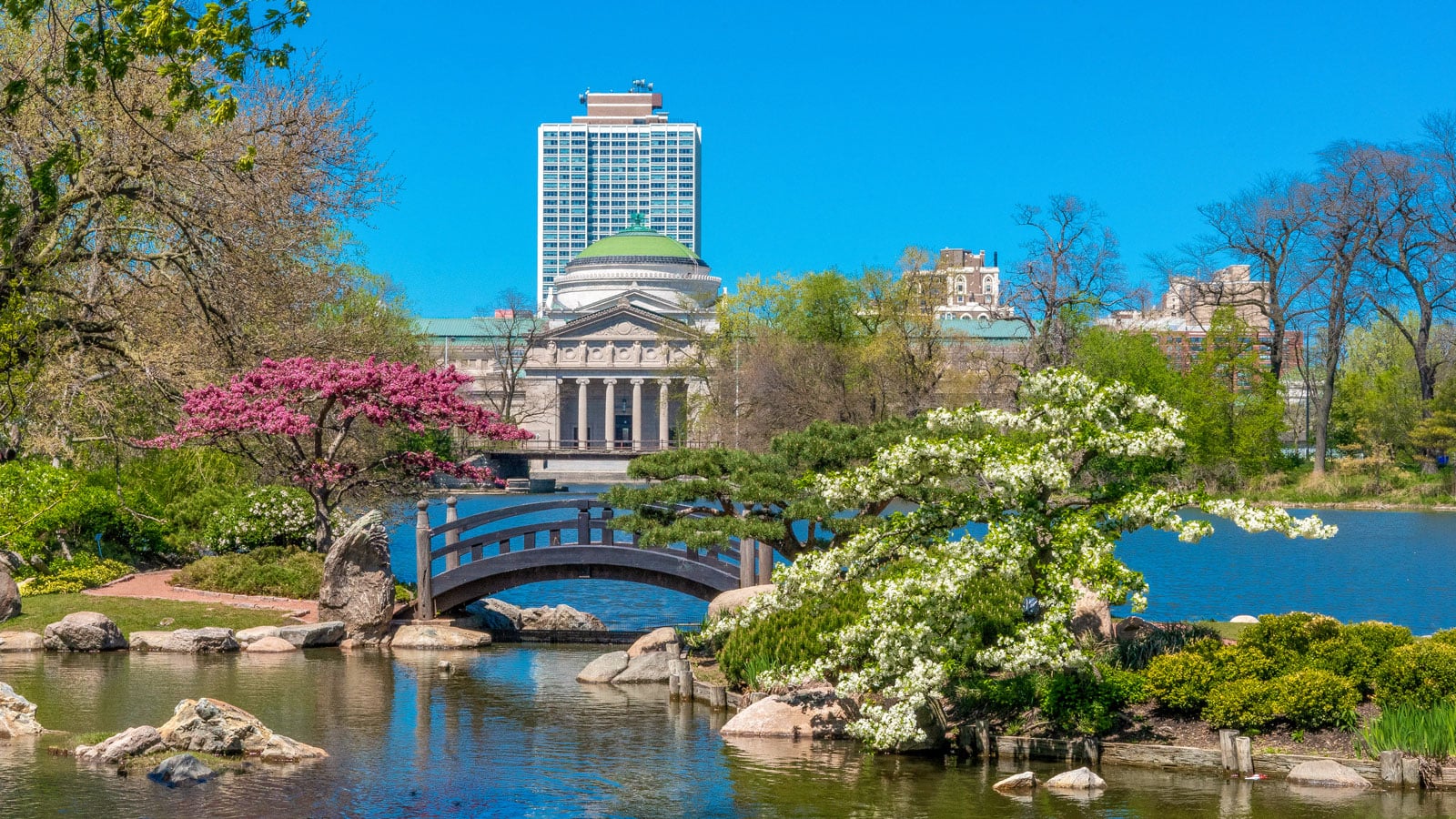
Jackson Park Photo: iStock
WTTW News covered a struggle for control of the Jackson Park Advisory Council, and the Humboldt Park Advisory Council has been shut down on multiple occasions, with a history of infighting chronicled by Block Club Chicago.
But there are external tensions, too.
Theoretically advisory councils exist to do just that: advise the Park District on priorities and needs, park by park. Yet each PAC president interviewed by WTTW News could offer examples where their opinion had been discounted or they hadn’t been consulted at all.
Recht said she found out about the NASCAR Chicago Street Race at the same time as everyone else, and Jamison was caught off guard when an area of Garfield Park was converted to native plantings, contrary to a framework plan.
At Midway Plaisance, the advisory council successfully beat back a proposal for a parking garage at the park’s east end, but lost another battle tied to the ongoing fallout from the city handing over land in Jackson Park to the Obama Presidential Center.
Because Jackson Park has historic status, all sorts of federal processes and reviews were triggered, Nichols Lodato explained, and one federal requirement is that lost park land has to be replaced elsewhere. The Park District’s solution was to convert a portion of Midway Plaisance into a playground, a decision Nichols Lodato and her fellow advisory council members objected to on multiple levels.
Those objections were overruled.
“There are many PACs that have battle scars from challenging power structures at the Chicago Park District and the city,” said Nichols Lodato.
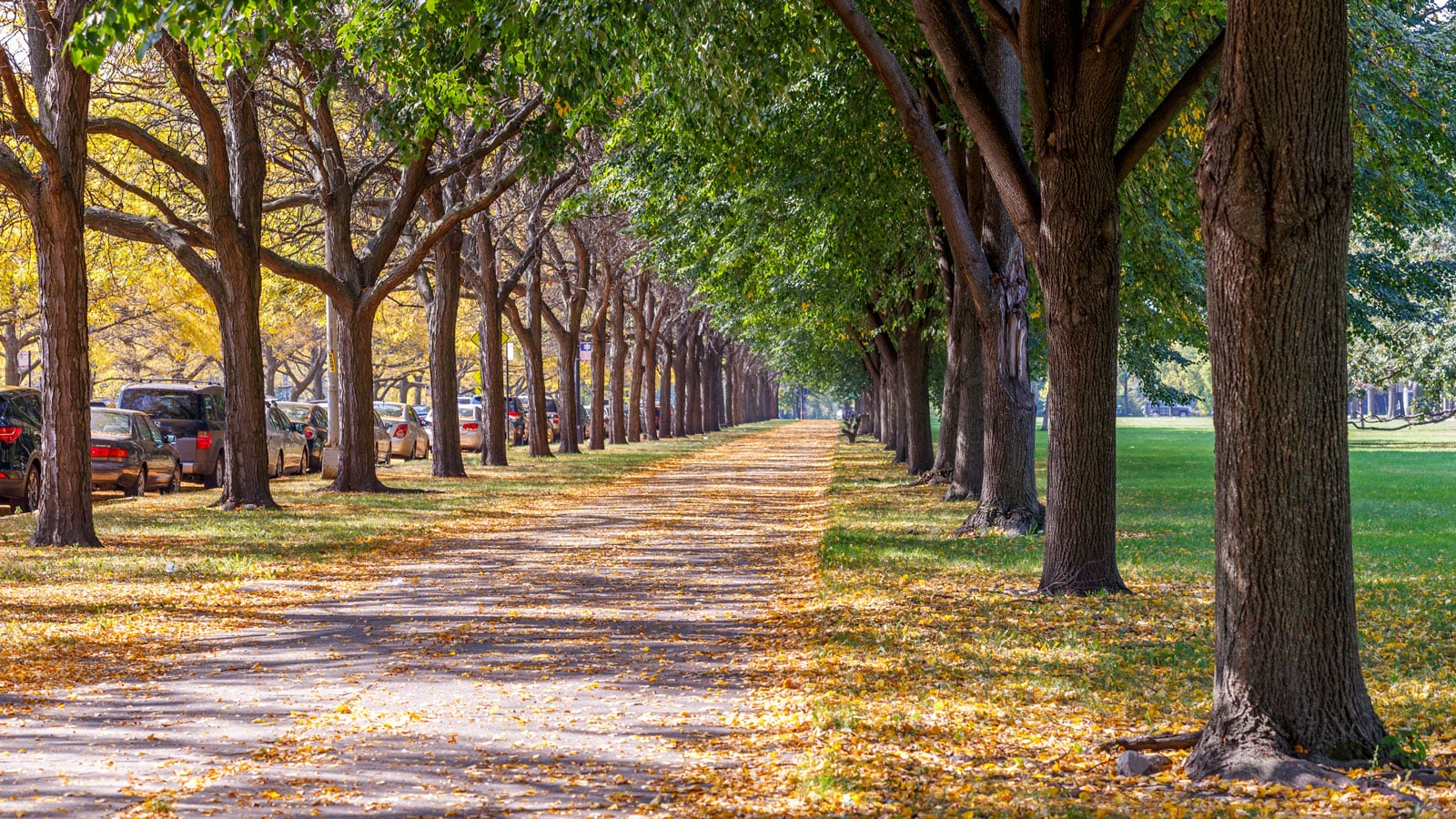
The path around Midway Plaisance Park in the Hyde Park neighborhood is pictured in fall. Photo: iStock
Among PACs, there’s a fear, Nichols Lodato said, that standing up to or contradicting the Park District will have repercussions, either in terms of withheld resources or other consequences.
The greater jeopardy, though, she said, is that people will become sour on the process of participatory democracy if they sense their voice doesn’t matter. PACs, Nichols Lodato said, are designed to be community forums, and their advisory role should have some influence.
“But … PACs are advisory only,” she said. “It can be demoralizing if you keep running up against ‘no.’ PACs can easily be left in the dust. Decisions will be made without their input and that deters people.”
For its part, the Park District said it is continually balancing a PAC’s voice against broader strategies and priorities, as well as listening to other community stakeholders whose opinions might differ from the PAC’s.
“It’s finding a balance,” said Stone. “The Park District has realities.”
But there’s no denying the value of PACs, she said, which is why the Park District co-hosts an annual PAC conference, to share best practices and provide PAC members with an opportunity to network.
Stone also introduced a training program called “PAC School,” now in its second year, for new PAC leaders. And she holds PAC office hours, where officers can pop in to ask questions or just check in.
Crossroads
Some 40 years after PACs were introduced, they’ve proven their worth as advocates and watchdogs.
“PACs at their best activate community members around the love of the parks, and that itself deepens civic connections,” said Nichols Lodato.
But PACs are also at something of a crossroads. At the most recent PAC conference, held in January, Lang of the Chicago Parks Foundation noted that most of the attendees were, well, older than PACs themselves.
“Where’s the next generation?” Lang wondered.
Jamison, for one, is actively recruiting her successors, and has people in their 20s and 30s in leadership positions.
“I want people to show up. I want my community to show up,” Jamison said. “Because when people do get involved, … when people do come to the meetings, they find out what needs to be done. That’s what the whole PAC is about. Come here and be a part of it. Be a part of the end result.”