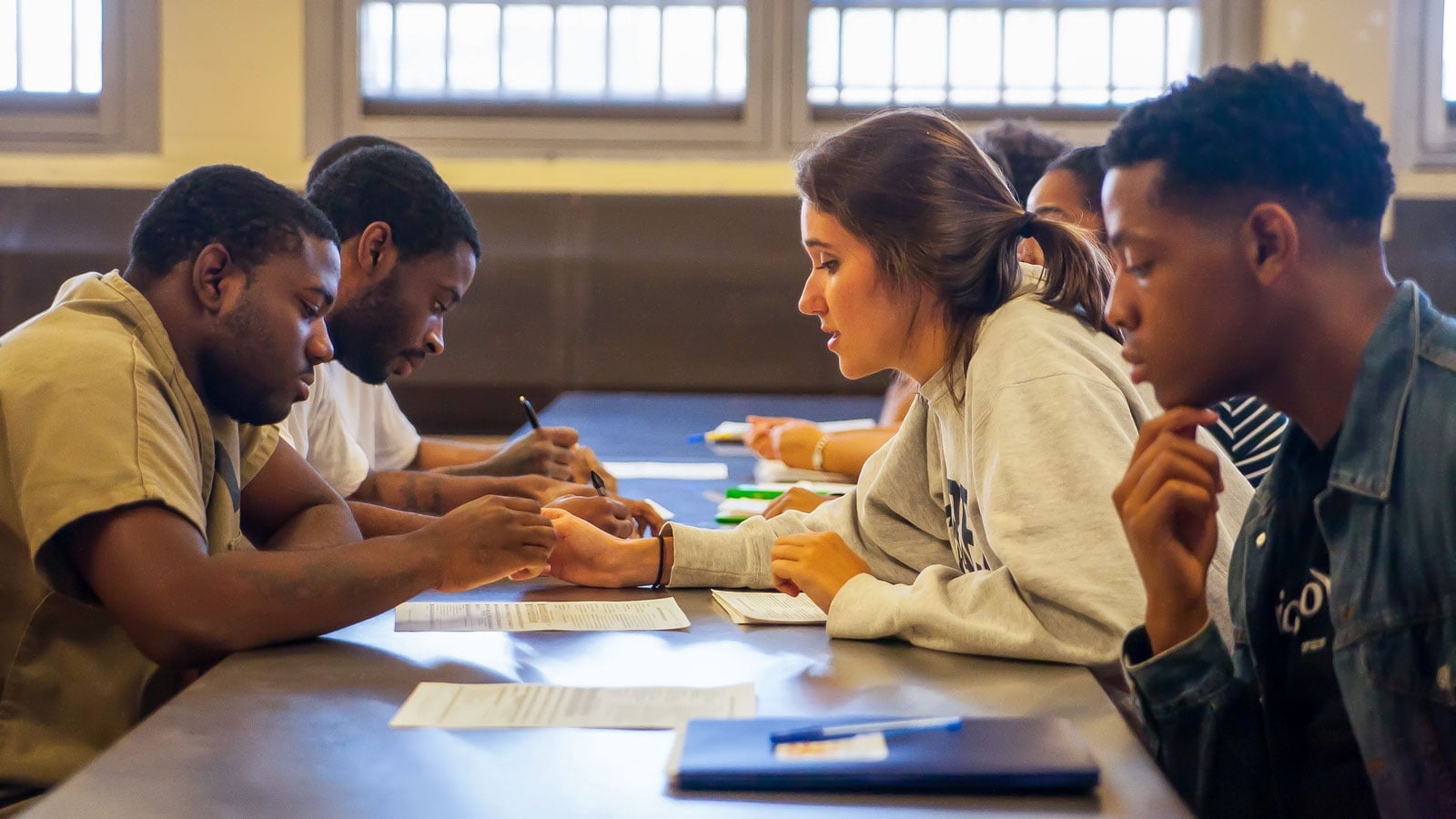
In 2019, Illinois directed county jails and local election officials to establish a process that would allow those in custody awaiting trial to cast ballots during elections.
Those behind the law said the move was an effort to guarantee everyone legally allowed to vote had access to the ballot box.
To see how local sheriffs and election officials have actually implemented voting, WTTW News reached out to every county jail in Illinois with a set of three questions.
- About how many people voted in the last election at your jail, and how did they vote?
- What information about issues and candidates on the ballot are provided to those in your custody?
- How will your jail handle voting in the primary and general elections for those in your custody in 2026?
WTTW News received responses from 48 of the 90 county jails in the state. Many did not respond, while a handful refused to comment on the voting rights of those in their custody.
In Illinois, the pre-sentenced jail population was 14,360 as of June 2025, according to the most recently available data from the Loyola Chicago Center for Criminal Justice.
Cook, Will and Lake are the only counties that confirmed they provide a temporary polling place for those incarcerated. Cook County Jail has received attention for its polling place; Will and Lake followed suit after a 2022 law expanded temporary polling places at jails in counties with populations of less than 3 million people.
While Cook is required under the law to set up a polling place, other counties may do so if they choose.
“It’s not only Cook County that should be providing the system for eligible voters — all eligible voters deserve true access to a polling place,” said Ami Gandhi, director of strategic initiatives and the Midwest voting rights program at Chicago Lawyers Committee for Civil Rights.
Most other jails use mail-in ballots. A few transport residents to vote in person, while others have the clerk collect the ballots.
Some county jails are located near courthouses or other facilities conducting elections. The proximity makes it easy for the counties to transport people in custody to voting precincts.
Asking for mail-in ballots while in custody can be a hindrance, said Stevie Valles, the CEO of Chicago Votes, a nonpartisan voting rights organization. A person in custody would need to ask an officer for the ballot; that officer would then need to get the ballot from the clerk. The person in custody would fill out the ballot and return it to the officer, who mails it.
“That’s really hard to do while you’re in jail,” Valles said.
Voting by mail is a coordinated effort among clerks, local election authorities and sheriffs. For the upcoming election, staff at the Bloomington Election Commission said they contacted staff on Feb. 5, the first day applications could be sent. The commission informed jail staff of any deadlines, and asked staff to reach out with any concerns.
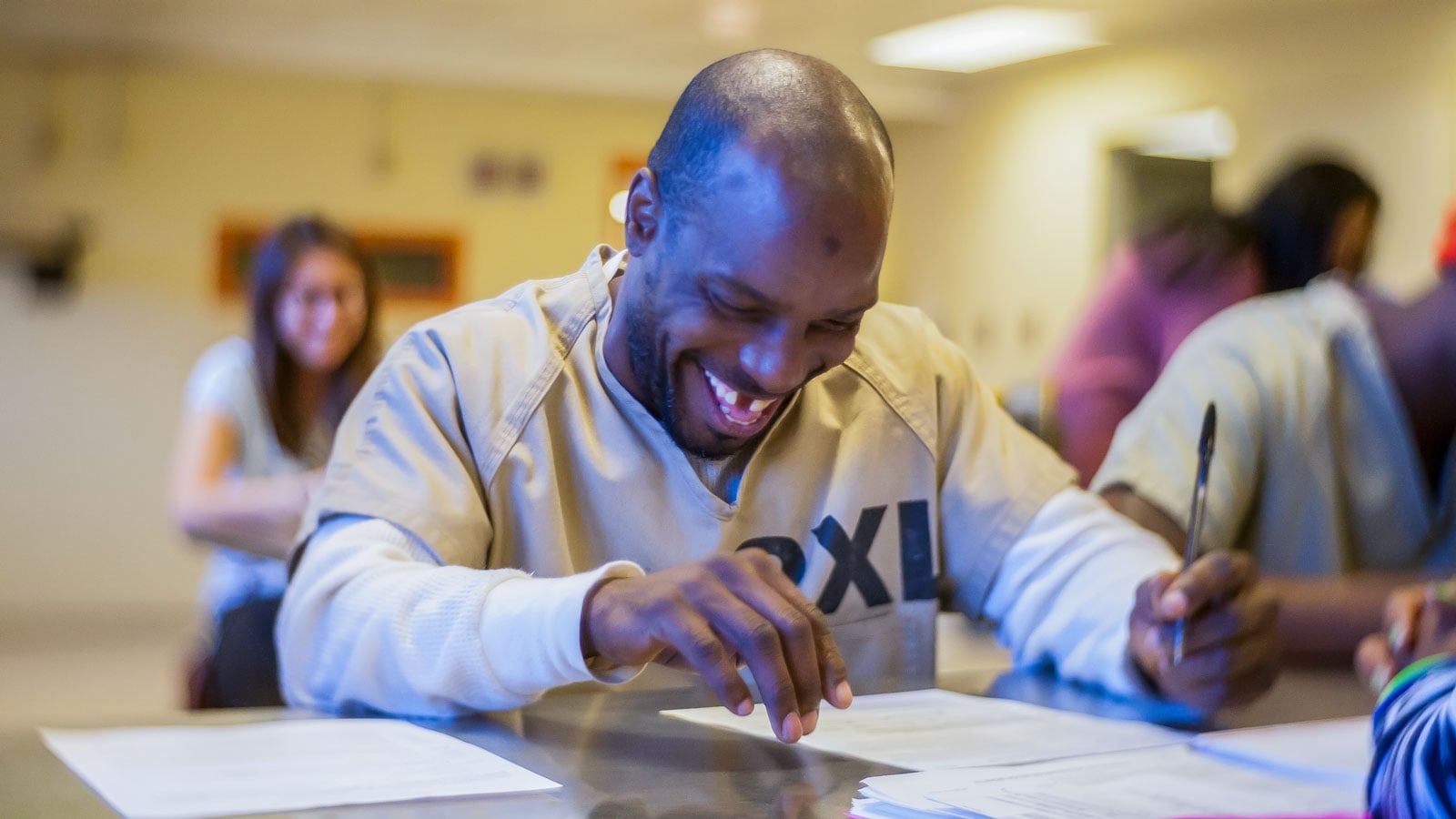
Chicago Votes conducts jail outreach efforts through the Cook County Sheriff’s Office. Courtesy of Chicago Votes
An election specialist said he will maintain contact with a director at the McLean County jail leading up to the election. Mail ballots for qualified detainees are sent to the jail, filled out by the voter and mailed back to the election commission, he said.
Access to Information
According to the 48 responses from local sheriffs, two of their jails have education programs involving collaboration with external organizations, while one-third relied on television news, self-guided research on tablets or family to provide election information. More than three in five reported they provide no information to eligible voters in jail.
Crawford County reported six people voted in 2024. For the next election, the county clerk will come in person to sign up those in custody to vote. This rural county in southern Illinois uses TVs and tablets to provide information to voters in jail.
“If they are not registered, we will register them,” William Rutan, the Crawford County sheriff, said about those who wish to cast a ballot. “I feel their right to vote is constitutionally guaranteed.”
McLean County in central Illinois, which includes the city of Bloomington, reported it works with Heartland Community College to have students research and put together nonpartisan information packets about local, state and national candidates for jail residents.
Many jails provide information packets from organizations like the League of Women Voters, some only upon request.
Eight of the 48 counties reported no voter participation in the last election cycle.
People who are convicted and serving a sentence can’t vote. Jails are now required to provide voter registration applications and information about voting rights being restored for those leaving jail and prison.
The responses from county jails about voter information show that in many cases, research is self-guided. “We do not provide information about candidates,” one response read.
“We don’t push politics here; as for getting materials on candidates, we don’t personally provide that,” said another. Some believed it was illegal to provide information to detainees despite the availability of nonpartisan voter guides.
To Valles of Chicago Votes, the lack of material being provided and low voter turnout are connected. It’s difficult to get anyone — inside or out — to vote. But once he starts talking about elections with those incarcerated, he said it’s welcome news.
“It cuts through the mundane life of being incarcerated, having somebody come in and talk to them about their civic rights, responsibilities, and the rights they still have,” Valles said.
He envisions opportunities for incarcerated people to get election information beyond TV, and instead from civics classes.
Chicago Votes partners with DePaul University and the University of Chicago to provide classes to those incarcerated at Cook County Jail. They’ll talk about which offices and candidates are on the ballot and pass out voter guides.
“I’ve never told anyone in a jail that they can vote for a judge and they say, ‘Oh, I still don’t want to vote,’” Valles said. “You get to elect the lawmakers who write the policies that have put you in a position that has landed you in incarceration.”