Visiting the Obama Presidential Center? Here’s What Else to See Around Jackson Park
Meredith Francis
June 8, 2026
Visiting the Obama Presidential Center? Welcome to Woodlawn, a South Side Chicago neighborhood overflowing with history. Anchored by the historic, Frederick Law Olmsted-designed Jackson Park, this corner of the city offers a blend of World’s Fair history, beautiful university architecture, colorful murals, lakefront views, and open green space. Whether you're making a full day of your visit or looking to wander a bit beyond the Center’s campus, here are a few nearby spots you may want to check out.
Griffin Museum of Science and Industry
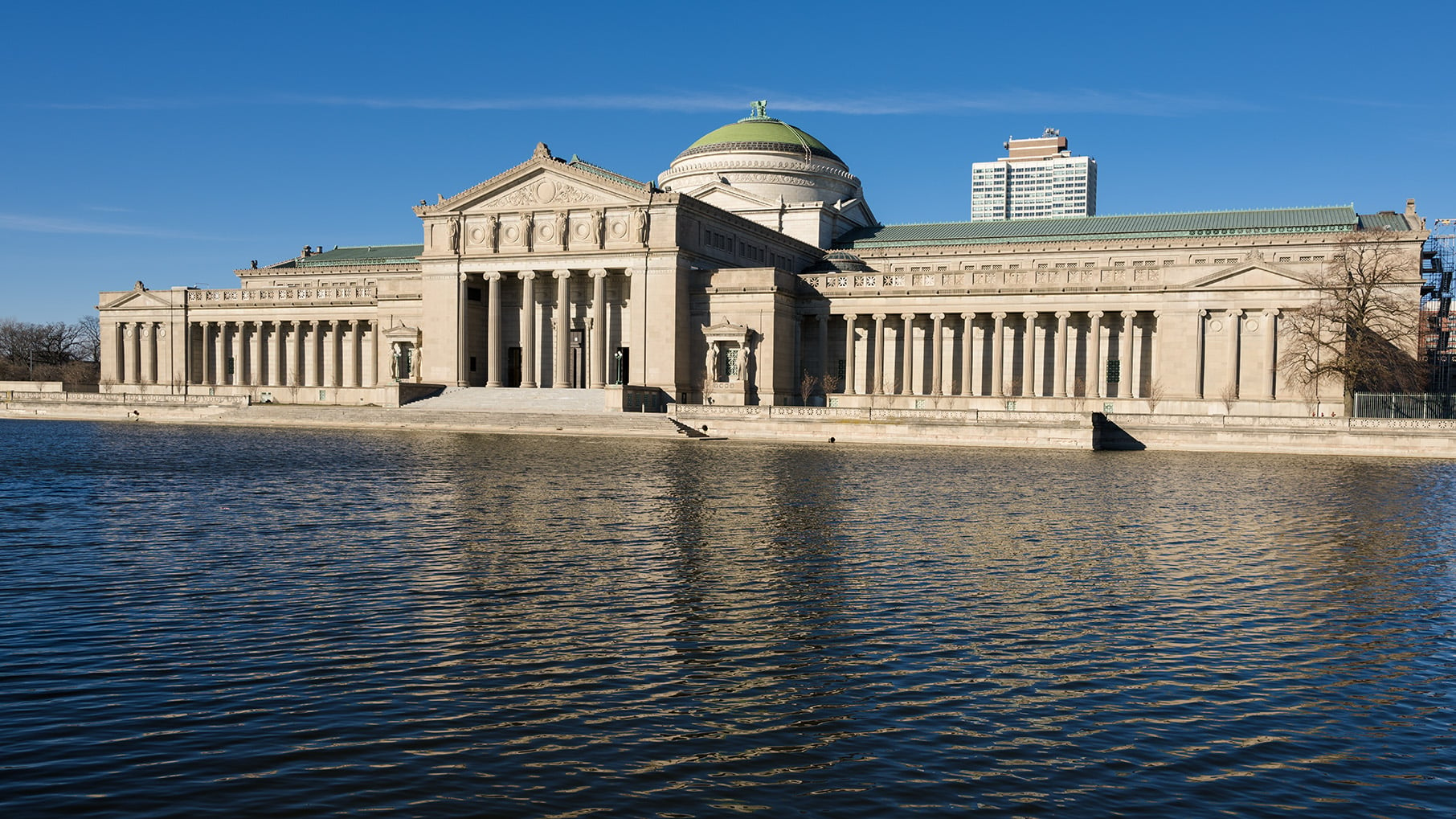
Explore everything from a captured German submarine to hands-on science exhibits inside a building with a fascinating history in its own right. The Griffin Museum of Science and Industry occupies the former Palace of Fine Arts, which was built for the 1893 World’s Columbian Exposition. Unlike most fair buildings, which were made out of temporary materials, the Palace of Fine Arts was constructed with brick and steel to protect the artwork that was displayed inside during the World’s Fair. After some years in limbo, the structure was transformed into the Museum of Science and Industry, which opened during another world’s fair – the 1933 Century of Progress.
Wooded Island & Osaka Garden
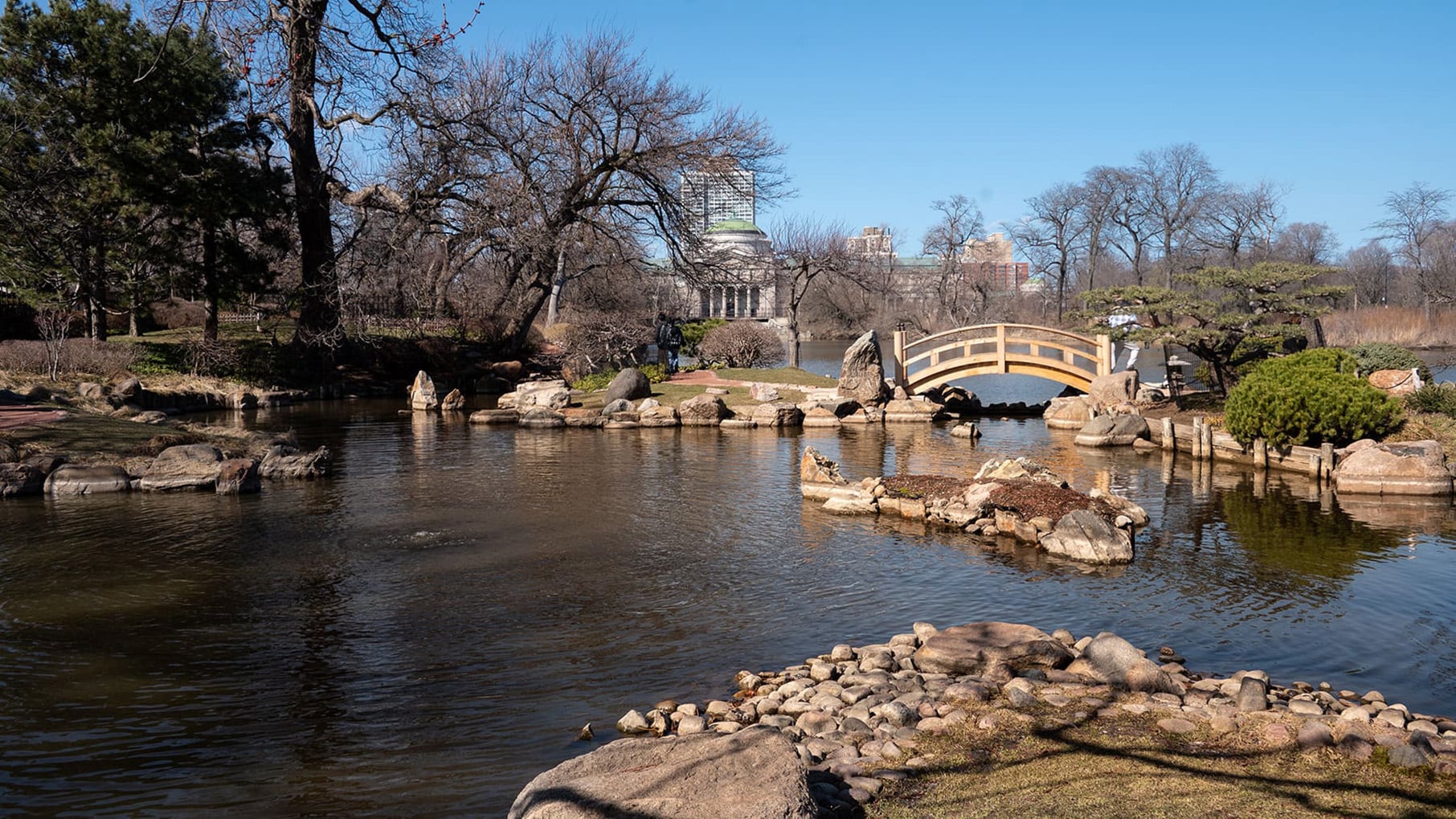
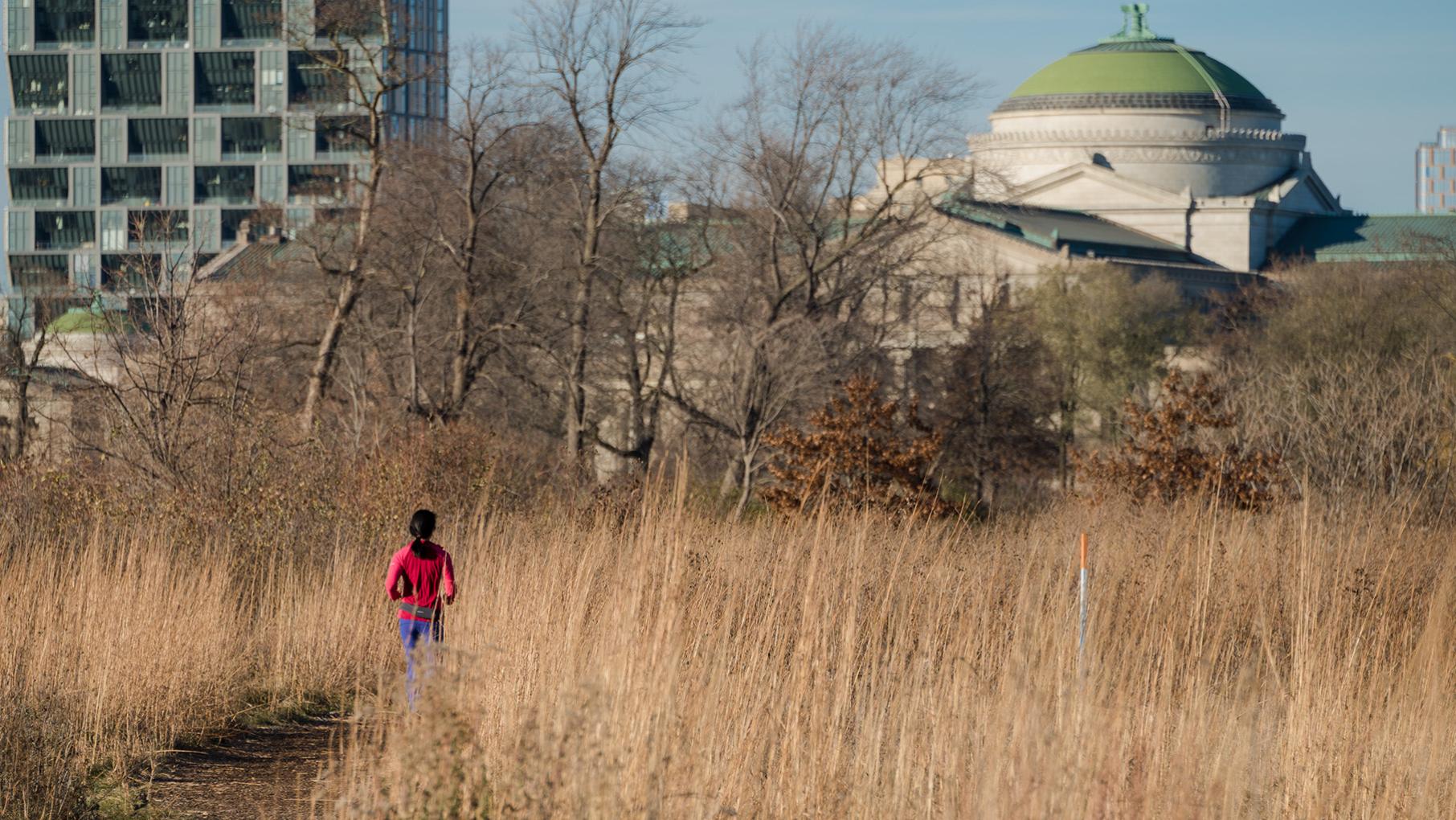
Another remnant of the World’s Fair, Wooded Island in Jackson Park was central to Frederick Law Olmsted’s landscape design for the fair. It was meant to be a quiet, natural respite from the bustling crowds and opulent ornamentation of the White City. On the north end of the island, the Osaka Garden offers lovely views of the Museum of Science and Industry on a quiet section of the lagoon. Originally called the Japanese Garden, it was home to the pavilion for the Japanese government during the fair. The garden was rehabbed multiple times over the years, and today, it is the site of a beautiful spectacle each spring: the blooming of the cherry blossoms. Just outside the garden is a steel sculpture named Skylanding, created by Yoko Ono. If you’re a birder, Wooded Island and Bobolink Meadow (which is east, on the other side of the lagoon) are a great spot to take out your binoculars.
The Statue of the Republic
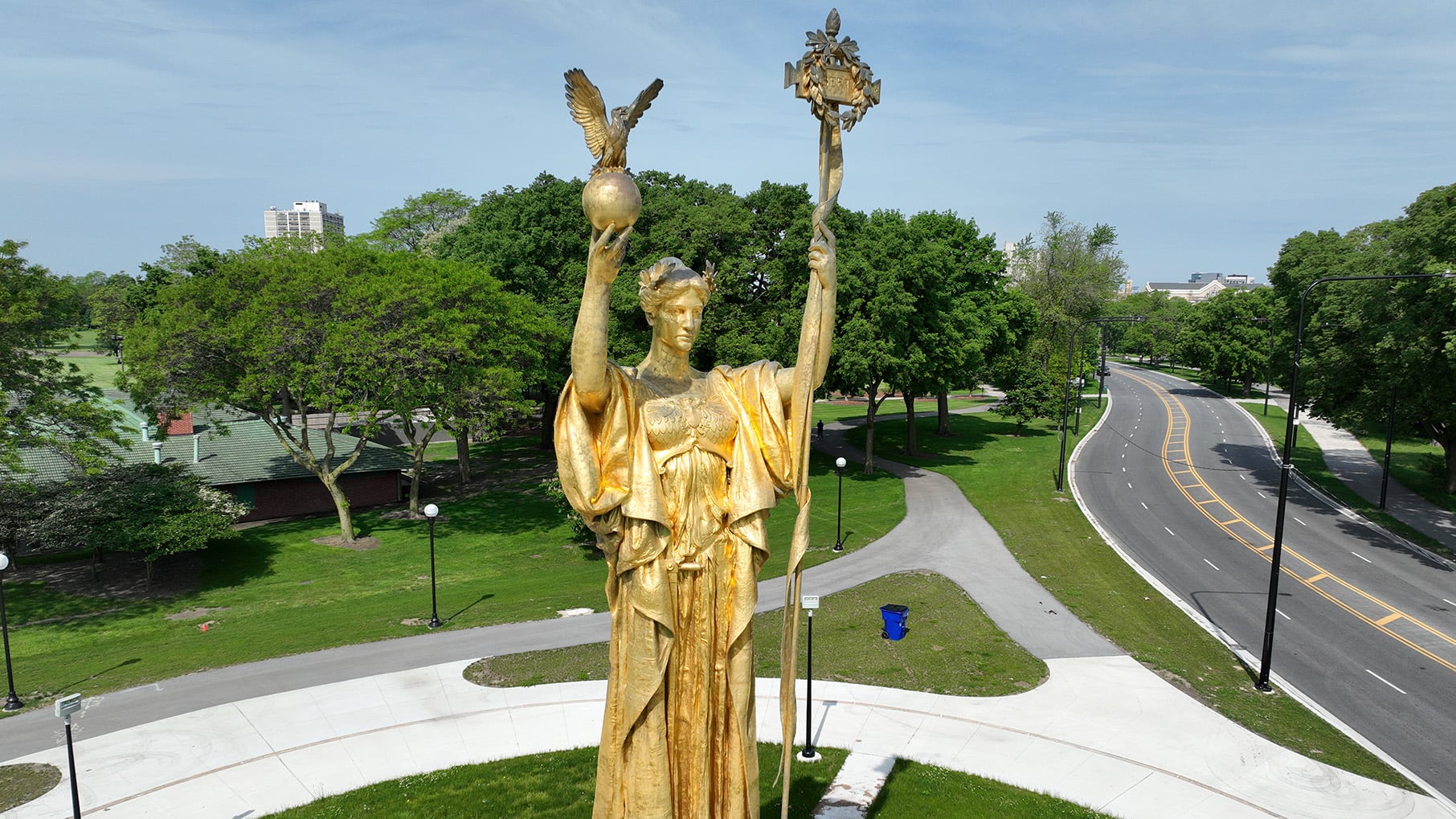
For yet another piece of World’s Fair history, visit the intersection of Hayes and Richards drives in Jackson Park to see a one-third scale replica of the Statue of the Republic. Created by sculptor Daniel Chester French, the original Statue of the Republic was a towering, gilded figure that stood in the Grand Basin at the 1893 World’s Columbian Exposition. It was 65 feet tall, though with its base it stretched to 100 feet. Like many of the other structures at the fair, it was made out of temporary materials. In 1896, as most of the White City had either been destroyed in fire or left in disrepair, park district officials burned down the original statue. The replica was created in 1918, to celebrate the 25th anniversary of the fair and the 100th anniversary of Illinois’s statehood.
Midway Plaisance Park
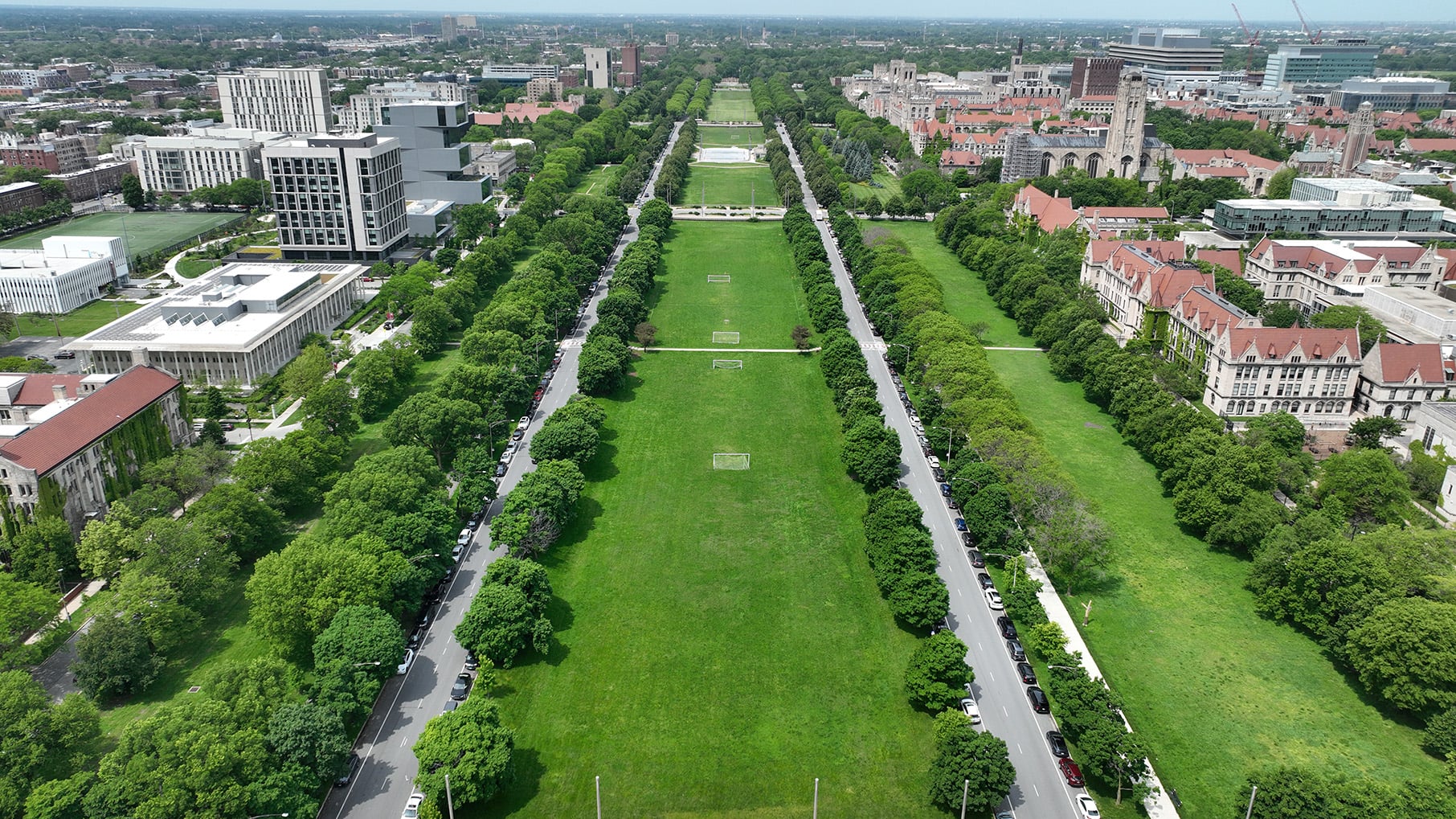
Explore another expanse of green space in Midway Plaisance Park, which connects Jackson Park to Washington Park. All three spaces were designed by Frederick Law Olmsted and fellow landscape architect Calvert Vaux, who also designed New York’s Central Park. Originally conceived as a larger park system connected by canals, plans were put on hold after the Great Chicago Fire of 1871. It wasn’t until the 1893 World’s Fair that the space was developed as the Midway Plaisance, an amusement park-style stretch of entertainment that was the more rambunctious cousin of the refined White City. The first ever Ferris Wheel was designed for the fair and sat on this stretch of land. Today, it’s a lovely park, with stunning University of Chicago architecture to serve as its backdrop. And if you’re visiting in the winter, lace up your skates and enjoy the ice rink at its center. At the western end of the park at the entrance to Washington Park, take in sculptor Lorado Taft's magnificent Fountain of Time.
The Architecture at the University of Chicago
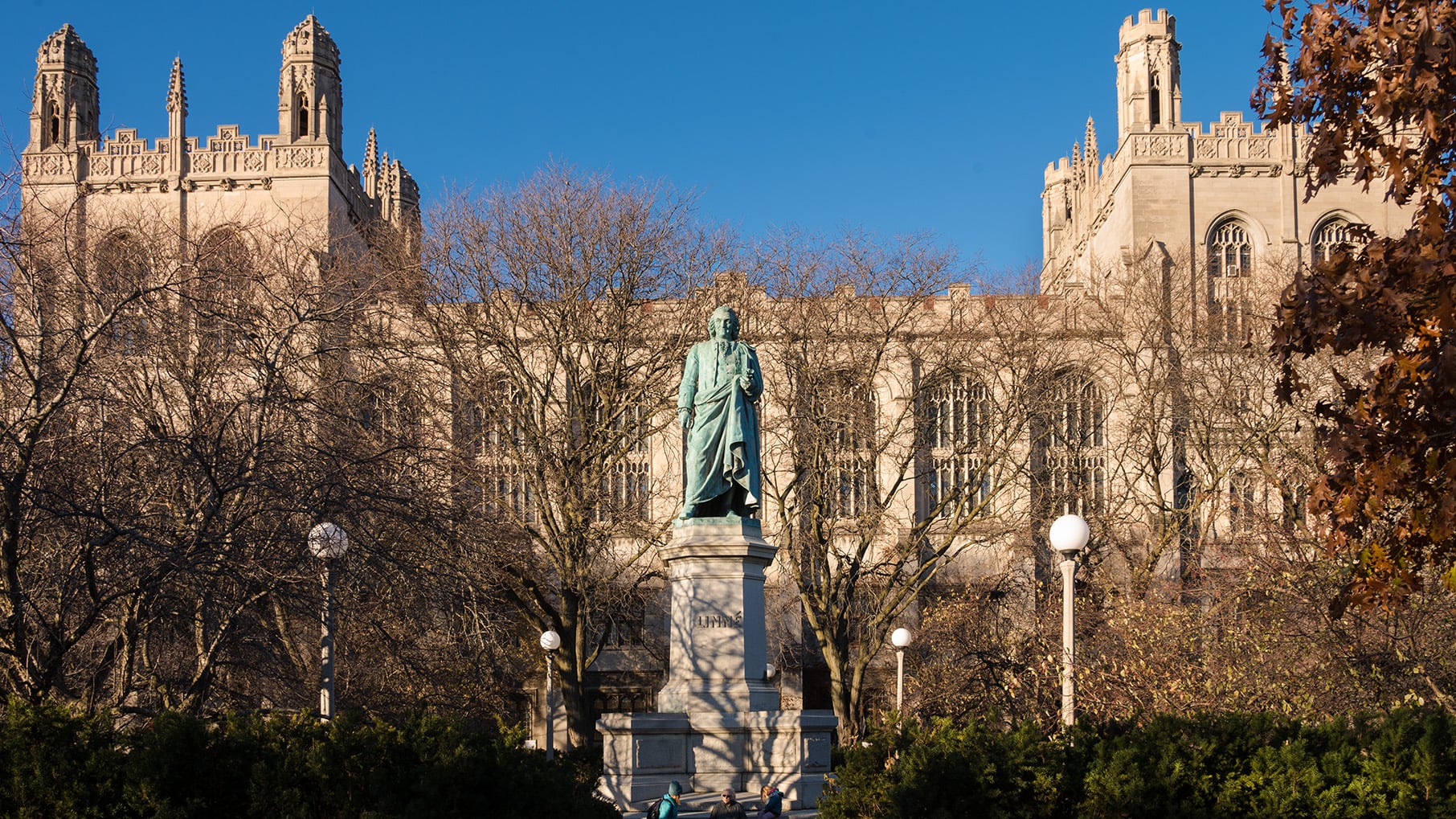
After about a 20-minute walk from the Obama Presidential Center, you can find yourself in the center of the University of Chicago’s main quadrangle. The architecture on campus will transport you to another era, with its Gothic, ivy-coated, limestone buildings recalling Oxford University in England. Some architectural highlights include the towering Rockefeller Chapel, the stately entrance to the quad in the Cobb Gate, or Harper Memorial Library, which was designed by architects Shepley, Rutan & Coolidge – the architects behind the Art Institute of Chicago. Slightly off the quadrangle, you can find the glass-domed Mansueto Library, designed by renowned architect Helmut Jahn. Plus, the university’s Logan Center for the Arts was designed by the same architects who designed the Obama Presidential Center, Tod Williams and Billie Tsien and their firm. All across the campus, you’ll find a wide array of styles by some of the world’s most significant architects including Mies van der Rohe, Walter Netsch, Jeanne Gang, and so much more.
Robie House
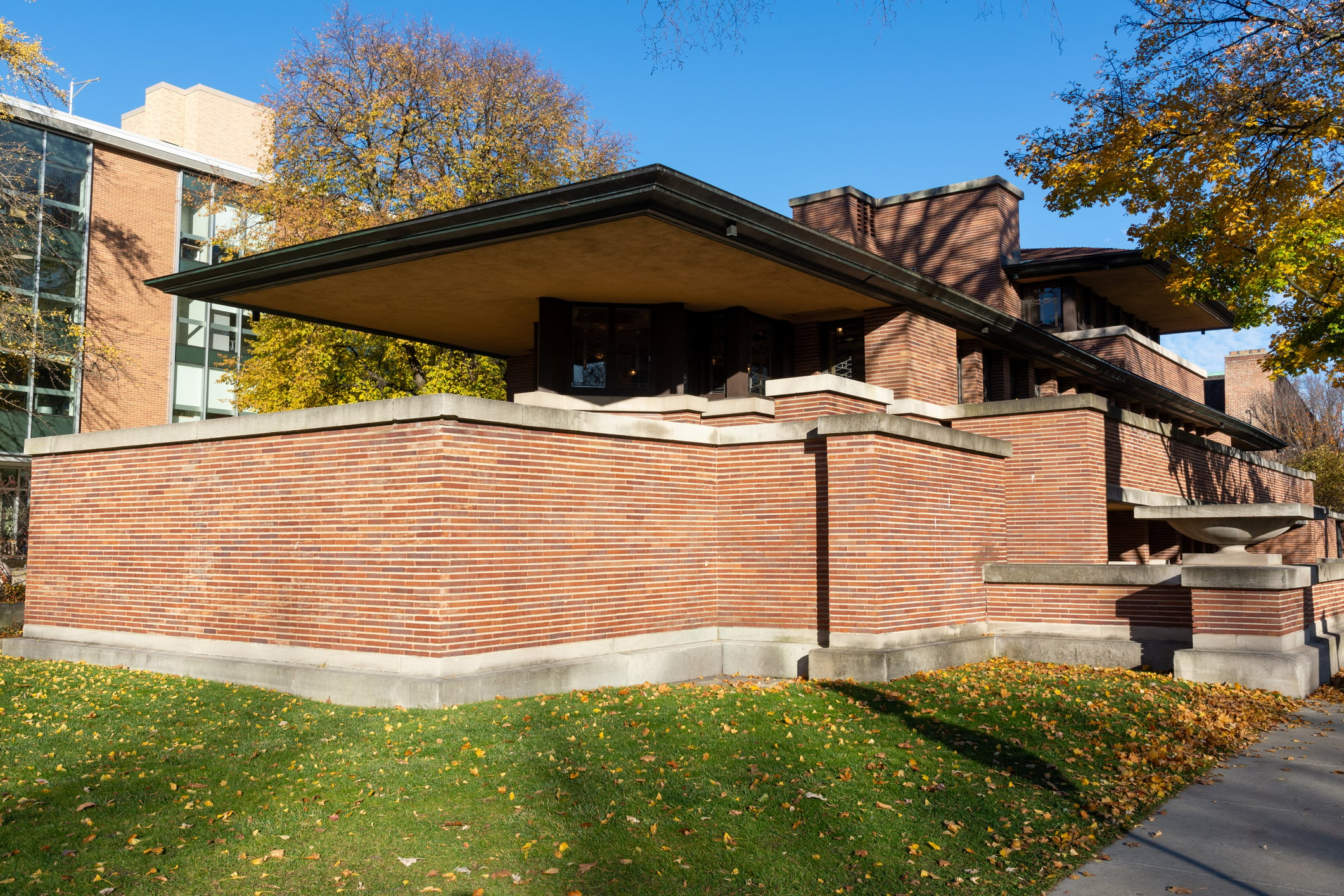
One architectural highlight on the University of Chicago’s campus worth seeing is the Robie House, designed by Frank Lloyd Wright. Robie House helped redefine American home design. Completed in 1910, the house broke from the European-inspired home styles popular at the time and introduced Wright’s Prairie style, emphasizing strong horizontal lines, overhanging eaves, and great ribbons of windows and open interior spaces.
The View from Promontory Point
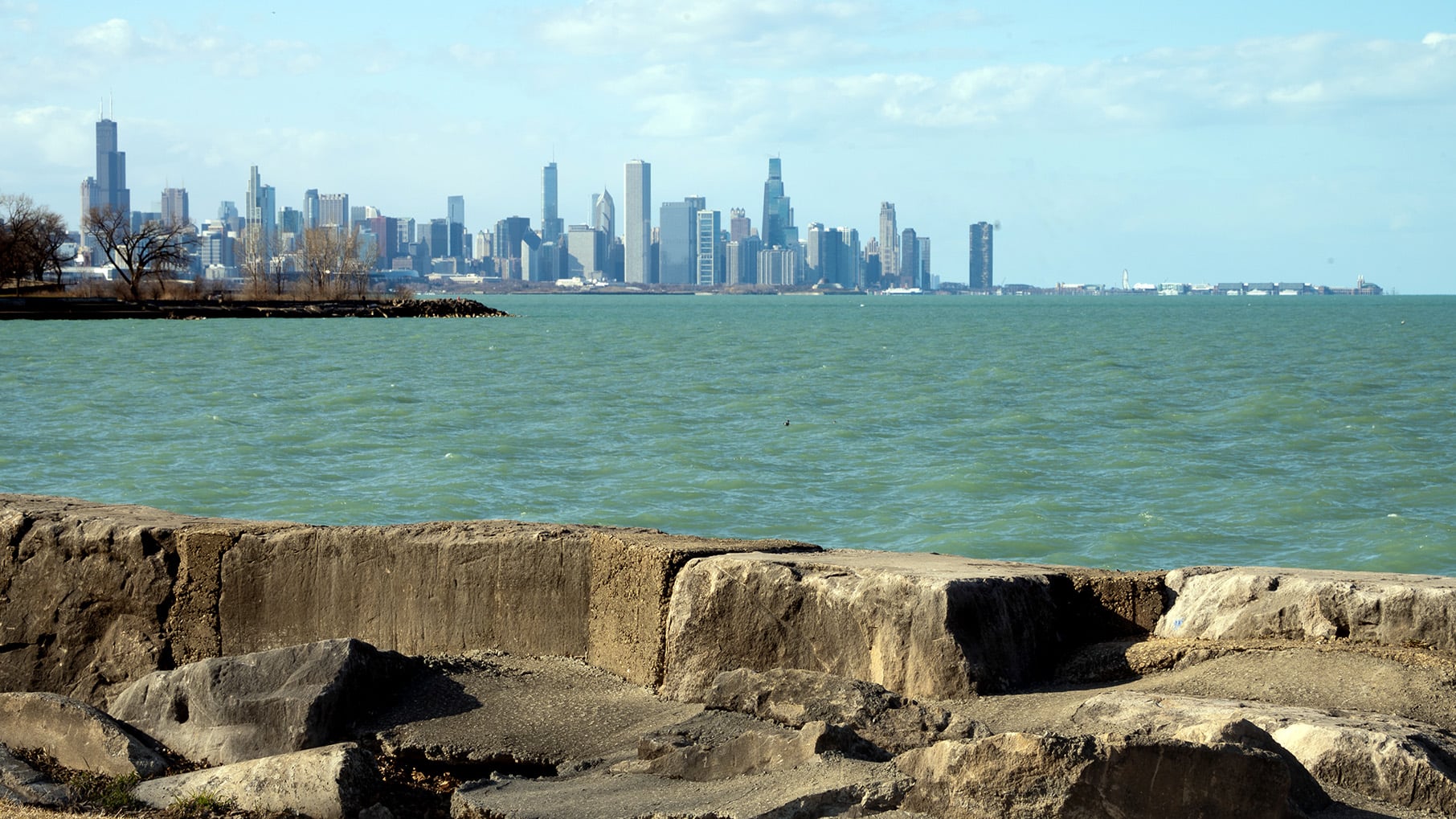
To see one of the best views in the city, head over to Promontory Point, a 40-acre man-made peninsula with sweeping views of Chicago’s iconic skyline. Originally conceived by architect Daniel Burnham in his 1909 Plan of Chicago, it took years for his vision of this lakefront gem to be realized. It was completed in 1938, with Alfred Caldwell as the landscape architect. Its rugged limestone revetments step down to the edge of the lake, making it a popular spot for water sports.
The Lakefront Trail
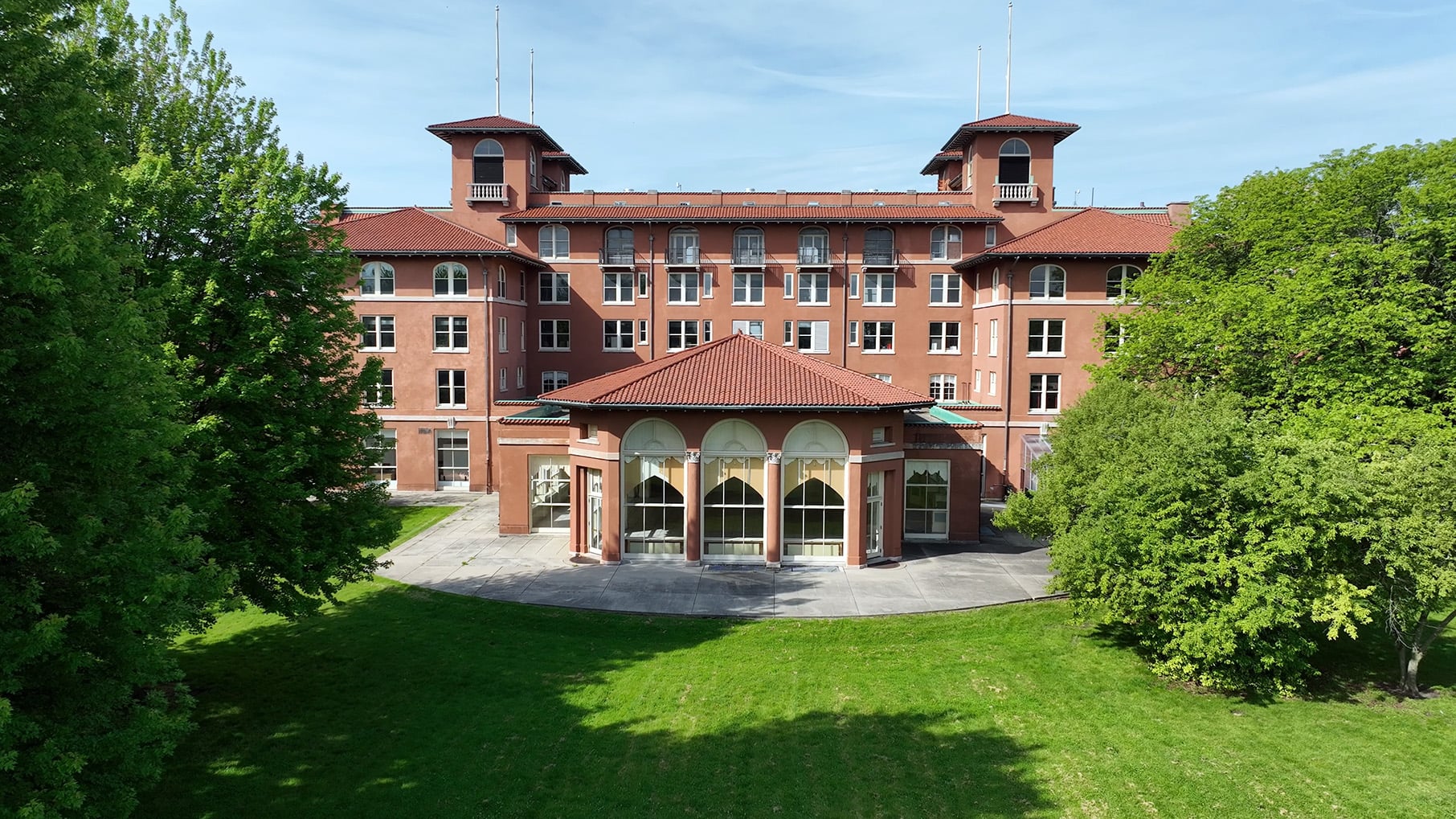
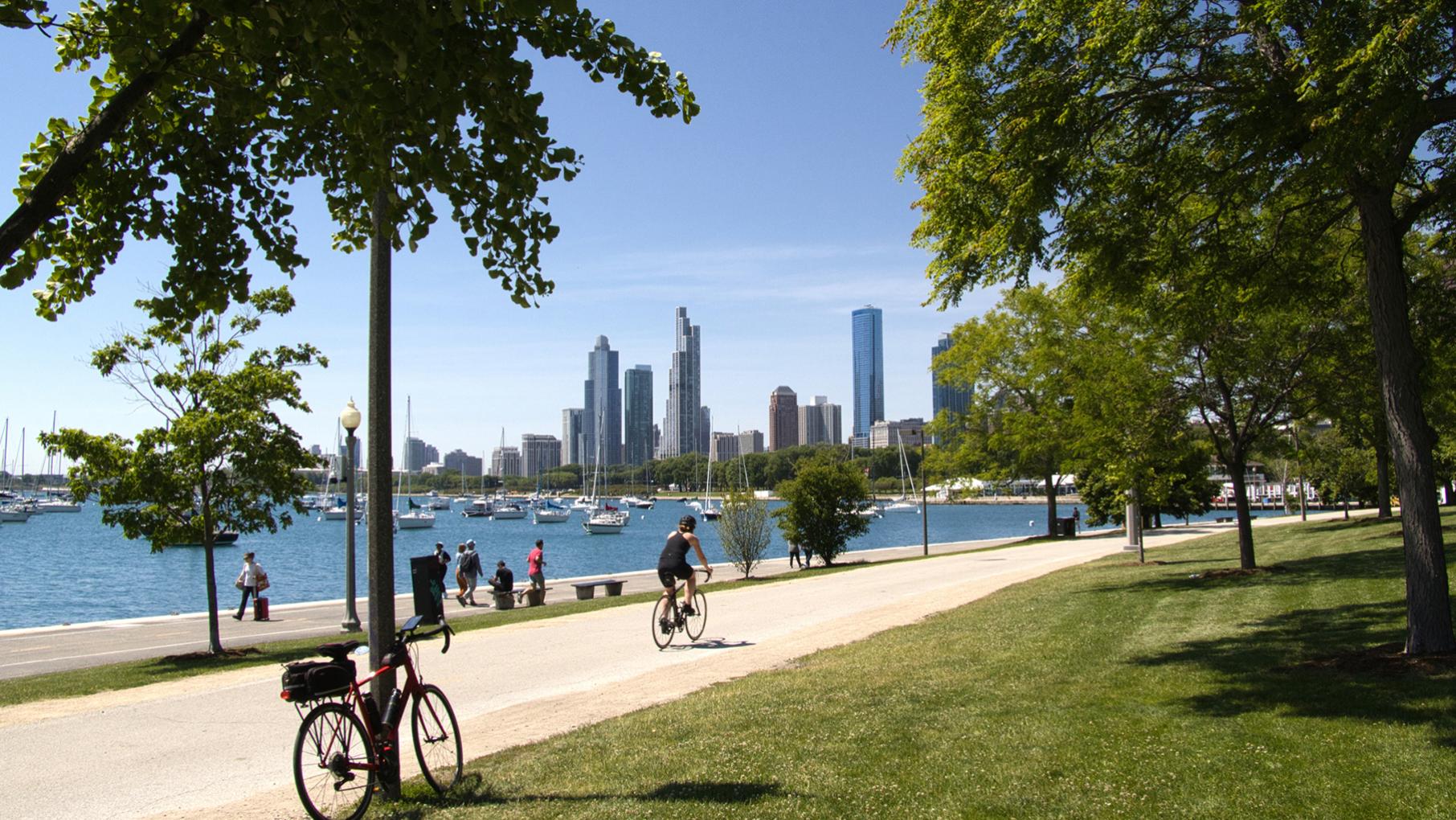
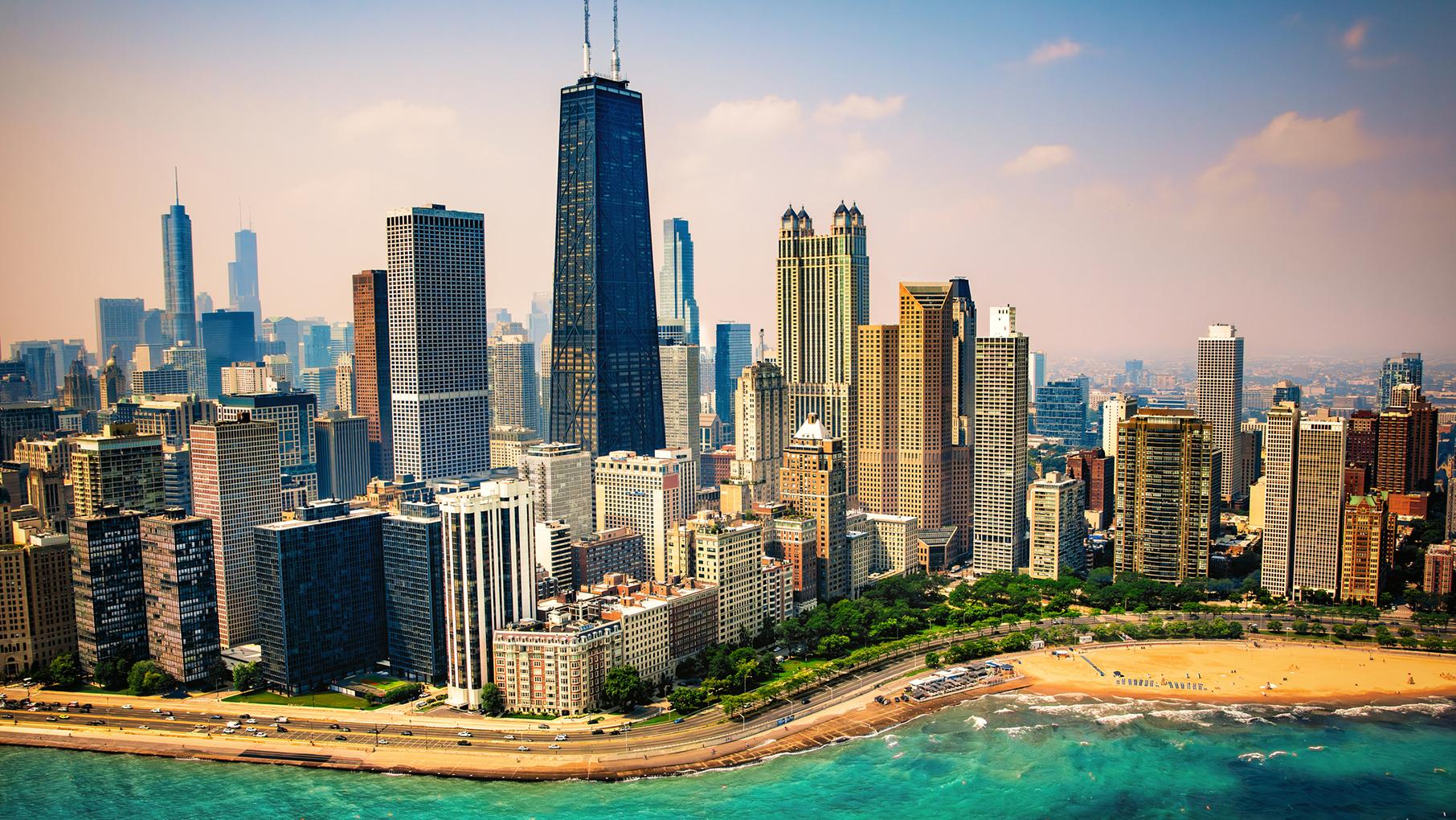
Last, but certainly not least, explore one of Chicago’s greatest features in the Lakefront Trail, an 18.5-mile trail that hugs the turquoise waters of Lake Michigan and passes through parkland, skyscrapers, and several long-standing cultural institutions – including the nearby South Shore Cultural Center, where Barack and Michelle Obama held their wedding reception in 1992. If you’re up for the journey, the best way to explore the Lakefront is by bike. Here’s our guided tour with all kinds of fun history.