The Joys of Grocery Stores Are Celebrated in a New Show
Daniel Hautzinger
May 28, 2025
Get more recipes, food news, and stories at wttw.com/food or by signing up for our Deep Dish newsletter.
Have a food story or recommendation? Email us at [email protected].
Grocery stores are so much more than a place to buy food. The ingredients they sell provide a window into other cultures. Grocery stores can be an economic indicator, as consumers notice price increases in their regular food necessities first. How grocery stores and their offerings have changed over time reflects the history of society, technology, globalization, and taste. They can serve as a repository of memories, as in the best-selling memoir Crying in H Mart, where visiting the titular Korean grocery store makes the author recall her late mother. One commentator has even argued that a grocery store is a perfect date spot.
“We both find comfort in walking through grocery stores,” says Chrissy Camba of herself and Emily Strong, the director and executive producer of The Grocery List Show, which Camba hosts. “I will go early, when no one’s there, and I will slowly walk up and down and look at the same things I’ve seen before, and sometimes there will be something different.”
“Time stands still in there, and everything is so organized,” Camba enthuses.
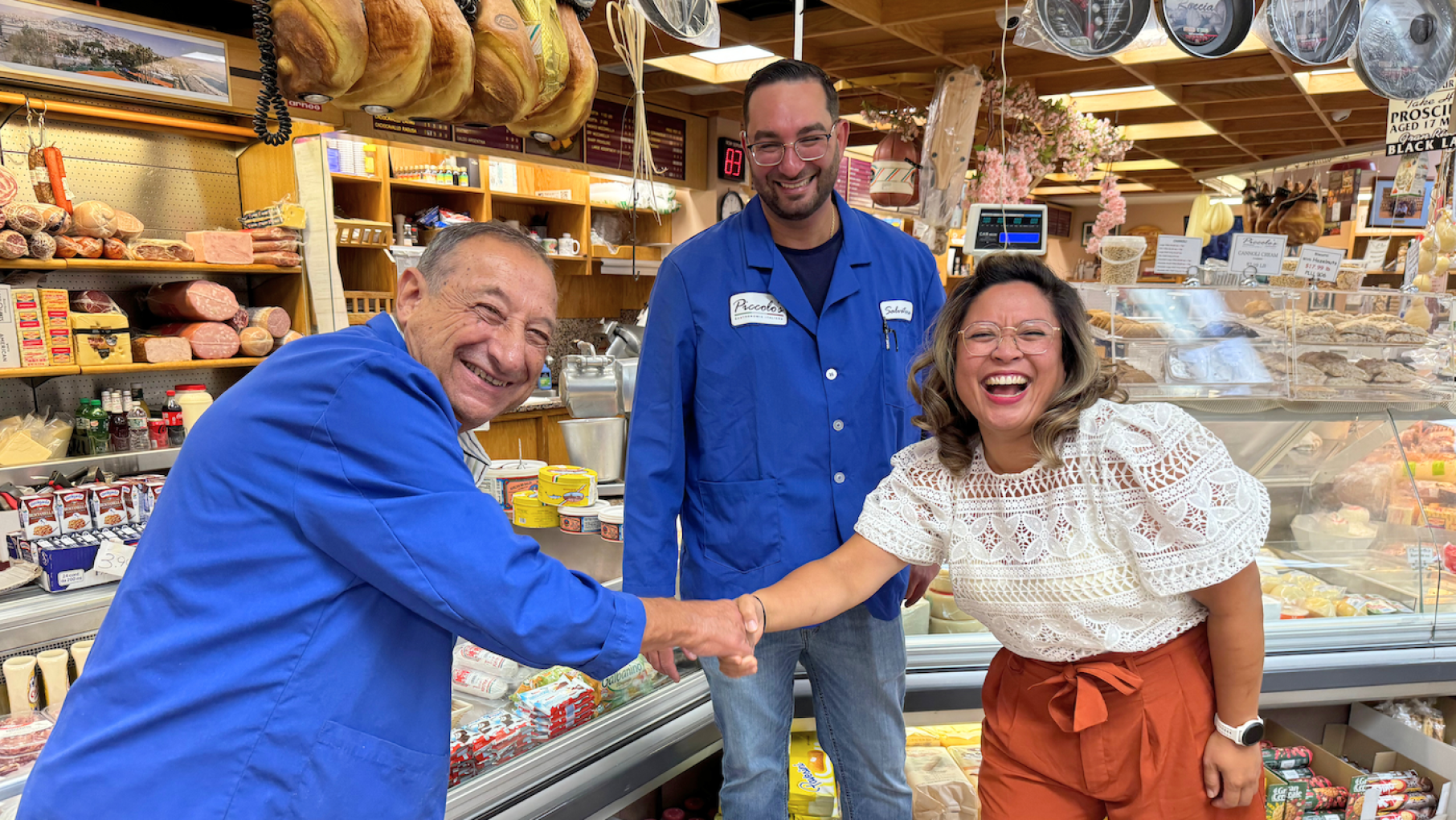
The Grocery List Show, presented by Independent Lens and available to stream via the PBS app and on the PBS Food YouTube channel, explores cultural grocery stores and the communities they nurture, from the Caribbean diaspora in Brooklyn to Italian Americans in New Jersey. The first episode spotlights a mainstay of Camba’s life, a branch of the Filipino grocery store Seafood City off Elston Avenue and the Edens Expressway on the Northwest Side of Chicago.
“Grocery stores are a way to transport us,” says Camba, a Chicago-based chef who has appeared on Top Chef and worked at various restaurants in the city. Seafood City “transports me back to the Philippines.”
She’s seemingly not alone. When Chicago’s Seafood City first opened in 2016 at the start of a continuing boom in Filipino food in the city, it drew consistent crowds, and still serves as a gathering place where families enjoy the food court and elders play bingo on Sundays.
“The first thing I thought about [when Seafood City opened] was my mom,” says Camba, whose family shopped at a grocery store in the Vietnamese business district on Argyle Street in Uptown before Seafood City came to Chicago. “I can tell she misses the Philippines, and I think seeing all of these products gives her a sense of home, because it’s a long flight and she worked a lot because she was a single mom, so she can’t really go back.”
Camba says that visiting the grocery store with her mom allows untold stories of her mom’s childhood and family to emerge, sparked by memories of a certain product or food. “I like going with my mom,” she says. “I never see her get excited” the way she does at Seafood City.
Cultural grocery stores like the ones spotlighted in The Grocery List Show offer immigrants like Camba’s mother a taste of distant homes – but they also provide an entry point to those places for people who have never been there. In The Grocery List Show, Camba encounters products unfamiliar to her and then learns to cook a traditional recipe with a home cook using them, like Palestinian Jordanian mansaf or Mexican American garnachas. (The recipes will be available here.)
“If you see this small grocery store with a community around it, go into it. Everyone’s usually friendly. They’ll answer any questions you ask, they’ll tell you what to make [an ingredient] in,” Camba says. “I think it expands people’s views without ever having to leave their area.”
While the imported products and ingredients of such cultural grocery stores are now threatened by tariffs, grocery stores remain an ideal vehicle for such exploration. After all, everyone has to eat.