Chicago's Restaurant Industry Struggles As Federal Immigration Agents Sweep the City
Daniel Hautzinger
October 24, 2025
Get more recipes, food news, and stories at wttw.com/food or by signing up for our Deep Dish newsletter.
Have a food story or recommendation? Email us at [email protected].
As reports of Immigrations and Custom Enforcement (ICE) activity spread throughout a North Side neighborhood on a recent Friday, one restaurateur decided to close his restaurant to dine-in customers for the evening and only offer take-out in fear for the safety of his employees.
“We were hearing about a strong ICE presence in the area, plus attempted detentions nearby, and it was way too close,” the restaurateur, who requested anonymity out of fear of retaliation, said. The restaurant was open for lunch, then closed its doors for dinner.
“You can’t plan for this,” he said. While he has a protocol to enact if federal agents arrive at his restaurant, it hasn't been tested. “Nobody knows what to do right now. No one knows what the responsible move is.”
As the Trump administration’s Operations Midway Blitz and At Large have brought increased immigration arrests and ICE activity to Chicago over the past two months, restaurant owners in the city have suddenly closed their restaurants for service either to protect their workers or because their workers did not show up; kept their doors locked during business hours to prevent federal agents from entering; seen a downturn in sales and business; and faced online harassment.
“We’re feeling it,” said Omar Cadena, the owner of Omarcito’s Latin Café in Logan Square. “People don’t wanna come in.”
Ivan Valdez said that sales at his Taquizas Valdez in Irving Park have been down 20 to 30 percent in recent weeks.
“The only thing that’s keeping us alive, if I’m gonna be completely honest, are Uber Eats, DoorDash, Grubhub,” he said. “You can definitely feel the streets are lonelier, and no one wants to come out.”
In McKinley Park, Eric Carlson and his wife Maria Alejandra Rivera have had to reduce staff hours because of a slowdown in demand at their Cadinho Bakery over the past few weeks, but, Carlson said, “We feel fortunate by comparison, because, as tough as it’s been on our business, we know of other businesses in the neighborhood that have had to close entirely for certain stretches of time because business was down so much.”
"The Food Industry Runs on Immigrants"
Since Operation Midway Blitz began in September, federal agents with ICE and Customs and Border Patrol (CBP) have detained scores of people, including citizens; shot two people, killing one; deployed tear gas and pepper balls in the face of protesters, tactics that have been questioned by a federal judge; raided an apartment building in the middle of the night with helicopters; walked the streets of downtown armed in full tactical gear; and handcuffed a Chicago alderperson asking for a warrant in a hospital.
“You’re going into our neighborhoods and causing fear,” said Cadena, who has witnessed the questioning of a man by federal agents and, from a distance, the use of a smoke bomb on Armitage Avenue in Logan Square outside a grocery store. “It’s been difficult to see all these things that are happening in a country that’s been based on immigrants,” he said.
Forty percent of people working in the food service industry in Illinois are immigrants, Illinois Restaurant Association president Sam Toia told WBEZ in September. The restaurant owners WTTW spoke to all said the majority of workers in every kitchen in which they have worked have been immigrants.
“The food industry runs on immigrants,” said Valdez.
Restaurant owners say that the presence of federal agents in the city has created an atmosphere of fear, leading both workers and diners to stay home. “People are concerned about going out, regardless of immigration status,” Carlson said.
Jason Hammel, the chef and owner of the Logan Square institution Lula Cafe, posted a widely circulated note on his personal Instagram in early October that called on people to “show generosity to those closest to us by dining in,” comparing the situation to the crisis that faced front-line workers during the pandemic.
“Almost everyone I talk to has said that this terror in our cities has caused slow nights, quiet days, which means those in our community who need it the most are worried about their hours being cut, lower tips, about not having what they need to provide for their families,” he wrote.
Majority Latino communities such as Belmont Cragin and Little Village have been especially affected, with restaurant owners in Belmont Cragin telling Block Club that they may be forced to close if they don’t get more business. Southwest Side businesses have urged consumers to support businesses in their neighborhoods, while the group Belmont Cragin United has organized restaurant crawls in its neighborhood, in addition to “Whistlemania” events at businesses across the city to assemble whistle kits for Chicagoans to alert others of the presence of immigration agents. Taquizas Valdez plans to host one the evening of October 29.
“You can just see the whole community come together,” Valdez said. “It makes me real proud to be part of this community.”
Cadena and Carlson both have noticed a stronger sense of community in response to the presence of federal agents, and have received a certain amount of resources, advice, and support from community groups, elected officials, and friends, even while they acknowledge wanting to continue to learn more about their rights.
But the North Side restaurateur who closed his restaurant for a night has found himself worrying about the attitudes of people in his area, based on comments on social media.
“It pisses me off that I feel the need to be anonymous, not only for my own safety but also my staff,” he said. He was born in Chicago to immigrant parents. While he wants to put up a sign in his restaurant protesting the presence of ICE, he fears that it would lead someone to report or target his business. “I’m hesitant as a Brown person in my own neighborhood.”
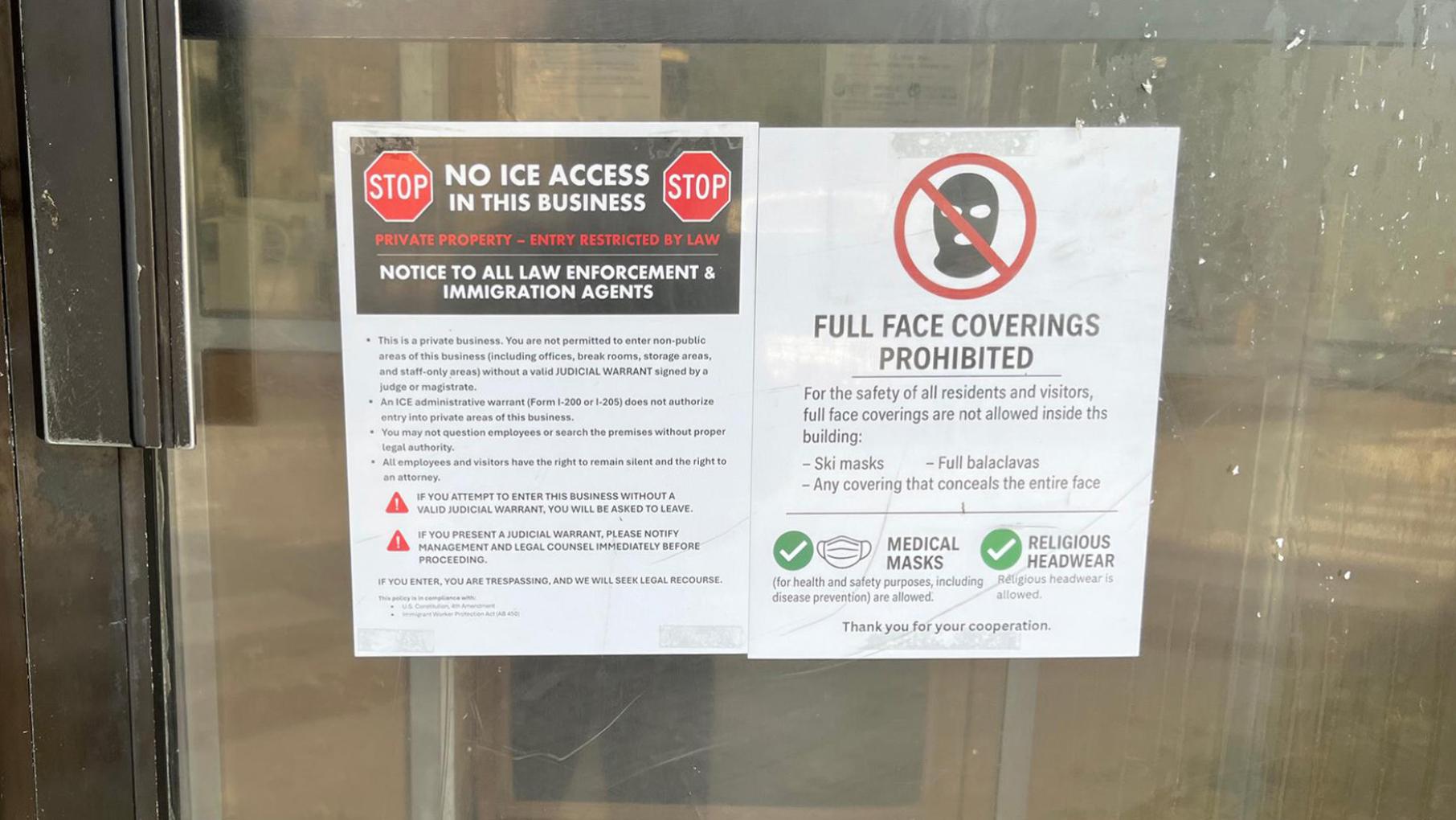
The fear of targeting is not unfounded. Katherine Anne Confections in Irving Park has received a slew of negative reviews online and messages threatening to “call ICE on you,” owner Katherine Duncan told Block Club. She suspects the emails and reviews were occasioned by her posting of a sign at her shop saying that ICE was not welcome. (Mayor Brandon Johnson signed an executive order in October prohibiting federal agents from using city property during enforcement actions and allowing private property owners to deny entry to federal agents without a warrant, and the city has distributed signage to property owners and leaseholders.)
Supporting Immigrants
Chicago restaurants have sought to support and fundraise on behalf of immigrant rights groups, donating portions of proceeds to the Illinois Coalition for Immigrant and Refugee Rights and the Street Vendors Association of Chicago, among others. Street vendors who make a living selling items like tamales and fruit from carts and trucks have been detained, leaving behind their equipment and merchandise. Some have stopped going out to sell at all, according to the Street Vendors Association, thus losing their source of income.
The Ramova Theater in Bridgeport is hosting a Tiger Moon Market on November 3 with a who’s who of more than 30 Asian American restaurants and chefs participating to raise money for various immigration rights groups. The depth and breadth of the line-up and sponsors reflects a widespread desire in the restaurant industry to do something on behalf of immigrants.
“Anyone that lives in Chicago knows that immigrants are responsible for so much of the vibrancy of our city,” said Cadinho’s Carlson. “They add to our city’s art scene and food scene and music scene, and so many of the people that fuel our economy are also immigrants, as any business owner knows.”
“It is important to stand up for people on a human, individual level,” he added in an email, noting that, “I personally know first- or second-generation immigrants doing every vital job in our community and our city.”
Omarcito’s Cadena, a Chicago native born to immigrants, said, “I saw my family struggle and work hard to produce.” The immigrants he has worked with in the restaurant industry were always “busting ass,” he said. “You’re talking about 70 to 80 hours a week…And they’re paying taxes, and they’re pumping money into the economy because they’re getting groceries, they’re paying for a car, they’re paying for gas, child care, going out, entertainment.”
The North Side restaurateur, who serves the food of his immigrant parents, wants to continue to share it with the city and educate his customers. “What we do is very important, especially now,” he said.
Valdez, a first-generation Mexican American, served as a reservist in the U.S. Marine Corps for six years. “If my parents wouldn’t have migrated here to Chicago, I wouldn’t have had this opportunity to, one, serve my country, and also have the privilege of opening up a restaurant here.”
“I love this country,” he said. “That’s the whole point I enlisted in the military. And just to see my own people, my own blood, being separated from families, it’s really hurtful. That’s what I went to go fight for: for our freedom.”
Have a food story or tip? Email us at [email protected].