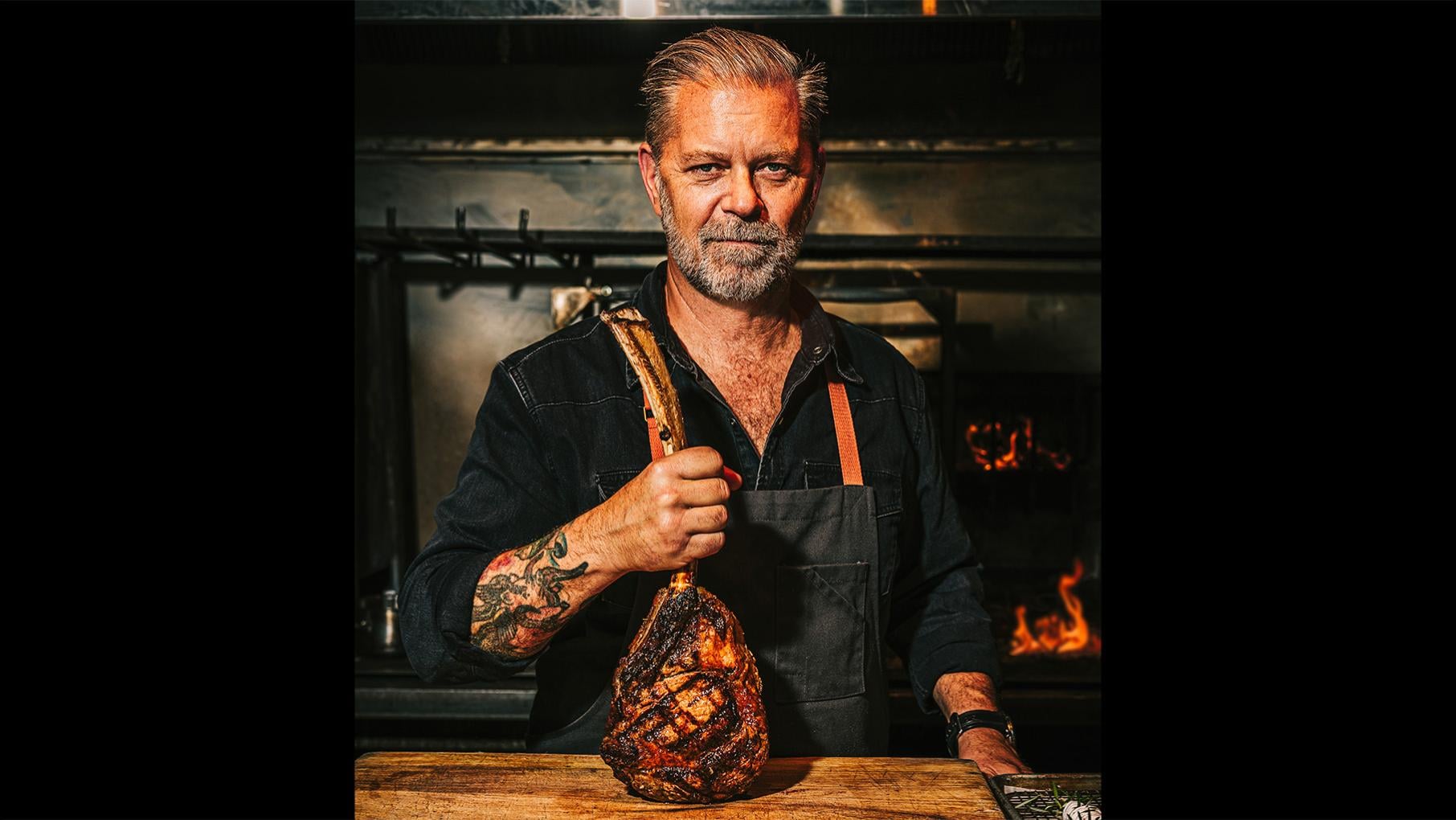
Alex Frantz Helps Local Food Get From Small Farms to Plates in Chicago
Lisa Futterman
December 9, 2025
Get more recipes, food news, and stories at wttw.com/food or by signing up for our Deep Dish newsletter.
Have a food story or recommendation? Email us at [email protected].
Ever look at a restaurant menu and wonder, “How do they get all those gorgeous, ripe heirloom tomatoes without lugging them back in a truck from the farmers market every week?”
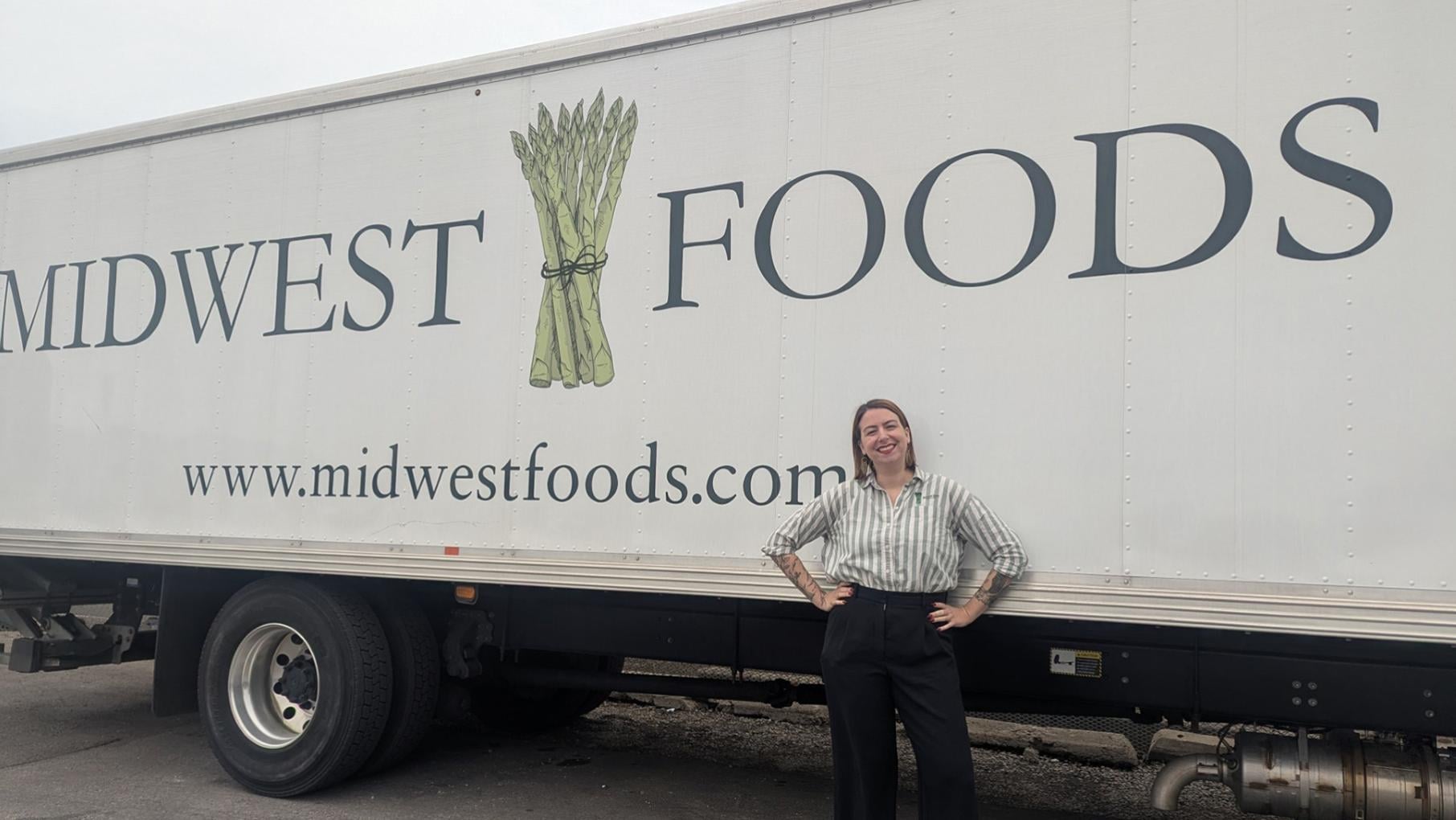
One answer lies in businesses like Chicago’s Midwest Foods, which distributes produce and specialty items to restaurants, universities, hospitals, airports, and stadiums all over the Chicago area and southern Wisconsin. Alex Frantz, their director of local & sustainability, makes sure that farms from Wisconsin, Indiana, Illinois, and Michigan are represented on plates in every type of food service business.
“Chefs come to me and say, ‘What do the farmers have?,’” says Frantz, “and farmers ask, ‘What do the chefs want?’”
She ensures that the company works with smaller and underrepresented growers, including those that are looking to expand, perhaps from an existing farmers market model, to add a wholesale business selling to chefs. Midwest Foods currently offers produce from over 40 local farms, a diverse mix that includes urban, next-generation, and woman-owned farms, in addition to their national and global suppliers.
Working with a company like Midwest Foods allows farmers to sell wholesale to restaurants without taking on the administrative, logistic, and accounting burdens themselves.
“They're often wearing multiple hats. They’re sales, they're marketing, they're farming,” says Frantz of farmers. “When we partner with them, we're able to connect them to a network of hundreds of chefs through one point, and then they can drop off higher volume orders,” instead of having to drive all the way to Chicago and deliver to each individual restaurant themselves. Chefs, meanwhile, get a roster of vetted suppliers on a single order, as well as delivery and invoicing.
Chef’s needs are paramount to Midwest Foods, Frantz says. Customers from fine dining restaurants, for example, often love local sourcing but not the hassle of coordinating directly with small farms. They want options: a variety of freshly harvested, high quality, seasonal vegetables. “We try to meet the demands of chefs in a way that makes it as easy as possible for them,” says Frantz.
A huge part of Frantz’s job is keeping both the sales team and customers informed about what’s available locally each week. That means the chef doesn’t have to coordinate with the grower about how long the striped zucchini they love will be in season and when to replace it in a dish with yellow squash, for example. Frantz and her team communicate between growers, purchasers, salespeople, and food service chefs, giving a heads up when items are about to be in season, and sending out weekly emails noting the latest product availability.
Sometimes it takes more than one farm to satisfy the demand. “Asparagus is a high-volume product for us, so it's an example of an item we source through an aggregator that coordinates production among several local family farms in Michigan under a single brand,” Frantz says. The spring vegetable grows well in Michigan’s sandy loam and climate. “Each season, [the aggregator] shares which farms are participating, so we always know exactly where our asparagus comes from and can celebrate the local families behind it. ”
In the long term, Frantz keeps produce moving efficiently through the supply chain by advising growers on pricing and strategy for Midwest Foods’ various types of customers. Every year, Frantz and her team sit down with farmers to plan production for the following season. “In October, we're planning with smaller growers because that’s when they're buying their seeds,” Frantz says. “It's hard to know what a chef [will want] on a menu next June,” she adds, “but that's the idea.”
The result benefits all the involved parties. “The chefs are engaged and are giving that feedback. Although they aren't necessarily going to want to commit in December to buying a whole season's worth of a particular crop,” says Frantz, “because we work with such a diverse array of chefs, we can estimate based on historical usages.” This communication helps with risk management, preventing restaurants from running out of squash blossoms, for example, on a busy Saturday night. “When something goes wrong, we can work with our network to still fill that order, so the chef's not out for the night. It de-risks on both sides.”
To Frantz, the intricacies of connecting food service customers large and small to local food means everything. “I grew up being a Bulls fan in the ’90s as a kid. Now when I go to a Bulls game at the United Center, I know that the produce that we sell there is also supporting local farms.”