South Asian Food Is Booming Thanks to Creative Chefs Pushing Its Boundaries – And Chicago Is an Epicenter
Daniel Hautzinger
December 19, 2025
Get more recipes, food news, and stories at wttw.com/food or by signing up for our Deep Dish newsletter.
Have a food story or recommendation? Email us at [email protected].
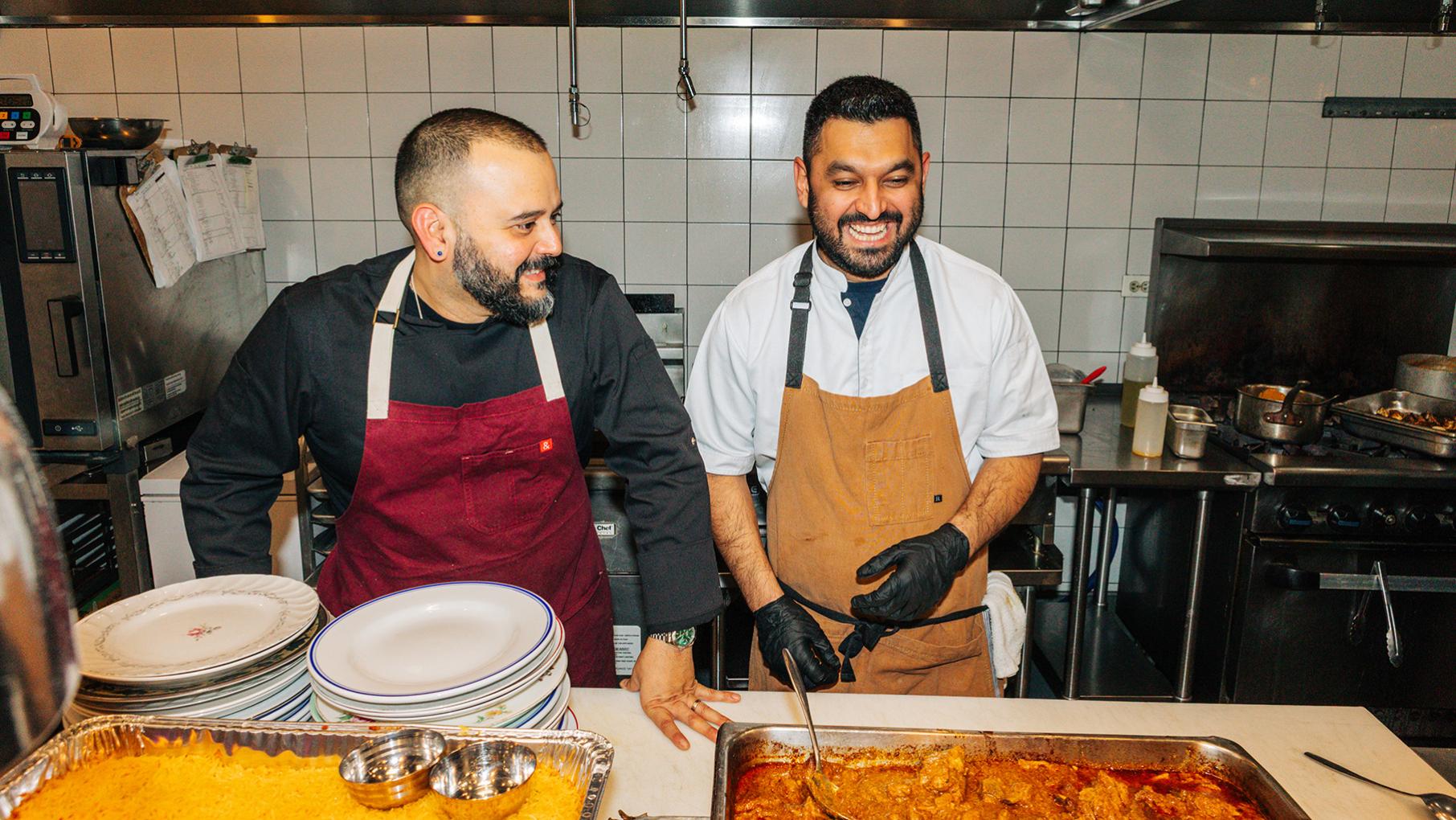
South Asian food is booming in Chicago. Look no further than a recent meal hosted at Superkhana International for a glimpse of the creativity and variety lighting up the city right now like so many Diwali lamps. Playfully titled “Chi Desi Super Friends,” the special event brought together seven of the chefs pushing South Asian influence forward and broadening the narrow American conception of what Indian food can be.
“We were just sitting around thinking about all these awesome cooks cooking South Asian food in Chicago,” says Kazuyoshi Yamada, one of the chefs and co-owners of Superkhana, about the dinner, which sold out within 24 hours. “It’s definitely a zeitgeist. Part of what we’re highlighting are the ways that really talented cooks are approaching their heritage and their place in the culinary world and our place here in Chicago.”
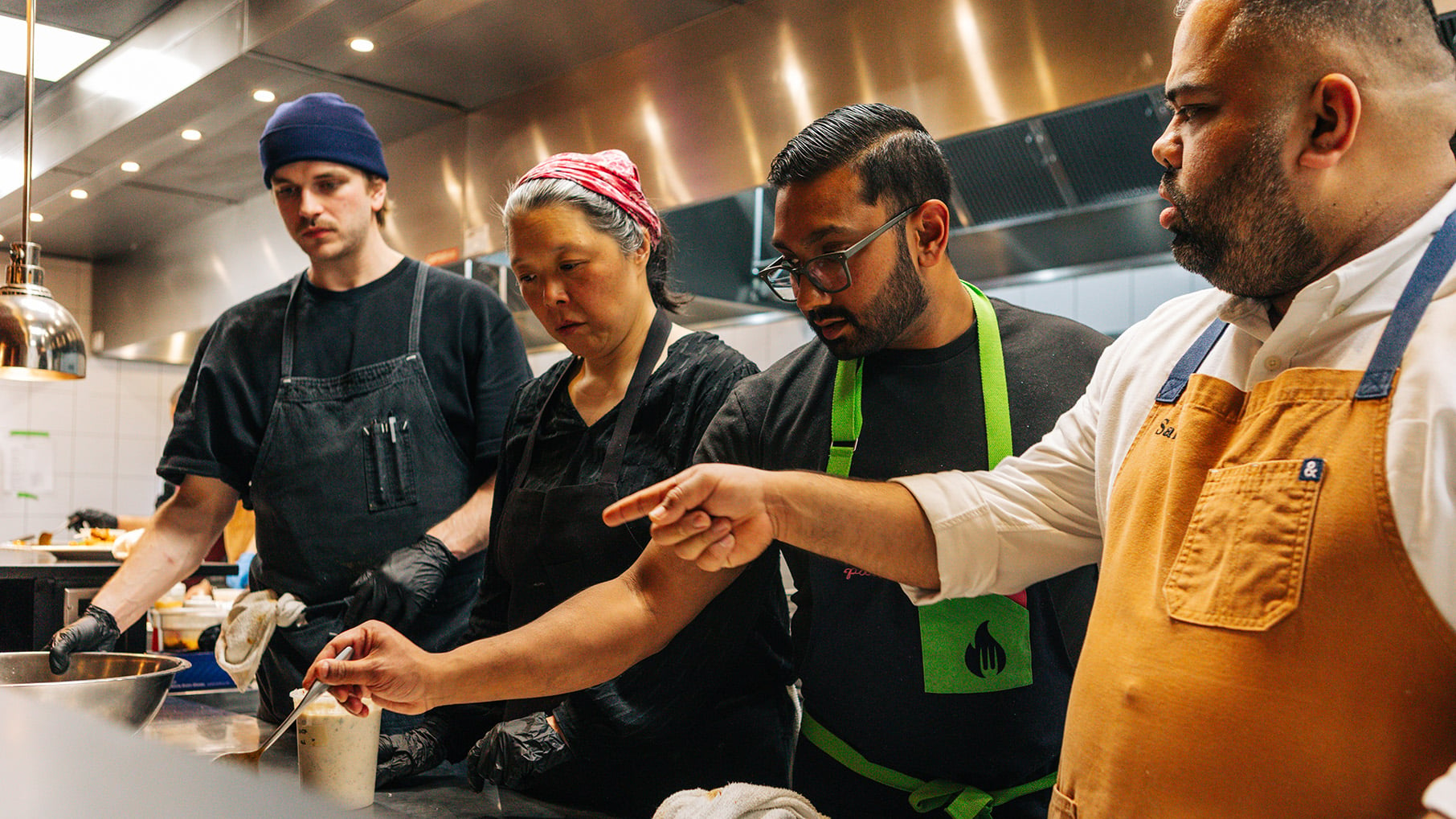
While the Super Friends chefs – Yamada, Zeeshan Shah, Rishi Manoj Kumar, Margaret Pak, Sahil Sethi, Zubair Mohajir, and Dylan Patel – share a grounding in South Asian flavors, their restaurants are as varied and distinctive as the Indian subcontinent itself, with its nearly two billion people and kaleidoscopic range of cultures and religions. Like the superheroes of the animated TV show from which the event took its name, they have wildly diverse specialties and origin stories.
Mirra combines the Mexican expertise of Singapore-born Kumar and the South Asian historical interests of Chennai-, Doha-, and Chicago-raised Mohajir for dishes like lamb barbacoa biryani. Pak was so enchanted by her mother-in-law’s cooking that she left a career in finance to bring little-known southern Indian dishes like black chickpea curry to Chicago in the form of Thattu. Sethi and Patel both harness their skill with spices at Mediterranean-influenced restaurants, but Sethi was born in northern India and worked around the world before opening the Middle Eastern Sifr while Patel grew up in the northwest suburbs and has spent his entire career at the eclectic avec.
“Everyone has a different perspective on their food, and we need to really make room for those interpretations,” says Ashok Selvam, a former editor of Eater Chicago who has covered the Chicago food scene for years. Chefs of South Asian descent are willing to experiment and stretch now that they “feel confident that they don’t have to explain what a curry is.”
Indian food is no longer pigeonholed as the province of buffets where you pour a protein in a cream-thickened sauce over rice and naan, washing it all done with chai or a mango lassi.
“It’s a new American cuisine, or a new Indian cuisine,” says Sifr’s Sethi. “It’s happening in Chicago majorly.”
Spotlighting Regional Cuisines
It’s not just happening in Chicago. New York City’s Semma, which focuses on the southern Indian state of Tamil Nadu, took both the top spot on the New York Times’ list of best restaurants and a James Beard Award this year. Eater just highlighted fine dining Indian spots in California, Arizona, and Utah. Sujan Sarkar – Sethi’s partner in Sifr and the force behind Chicago’s Michelin-starred Indienne and Swadesi Cafe – told WTTW after opening his regionally focused Nadu this year that interest in the diversity of the subcontinent’s cuisines is expanding in India itself.
Chicago is, however, an epicenter. Selvam argues that “the biggest thing to happen to Indian cuisine in America” is from here: Patel Brothers, now the largest South Asian grocery chain in the United States, started in Chicago on Devon Avenue in 1974. Indienne, Thattu, and Mirra have all attracted national attention, appearing on best new restaurant lists. Superkhana was recently recognized by Bon Appetit – not for curry or tandoori chicken, but their Indian-ish pizza. Thattu even made news in India several years ago, as the subject of an article in the Malayalam-language paper Manorama.
“That’s when Vinod’s mom was like, ‘Okay, this is for real,’” says Pak of her mother-in-law, who still lives in the southern Indian state of Kerala.
The fact that a widely circulated newspaper on the other side of the globe would cover a small restaurant concept in Chicago for showcasing the traditions and foods of tropical Kerala reveals how unusual it was for an American place to serve Keralite food. While grocery stores serving Keralite food could be found in the suburbs, people outside the diaspora were largely unaware of the coconut-heavy coastal cuisine, let alone its origin.
“When we opened in 2019 [as a food stall], people would be like, ‘What is Kerala?’” Pak says. Growing up in northern India, Sethi recalls knowing only “generic” south Indian dishes until he started training as a chef and traveling more.
Selvam, who was born and raised in Chicago, was exposed to some of the food of Kerala as a child because his mother had spent time there, which neighbored her home state of Karnataka. But to find a restaurant serving southern Indian food on Devon Avenue, you had to know to look for a vegetarian place – nowhere advertised its specific origin.
Today, Nadu, located in the wealthy white neighborhood of Lincoln Park, specifically notes where each dish comes from in India – and names the recipes in their original languages instead of Americanizing them. “Seeing [the southern Indian language] Kannada on the menu,” Selvam says, “was a pretty wild moment. That felt wonderful.”
Third-Culture Cooking
The exploration of lesser-known regional South Asian traditions exemplified by Thattu and Nadu (and mom-and-pop spots like Trilokah, Mintza, and Thalaiva’s Indian Kitchen) is one of the main drivers of the current blossoming of South Asian restaurants. A freewheeling approach that draws on disparate influences or finds connections between various dishes is another.
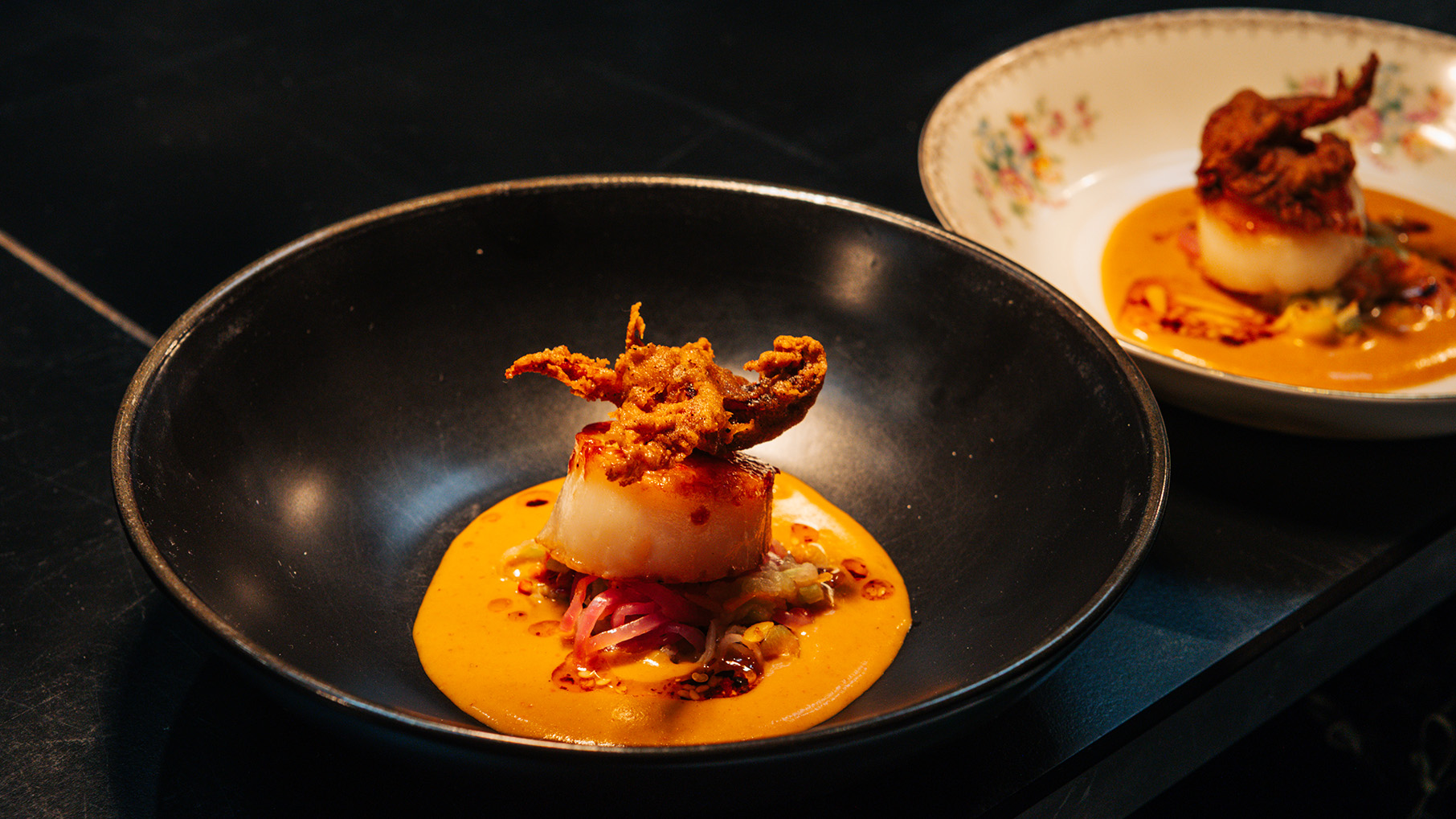
It’s a style sometimes called “third-culture cooking,” in which the children or grandchildren of immigrants incorporate into a personal whole aspects of the cultures they have encountered growing up, from their own family recipes to dishes eaten in restaurants and at friends’ homes. Similarities between cuisines, such as reliance on cilantro, coriander, and chili in Mexican and Indian food, are used to build entirely new combinations, like at Mirra. A reverence for local produce inculcated in jobs at places like Lula Cafe and The Bristol, where Superkhana’s Yamada and Zeeshan Shah respectively worked, is carried into dishes with Indian flavors that also show the mark of an American childhood in the form of pizzas and calzones with ranch dressing for dipping. Fried chicken sandwiches, spicy chicken, and hot honey are extremely popular; Mohajir combines them with his own spin at Lilac Tiger, offering a tandoori honey chicken sandwich with gochujang aioli and Filipino pickles.
“There’s now a generation of Indian cooks who’ve been out there cooking all kinds of food and are making the connections from those restaurants to their own personal histories,” says Yamada, who fell in love with Indian food while on a Fulbright scholarship in Mumbai. “My favorite thing about it is that it all feels like a very natural process. Nothing feels forced, nothing feels overly precious.”
The regional and mash-up approaches aren’t mutually exclusive. Even as Thattu presents a cuisine to customers who might never have had it, Pak sometimes incorporates her own Korean-American background, adding gochujang to a chutney and topping it with shiso. Even as he draws on a decade of immersion in Mexican cuisine under Rick Bayless, Kumar also researches regional Indian recipes for Mirra, continually discovering new dishes and techniques.
“Indian food is hyper-regional,” he says. “It’s like Mexican.” A Bengali chef will do something one way, a Gujarati another, and a South Indian a third, he explains.
When he decided to open Mirra with Mohajir, he was more of an expert in moles and masa than curries and dosas. He had to draw on memories of his mother and family’s cooking back in Singapore to re-introduce Indian techniques to his repertoire. “I re-learned how to cook when I went to Mexican cooking,” he says. “Indian being [my] own culture, it was just natural.”
Drawing on personal experience helps immigrant chefs escape the trap of “authenticity,” where self-appointed experts – sometimes from outside the culture – declaim that a dish is not the same as it would be back in its country of origin. Of course not: the ingredients and iterations and people making it vary even within that country of origin.
“If you’re an Indian, now you’re like ‘Well, this is how we do it. My mom makes the best thing.’ You have this voice in your head telling you this is the way,” Kumar says. (Pak takes the feedback of Indian moms who try her food to heart and sometimes incorporates their suggestions, she says.) He values his perspective as an outsider to Mexican cuisine, which he believes allows him to assess different techniques more objectively, without personal memories as baggage. His background in Mexican food now informs his approach to Indian food.
“Now we have confidence that, if I bring a little bit of those tastes, a little bit of that flavor, a little bit of those techniques” from one’s background, Selvam says, “it’s just going to augment our already established kitchens.”
A “Throughline of Flavor and Tradition”
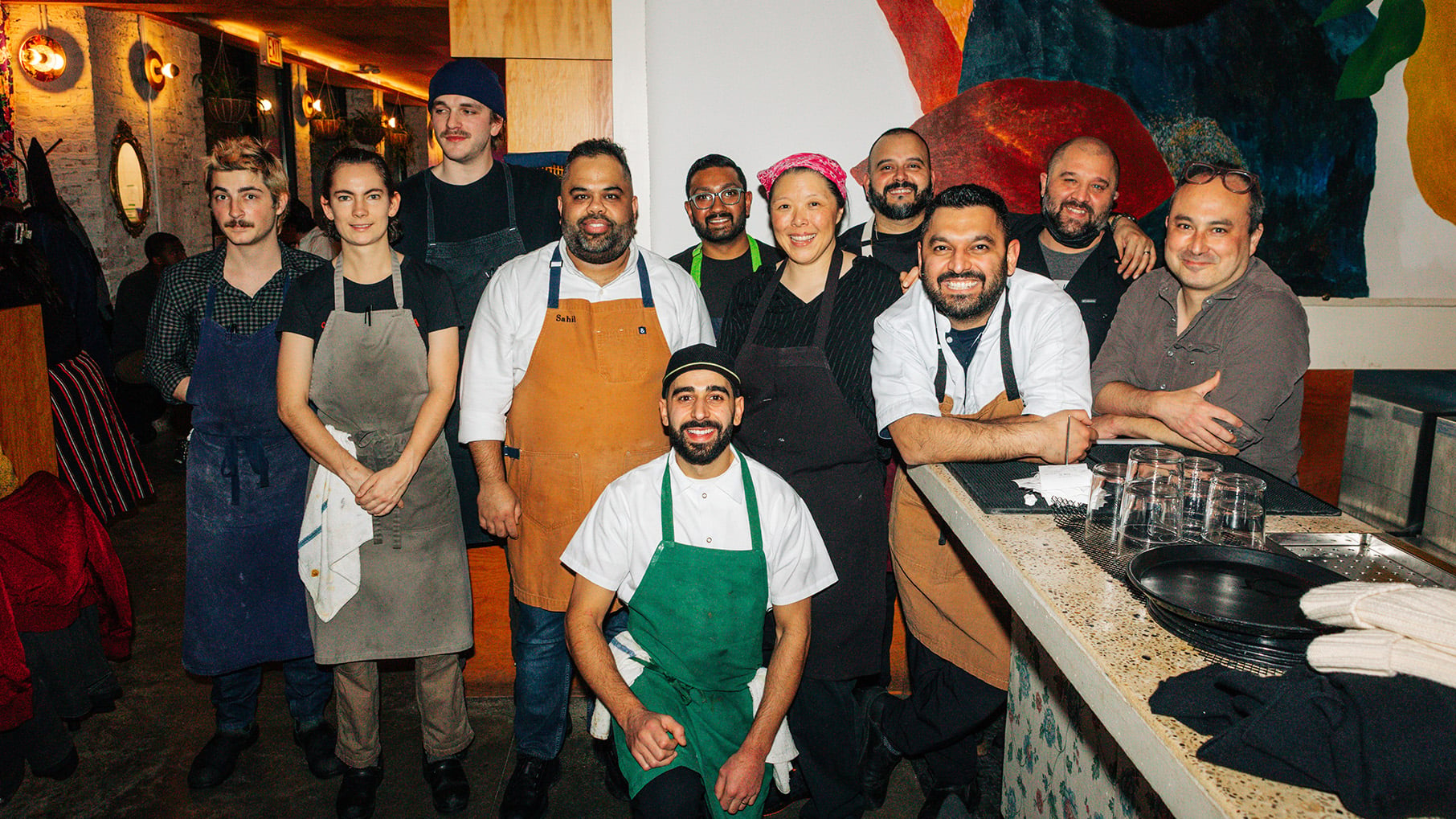
Dylan Patel and Sahil Sethi don’t cook Indian food at their restaurants. Patel mixes flavors from the Mediterranean through the Middle East at the ever-popular avec, whose kitchen he has run for several years. Sethi has worked at various Indian spots both globally and in Chicago, but draws on his time in Abu Dhabi to offer Middle Eastern flavors at Sifr. “This is something new, it’s a stepping stone, it is something challenging,” Sethi says.
Both subtly incorporate their heritage into dishes, whether in their use of spices or their approach to wood-fire cooking – a specialty of both restaurants – but they are not defined by it; Patel also uses Mexican ingredients like guajillos and habaneros.
The Chi Desi Super Friends chefs all cook “food that’s really firmly rooted in the tradition of South Asian cooking, and I think that’s what makes it so organic and unforced,” says Yamada. “Even though the dishes may not look familiar or involve unfamiliar ingredients, there’s always this throughline of flavor and tradition.”
At the Super Friends dinner, Patel went traditional with a village-style stewed goat with curry leaf, raita, and basmati rice; Yamada and Shah looked toward Italy in a sambar squash lasagna; and Pak and Mohajir topped distinct kinds of southern Indian dosas (crepes) with condiments drawing on East Asia (gochujang chutney, shrimp head chili oil).
“We’re a part of this community that’s growing and expanding what people think of when they think of Indian food,” Yamada says. “It feels really good to have so many people doing that.”