Immersive, Opulent, Maximalism Is In, Judging from Some Chicago Finalists for Restaurant Design
Maggie Hennessy
January 22, 2026

Get more recipes, food news, and stories at wttw.com/food or by signing up for our Deep Dish newsletter.
Have a food story or recommendation? Email us at [email protected].
The etymology of the word restaurant originally had to do with a French vendor serving restorative broths to weary patrons in eighteenth century Paris, which seemingly cemented the term as a place to nourish and revive us. Judging from the immersive, maximalist designs that dominated Chicago restaurant openings in 2025 (and 2024, turns out), what we all seem to need right now is aspirational escape. To slurp scallop aguachile in a concrete cave amid waving faux palms. To descend a neon-lit staircase in a Korean restaurant and emerge into a mirror-walled omakase den. To feast on ’40s-era pressed duck in a dining room that evokes ’20s-era Paris. To visit a soaring cathedral where our daily bread consists of truffled Caesar and massaged Wagyu beef.
Stressful headlines be damned; take us away!
Concept-wise, the four 2026 nominees for Best Design, as chosen by a clandestine judging panel for the annual Jean Banchet Awards, share only a few commonalities. The Alston and Adalina Prime proffer meaty extravagance befitting a modern Gilded Age. Matilda slings likable Peruvian and Mexican shareables and buoyant good times. Noriko Handroll Bar is where the cool kids throw back deliciously balanced, two-bite handrolls. I gleefully descended each conceptual rabbit hole on visits to all four over the past few weeks, which proved a temporary balm from a bitter winter and a disorienting time.
The Best Design winner will be announced on Jan. 25, when Chicago’s cheeky answer to the James Beard Foundation Awards returns to Venue Six10. Opulent escapism arguably dominated last year’s design category at the Banchets, too. The lavish, Lettuce Entertain You-backed Tuscan steakhouse Tre Dita, with its 44-foot ceilings and glass-walled pasta lab, came out on top against sultry Brasero, industrial-chic Bazaar Meat, and Noriko’s warm and modern older sibling, PERILLA Steakhouse.
Immersion (Still) Sells
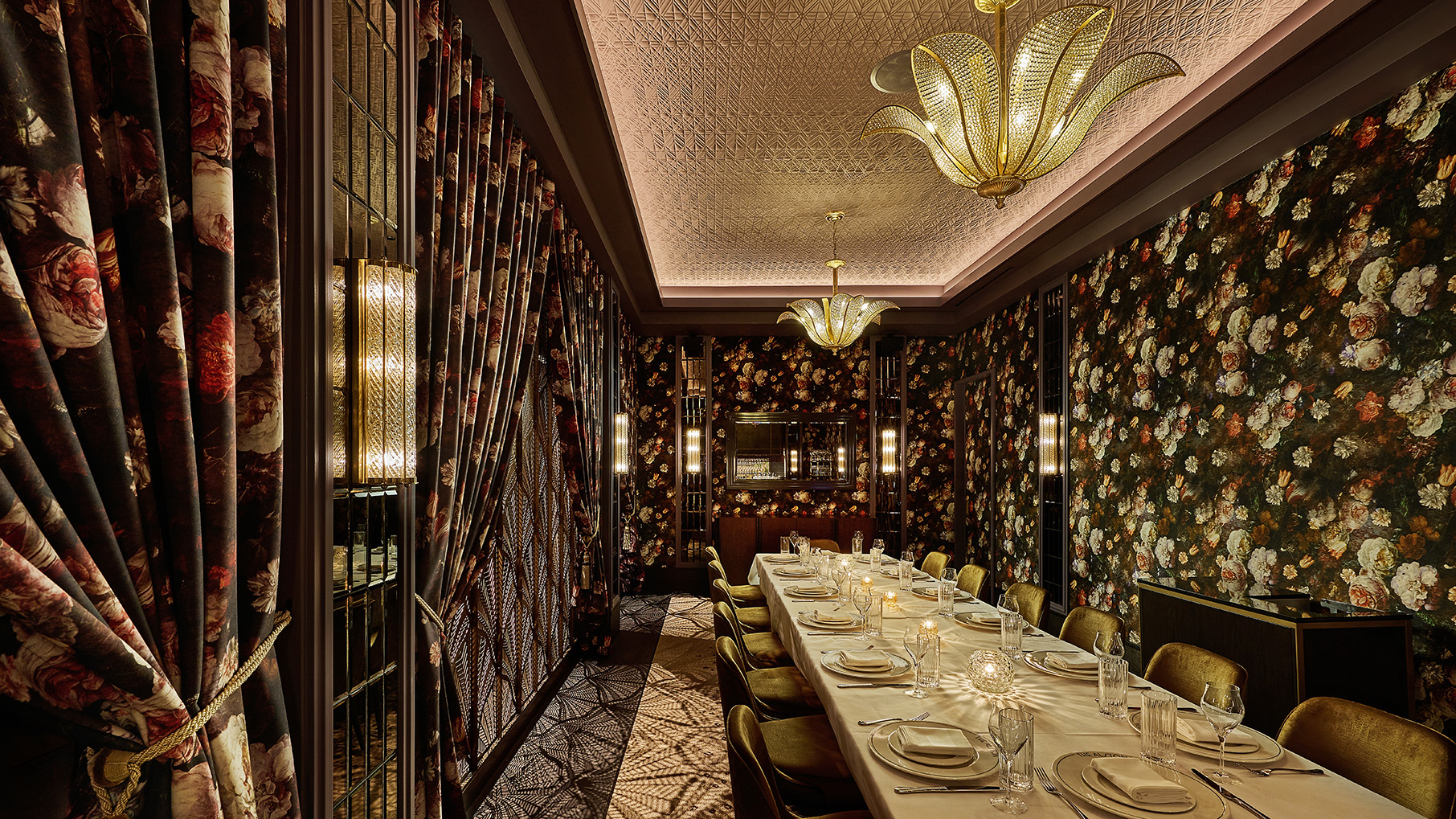
Labyrinthian grandeur was top of mind as I ascended the elevator on a recent Thursday to The Alston, designed by Heidi Lightner Architects, inside the Gold Coast’s massive One Chicago luxury residence. Entering this curtain-cloaked neverland, which stretches the length of a whole city block, feels a little like Alice tumbling through the looking glass. Fifty/50 Group founder and partner Scott Weiner and I downed tiny bottles of supposedly hangover-preventing Zbiotics (“Drink me!”) and bespoke cocktails in the handsome bar. Then the bartender handed us each a glass of fine French whiskey, and Weiner led me on a tour down long corridors lined with sculptural metal screens and hidden doorways to a private dining room out of 1920s Paris that’s beloved by the Chicago Bulls. Through a locked door to the wine cellar, I delightedly pushed a door in the wall to yet another private dining room. We finally emerged in the grand, main dining room, set beneath a digital ceiling screen displaying rotating artworks (Botticelli one minute, trippy water droplets the next) and a formidable pair of handblown glass tube chandeliers that “each weigh a ton,” Weiner told me.
“It’s over the top here, you know?” he said. “You want to come here and feel sexy, like you can wear a suit.”
In other words, it hits us over the head with the fact that, even on a random weeknight, dining here is an occasion.
“One thing that has happened since the pandemic is the experiential dining places, especially in our company, anything that’s still an experience is doing well,” Weiner said. “Whereas there’s less need for staples like pizza when you can just put a pot of soup on the stove at home.”
His comments mirrored some findings in a recent dining trends report by OpenTable. Some 37 percent of consumers said they’d like to see more experiential dining in 2026 (which includes pop-ups and collaborations). And a decent majority (54 percent) are willing to pay a premium for an experience with a unique vibe. This is according to a survey of more than 1,500 consumers in the fall of 2025.
Dodging a roving caviar cart, we wove our way toward the corner booth former mayor Lori Lightfoot prefers – which can disappear from view thanks to floor-to-ceiling drapes. Indeed, Chicago royalty can remain incognito here if they wish, entering through a secret door from the garage and heading straight for the members’ club, with its four-seasons terrace overlooking the Gothic Revival-style Holy Name Cathedral.
Past the bar where we’d begun, through a door marked with The Alston’s cheeky keyhole “A” logo, we entered the cozy members’ lounge the way regular folk do. Velvety wallpaper bloomed with flowers I half expected to sneeze at me as we headed for the terrace and briefly crashed a fundraising event featuring several high-profile Chicago politicians. I quietly cursed myself for not wearing something smarter. You never know who you might bump into at The Alston.
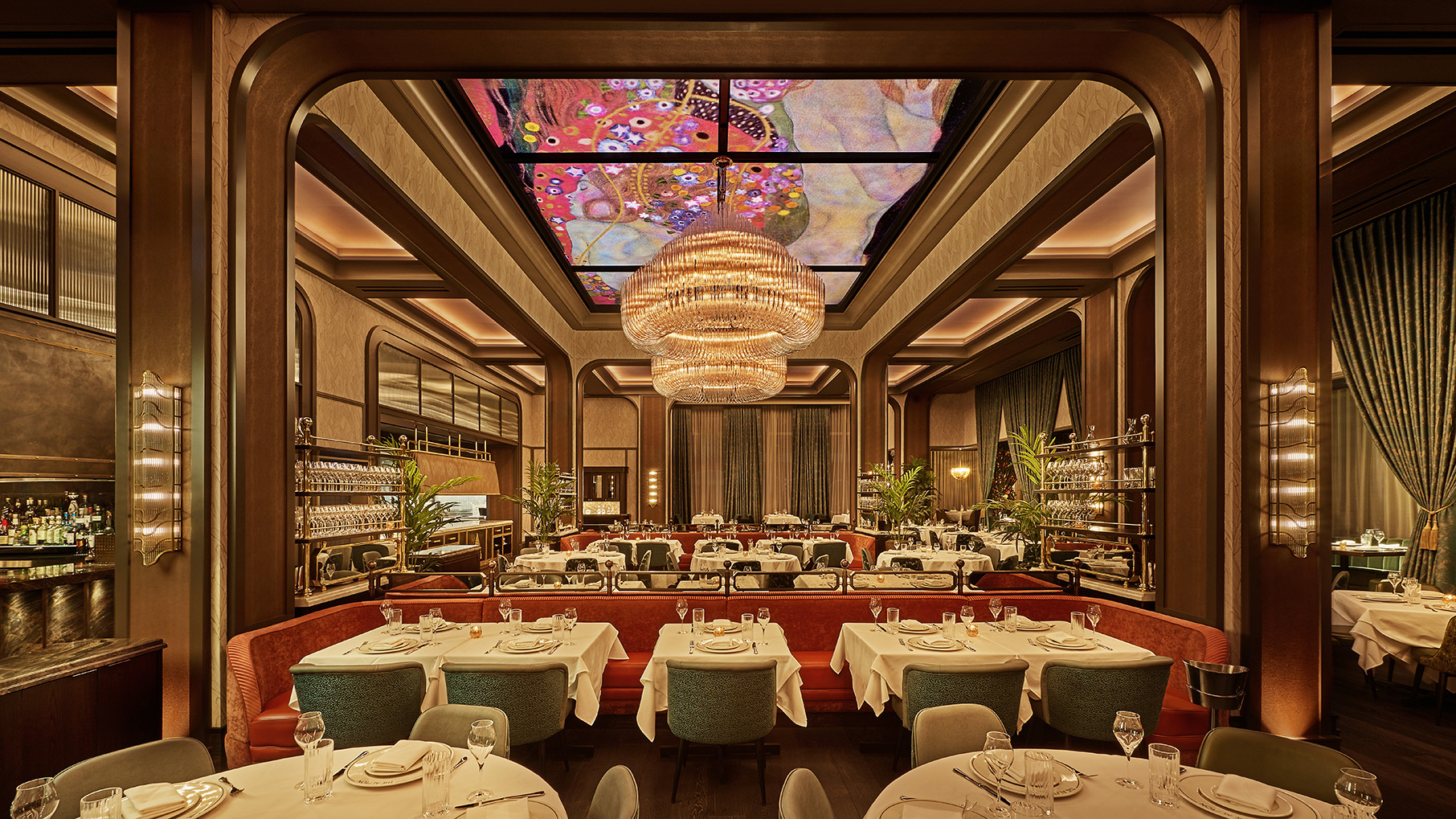
It was fitting, perhaps, that my visit to the other grandiose steakhouse on the list, Adalina Prime (designed by Dunne Kozslowski), occurred just before the holidays. The place was bedecked in oversized ornaments, twinkle lights, garland, and trimmed trees of numerous shapes and sizes – like wandering onto the set of “The Nutcracker” ballet. With custom wooden arches and glowing, tiered chandeliers, the soaring dining room bears similarities to a cathedral or grand train station when not dressed in its holiday finest. Indeed, the periodic roar of Metra commuter trains mere feet from the glass-walled restaurant drove the latter’s point home to my giddy delight.
If you’re the sort who goes for a martini, I’d consider it essential to start with the standout version poured at Adalina Prime’s handsome bar, set beneath a formidable fake tree. I, for one, could do without restaurants’ prevailing impulse to cram every bit of negative space with future landfill inhabitants, convincing and grand as some of this fauxliage may be.
The something-for-everyone food menu takes clever license with certain steakhouse usual suspects – giving scallops the escargots treatment, sousing cauliflower in cognac-laced Diane sauce, and swapping in cacio e pepe spinach for the typical creamed greens. Regardless, I watched more good old-fashioned charred steaks than anything else land on table after table. Some things never change, I suppose.
Escaping Winter’s Dread
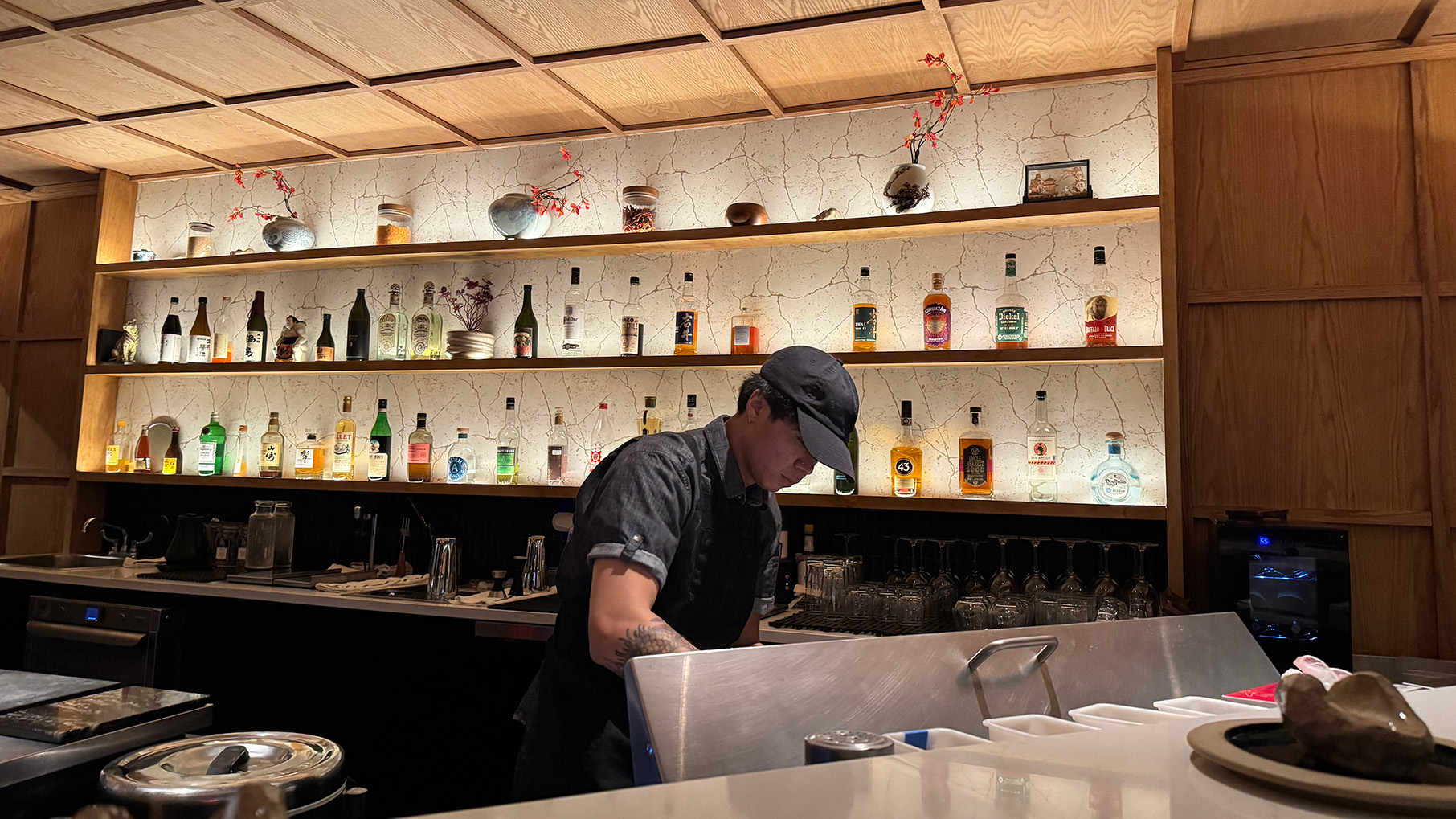
Despite the stubborn insistence of many Chicagoans to leave their trees up well into the new year, the holidays came and went in a flash. As the winter doldrums set in, I thrilled at one underrated upside: that I can finally nab impossible reservations, like at Noriko, the 21-seater that roared onto Chicago’s dining scene last February.
On a bafflingly mild and blustery January weeknight, my husband and I walked into a relatively quiet PERILLA Fare, where most of the action involved packaging and handing off carryout orders of bulgogi and kimchi fried rice. The host directed us to a staircase smack dab in the middle of the restaurant. Descending the purple neon-lit steps into the warm, minimalist Noriko had the intoxicating, if more restrained, effect of entering a Las Vegas casino. What time is it? What day? Who cares! The sense of almost accidental discovery was deliberate, chef/partner Billy Lim told me. Partner Alvin Kang led the design overhaul of what used to be PERILLA’s overflow storage, with help from Lim and chef/partner Rhan Whang.
“We wanted the experience to feel transformative,” Lim said. “The purple LED lighting was a wink to our playful edge and the first hint that you're entering a different restaurant.”
The team went back and forth on outdoor signage, but ultimately took the risk of leaving it out entirely to stay truer to a speakeasy feel: “subtle, discreet, and discovered rather than announced,” Lim said.
Noriko’s mirrored walls briefly fooled me into thinking the cream-hued granite bar that barely seats two dozen went on and on. But it also drew my attention to the action behind the bar. With quiet fluidity, chefs cupped warm sushi rice in their hands, sliced and torched fish, tweezed green onion curls, painted sauce, and scooped tiny heaps of caviar and wasabi,all dramatically aglow in the warm light of the backbar lined with perfectly spaced bottles.
Upbeat house music thumped, but we didn’t need reminding that this kind of omakase joint needn’t demand a hushed museum-like atmosphere. Something in the space and characters populating it told our shoulders to instinctively drop. We sipped custardy nigori sake from tiny cups and awaited each handroll deposit into our respective ceramic holders with rapt attention: yellowtail with fruity jalapeno, fatty bluefin toro with wasabi and house soy, torched scallop with scallions and sweet soy. Across from us, friends primped for a selfie. To my right, a pair of tourists asked the chef for barhopping recs. As our night wound down, theirs was beginning. Isn’t this city grand?
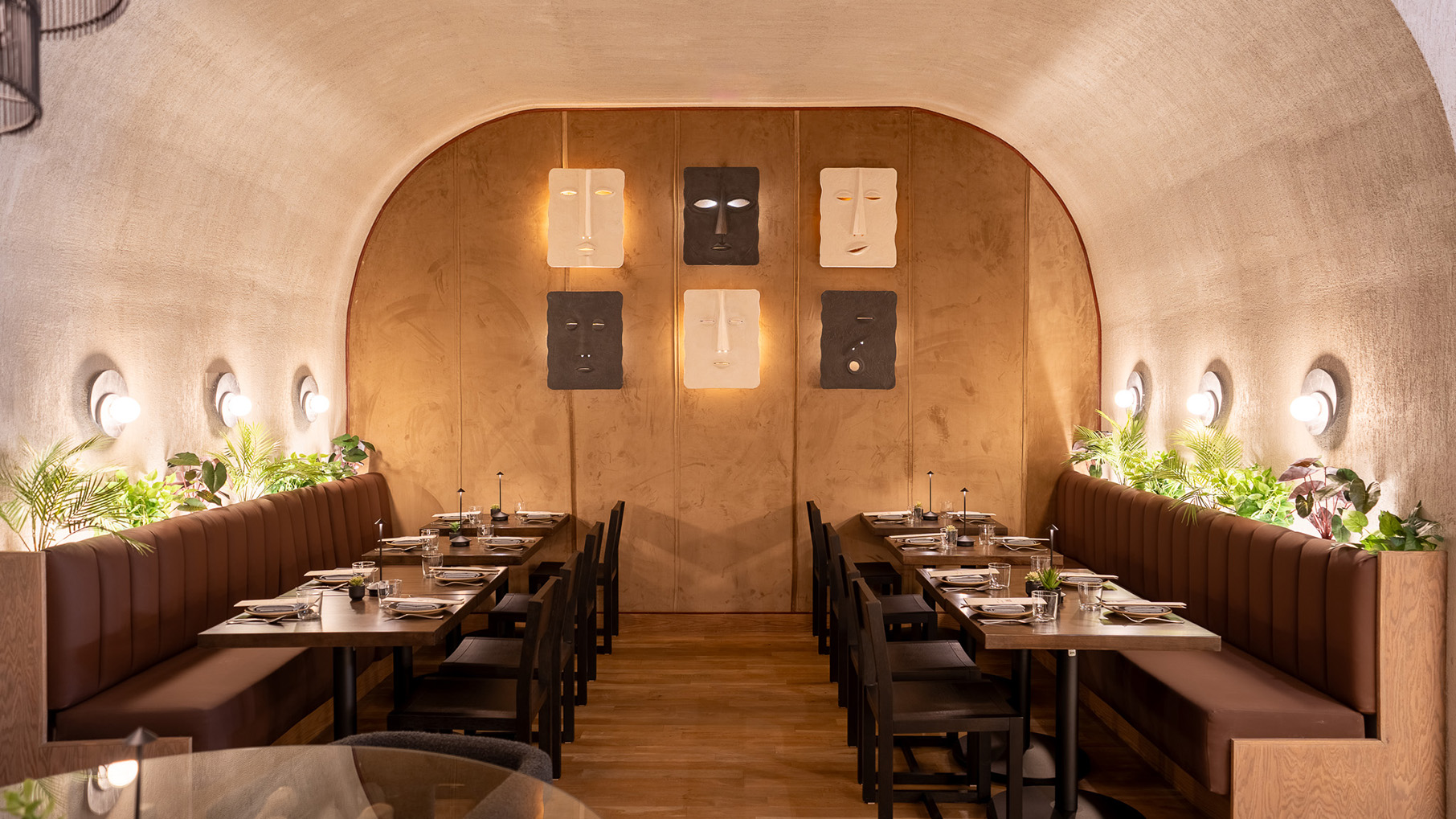
I was still flush with the joy of reclaiming winter weeknight revelry when I met a friend the following Tuesday at the last stop of the tour in River North. The airy, earth-toned Matilda, designed by Daniela Crespo and Vanessa Briceño of Crespo & Br, whisks you to a sexy neighborhood bar in Oaxaca, Mexico, or maybe a posh art collector friend’s home in Lima, Peru. Colombian artist Dickson Zamora created the curved, textured gray walls and backlit sculptures of faces that act as focal points in each partitioned dining area. Complete with waving (faux) greenery, it lends the feeling that this modern cave was built for a coastal, subtropical climate outside.
Though not for the faint of eardrums acoustics-wise, this boisterous spot teems with whimsy, via tableside guac starring an herb ash-coated avocado that looks like it’s still in the skin and light fixtures above the bar that resemble wispy sun hats; via culinary leaning cocktails like an herbaceous, lipsmacking pisco- and hoja santa vermouth martini and tiny cauldrons of chipotle-scented chicken tinga paired with tiny corn tortillas and dabbable Peruvian hot sauces. There’s even a basement bar accessible through a hidden door in the wall, aptly named Clandestino.
Matilda’s Mexican wine list featured enough new-to-us pours to lure us out of damp January-induced weeknight abstinence, into creamy, lush Valle de Guadalupe Chardonnay and a savory, smooth Sangiovese from Delores de Hidalgo that tasted like crushed herbs and cherries. We did, however, manage to resist dessert. Today was for restoration and for living, just a little.