








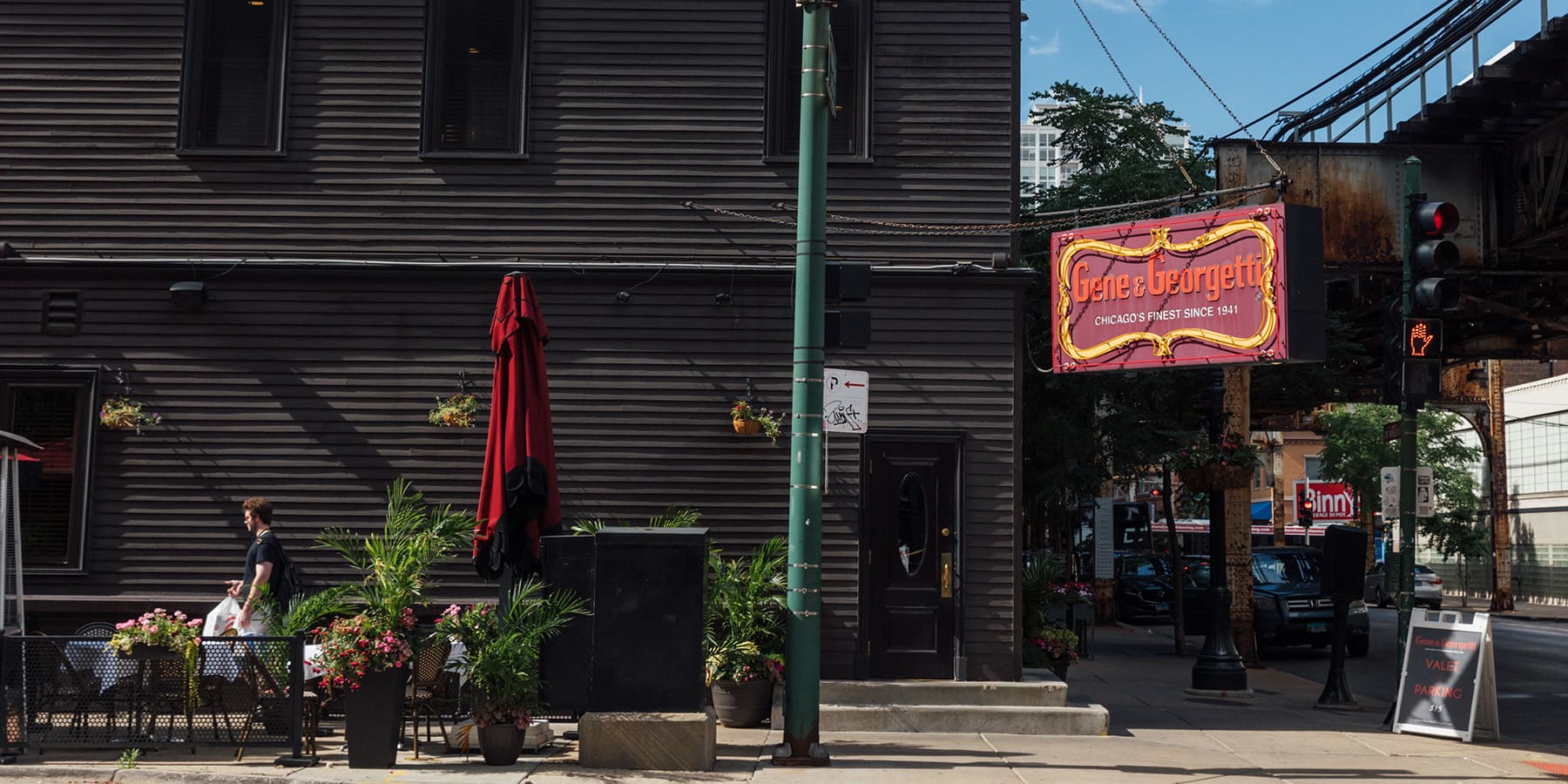
Michael Jordan did it. So did Mike Ditka, and Harry Caray, and two Italian immigrants who went by Gene and Georgetti. There’s a guy called Joe, someone named Gibson, and Arnie Morton. Gustavus Franklin Swift posthumously lent his name, along with an anonymous son or two.
The connection between this disparate group? They all have eponymous Chicago-area steakhouses.
And why not? Chicago has been linked to steakhouses since Swift helped make it the meatpacking capital of the world, and the city retains a reputation as a meat-and-potatoes town even as it has become an internationally recognized hub of innovative gastronomy. The basketball team that Michael Jordan made world-famous is named the Bulls, after all, and they played their inaugural 1966 season at the International Amphitheatre next door to the stockyards where cattle disembarked trains to be turned into beef. Everyday Chicagoans might grab a hot dog or Italian beef for a cheap lunch and scarf some square-cut slices of tavern-style pizza at a party, but when they’re celebrating with a fancy meal, they go to a steakhouse.
“It was always special when the family would go out and ‘treat ourselves’ to a really wonderful experience” at a steakhouse, says Thomas Oh, the director of operations and sommelier at PERILLA steakhouse in Chicago’s L7 hotel.
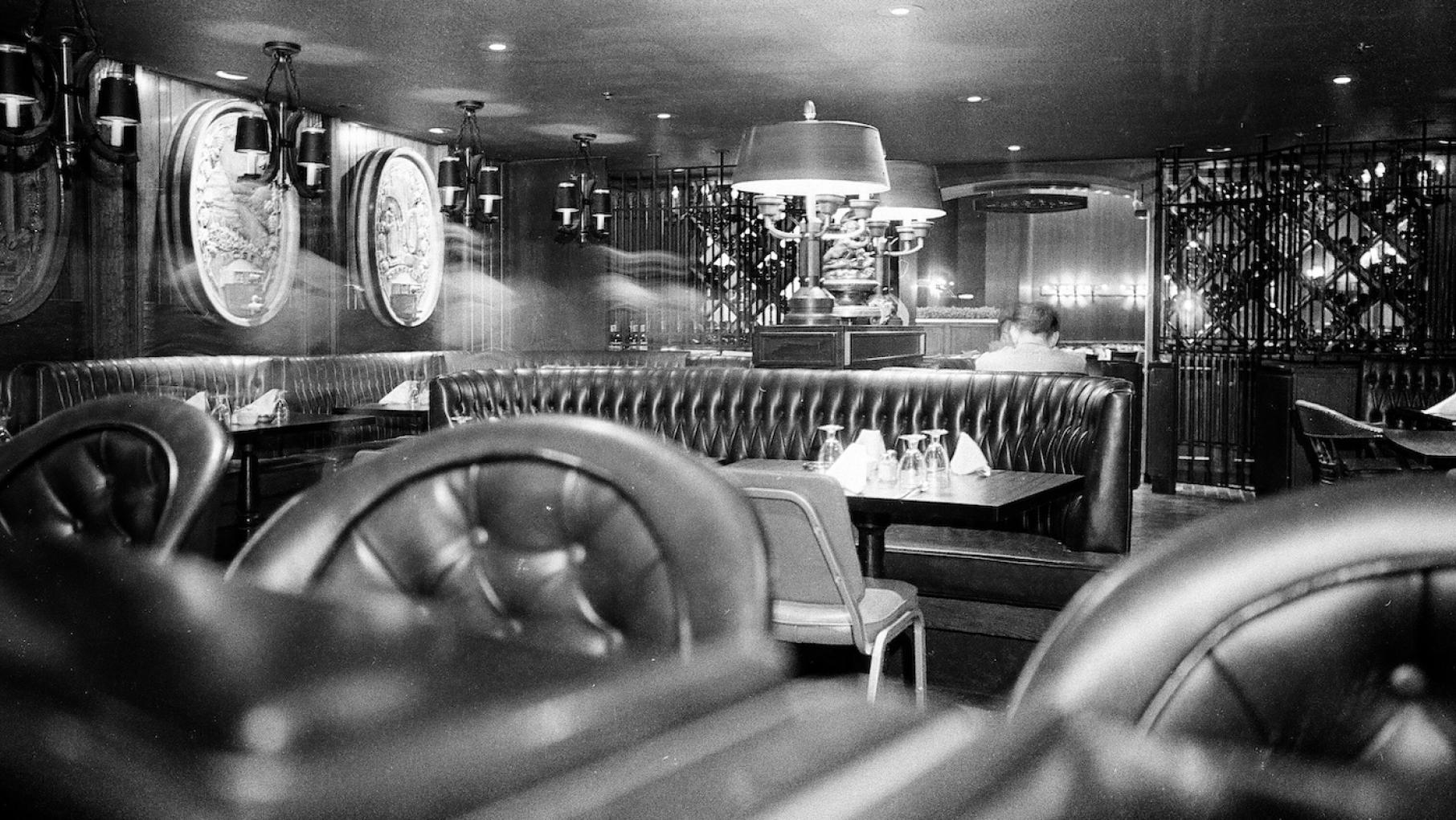
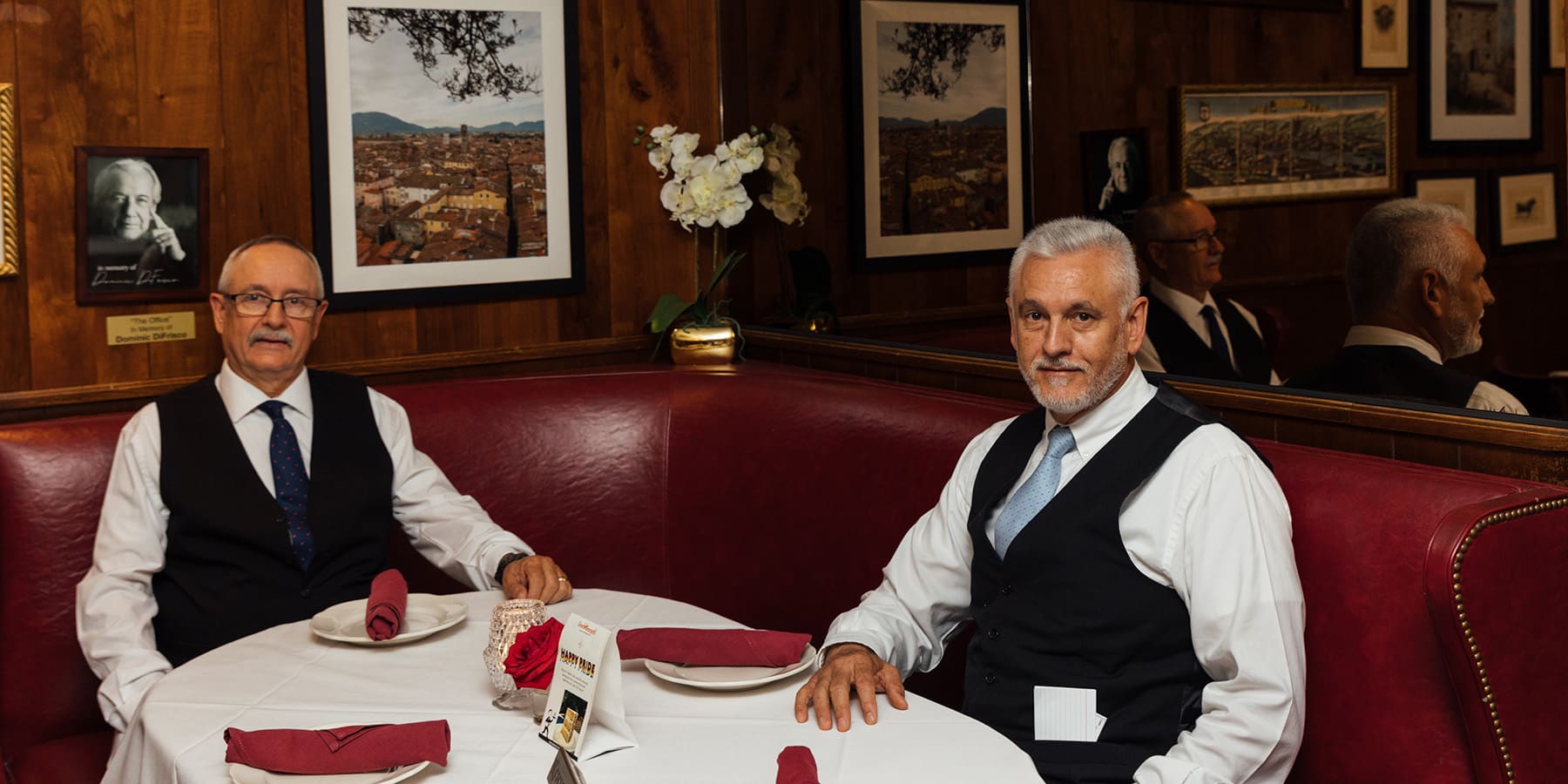
The dark wood; the oxblood banquettes; the white tablecloth; the dressed-up waiters; the massive salads; the rare steak; the unchanging sides of potato, creamed spinach, sauteed mushrooms, and asparagus: it all conjures a sense of both nostalgia and luxury for people, stirring up their own fond memories as well as an immutable sense of American affluence.
“We share birthdays. We share good things, bad things, sad things sometimes” with customers, says Juan Muńoz of working at Gene & Georgetti for more than 40 years. Such a restaurant “makes you feel at home,” says his brother J. J., who has worked there almost 30 years.
A steakhouse “was one of my first jobs,” says Jenner Tomaska, the chef behind The Alston, where you can carve up a $155, 40-ounce, dry-aged, butchered-in-house porterhouse underneath a 2,000-pound custom glass chandelier. “That’s what I thought was fine dining when I was 14, 15 years old.”
For many people, the steakhouse – not a multi-course, tasting menu restaurant such as Tomaska’s Michelin-starred Esme – is still their choice for fine dining, as is clear from the profits. Chicago’s highest-grossing independent restaurant in 2024, according to Restaurant Business, was the Gold Coast’s Maple & Ash, with sales of more than $35 million and an average check of $160. Not far behind on the list – and physically located across the street – was Gibsons Bar & Steakhouse, which has been in the top 30 highest-grossing independent restaurants in the country since 2014. It’s no wonder that some of the scarcest reservations in town are for places such as Bavette’s Bar & Boeuf, which attracts locals and out-of-towners alike.
“I think that steakhouses, especially over the last 10 years in Chicago, have become kind of the clubs that people go to,” says Greg Mohr, one of Tomaska’s partners in The Alston, likening some steakhouses to “a bar with a restaurant attached.”
“The steakhouse crowd, they’re looking for a good time, but they’re also looking to have a seat and a cocktail,” he says.
The unflagging attraction – and the possibility of those profits – has made a steakhouse a safe bet for Chicago restaurateurs even as the restaurant industry at large faces numerous challenges and shrinking margins. Korean barbecue-inspired PERILLA steakhouse opened in 2024, the same year that Italian-inflected Tre Dita debuted just down the Chicago River and British Hawksmoor opened an outpost north of them. The Alston opened in the spring of 2025 just months after Sophia Steak in the same glistening building, while some Gibsons alumni ventured to the suburbs with The Greggory.
“The question we keep getting asked is, ‘Does Chicago need another steakhouse?’” Tomaska said before The Alston opened. “Our goal is to be the best steakhouse in Chicago and translate that into this next decade and era of Chicago’s hospitality and bar scene, modernizing why the timelessness of the steakhouse exists in the city.”
“Where the Steak Was Born”
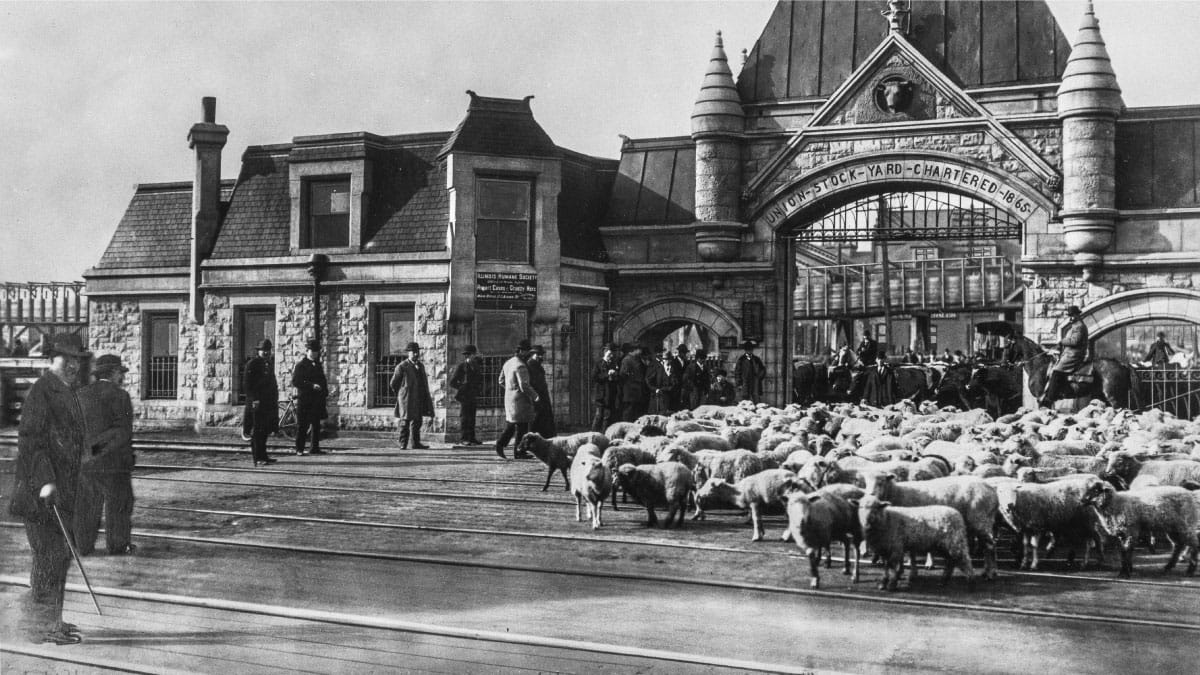
For decades, those who wanted a big hunk of beef in Chicago could eat it “where the steak was born.” (This advertisement slogan neatly recast death into life by turning the slaughtering of a cow into the “birth” of a steak – just one of the ways in which Chicago’s slaughterhouses helped divorce a pristine product from the gruesome realities of meat production.) At the Stock Yard Inn at 42nd and Halsted streets, cowboy-hatted ranchers sold livestock to besuited meatpackers near rooms where U.S. presidents had stayed. Diners could sit down and enjoy a steak that had been butchered and dressed at the Union Stockyards that neighbored the inn. Oil paintings of meat barons glowered down from wood paneling in the ballroom of the Saddle and Sirloin Club and bullfighting regalia decorated the Matador Room inside the inn’s half-timbered Tudor-style building. But the Sirloin Room was the most famous of the restaurants, allowing patrons to personally select their own steak before it was branded with a red-hot iron.
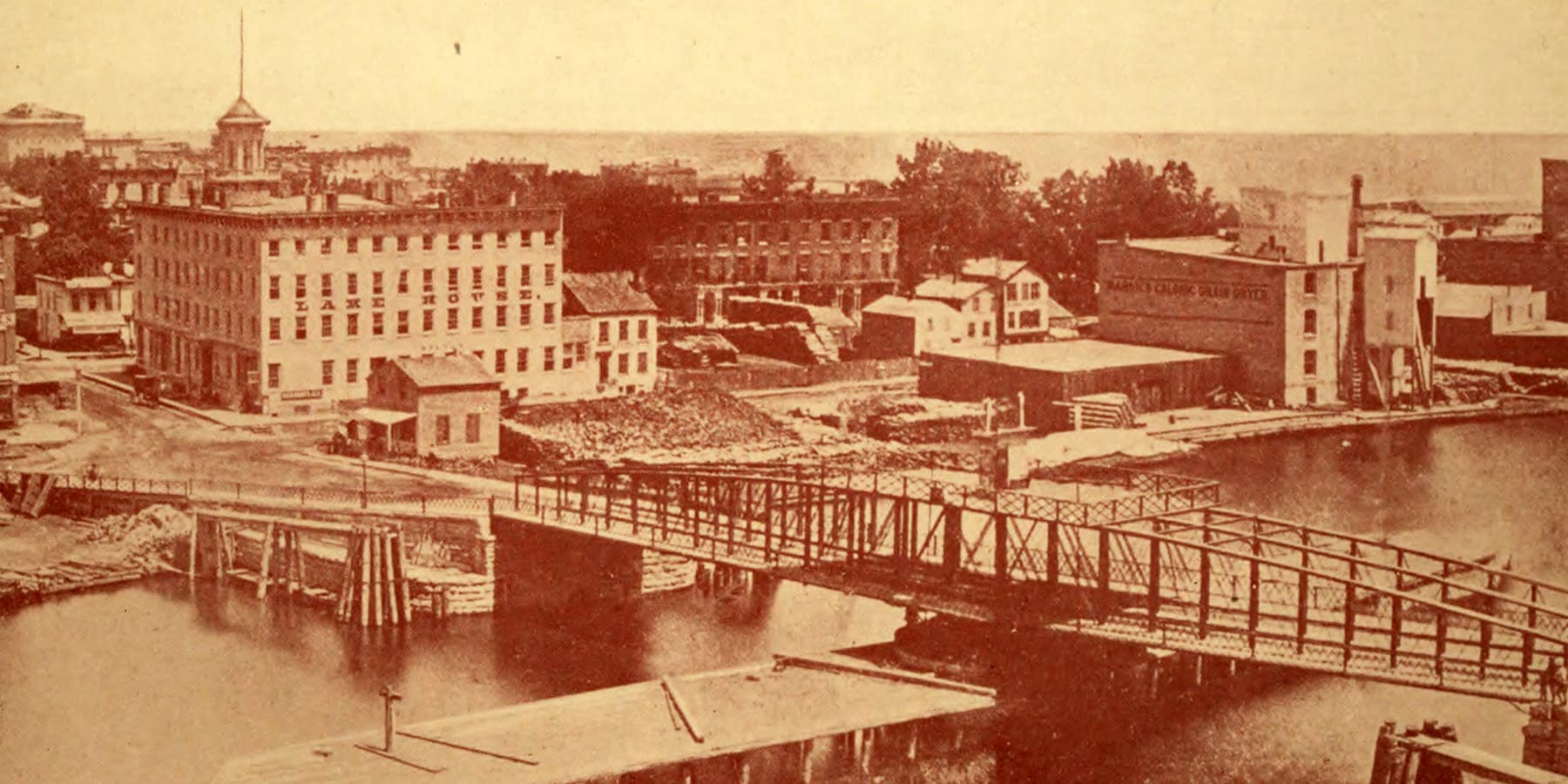
Chicago had restaurants that served steaks before the rise of the stockyards – Billy Boyle’s Chop House was a busy press hangout considered one of Chicago’s best restaurants in the late nineteenth century – but it was the stockyards that cemented an association between Chicago and steak. Businesspeople that flocked to the city for a robust calendar of conventions made a habit of dining at a steakhouse while here – often on the company’s expense account.
“I think it’s a historical connection that never went away,” says Devin Drerup, the general manager of The Alston. “There’s still that sense of culture rooted around stockyards.”
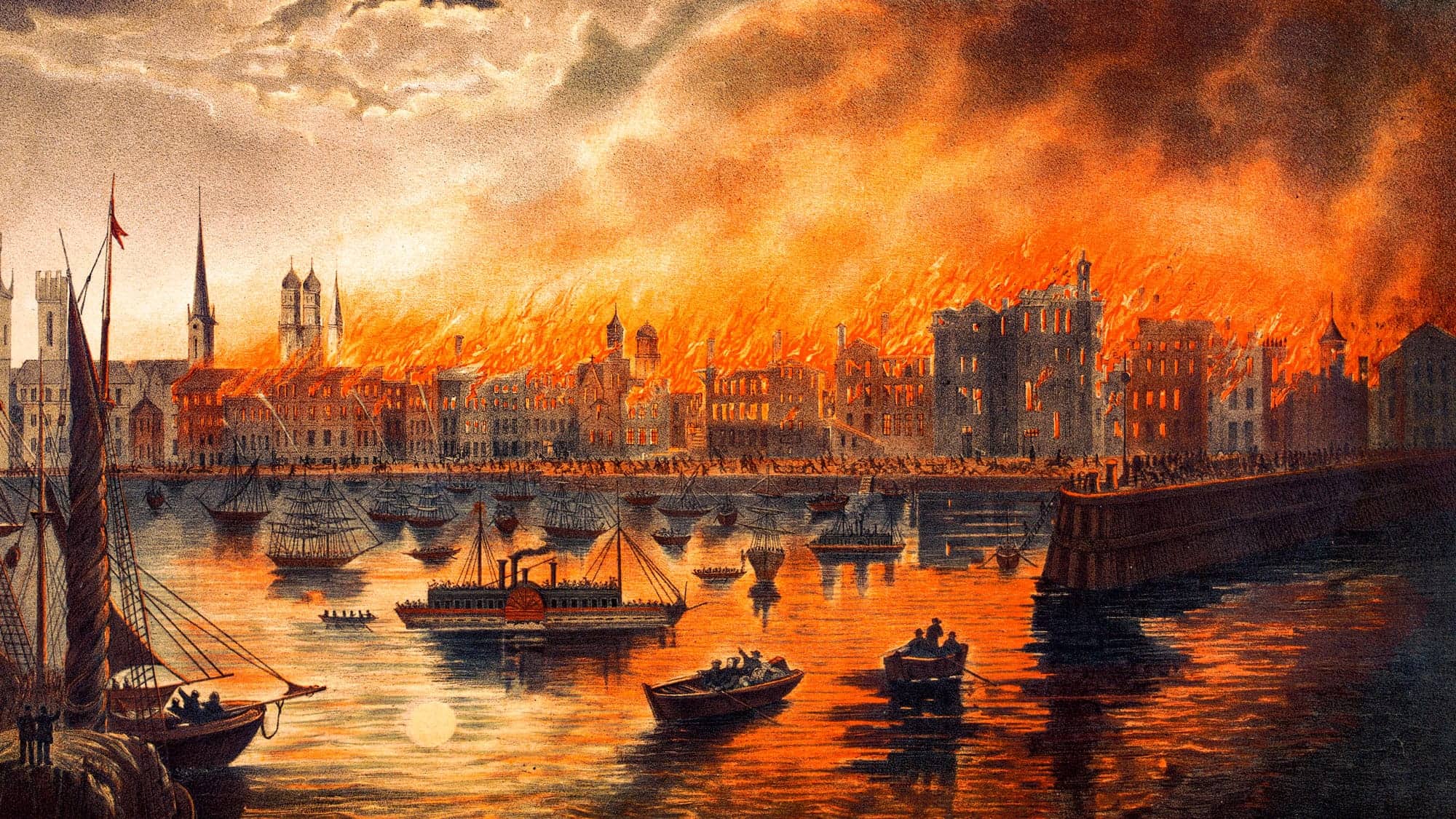
The expansion of railroads, development of refrigeration, institution of “de-assembly” lines in butchering, and fine-tuning of cattle breeds all led to the emergence of Chicago as the center of the American meat industry – and helped make meat plentiful and more affordable. The cattle population of the United States was 15 million in 1870; by 1900 it had more than doubled to 35 million. Much of this astonishing growth was due to meatpacking tycoons such as Gustavus Swift; hence the steakhouse Swift & Sons located in an area of the West Loop that once housed meatpacking plants.
This association between red meat, business, and butchery might be responsible for the masculine mystique around the steakhouse that is part of its appeal to a certain type of high-rolling, Rolex-wearing finance bro – it’s not an accident that almost every chop house with a namesake is named after a man, and that various sports legends have opened one. (Sophia Steak even touted in press materials its status as “the only steakhouse in Chicago named after a woman.”) It also reflects the period of mid-twentieth-century postwar affluence when steakhouses and supper clubs with prime rib reigned supreme, and a company man might conduct business over a martini, a T-bone, and a cigar before returning home to his white-picket-fenced suburban home.
But as that era of abundance began to wane, beef prices spiked enough that President Richard Nixon instituted government-imposed price ceilings in 1973, at the same time that Chicago’s meatpacking industry was declining and moving closer to the cattle in rural areas, thanks to the development of long-haul refrigerated trucking. According to data from the Food and Agriculture Organization of the United Nations, per capita consumption of beef in the United States peaked in 1976 – the same year that the Stock Yard Inn and its restaurants closed for good, and five years after the Union Stockyards themselves shuttered.
While stalwarts like Gene & Georgetti (opened in 1941) stuck around, steakhouses stopped being exciting prospects. “Steak is no longer fashionable, and besides, top-quality beef is very expensive,” declared the Chicago Tribune in 1979, the year after entrepreneur Arnie Morton opened a steakhouse called Morton’s at 1040 N. State St. “But Arnie Morton is a restaurateur who sets his own trends…”
The paper wasn’t wrong. In 1987, Morton – who had earlier helped develop the Playboy Club with Hugh Hefner – sold his steakhouses for a reported $12.4 million; Morton’s is now an international chain. Two years after that sale, Steve Lombardo and Hugh Ralli opened Gibsons Bar and Steakhouse across the street from the original Morton’s, launching another restaurant empire built on steak.
Morton and restaurateurs like Don Roth of The Blackhawk (known for its prime rib) “really showed the prowess of our town,” says John Colletti, a managing partner for Gibsons Restaurant Group who joined Lombardo and Ralli at Gibsons in the early 1990s. According to Colletti, Lombardo consciously drew on the influence of places like Morton’s, Gene & Georgetti, and Eli’s The Place for Steak when opening Gibsons. “He was always interested in the steakhouses that were here.”
A New Era for Chicago Steakhouses
In 2016, Gibsons Restaurant Group entered a new era, opening Gibsons Italia on the Chicago River with the involvement of the next generation of restaurateurs, Lombardo’s children. In the decades since the first Gibsons opened, the group had expanded into other brands and locations, but this was their first restaurant tapping into a more global food scene. For decades, steakhouses and French restaurants were the ultimate fine dining spots in Chicago, but the culinary world had expanded outward and garnered ever more attention starting in the 1990s, even as many steakhouses remained timeless – another word for unchanged.
By the mid-2010s, Chicago was famed for a cornucopia of food, not just its steaks. Spiaggia and Monteverde were garnering acclaim for seasonal pastas, Alinea and Moto had wowed diners with dishes seemingly created in a laboratory, Parachute was creatively fusing Korean and American flavors, and the chefs behind all of these restaurants had become celebrities. With Gibsons Italia, Gibsons opened the doors to the musty old steakhouse and began letting in some of these new influences.
Gibsons Italia added handmade pastas to a menu that, yes, still included plenty of steaks. With Bazaar Meat, another riverside restaurant, Gibsons again dipped into the Mediterranean by partnering with Spanish celebrity chef José Andrés, while also indulging in some modernist tricks such as solidifying olive juice into a sphere.
A few additional places had augured this new wave of steakhouses – German-inflected Boeufhaus opened in 2015, while Latin American live-fire El Che Steakhouse & Bar debuted in 2016. But the artery-clogging glut of modernized steakhouses came after the pandemic, when luxury became the watchword in some sectors of dining and many restaurateurs turned to New York strips as a tried-and-true moneymaker. Even such enduring stalwarts as Gene & Georgetti shed some hidebound practices as a new generation took over and a changing restaurant landscape demanded experimentation and adaptation.
Other restaurant groups followed Gibsons with their own Italian steakhouses such as Fioretta and Tre Dita. Asador Bastian won national attention for its aged steaks from older Spanish cows served in a remodeled townhouse. Chemistry in Hyde Park boasts Black ownership.
For Andrew Lim and Thomas Oh of PERILLA, their steakhouse located in a busy tourist area downtown is an unintimidating way to expose more people to Korean cuisine. “In essence, it’s still Korean barbecue,” says Oh of their food. But placing that within the framework of a steakhouse offers people context. “Maybe it gets someone to think, ‘Korean restaurant, Korean barbecue – might be a bit too adventurous for me. But steakhouse sounds familiar.’”
Beef at PERILLA is charred on a tabletop grill and served ssam style, with herbaceous leaves to wrap bites of meat with spicy sauce and fermented vegetables. There are some standard sides such as mushrooms – jazzed up with tamari caramel – but also Korean stalwarts such as banchan, egg souffle, or kimchi fried rice. There’s even a taste of the Italian steakhouse trend, in the form of cacio e pepe made with Korean rice cakes instead of pasta.
“When I see tables come in and they’re learning how to make ssam and they’re enjoying it that way, they’re now fully immersed in our culture and cuisine, whether they realize it or not,” Oh says.
The Alston’s Tomaska is also trying to use the familiarity of the steakhouse as a stealth vehicle to push unadventurous diners towards his own style of seasonal, creative cooking. “It’s letting them know that they can trust us, and then subtly whispering in their ear that they’re going to get something different,” he says: peach in their lobster bisque, local salt-baked trout, roasted endive instead of creamed spinach.
“There’s still a lot of meat-and-potatoes-type people, and clearly that’s what’s worked in this city for decades now,” Oh says. PERILLA steakhouse is “a really interesting and fun opportunity for us to turn the page on what people are thinking about when they say the word ‘steakhouse.’”
“For years, we’ve said, ‘Another steakhouse?’ It’s going to hit critical mass at some point,” says Greg Mohr of The Alston. “And it hasn’t happened.”
Indeed, the second half of 2025 brings the opening of Adalina Prime, while the Gibsons group has a more casual tavern concept planned for 2026.
Don’t bet on the steakhouse disappearing from Chicago anytime soon.