A Culinary Arts Teacher Tries to Provide Communal Values Alongside Career Skills with a Community Fridge
Daniel Hautzinger
March 13, 2026

Get more recipes, food news, and stories at wttw.com/food or by signing up for our Deep Dish newsletter.
Have a food story or recommendation? Email us at [email protected].
The aroma of roasting meat drifted down the hallway of Roosevelt High School, past the gym and endless ranks of lockers. The seniors in the culinary arts program were preparing their holiday celebration; birria was on the menu. Their teacher, Sarai Blankenbaker – known around the school as Chef BB – had helped them break down a whole goat and season and marinate the meat before slow-roasting it. Now the students would get to enjoy the product of their efforts, enjoying succulent shredded meat on Chicago-made El Milagro tortillas with pickled vegetables, lime juice, and salsa verde that they had also prepared.
“Don’t put the Colombian in charge of the tortillas,” she jokes to a group of students warming tortillas in a pan on a hot plate, clicking a pair of tongs to punctuate her speech.
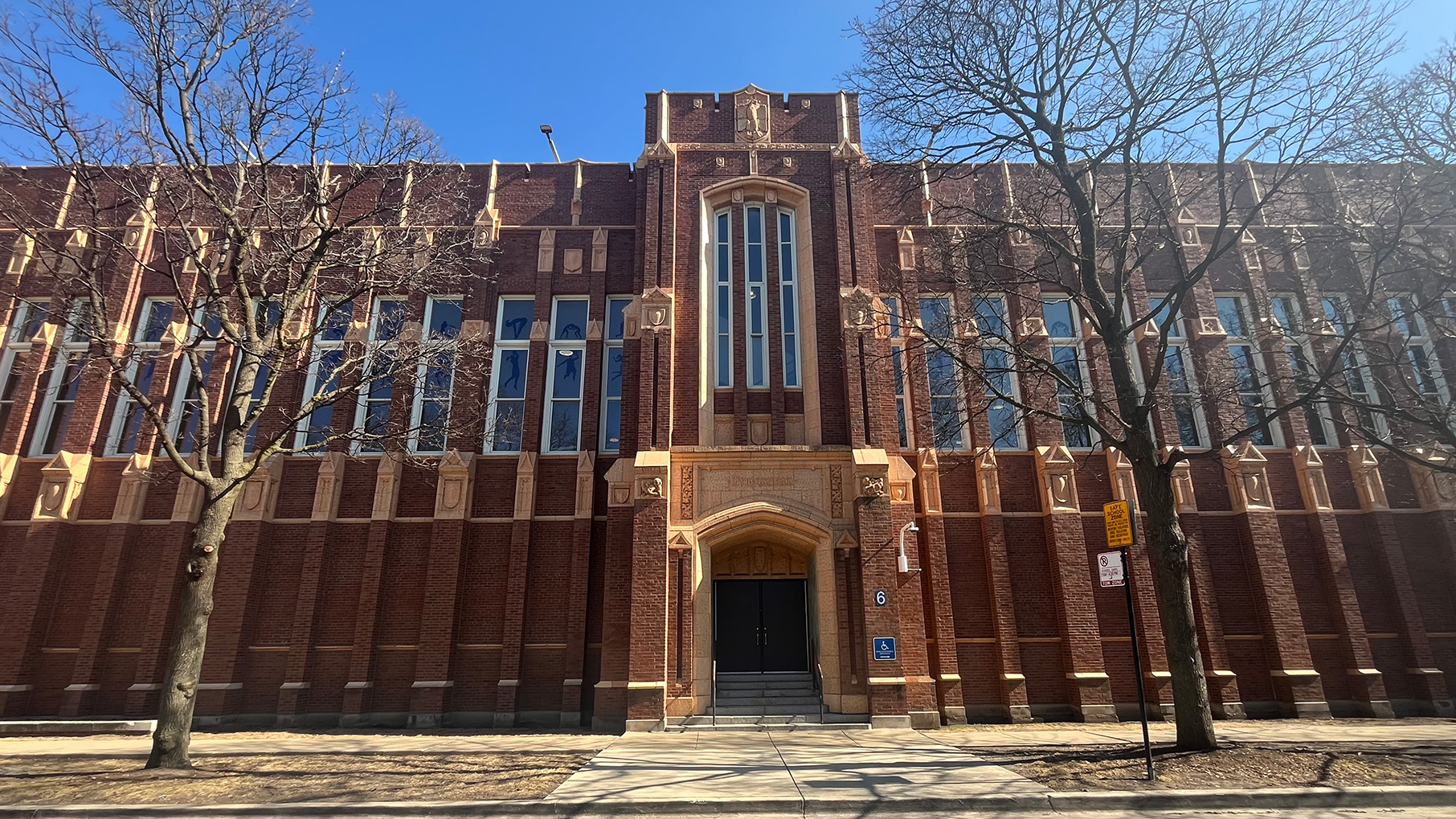
Located at Wilson and Kimball Avenues in the diverse neighborhood of Albany Park, Roosevelt has students with backgrounds from around the globe, including many from Latin America. Blankenbaker herself was born in Mexico, and slips Spanish phrases and questions into her interactions with her bilingual students.
“They’re familiar with birria; they grew up with it,” she says of her students. Her own late grandfather, a formative influence, loved the dish, buying generous portions of it when she and her family visited him on Sundays. Preparing birria with her students is an homage to him and the heritage of many of her students, as well as a lesson in cooking and the ways food interacts with the world.
“It’s a way to see a whole animal on the table and show respect instead of being freaked out,” Blankenbaker says. “Understanding how we produce our food, understanding how it affects climate, [how] it affects economy.”
While the culinary arts program is officially focused on preparing students for career opportunities in the hospitality industry, lessons with Blankenbaker are never just about food.
Forays into international dishes are windows into history. The seniors in the program cater a meal for a senior living facility every year, an activity that teaches them not just how to cook for a large group with dietary restrictions but also inspires thought about caring for their own parents and relatives as they age. A garden with vegetables and fruit trees at the school shows students what it takes to grow food and how that intersects with health and the environment. It also offers a chance to discuss food and nutritional access – an undercurrent for everything the culinary arts program does.
The older culinary students prepare meals for other students every week, supplying a community fridge inside the school meant to support students – and even their families – who do not have enough to eat at home. Various grants and nonprofits funded both the fridge and ingredients for meals specifically prepared for it, while leftovers from curriculum lessons also go into it. (The nonprofit Support + Feed also donates plant-based meals every Friday.) The school administrator assisting kids with unstable living conditions distributes some of the meals directly.
Chicago Public Schools (CPS) offers breakfasts and lunches in its cafeteria, but “a lot of students don’t like the quality,” Blankenbaker says, “and a lot of it is processed, too,” unlike the fresh food her students prepare for the fridge. In the current school year, 77,565 CPS high school students qualified as “economically disadvantaged,” meaning their families’ income is within 185% of the federal poverty line, according to CPS.
By having her students feed their classmates, Blankenbaker hopes to instill communal values and inspire deeper thought about everyone’s struggles. “They know that food is meant to be shared,” she says. “We have to do something to show up for our community. And then they start practicing it.”
Chef BB
Blankenbaker’s drive to care for others is driven in part by her own experience with financial and food insecurity. “Sometimes we only had access to eggs, or we would have to soak the hard tortillas in water just to get through a day,” she says. Her stepdad worked all day in construction, “but he just was not getting paid to his skill.”
But her grandfather loved food when the family had money for it, bringing Blankenbaker to the market and teaching her how to choose a fish or savoring the goat head from birria while she grew up in the southern Mexican state of Morelos. After coming to Chicago with her family at age 12, Blankenbaker was astonished by the abundance of food at American grocery stores, and its disregard for seasonality: You could have fruit the whole year, even if she still hasn’t gotten used to what that non-seasonality does to the quality of the produce.
She attended North-Grand High School in Hermosa and took culinary arts classes. She only understood what it meant to be undocumented when she tried to get a job at a bakery through a school program and learned that she didn’t have a social security number with which to fill out the necessary forms.
“I didn’t even know it was such a big legal issue,” she says. Her understanding of immigration was, “You come here and then you better yourself and you go to school.”
She also eventually learned that it would be difficult for her to go to college. The hospitality industry seemed like her best bet, as “an industry that will accept me” despite her undocumented status.
She started working as a dishwasher while still in high school, getting the job through a career training program at her school. Her own students can now access paid summer internships at restaurants and receive various certifications through the culinary arts program.
She took the top spot in what is now called a Culinary Careers Program (C•CAP) competition, which required her to demonstrate skills against other high schoolers; she now trains her students to make omelets and plate an elaborate cucumber dish for the competition every year. The program offers scholarships, but Blankenbaker couldn’t access them as an undocumented student and went straight into the industry from high school, drawing on the certification and skills the culinary arts program offers.
The restaurant industry is hard on the body and its long, late hours make it difficult to have a family, so she found her way back to CPS, this time as a teacher. She was a culinary arts instructor at Simeon Career Academy in Chatham for years before moving to Roosevelt. At Simeon, she started both the birria and the community fridge, which was placed outdoors, inspired by (but unaffiliated with) initiatives like the Love Fridge.
Her oldest daughter, Nayeli, was also an impetus behind the drive to help others. At age six, Nayeli often asked questions when she and her mom drove past homeless encampments, wanting to give toys to the children she saw there. Blankenbaker instead encouraged her to gather necessities, and so Nayeli solicited donations via social media for her sixth birthday in 2021. She and her family personally dropped off what they gathered.
“They're homeless and they don't have no food and other stuff, so we need to help them," she told CBS News about her donation drive.
Blankenbaker encourages her children and students to pay attention to others – a lesson she herself learned with her students. “You start seeing patterns,” she says. Students appeared tired all day. “I was like, ‘What are they eating? And they only have access to junk food…my students are eating hot chips for breakfast,” she says, because it’s all they had time for or could afford.
“To say that it’s only one issue…or to accuse parents is not fair,” she says. “It’s a whole system that causes that.”
Observing the need for better, healthier food in her students and inspired by her daughter, Blankenbaker brainstormed solutions with her students at Simeon and came up with the idea for a community fridge. When she moved to Roosevelt, she brought the idea of the fridge with her. She aims to supply it with 25 meals a day. They might be jollof rice or jambalaya that her students learned to cook during Black History Month – which also exposes her students to cultural dishes they might not otherwise encounter.
“Yes, we all need a job,” Blankenbaker says of the training in her culinary program. “But food is sacred. And because we are so focused on selling everything and making money out of everything, we’ve lost that connection.”
A Mac and Cheese Competition
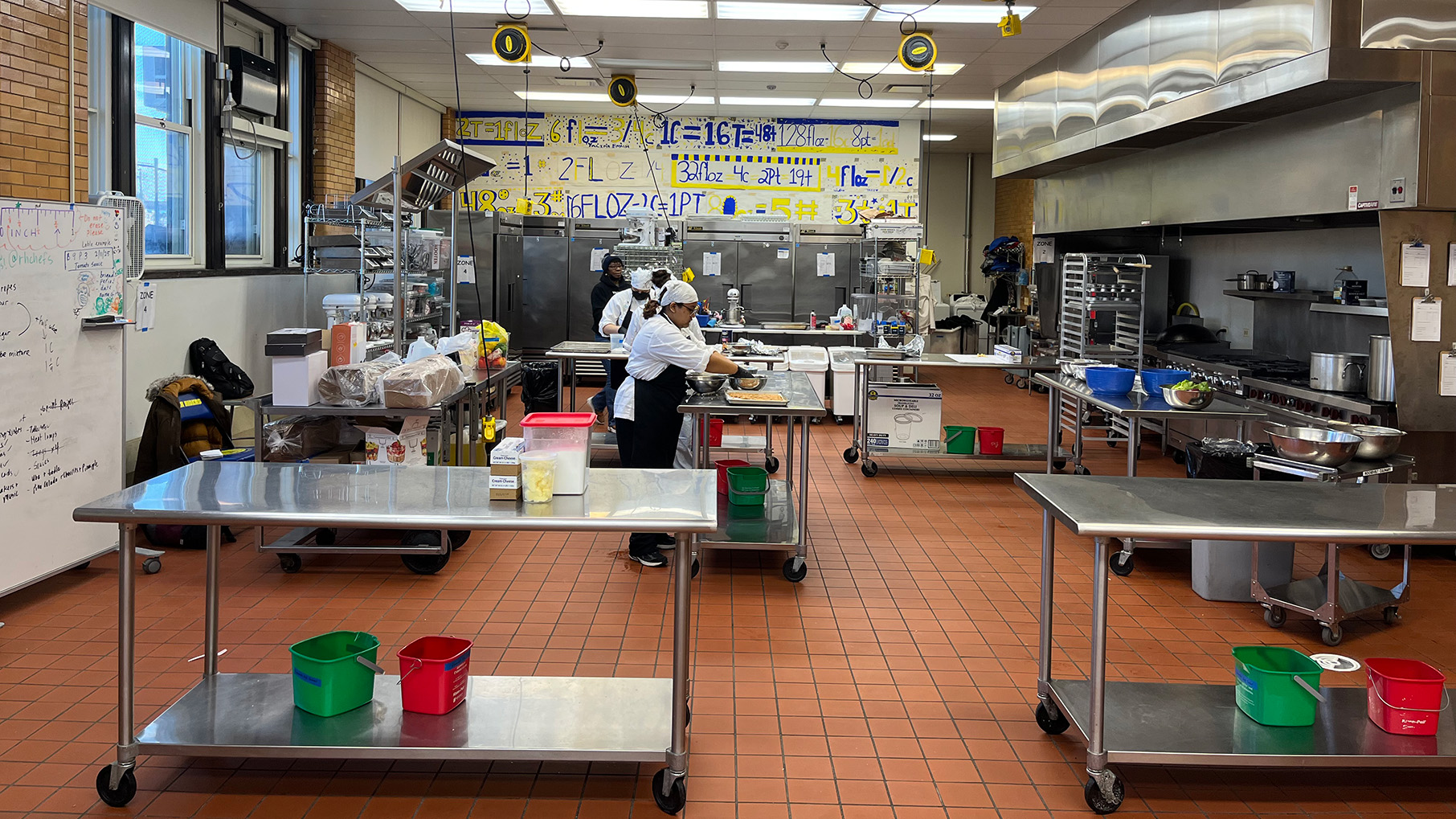
Black History Month was also the backdrop for a major milestone in the culinary arts program, which is a three-year curriculum that begins with sophomores. In February, juniors come up with recipes for mac and cheese and prepare them in teams for a judged competition. They have already learned to don aprons and whites – which they launder themselves at school – to wash up on arrival, to wipe down stations and handle kitchen tasks mostly on their own without being told. The competition allows them to cook and personalize a dish largely independently, and forces them to present it and answer questions about it from both judges and random school employees who have been invited in to sample the food.
Blankenbaker, who is as youthful as her students and smaller than many of them, largely stood back as they finished and plated their dishes, stepping in to offer comments on what might have gone wrong with a slightly soupy version.
“I appreciate the hard work together and the growth as a class,” she told the students before the judging began. Now that they had demonstrated they could handle pressure, she was going to push them harder. Everyone gathered for a cheer of “culinary,” and the judging began.
One team added bacon and green pepper to their mac and cheese; another prepared theirs over garlicky mashed potatoes. After tallying the scores, Blankenbaker queued up “We Are the Champions” by Queen and presented a “GOAT” (greatest of all time) medal to the winners, who had deep-fried squares of cheesy noodles.
As the students headed off for another period, the next class came in and helped clean up. “They take pride in their work, because they want people to see their kitchen clean,” Blankenbaker says. “That’s the message: take care of your surroundings, take care of your community.”
This story has been updated to refer to the new name of the Culinary Careers Program.