Muslim Chefs at Restaurants and Pop-Ups Celebrate Ramadan by Blending Cultures
Lisa Shames
March 18, 2026

Get more recipes, food news, and stories at wttw.com/food or by signing up for our Deep Dish newsletter.
Have a food story or recommendation? Email us at [email protected].
Mention you are fasting to someone and automatically their thoughts will turn to what you’ll be missing. But when it comes to Ramadan, Islam’s most sacred month, and the fasting from sunrise to sunset that plays an integral role in its observation, it’s more about what you will gain than what you’re giving up.
Until recently, I’d include myself in the first camp with an embarrassing minimal understanding of Ramadan. Years back, when I worked in a Spanish restaurant, I remember a Muslim co-worker who would fast during his server shifts with the enticing aroma of garlic all around. I couldn’t imagine how – or, truth be told, why – he did it.
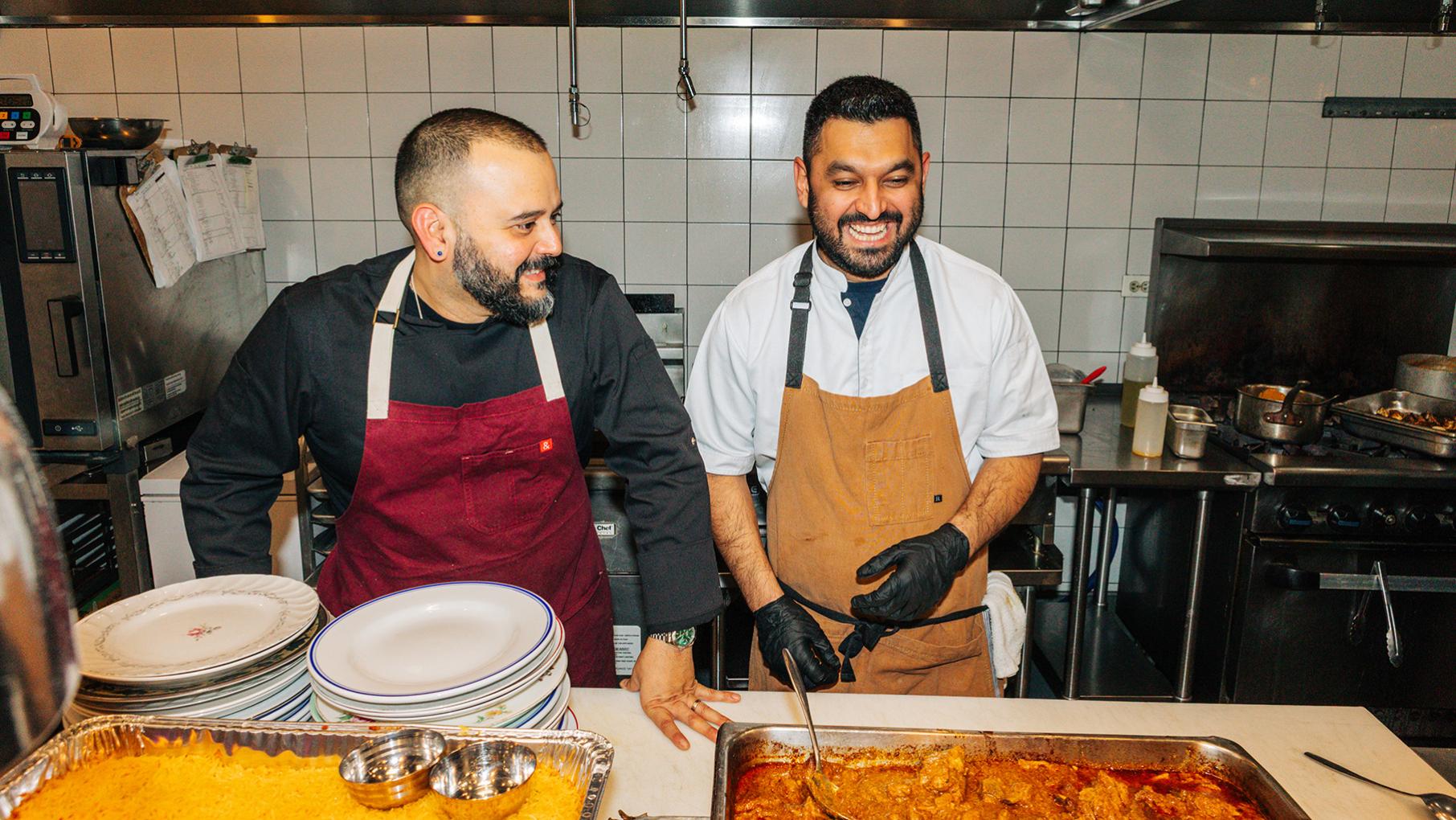
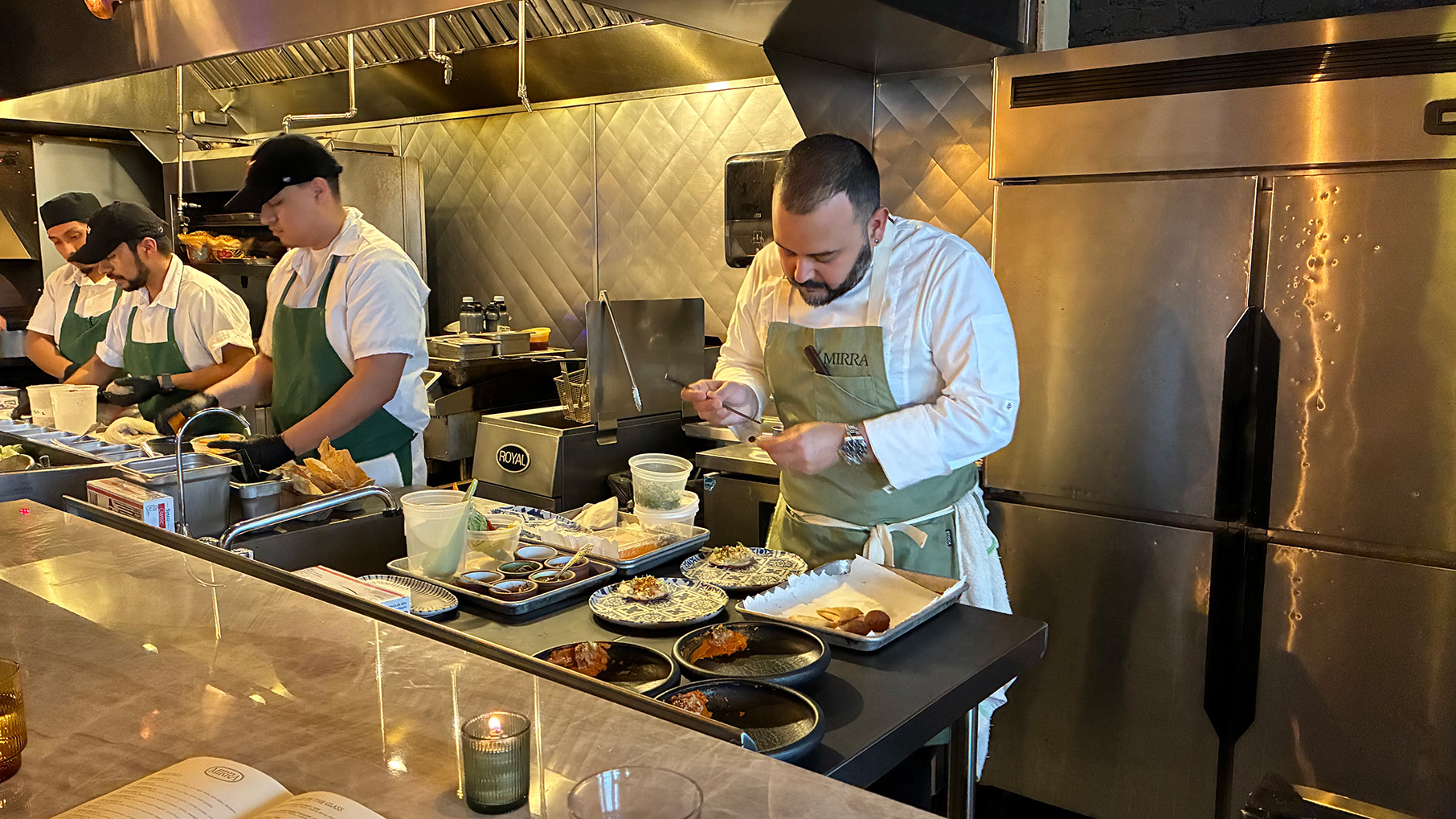
I thought of him at a special Ramadan tasting menu dinner at Bucktown’s Mirra. Created by co-owner and chef Zubair Mohajir, the seven-course meal started on the first day of Ramadan, February 18, and runs through March 27. (The holy month follows a lunar calendar, so its timing changes each year.)
Mirra’s tasting menus typically revolve around festivals, but this one is personal for Mohajir.
“One of the things that overwhelms me emotionally is the lack of representation that's always been there when it comes to being Muslim and being a chef in the mainstream industry,” says Mohajir.
He wanted to change that by doing a special menu that honors iftar, the meal that breaks the daily fast, and dishes and ingredients associated with it. The menu also adheres to Mohajir’s and co-owner and chef Rishi Kumar’s global culinary backgrounds and heritages with dishes that fluidly mix South Asian and Latino flavors. “One of the biggest growing populations of Muslims in this country are Latin Americans,” says Mohajir, adding that the first Latino-led mosque recently opened in the suburb of Berwyn.
“This is Ramadan food at its essence, but then we have fun with it,” says Mohajir.
The first course offered a trio of small bites: a flaky mushroom-stuffed samosa dotted with three salsas; paniyaram, a round fritter made from lentil batter; and a small roti tostada topped with hamachi slices sitting on a vanilla-and-almond salsa macha.
“You always want to start with something crispy and tangy,” says Mohajir. “Nothing can describe how your mouth feels after the first bites when you haven't eaten or drank water all day.”
Texture continued with the next course, a crispy pesaruttu. Similar to dosa, the small crepe was filled with prawn mousse and dusted with toasted black and white sesame seeds. Underneath, a creamy sauce blended India’s korma curry with poblanos and epazote.
The third course was dark — literally. Typically prepared as a flatbread, the kulcha here was oblong and black. Topped with shavings of huitlacoche and paired with guajillo butter, the soft roll was both funky and spicy.
At around 6 pm, with the sun still up, Mohajir couldn’t help but check his watch. “This is the hardest time,” he said. “I feel like the day flew by and this last hour is the hardest.” With daylight saving time taking place right in the middle of Ramadan, the fast breaking was now an hour later.
It wasn’t until after he served the next three courses — Chilean seabass with khichdi (spiced lentils and rice); kofta, a scotch egg of sorts with a mole blanco and a sous vide egg yolk jam; and a fluffy goat tamal — that Mohajir took his first sip of an iced coffee that Mirra’s bartender had given him earlier, finally breaking his fast.
“I'm grateful for the people I have around me,” says Mohajir, who has fasted during Ramadan since he was 12. “They know what you're going through, and they'll have a glass of water or an espresso ready. You don't ask for it, but your faith is restored in humanity in a lot of ways with folks valuing each other's beliefs.”
Dessert nods to one Mohajir’s mom used to make for him as a child. The saffron milk cake eats like a love child of flan and cake, with sweetness via squiggles of dulce de leche on top.
The response Mohajir has received for his Ramadan dinner has reinforced its value.
“I’ve had people come up to me and say, ‘We never see ourselves being represented in a tasting menu, let alone during Ramadan,’” he says.
“It’s nice to feel seen,” says Ayaan Roble. Her friend Ashley Falcon, who isn’t Muslim, had seen the special menu and wanted to bring Roble to a place that highlighted Ramadan while also being on her must-try restaurant list. “It seemed like a once-in-a-lifetime experience,” says Falcon.
“Even if you’re not familiar with iftar and foods regularly served, it’s a spectacular meal,” says Adel Ansari, a digital content creator who goes by Yumwalla on Instagram. “But if you are, there’s a wink wink nudge nudge with the spices and hints of this and that in each dish that spotlights something so dear to me.”
Sufyan Sohel, a nonprofit executive and civil rights activist, joined three Muslim friends at Mirra for iftar. “Seeing Ramadan acknowledged in a restaurant setting in Chicago is powerful,” he says, adding that it’s a reminder that these traditions are not something to be hidden away in private homes. “With so much anti-Muslim and anti-immigrant energy across our country, many communities are living with fear and hatred directed at them and the painful reality of being treated as outsiders. This dinner made the city feel a little more open, connected, and more like home.”
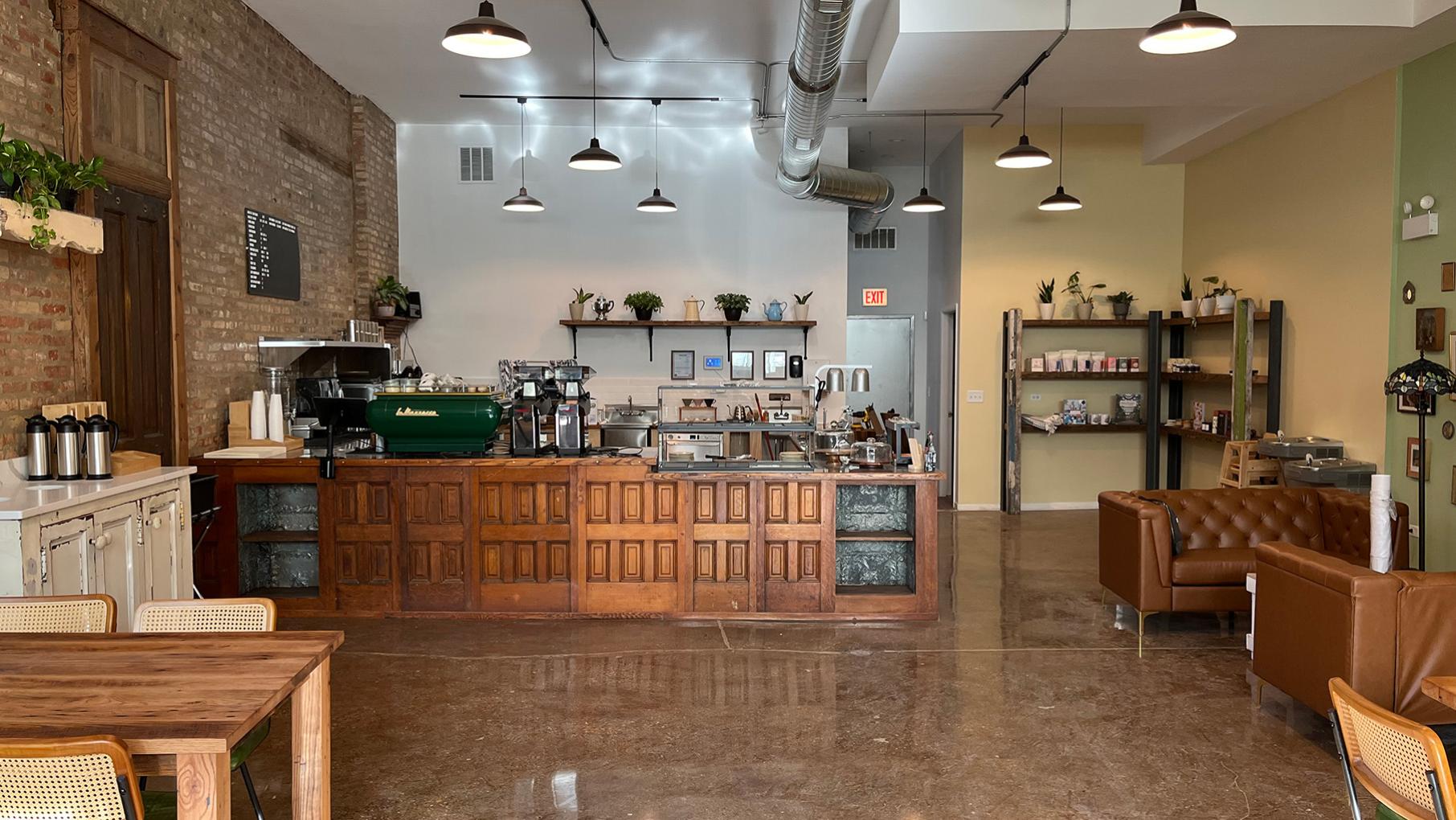
On Chicago’s South Side, a late-night Ramadan pop-up brought those who celebrate to Pilsen’s La Malinche, a coffee and tea house owned by couple Hector Aguille and Yvette Valdez, who previously had a café in Mexico City. The pop-up was organized by Maryam Khan, who has been doing similar events around Chicago for the last few years.
A practicing optometrist, Khan hosts pop-ups and curated dinners under the name Eyekhanic Eats about once a month. “I have an interest in cooking and hosting gatherings that bring people together through food and community,” says Khan, whose father used to own a restaurant. “My full-time job pays the bills, and this pays the passion.”
La Malinche’s proximity to an Islamic community center brought Khan to the area – and the coffee bar – often. The idea of hosting a pop-up there made perfect sense. “It's a nice way to get community together, refuel for the next fast, and have a space where we can just be all together,” says Khan. “I really love Pilsen and the Latino community. A lot of our flavors overlap with being Pakistani and South Asian.”
Like the dinner at Mirra, her menu featured a combination of cultures. The chipotle chapli kabob burger combined the idea of Pakistani kabob with Latino flavors in the form of a breakfast sandwich with a hash brown and an egg. A chicken panini incorporated a signature family recipe with melted cheese and a salsa verde. For dessert, there was Dubai chocolate toast and churro halwa, which included churro pieces made by a Pilsen vendor submersed in the South Asian semolina pudding.
The timing of the pop-up corresponded with the ending of evening prayers at the center down the street. By 9:15 pm, La Malinche’s colorful room was packed. There was plenty of hugging and laughter and some board game playing. Many of the women were wearing long coats beautifully adorned with embroidery and beadwork.
The pop-up lasted until 1 am. “We never are open at this time, plus it helped us reach people who might not know us,” says Aguille.
For Khan, the fasting associated with Ramadan is like a refresh. “I feel like it's training ourselves, our bodies and our spiritual soul, to give away something for just a short period of time,” she says.
Her husband, Arsalan, who works in healthcare research, helps at the pop-ups. “I'm actually the ‘logistics provider’ and I’m here for moral support,” he says. “The fun part of not eating from dusk till dawn is, when you taste that first bite, you understand how much pleasure we get out of it. That teaches you patience, endurance, respect, and valuing everything that God has blessed you with.” Like Khan, he sees Ramadan as a reset and a time to reflect on yourself, the things you are chasing, and what they mean in the bigger picture of life.
“Ramadan starts with something as simple as not eating or drinking, but the root of it is spiritual,” says Mohajir. “It’s you coming to terms with yourself. When you're hungry and thirsty, you'd be surprised how fast you can do that. It's also a big reminder of the blessings that we have every single day, because there's an end to our fast, but for many people out there, there isn’t.”