A Surprising Remnant of the Bicentennial: Marc Chagall's 'America Windows'
Daniel Hautzinger
July 2, 2026
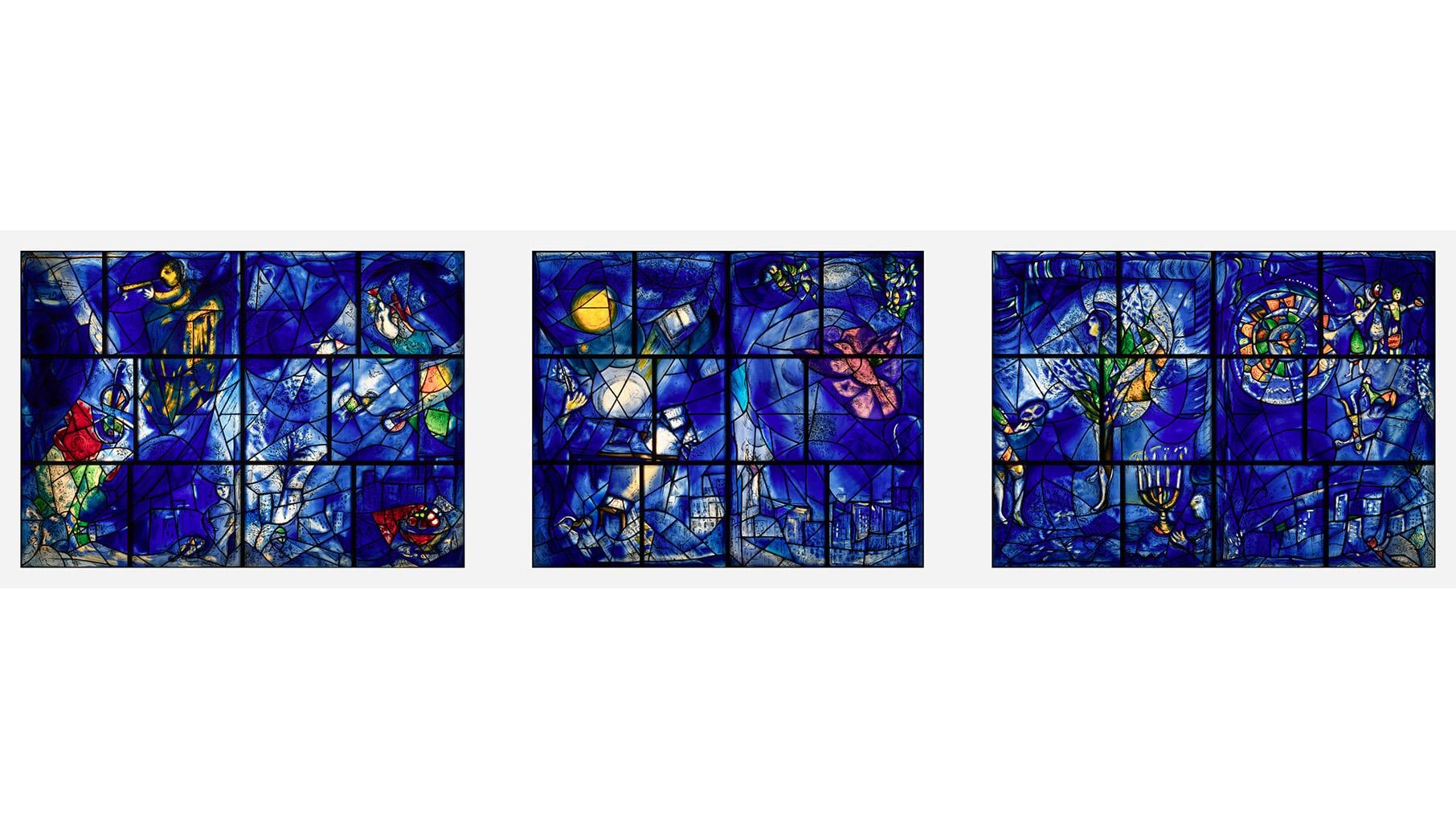
On the 250th anniversary of the United States, there is plenty of history to look back on, including prior observances of significant milestones. The nation’s bicentennial 50 years ago left a monument in Chicago that has outlasted that transitory anniversary. Marc Chagall’s stained glass America Windows at the Art Institute of Chicago are a touchstone for the city, memorably appearing in Ferris Bueller’s Day Off and transcending their initial association with the bicentennial to become a lasting piece of art.
Like the Statue of Liberty which appears in the central window, the America Windows are a symbol of freedom in this country conceived, designed, and manufactured in France by Europeans. Chagall was born in what is now Belarus and eventually became a citizen of France, where he spent a large portion of his long life. During World War II, the Vichy government stripped him and his wife of their French citizenship because they were Jewish, and they found refuge in the United States before returning to France after the war.
Chagall first visited Chicago during his wartime stint in the U.S., lecturing at the University of Chicago in 1946 while his work was exhibited at the Art Institute, which still has a substantial collection of his works today. He returned for more lectures at the school in 1958. But it wasn’t until late in his life that he formed a connection with the city, contributing two major artworks.
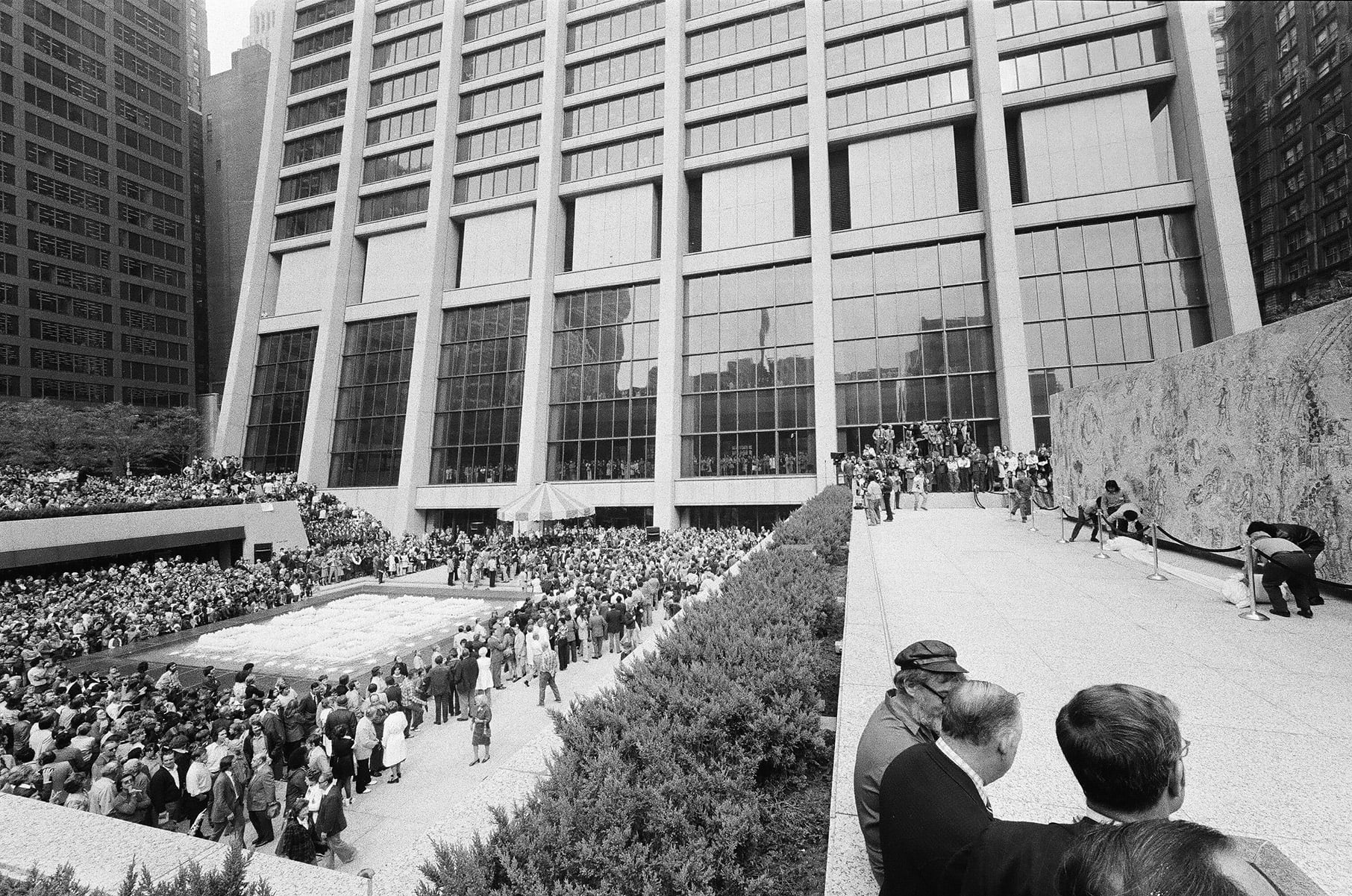
The first was The Four Seasons mosaic in what is now the Chase Tower plaza at 10 S. Dearborn St. in the Loop. Installed and dedicated in 1974, the massive mosaic is mounted on a 70 foot-long, 14 foot-high rectangular block on the east side of the plaza. Chagall created the design in France and mosaicist Michel Therin installed it in Chicago, using glass from Venice and Paris, gray granite from Norway, black granite from Belgium, rose granite from France, and green stone from Israel, according to the Chicago Tribune. The design even incorporates bits of the Chicago brick that built much of the city, according to the City of Chicago.
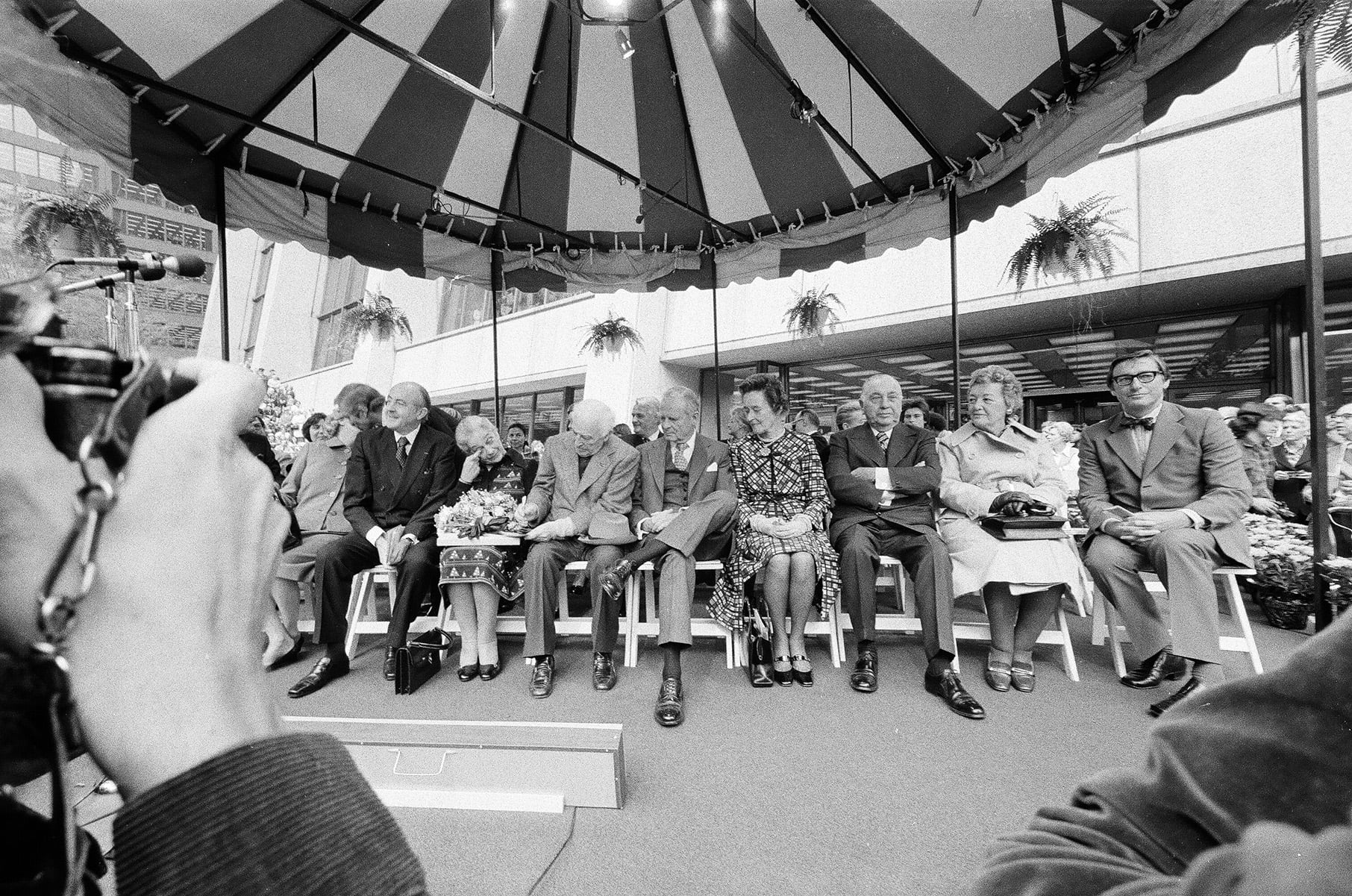
Chagall and his wife visited Chicago for the dedication of The Four Seasons – but first the 87-year-old artist inspected the mosaic in person, marking spots to be corrected by Therin with red paint. “Not bad,” Chagall reportedly said upon seeing it on location for the first time.
At the packed public ceremony revealing The Four Seasons, Mayor Richard J. Daley made Chagall an honorary citizen of Chicago and Chagall reportedly startled the gruff mayor by kissing him on the cheek. The interpreter translating Chagall’s remarks from French apparently fell behind and offered only an abbreviated version; Chagall’s wife typically served as his interpreter in America.
“Chicago is very important,” Chagall told the Tribune through his wife while he was in Chicago, “in the buildings and construction of this city I see a symbol of vitality, idealism.”
He also apparently took a liking to Daley, who was in the midst of reimagining the Loop with new construction and public art like the enigmatic Picasso sculpture in what is now Daley Plaza and the vibrant red Calder Flamingo in Federal Plaza. The Four Seasons and Chase Tower Plaza sit in the center of the Loop, directly between the two government plazas with their monumental artworks.
The America Windows
The America Windows were commissioned by the Art Institute’s Auxiliary Board for the museum for the bicentennial. But by the time the work was finished and installed in 1977, the bicentennial had passed and Daley had died in office.
“Suddenly the mayor is dead. I was very fond of him. They want to dedicate this work to him, to associate his name with it, which is rather nice. It is sad that he is gone,” Chagall said. The Windows were thus dedicated on the late mayor’s birthday, May 15. Michael Bilandic and Daley’s widow Eleanor presided, while Chagall and his wife cancelled a trip to be there at the last minute.
Daley did approve the design before his death in December, 1976, when Chagall’s stained glass collaborator Charles Marq visited Chicago earlier that year to study the light and determine the placement of the windows in the Art Institute. Chagall first started working with stained glass in the 1950s, when he was nearly 70 years old. Charles and Brigitte Marq of the centuries-old Atelier Jacques Simon executed his vision for nearly all his projects.
For his windows, Chagall would make a sketch and fasten colored fabric to it, then work on a more exact design in watercolor and ink. Charles Marq would photograph that design, enlarge it, and determine precise colors and draw in the lines where the lead that holds the glass would go. Once the glass was fabricated, Chagall and Marq would finish it up with black paint and small scratches.
The predominantly blue America Windows consist of three windows with two panels each – and were flown to Chicago from France on three separate flights for security reasons. They represent music and painting in the left window, theater and dance in the right, and literature and American freedom in the center, with buildings meant to echo Chicago’s architecture running along the bottom. The signing of the Declaration of Independence is commemorated in the central window, according to the Tribune, per the bicentennial theme.
They were Chagall’s first stained glass work not to deal with religious themes; almost all of his previous windows were in cathedrals, churches, or synagogues. (Although he often incorporated Jewish themes, he was no stranger to using Christian symbolism, as in his White Crucifixion at the Art Institute, reportedly one of the late Pope Francis’ favorite paintings.)
“It’s not for a cathedral, but at the same time it must be a place where one can reflect. If the work is good, then the visitors, those who come to see, will have a certain feeling,” Chagall told the Tribune about the America Windows.
The windows initially overlooked the Art Institute’s McClintock Court from the west, in a gallery named after Chagall. They were removed in 2005 to avoid damage during the construction of the Modern Wing, then reinstalled in a new interior location with artificial lighting at the very back of the museum in 2010. Exposure to the elements had caused damage over time, just as it had for The Four Seasons, whose top was deemed unsalvageable during a restoration. A protective canopy was installed over the mosaic in 1994.
Chagall had died by then, at the age of 97, in 1985. One of his final works was a tapestry on the Biblical figure Job for what is now the Shirley Ryan AbilityLab in River North. Although it was unfinished at the time of his death, his weaver collaborator was able to complete it from his design.