Where to Find the Food of Argentina in Chicago
David Hammond
July 10, 2026
Get more recipes, food news, and stories at wttw.com/food or by signing up for our Deep Dish newsletter.
Have a food story or recommendation? Email us at [email protected].
Argentines, like Chicagoans, adore beef. So it’s no surprise that the most conspicuous Argentine restaurants in Chicago are steakhouses: El Che Steakhouse & Bar, Artango Bar & Steakhouse. Even at most of the Argentine spots that don’t have “steakhouse” in their name, beef is central to the menu.
There’s no single Argentine neighborhood or “Little Buenos Aires” in Chicago. What connects the pockets of Argentines scattered across the city is not geography but the Argentine spirit that expresses itself through music, dance, and, of course, the food.
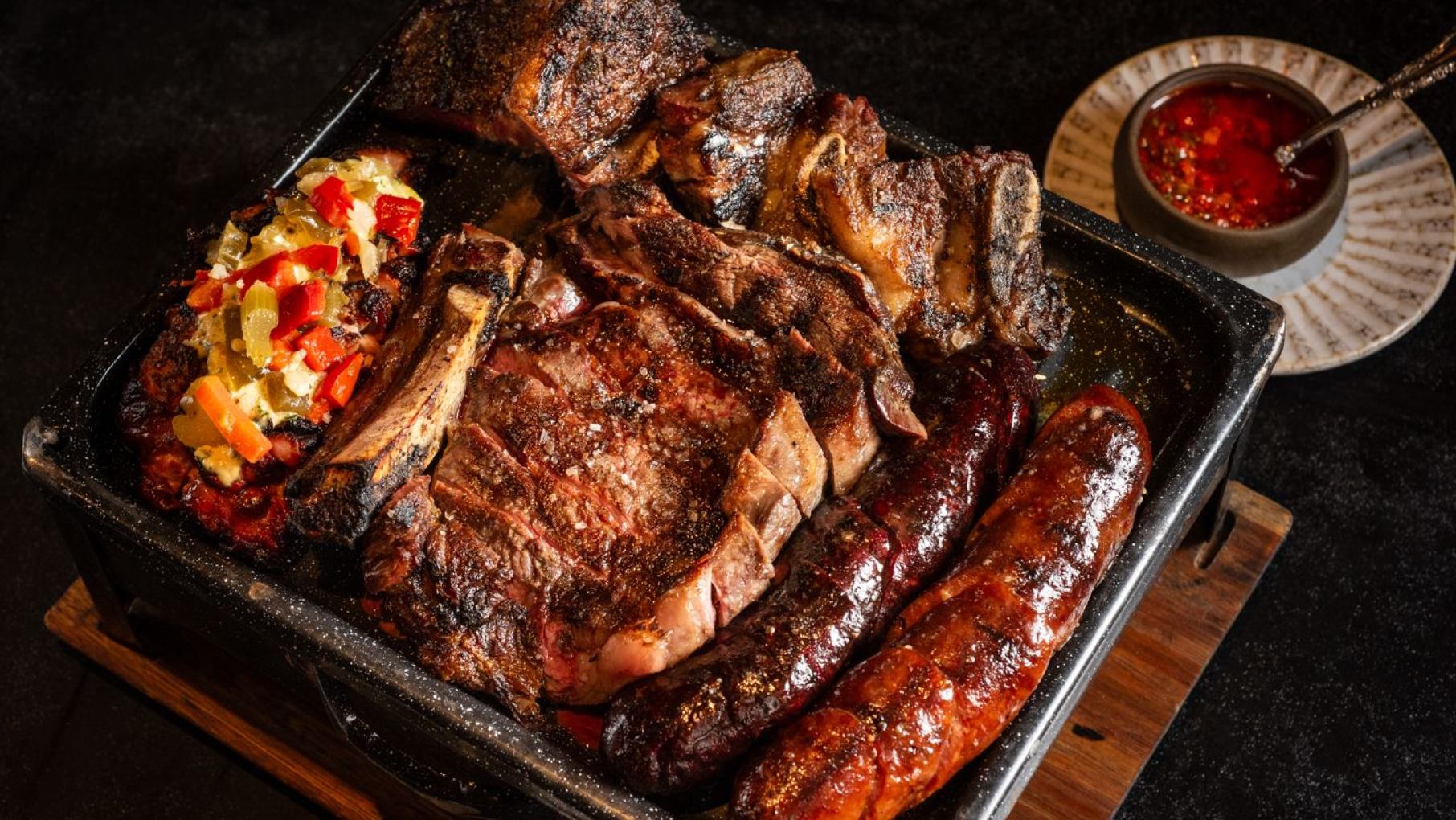
Argentina has absorbed enormous waves of first Spanish and then Italian immigration, and its cooking carries that history forward. Pasta and pizza immigrated to Argentina and became naturalized Argentines, an arrangement that seems to have worked out well for everyone. At La Nonna on the Northwest Side, Argentine dishes sit alongside Italian favorites. You can get a big, beautiful parrillada – a mixed Argentine grill platter – and you can get pizza and a Caprese salad.
If meat is for dinner at an Argentine restaurant, expect to see it served with chimichurri, which the Royal Spanish Academy defines as an Argentine/Uruguayan sauce made from garlic, parsley, hot pepper, salt, oil, and vinegar. Its delicate intensity makes it a perfect condiment for steak, with palate-perking acidity and an herby quality that contrasts with and complements luscious meat. Today, you can find chimichurri at non-Argentine steakhouses too, including PERILLA Steakhouse, which offers chimichurri with wagyu skirt steak, the green sauce accented with minari, a fragrant Korean herb.
Any restaurant that claims to be Argentine will almost certainly have empanadas on the menu. The Spanish verb “empanar” means to enclose or cover something in a bread envelope. Filled pockets of bread are one of civilization’s more enduring culinary inventions: They popped up across the Middle East, the Mediterranean, and South Asia. But empanadas were established in Spain, specifically in Galicia, before the Spanish began their conquest of Mexico and other countries in what is now Latin America. Their highly transportable empanadas came with them.
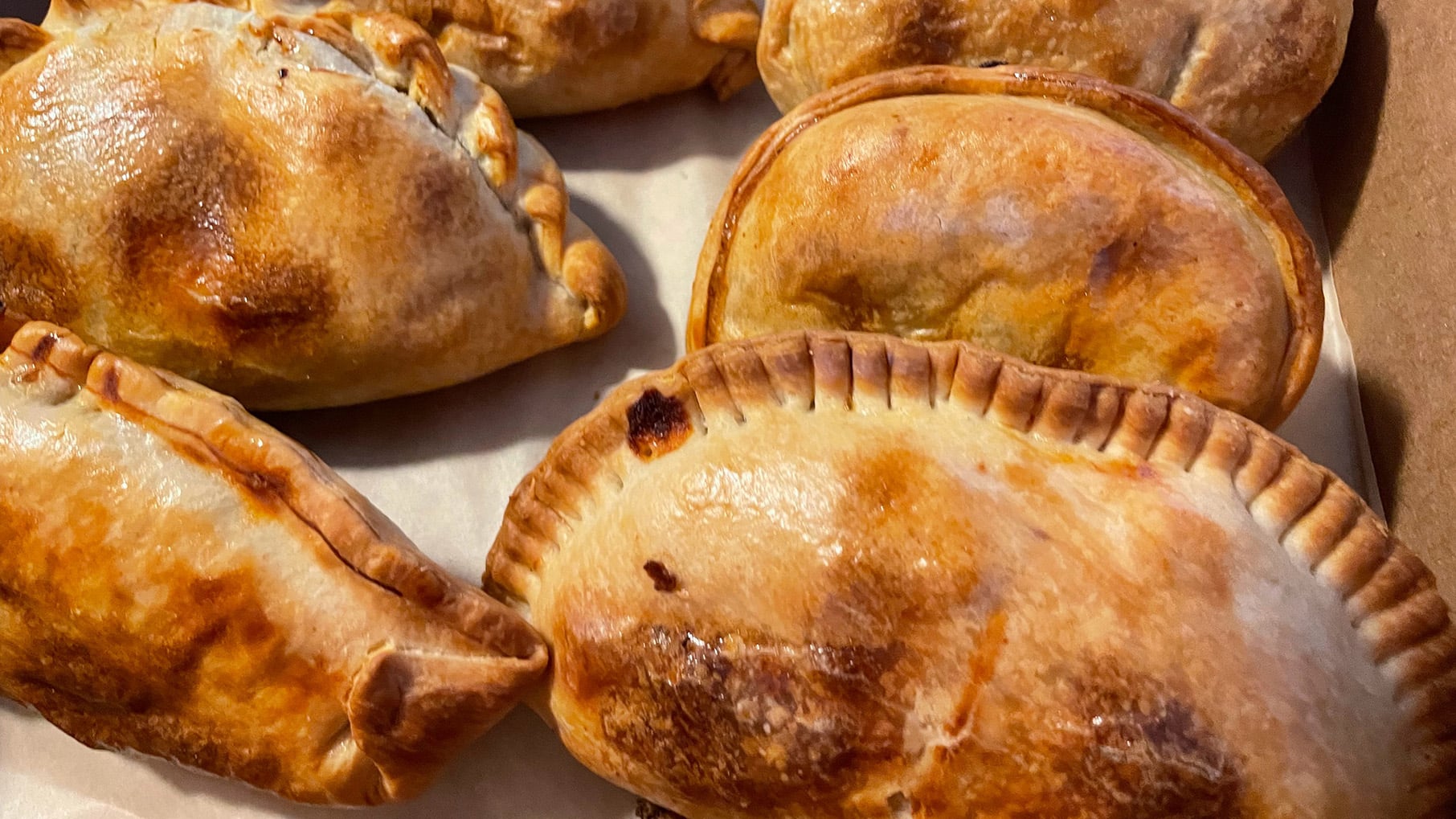
But Argentina did more than just copy another country’s recipe for hand pies. The country transformed the empanada into a national food with numerous regional variations. The empanada from the Tucumán province of Argentina contains juicy beef, onion, and a hard-boiled egg; in Córdoba, the empanadas may be slightly sweet from sugar or raisins; and in Patagonia, lamb or seafood are not uncommon fillings. The empanada, like many successful immigrants, adapted quickly.
In Chicago, those traditions appear in both old-school and modern forms. At El Nandu on Fullerton Avenue, empanadas are made from scratch, kicking off a menu of skirt steak, sausages, and other grill-house staples. At 5411 Empanadas, a food truck turned chain of restaurants named for Buenos Aires’ international dialing code, the empanadas are baked with traditional fillings as well as more contemporary combinations, such as ratatouille and Impossible plant-based meat, a type of lab-made food that might give an old gaucho a moment of quiet reflection.
At the West Loop’s El Che Restaurant & Bar, chef John Manion, winner of the 2026 Jean Banchet Chef of the Year award, treats live fire not as rustic decoration but as the restaurant’s organizing principle. The room glows, steaks meet open flame, and an all-South American wine list offers diners options beyond the seemingly obligatory bottle of Malbec. (El Che’s Alex Cuper won Sommelier of the Year at the Banchets.) El Che is Argentine in inspiration rather than an exercise in strict culinary reenactment, showing how South American grilled meat fits right into the traditions of a modern Chicago steakhouse.
Asado – essentially, a barbecue – is fundamental to Argentine cuisine. Argentina’s government describes asado as both a national food tradition and a deeply rooted social activity. To speak of asado simply as grilling is to miss the point. In Argentina, fire matters and meat matters, but the gathering matters most.
“The asado experience is essentially social: standing around a parrilla [a grill] and eating various cuts as they’re ready,” explains Manion. “It spans from the afternoon into the night, and often passionate discourse is as important as the meat.”
Artango in Lincoln Square brings another part of that lively culture to the table, pairing Argentine steaks with cocktails, seafood, live music, and an atmosphere that nods toward the theatrical Buenos Aires of tango halls and late dinners with tango performances on stage and on the dance floor of the restaurant.
Still, some of the deepest pleasures of Argentine cooking are often the least dramatic – and don’t require a flicker of fire. A choripán is chorizo sausage tucked into bread and sharpened with chimichurri or salsa criolla. Sandwiches de miga are delicate, crustless tea sandwiches that seem almost comically restrained beside a platter of glistening meat, like a penny whistle playing next to a brass band. Both choripán and sandwiches de miga are simple foods that can be eaten with the hands, and both are served at Barra Ñ on Elston Avenue, which offers a more casual but still sociable expression of Argentine food.
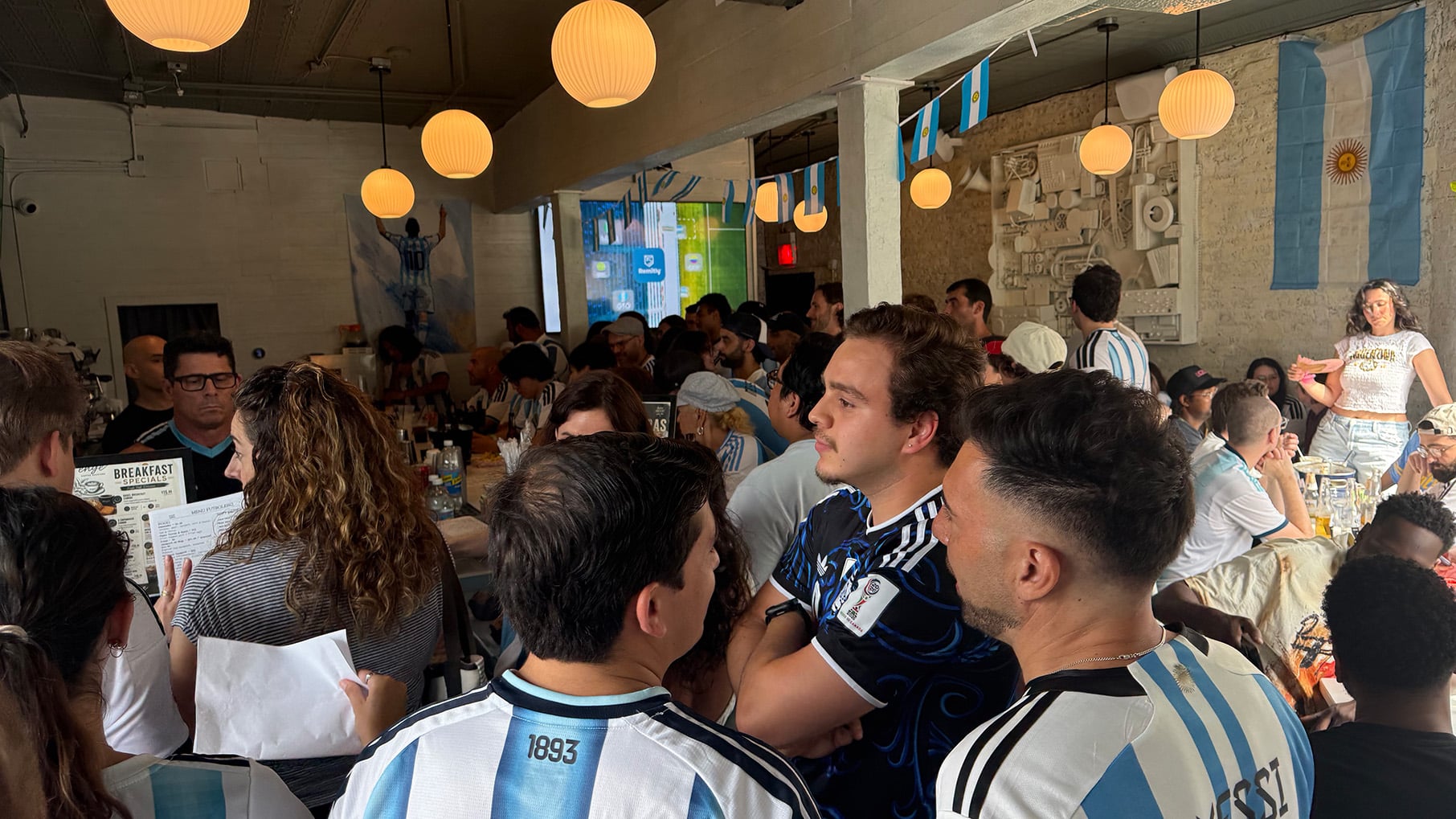
Unlike many other Argentine places in Chicago, Barra Ñ has television monitors, the better to watch the World Cup. Soccer is huge in Argentina, which is the defending champion and also took the Cup in 1978 and 1986. On the Friday before the Fourth of July, top-ranked Argentina played 67th-ranked Cape Verde. At Barra Ñ, they set out large TV screens outside the restaurant, and the crowds watched, nervously at times, as Lionel Messi and his team barely kicked their way to a hard-fought victory.
The Argentine experience in Chicago cannot be reduced to a steak, an empanada, or a spoonful of chimichurri. It comes fully alive only when people gather around a crowded table, beside a roaring grill, perhaps near a tango floor or before a television. Scattered across the city, these restaurants become temporary outposts of Buenos Aires, preserving old traditions while giving them a distinctly Chicago accent. Asado is never just about meat. It is fire, ritual, memory, and fellowship; and in a city built by immigrants, sustained by the appetite for juicy beef, and supported by a rollicking good time, Argentina has found a natural second home.