A Q&A with Retired Astronaut Daniel Tani on Spaceflight, Uncomfortable EVA Suits, and 'Once Upon a Time in Space'
Meredith Francis
July 20, 2026
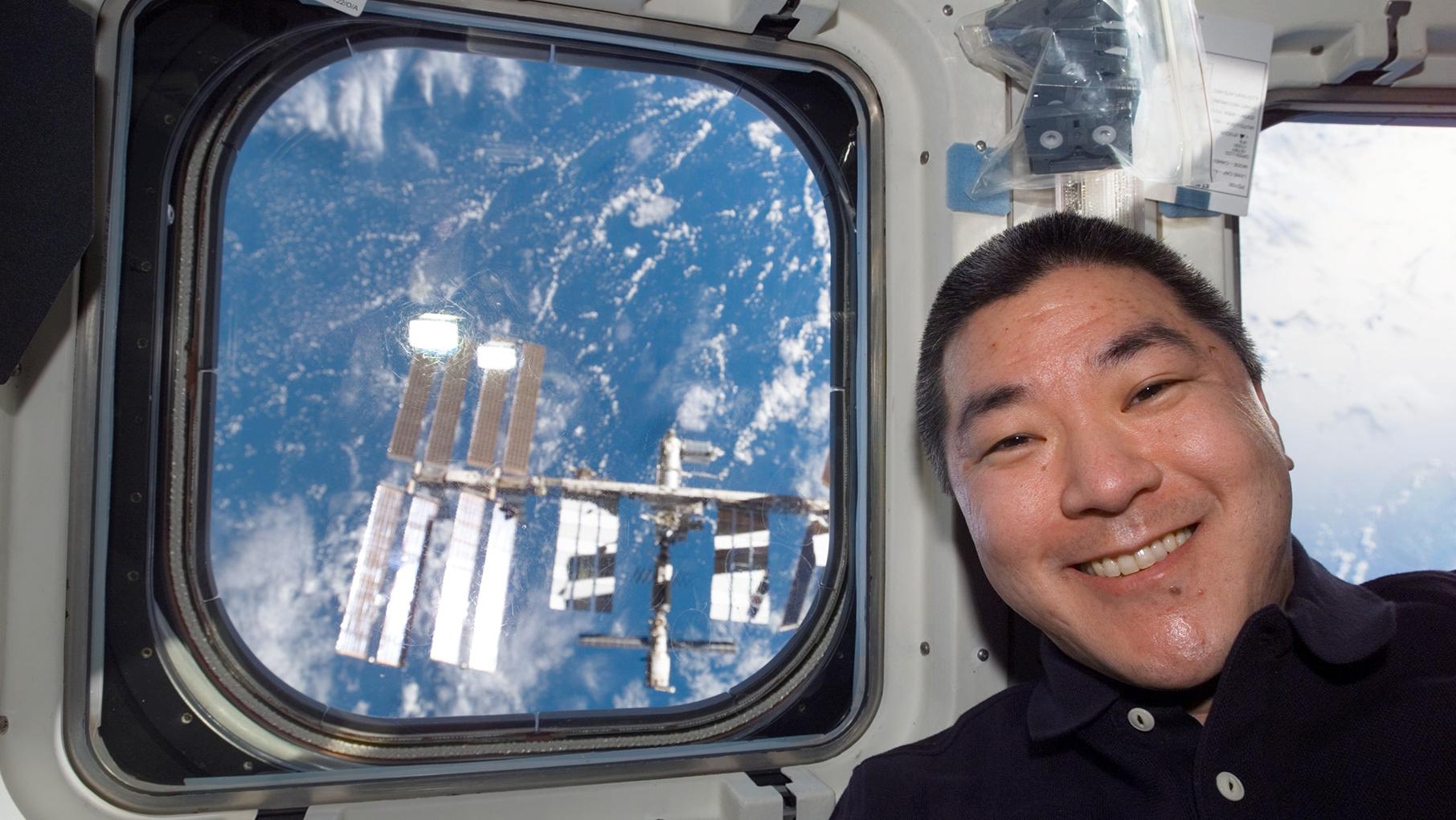
Once Upon a Time in Space is available to stream at this link.
When astronauts talk about their journey to space, it’s often described as the fulfillment of a childhood dream. That wasn’t the case for Daniel Tani. The retired NASA astronaut, who spent 132 days in space over three missions, didn’t seriously imagine becoming an astronaut until his 30s, when NASA invited him to interview.
Tani, who grew up in Lombard, Illinois, is featured in episodes 3 and 4 of the new four-part PBS series, Once Upon a Time in Space. The series focuses on the human stories of space travel, taking a closer look at the personal experience of astronauts, Russian cosmonauts, and their loved ones watching from Earth. Tani’s story traces his path from suburban Chicago to a career in engineering, to working aboard the International Space Station (ISS), where, between 2001 and 2008, he spent more than four months living and working in orbit, and contributing to the assembly and maintenance of the ISS. Across his three missions, he completed six spacewalks.
As excitement builds around NASA’s Artemis missions and the prospect of returning humans to the moon, WTTW spoke to Tani about his experiences aboard the International Space Station (ISS) and what he learned from his time in low orbit.
This interview has been edited and condensed for clarity.
In the documentary, there’s a nice photo of you with your mom in Cubs gear at Wrigley Field. You grew up in Lombard, Illinois. What was your childhood like there?
Tani: We moved to Lombard when I was three, and then my father passed away months later. And so I had two brothers in college, and then a brother and sister in high school, and then me who just turned four. I imagine it was a pretty typical suburban Chicago life. I played baseball and did model rockets and I attended public school.
You mention in Once Upon a Time in Space that being an astronaut wasn’t really a childhood dream for you. When did it become something you wanted to pursue?
Tani: My first job out of college was in aerospace engineering, but it wasn’t because it had anything to do with aerospace. It had everything to do with, I could live in Los Angeles and enjoy the nice weather and live at the beach. I met a couple astronauts during that job, and I was pretty wowed. But it was more like meeting a celebrity. It wasn’t like, oh, this is going to change my career. But then at my next job, I got to actually work with some astronauts. Working with them, I realized – it seems silly to say – but they’re just people that have a job. I never thought of an astronaut being a job. Once I got to know some, I thought, well gee, it would certainly be fun to do this, and so I should throw my name in the hat. Really, my thought about being an astronaut didn’t happen until I was maybe 30 years old. The strong desire to be an astronaut really didn’t happen until I actually got offered the interview. Then I really wanted it. It felt close enough to be tangible. Until then, it just seemed like a wild dream.
You flew during an interesting chapter in space history, after the early shuttle years but before today’s commercial spaceflight era. Looking back, how would you describe the moment in space travel that you were a part of?
Tani: It was the best time to be an astronaut because we were flying so many flights. My career was perfectly positioned over the space station assembly. There were so many parts that were being flown up and so many spacewalks required to install those. We were flying four or five or six shuttle missions a year, and each shuttle mission was doing two or three or four spacewalks. It was incredible. Plus, we were starting to put people on the station. It’s exciting now because we have a full laboratory in space and we’re doing a ton of science, but we’re only flying four or five U.S. astronauts a year to the space station, so it seems like a longer line.
As the series explores, space travel can be dependent on the whims of geopolitics. Talk about the bonds formed between astronauts on the ISS. What is it like with everyone on board?
Tani: It’s not only on board, but in training. We go to Russia a lot and spend a lot of time there training with cosmonauts, and then most of the other international astronauts come to Houston and train with us - the Germans, the French, the Canadians, the Japanese. So once we’re in the office, they’re great colleagues. Really, you soon forget about their nationalities and their governments.
There is a lightheartedness. It never got very serious when I was there, and there have been some serious moments in the past. I only imagine that everybody on both sides, the astronauts and the cosmonauts, both shake their heads and wish that the governments would get along as well as the astronauts and cosmonauts do. We felt completely isolated from the turmoils that go on in the political realm. We’re trying to get work done. We’re trying to build a station. We, as the lucky people that live on the space station, really bond over the privilege we have to be flying in space representing our government.
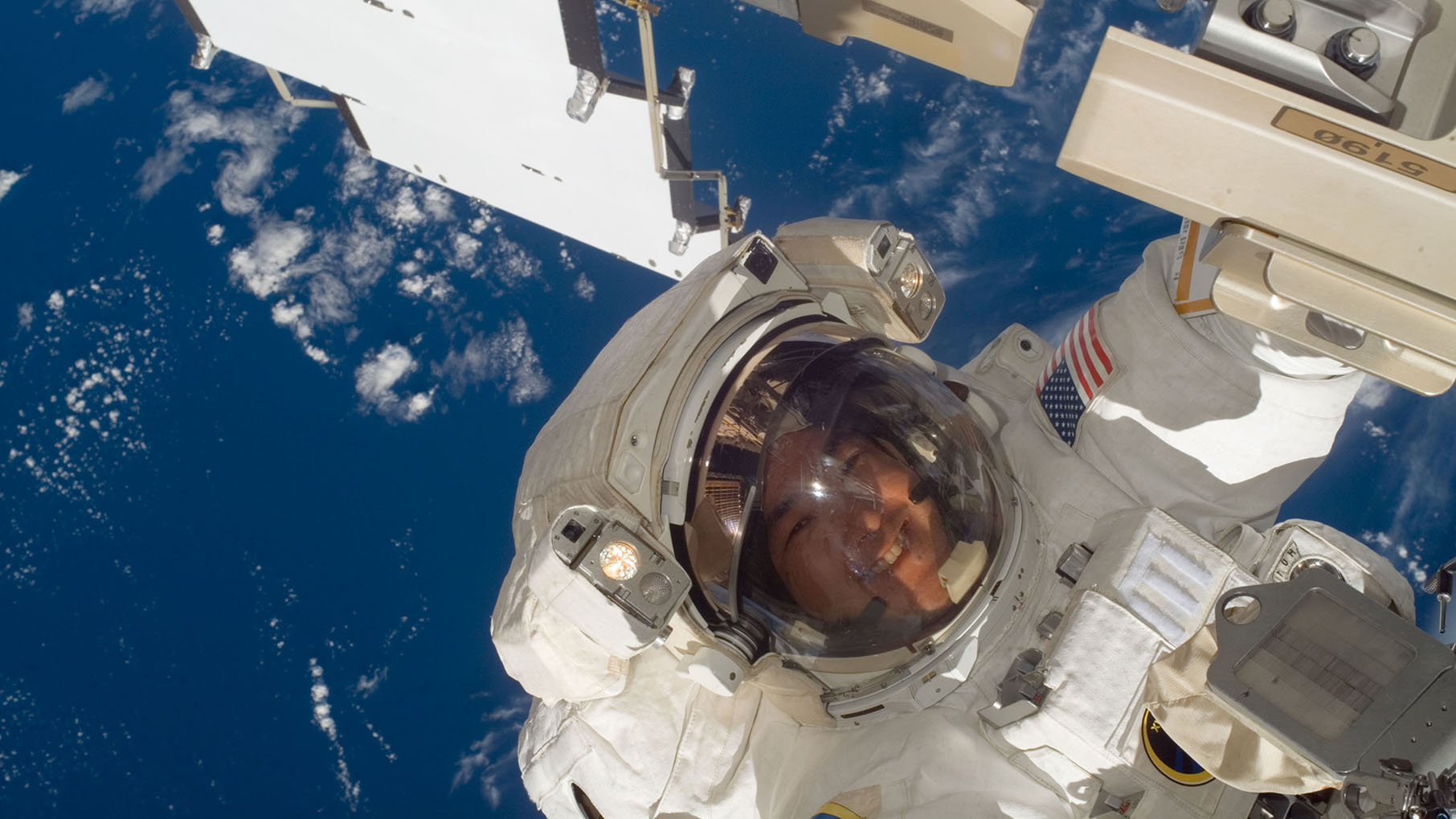
One thing the series doesn’t get into is the space walks that you did. Can you describe what that experience is like physically, as well as mentally and emotionally?
Tani: So I’ve done six spacewalks in my career. Spacewalks are incredible because you are your own satellite for six to eight hours. You get in the suit, click on the helmet, your gloves and then you have everything you need for the next eight hours – oxygen and the ability to scrub the CO2 and communications and a little bag of water to drink.
Now, physically, it’s exhausting. The spacesuit – it hurts. It’s made of metal and fiberglass and it’s not custom-made. It’s hard to maneuver, to move around with the suit. You’re sort of bouncing around inside the suit and so you get real sore points on your shoulders and your hips and your feet and your toes and your fingernails. Because it’s constantly rubbing on your fingernails when you use your hands, it’s not uncommon to lose fingernails. It’s a long day. You’re in that suit for about 12 hours because you have to be in the suit for four or five hours before you go outside.
Emotionally, it’s exhilarating in that we all want to do spacewalks. There’s a great amount of pride and responsibility and a lot of just, “Wow, I can’t believe I get to do this!” But you really temper that during a spacewalk because you’re out there to do a job, and the worst thing that can happen is that you mess it up and you don’t get your job done, and even worse, somebody has to come after you and clean up your mess.
But there are moments of, OK, I’m going to take a break. I’ve got two or three minutes. I’m just going to hang out and look at the station, or look at the sky, or look at Earth. There are times when your buddy inside will say, “Hey, Dan, we’re coming up on Chicago, so take a minute and look down." It’s awesome to fly over something familiar.
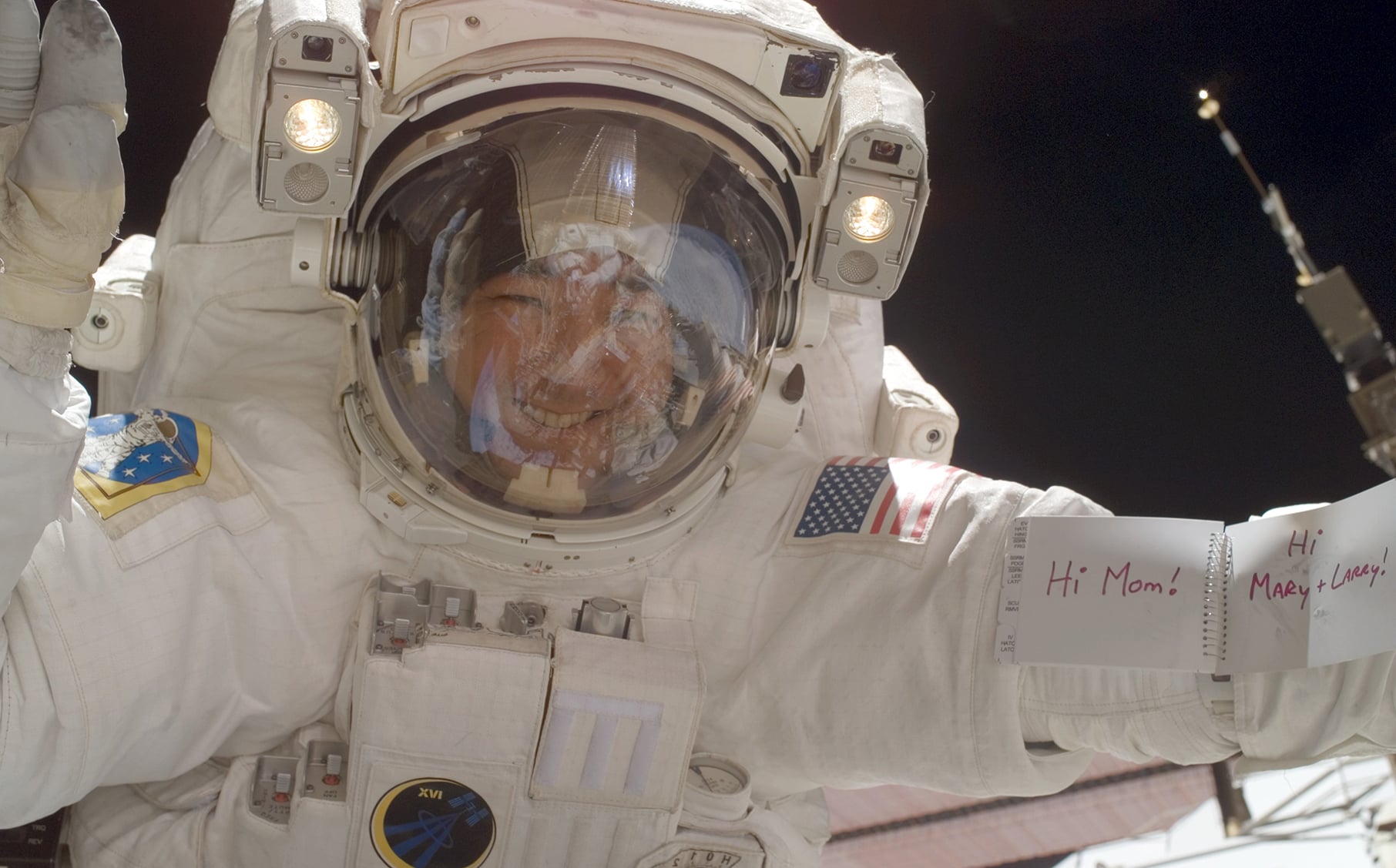
In the series, there are clips of you saying, “Hi Mom!” Or holding up a piece of paper saying “Hi Mom!” The documentary touches on losing your mom while you were on a mission. What did she think of your career as an astronaut, and how did she shape it?
Tani: When you become an adult, you start to realize that your parents are people. My father passed away when I was very young, so I remember talking to my mom as an adult, and I said “What is it about dad that you really liked?” She said one of her favorite things was when he would give a speech, and everybody was paying attention to him. I didn’t really like that answer, that she enjoyed him getting attention, but what it made me realize is by becoming an astronaut, and getting to do some amazing things and being in the public eye, I think she enjoyed that, and I think she was proud of being my mom. But I remembered that story, so when I became an astronaut, giving speeches or being on TV, I remembered her telling me that and I wanted her to enjoy those moments, and so that’s why I would specifically say “Hi, Mom!”
I was the youngest, and so every barrier that could be broken down had already been broken down by the time I came along. She gave me a big leash. She certainly didn’t try to dissuade me from doing stuff like flying or adventurous things. She understood that we children have our own desires and goals. She was a great supporter of whatever we were doing. Her story of being a very, very poor farmer, and then being interned during World War II, and then losing her husband and her son – she got what I think is more than her fair share of bad luck during her lifetime but you would never know it when you met her. She was so life-affirming and happy, so I think of that as a great role model for being a parent, being a friend, being a member of the community.
The recent Artemis II mission really captured a lot of people's attention. What do you think about the journey back to the moon, and what would you say to people who are paying attention to space for the first time?
Tani: I was so thrilled with all the attention that Artemis II got, because even up to the launch, I sensed a little bit more attention, but boy, as soon as it launched, the attention was overwhelming, including for my kids. My kids don’t care about space whatsoever. They roll their eyes every time we talk about space, but, boy, they were into it. The four astronauts were their heroes, and so I’m completely thrilled. Going to the moon is really hard, and it’s an interesting discussion to have, to say, hey, we did this 50 years ago, 55 years ago. How come it’s so hard to do it now? And shouldn't it be easy? Shouldn’t this have been a piece of cake? There are a couple of reasons why that is, but basically it’s hard, and we want to do it safely, and yes, technology has grown by leaps and bounds, but the basic chemistry of getting a rocket to get off the earth and go towards the moon is still hard to do. So I hope this pulls in – well, it has pulled in – a ton of people that are interested in the science of it and the engineering of it, but also the humanity of it. Victor Glover made some really emotional comments about being so far away from Earth. And so there are those philosophical moments, too. That crew did a great job. Commander Reid [Wiseman] is a good friend of mine. I couldn’t be more proud of him and what he and his crew did.