Engaging Kids (and Parents) in Food and Inspiring Creativity and Connection
Daniel Hautzinger
July 23, 2026
Get more recipes, food news, and stories at wttw.com/food or by signing up for our Deep Dish newsletter.
Have a food story or recommendation? Email us at [email protected].
Remember going out to eat as a child in the days before iPads and getting a placemat and crayons to play with? What if that placemat not only entertained you while you endured the adults’ tedious conversation but also engaged you with the food you were about to eat, maybe even drawing those boring adults into the fun?
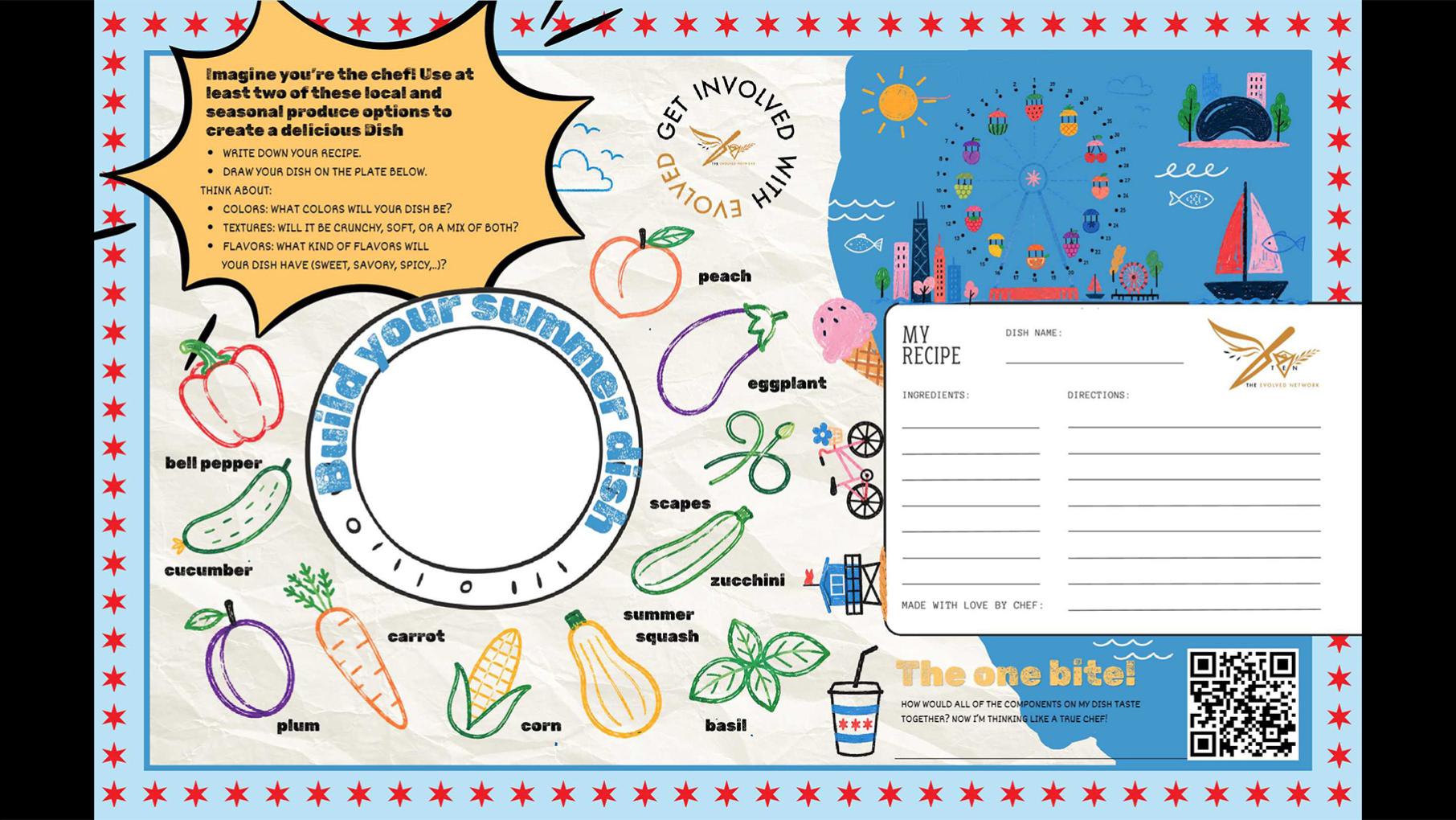
That’s the goal of placemats available at 21 restaurants around Chicago, from casual spots like JT’s Genuine Sandwich Shop to award-winning sit-down restaurants like Mi Tocaya. The placemat features drawings of seasonal produce and encourages kids to think through the colors, textures, and flavors of them to build and draw their own recipe.
“It’s about getting the kids that come and eat at the restaurant engaged and interested,” says Sarah Stegner, the chef and co-owner of Prairie Grass Cafe in Northbrook, who originated the idea and brought it to Sebastian White to “take it to the next level.”
White is the founder of The Evolved Network, a nonprofit that harnesses food and gardening to support youth in Chicago, especially from disinvested communities. A chef and clinical psychologist, White uses food as the medium in initiatives like the placemats or culinary and horticultural classes at schools across the city, particularly on the South and West Sides, but it provides an opening to larger topics and growth.
“Food is so much deeper than just nourishment and nutrition,” says White. For instance, the placemats can kickstart creativity as well as thoughtful connections with parents. “Cooking is about understanding what the ingredient is or what it’s closest to, to try to create a story,” says White. “And I think that translates across so many different subject matters.”
Parents “have to stop and pay attention” as their kids ask questions about the placemat, Stegner says – what’s basil? Would an eggplant taste good with a plum? “There’s this moment where you watch them fumble through it and have a conversation about it,” instead of shunting a device onto their kid, where “the goal is to keep them as quiet and out of the way as possible.”
“It’s just incredible what can happen once you start to engage,” adds White. “Food opens up so many doors to that type of experience, and connection between a parent and a kid is really important.”
White never condescends to kids with food; garlic scapes are on the summer placemat as a possible ingredient. “I know the kids in our program are eating all sorts of complicated things that adults will look at funny,” he says. He’s joined the kids in preparing bison meatballs, using sumac in chimichurri, and making aioli with plum and duck eggs. “They eat it more than the adults will,” he says. “And we’re doing this with as young as first graders.”
Stegner and White believe that, in the setting of a restaurant that intentionally works with local farms and seasonal produce but is also welcoming to families, it’s easy for kids to be adventurous and try new foods.
“As a father and as a chef, I want kids to try and be open to things,” says White. “You go to so many restaurants, what you see is butter noodles and chicken tenders and fries” on the kids’ menu, “suggesting that we don’t want kids to be open to different things.”
The placemats – designed by Diana Klimovich – are created in partnership with the Ann & Robert H. Lurie Children’s Hospital of Chicago. “It shows that they are trying to back not just the health aspect of it but the soul aspect of it,” White says.
“What brings people back to restaurants, I’d love to say it’s the food, of course, which is always a part of it, but it’s also how you feel when you’re in there,” says Stegner. She thinks the placemats can help make a family’s experience in a restaurant more positive and engaged. “That makes people want to go back, when they feel connected to their family and they feel connected to the community.”