In an Age of Lines and Viral Pastries, What’s It Like to Be a Regular Neighborhood Bakery?
Daniel Hautzinger
August 21, 2026
Get more recipes, food news, and stories at wttw.com/food or by signing up for our Deep Dish newsletter.
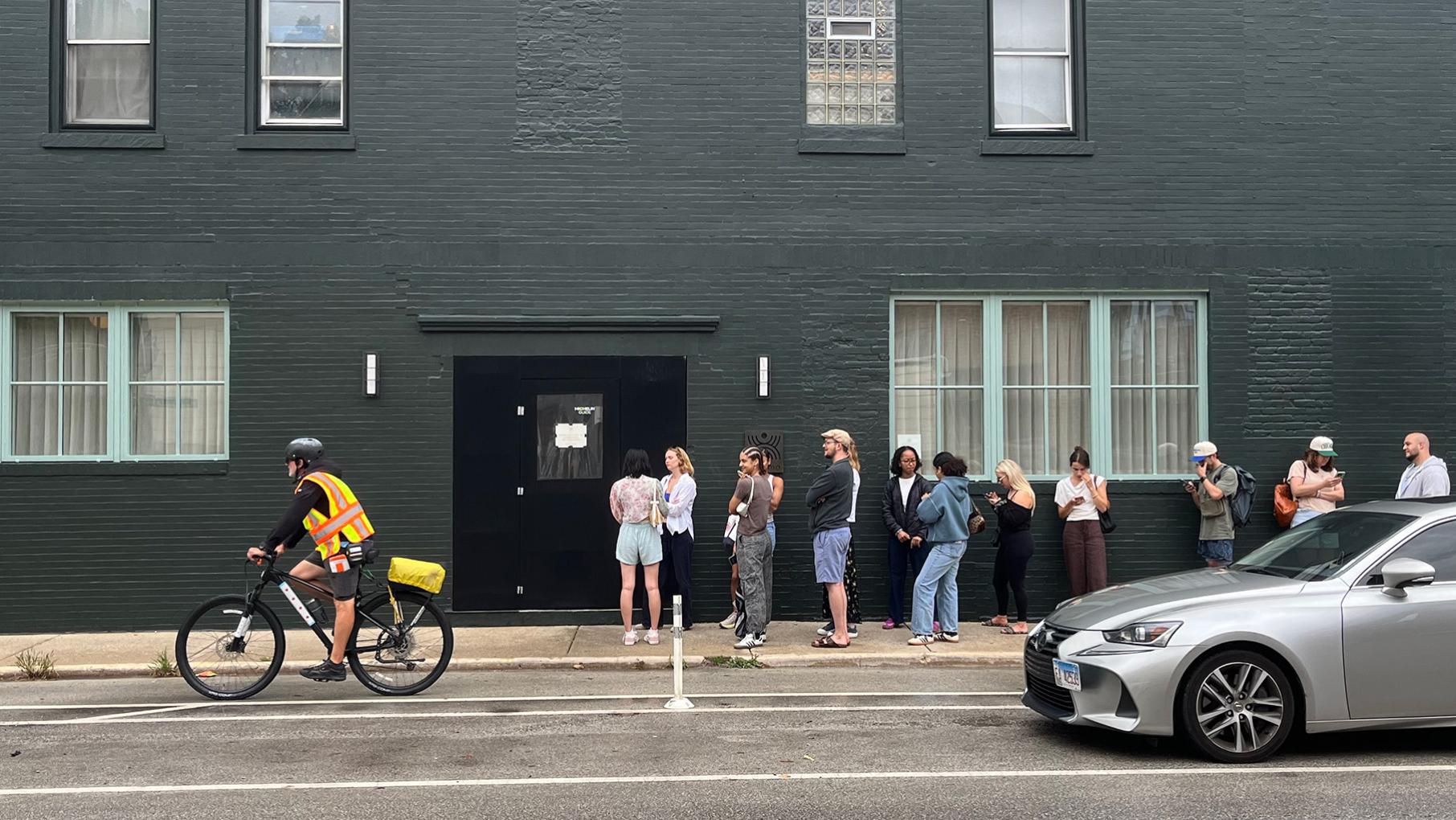
The bakery scene in Chicago is arguably the best it has ever been. Many of these spots have drawn lines down the block, some for years – looking at you, Kasama.
But the bakery boom doesn’t only include the viral places that attract lines and social media attention. In addition to longtime stalwarts, plenty of excellent bakeries have opened in the past few years that function like most used to in Chicago: They serve a neighborhood audience as well as a handful of food-interested travelers, managing to have some handcrafted pastries left when they close rather than selling out within an hour or two of opening to a crowd that was there before the doors were unlocked. What’s it like to be one of those?
“It’s an absolute bonkers time to own a bakery in Chicago. It’s hard not to fall into what I call Bakery Dysmorphia,” Andrew Cheng recently wrote on the Instagram account of his Roscoe Village bakery Sweet Rabbit, which centers seasonal local products like peaches in pop tarts or tomatoes in a croissant and occasionally spotlights ideas from Cheng’s Chinese background, such as black rice cake inside a cream puff. He also bakes milk bread, challah, and more. “What am I doing wrong? — I don’t have a line out the door that’s 3 blocks long.”
Cheng, who worked at heavyweights Floriole and Hewn before opening his own bakery, has a sense of humor about the discrepancy – “We’re the ones without the line down the block,” he signed off on Instagram. But watching apparent blowout successes appear seemingly out of nowhere generates some dissonance.
“I’m proud of what I do, but it’s also very frustrating that I’m working so hard and it’s like…” he says, trailing off. “I don’t want accolades, I don’t want national attention, I don’t want local attention, I don’t want my face anywhere, anything like that. It’s just a hard business.” (He nevertheless has received plaudits from places like the Chicago Tribune and the Infatuation.)
The Ingredients for a Viral Bakery
There are many factors that make a bakery go viral, not all of them related to the pastries themselves – although Chicago has been lucky that most of our line-drawing bakeries have a product to back up the hype. Generating the kind of social media attention that brings continuous crowds is an imperfect science. Lines, and social media videos, become self-sustaining: If people are willing to wait in a line, then it must be good; if this person’s video of their giant croissant notched tons of views, maybe mine will, too.
“Forget critics or influencers or PRs – the best representation a restaurant can dream of is a line,” writes Ruby Tandoh in an essay on line-drawing viral foods in her book All Consuming.
Amongst the queued up Chicago bakeries, there are a few commonalities. Many blend French patisserie with their owners’ cultures. Pan Artesanal led the crowd, combining Mexican and French traditions in Logan Square as early as 2018. Kasama really popularized it in the early 2020s, even while sticking more to classics than fusions. Asian flavors are an especially common addition to croissants, from Filipino (Del Sur) to Korean (Daeji) to Indian and Filipino (Sarima).
Plenty of these bakeries also have limited hours, opening only three to four days a week and thus avoiding less busy Mondays and Tuesdays; scarcity also increases desirability. This is a risky strategy, however, given the fixed costs of running a business: You have a smaller window in which to make enough money to pay rent and payroll and utilities.
And while it can seem like many of these bakeries dropped out of the sky, most had a way of building an audience before opening. Bad Butter offered pastries for weekend pick-up for years before opening a brick and mortar, and Guillotine held a pop-up at the already-popular Mindy’s while choosing a location on one of the hottest restaurant stretches in town, in West Town. Milli by Metric capitalized on the strength of its coffee brand, Metric, as well as the reputation of its pastry chef, Lou Turner, who came from the hot restaurant Obélix. Justin Lerias sold pastries he made from his home kitchen as Del Sur at Side Practice Coffee for a year, while Albert Song of Daeji fine-tuned his offerings at a farmers market. Song even altered his inventory in order to be more successful: when he observed a line for a fellow vendor’s pastries and focaccia, he shifted his focus from cakes.
Whether or not any of these commonalities are the reason for these bakery’s lines is harder to say. The question is, do you even want to emulate them?
To Chase or Not to Chase Trends
Cheng is most proud of his sourdough bread; he enjoys the challenge of adapting it to different weather conditions and the technique involved. But “it’s not sexy, it’s not Chinese, it doesn’t have whatever,” he says. “It does not draw more people in.”
Ten years ago, Valeria Socorro made a mole croissant. Only about half of the customers of her Loba Pastry liked it. It’s different today, with global flavors in pastry a draw instead of a put-off.
“There’s room for everyone,” she says. In addition to incorporating her Mexican heritage into some goods, she has developed twists on classics, like a sourdough muffin or a canelé-like emmie that is oat-based. “These new bakeries are bringing something new, a new perspective, new flavors, and I think that’s great.”
She loves getting to experience another culture in Chicago through a bakery without traveling. But she’s less interested in chasing social media attention. “Trends are trends,” she says. “They go away as easy as they come. That’s not for me. I tell people, ‘I’m a lifer.’ I’m here for the long term.”
She wants Loba to be known for hospitality, a place where regulars return and are happily welcomed. “Having a line wrapped around the corner is great, but as far as business is concerned and from my perspective, it’s more about the people that come back,” she says.
Socorro launched Loba 10 years ago and has been in her space at Lincoln Avenue and Addison Street for three years. Cheng opened Sweet Rabbit around the same time she moved in. But Peter Yuen’s La Patisserie P on Argyle Street in Uptown has been in the family since 1982. He took it over from his father in 2004.
“I actually would prefer to go fishing,” Yuen says. “But as soon as people eat one of my products and say, ‘Oh wow, it’s so good, it’s so delicious,’ that instant gratification is the driving force.”
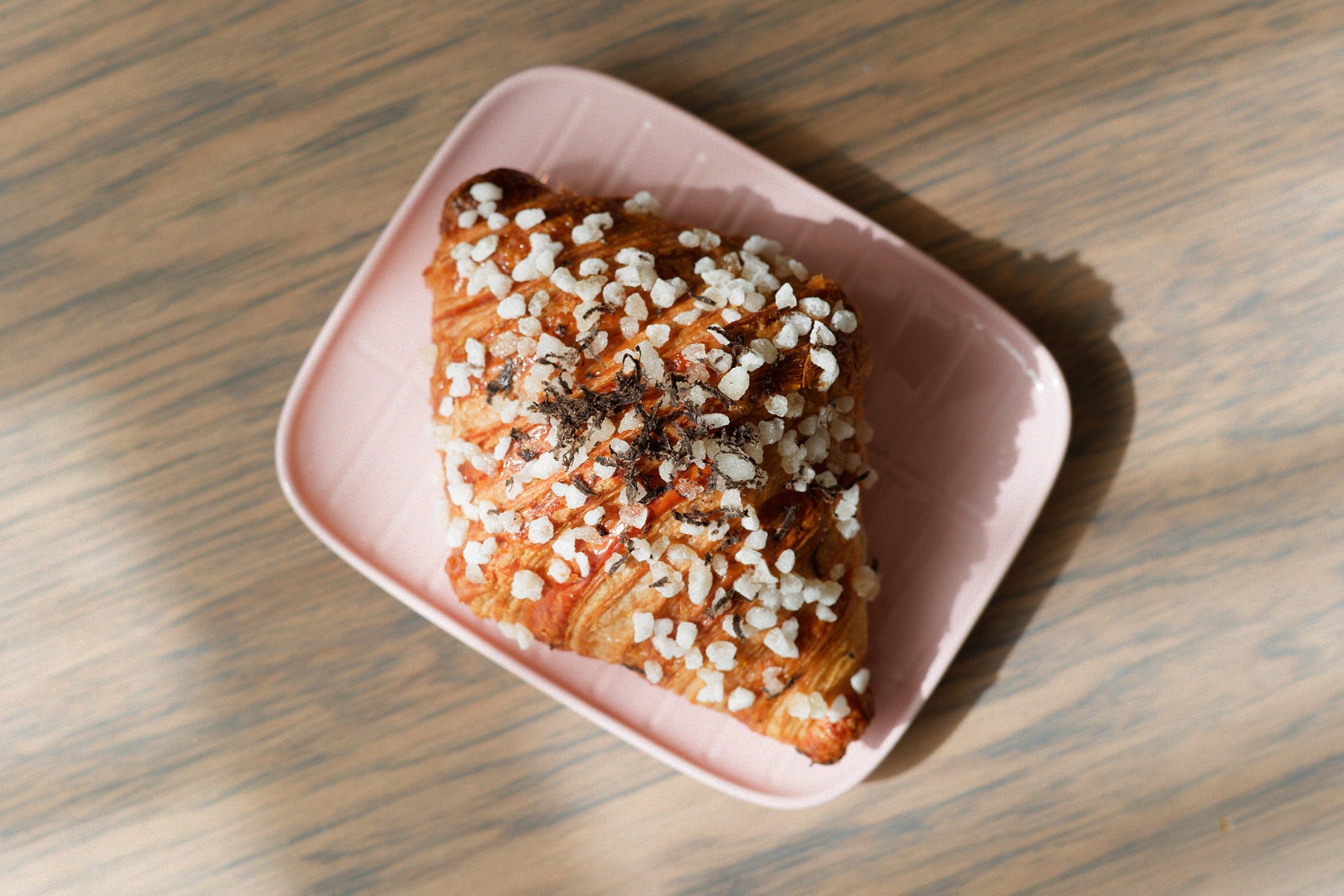
While his father’s bakery sold East Asian baked goods under the name New Hong Kong Bakery, Yuen trained in French pastry and has become known for his croissants. He also retained some of his father’s Asian products, like egg tarts, hopia, and char siu buns. Some of the flavors du jour, like ube, fit naturally within his output. And his years of focus on laminated pastry in competitions dovetail with a continuing social media fascination with the croissant and its hybridized offshoots: the cruffin, the crookie, the croissant cube.
“About 12 years ago, I already did all these beautiful things,” he says.
But the world of competition pastry is not the same as that of a daily bakery, and back then the bakery boom had yet to begin.
The Rise of Bakeries
Pastry chefs were often some of the first to be cut during the pandemic, and lots of the roles didn’t come back afterwards, thanks to rising costs. Many furloughed pastry chefs used their newfound free time to experiment with bread and pastries and sell them through social media. Some eventually parlayed their followings into a brick and mortar bakery. Other bakeries were started by refugees from other careers who used YouTube videos and online recipes to learn a hobby and hone it into a career.
And the public ate them up. Pastries can be more accessible than fine dining while still offering high-quality ingredients and careful craftsmanship. Even an expensive stuffed croissant and artisan coffee is cheaper than a dinner out. A bakery has a more casual vibe, plus you don’t have to fight to get a reservation online – a line will at least move, whereas a booked restaurant will likely stay booked. Kasama is the perfect example of all of this, offering those who can’t afford a $300 tasting menu a Michelin-starred experience to which you can simply walk up or even order online during the day.
Pastries also look good in photos, making them ideal for social media.
“On Instagram, you shared a photo of the food with an explanatory caption, rather than a blog post about the food with an illustrative photo,” writes Tandoh of the evolution of viral foods on social media. “This allowed you to bypass thinking altogether and just look...”
TikTok takes that a step further, she continues. “[B]efore you even see the name of the uploader or the caption of the video, you see how many tens of thousands of views and likes it has. I guess this is the digital version of the long, snaking queue – a conspicuously visible way of quantifying hype.”
She traces the beginning of our “age of serial virality” to Dominique Ansel’s cronut, a ring-shaped croissant fried like a donut that debuted in 2013 and garnered attention and imitations around the world. Lines for food had already become a sought-after sign of success, with Shake Shack eventually offering a webcam of its line on its website so that people could track its length way back in 2006. “At first, Shake Shack management thought it was a horrible idea,” Tandoh relates. “If they see a line, they said, people won’t go there.” They were wrong.
Both the cronut and Shake Shack debuted in New York City, and until recently Chicago seemed immune to the excesses of that maximalist city’s dining trends. No endless lines for viral foods or selling of impossible-to-get reservations for us Midwesterners. But we’ve become a line town, at least for bakeries and bagel places, and the app Dorsia, where members pay to get access to reservations at hot restaurants, just expanded to Chicago.
Socorro worries how the increasing hype will affect independent businesses, as in the case of the recent expansion of bagel chains funded by private equity to the city. “I think two small businesses have the sensibility to not open across the street from your bakery, but those guys just don’t care,” she says. “They don’t even notice. They’re like, ‘Oh, this place seems to be doing really well, let’s open a place across the street.’”
But she views other independent bakeries as “inspiration, not competition,” even as both she and Sweet Rabbit’s Cheng have noticed a slight dip in sales as more bakeries open or when farmers markets with bakery pop-ups take place nearby. They both wonder if we’ve reached a saturation point, even as Yuen thinks Chicago is big enough to support it all.
“I don’t mean to dismiss any bakeries,” says Cheng. As someone who left another, more profitable industry to return to baking, he understands why people go into this industry. (The “P” in Yuen’s bakery name stands for “passion.”) “There’s some really amazing bakers out there right now, and people want to line up for them. That’s great.”
But the business does take a toll: Endless bills to pay, payroll to keep, a social media presence to maintain, the nagging thought that you, too should have a line down the block.
“They say there are two happiest days for a baker or owner,” Cheng says. “It’s when they open and when they close.”