International Bubble Tea Chains Are Changing Chicago’s Chinatown. Local Businesses Have Mixed Reactions
Mona Tong
September 3, 2026
Get more recipes, food news, and stories at wttw.com/food or by signing up for our Deep Dish newsletter.
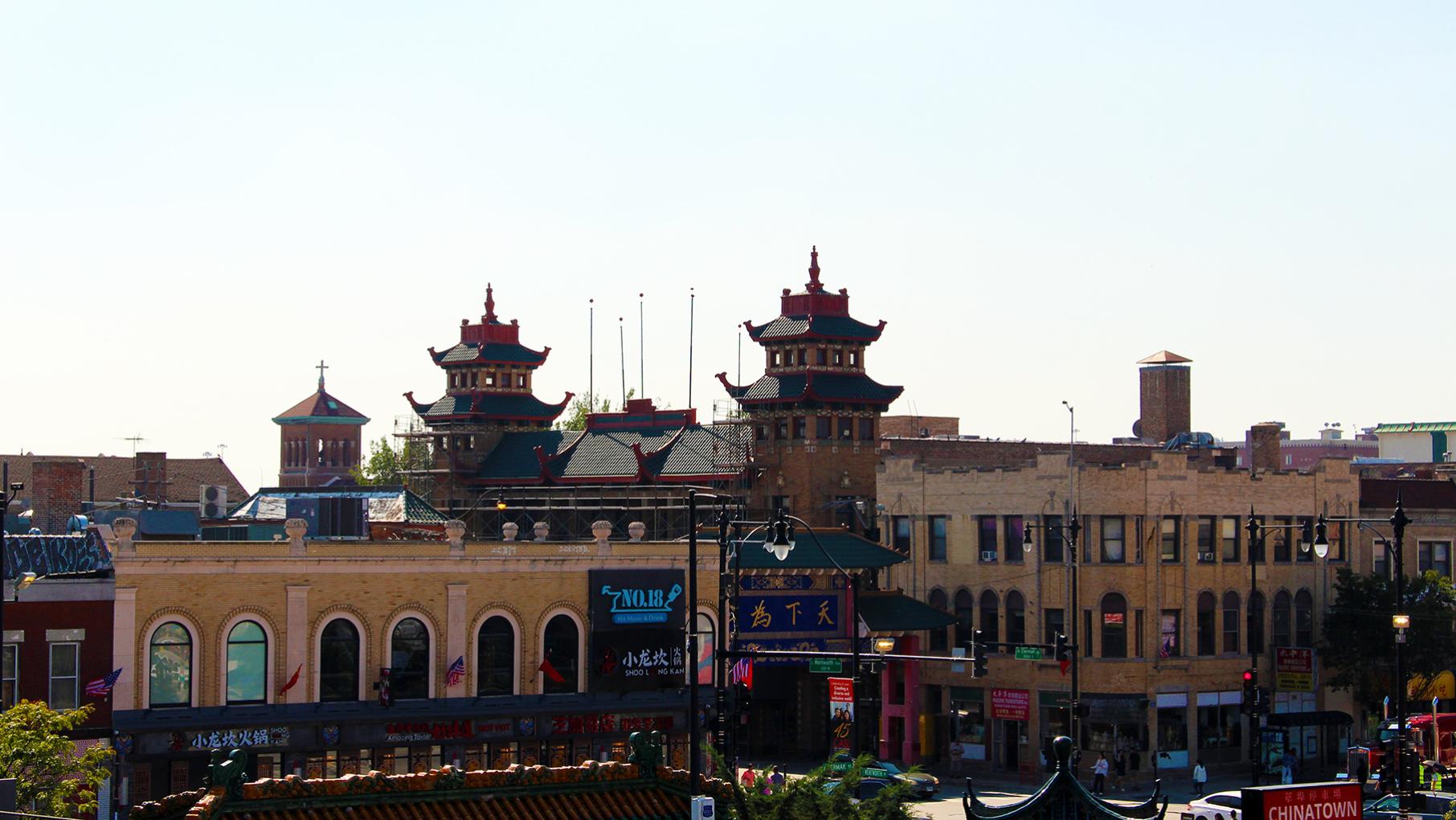
When Albert Moy opened Bingo Tea in Chinatown Square in 2014, there were only three other stores in the plaza selling bubble tea. Now, there are over 15 in Chinatown Square alone and more than 25 in the neighborhood, many of which operate as independent franchises of large, international chains. While over the past decade Chinatown Square has increasingly commercialized and catered to tourists, the southern “Old Chinatown” portion of Wentworth Avenue between Cermak Road and 24th Street has retained more of the neighborhood’s legacy, family-owned Cantonese restaurants.
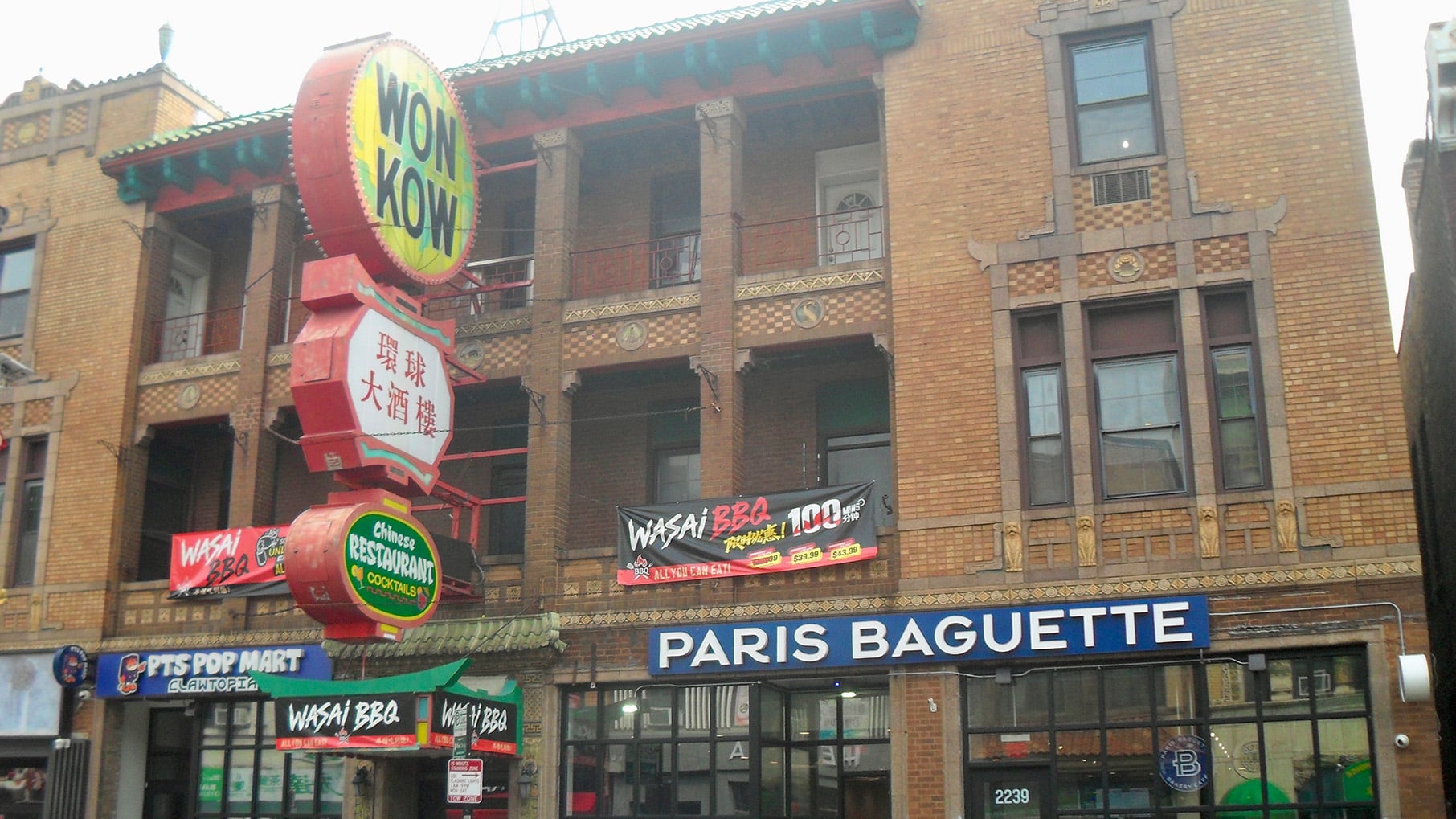
But since COVID, franchises have also begun opening in Old Chinatown. Sarah Tang, director of programs at the Chinatown-based nonprofit Coalition for a Better Chinese American Community (CBCAC), points to the opening of a Paris Baguette in the location of a Chinatown icon as a sign of how much the neighborhood has changed. The Korean bakery chain, which has over 4,000 locations worldwide, opened in February of 2024 at the former site of Won Kow, once the oldest continuously operated Chinese restaurant in Chicago, which closed in 2018 after 90 years.
Since then, a slew of international restaurant chains have continued to enter Chicago’s Chinatown, which is the rare U.S. Chinatown that has grown instead of shrunk in recent years. Bubble tea, bakery, and hot pot chains from China, Korea, Mongolia, and Taiwan have taken over vacancies previously occupied by local spots like the 40-year-old, family-run Seven Treasures and Moy’s Bingo Tea, which he closed in August, 2025.
Moy foresees this trend continuing, with one big brand following another. In June 2026, he reopened Bingo Tea in Homer Glen, a southwest suburb, to “try it all over again.”
Rising rents, rising costs for local businesses
When Bingo Tea’s lease was up for renewal in 2025, the rent "skyrocketed." Moy says the new rate, combined with ballooning property insurance and common area maintenance fees that commercial tenants are responsible for paying, would have made it impossible to support his family and make ends meet, despite a reliable customer base.
According to CBCAC’s Tang, Chinatown's last generation of commercial leases were for 5-10 year terms, and many of those leases ended recently or will end soon. Once they do, local businesses have little protection against landlords raising rents beyond what they can sustain.
“In 2024, we were seeing rents go for seven to eight thousand, but in just two years what we hear now is that it’s $10K plus a month for a ground floor on Wentworth,” Tang says. “It’s certainly not affordable for a new entrepreneur not coming with investor capital and just using their own savings. The startup cost is very steep.”
As someone with a deep connection to Chinatown and boba culture there, Peter Li initially wanted to open his Gathers Tea Bar in the neighborhood. But the rent in Chinatown was too expensive for a first-time business owner, so he opened in Little Italy in 2019, a location he now says he appreciates.
Though rental costs everywhere have risen in the past few years due to inflation, Moy views the international chains as partially responsible for driving Chinatown’s commercial rent hikes, as they can and often do offer to pay building owners a higher rent to move in. “It’s hard to compete against large pockets. They can pay. Local shops can’t, and they’re not going to jeopardize everything they have just to renew a lease,” he says.
Gourmet Food, a 37-year old Cantonese restaurant tucked off Wentworth Avenue on 23rd Street, is bracing for a significant rent hike when their lease ends soon. Owner Xiao Xiao Hong, who has operated the restaurant the past 23 years, views the wave of international boba chains as a short-term fad with volatile impacts on Chinatown’s longstanding restaurants like Gourmet. She says through a translator that, while the chains may close in three to five years, the fate of her restaurant in that timeframe will be more uncertain.
Increasing foot traffic, intensifying competition
International chains have also helped bring greater foot traffic and investment to Chinatown over the past few years, especially after economic setbacks following the COVID-19 pandemic. While across the country many urban Chinatowns are shrinking due to gentrification and development, Chicago’s Chinatown is an anomaly that is expanding in both geography and Asian population. This is partly due to sustained tourism and commercial activity.
E-Connect, a gift shop and traditional Chinese medicine store, moved from Chinatown Square to Wentworth Avenue this May, after the previous owners retired. E-Connect’s new owner Joey Li says through a translator that, when they first moved, she was worried about foot traffic, because Old Chinatown has historically had less foot traffic than the Square. But visitors now come to Wentworth specifically for milk tea.
She says that’s a double-edged sword. On one hand, the bubble tea customers walk around and stop by other businesses. But she also worries that visitors will only associate Chinatown with bubble tea: “Are people only coming to Chinatown for that now?”
JieHua Li, owner of Sea Cucumber City, a traditional Chinese medicine shop on Cermak Road, views the increased foot traffic positively. Though Cermak Road is much quieter than Chinatown Square and Old Chinatown, she sees people walking around more and customers coming in with bubble tea. Maybe if Cermak gets a bubble tea shop, it will increase tourists here too, she says through a translator.
Since Gourmet Food is also located on a quieter street, Hong says she hasn’t seen many more tourists come as a result. But she says that the bubble tea shops have brought more competition, which has hurt her business. Since boba is “the thing to buy now,” she says that consumers would rather spend their $10 on a boba and bao instead of a rice box.
Jin Xi Liu, owner of Yummy Yummy Noodles, a 20-year old Cantonese-style restaurant on Wentworth specializing in noodle soups, doesn’t pay as much mind to the influx of new chains, as he doesn’t view them as competition. He says through a translator that he has a loyal customer base, and gets plenty of tourists via local food tours that come by his restaurant nearly every day.
Smaller bubble tea shops see the influx of international chains as intensifying competition in the industry. For Gathers’ Peter Li, this competition is healthy motivation for Chicago’s boba scene to improve. “I'd much rather see Chicago develop a competitive tea scene where everyone is pushing each other to get better than have an industry that's comfortable being mediocre. If the bar keeps getting raised, we all have to rise with it, and the customer ultimately gets a better product because of that,” he emails.
Plus, he argues that more boba shops bring greater awareness of bubble tea. A chain could be a gateway into the world of bubble tea that leads someone to explore more shops around the city.
For Moy, this competition can be cutthroat and damaging to local businesses in the area. Although the new boba chains offer quality products, he says that they can afford to offer flashy deals and promotions that take business from other shops because they have deeper pockets and more brand recognition.
When Chinese chain Molly Tea first opened on Wentworth, they offered buy one, get one floral milk teas, along with free merchandise and giveaway prizes. Lines stretched down the block. A year later, Taiwanese chain CHICHA San Chen offered similar promotional giveaways for their grand opening in Chinatown Square.
“It’s pretty much a cutthroat business,” Moy says. “A lot of local shops will not survive because of that reason. Regardless of how good your stuff is, unless you spend thousands of dollars on similar techniques, it’s slim to none because of these big-name stores.”
Moy adds that international chains have more funds to invest in storefront remodeling and aesthetics, an important part of business in the age of social media. “Everybody’s going to want to go to that fancy place instead,” he says.
A changing Chinatown: Can local mom-and-pop restaurants still thrive here?
While the influx of international chains has attracted more foot traffic and tourism to Chinatown, it has also accompanied major neighborhood demographic and business changes in the last several years.
Peter Li and Moy recall growing up in a Chinatown where most people were from Toisan, speaking Cantonese or their local Toisan dialect of Cantonese, and most businesses were small, homestyle Cantonese restaurants that primarily served the local community. The first wave of Chinese immigrants who came to the U.S. in 1849 and to Chicago in the mid-1870s mostly hailed from the Toisan area of south China’s Guangdong province.
“When I was growing up, it was all Toisan people. Very seldom I heard anybody speak Mandarin in Chinatown,” Moy says. “Now, I would go down to grocery-shop, people start speaking to me in Mandarin and I would look at them like, ‘What?’ I’d have to point, which is ridiculous because I'm from Chinatown.”
Peter Li has noticed that many older Cantonese restaurants and mom-and-pop businesses he grew up with are gradually disappearing. Priced out of Chinatown, he says that many Chinese and Cantonese businesses have moved to nearby neighborhoods like Bridgeport or South Loop. Other shops, like Moy’s Bingo Tea, have moved to the suburbs, where Moy says rent has been “very reasonable.” Meanwhile, turnover amongst new businesses entering Chinatown is quick, Peter Li observes. Trends come hot and die fast.
Chinatown’s changing food landscape both reflects and is reflected by its changing demographics. Clayton Xu, policy manager for CBCAC, hears from residents that displacement pressure comes not just from rent hikes, but also from their favorite restaurant in the community closing. When there are fewer businesses in the area that local people can afford and frequent, “that’s a sign that can trigger locals to move out,” Tang adds.
According to a Medill School analysis, as Chinatown has expanded geographically, the Chinese American population in “core” Chinatown, or Armour Square, fell between 2017 to 2022, while the Chinese American population grew in the surrounding “greater” Chinatown area, which includes affordable southwestern neighborhoods of Bridgeport, McKinley Park, Brighton Park, and Archer Heights.
Peter Li is optimistic that there is room for both international chains and local businesses to exist in Chinatown. “For me, the best version of Chinatown is one where the new and old can coexist. I want to be able to get excited about a major tea brand from Asia opening down the street, but still walk a few doors over and eat at a family-owned restaurant that's been serving the neighborhood for 30 years. I think having both is what keeps Chinatown interesting and, more importantly, keeps it feeling like Chinatown,” he writes.
Longstanding family-owned restaurants like Gourmet Food and Yummy Yummy Noodles say that they want to continue making traditional Cantonese-style dishes and honoring Cantonese culinary traditions, but it’s increasingly difficult with rising costs. Hong says that her father-in-law worked in the food industry in Toishan, and encouraged her and her husband to bring the culture and traditions of Toishan to the U.S. – so it’s very important to her to keep Gourmet Food and its legacy alive.
As someone who had to move his business out of the neighborhood, Moy believes that Chinatown is no longer a viable place for mom-and-pop shops to open and survive. He predicts that, within the next ten years, the majority of mom-and-pop shops in Chinatown will be gone, and holds the international chains responsible. “It’s going to be very commercialized. And it’s the people with the bigger pockets who changed it,” he laments.
Note: Sarah Tang at the Coalition for a Better Chinese American Community (CBCAC) translated interviews with Gourmet Food, Yummy Yummy Noodles, E-Connect, and Sea Cucumber City.