The Chicago Symphony Orchestra's History Is as Dramatic and Tempestuous as Some of Its Greatest Music
Daniel Hautzinger
September 23, 2026
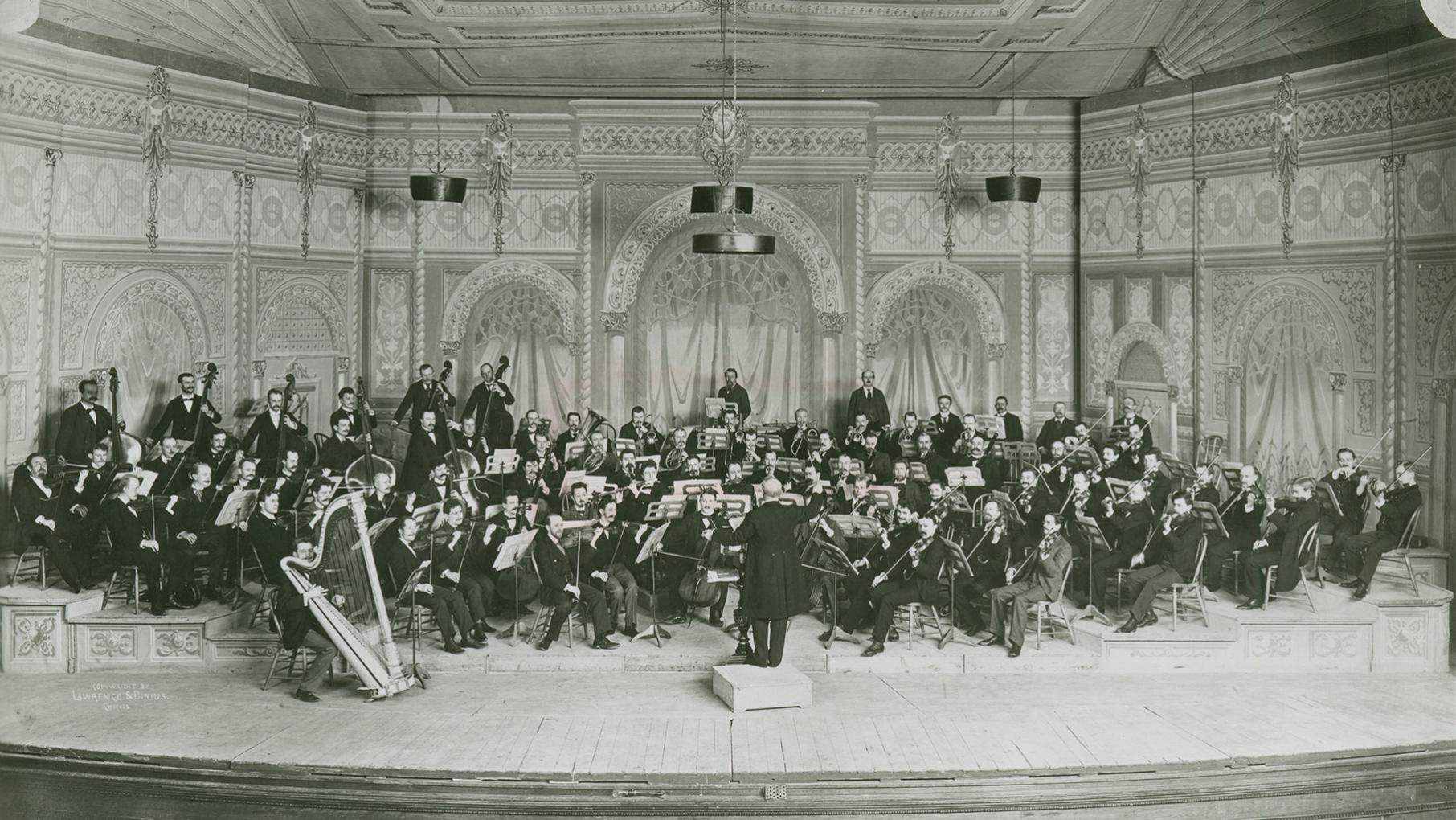
On October 9, 1871, Theodore Thomas and his traveling orchestra arrived in Chicago to perform at the reopening of Chicago’s Crosby Opera House. But five hours before they disembarked their train, the opera house, whose scaffolding had only just been removed, collapsed. The Great Chicago Fire was tearing through the city.
Thomas and his orchestra quickly moved on to their next stop, in Joliet. But the conductor would eventually return to found what is now the Chicago Symphony Orchestra (CSO), leading its first concert almost exactly 20 years later, on October 16, 1891, in the Auditorium Theater.
One hundred and thirty one years after the CSO’s first concert,, a 26-year-old hotshot conductor named Klaus Mäkelä led the orchestra for the first time in the wake of another world-shaking calamity, the COVID pandemic, which had shut down the orchestra for a year and a half, its longest absence from the stage. A year later, Mäkelä accepted an offer to become the CSO’s music director, the tenth man to hold that title after Thomas. He had only conducted the orchestra twice, and was just 27 years old.
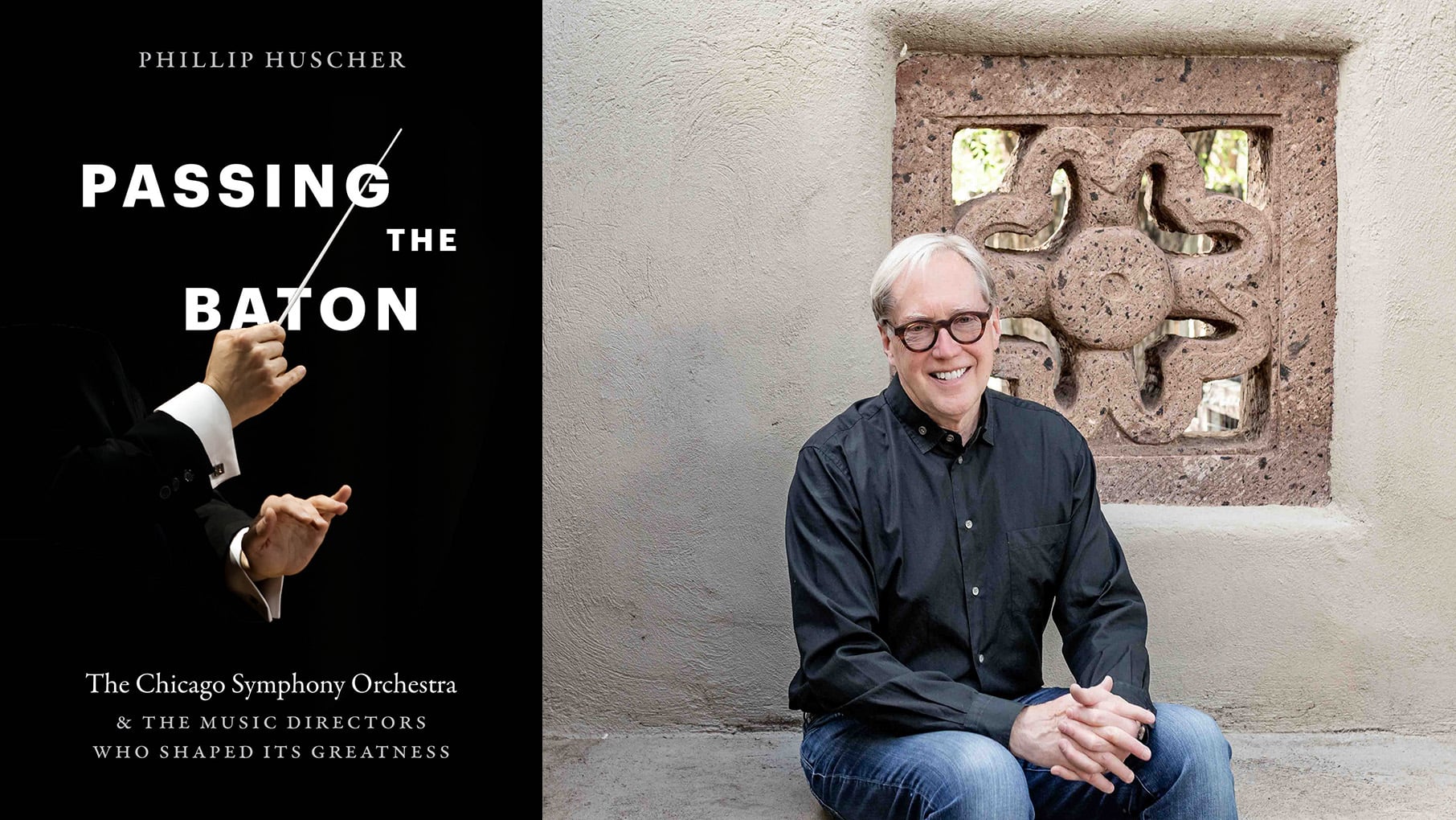
The story in between is the subject of the new book Passing the Baton: The Chicago Symphony Orchestra and the Music Directors Who Shaped Its Greatness by Phillip Huscher, the longtime program annotator for the CSO and a former journalist and music critic. It publishes September 28.
“An orchestra is a really tricky subject,” says Huscher, because “it changes personnel every year. It is an organic thing. And to have your main character, in a sense, be someone who changes dramatically over time is a little complicated.”
Huscher’s solution to telling the “unusually good” story of the CSO, then, was to follow the music directors over 135 years from Thomas to Mäkelä, with particular focus on the fraught moments of succession between them. “They’re full of promise, full of great expectations, and, as we know, they can sometimes turn out to be surprises,” he says of the appointments of new music directors.
They can also turn out to be disasters, as his book details.
The decade after the death of the orchestra’s second music director, Frederick Stock, was especially chaotic. In a transition presaging that from the elder statesman Riccardo Muti to the young Mäkelä, the 32-year-old Stock took over after the death of the well-regarded Thomas in 1905. Unlike Mäkelä, who already led two important orchestras at the time of his appointment, Stock had risen from the orchestra itself and had little local – let alone national or international – profile. But he became a popular figure in Chicago, surviving even a period of anti-German sentiment during World War I in which he resigned until he became an American citizen. He was the CSO’s music director for an impressive 37 years, the longest tenure even today.
So when he died after conducting the patriotic opening concert of the 1942 season, the first after the U.S. entered World War II, the CSO had made it through 50 years with only two music directors. The next decade saw three short-lived replacements – two trashed by an influential critic, one canned midway through his first season because of his expensive plans – until the legendary Fritz Reiner took over in 1953. The orchestra’s board also tried and failed to appoint Wilhelm Furtwängler during this period, despite questions about his association with the Nazis and his own seeming disinterest.
Another contentious period worthy of reality TV came after Reiner, when that influential critic – the Tribune’s Claudia Cassidy, nicknamed “the executioner” – influenced the orchestra’s board to choose Jean Martinon as music director. But she soured on him within the first year, after her former assistant resigned from the CSO as general manager following a power struggle with Martinon. Cassidy’s extraordinary influence and questionable journalistic ethics then became a national news story, leading to her downfall.
Martinon’s own demise as music director took a few more years and another nasty rivalry, as the oboist Ray Still took a personal dislike to the conductor and expressed it by playing the World Series on a radio during a rehearsal, reading during rehearsals, refusing to follow Martinon’s tempos, and rejoining to Martinon, “Well, I make music,” in front of the orchestra when confronted about it.
Still was removed from the orchestra but eventually restored to his position with reprimands after arbitration. He remained with the CSO until 1993. Martinon was gone by 1968.
Drama was confined to the music during the 22-year tenure of Sir Georg Solti, who helped turn the CSO into an international darling and held the record for the most Grammy Awards of any recording artist – most with the CSO – until Beyoncé overtook him in 2023. It was under Solti that Chicago’s brass section became the orchestra’s most lauded attribute, thanks in part to the unrivaled Adolph “Bud” Herseth, who was principal trumpet for 53 years.
So despite the mutability of an orchestra and the churn of players – “there’s almost never been a season when there hasn’t been at least one new person in the orchestra,” Huscher says – there is also longevity and continuity. “People who come into this orchestra as members, as musicians, know this history, this tradition of playing, know the reputation it has, know the kind of sound that it’s known for, and they buy into that and contribute to it,” Huscher says. “The Chicago Symphony has always had an identifiable sound.”
Things change and things stay the same. The orchestra has faced fears that it would not survive since its first season; music directors have complained about the treatment of the arts in America as entertainment rather than culture all the way back to Stock; audiences have resisted new music from Mahler in the early twentieth century through today.
The pandemic was a greater break than most: there were 21 vacancies to fill in the orchestra the day Mäkelä was publicly announced as music director in 2024, the most any music director has had to fill. When Huscher started writing Passing the Baton in 2012, he assumed Muti would still be the music director when he finished it. But the research and writing took longer than expected, “and for a whole while I didn’t know what was going to happen next, and it was driving me crazy,” he says. The appointment of Mäkelä, who officially takes over in 2027, “gave the story a really wonderful upbeat ending, even though the story honestly doesn’t end,” Huscher says. “This is the beginning of something new and exciting.”