Facebook icon Twitter icon Instagram icon YouTube icon
Playlist Genealogy

Genealogy

Joseph Yoakum | Art & Design in Chicago


Parts of his life story and elements of his drawn landscapes were invented, but both were extraordinary nonetheless. As a young man, Joseph Yoakum traveled the world - he claimed to have visited every continent except Antarctica - then recalled those memories to draw fantastic landscapes when he started to make art late in his life.

Helen Hughes Dulany | Art & Design in Chicago

Justin Henderson

Her career began during an illness and lasted a short six years, but for that brief period in the 1930s, Helen Hughes Dulany was one of the most in-demand designers in the country. Born in 1885 in Bismarck, North Dakota to a family that helped settle the state – one newspaper article about her notes that she “is said to have been the first white child born in North Dakota” – she married a wealthy lumberman and moved to Chicago in 1920. Her own family was well off, her father having become rich from electric utilities.

Hubbard Street Gallery Scene | Art & Design in Chicago


The district just north of the Chicago River may today be filled with nightclubs and restaurants full of young people out to see and be seen, but in the 1970s, it was a bit seedy, the site of industrial warehouses – and a burgeoning alternative art scene. Frustrated with the lack of galleries to show their work in Chicago, young artists began to set up alternative exhibition spaces. Attracted by cheap rents and supported by grants from the National Endowment for the Arts, many of them set up shop on Hubbard Street.

Charles Clarence Dawson | Art & Design in Chicago

Justin Henderson

At the 1933 Century of Progress World’s Fair in Chicago, only one African American artist had a visible presence. It wasn’t Archibald Motley, Jr., the city’s best-known black fine artist at the time; it was an adman by the name of Charles Clarence Dawson. Not that Dawson didn’t also have fine art training or aspirations – he had actually been a classmate of Motley’s at the School of the Art Institute of Chicago. But he struggled to make a living from painting alone and so turned to commercial art to support himself.

White Rabbits | Art & Design in Chicago

Justin Henderson

White Rabbits made the White City beautiful. When it came time to construct the sculptures and decorations that ornamented the palaces of the 1893 World’s Columbian Exposition in Chicago’s Jackson Park, the sculptor Lorado Taft decided to turn to several of his female students at the School of the Art Institute for help at a time when bias often prevented female sculptors from finding work. When Taft, who was overseeing the fair’s sculptural ornament, asked chief architect Daniel Burnham if he could hire them, Burnham reportedly replied, “Hire anyone, even white rabbits if they’ll work!” And thus did the group of young sculptors receive its name.

South Side Community Art Center | Art & Design in Chicago

Justin Henderson

The South Side Community Art Center (SSCAC) was funded with dimes. During the Great Depression, the Federal Art Project, under the aegis of the unemployment-alleviating Works Progress Administration, set up more than 100 community art centers around the country to employ artists and make art available to neighborhoods through classes and exhibitions. The Federal Art Project would staff the centers, pay the teacher’s salaries, and handle operating costs, but the community itself had to provide the building.

Institute of Design | Art & Design in Chicago

Justin Henderson

In 1937, an innovative Hungarian artist came to Chicago to set up a school of design based on the latest progressive German artistic ideals. László Moholy-Nagy had taught at Germany’s experimental Bauhaus, which sought to create art for the industrial age and to reconcile art, design, and architecture. As an influential photographer, thinker, and painter, Moholy-Nagy was invited to form a school along the lines of the Bauhaus in Chicago, and the New Bauhaus was born.

Hyde Park Art Center | Art & Design in Chicago

Justin Henderson

Chicago’s oldest community arts center helped launch the career of many of its youngest – and eventually most influential – artists. The Hyde Park Art Center (HPAC) began in a storefront as the Fifth Ward Art Center in 1939. Over the decades, it shuttled through numerous locations, finally moving into its first free-standing home at 5020 S. Cornell Avenue in 2006. In the first couple of decades, it primarily offered classes to people from the neighborhood, but when artist Don Baum became involved as a teacher and curator in the mid-1950s, it began to present exhibitions spotlighting local artists.

Hairy Who | Art & Design in Chicago

Justin Henderson

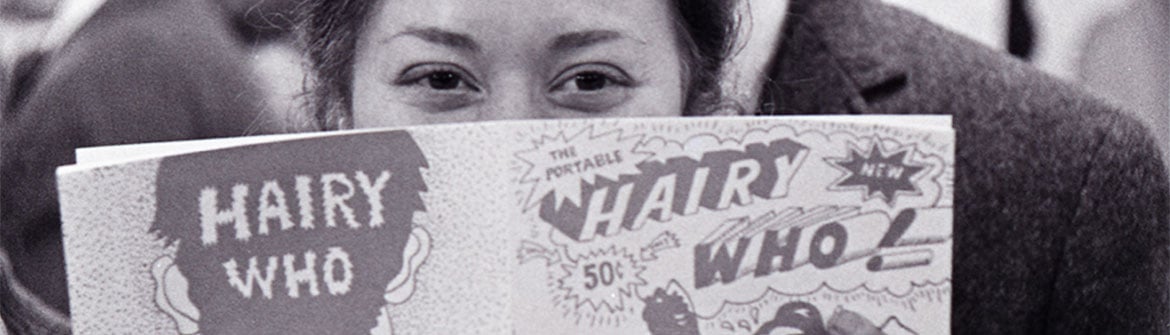
In 1966, one adventurous Hyde Park curator took a chance on a group of unknown graduates of the School of the Art Institute of Chicago. Calling themselves Hairy Who, they gave Chicago a visual arts movement to call its own.

Exhibition Momentum | Art & Design in Chicago

Justin Henderson

Chicago’s art community was at war. In 1947, the Art Institute of Chicago’s annual Chicago and Vicinity exhibition, an important showcase of local artists, featured primarily students or recent graduates from the School of the Art Institute of Chicago (SAIC). Older artists were incensed. They organized counter exhibitions and fired off an indignant open letter. Hoping to appease them, the Art Institute capitulated and declared that the 1948 exhibition would be “limited to professional artists.”

Henry Darger | Art & Design in Chicago


For most of his life, Henry Darger lived in a one-room apartment building, attended Catholic Mass as many as four or five times a day, and worked as a janitor and dishwasher at a hospital. He paid meticulous attention to the weather, even recording it every day for ten years in a journal. He barely interacted with anyone and seems to have had only one friend, who one biographer believes was also his lover. And he also wrote, and drew, and painted, and cut-and-pasted. Thousands of pages, hundreds of illustrations, multiple volumes, and none of it seen by anyone except himself until after his death.

Gertrude Abercrombie | Art & Design in Chicago


They called her the “Queen of the Bohemian Artists,” and she presided over gatherings that included Thornton Wilder, Dizzy Gillespie, Sonny Rollins, Sarah Vaughan, Charlie Parker, and others at her Hyde Park home. But she wasn’t just the host of a salon – she herself was an idiosyncratic painter (and sometimes played piano with her jazz musician friends). Gertrude Abercrombie was never represented by a major gallery and her reputation was mostly local, but she was a renowned figure in Chicago who left behind a striking collection of works.

Artemisia | Art & Design in Chicago


Tired of being pushed out of exhibition spaces, a group of female art students formed their own collective in 1973. The group existed for three decades, launching careers and occasionally attracting controversy.

Lorado Taft | Art & Design in Chicago

Justin Henderson

Lorado Taft

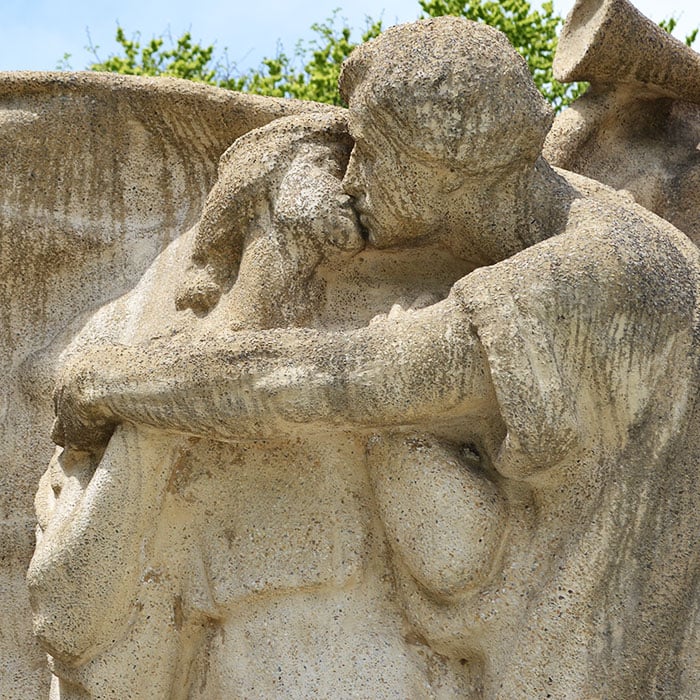
detail from Lorado Taft’s Fountain of Time in Washington Park
A detail from Lorado Taft’s Fountain of Time in Washington Park. Photo by Daniel Andries

Perhaps no other sculptor has played as prominent a role in Chicago as Lorado Taft.

Art & Design in Chicago

Justin Henderson

Subscribe to Genealogy