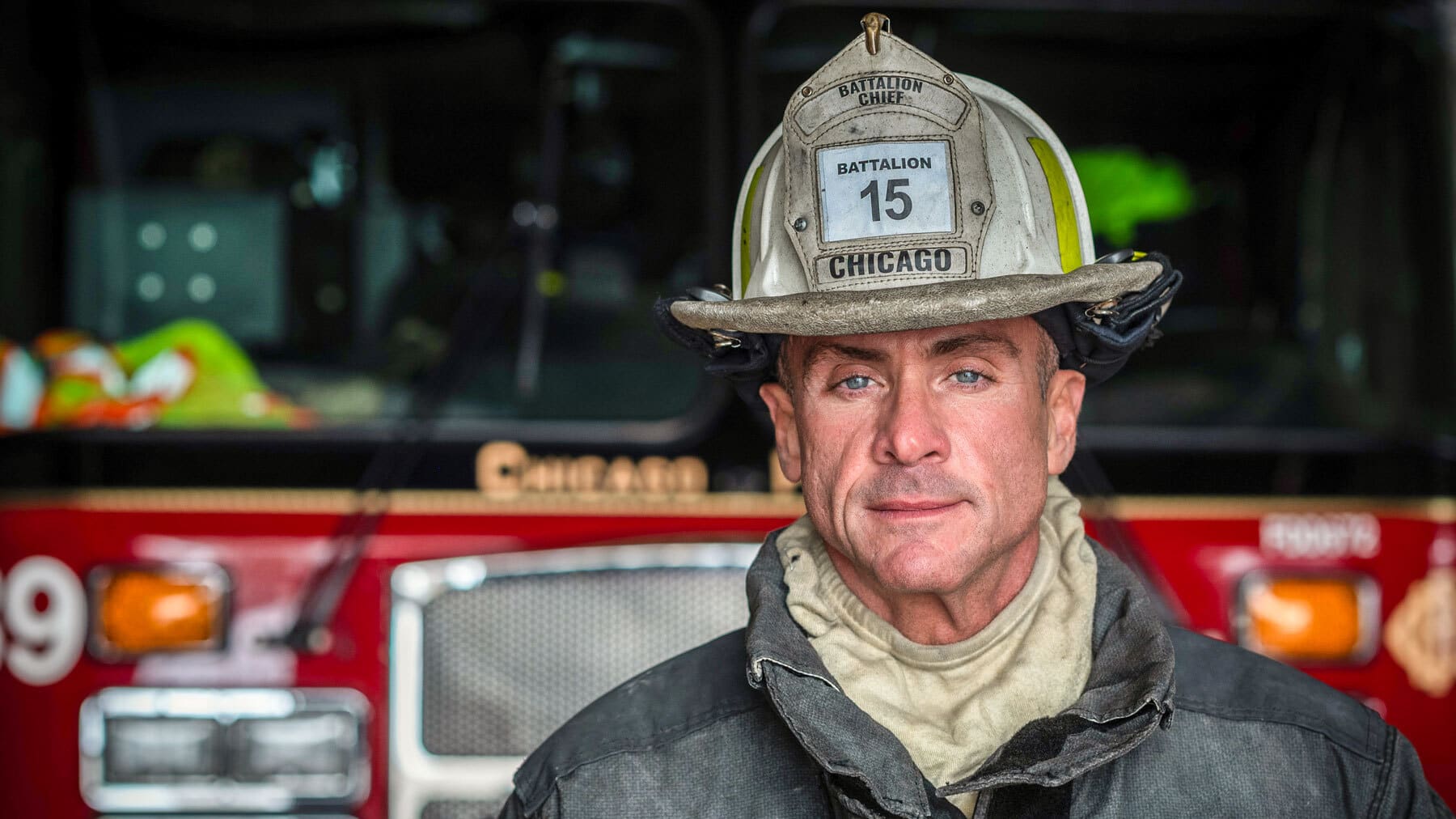
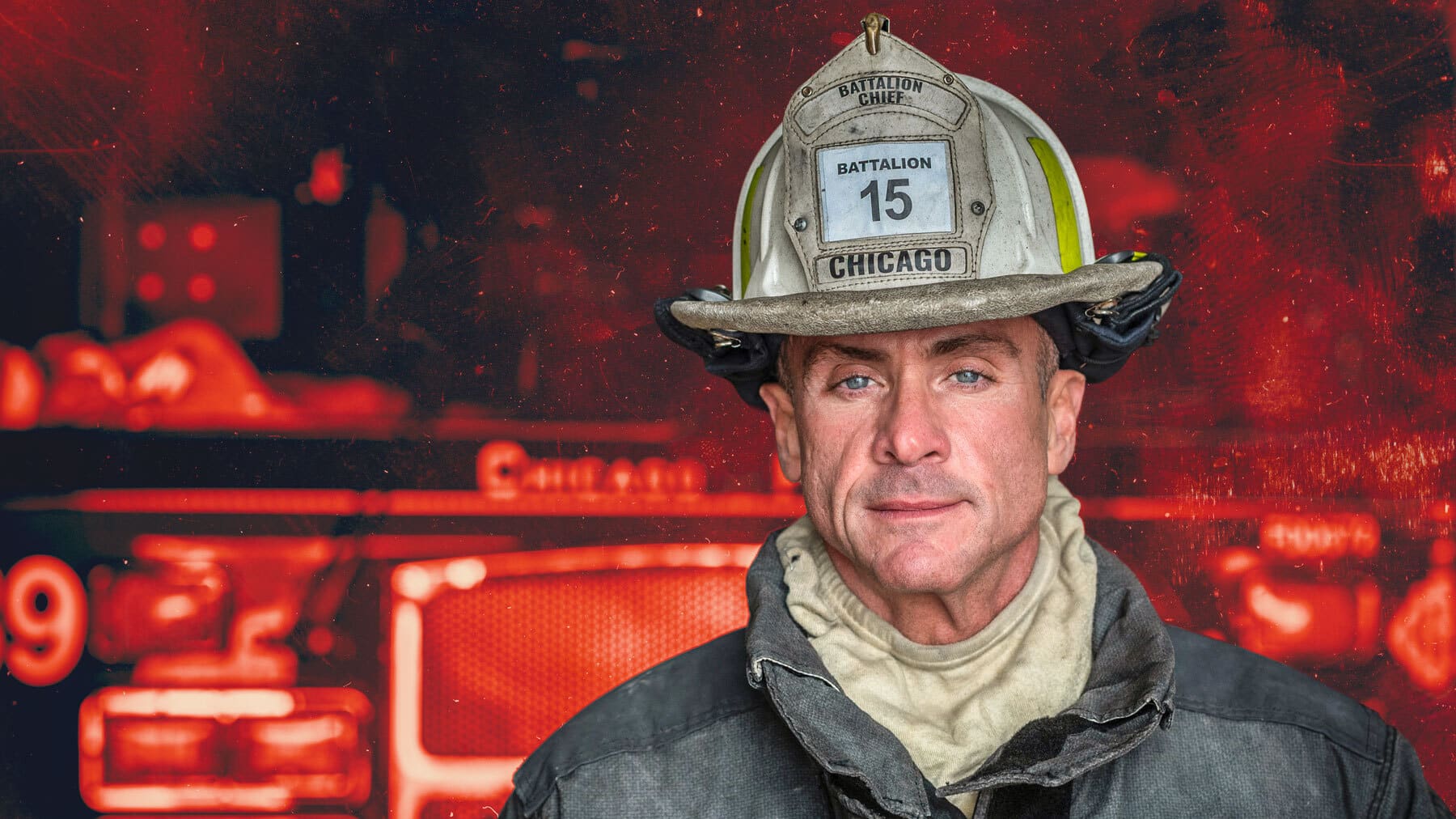
When Chicago Fire Department Battalion Chief James Spalla was a little kid growing up in Bridgeport, he remembers looking forward to seeing his Uncle Jack and Uncle Jerry at family parties.
“I looked at them as bigger than life, like, ‘Wow, these guys are firemen.’” Spalla said. “I got to experience a few times going as a child to one of their firehouses and it was just everything you thought it was gonna be, watching them respond to a run, watching them hang off the back of the truck (which we can’t do anymore). They were firemen when firefighting was rough.”
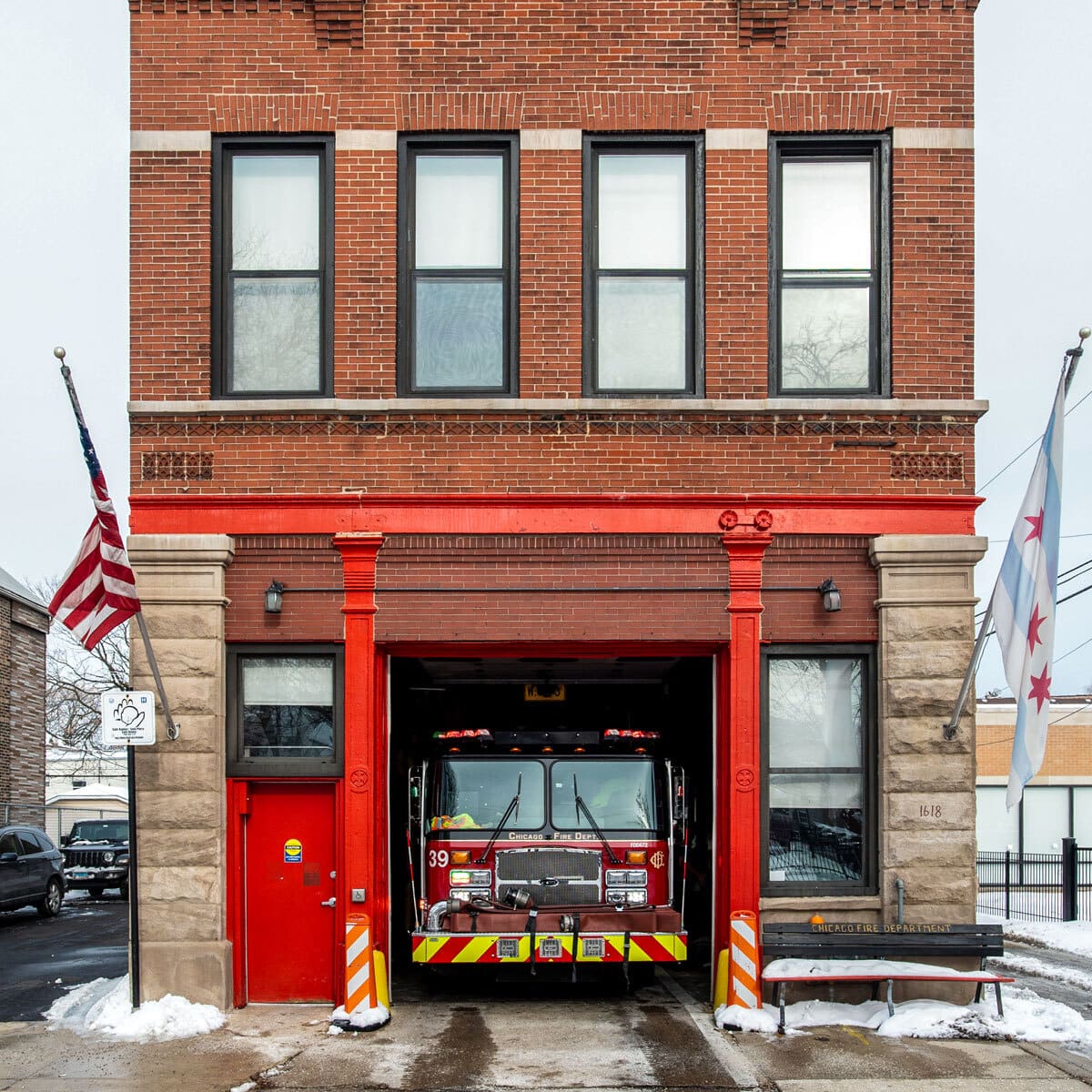
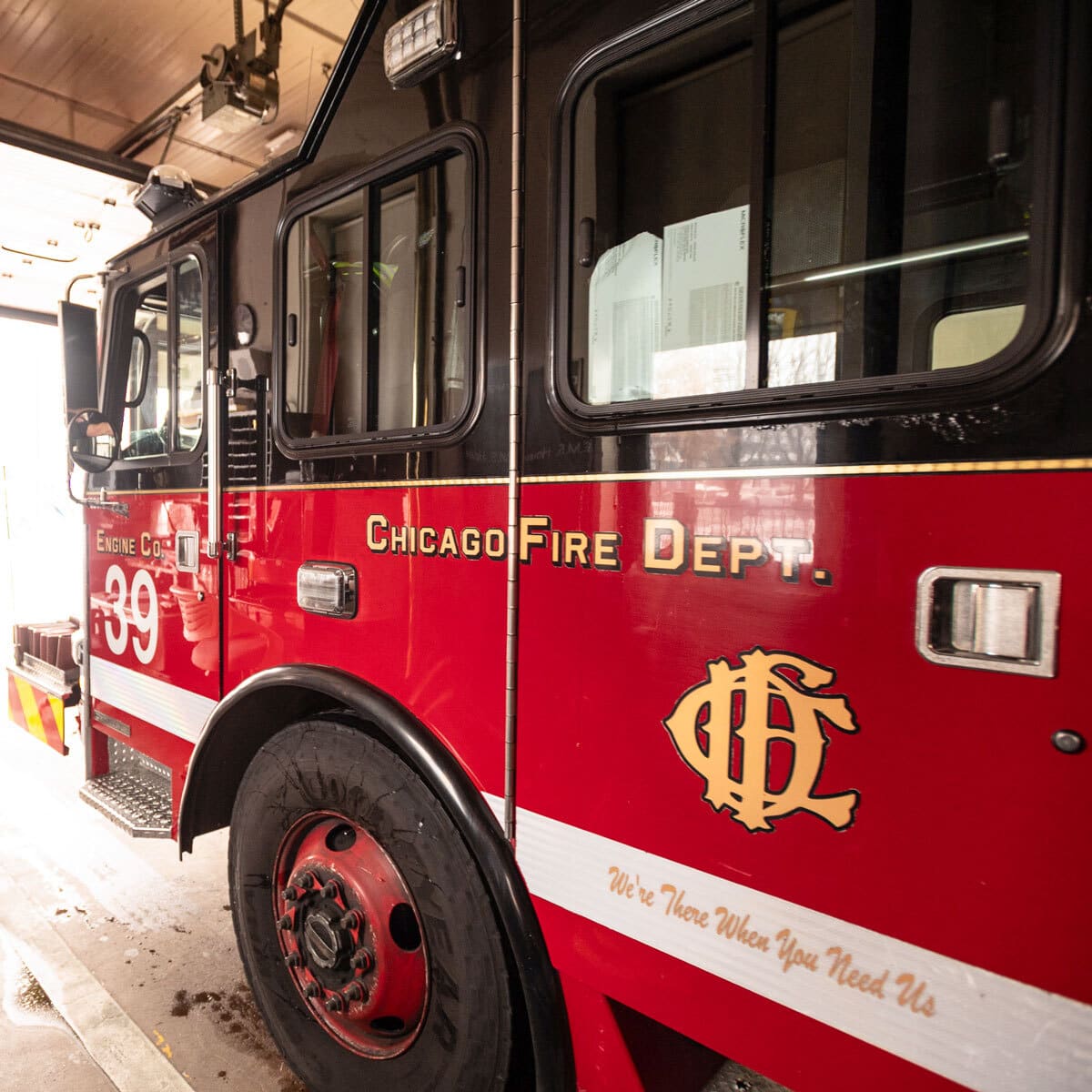
Those early memories planted a seed in Spalla’s mind, and he, too, became a firefighter with the Chicago Fire Department. Firefighting has become something of a family business – or perhaps a family calling – for Spalla and his extended family. In addition to Uncle Jack and Uncle Jerry, Spalla has two cousins who became firefighters, plus a few in-laws. Now, Spalla is the one captivating the kids at family gatherings.
“It makes our holiday parties and birthday parties a little more interesting because we get to sit around and swap fire stories,” Spalla said. “The kids constantly have tons of questions, and it’s nice to get together with those family members that share the same job and the same knowledge.”
Becoming a firefighter didn’t necessarily come easily, rather, as Spalla puts it, “by the grace of God.” The Chicago Fire Department, which has some 4,500 uniformed firefighters and paramedics, is very competitive. Typically about 20,000 people apply, and only a few thousand are selected to take the exam, which is offered infrequently. According to the Chicago Sun-Times, the 2022 exam was “only the fourth the department has administered in 44 years.” Only 200 firefighters are hired each year.
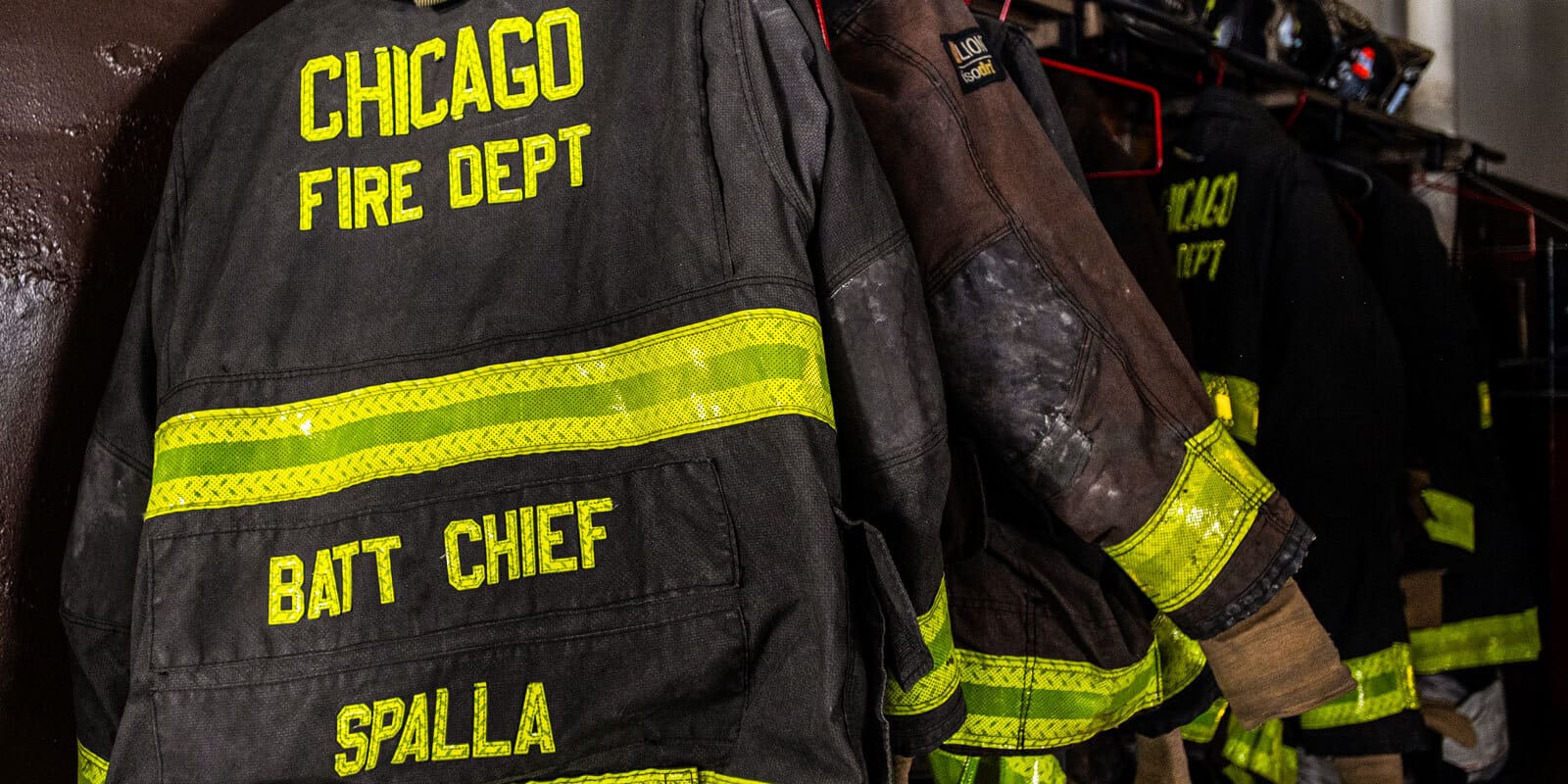
Spalla joined the department in 1996. Each step up the ladder required more studying and exams, but he kept going, working his way up to battalion chief four years ago. He leads Battalion 15, which covers parts of the Bridgeport, Pilsen, McKinley Park, and Brighton Park areas, so any given shift may find him at a different firehouse. Chicago firefighters work 24-hour shifts, with 48 hours off in between shifts. As with any job, there’s a checklist of things to do for someone in Spalla’s position when he reports for duty: he checks in with his firefighters, conducts roll call, does an inventory of equipment, and completes plenty of administrative tasks. The work of any fire company is quite varied.
“Every time you see a truck or an engine going down the street with lights and sirens doesn’t necessarily mean it’s a fire run or a building fire,” he said. A less busy company may go out on runs seven or eight times per day, while a busier company might go out 20 times per day.
Most often, they respond to medical emergencies. They deal with faulty building alarms. They are on the scene of serious car crashes. The department even has a dive unit to handle incidents in Lake Michigan. And, of course, they fight fires. The number of fires any one company responds to depends on where it’s located. Spalla said the busiest companies, including those on the West and Southeast sides of the city, might respond to 10 fires a month, whereas downtown companies respond to two or three fires.
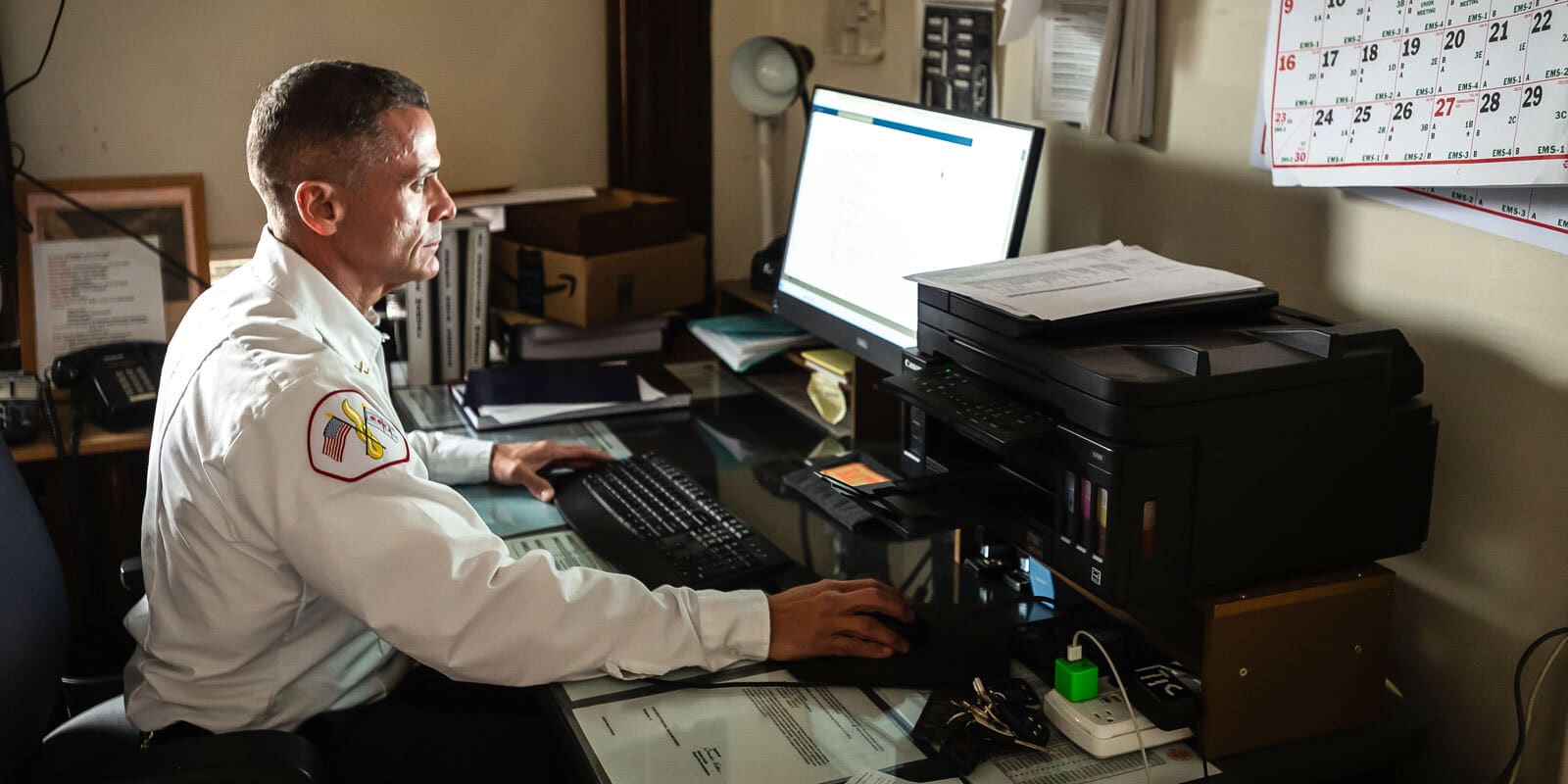
Spalla wouldn’t trade his job for anything, a feeling that has grown out of the camaraderie of the firehouse.
“I can talk for hours about what I like about the job, especially the coworkers,” Spalla said. “The coworkers are the pulse of the job. It’s easy to work with those people because they keep a positive attitude each day, they’re fun to be around, and they really take the job seriously.”
It’s the fellow firefighters that make the firehouse a home away from home. “My wife will ask me, ‘So, you’re going to work tomorrow?’ And it’s funny to say, ‘Yeah, I’m going to work,” because it’s not even like it’s work. You’re going there because you enjoy it so much. You almost feel guilty at times calling it work.”
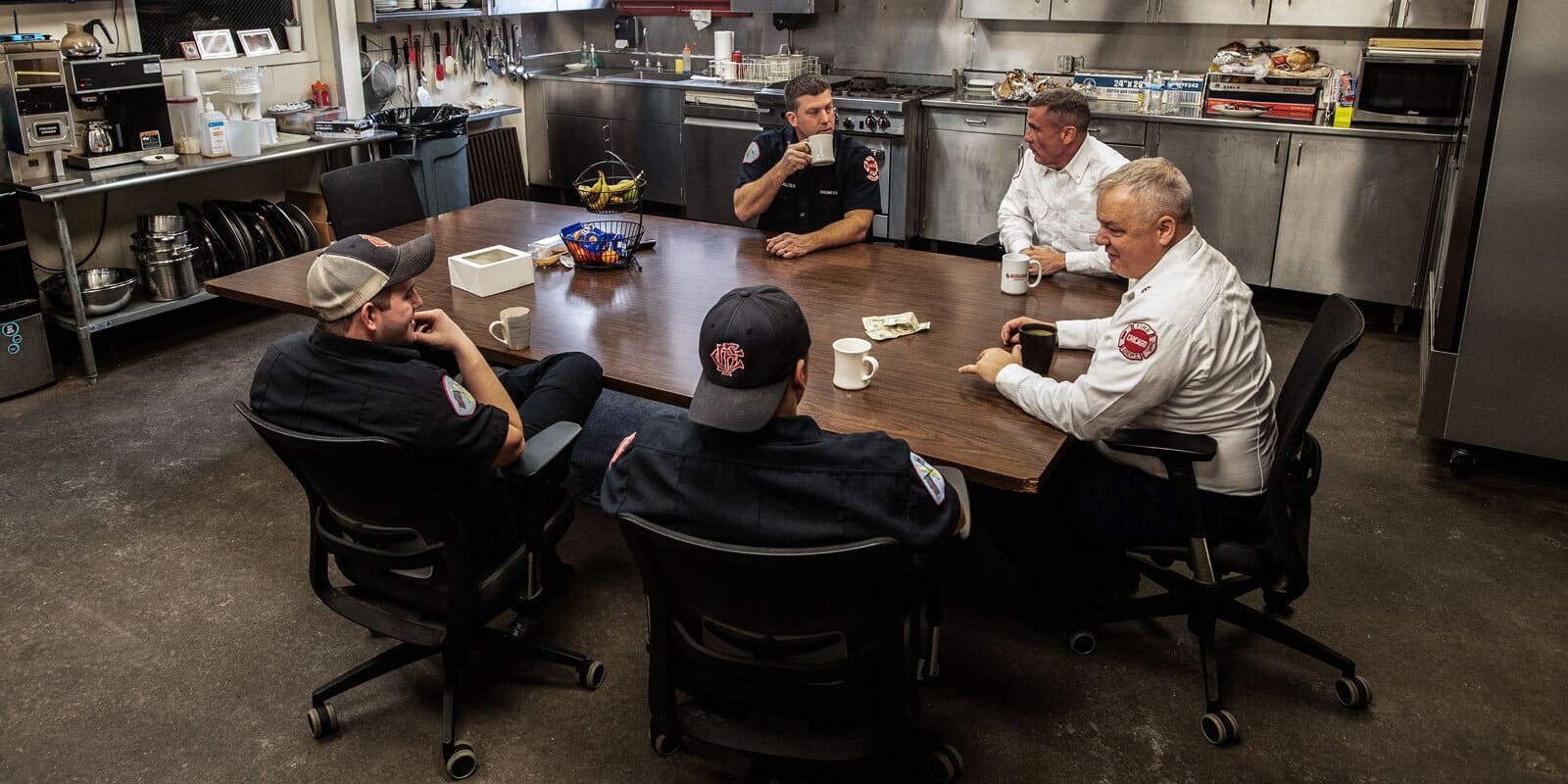
Many firefighters have “something in their blood,” he said, that draws them to the work, particularly the adrenaline rush of going out on a run. Adrenaline aside, it’s knowing that they’re on their way to help people that motivates them.
“When we get sent out of our firehouses, it’s always to help somebody for whatever reason. Whether it be a fire, an auto accident, an EMS run, a person having a heart attack – at the end of the day, we’re being sent out to help somebody. That in itself gets the juices flowing for I think everybody, knowing that our job is gonna be a challenge each time, it’s never gonna be the same,” Spalla said.
But the job doesn’t come without its challenges. Firefighters are often the first to arrive at the worst moments in people’s lives – fires and accidents that can be upsetting to witness. That’s where the “brotherhood and sisterhood” comes in.
“You can go to a very sensitive incident where there are people in distress, and it can be a gruesome part of the job where you see things that most people will keep in their mind’s eye for months and years and never be able to get rid of it,” Spalla said. “A phenomenon with firemen, after a while, is that we have the ability to see those things, wrap it up, and go back to the firehouse and sit down and have dinner with each other. Because, man, the stuff that we’ve seen, the stuff that we’ve done. My family will hear me talking about it with my friends, and it mortifies them.”
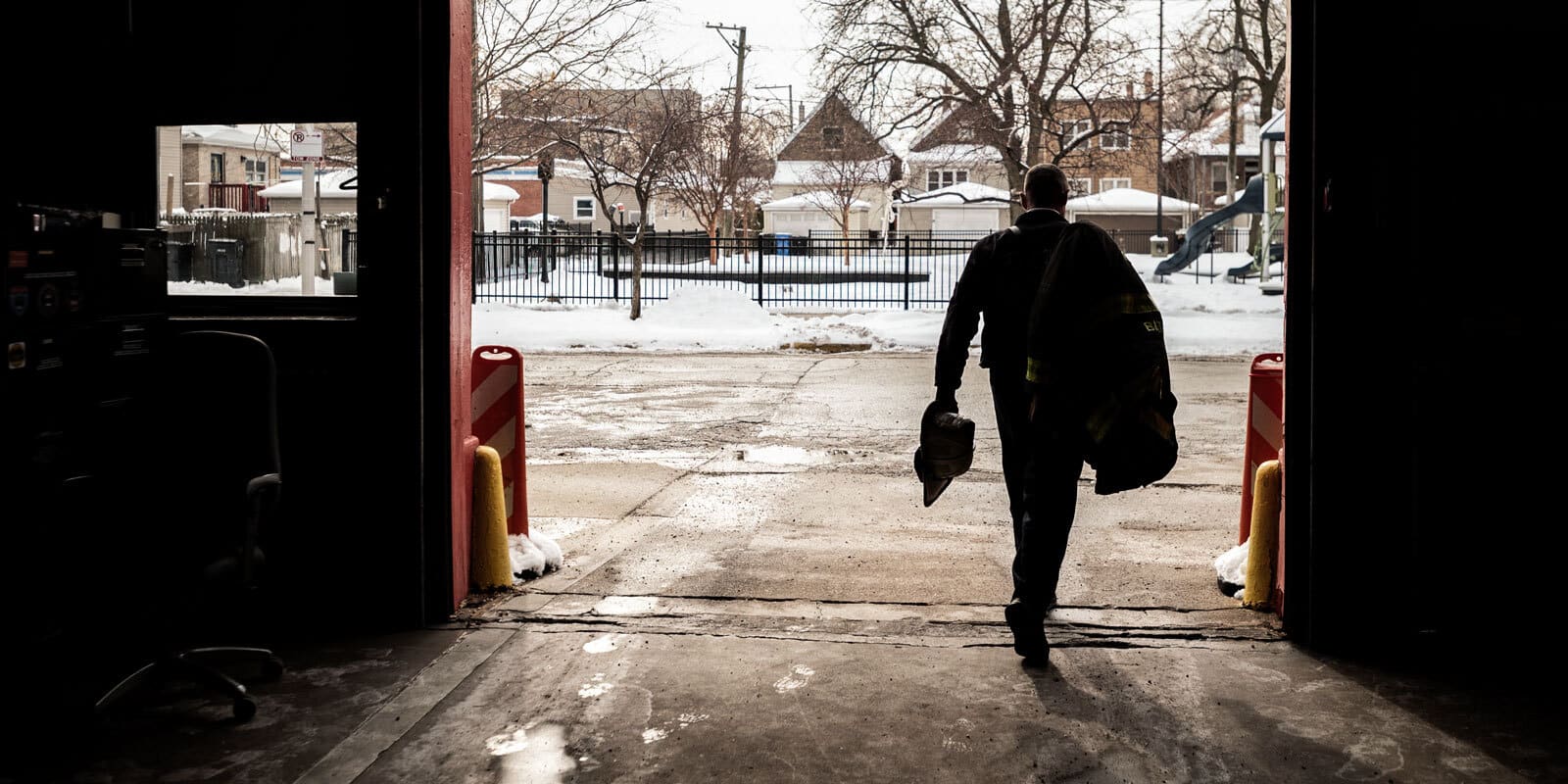
Chicago’s history, particularly surrounding the Great Chicago Fire of 1871, is what Spalla believes sets the Chicago Fire Department apart. He acknowledges that because they show up to help, most everyday Chicagoans look to them with appreciation and respect. It’s why so many people apply to become a Chicago firefighter, and why Spalla’s uncles loomed so large.
“People think we’re bigger heroes than what we feel like,” Spalla said with a laugh. “I never understood what I was getting into. When an outsider who wants to be a fireman says, ‘Here’s why I want to do it,’ it’s because of what they know on the surface about being a fireman. They ride on red trucks. They spray hoses. They put out fires. They save cats from trees. That’s what you know. Now go do it for 30 years. Overall, we want to walk away with a victory. A victory for us is being able to help who we came to help.”
Explore More