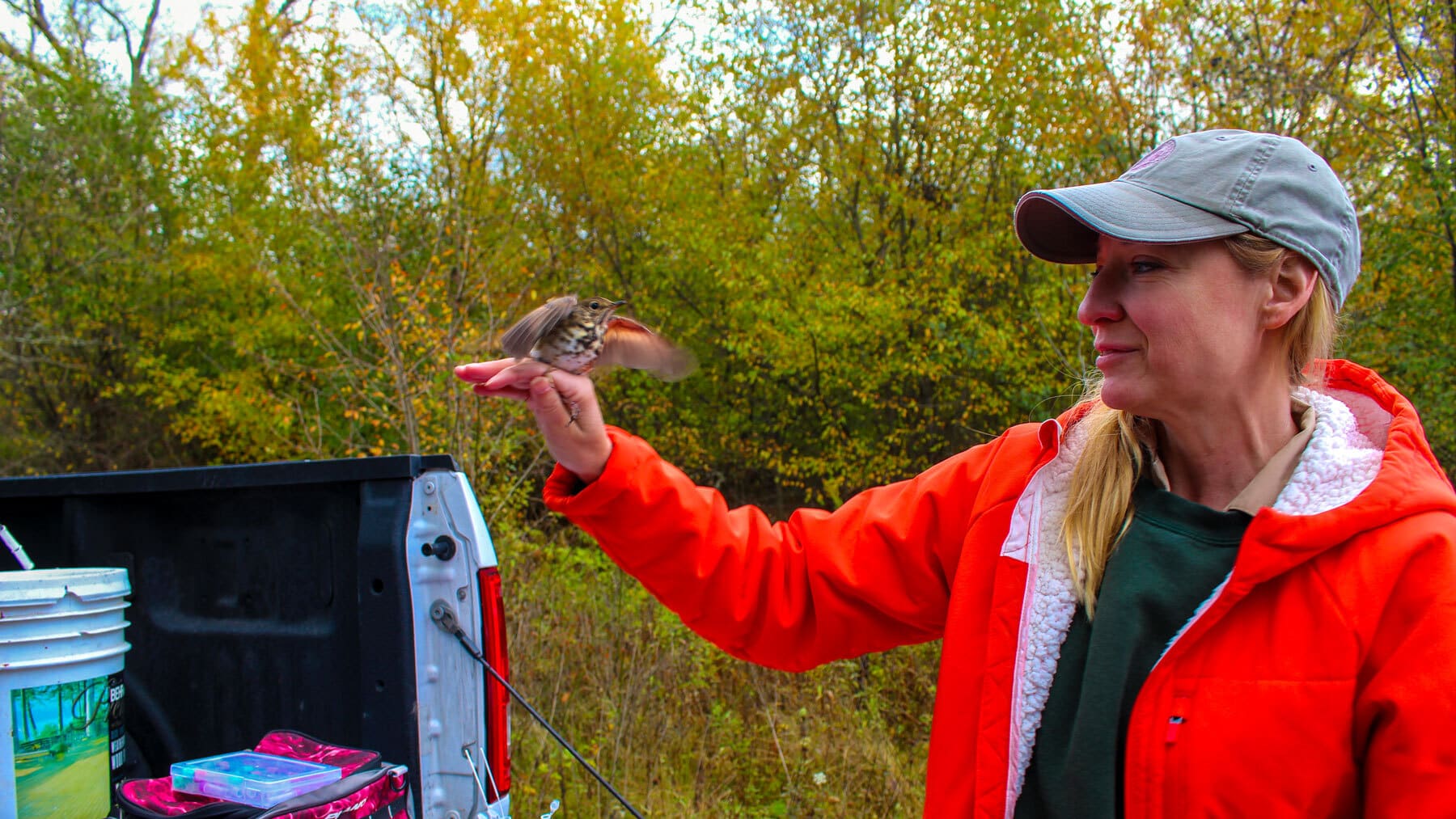
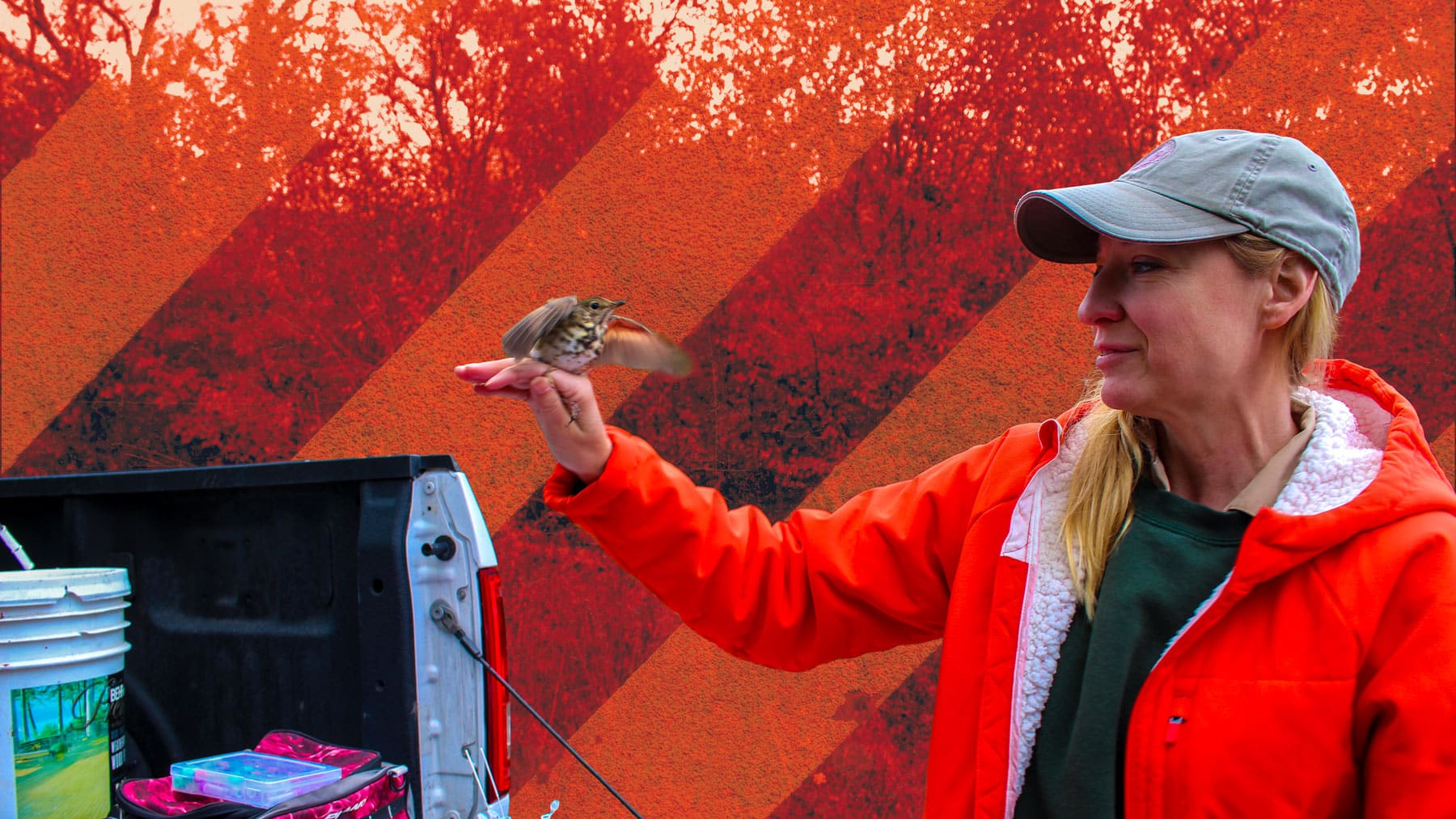
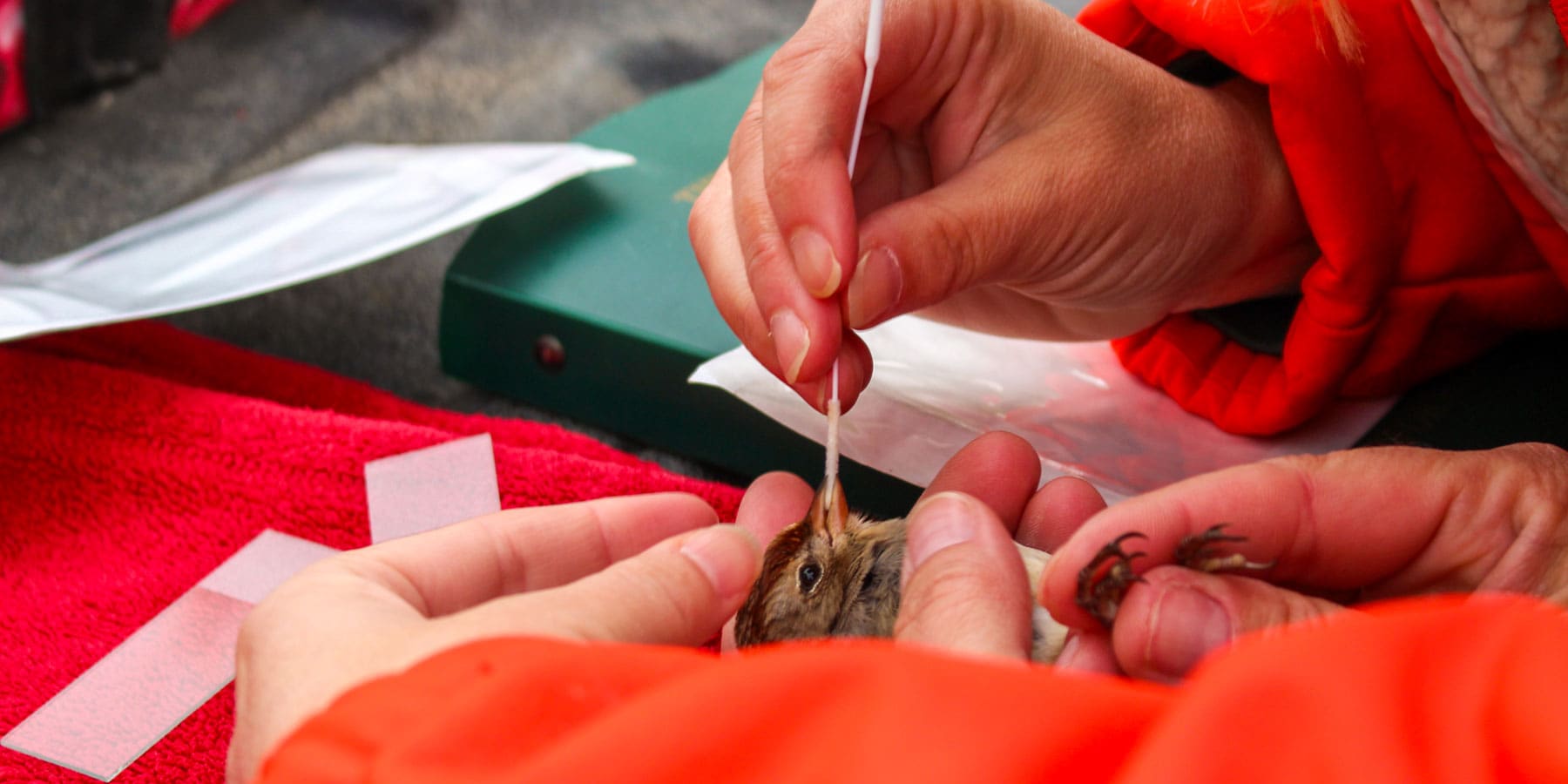
For most Chicagoans, it would be a bad day on the job if a bird pooped on their paperwork. But with a juvenile white-crowned sparrow held gently but firmly in her hand, wildlife biologist Samantha Plencner lets out a cheer. The small bird has just done its business on Plencner’s birding field guide. She scrapes the droppings off the page into a small vial with a swab.
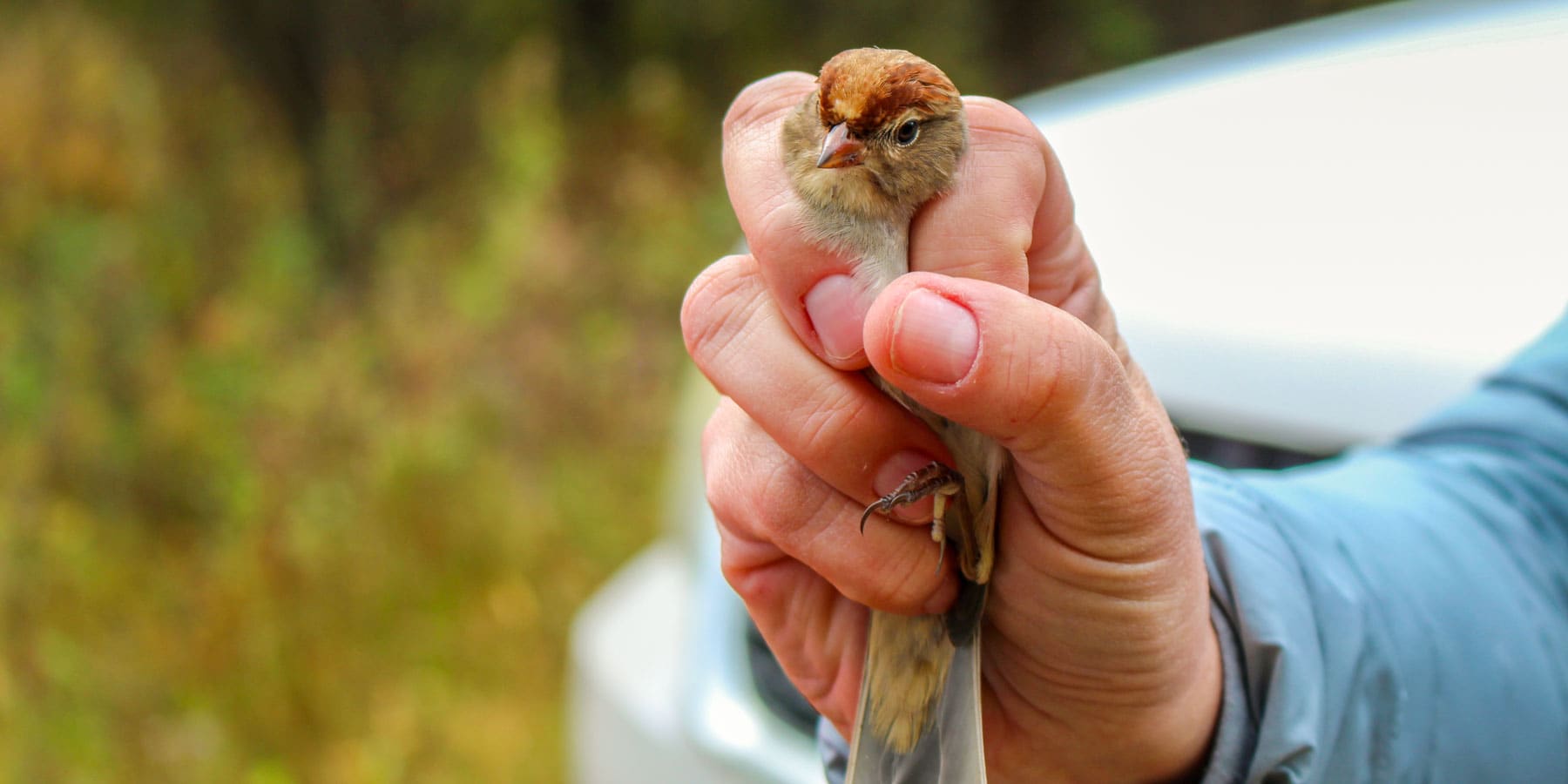
“We’re the only people who get really excited about that,” says Melina Frezados who, like Plencner, is a wildlife biologist with the Forest Preserves of Cook County. “Yay poop!” Plencner jokes. The bird – feathers around its head puffed up in indignation, trying mightily to peck the hand that holds it – doesn’t look particularly amused. But wildlife biologists can learn a lot about birds from these small samples and brief examinations.
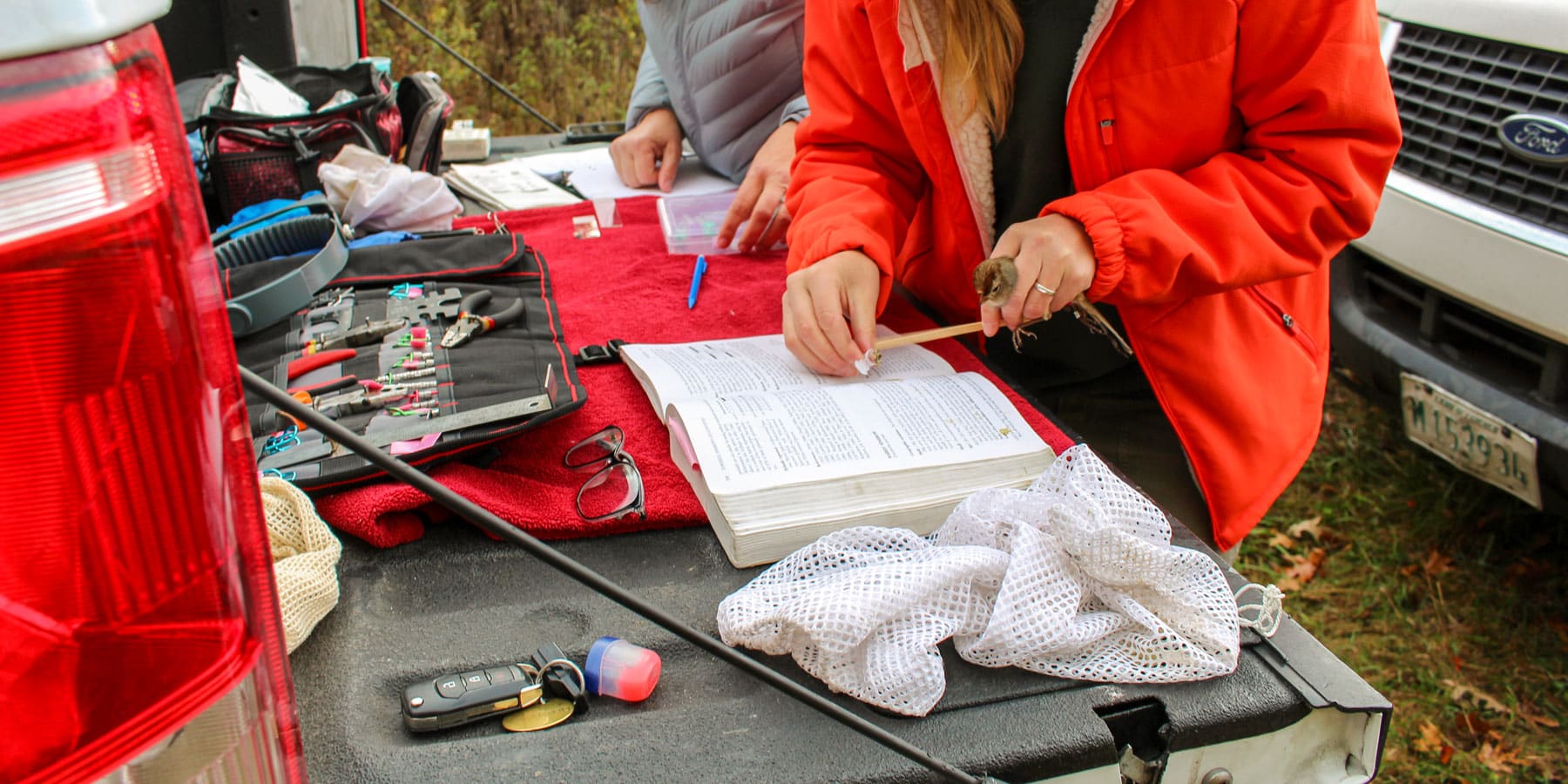
It’s a chilly autumn morning at the Arthur L. Janura Preserve in the northwestern Chicago suburbs. Plencner and Frezados are standing at the back of a pick-up truck, a makeshift lab spread out across the tailgate. They deftly pass the bird between the two of them as they take notes and samples. It’s all part of the routine surveillance they conduct on birds in the forest preserves during migratory season. In the winter, they focus more on raptors. But during the spring and fall migratory seasons, they see a lot of these smaller birds.
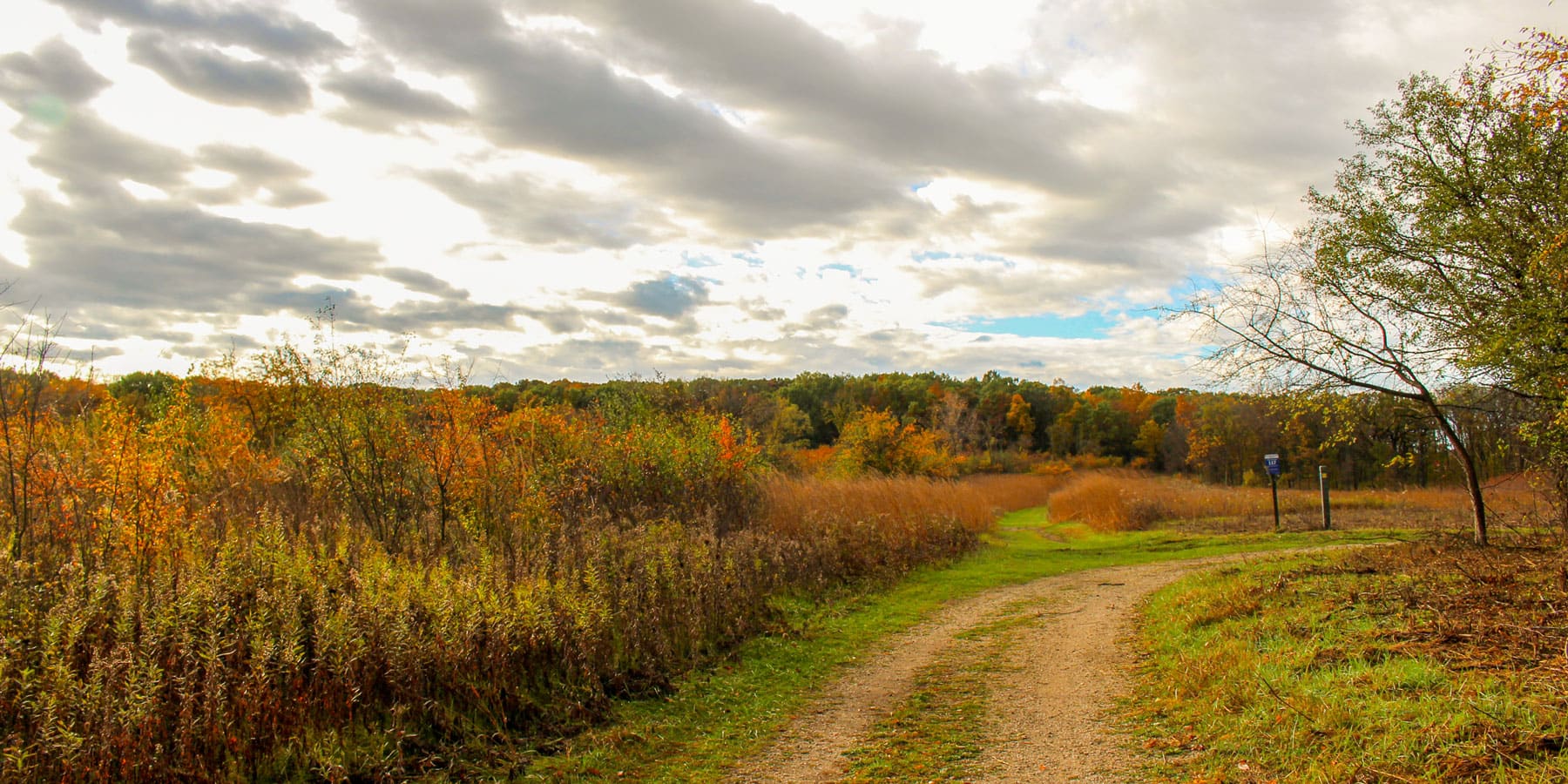
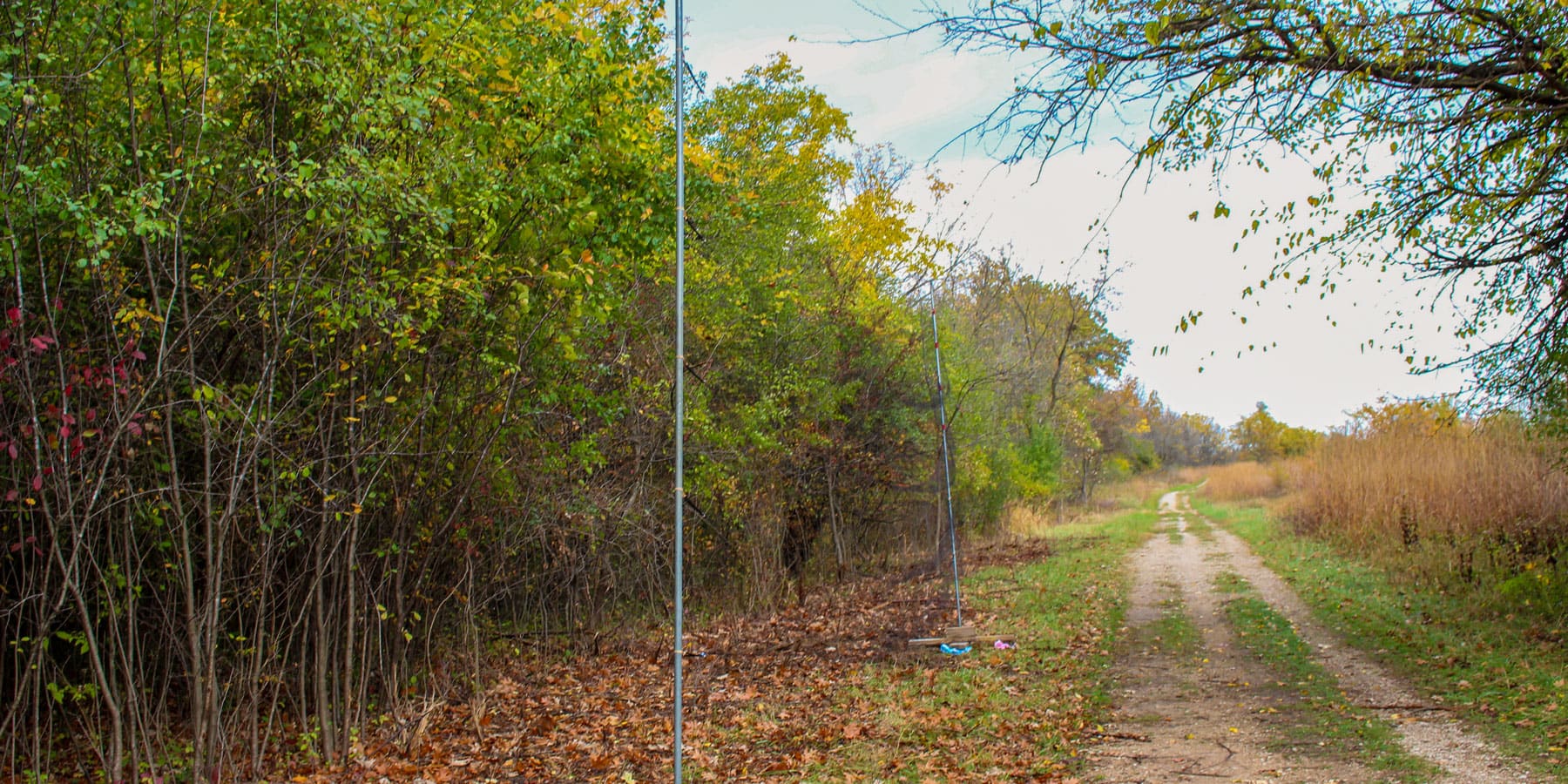
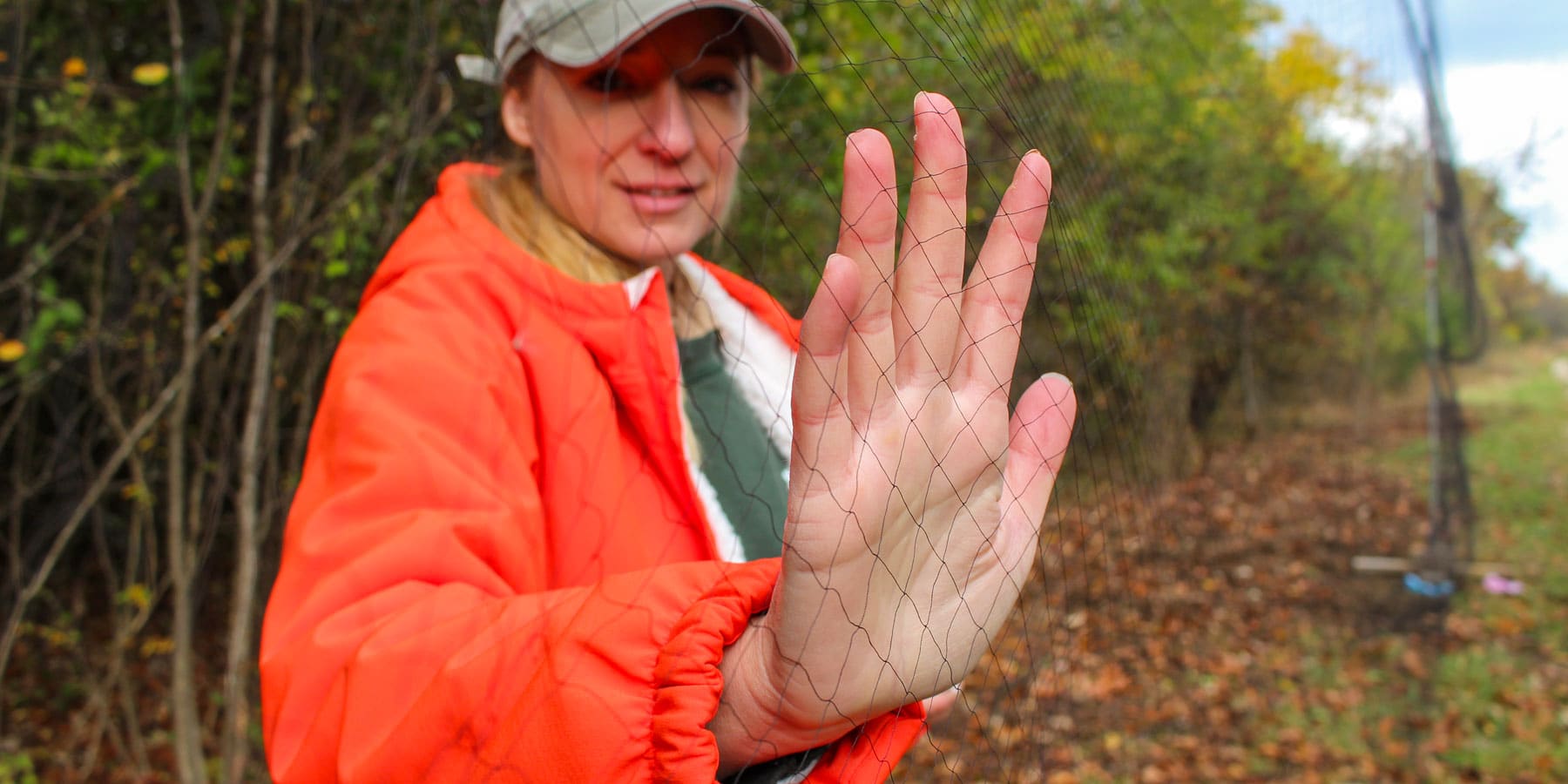
On a nondescript, unpaved service road through the preserve, there is a net between two metal posts that is invisible from afar used to catch the birds. Up close, it looks almost like a large volleyball net, but with a longer, taller net, and with small pockets. Before Plencner has arrived on site, Frezados has captured three birds – the white-crowned sparrow, and two Swainson’s thrushes. To do this, she played bird sounds from a small speaker under the net. The curious birds fly toward the sound, and get stuck in the net. Though it might not be what the birds have in mind for their morning, they are unharmed by the process.
Plencner admits that, experienced though they all are, she has walked right into the net before, since it’s hard to see until you’re right up on it. But she wouldn’t have it any other way. A native of the Northwest Side of Chicago, Plencner has degrees in chemistry and biology, and is currently working on her Master’s in Public Health, too. When she first went to school, she thought she’d work in the pharmacy industry. When she was right out of college, working in a corporate cubicle, she realized what she really wanted was to be outside. Since then, she has gotten all manner of experience. She’s worked with primates in Borneo. She’s worked with all kinds of animals in the Bahamas. She spent a good amount of time in Key West. “I can catch a pelican,” Plencner says. “Turns out I’m really good at that.”
While they quickly set up their equipment on the back of the truck, the bird’s waiting room is a light, mesh bag that hangs off the truck. As with the net, the biologists ensure there is no physical harm to the delicate creatures. Though, this particular bird is growing impatient.
Calmly and smoothly, Frezados removes the Swainson’s thrush from the bag. It’s impressive to watch Frezados and Plencner hand the bird to one another without it escaping. “You learn, especially with a bird, you have to be rigid enough to hold them in place but you have be gentle,” Plencner says. Occasionally, the bird lets out a chirp in protest.
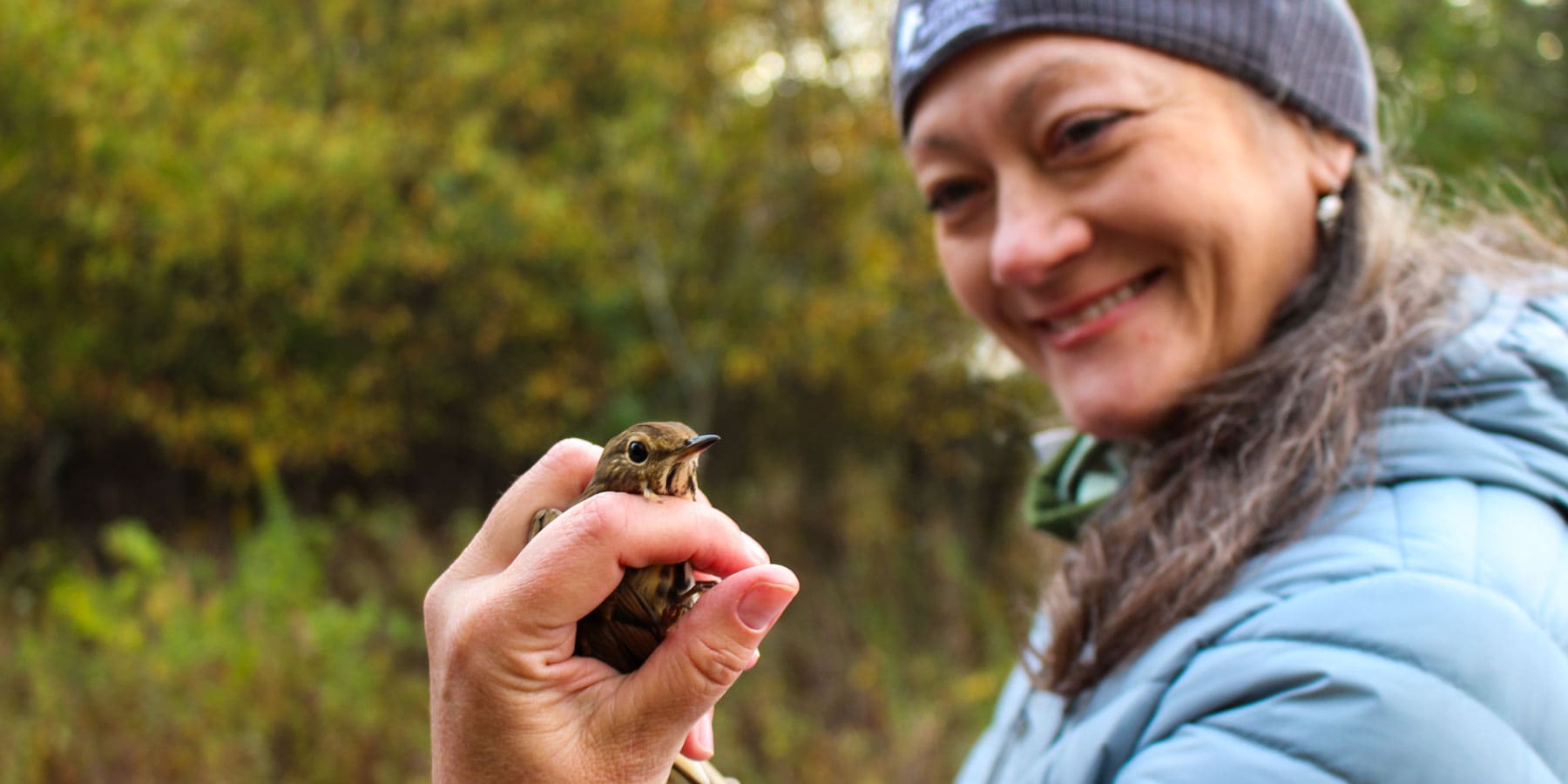
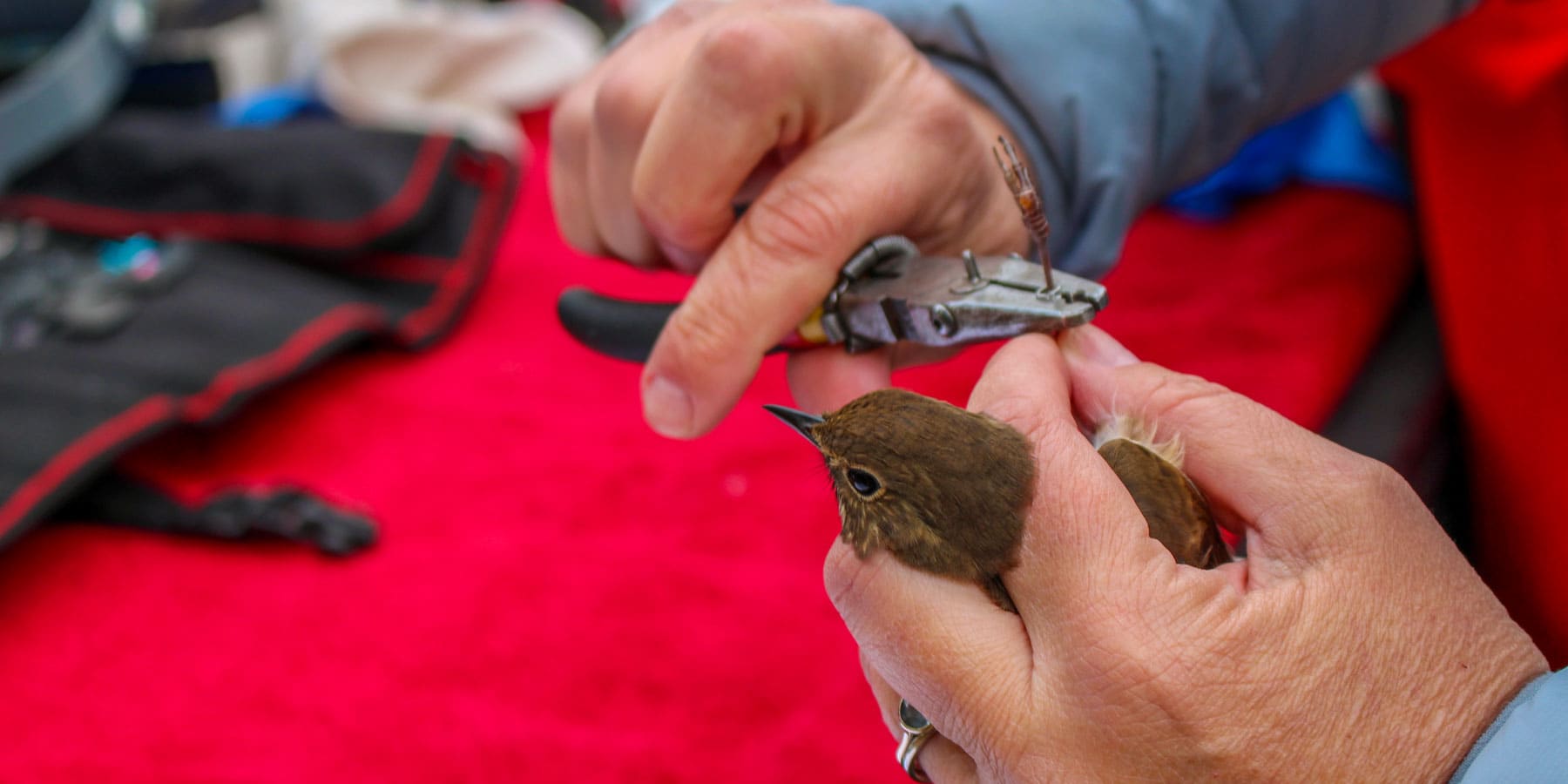
Once the bird is out of the bag, the first order of business is to affix a small, harmless aluminum tag to the bird’s leg. It’s part of the U.S. Geological Survey’s bird banding program, in which banded birds receive their own unique number in an effort to capture a wide variety of data.
“That way, as it migrates, we can track – if the bird is recaptured – its migratory pattern, longevity, reproductive success,” Frezados says. “All kinds of things can be learned from the program.”
One of the past birds they banded, an osprey, was traced all the way down to Colombia.
Has a bird ever escaped before they could get a band on its leg? “Oh yes,” Melina says. “It happens.”
After banding the bird, they work to identify specific characteristics – using the pooped-upon ornithology field guide – that can help determine the bird’s age and gender.
“Each bird is like a little mystery,” Plencner says.
Certain traits like its plumage, certain markings, wing and tail length, and molt pattern can offer clues.
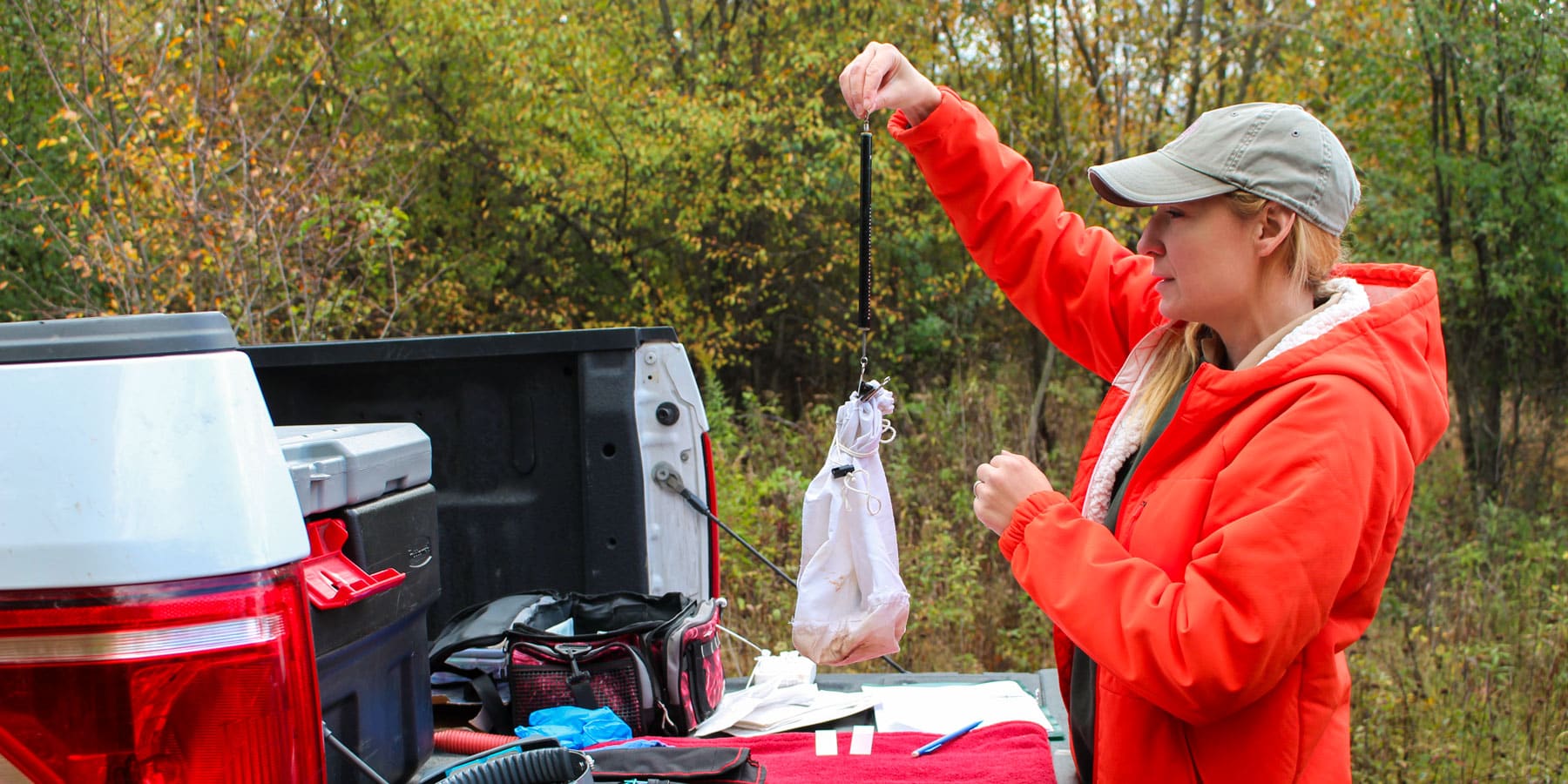
The bird must also be weighed. They place it in another small bag. Swainson’s thrushes typically weigh just around one ounce. When she retrieves it from the bag, she tells the bird, “you are so cute!”
Even with her varied experience with animals, Plencner’s favorite animal is still a dog; she has one energetic dog at home and a cat. Her second favorite animal? The “underrated” opossum. She encourages everyone to google opossum facts. (They are naturally immune to snake venom!)
“I’ve been lucky I’ve been able to travel for my career, and also meet all these different animals, which to me is like meeting celebrities. I remember when I met a flamingo for the first time, I was just like, oh my god, it was like meeting Beyonce or something,” she says.
So which celebrity would she most like to meet? A prairie chicken. They have a cool mating ritual she’d love to see in person.
As part of their surveillance, Frezados keeps a firm grasp on the bird while Plencner swabs various parts, including beak and the cloaca (the sole opening at its rear for both its digestive and reproductive tract). This Swainson’s thrush expresses its discontent.
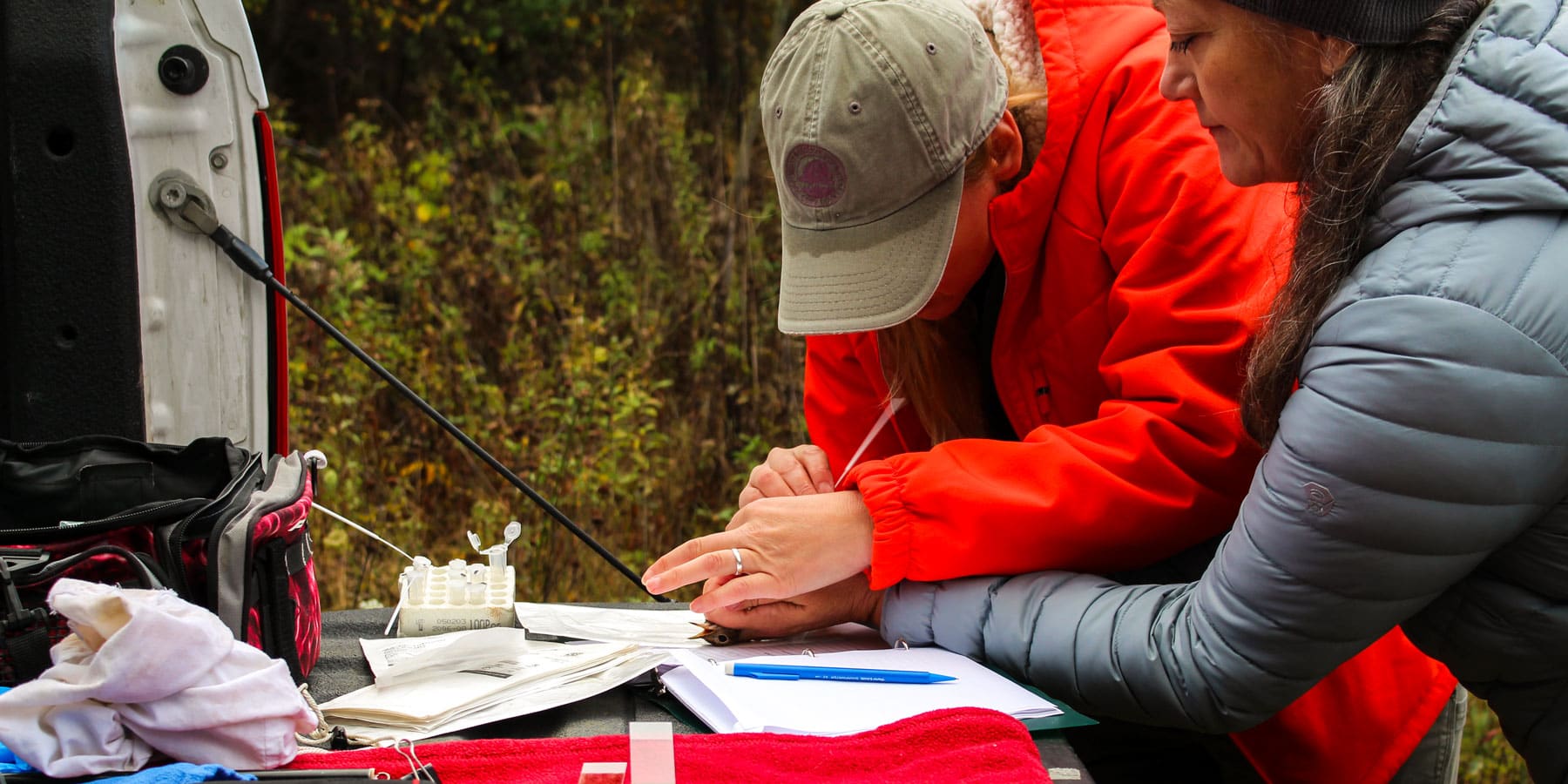
“If the bird happens to poop on my hand, [Plencner] can scoop it up and test it for parasites. Or if the bird was a little bigger, we could take a little drop of blood and test it for various zoonotic diseases,” Frezados says. “We examine it for any external parasites, too. It’s quite literally hands on.”
The bird gives Frezados one last talking-to.
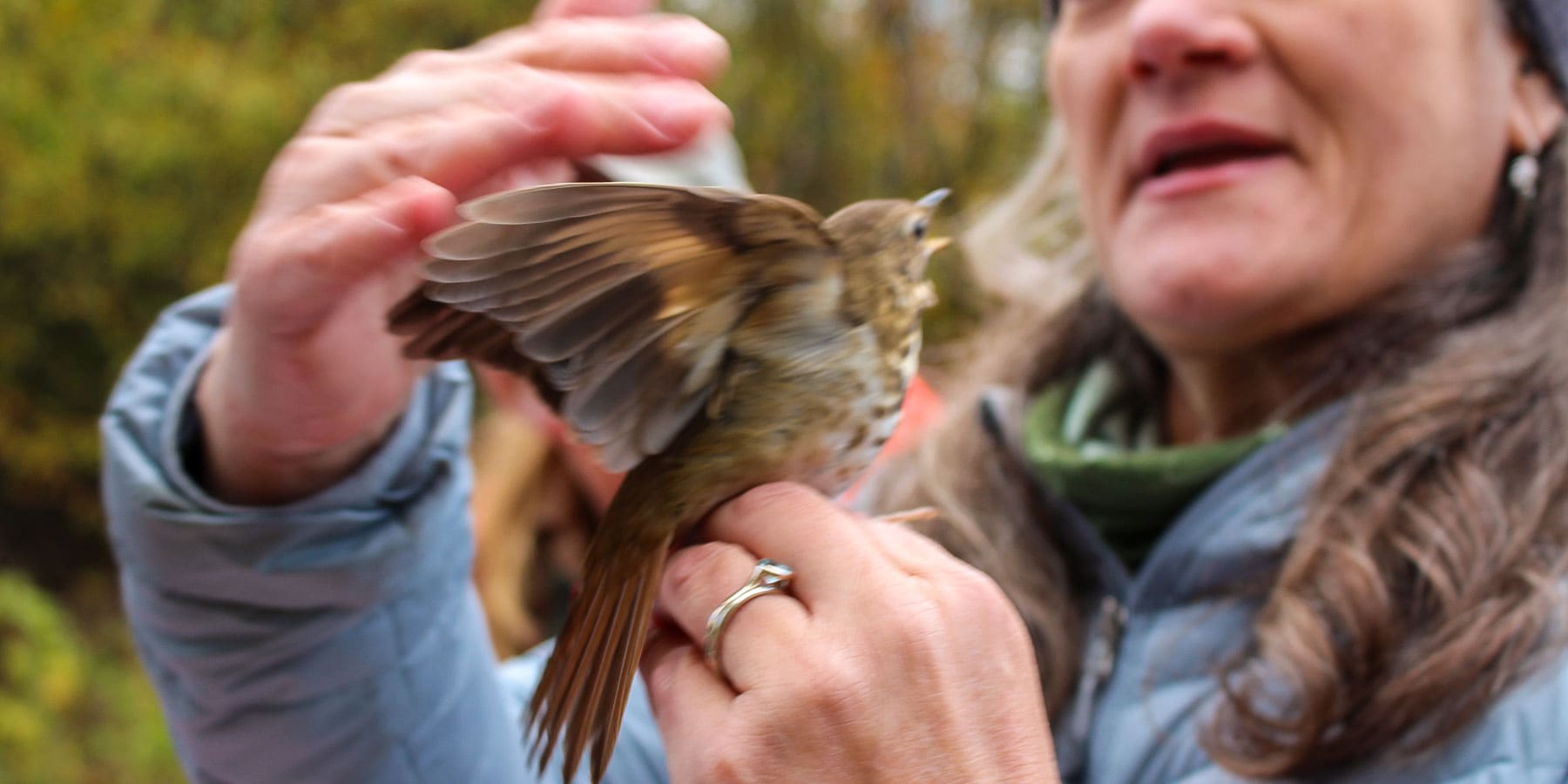
After only a few minutes of work, Frezados releases the thrush. It flies back into the nearby trees with a crazy story to tell its friends.
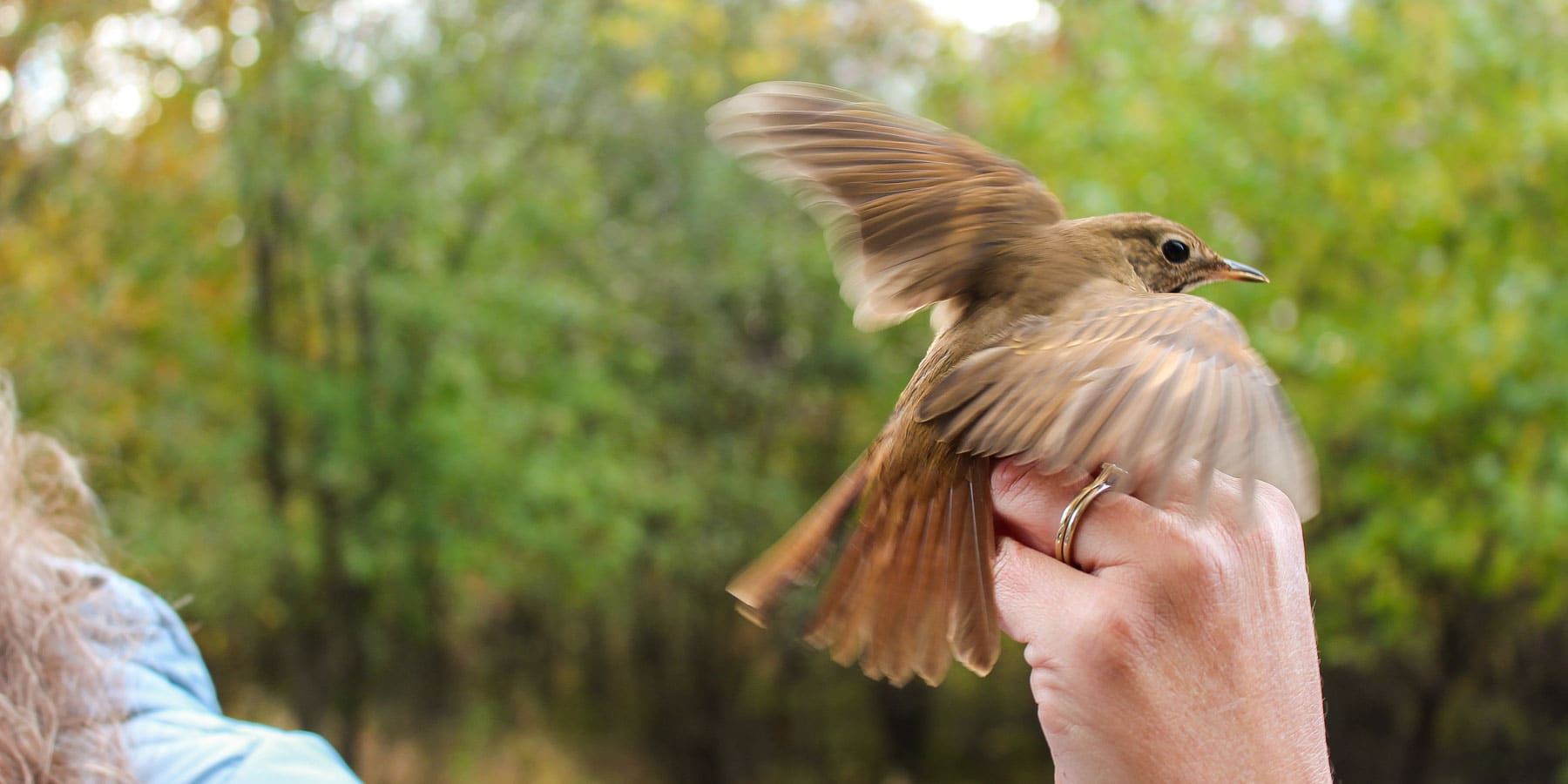
After the two thrushes are banded and sent on their way, the last bird they examine is the juvenile white-crowned sparrow – the one that poops on the guide. Because it’s a juvenile, it doesn’t yet have its white crown.
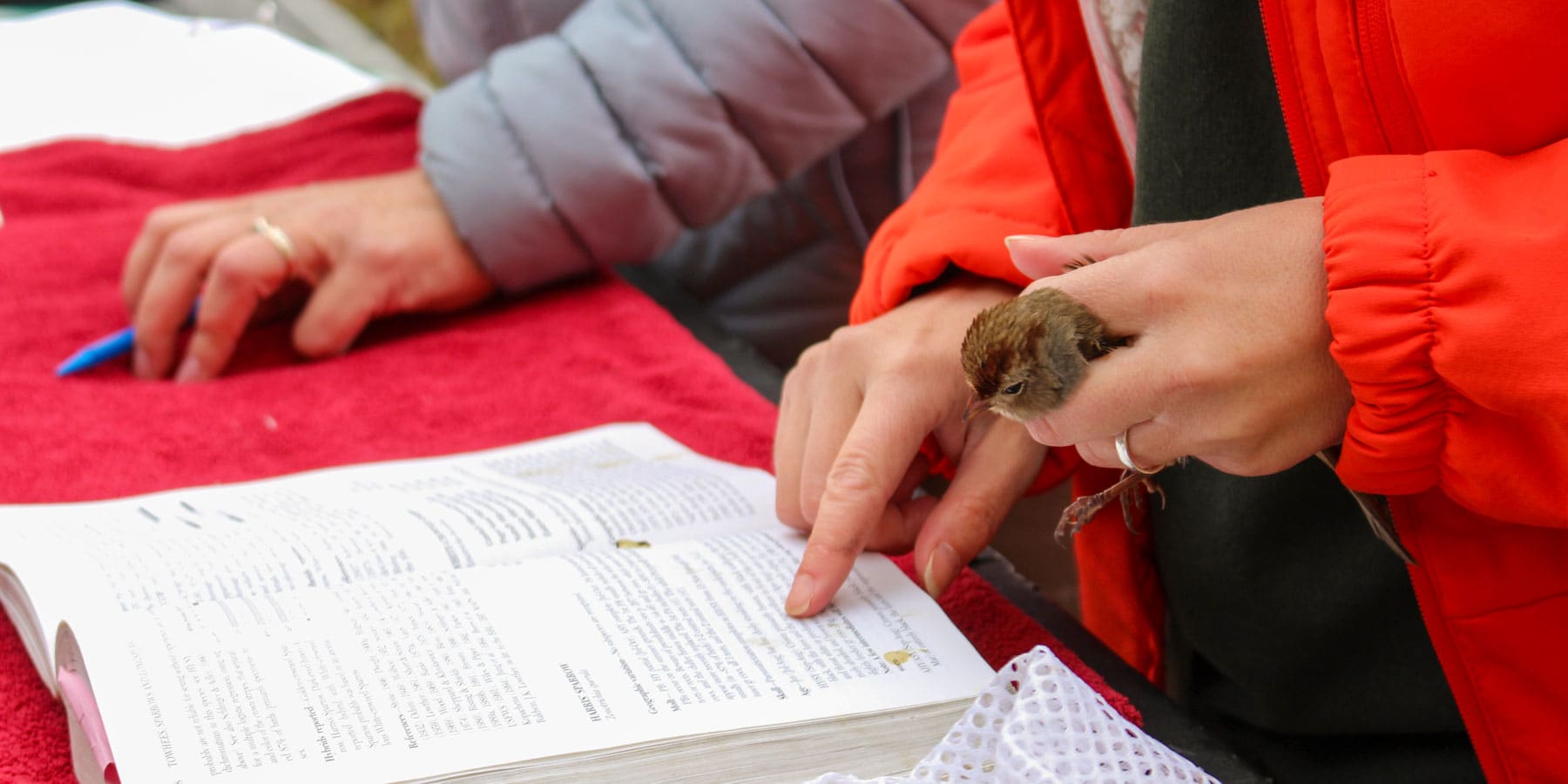
In classic rebellious teenager fashion, it gives Plencner’s finger an angry peck. “Oh, he’s a spicy one!” she says. She shakes it off and hands it back to Frezados while she swabs it. Only with larger raptors do they wear protective gloves. Back when Plencner was working in Florida, a much larger raptor stuck one of its talons into her hand, so this small sparrow is not quite as intimidating as it wants to be.
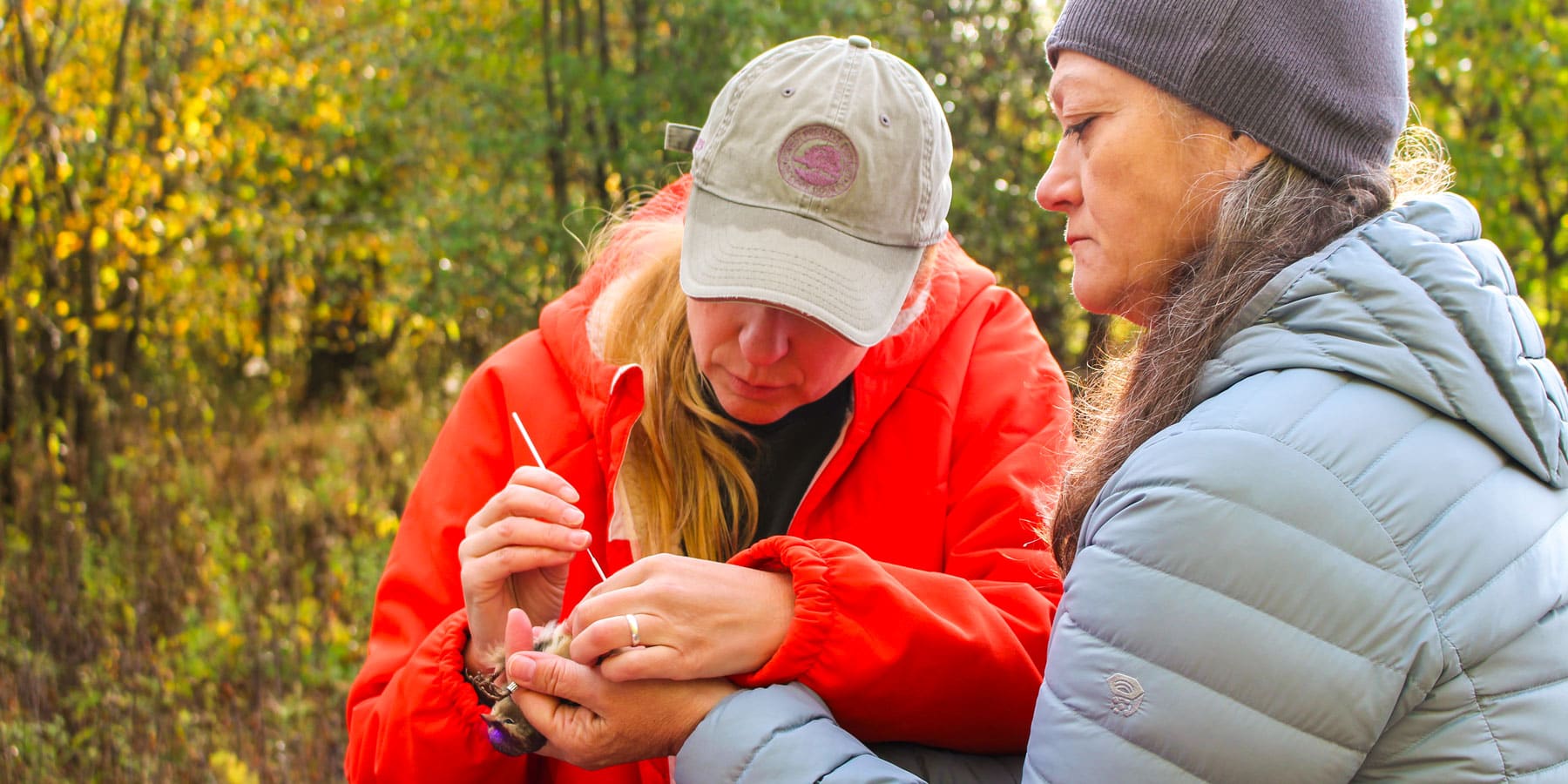
“Come on, open up!” Plencner says as she swabs the sparrow’s mouth. She sneaks the swab in while it angrily chirps at her.
Plencner loves her job. “I love, love, love seeing animals up close,” and she loves that it’s different every day and that she gets to spend time outside. One of the challenging aspects, however, is seeing how some animals struggle as humans have encroached on animal habitats. While this particular site is out in the suburbs, the samples they get from forest preserves wildlife in more industrial or urban settings reveal pollutants in their tissue and blood streams.
“Especially with habitat loss, when you start seeing what certain animals are doing to adapt to it, on one hand, it can be like ‘Wow, they are amazing the way they can adapt!’” Plencner says. She recalls seeing birds outside a Home Depot learn that if they flew in front of the sensor on the automatic doors, they could sneak in and take advantage of the aisle with big bags of bird seed. “But sometimes you see how they struggle, like when they’re forced into little spaces.”
After the work in the field is done, Plencner returns to the lab, where she often spends the second half of her day reviewing samples, testing blood and tissue, and identifying any parasites or other abnormalities.
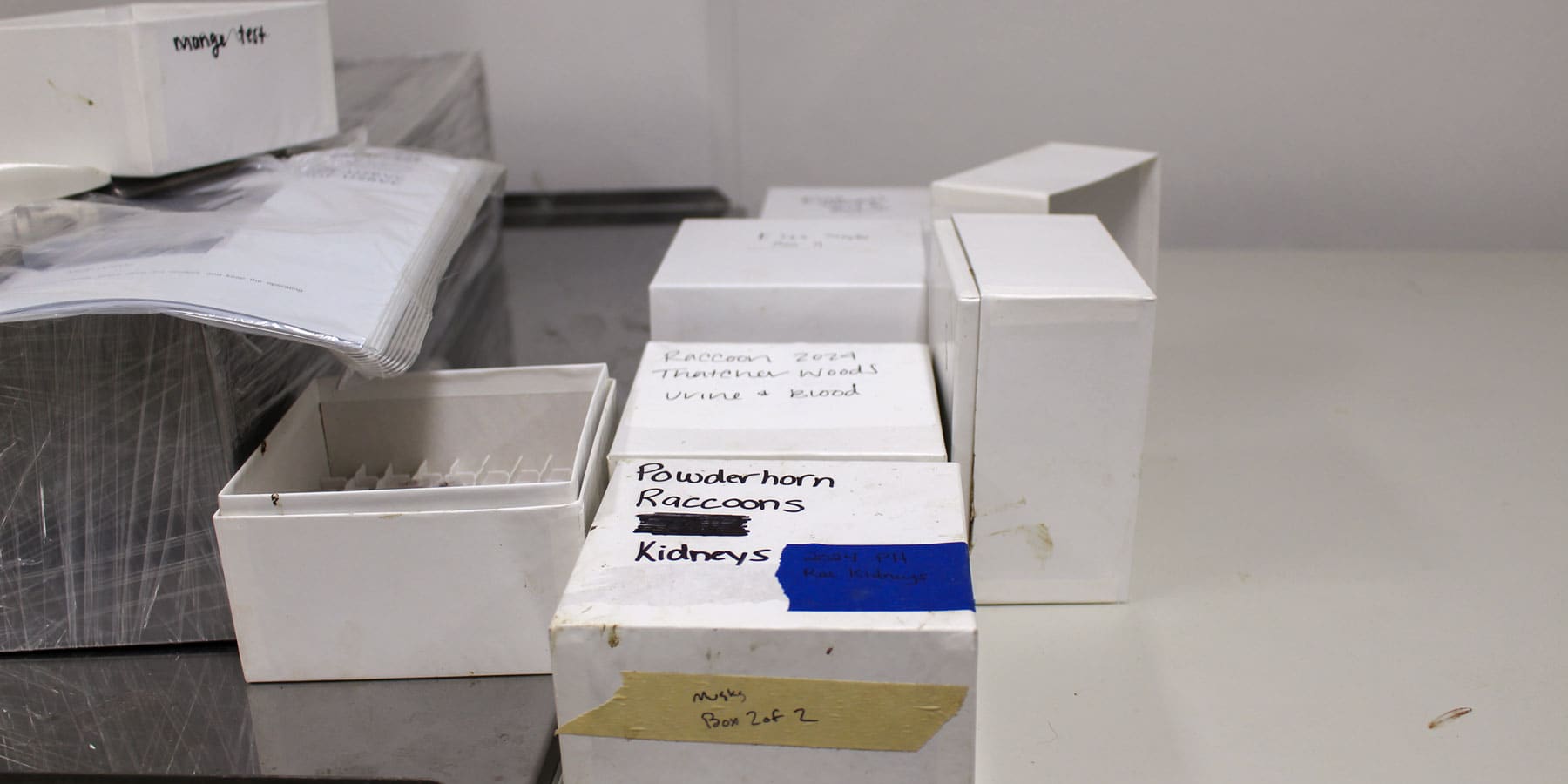
Frezados says it’s rare to have a wildlife biologist who also knows chemistry, and that they’re lucky to have Plencner – especially since she knows what to do with all the advanced lab technology. In one room near the lab, there is an entire room full of large freezer chests, full of all kinds of samples that they share with university students hoping to get into Plencner’s field. There are animal cadavers and individual parts, including raccoon kidneys.
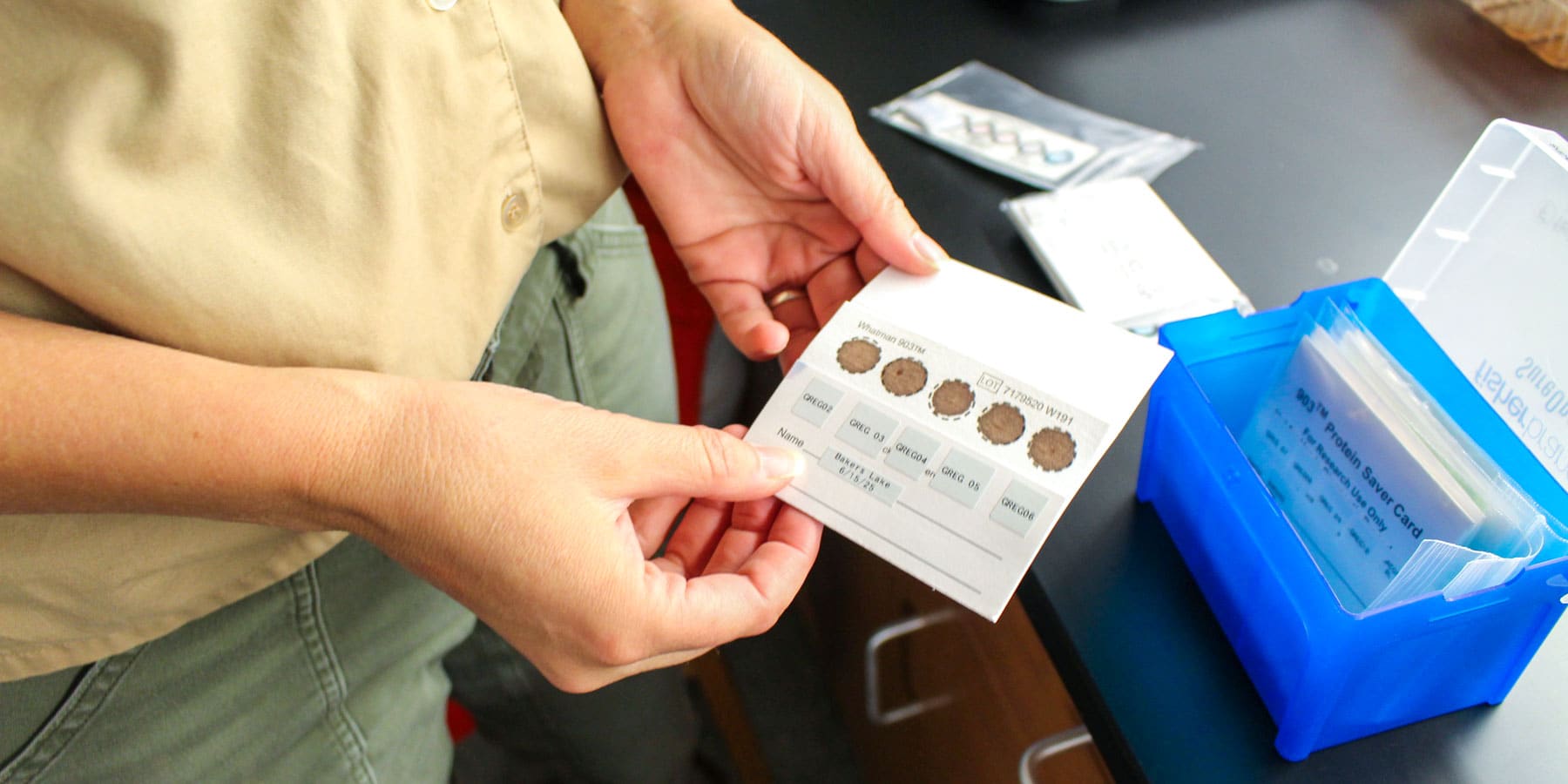
Though the birds they processed today were too small to draw blood, even a drop of blood, like those on this wildlife sample from the Baker’s Lake forest preserve, can reveal a lot about what pollutants are entering an animal’s bloodstream. Similarly, if they had pulled a parasite off of a bird earlier in the day, they would bring it here to identify it.
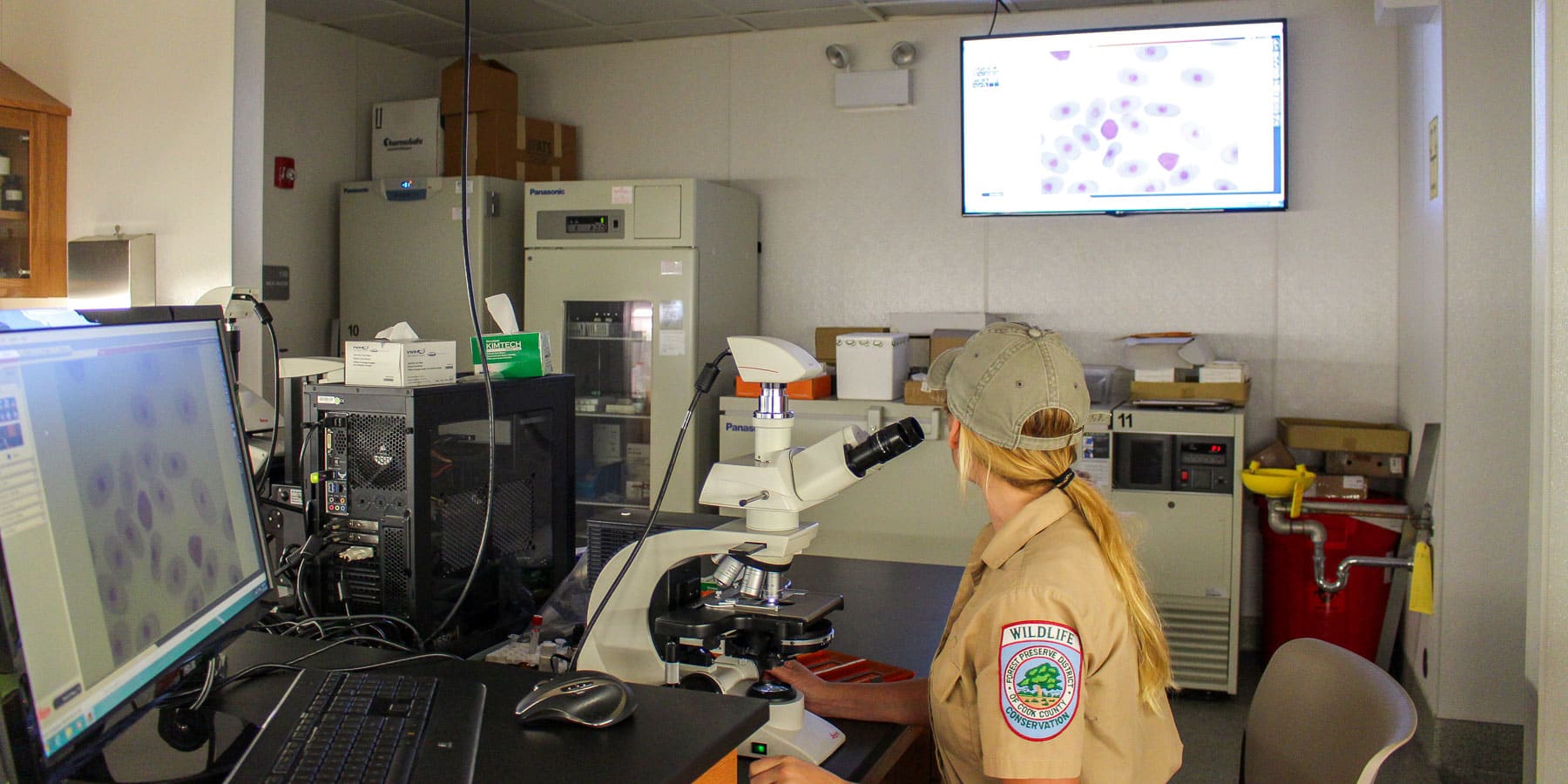
“Turtles always have something going on in their blood,” Plencner says as she examines a sample under the microscope. And after moving the microscope around a bit, sure enough, she finds a cell infected with a parasite.
The work Plencner and other Forest Preserves wildlife biologists are doing can help inform the public about zoonotic diseases (diseases that can transfer between animals and humans). In recent years, she has seen birds out in the field infected with bird flu. “They’ll actually cough blood. It’s really sad,” she says. While she does preliminary testing, their data is sent to a national laboratory to confirm bird flu cases. After recent federal funding cuts, it’s taking longer to get answers.
Even in the lab, the morning’s birds banded and sent on their way, Plencner is still driven by the same curiosity that made her cheer for the sparrow’s droppings hours earlier.
“I would love for people to know about all the local wildlife and diversity that’s right in our backyard. Growing up in the city, and then coming and working for the Forest Preserves, my mind was blown by it,” Plencner says. “Once I was out in nature, seeing all the birds coming in and out, the reptiles – there’s always something happening. I wish everybody could experience that and know that there’s a lot of value in conserving and preserving. It not only helps the animals, but it helps the people that live here.”
Explore More