The Great Railroad Strike, 1877
In 1877, the U.S. economy was struggling amid the Long Depression. Railroad companies, which had initially boomed following the Civil War, were once again tightening their purse strings. Since so many people were desperate for work, workers had little power as their bosses cut wages, and unions were not yet widespread. On July 16, workers from Baltimore & Ohio Railroad in Martinsburg, West Virginia blocked freight train traffic after the company slashed their wages by 10 percent. Over the next several weeks, the strike spread to other American cities like Pittsburgh and Baltimore, with reports of violence reaching newspapers across the country.
Tensions mounted. The mayor of Chicago, Monroe Heath, and other city officials prepared by arming police, readying the National Guard, and emboldening local militias. By July 23, labor leaders in Chicago called for a strike at the city’s various railroad companies. The next day, leaders at the Michigan Central Railroad denied workers’ request to have their wages reinstated, and the workers marched across railyards, with other laborers from other railroads joining along the way. Workers from other industries, like meatpacking and lumber, joined, too, bringing much of the activity in the city to a halt, according to Karen Sawislak in the Encyclopedia of Chicago. Railroad workers in other Illinois cities followed suit.
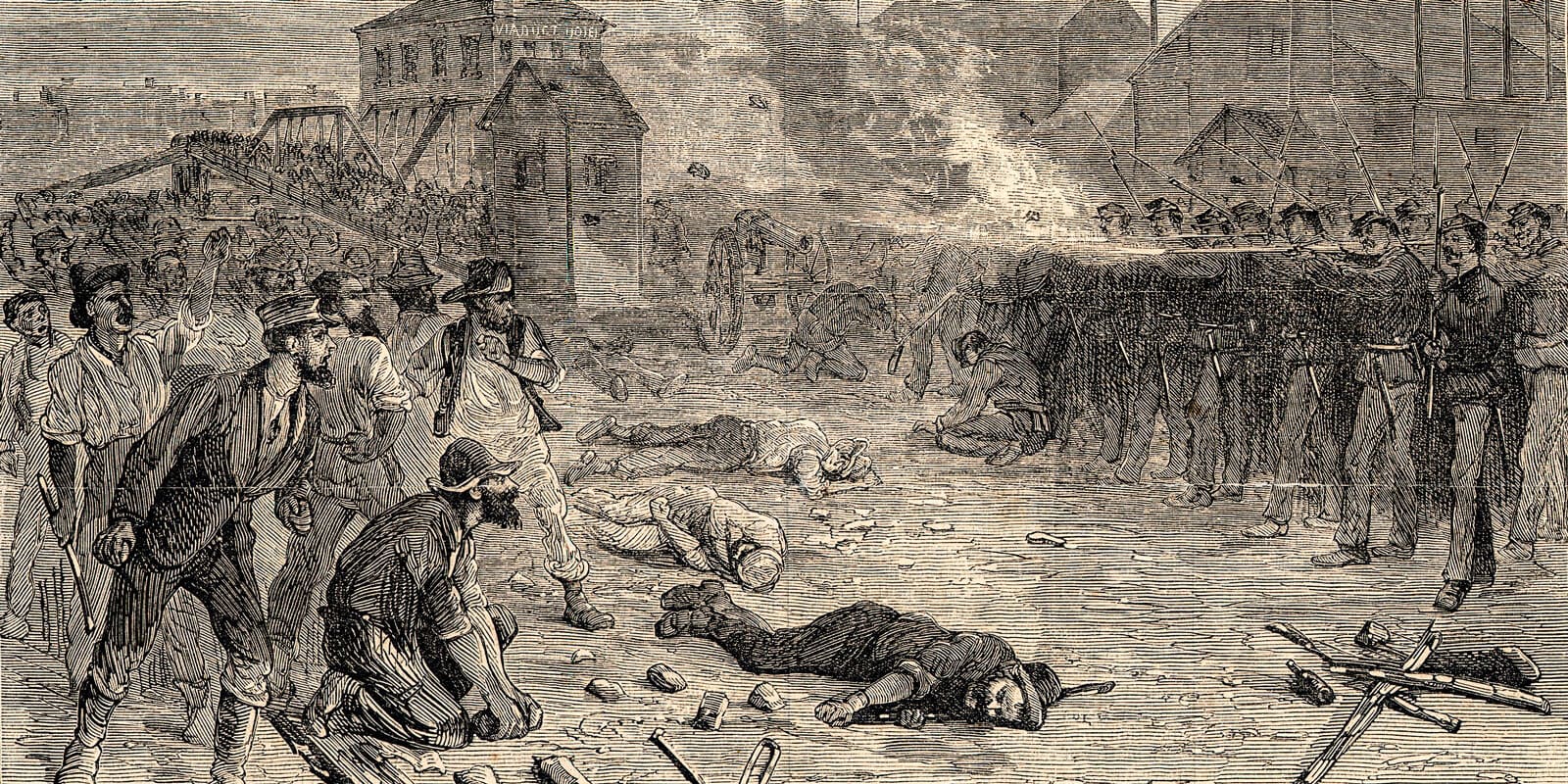
In Chicago, clashes broke out over the next few days between workers and authorities, particularly along the immigrant-heavy South Halsted Street. Workers hurled objects at police, and police in turn fired into crowds. One such skirmish, called the Battle of the Viaduct, named for the railroad viaduct at Halsted and 16th streets, turned particularly violent, with at least two protestors killed and several badly beaten or injured by gunfire. The reported death toll of the clashes varies, but historians estimate between 18 and 30 people died in the violence, with up to 100 injured. Troops and police restored order, and workers returned to their jobs. The nationwide strikes were broadly considered unsuccessful but they foreshadowed violent labor clashes to come.
The Eight-Hour Workday Strike and the Haymarket Affair, 1886
Perhaps the most infamous moment in Illinois labor history took place just nine years after the railroad strike. On May 1, 1886, an estimated hundreds of thousands of workers across the country participated in a strike to call for an eight-hour workday. According to the Illinois Labor History Society, federal law already called for an eight-hour day, but “the federal government failed to enforce its own law, and in Illinois, employers forced workers to sign waivers of the law as [a] condition of employment.” A song called “Eight Hour,” became the anthem of the movement, and the slogan, “Eight Hours for Work. Eight Hours for Rest. Eight Hours for What We Will.” took off. Chicago was the center of the national movement, as “unionists, reformers, socialists, anarchists, and ordinary workers” joined forces to organize, writes Christopher Thale.
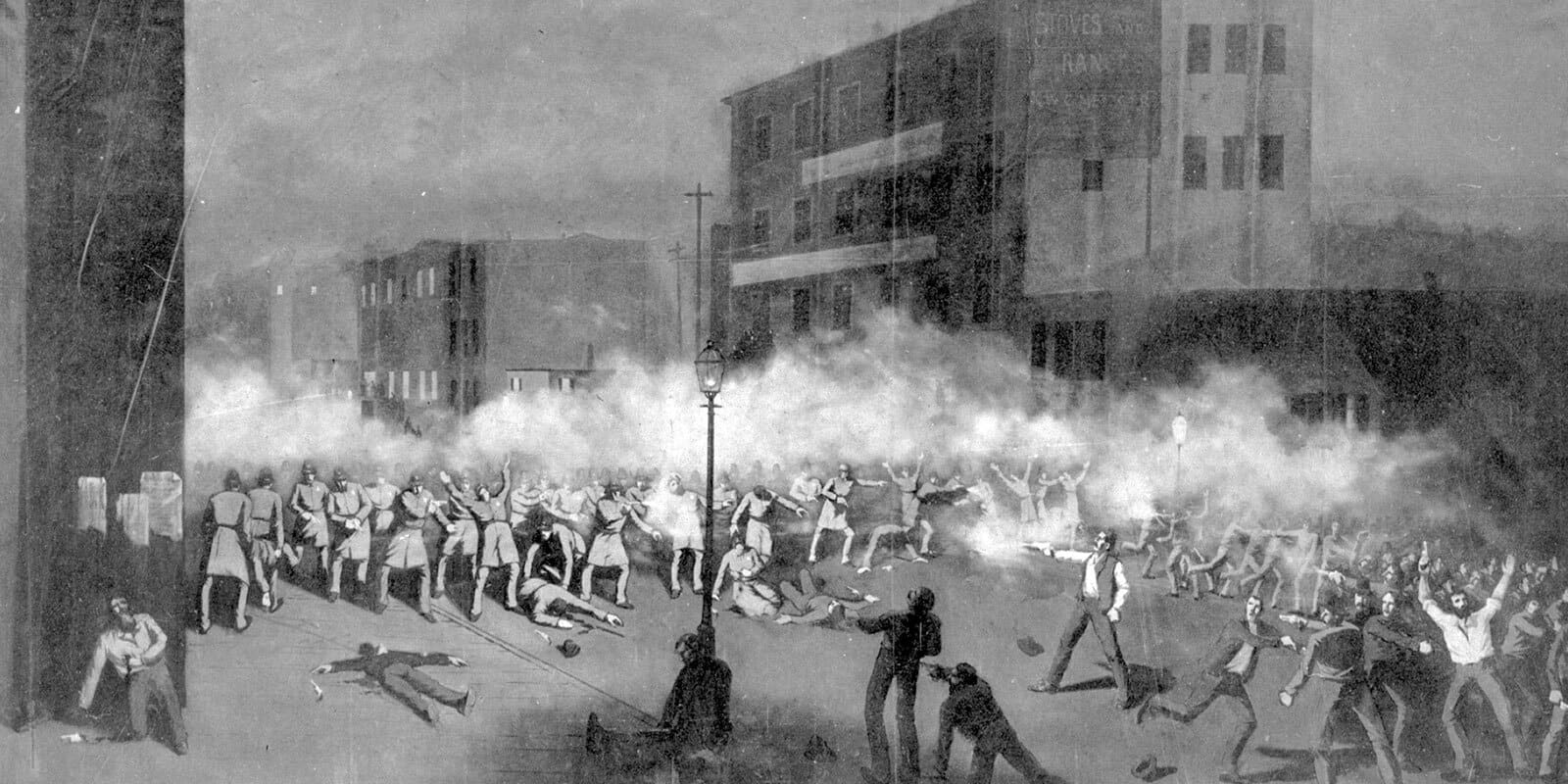
A series of rallies and marches over several days that May first tipped toward violence on May 3, when police shot and killed two strikers at the McCormick Reaper Plant in present-day Little Village. In response, a group of anarchists called for “Revenge!” with a flier and called for another protest the next day at Haymarket Square near Randolph and Desplaines streets. On May 4, protesters gathered in what was otherwise a peaceful demonstration, but police attempted to break it up. As they encroached on the crowd, an unidentified person threw a dynamite bomb at police. In the chaos and confusion, police fired into the crowd, and possibly struck some of their fellow officers. In the violence, seven police officers were killed, and an unknown number of civilians were killed and wounded. The Chicago Tribune dramatically recounted the “hellish deed” in the paper the next day: “It explodes and covers the street with dead and mutilated officers. A storm of bullets follows. The police return fire and wound a number of rioters.”
In the aftermath, police arrested hundreds of activists, and charged eight anarchists with murder, even though most of them were not present at the rally when the bomb was thrown, and there was no evidence to support the charges. After a sham trial, seven were sentenced to hanging. In what is often considered one of the most notorious miscarriages of justice in American history, four of the men – August Spies, Albert Parsons, Adolph Fischer, and George Engel – were ultimately hanged in the alley behind what was then the Cook County Courthouse at 54 West Hubbard Street. The identity of the bomber was never discovered. May Day, celebrated on May 1, continues to be recognized as International Workers Day. A monument for the “Haymarket Martyrs” stands at Forest Home Cemetery in west suburban Forest Park.
The Pullman Strike, 1894
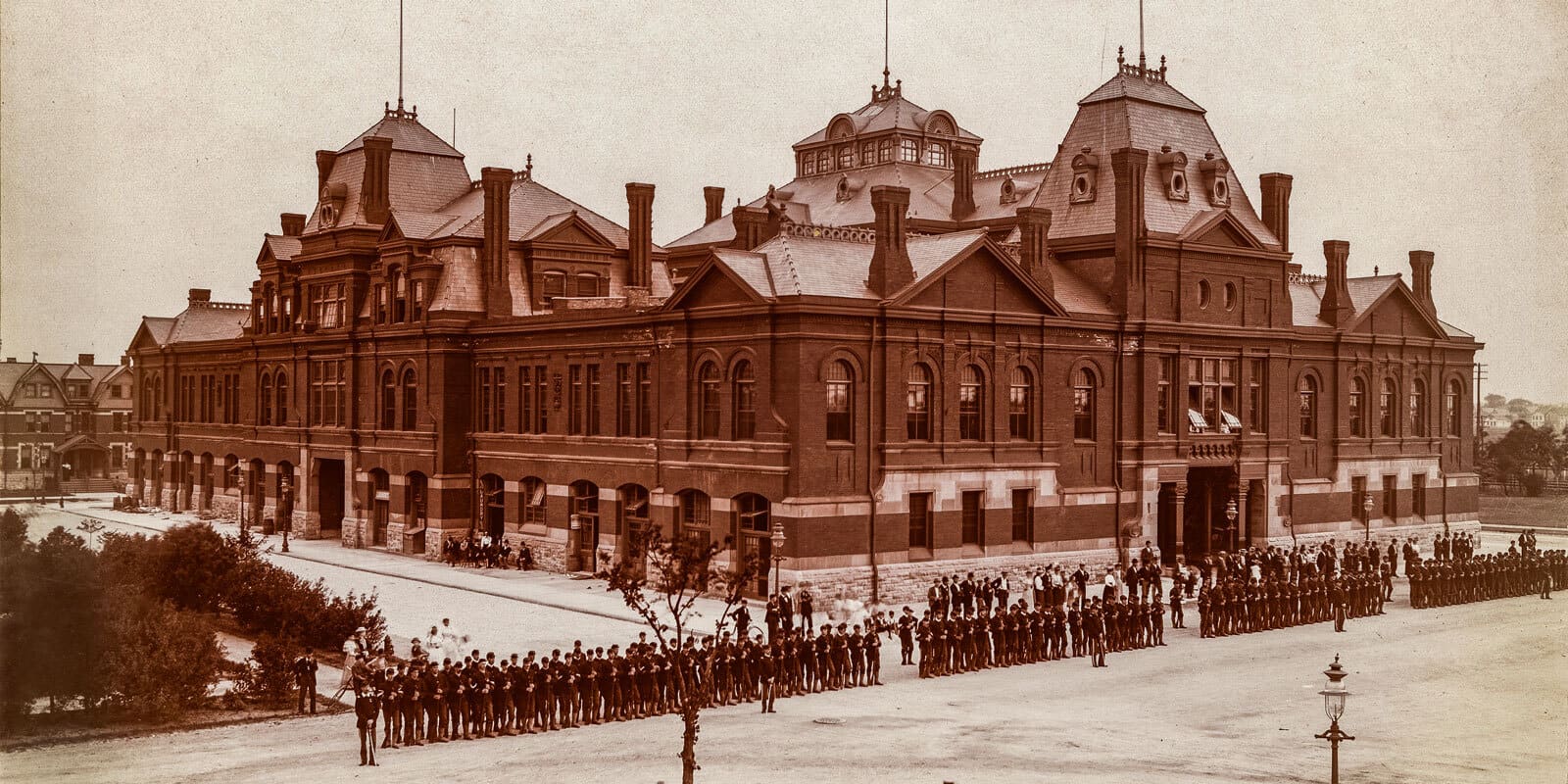
The Pullman Palace Car Company, led by George Pullman, wanted to have a hand in every aspect of employees’ lives. The 4,000-acre company town of Pullman had housing for workers, a school, church, a library, a theater, and a hotel. But life there was strict, with restrictions on what tenants could do to their rental homes, dress codes, and a ban on alcohol for everyone except hotel guests. George Pullman was, in effect, the boss, the landlord, and the mayor. So when he cut wages by nearly a quarter at the railroad car manufacturer following the economic downtown of 1893, but did not lower rent, workers’ resentment boiled over.
On May 11, 1894, workers went on strike. A month later, the newly formed American Railway Union, led by prominent socialist Eugene Debs, decided to boycott Pullman cars, refusing to handle, inspect, switch, or haul Pullman cars or equipment. The movement halted trains in 27 states, bringing rail traffic in the Midwest and West to a halt for a month. But the strike did not achieve the workers’ goals. Violent clashes between strikers and authorities broke out, as some officials were given shoot-to-kill orders for any striker who destroyed property. Federal troops came to Chicago, and by the end of July, enthusiasm for the strike lost momentum. Though workers did not achieve their goal, the reputation of George Pullman took a hit. Pullman was so widely disliked that a legend emerged that he was buried under concrete and steel to prevent disgruntled employees from defacing his grave.
Upton Sinclair’s The Jungle, 1904
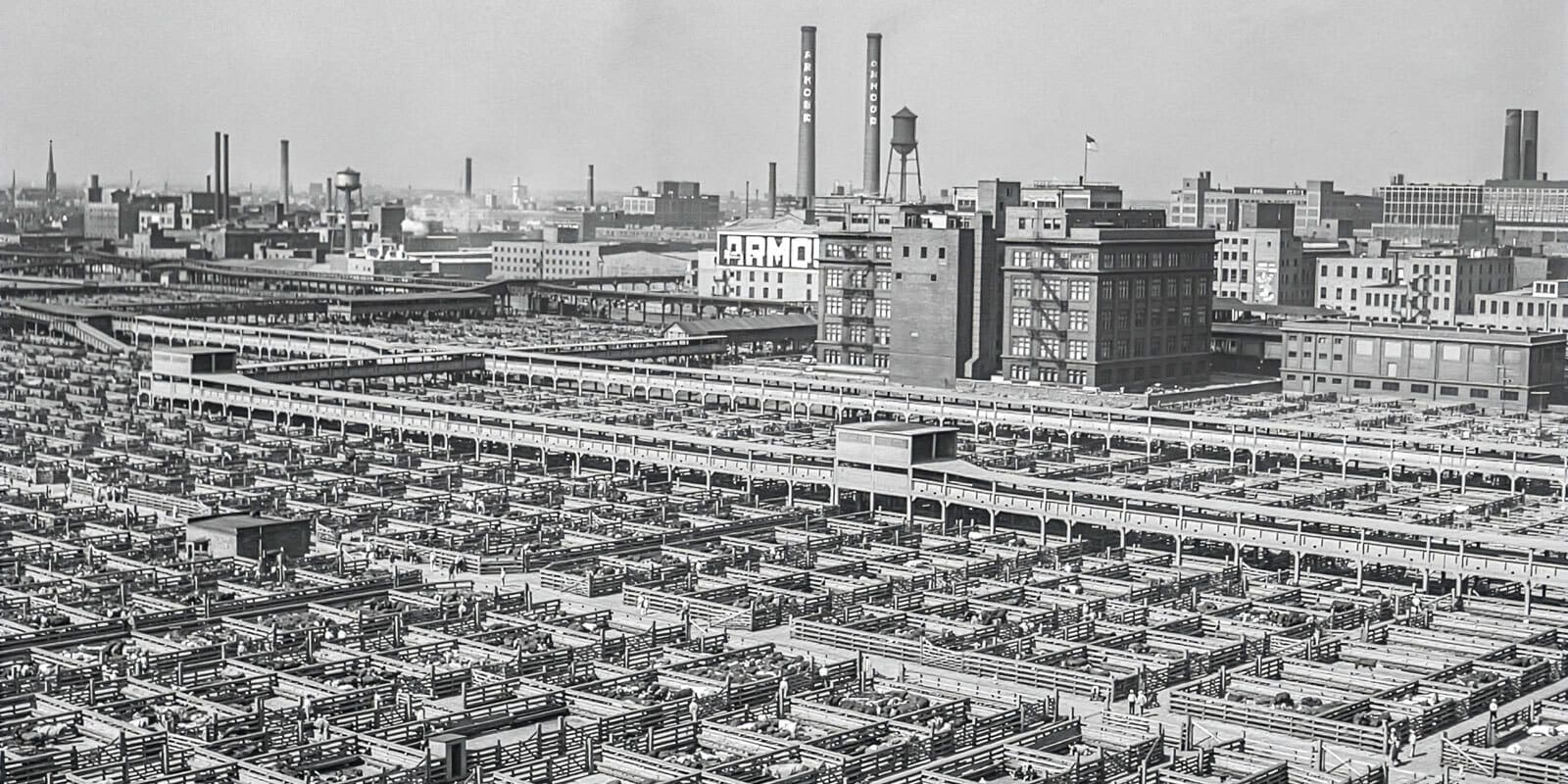
In 1906, Chicago’s sprawling meatpacking district became the setting for muckraker journalist Upton Sinclair’s searing novel, The Jungle, which portrayed immigrant laborers’ deplorable working and living conditions. It tells the story of Jurgis Rudkus, a Lithuanian immigrant stockyards worker, trying to support his family. As Sinclair writes, “All day long the blazing midsummer sun beat down upon that square mile of abominations: up to tens of thousands of cattle crowded into pens whose wooden floor stank and steamed contagion.” He describes the “rivers of hot blood, and carloads of moist flesh,” which “smelt like the craters of hell.” He also writes of the worker dining rooms littered with trash and swarmed with flies, bathrooms that were “open sewers,” and suggested that dead rats ended up mixed in with the meat.
Though Sinclair’s intentions may have been to shed light on the exploitation of laborers, much of the public attention turned toward the sanitary conditions (or lack thereof) in the city’s meatpacking plants. As Sinclair famously said, “I aimed at the public’s heart, and by accident I hit it in the stomach.” Regardless, Sinclair’s portrayal of labor struggles influenced national reform beyond the factory floor. Following the novel, Congress passed first sweeping federal food safety laws, the Pure Food and Drug Act and Meat Inspection Act.
Garment Workers’ Strike, 1910
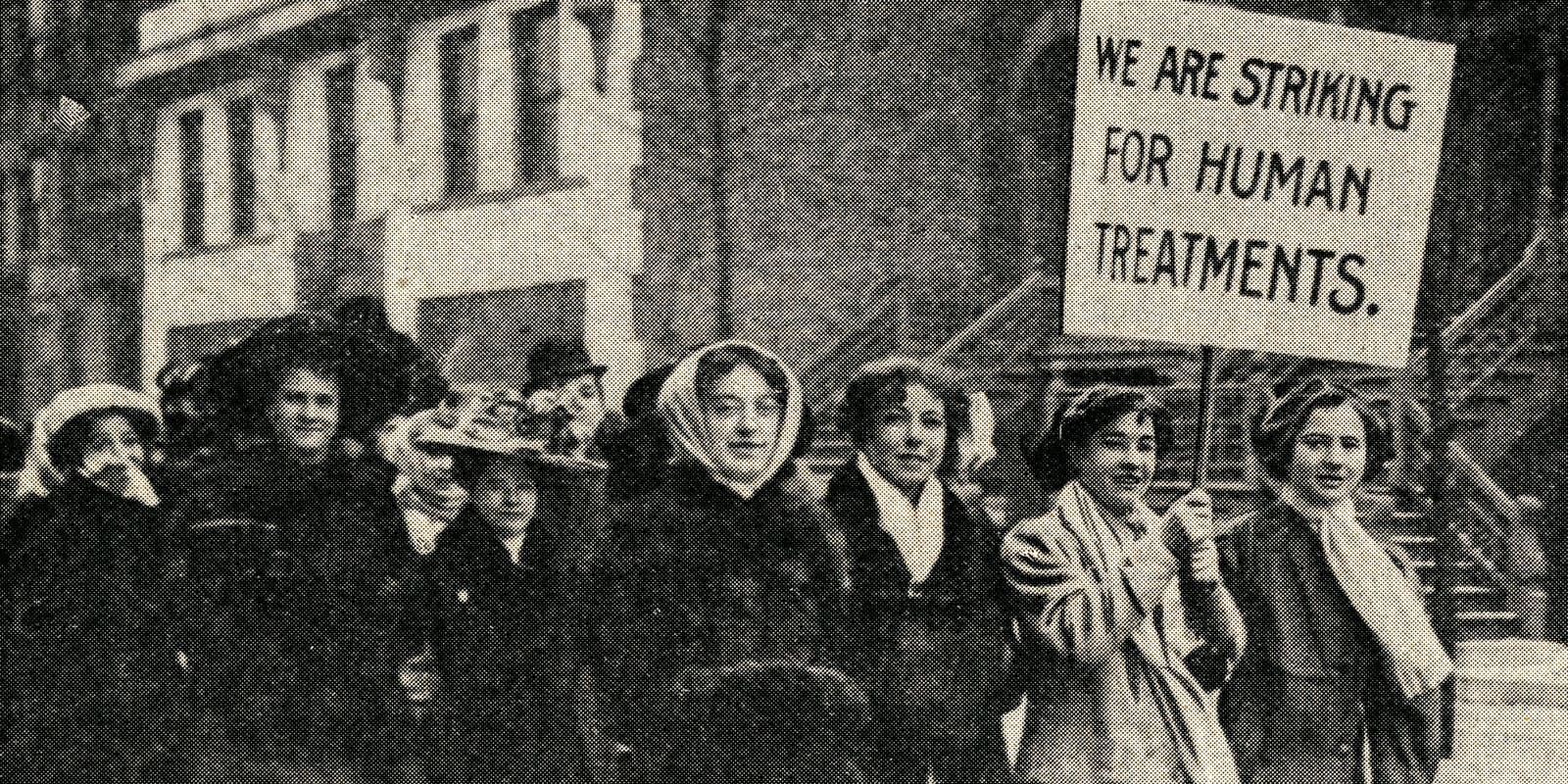
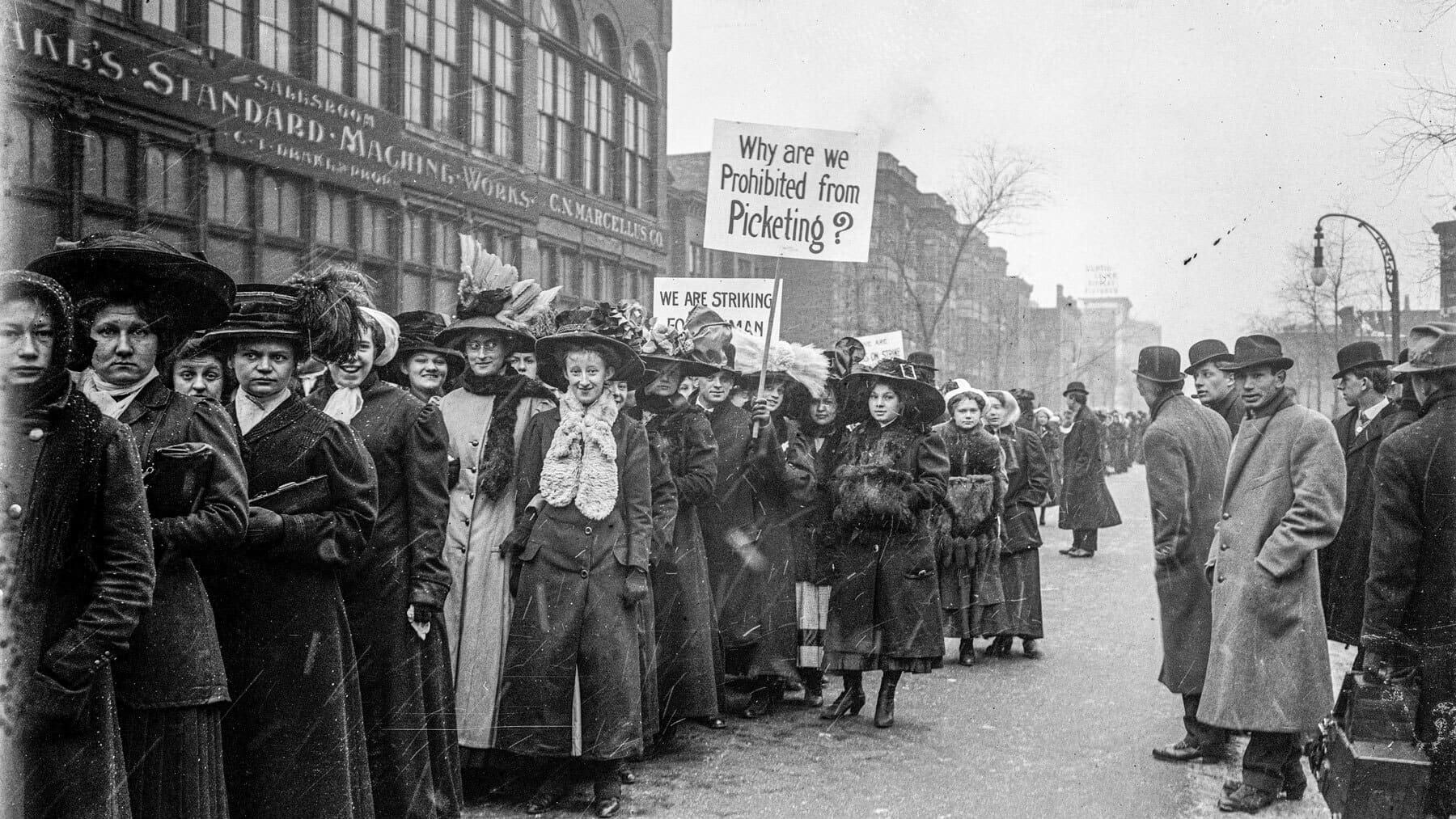
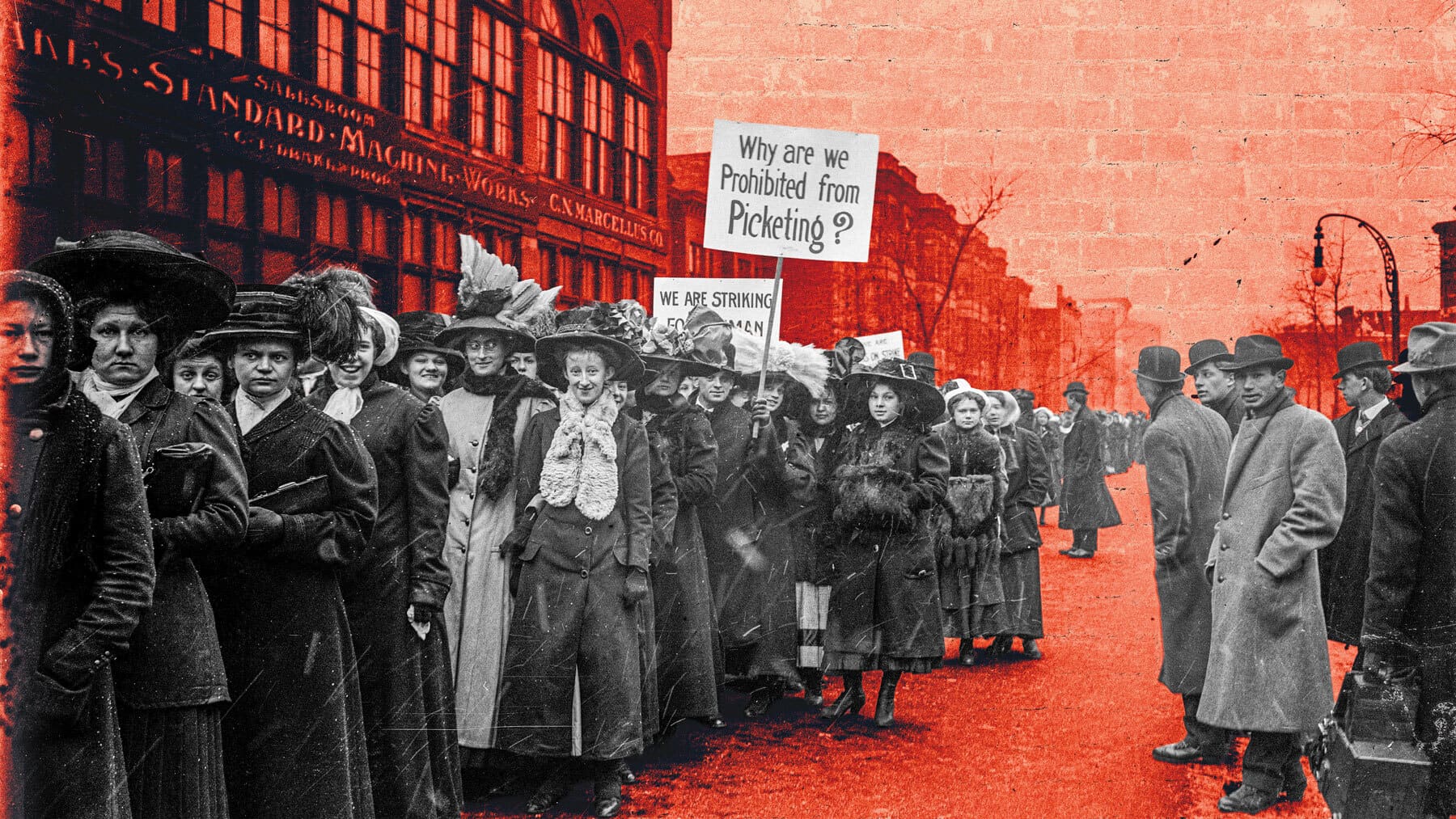
In the fall of 1910, Chicago became the stage for one of largest garment worker strikes in the country. During this period, the garment industry was one of the biggest employers in Chicago, and a large employer particularly of immigrant women. The industry had seen previous strikes across other cities, including one that began in New York City in 1909 called the Uprising of the 20,000, in which primarily Jewish immigrant young women walked out in a strike against the shirtwaist industry.
The Chicago strike began in September 1910, with a group of young women, led by Hannah Shapiro, who was just 17 or 18 years old at the time. Hannah was an immigrant born in Ukraine, who, according to the National Park Service (NPS), began working in garment factories at age 13. Fed up with the working conditions and low wages at the Hart, Schaffner and Marx (HSM) Shop No. 5 in present-day Pilsen, Hannah and a group of 16 young women walked off the job. Per the NPS, laborers “often worked long or inconsistent shifts in cramped sweatshops with poor lighting. Working conditions, production quotas, and shift-lengths depended on the whims of foremen.” Over several weeks, more and more workers – many of whom did not speak the same language and organized across gender and ethnic divides – joined the strike after some unions backed the movement. In the ensuing weeks, some smaller-scale clashes broke out between strikers, strikebreakers, and police.
The strike lasted until February 1911, ending some smaller-scale violent clashes between strikers, strikebreakers, and police. It ended after HSM agreed to some, though not all, of the workers’ demands. Garment workers were able to achieve improved wages and working conditions.
The Memorial Day Massacre, 1937
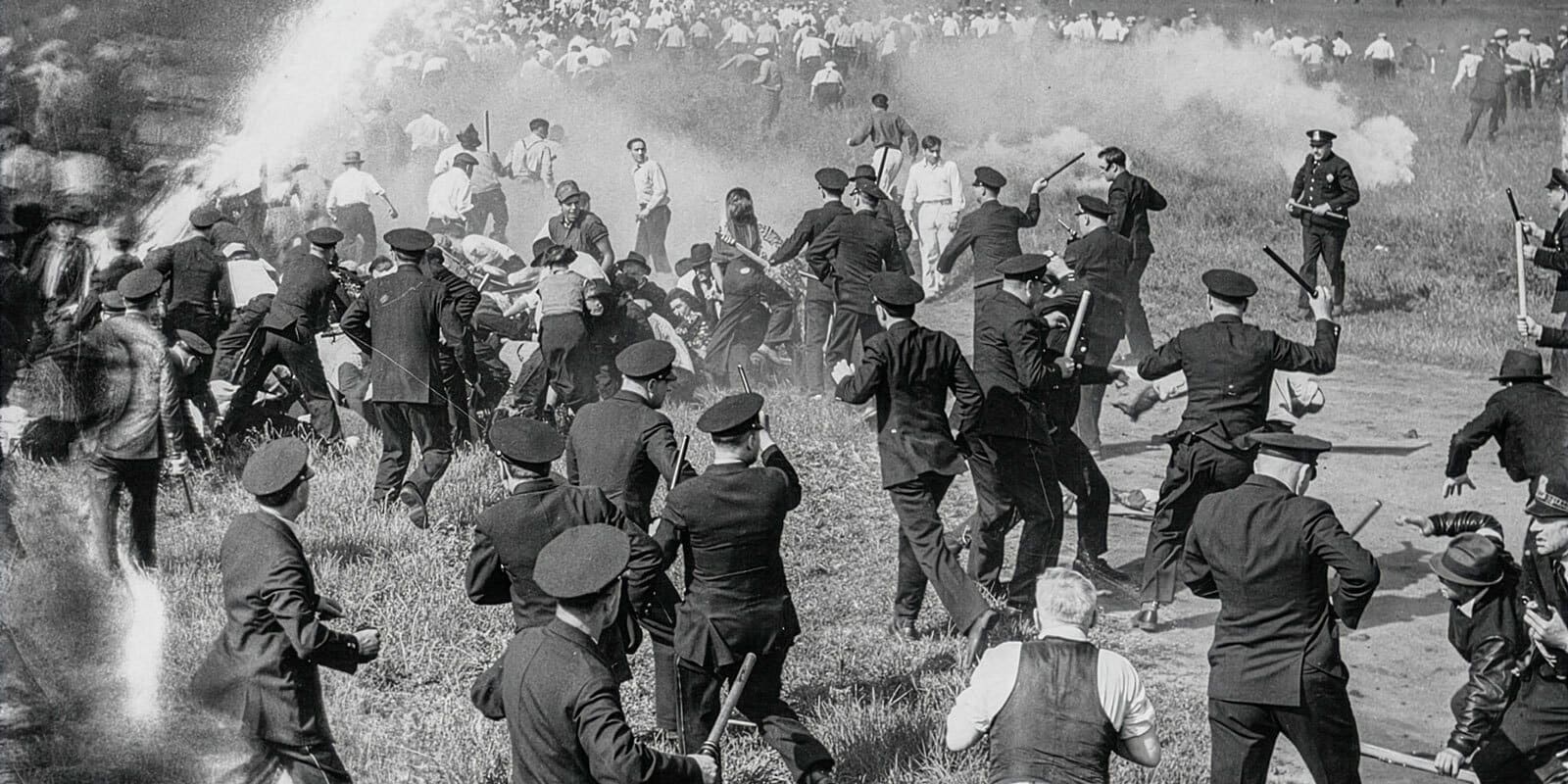
A dark moment in Chicago labor history came on Memorial Day in 1937. On May 30, 1937, hundreds of steelworkers, their families, and supporters marched peacefully toward Republic Steel on Chicago’s Southeast Side during the “Little Steel Strike.” They were demanding basic union protections – like an eight-hour day, a 40-hour week, overtime pay, and safer conditions – after the bigger U.S. Steel had signed a union contract. Smaller companies, like Republic Steel, held out. As the crowd approached the steel mill, Chicago police, armed with tear gas and clubs supplied by the company, blocked their path. When marchers asked to move forward, the police officers attacked, beating protestors and firing into the unarmed crowd. Ten people were killed, and dozens more, including women and children, were wounded.
The tragedy came just two years after the National Labor Relations Act had enshrined workers’ right to organize unions, pursue collective bargaining, and go on strike. According to the Chicago History Museum, newspapers like the New York Times and the Chicago Tribune initially echoed the company’s false claims that the protestors had rioted and provoked officers, but newsreel footage later debunked that claim. The event was the deadliest episode of the Little Steel Strike, and today a memorial at 117th Street and Avenue O honors the 10 slain workers.
Explore More