
On a sunny October morning, Chicagoan Aaron Eiger is out for a stroll with his Portuguese water dog, Ruthie. They’re not walking on the lakefront, nor are they in a nearby park. Instead, they’re strolling past the old gravestones and impressive mausoleums at Graceland Cemetery and Arboretum in the city’s Uptown neighborhood. Eiger and Ruthie walk through Graceland every day.

“Everybody I know in the neighborhood loves to come for walks in here,” Eiger says. “It’s really a great thing for the community and the city as a whole.”
Like Eiger, more and more people in the surrounding neighborhoods have begun to treat Graceland as more than just a cemetery; they are utilizing the space as it was originally designed to be – a public greenspace in addition to a final resting place.
Graceland’s small but friendly staff finds itself busier than ever overseeing the 119 acres. On this particular Monday morning, the main office on the corner of Clark Street and Irving Park Road has a few boxes scattered about, as the staff is still cleaning up from the previous weekend’s Open House Chicago, of which it was a participant.
“When I started 11 years ago, there were only three of us,” says Jensen Allen, the cemetery’s onsite director. “We have grown gradually since then. A steady increase of staff from three to seven [full-time employees] doesn’t seem like a lot, but it’s a pretty big improvement, especially because we’ve become a lot more open to the community. It has changed the culture to go back to how Graceland was originally formed – a place that people could come and enjoy, and a park-like cemetery.”
A Cemetery Brimming with Chicago History
Situated between Montrose Avenue, Clark Street, Irving Park Road, and the Red Line tracks, Graceland Cemetery was first established in 1860 as a private cemetery. According to the cemetery, landscape architect H.W.S. Cleveland created the “park-like ambiance” of the space, which at the time was located outside city boundaries in the town of Lake View and was meant to be a getaway from the crowded urban center.
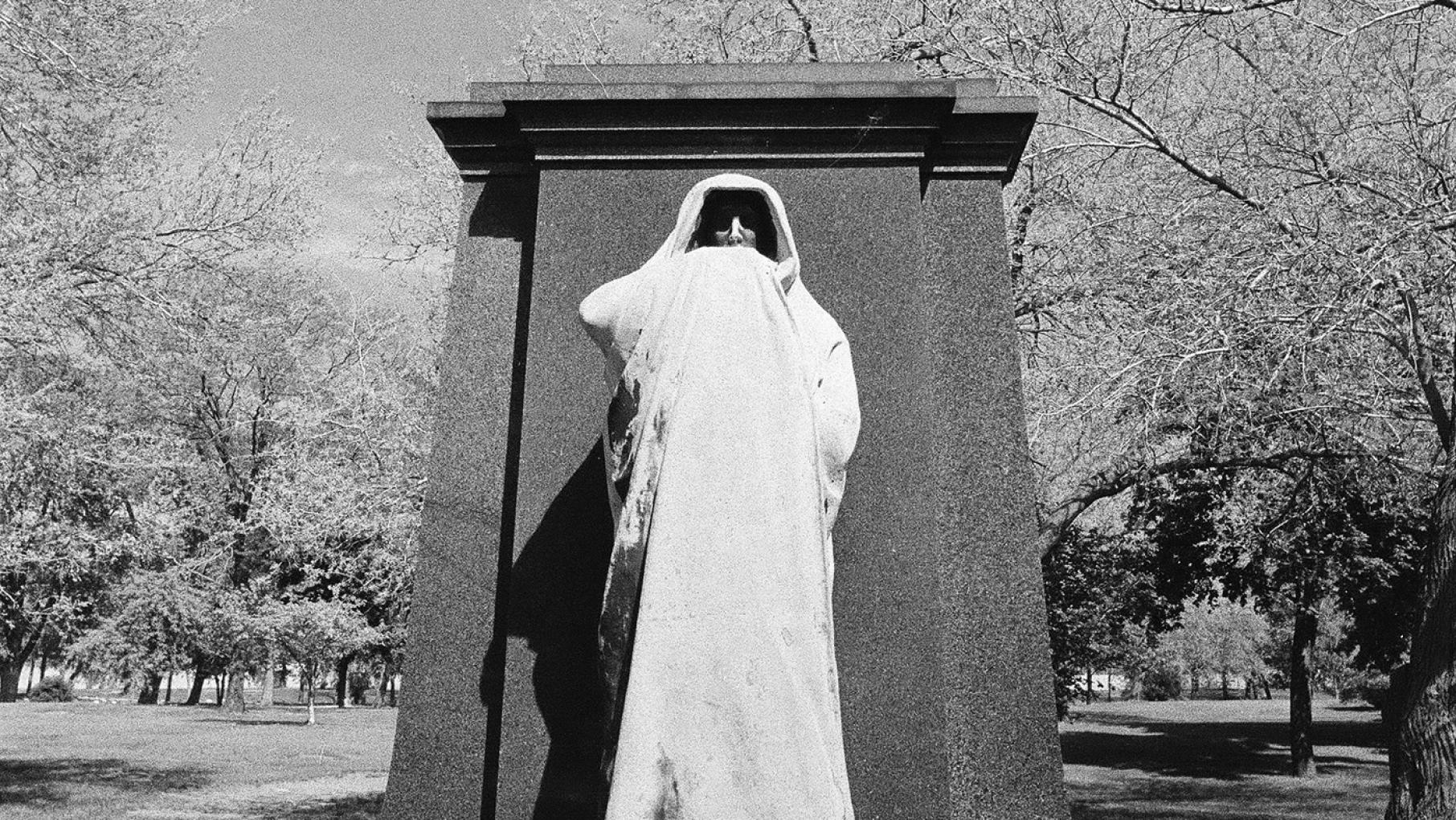
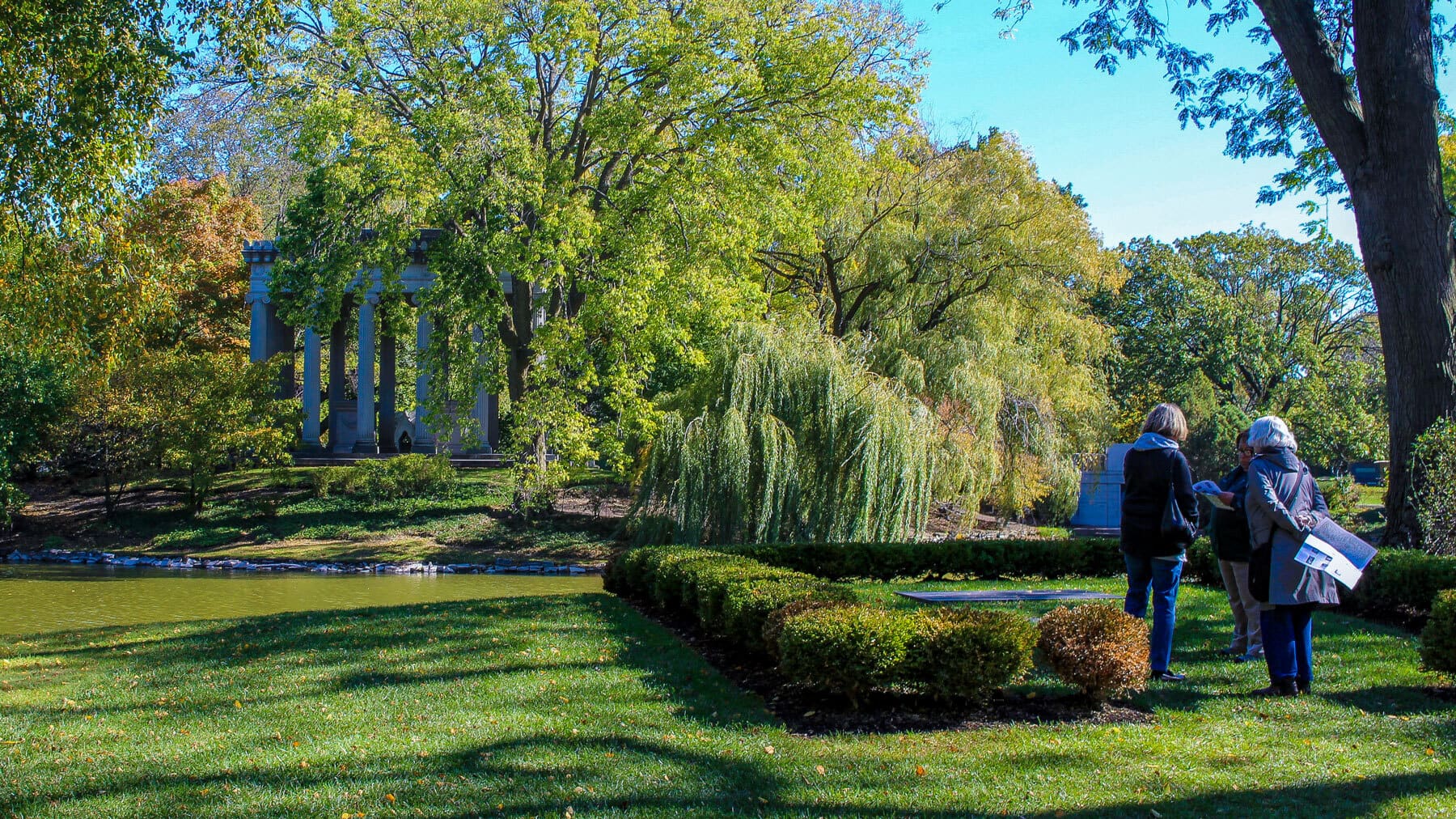
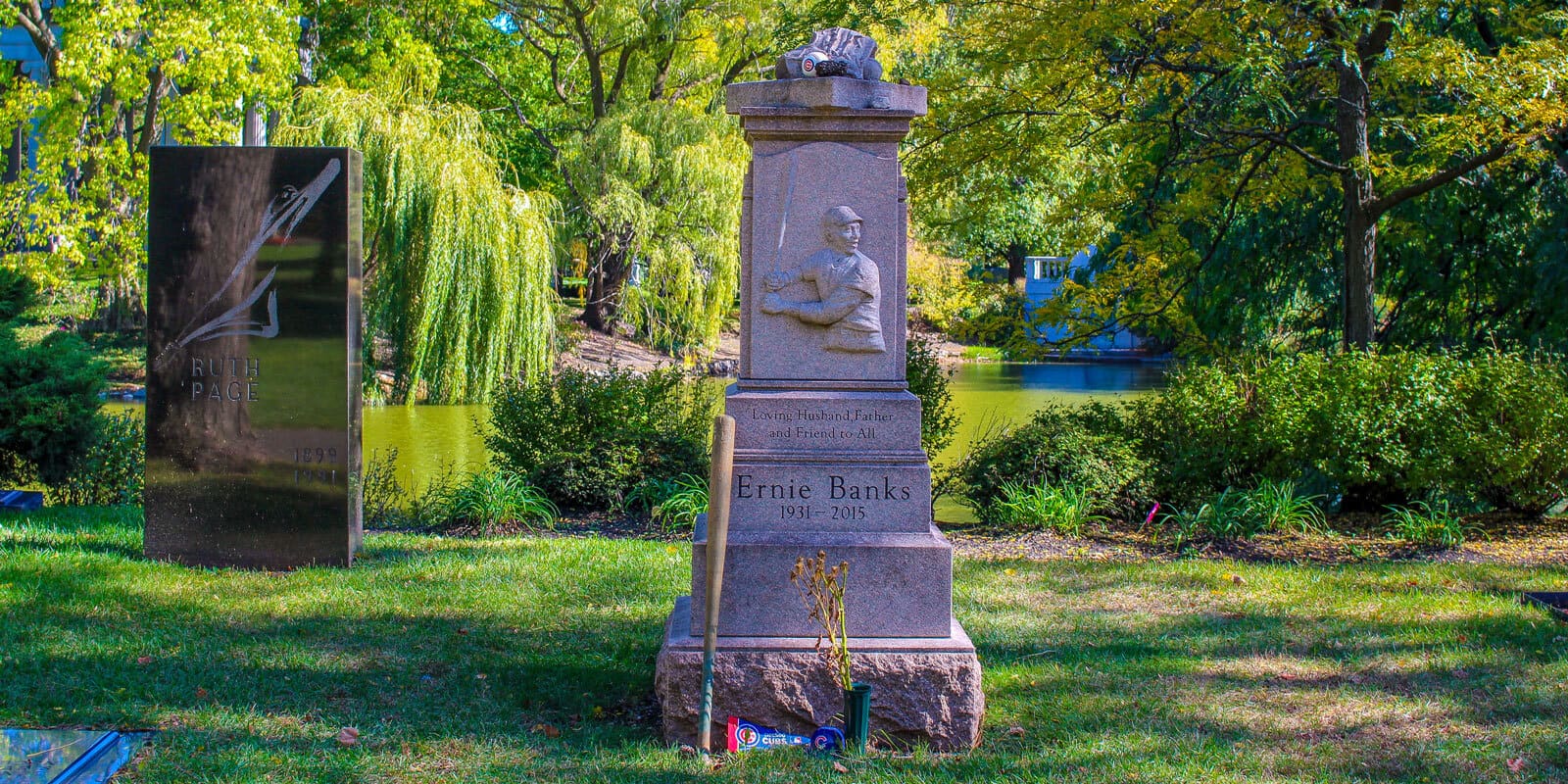
According to Allen, there are 175,000 graves at Graceland. It’s known as the cemetery of architects because prominent names like Louis Sullivan, John Root, Ludwig Mies van der Rohe, and William Le Baron Jenney can be found there. Daniel Burnham is buried on his own small island in a pond on the northern end of the cemetery. Other notable people, including Marshall Field, Potter and Bertha Palmer, George Pullman, Chicago Cubs shortstop Ernie Banks, and many, many more are also buried there. Graceland has also become famous for the stories and lore behind some of the graves, including the legend that in peering into the eyes of the eerie Eternal Silence sculpture, one will see their own future death. There’s also Inez, “The Girl in Glass”, a sculpture of a young girl that supposedly disappears during thunderstorms.
As Adam Selzer writes in his book Graceland Cemetery: Chicago Stories, Symbols, and Secrets, “By the turn of the 20th century, it was such a popular place that it had to be closed to all but ticket holders on Sundays and holidays for a time, as lot owners were afraid it had become too much of a ‘pleasure ground.’” Then, later in the 20th century, as “societal trends moved away from using cemeteries as places of leisure, the cemetery fell into periods of neglect.”
By midcentury, the nearby Uptown neighborhood was hit particularly hard by disinvestment and poverty. “People didn’t necessarily see cemeteries in the same way,” Allen says. “So some people would come into the cemetery at night, and they would potentially try and take bronze doors, or hang out in a mausoleum when they weren’t supposed to. So there was this idea that it could really be open.” The brick walls that surround the cemetery also might have deterred people, says Allen, assuming they weren’t allowed in.
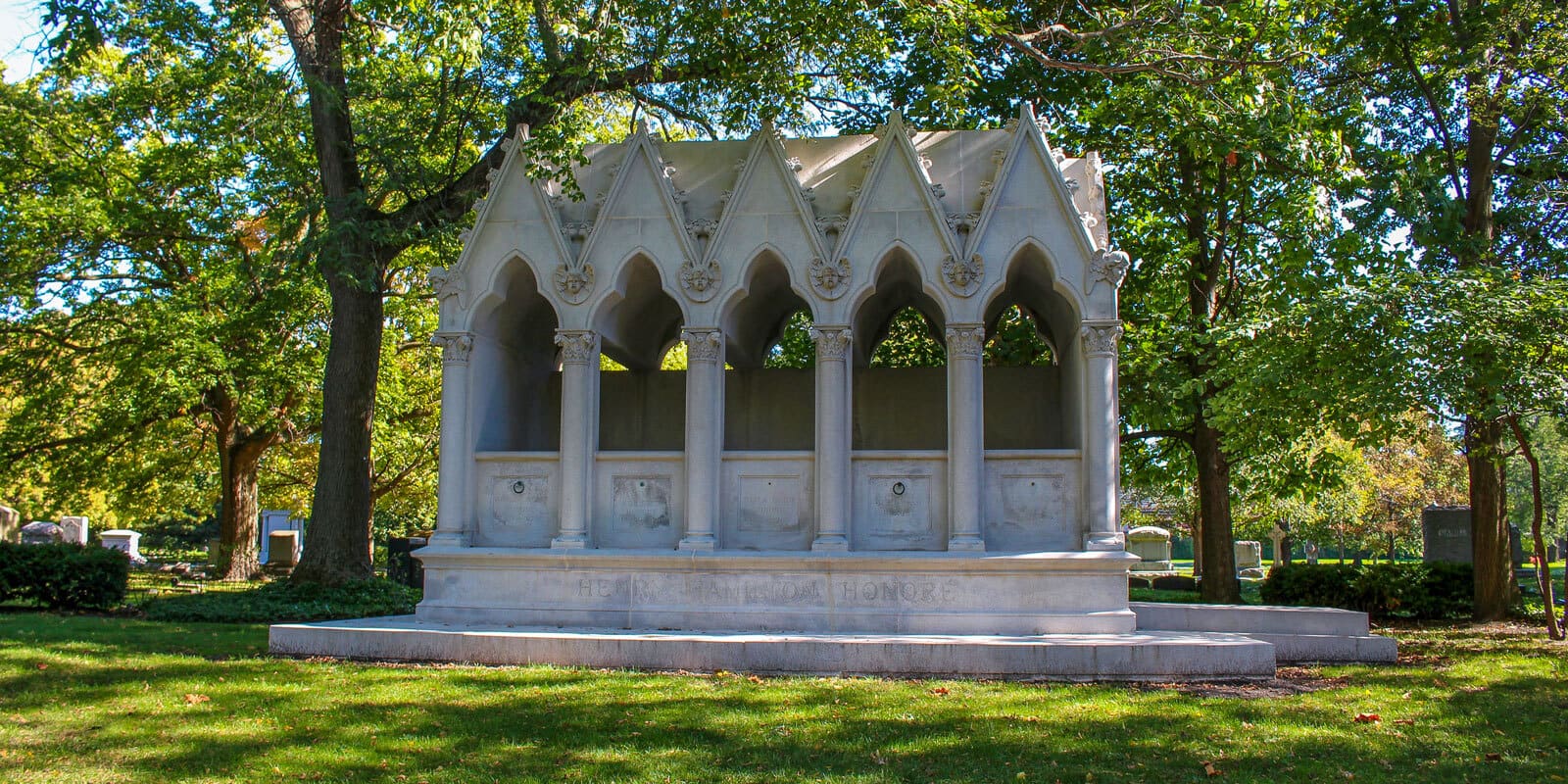
Those attitudes shifted, especially in the past decade. Allen says starting around 2017, residents in the nearby neighborhoods began to express interest in using Graceland as it was originally intended – a place to walk, jog, or bike through, to admire the trees, and to walk the dog (at least on days when the resident coyote and its pups aren’t present), even if they don’t have a loved one’s grave to visit.
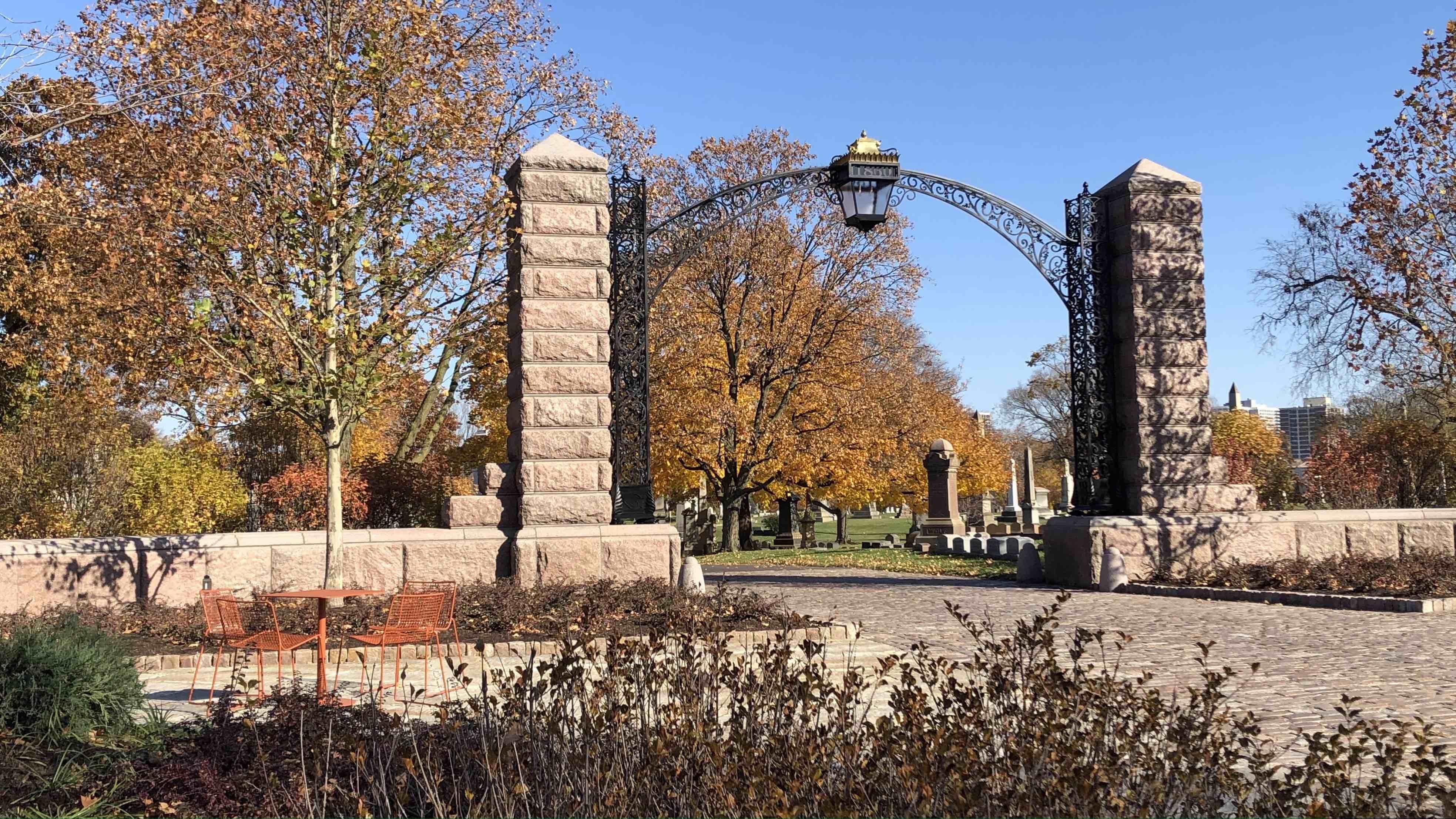
Returning to the cemetery as a shared space has been a natural progression. In 2014, the Morton Arboretum designated the cemetery as an arboretum, as it contains over 2,000 trees and shrubs. (In 2020, a derecho storm uprooted an estimated 200 trees and caused other damage, but the cemetery has since replanted new trees.) Then, in 2020 when the COVID-19 pandemic hit and the city closed many public parks, Allen noticed an uptick in foot traffic at Graceland. Now, tours hosted by external groups are common, and Graceland offers self-guided tours on its website. In 2023, the cemetery debuted its new entrance – though it looks like it could have been there all along, with the hopes that it would provide a warmer welcome to the community.
So, there’s a lot for a staff of seven full-time employees to keep up with.
Digging Through Graceland’s Archives
For a staff surrounded by gravestones, they’re remarkably upbeat. One such employee is Pastor Juarez, who first started in 2016 in a security role. He’s witnessed the cemetery’s transformation since then.
“When I first started working here, it was a much more conservative environment. The rule were much more stringent as far as what the public was allowed to do,” Juarez says. “We’re talking everything from no pets, no bicycles, no picnicking – nothing, really. When I first started, it was roughly the time [Allen] took over as director. She was much more open to the idea of opening the cemetery back up to the community.”
Juarez’s role has since taken a new shape, and he’s often the first face people see when they enter the cemetery. His official title is guest services ambassador, but like most job titles, those three words don’t quite cover the scope of what he does on a given day. One of his responsibilities is conducting genealogy research, which sometimes involves going through the files, papers, and books in Graceland’s archives. Their records go back to when it first opened in 1860.
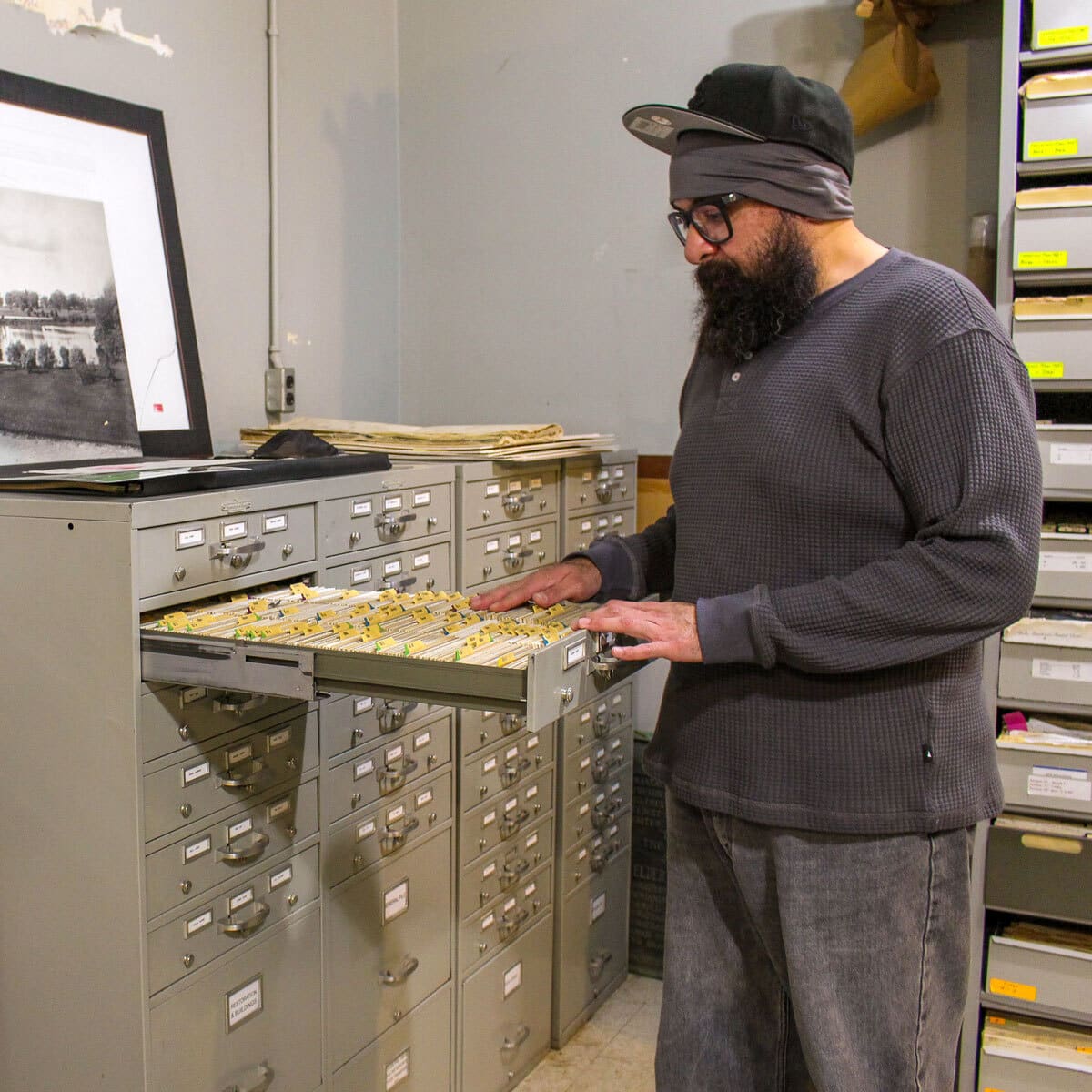
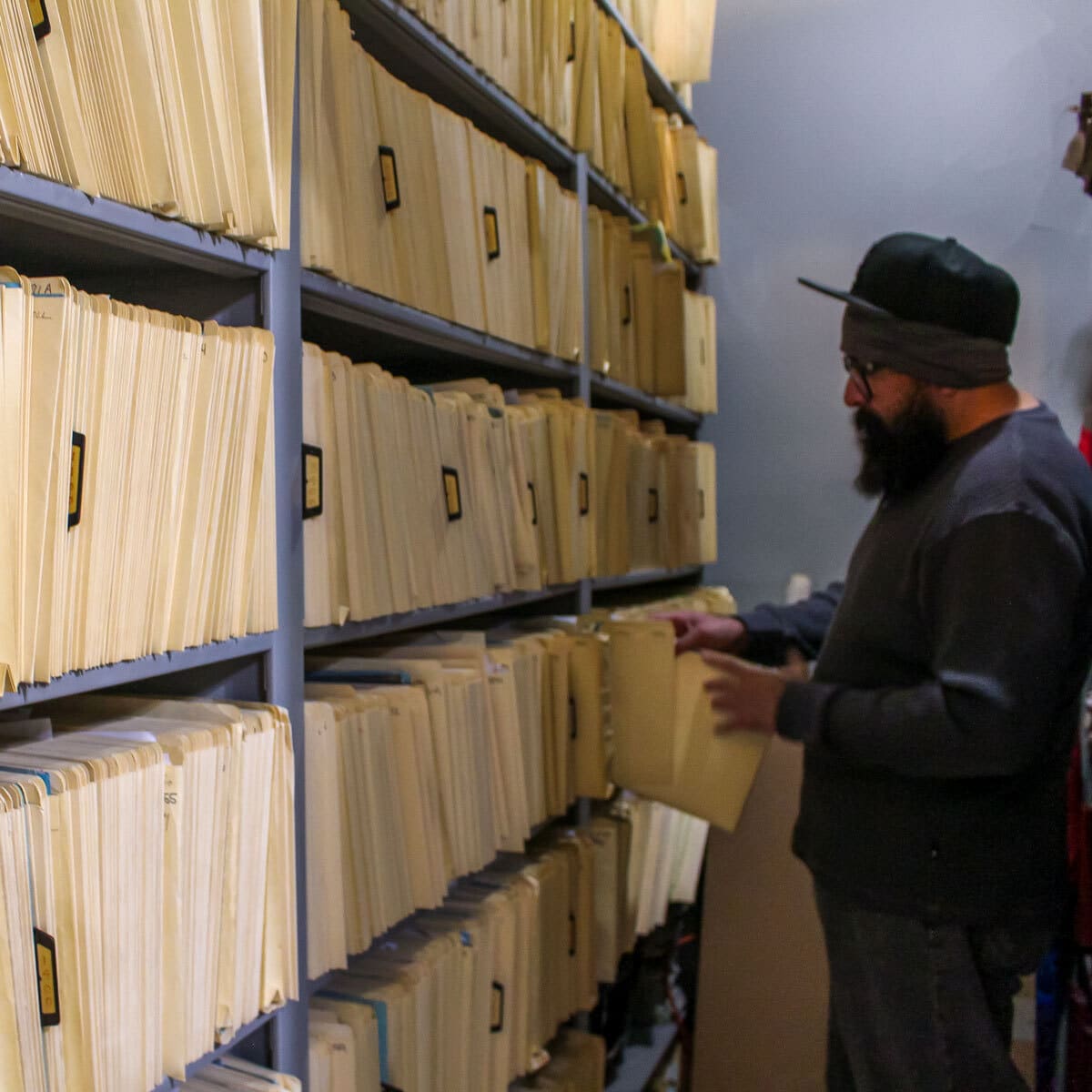
“Most of the time, people are inquiring about relatives that they may not have known or ancestors from generations past that they want to learn about,” Juarez says. “They’ll provide just very small glimpses of information and I have to work with that to try to dig up as much as I can for them.”
That’s no simple task. People might only be able to provide him with a name. And it’s complicated by the fact that their early records were stored in a downtown office that was destroyed during the Great Chicago Fire (though the staff at the time were able to duplicate many of them). The information he discovers might be difficult too, if, for example, he learns that a person’s relative had a traumatic cause of death. But he still finds the work interesting, especially as so many influential Chicago figures are buried at Graceland. In researching the Palmer family, he learned the famed philanthropist Bertha Palmer left money in her will for her household staff and personal assistants.
“It’s fun looking through history. There are so many files that I probably haven’t looked through a quarter of them. So I am sometimes surprised by what I find,” he says.
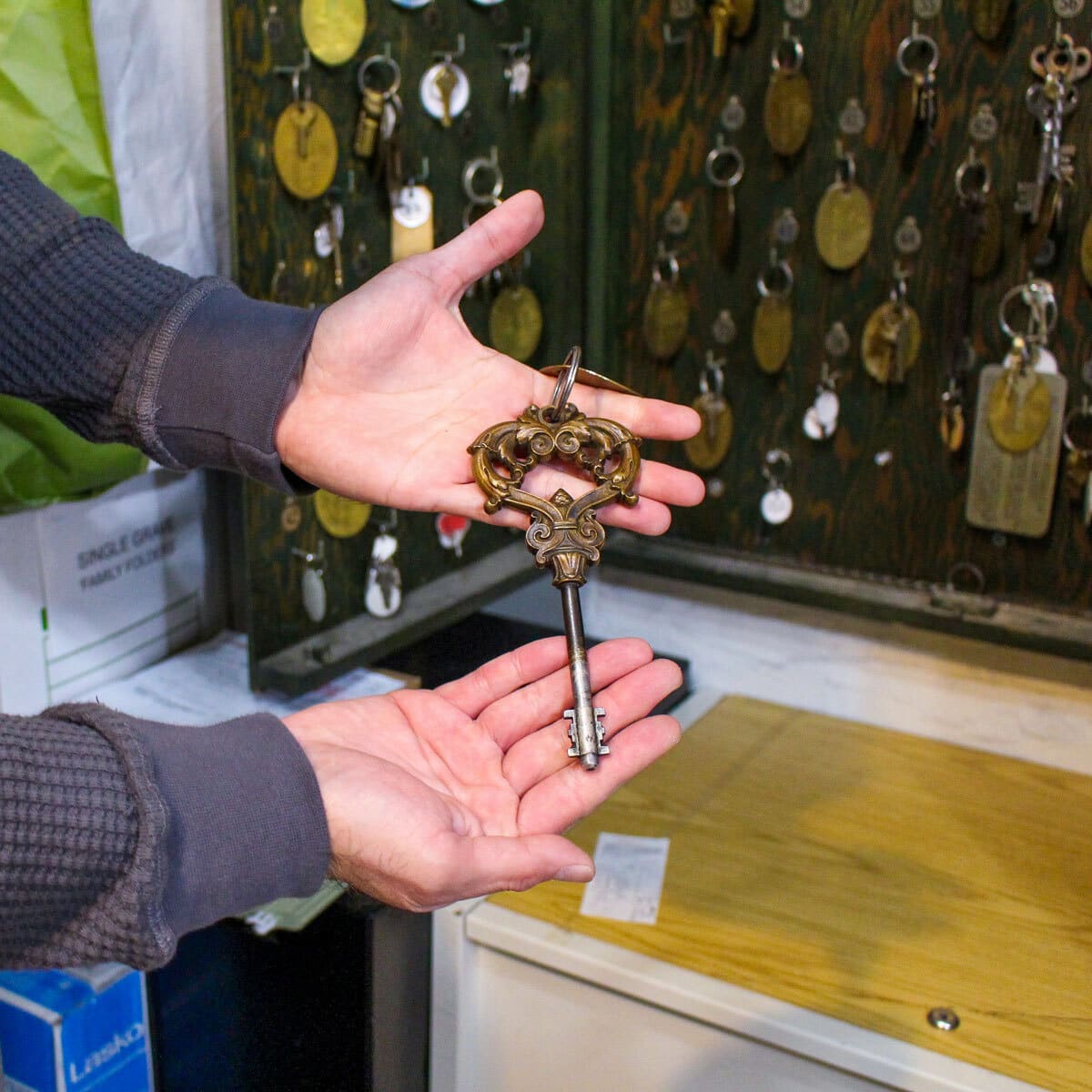
His favorite part of the job is getting out onto the “peace and serenity” of the grounds. (If you’re wondering who holds the keys to the mausoleums, it’s Juarez.) He enjoys his interactions with the living, too. For example, on a Monday afternoon, Juarez is driving the cemetery’s SUV around, with three women visiting the cemetery in the back seat – a Chicago woman, and her two friends from Dallas, who were “celebrating 25 years of friendship by looking at graves,” one of them jokes.
Juarez is often the last person at the cemetery, as he is the one that locks the gates at closing. In his near decade at Graceland, he only recalls two times when people got locked in. Once, a police officer cut the lock on the gates. Another time, Juarez was already halfway home.
“I noticed a call was coming through the office, and I picked up and a guy was like, ‘Hey, so, I’m still in here,” Juarez says. He doubled back to let him out, but he had climbed the fence.
“Every day is a little bit different.”
Caring for the Grounds and the Graves
Though you might not think it, given that it’s in a big city and it’s been around for 165 years, Graceland is still very much an active cemetery. According to Allen, though they are less active than most cemeteries, they do about 100 burials per year, 30 of which are casket burials, and 70 of which are cremations, on average.
Tasked with the manual labor of these efforts are Graceland’s three grounds crew workers. One of them is Ryan Turley. He was unhappy at a previous job when he stumbled upon the job posting four years ago.
“I’d never done anything like this before,” Turley says. “The physical labor, and the fact that it was in a cemetery just piqued my interest.”
Like everyone else on the staff, there are quite a few bullet points in Turley’s job description. There is a lot of greenery to care for over the 119 acres, especially given the cemetery’s status as an arboretum. In the winter, there’s snow to remove. Outside of the winter, there are headstones to install or care for. But on days when there is a burial service, that takes up most of his time. That involves preparing the grave, setting up the flowers, and the tent that might sit over the site.
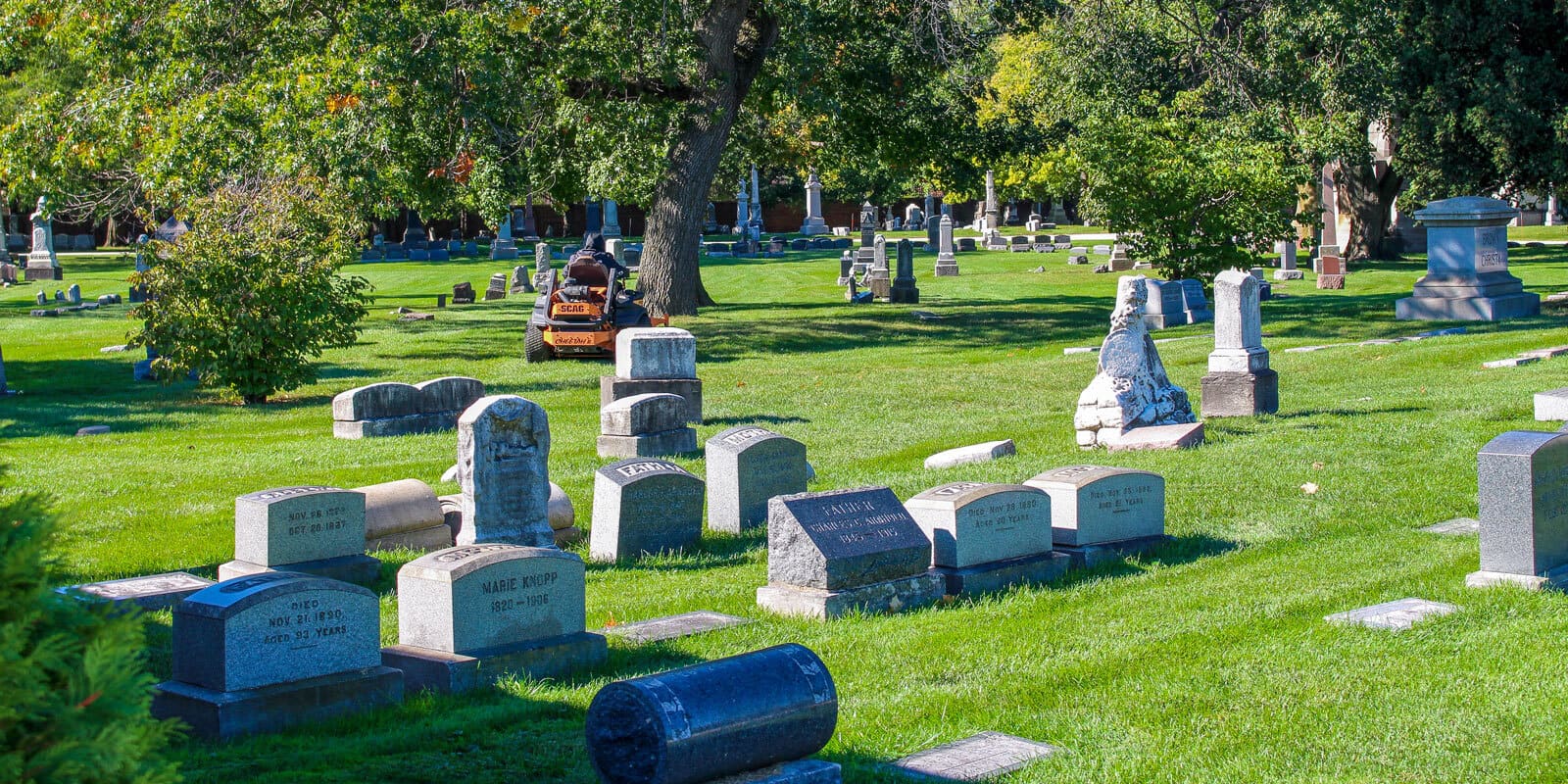
While the grounds crew digs the grave sites for cremation urns by hand only in the warmer months, casket burials take place throughout the year – even when the ground is frozen – with the help of a backhoe. Turley says the cemetery recently acquired a “grave heater.”
“It’s basically just like a big metal box essentially that sits over the grave,” says Turley. “You hook it up to a propane heater overnight and it softens the ground.”
Like Juarez, Turley’s job is sometimes complicated by the sheer age of the cemetery. Turley is currently in the middle of surveying a plot, and he’s run into a problem.
“There’s probably like six feet on each side of two plots that had been given to both plots. So there’s a weird overlap that’s not accounted for in the old records,” he says.
Logistic headaches aside, he’d take this job over office work any day. “I find it rewarding. Working outside is nice most of the time, even in bad weather.” He enjoys taking in the artistry of the graves, monuments, and mausoleums that make up his outdoor office. He’s particularly drawn to the monument of famed private eye Allan Pinkerton, and to the Hoyt monument. The latter is the final resting place of Emilie Hoyt Fox and her three children, all four of whom died in the Iroquois Theater fire in 1903, in which 603 people perished. According to online records, Emilie’s husband died of “intense grief” two months later.
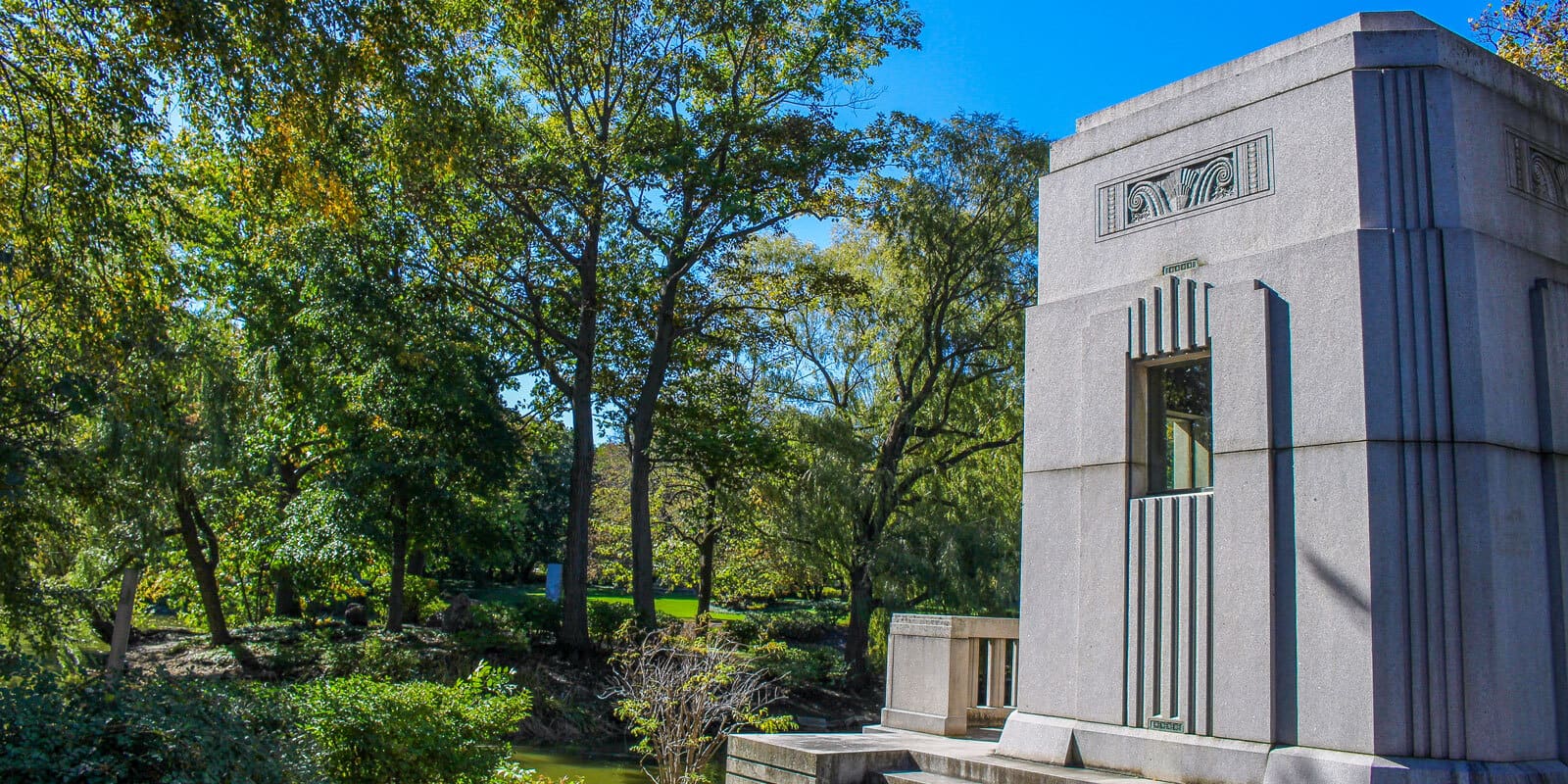
Though tragic, these very human stories ground the work that Turley, Juarez, Allen, and the rest of the staff do on a given day. One of the toughest parts of their jobs is the fact that they are working with mourning families.
“The way people handle the circumstance if someone has passed – you have to wear a hat of a psychologist or counselor. You may go out and clean off a stone or clear a grave because you’re the only one there that day, and someone is coming out last minute,” says Allen.
That’s one thing the Graceland staff wants the increasingly-present public to remember: it is a greenspace that should be respected. Juarez recalled seeing people sunbathing.
“It can be kind of tough,” adds Turley, “to make sure everyone in here is still treating it as the cemetery it is. But at least in my experience, my interactions with the public are, by and large, very positive.”
Juarez says that a lot of people ask him if it’s “creepy” to work in a cemetery, especially since he’s often the last person there at night. “It’s not scary.” The rest of the staff agree.
“I think some people have a preconceived notion that it’s depressing or spooky to work here,” Turley says. “And respecting the grounds that you’re on is important. But I do think that they can be really nice public greenspaces. It’s a lot more inviting than people might initially think.”
Explore More
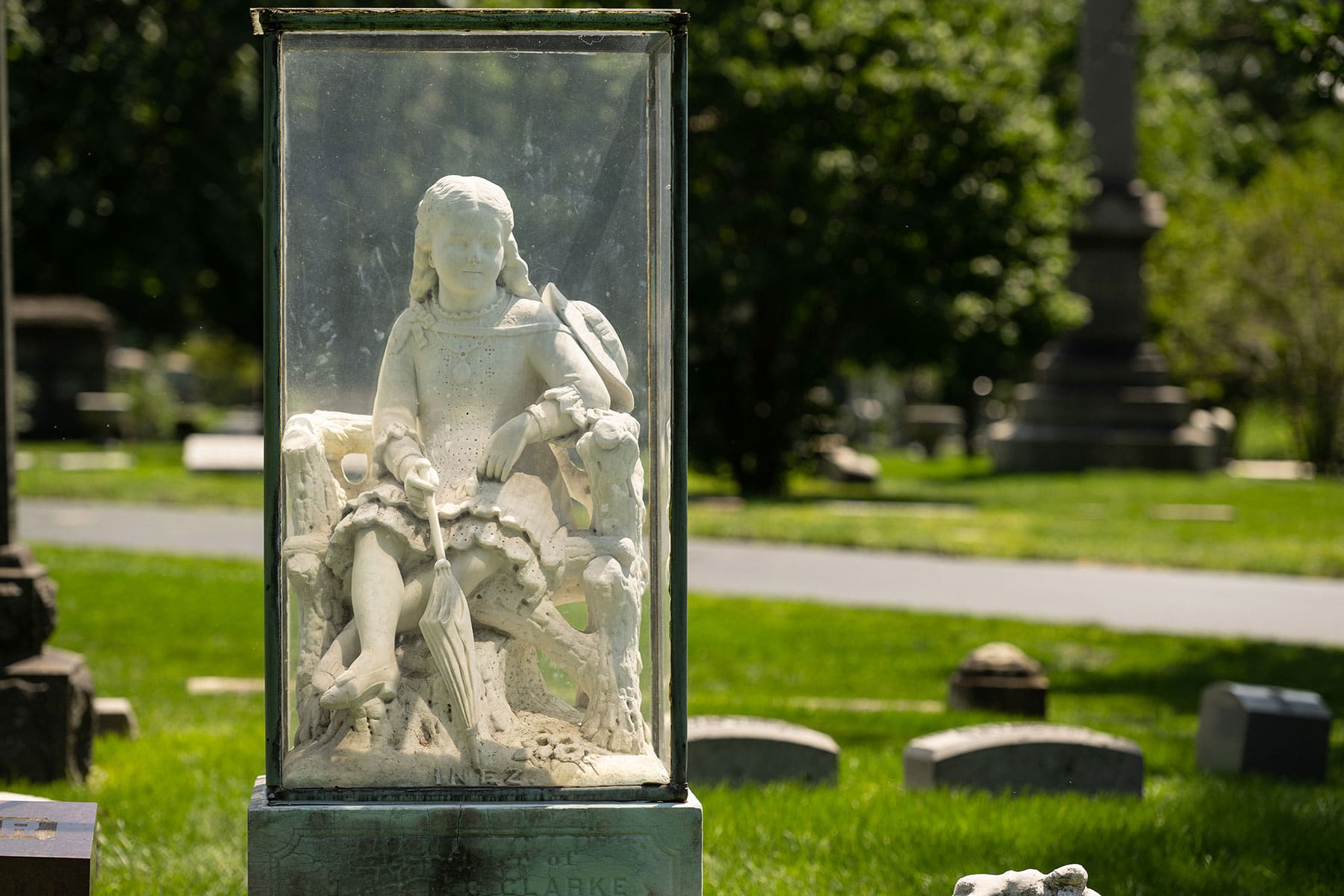
Was The Girl in Glass at Graceland Cemetery really a victim of parental neglect? | Chicago Mysteries with Geoffrey Baer
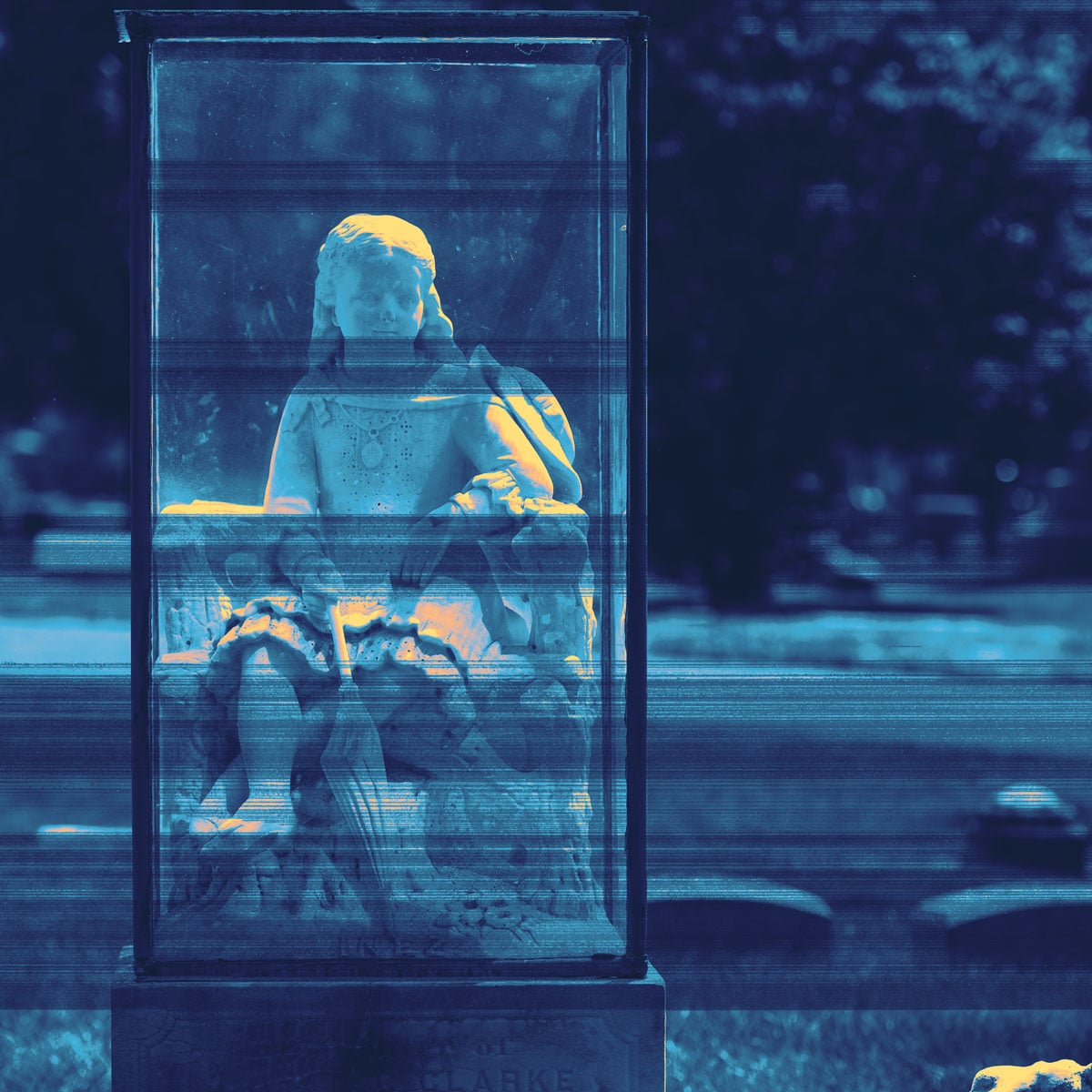
Was The Girl in Glass really a victim of parental neglect?