'Crime and Punishment in America' Examines a Complicated Subject's History in Depth
Daniel Hautzinger
October 22, 2026
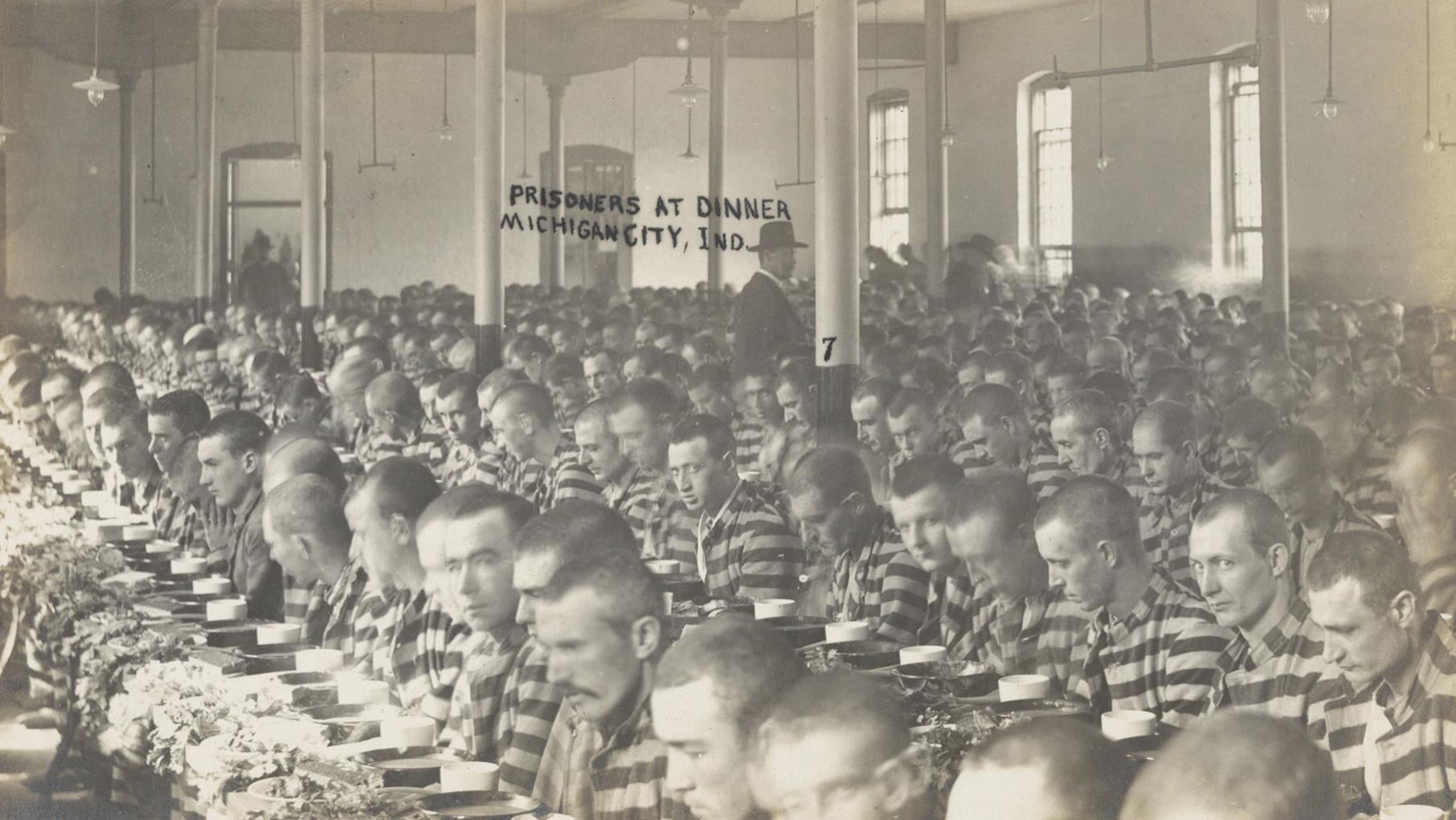
Crime and Punishment in America premieres on WTTW and via the PBS app Monday, November 16 through Thursday, November 19 at 7:00 pm every night.
Crime and Punishment in America is a complex topic that is often flattened into simplicity, but a new documentary of that name explores it in depth with nuance over four parts, eight hours, and 250 years of history, with perspectives that range from the police commissioner Bill Bratton to the retired Supreme Court Justice Stephen Breyer, the Philadelphia District Attorney Larry Krasner to formerly incarcerated people, civil rights attorney Sherrilyn Ifill to a former corrections officer. It’s the latest project of Lynn Novick, with Ken Burns as executive producer.
Novick will be in Chicago on October 29 for a screening event hosted by WTTW that will feature a discussion between her; documentary participant and Northwestern University historian Kevin Boyle; and Nicholas Crayton, who was featured in WTTW’s Firsthand: Life After Prison.
We spoke to Novick about the film she wrote, directed, and produced.
This interview has been condensed and edited for clarity.
It’s a topic that’s constantly discussed, particularly in politics, but you don’t necessarily think of it as having a history.
I agree. With this particular set of institutions, I think we have the sense it's always been like this, and this is just a given of how people do things.
Working on College Behind Bars made me realize how little I know about this history, and how curious I was about how we got here. Spending time inside prisons for that and just trying to absorb what I was seeing and feeling as a visitor, the dynamics inside these places, and why they are built the way they’re built, and why they’re organized the way they’re organized, and how people are treated and treat each other, and the hierarchies and the rules and the mindset – all of that was something I had not been exposed to, and it just raised a lot of questions that I didn’t know the answers to.
I think I felt, as a citizen and someone who cares about our history, that it would be useful for us to learn that history and share it.
How did you decide what to focus on in such a huge topic?
We relied on the expertise of people who know a lot more than us, as we always do on every project. So that was historians and scholars who've studied American history and the history of incarceration and policing and the justice system over time, and also people who have lived experience in the world of being incarcerated or put in jail or prison. Or judges or prosecutors: people who have worked in the criminal justice system. There's a wide range of perspectives that they brought.
And then we just had to try to focus and pick stories and examples that would illustrate larger themes.
Why did you use those firsthand stories to scaffold this?
In all the work I've done with Ken Burns, it's the same. We can hear history told as an abstraction that doesn't really have human dimensions, or we can try to present it as something that is about people. That's the way we've told pretty much all the stories I've worked on in my career, and [it has] maybe never [been] more important than [in] this particular story.
Why do you say that?
The way that we administer justice in this country has a way of removing the individuals and creating blank faces, if you will, just numbers and statistics. You get a number when you're arrested or locked up incarcerated, and you sort of stop being seen as a person. So it was really important to us to put the people back into the story on all sides.
If you're a viewer, you're not going to learn about everybody that this happened to, but you're going to learn about one person. And from their personal experience and the way they tell it and what they remember and what happened to them, you can begin to feel something about what this is like. That's what we're after.
You have Reginald Dwayne Betts as almost a moral guide commenting throughout.
We’re very grateful to Dwayne for agreeing to be a part of the project. He sees all of this through so many different lenses. He is himself someone who was incarcerated as a teenager. He's also someone whose family was victimized in a very serious way. And he had a lot of friends growing up who ended up in the carceral system. He's now an attorney and works to help people get parole and has done a lot criminal defense work. And he's also an artist and a poet and a storyteller and an activist to improve conditions in prison insofar as he's created a nonprofit to bring books into prisons. He’s always interested in making this very complicated story more complicated and not oversimplifying it and reducing it, and we really appreciate that.
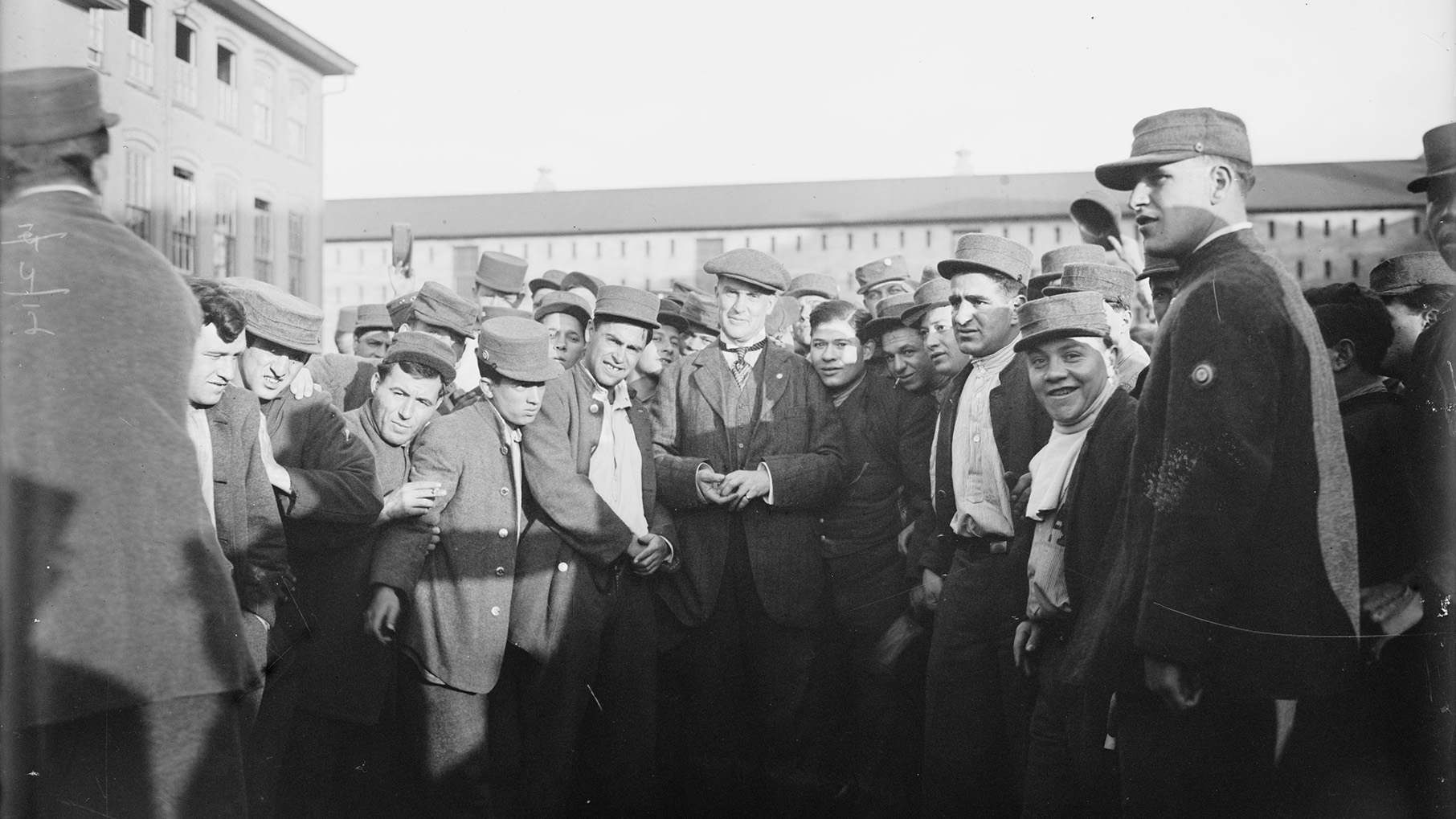
So much of this history is one of attempted reform, from the very beginning.
That was one of the most fascinating things for all of us working on the film: to learn that the prison itself, penitentiary itself, was created as a reform. It was presented as an alternative to public executions and torturing people for often small crimes, because there was no idea of rehabilitating people through the punishment system. It was just pure punishment.
The idea that we would create a system to help people rehabilitate themselves and to repent and be better, and the way we would do that would be through incarceration – that seems to us just a given, that that's what the system is supposed to do. But it was a new idea in the early days of the American experiment.
And it’s one of the ways in which America is exceptional in this history.
This is one where we definitely are different than a lot of other countries. We created this idea and we've doubled down on it multiple times, in spite of the way in which it was proven to not deliver the promise that we thought it should.
Is that one of the throughlines in this history?
I think you hit the nail on the head. When we look at some problems that society faces, we don’t know about them, and then when they’re exposed, we do something. When it comes to understanding that prisons can be – have been – places of abuse and torture and mistreatment, where people can be isolated and not helped, there have been repeated cycles of exposure of this problem, and people reformed it and addressed the problems and tried to fix it. We can't say we haven't known; we have known.
The real question, which I don't think I have a good answer for, is how come knowing is not enough, has not been enough? Even trying to reform and fix the problems has not enough. We have made some improvements. We have made some changes. We have put in place some systems of accountability, but they're not uniform, they're not everywhere, and they're far from enough.
Is there something that you learned in making this that changed the way you think about crime and punishment in America?
One scholar that we interviewed said, “No one planned this.” It's almost too complicated and such a mess; no one would have planned this this way. Appreciating that makes it easier to try to imagine how we can make changes.
There have been always people who really care and try to make things better: People inside these places, people in the police departments, people on the [judge’s] bench, journalists who tried to expose what could be better, what was wrong. That does give me hope that [just because] things are not good doesn't mean they can't be better. It probably is a lot of small decisions and actors that can shift things in a better direction. There’s no one big, easy fix. The president can’t wave a magic wand and get a bill passed and change all of this.
[Another way] in which America is somewhat exceptional is how crime policy and politics are intertwined. That's not the same everywhere. And that does have a lot to do with why we do things the way we do. You see politicians speaking about making America safe again, about being tough on crime, about “three strikes and you're out,” especially in the last 50 years. I think those positions are not really driven by research and smart policy as much as getting votes. People are scared; they want you to do something. A little girl was kidnapped and it's a horrible nightmare for everybody who hears about it. So what are we to do about that? It's an opportunity for someone who's in a political position to use that fear and desire for something to be done to pass laws that aren't actually going to address the problem that caused this to happen.
I think we might be the only country that elects prosecutors. I think judges in other Western countries are a little bit more insulated. But fear is an incredibly powerful human emotion. That’s real and we have to reckon with that.
I have compassion for the politicians, because they're trying to get elected and make policies that they think people want, or that they know people want because that's what got them elected. So we really can't just see this as a top-down problem. It's very much a bottom-up problem. We the people are responsible for the people we elect and the policies they embrace. No one's shoving this down the throats of the American people.