Feeding Those Within Reach: The Local Organization that Meets Unhoused Chicagoans Where They Are
Daniel Hautzinger
June 19, 2024
WTTW is spending a year focused on the challenging experiences and unique perspectives of unhoused people across Chicago in FIRSTHAND: Homeless.
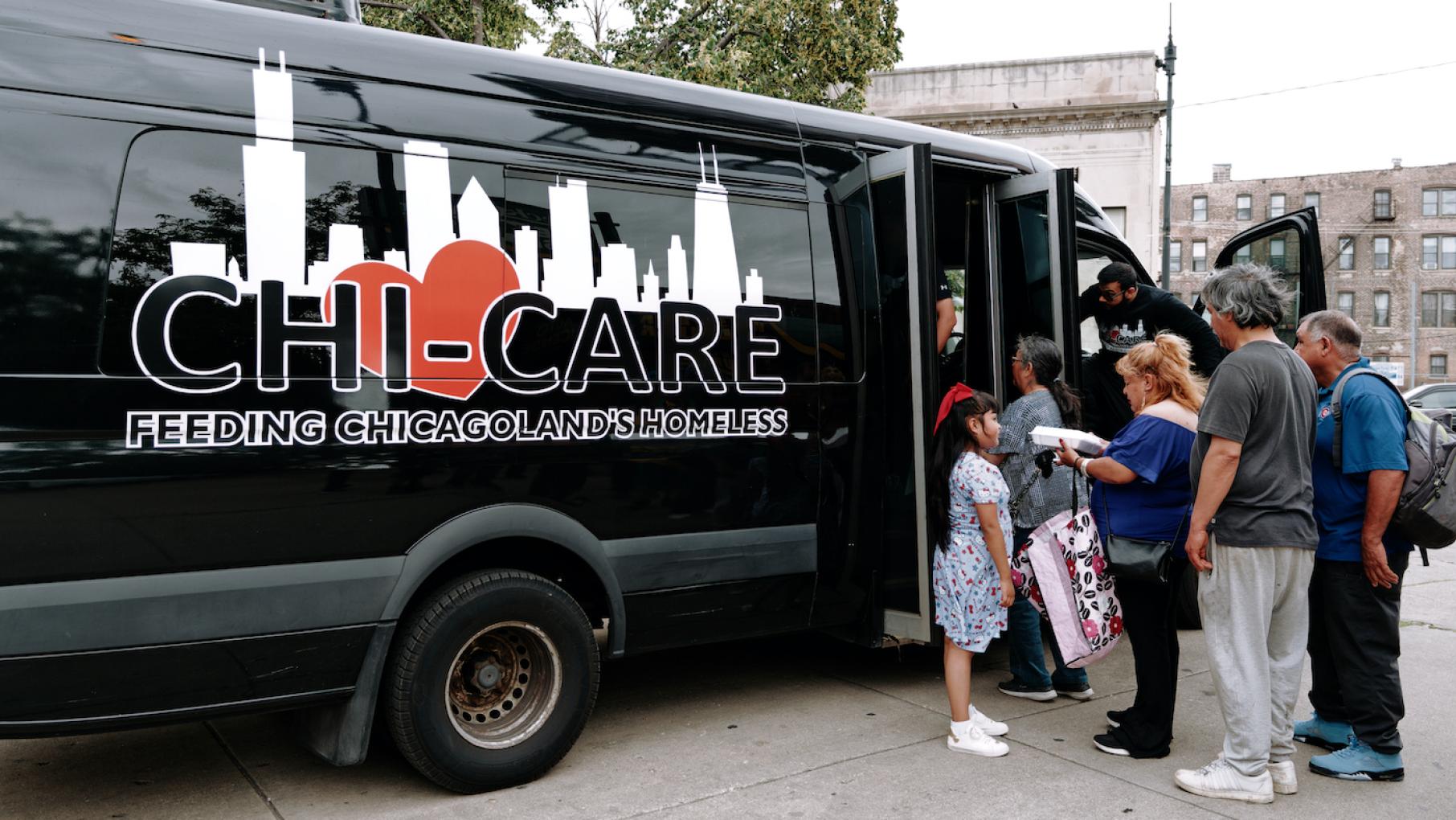
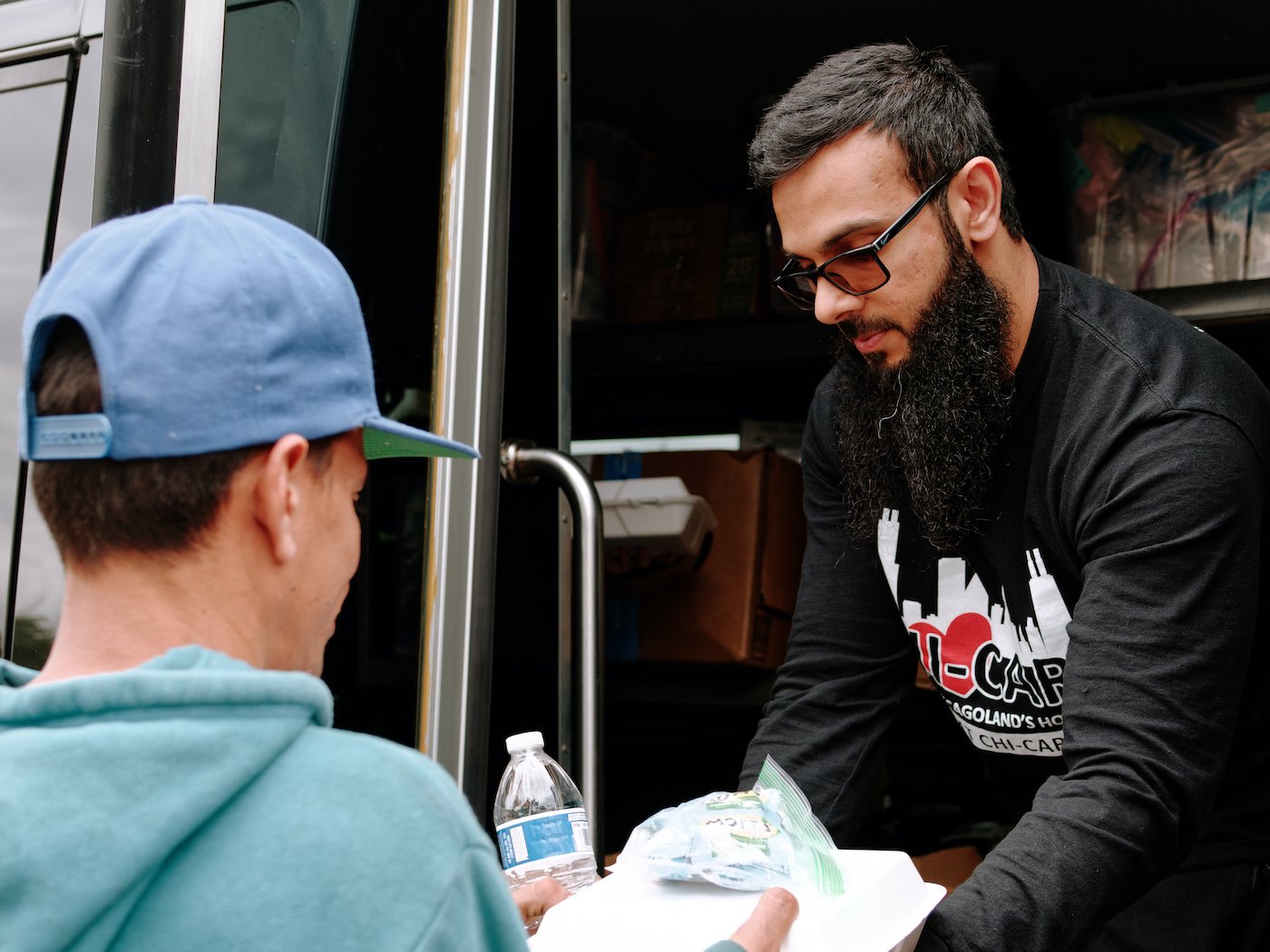
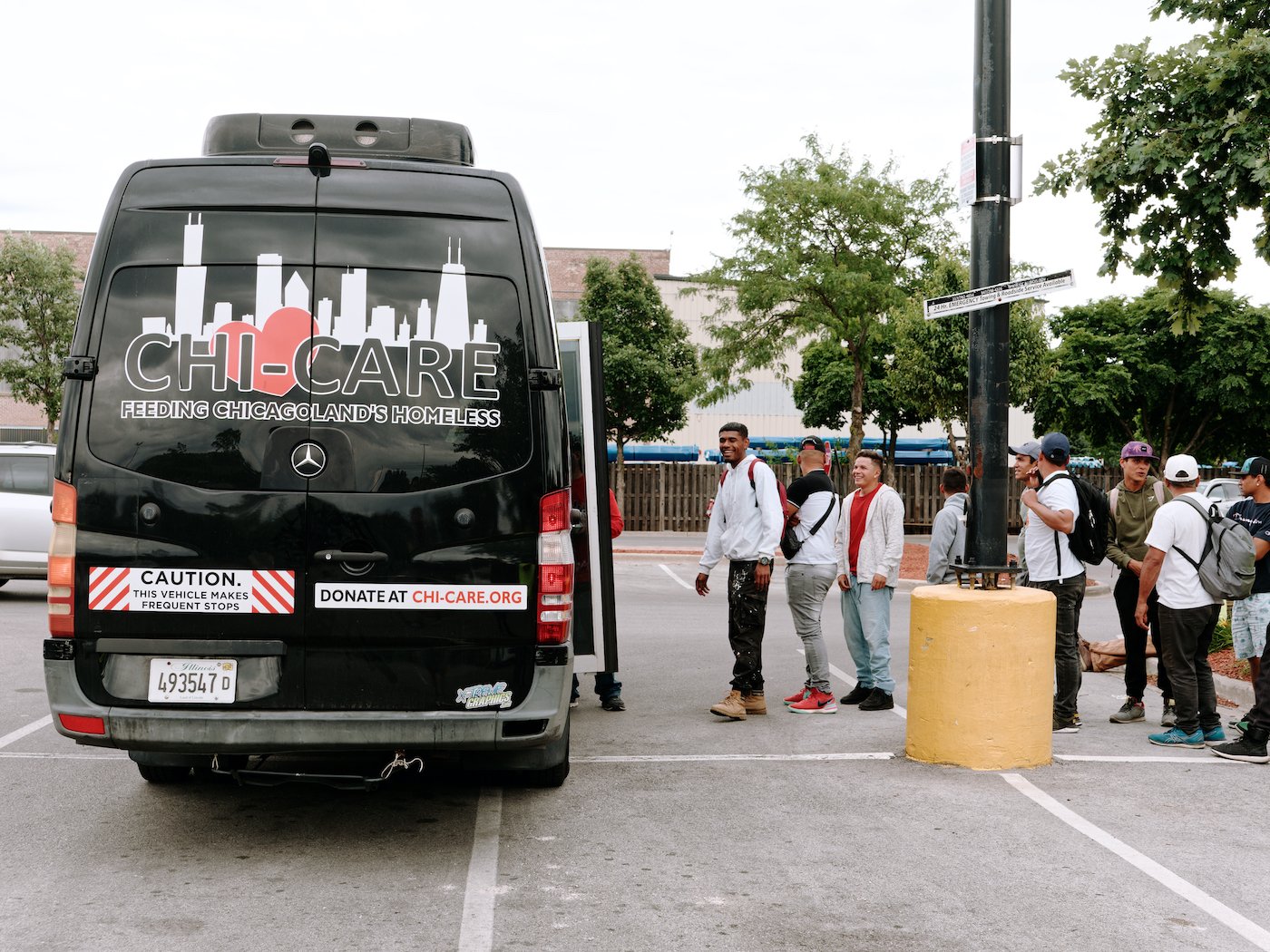
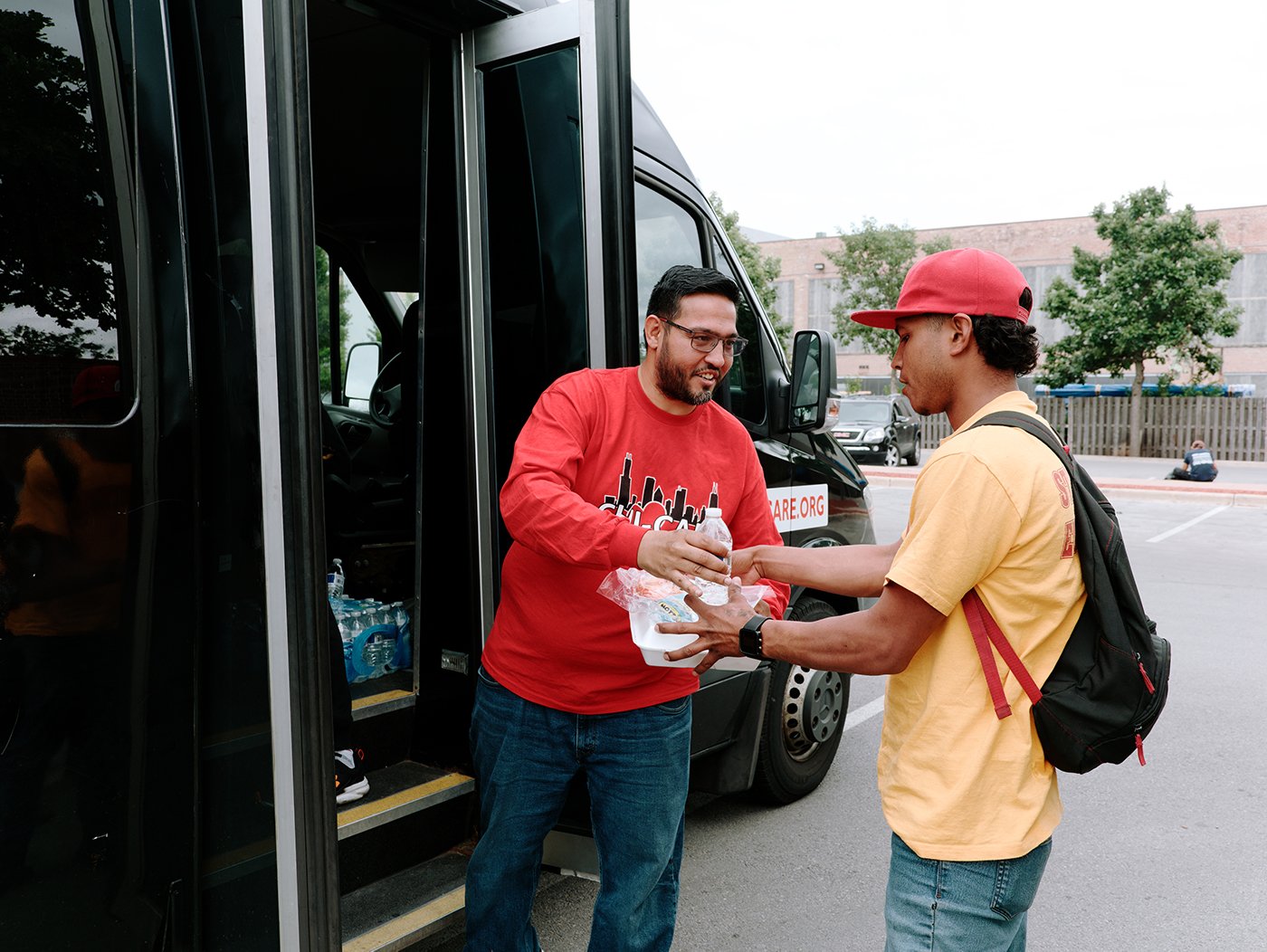
Three times a week, a black van emblazoned with a red-heart-and-white-skyline logo drives through Chicago, stopping at the encampments, parking lots, and plazas where hungry and unhoused people live and gather. A line of patient people quickly forms at the door of the van, where volunteers from the nonprofit Chi-Care hand out meals, bottled water, pre-packaged snacks, shirts, pants, socks, underwear, and bags full of hygiene products to whoever wants them – no questions asked.
“We’re just trying to provide hope and dignity,” says Farhan Ahmed, a co-founder and president of Chi-Care. “We want someone to feel the love and let them know that there are people out there who do care.”
More than 18,800 people in Chicago lacked a permanent place to sleep at the beginning of 2024, according to an official annual count by the U.S. Department of Housing and Urban Development, triple the number of Chicagoans experiencing homelessness a year earlier – and some critics of the official count argue that it is a vast underestimate.
Those unhoused people are in need of not just shelter but also everything else necessary to survival: heat, clothes, water, food, kindness. Chi-Care strives to provide all of these to as many Chicagoans in need as they can, delivering hot meals from restaurants and basic necessities along predetermined routes.
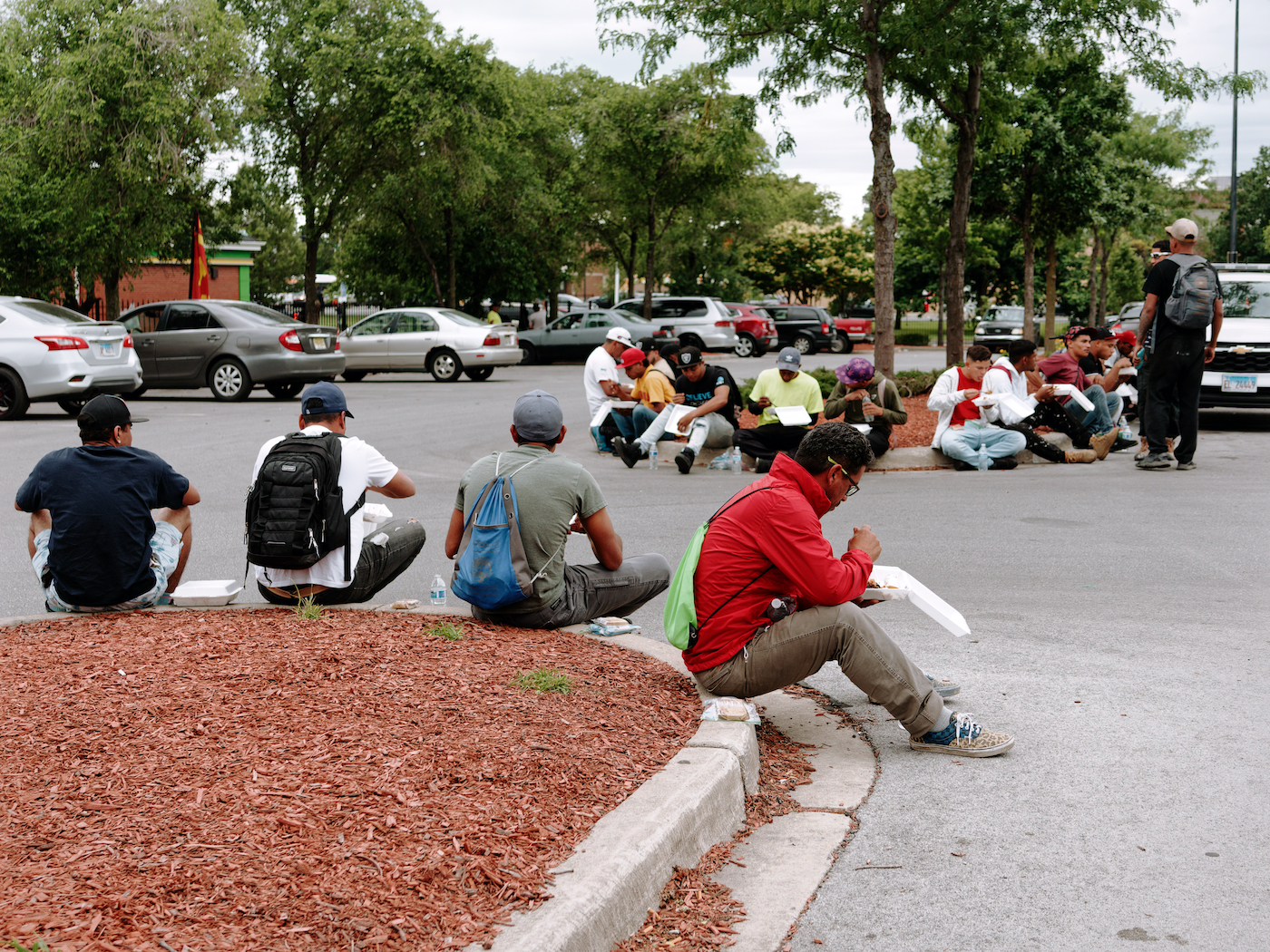
On one Saturday in June, Meraj Alam, a board member of Chi-Care who designed the organization’s website and manages the distribution of food, cheerily chats up the people lined up outside the Chi-Care van, dispensing smiles, jokes, and a compassionate ear to both clients he see every week and people he has never met before. The first stop is a Home Depot parking lot, where migrants and other young men looking for work queue for a meal upon the van’s arrival. Alam has the open, welcoming disposition of a hotel concierge, and engages with the “brothers and sisters” who don’t share his language by pointing and speaking in a rudimentary mix of Spanish and English. He receives plenty of thumbs-ups, thankful nods, and the occasional “gracias de todo corazón” – "thank you with all my heart."
“I know exactly what you mean,” he responds with sudden solemnity when a regular client tells him that at another stop, putting his own hand over his heart.
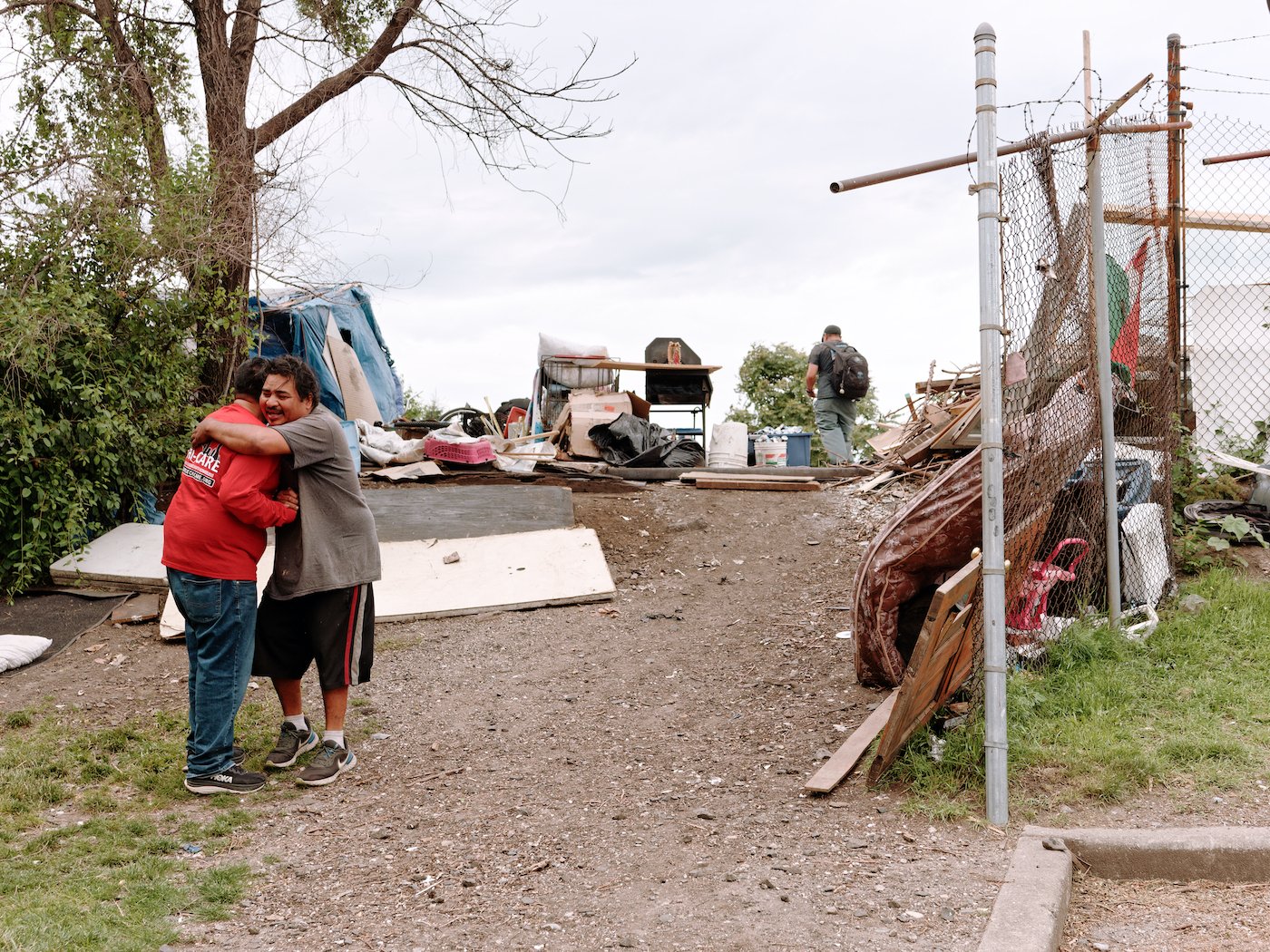
At that stop – a railroad-side encampment up a slope from a parking lot – Alam excitedly welcomes a few familiar dogs, explaining that one lumbering mutt barked at him when they first met but now seems happy to see him. One resident from the encampment exhaustedly tells Alam that he’s getting by, in between expressions of gratitude, before asking if Alam has any shoes. Alam doesn’t today, but he takes down the man’s size and promises to bring him some soon.
The encampment used to be half a mile away, in a now weedy field at the other end of a shopping mall, but it burned down. Alam suspects the fire was not an accident. The residents carted what remained of their belongings across the asphalt to the more hidden location next to the railroad, and Alam and Chi-Care adjusted their route to continue to visit them.
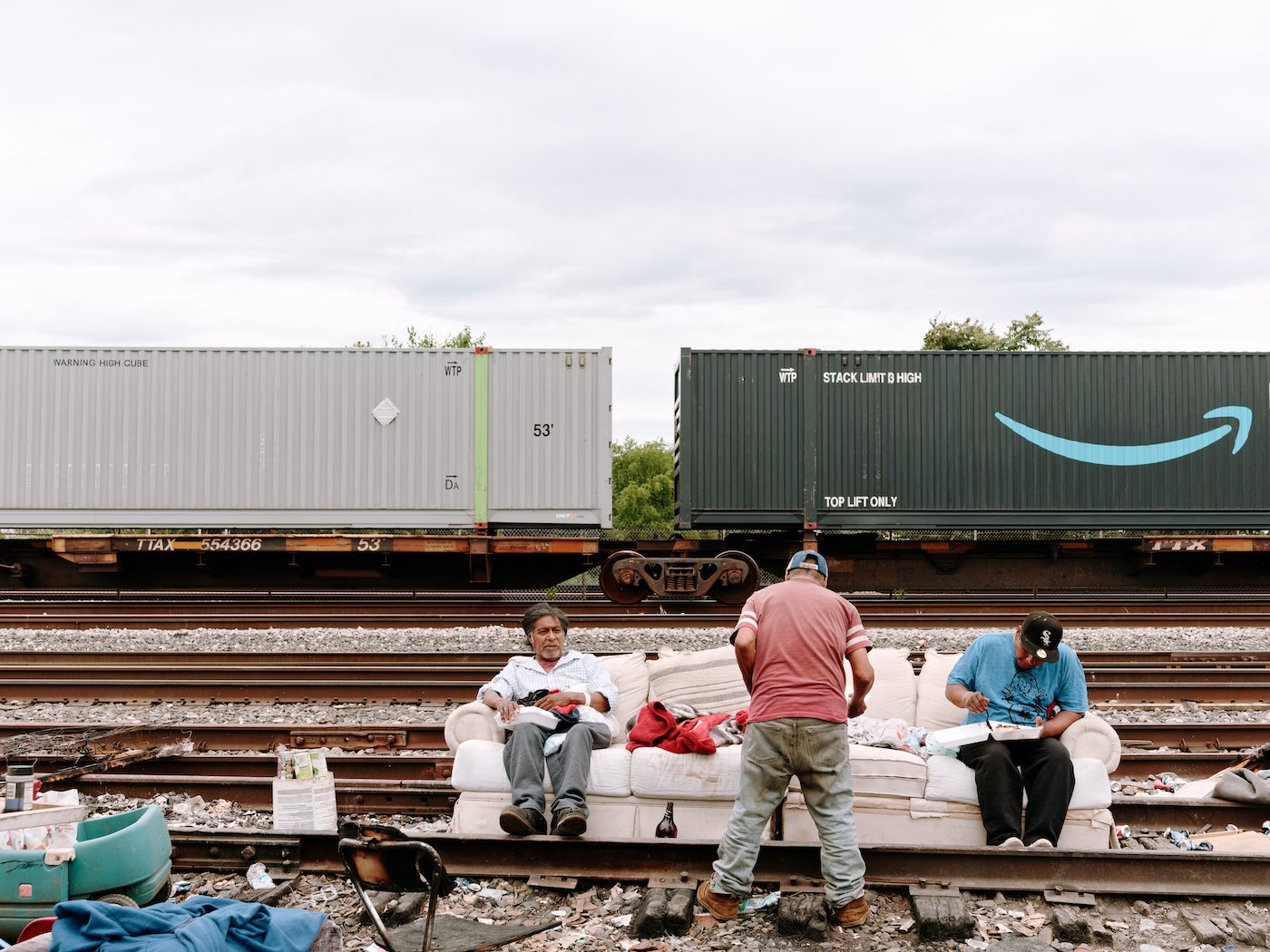
Rerouting is not uncommon, as encampments are cleared by the city or neighbors, or residents simply move on. But the leaders and drivers of Chi-Care try to keep up as people relocate. They will even stop for a single person along a route if they know where that person will be.
“We basically go out and scout; or within our routes, if we see something that is an encampment or a spot where people gather up, we’ll pinpoint it and say, ‘Okay, we need to check this spot out next time and bring a little bit more meals and introduce ourselves,’” says Ahmed.
After stopping at the railroad encampment, Alam sets off in a separate van from the rest of the group to drive a possible new route. He has already found a partner at a barber shop who is now helping distribute meals after some supervisory vetting, and he and Chi-Care want to continue to expand their presence on the south side.
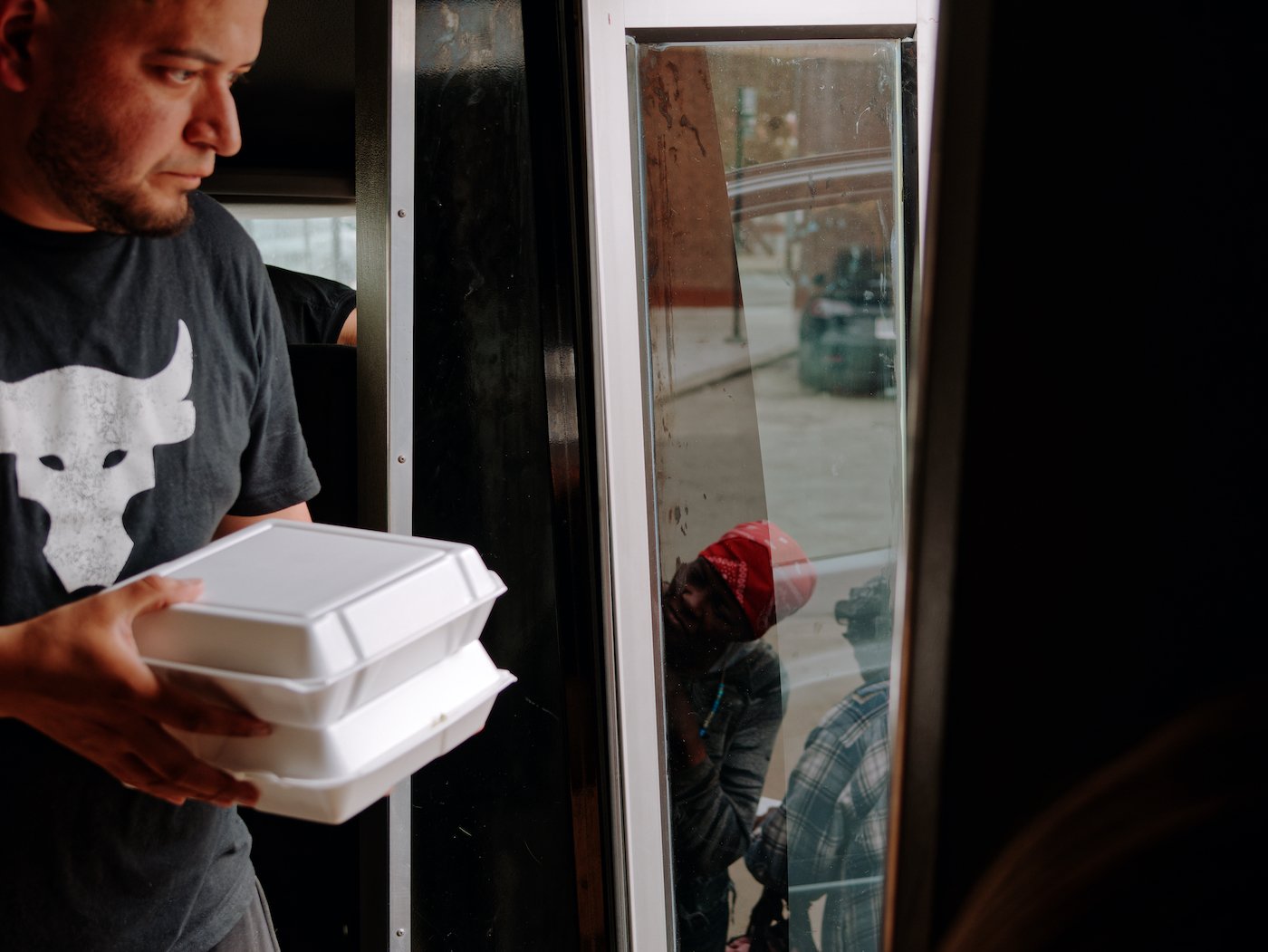
In addition to their current south side drive, they already service downtown and surrounding areas in one weekly route and north side neighborhoods in another. Every Thursday, they hand out meals at a wellness fair hosted by the CTA at the Forest Park Blue Line station. If they have leftover meals after any of these events, they bring them to a shelter. They also partner with various organizations to provide meals and other needs at fairs and events that are less frequent. And, with the help of the Greater Chicago Food Depository, they distributed meals to migrants sheltering at police stations for months last year when large numbers of people began coming to Chicago from the southern border, many on buses paid for by Texas Governor Greg Abbott. Ahmed says Chi-Care was providing up to 8,000 meals a day.
But the initial goals of the organization were far more modest. “Our original plan was to feed 50 people a month,” Ahmed says with a rueful chuckle. He and his friend Asif Iqbal both saw the need of people on the streets and brought them meals, guided in part by the Muslim pillar of zakat, or almsgiving. (Chi-Care is non-denominational despite some of its founders’ Islamic underpinnings.) They wanted to formalize such charity. While Ahmed said there were “many great organizations” working to help unhoused people in other ways, they couldn’t find one whose sole mission was to bring food to unhoused people where they live on a consistent basis.
So they decided to start their own and call it Chi-Care. “We really wanted to give back to our city and take care of the people that we could reach,” Ahmed says. “There are so many people within reach that we can help.”
They connected with a KFC and Mr. Broast in Lombard and took advantage of grants the restaurants had to donate food, then loaded up meals and drove around to distribute them. “Nothing wrong with peanut butter and jelly sandwiches,” Ahmed says, “but we didn’t want to go that approach. We wanted to provide good-quality meals.”
That was in March of 2020.
“What does ‘shelter in place’ mean to somebody who does not have a so-called home?” Ahmed says of the pandemic-era order that went in effect then. “That gave us a bigger incentive of going out there and committing to this mission.”
While the original plan was to distribute meals once a month, they immediately decided that they needed to go out weekly. With the help of a group of “stellar individuals” like Alam, they began to expand and eventually attract other volunteers. They have distributed food every single week since March of 2020.
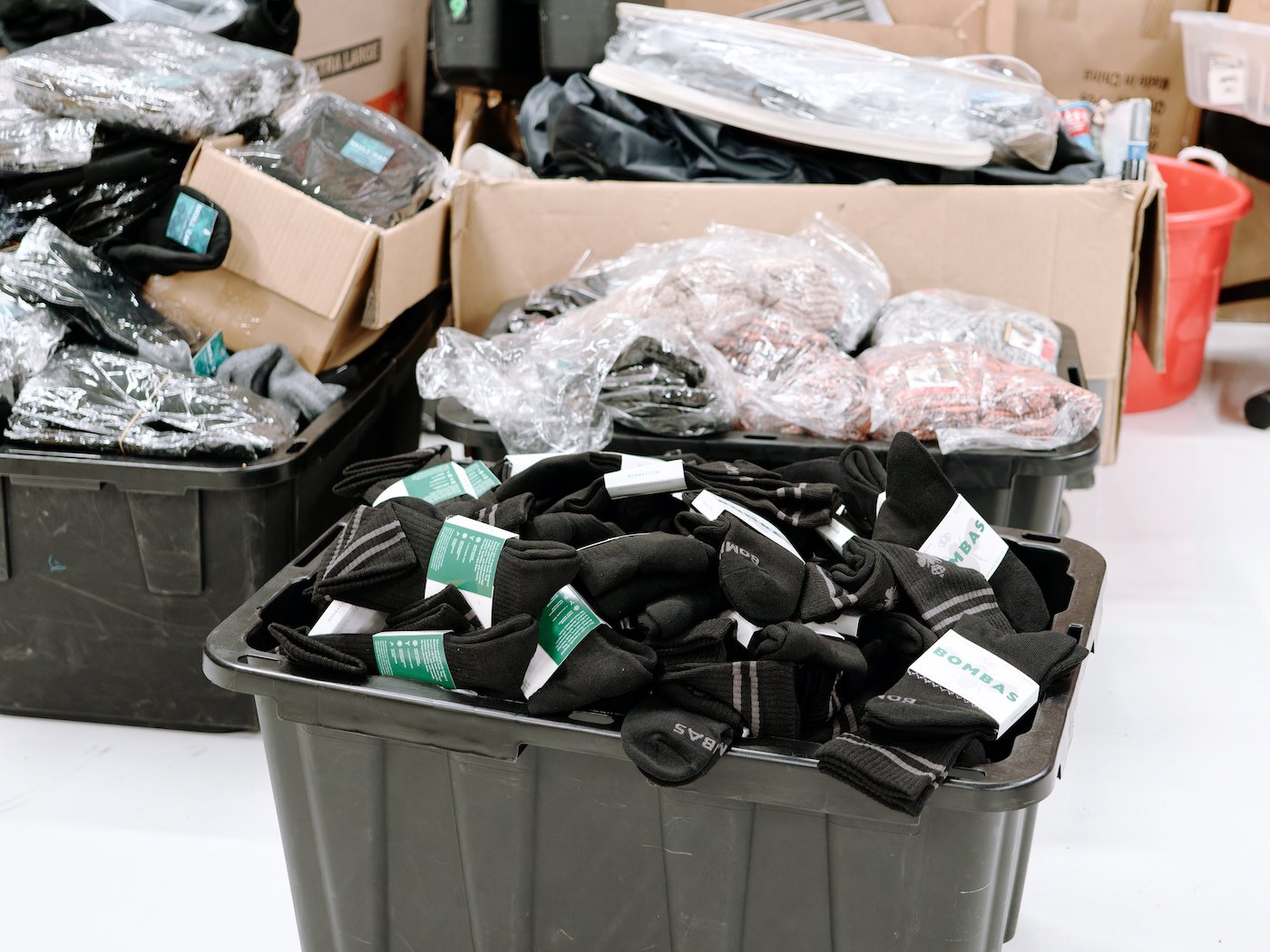
Meals continue to come from restaurants such as Pita Inn, Tandoor Char House, Ghareeb Nawaz, and some thirty others, or an organization such as Fight2Feed. Chi-Care buys the meals at a discount. They’re often already packaged, but sometimes other organizations or companies volunteer to pack up food for Chi-Care – that’s how Maddie Jirgal, an amiable volunteer on a recent Chi-Care route, came across the organization. She started volunteering on the routes in large part because of how easy it is to sign up: you simply add your name if there is an opening and show up.
Almost anyone can volunteer. “Basically, if you’re potty-trained,” you can help Chi-Care, Ahmed says with a laugh. Children sometimes join their parents; one young girl comes frequently enough that she has befriended an unhoused girl on the route and always makes sure to see her. Some volunteers are consistent enough that they can drive the van on a route after just a few months of working with Chi-Care, as the young father Ahmed Rashid now does on Saturdays. All of Chi-Care’s staff are volunteers, although they occasionally use paid contractors to fill in gaps and are looking to hire some positions, such as a grant writer.
“We basically tried to stay 100% to the cause, and we did for four years,” says Ahmed. “Now we need to open up positions where we pay people because now it’s time to grow.”
No one in the organization had or has experience in the nonprofit world, even if they were able to leverage some of their knowledge and skills in other areas.
“We’ve just been kind of winging it, man,” Ahmed says. “We’re doing our best, that’s the honest truth. We’re really what you call grassroots. We are learning as we go.”
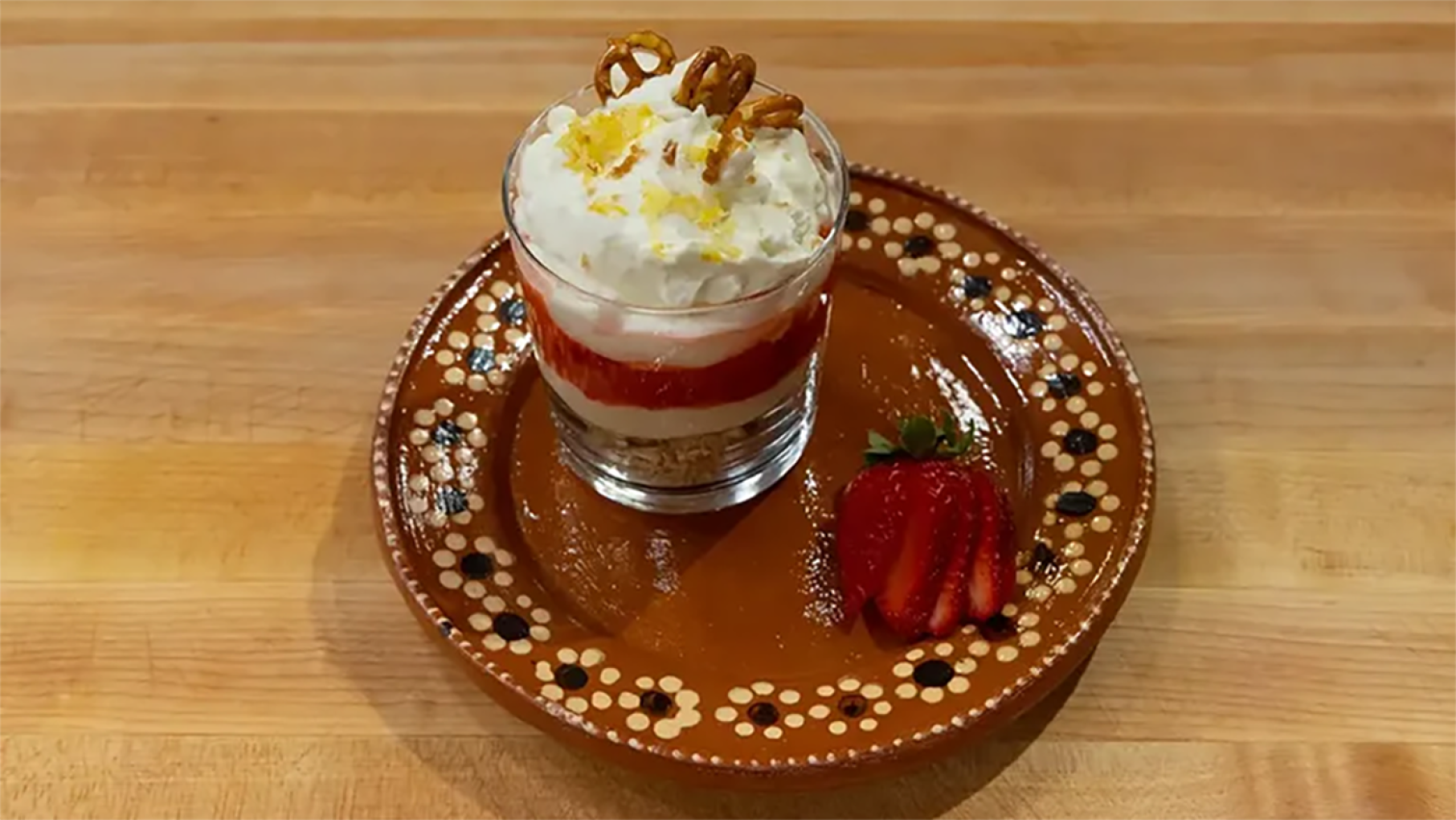
Despite that lack of experience, they have steadily expanded and taken on bigger projects. Funding comes from individuals and corporate donors as well as grants. They are currently receiving the proceeds from sales of the Chicago Chefs Cookbook – a collection of recipes from 46 Chicago area chefs compiled by the nonprofit fundraising organization Chicago Chefs Cook – found at any Mariano’s location. Sample one of the cookbook’s recipe here.
“These are basic needs,” Ahmed says. “We have to show people that we’re out here and we’re humans, and regardless of your financial situation or anything, people can come out, volunteer, experience, talk to people. Imagine getting a smile out of somebody who’s had a very tough life. The reward in that is just amazing.”
This post has been amended to reflect that Meraj Alam is a board member of Chi-Care and did not design the organization's logo.