WTTW's 'Chicago Stories' Revisits Legendary Blizzards That Changed Chicago History
Julia Maish
September 25, 2025
Chicago Stories premieres Fridays at 8:00 pm beginning September 26 on WTTW, wttw.com, and the PBS app.
Discover more at wttw.com/chicagostories.
A new season of WTTW’s documentary series Chicago Stories beginning September 26 includes a look back at a notorious unsolved murder case that still impacts our everyday lives; the saga of a governor whose insatiable thirst for wealth and influence led to his downfall; the origins of many of the foods that are synonymous with Chicago; and the history of Marshall Field’s department store and its whimsical holiday decorations.
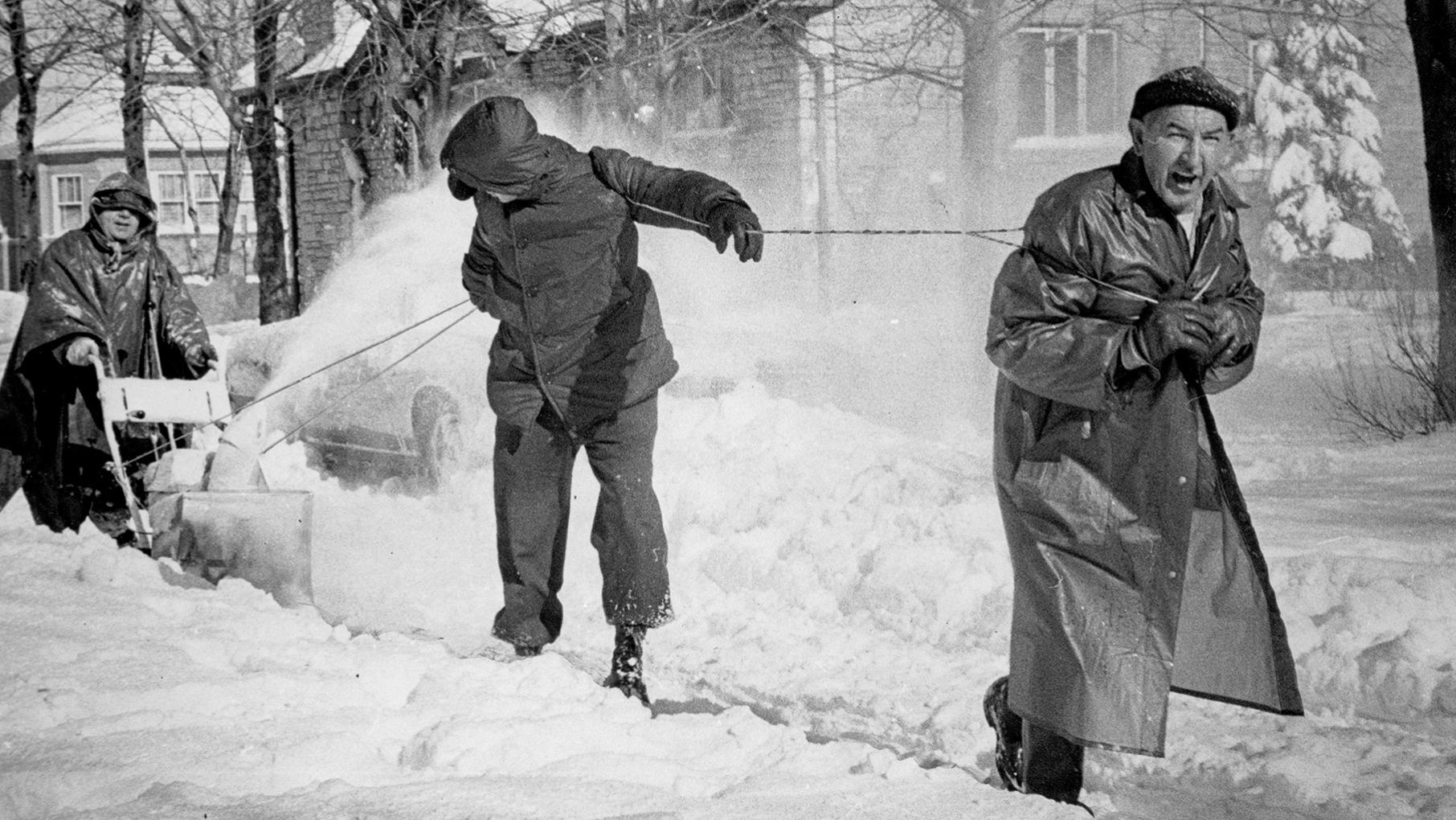
The season kicks off with a tale of two deadly blizzards – one of which dealt a fatal blow to the political career of one mayor and jumpstarted the campaign of another, changing the city’s political landscape forever. The film’s producer, Eddie Griffin, explains what makes this a quintessential Chicago story, and what he learned about our city along the way.
This interview was edited for length and clarity.
Why did you feel it was important to tell this story?
Eddie Griffin: When people talk about legendary blizzards in Chicago, they usually do it with a smile. Even if you hate the cold or shoveling the sidewalk, there’s something charming about snowfall. We romanticize our memories of snow days, of building snow forts, of climbing snow banks. There’s a nostalgic bond we share as a city when we experience a blizzard. Chicago Stories strives to paint the full picture. There were real consequences, real tragedies, and real lives changed in these blizzards. We want to make sure everyone gets the full scope of these iconic moments.
The film focuses mostly on the blizzards of 1967 and 1979. How were those storms similar, and how were they different?
Griffin: They were pretty close in total snowfall. You see the same sort of obstructions in both; abandoned cars, clogged expressways, the airports were closed, CTA shut down, and the Loop ground to a halt. But the difference, and this is what the film is about, was the reaction from City Hall. In 1967, Mayor Richard J. Daley was calm and collected. He basically said “Yeah, there’s a lot of snow – we’ll get rid of it as soon as we can. In the meantime, grab a shovel and help your neighbor dig out.” And people pretty much fell in line. It was a different story in 1979. Patience had run out. That quaint charm of taking a “snow day” had disappeared. People in Chicago didn’t cut Mayor Michael Bilandic the same amount of slack afforded earlier to Mayor Daley. Bilandic was not the same strong personality as Daley. Bilandic was like a deer in headlights, and frustrated citizens ate him up.
The city’s best-known meteorologist, Tom Skilling, is interviewed in the documentary. How did his unique insights contribute to this story?
Griffin: All the nice things said, all the praise, all the love shown to Tom Skilling is 100% deserved. He’s thoughtful. When I interviewed him, you can tell how much he loves Chicago. It’s completely authentic. And his memory recall is insane. He was able to take us step by step, moment by moment, through the 1979 blizzard. It was 45 years ago, and he can describe the conditions like it was yesterday. That’s priceless – it helps us give the story a personal touch.
What do you think city officials – and Chicagoans who experienced them – learned from these epic snowstorms?
Griffin: I think city officials in Chicago, and city officials around the country too, learned that this could happen anywhere. I don’t mean the snow – I mean the political fallout. Mayor Bilandic lost reelection because his snow removal plan failed. Now, I’d like to say that city officials realized they needed to have a better plan, but more than likely they realized they needed to have the appearance of a better plan.
You touch briefly on the 2011 “Snowmageddon” blizzard as well. What was unique about this storm?
Griffin: That was all about timing, and in this case, the timing was terrible. The blizzard hit during rush hour. We knew the snow was coming, it wasn't a surprise, and still people didn’t take all the precautions. Jumping on Lake Shore Drive during a blizzard…probably not a great idea. But on the bright side, we were in the social media age, so we got to follow the chaos in real time. People were able to post photos of their cars buried under the snow and tweet clever names like Snowmageddon, Snowpocalpyse, and SnOMG.
Did you learn anything that surprised you?
Griffin: I learned that the old adage, “If you don’t like the weather, just wait five minutes,” is true for Chicago! The day before the blizzard of 1967 hit, the temperature in Chicago was 60+ degrees. We have film of people biking and picnicking in Lincoln Park. Everyone thought spring had arrived early. And then…all hell broke loose. Temperatures plummeted, the snow followed, and the rest is history.
What do you hope viewers take away from this story?
Griffin: You can’t help but feel a little sympathy for Mayor Bilandic. Every other mayor, every other civic leader, likely couldn’t have done much better. Weather conditions during the blizzard of 1979 were just too nasty. All that snow layered into all that ice – there was no way to keep the city running. But that’s the job of the mayor, that’s the job of our elected officials. It’s okay to hold our politicians to high standards. It’s nothing personal – you make it work or you take the heat. Bilandic could not make it work, so he paid the price.