Americans Overlook Dairy Cow Beef While Europeans Prize It. Table, Donkey and Stick Is Trying to Show Why
Daniel Hautzinger
December 1, 2025

Get more recipes, food news, and stories at wttw.com/food or by signing up for our Deep Dish newsletter.
Have a food story or recommendation? Email us at [email protected].
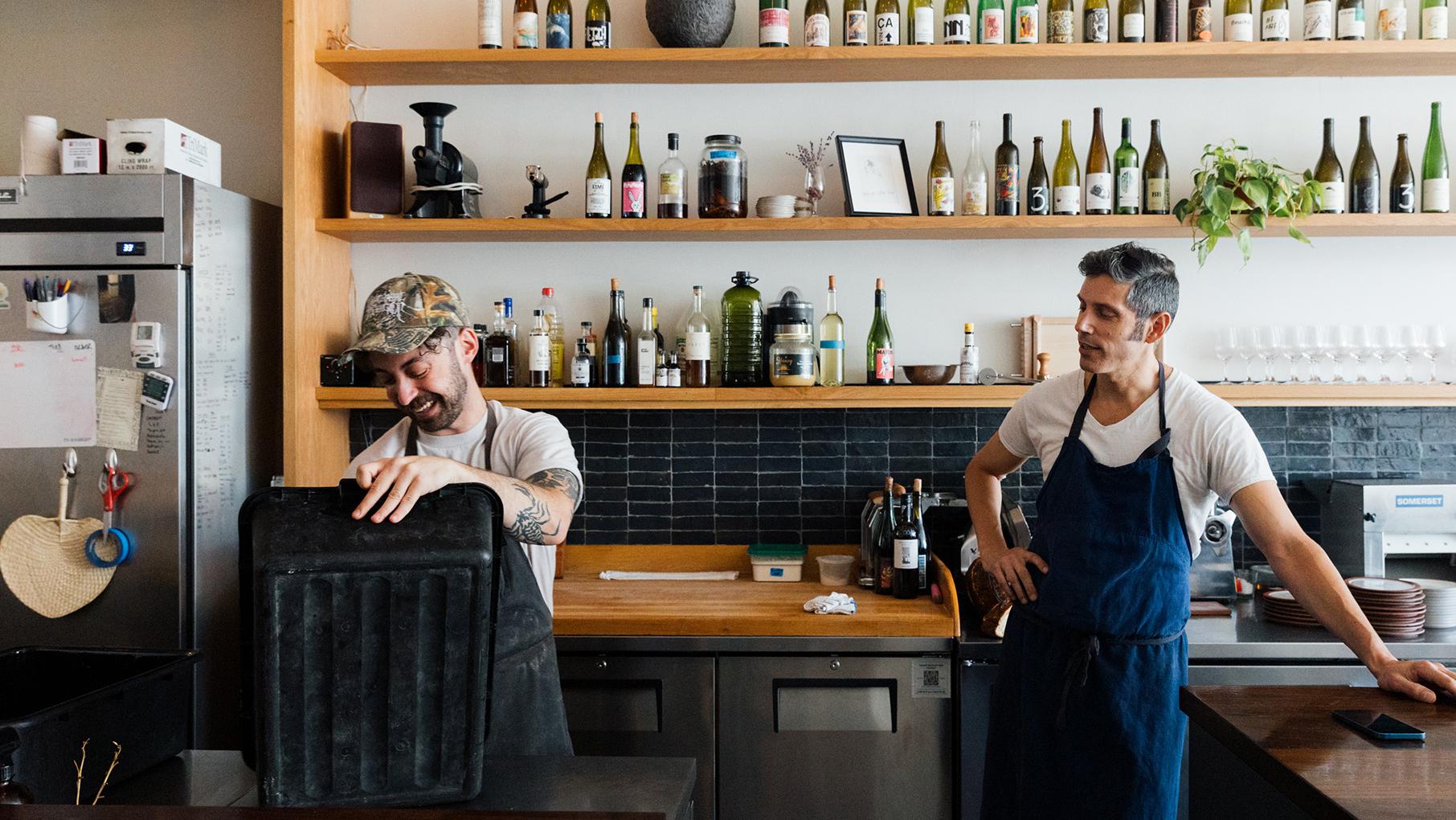
“I’m not a big steakhouse guy,” Matt Sussman says as he stands at a wooden counter in his tiny Logan Square restaurant Table, Donkey and Stick next to a box full of beef cuts and watches them get trimmed and readied for steaks.
Not that these will be any old steaks. Well, they will be old, in the sense that the cow they came from is a seven- to eight-year-old retired Jersey dairy cow, whereas most cattle raised for beef in America are slaughtered around two years; the top four USDA beef grades all require an animal under 42 months. But the steaks won’t be typical.
Sussman has purchased a whole dairy cow from Kilgus Farmstead, a farm southwest of Chicago in Fairbury, Illinois best known for its dairy products. He and his equally curly-headed chef Matt Saccaro are featuring cuts from the cow every Tuesday night through the end of the year in various preparations alongside some classic red wines that pair with beef. (Sussman spotlights special wines at the restaurant every Tuesday.) Obviously, there will be much more than steak.
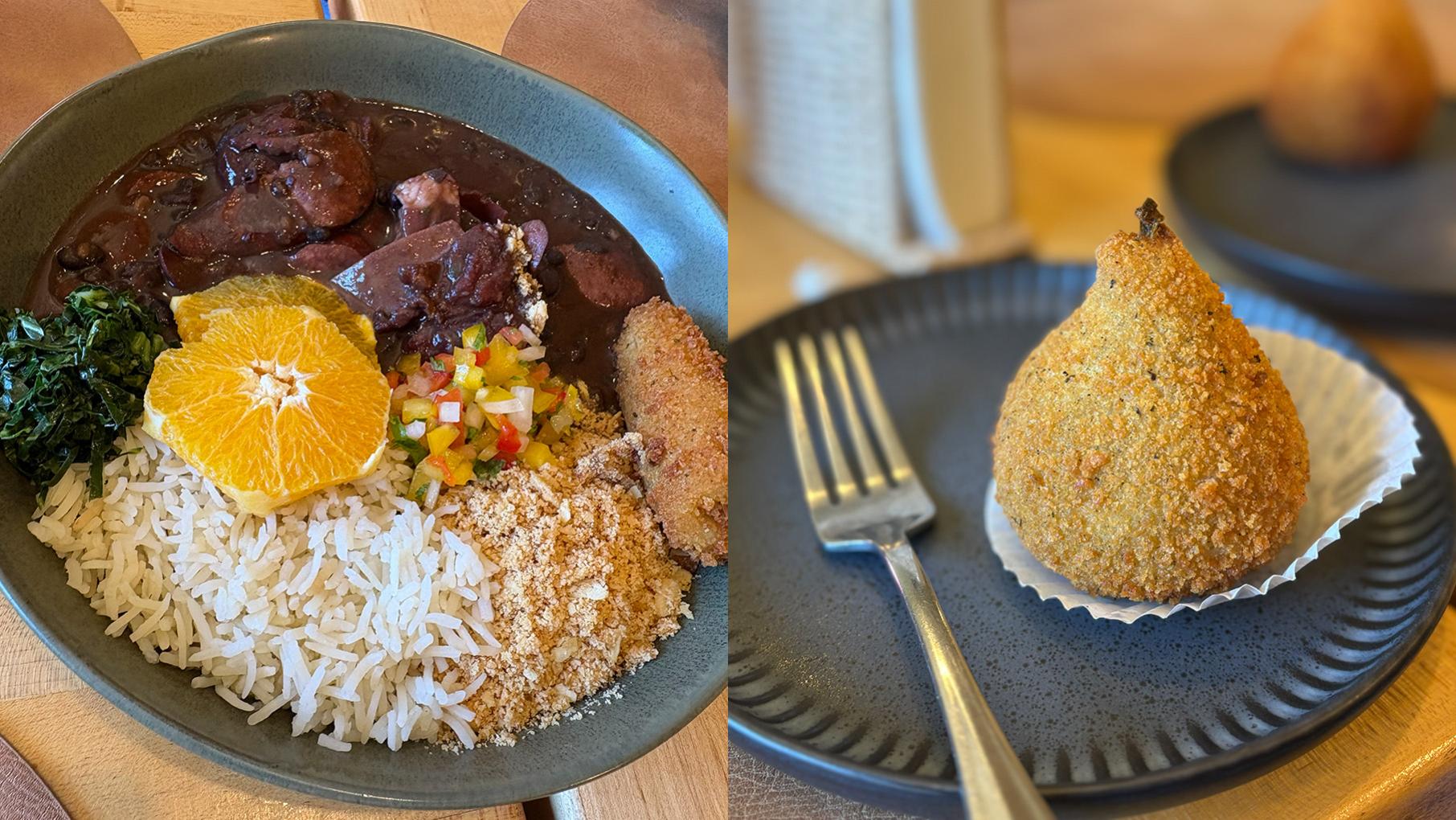
As befits the Alpine-inspired Table, Donkey and Stick, many of the preparations are European-style: boeuf bourguignon and its Italian cousin brasato al barolo – both paired with the wine for which they are named – have already been on the menu, while butcher steaks with bordelaise sauce and faux-filets with bearnaise sauce are coming up. The parts of the cow that don’t star in a dish will be turned into charcuterie and used in other ways. This is a restaurant that makes its own charcuterie and hosts an annual dinner highlighting offal and off cuts, after all; both Matts have aged homemade salamis in their homes at some point in their lives.
The older dairy beef has a different flavor than the Angus beef Americans most often eat: more flavorful, earthier, mushroomy in a reverse of the way that we say mushrooms are meaty. If Angus is a portobello, the Jersey beef from Kilgus is a morel. There’s less fat, and it’s a bit less tender; as those who go for ribeyes over filets know, tenderness doesn’t necessarily equate to flavor. For lack of a better word, it’s beefier.
It is not what you would find at most steakhouses.
“I would just go to a lot of restaurants before I would go to a steakhouse personally, because I’d rather see something that’s unique and represents the person that’s cooking it, their perspective,” Sussman says as Saccaro sears a small, oblong portion for them to taste.
“You go here for something like this,” says Saccaro as he and Sussman appraise the flavor and texture. “We’re not going to do the 22-ounce Wagyu. That’s not our style.”
Learn more about Chicago's steakhouses in our documentary and website Chicago Stories: Iconic Foods.
How Dairy Cows Stopped Being Beef
“Would you pay less for a chicken because it laid eggs?” Andrew Roberts asks.
Roberts grew up in Wales, “where a dairy cow was still a cow,” he says. “When a neighboring farm had an old [dairy cow] that was due to be dispatched, that’s the beef you had.”
Roberts is currently the chef at West Town’s Nettare, where he has been serving a Kilgus dairy ribeye since the summer. “For me, the flavor is more enjoyable,” he says, explaining that he’d take dairy cow beef over prized Wagyu. “People describe a good steak as tasting of butter, and literally the fat on a dairy cow does taste like butter. It has this real sort of creamy, complex, aged quality to it.”
“I think if we were in any other place than America, this would be totally normal,” says Table, Donkey and Stick’s Saccaro.
It was in land-rich, mass production-pioneering America that a preference for young beef took hold – as a necessary prerequisite to the abundant, low-price beef that for so long made up so much of the American diet, from hamburgers to steaks. As meatpacking tycoons began to consolidate America’s livestock trade in the infamous stockyards of conveniently located Chicago in the latter part of the nineteenth century, transforming the cattle raised on the plains of the West into individual cuts of beef for the dense urban population of the East, new technologies such as refrigeration and a use of all the non-edible parts of the animal allowed them to offer meat at cheaper prices. That only stimulated demand further, leading ranchers and meatpackers to try to provide more and more beef. If a steer took years to raise to full weight, that was years before it could be sold for beef, as well as years of costly feed it needed to consume. Breeders managed to compress the lifespan of cattle so that they were ready and profitable to slaughter by their second year, while ranchers began finishing them with high-fat grains and oil seeds to fatten them up even more quickly. The cattle population of the United States more than doubled from 1870 to 1900.
Learn more about Chicago's stockyards in our documentary and website Chicago Stories: The Union Stockyards.
Along the way, Americans got used to the more straightforward taste and more tender texture of young beef. Dairy cows started being processed for low-quality commodities like hot dogs, hamburgers, or pet foods once they reached the end of their milking years. In the 1970s, meatpackers invented “wet-aging” to tenderize meat and concentrate flavor by vacuum-sealing individual cuts in plastic instead of hanging full sides of beef in refrigerated rooms for weeks. Now, the older method of dry-aging is the outlier rather than the norm, the province of steakhouses and specialty butchers.
Dry-aging attempts to introduce complexity and nuttiness to beef – in some ways replicating the flavor of an older cow. “People talk about aging their beef,” says Roberts, who doesn’t have the space in Nettare to dry-age the beef he serves. “You can age it while it’s upright.”
A young steer “doesn’t have the chance to develop the fat and the marbling,” he adds later.
Of course the chemical process of aging beef is not the same as a cow simply getting older. Table, Donkey and Stick is still dry-aging some of their dairy beef, particularly the ribeyes they’re serving in the style of the Basque txuleton, a prized ribeye that comes from an older dairy cow. Since Kilgus’ dairy cows are pastured and thus mostly grass-fed, like the cows that provide txuletons, there is also an added flavor note in their fat, as Roberts notes. They have not spent their lives standing in concrete stalls being fed hay and grain.
Asador Bastian brought the txuleton to Chicago when it opened a few years ago, attracting national acclaim for offering ribeyes from various breeds of mature dairy cow. While the Holstein available at Asador Bastian is the most common dairy cow in the United States, Kilgus raises smaller Jersey cows for its dairy.
Since dairy cows have to keep having calves to produce milk, and some of those calves are inevitably males that don’t produce milk, Kilgus raises some of its Jersey animals to sell as beef. They’re also working on cross-breeding Jersey and the larger Angus, the common American beef breed, for beef that’s “the best of both worlds,” Justin Kilgus says. “The Jersey breed is made for milk production. The Angus breed is made for meat production. So I feel like we can get a little more flavor and quality on the meat with the Jersey being in there, and on the Angus side of things, we bring in more muscle dimension, more mass basically.”
The cow Table, Donkey and Stick bought from Kilgus is a different animal, however: a full Jersey cow that went through a whole career of producing milk. For that reason, it’s also more sustainable than farmed beef that is fattened as quickly as possible on grain – which has its own environmental footprint – and slaughtered young. You’re getting milk and beef from the same animal, instead of having two cows, each with significant environmental impacts.
“It’s definitely a lot more flavorful, a lot more beefy,” says Kilgus, who has begun selling retired dairy cows through the specialty purveyor Regalis to restaurants around the country, including a Michelin-starred spot in New York City. “It can tend to be a little tougher because it is an older animal,” but that lends itself to some of the slow braising techniques Table, Donkey and Stick is using. Plus, in many other countries, tenderness is not the goal; flavor is. For instance, the grass-fed meat eaten in beef-loving Argentina often has a more toothsome texture, according to Saccaro.
President Trump has recently dropped his tariffs on beef, including from Argentina, in a bid to lower the rising cost of beef. Since retired dairy cows are not typically in demand in the United States, they can also be cheaper, even if they’re pasture-raised on an in-demand independent farm like Kilgus – another part of the draw for Table, Donkey and Stick’s Sussman. “We think people should have a chance to experience what these animals have to offer without dropping $100+ on a steak special or tasting menu at a fancy restaurant,” he emails.
An Invisible Agricultural System
Table, Donkey and Stick is named after a German fairy tale collected by the Brothers Grimm in which three sons are kicked out of their father’s house because their milk-providing goat lies that they have not allowed it to feed on enough grass. When that goat eventually stopped producing milk, surely that family would have butchered, cured, and eaten it, as a vital source of food they would be loath to waste.
In the modern world, we don’t know what happens to the animals that produce our milk, once they inevitably stop being able to do so. Thanks in large part to the innovations of the stockyards in Chicago, our agricultural system is both the largest it has ever been but also entirely out of sight. Most urban consumers of meat are entirely divorced from food production: we don’t know, and don’t have to know, what it takes to raise an animal and break it down into the cuts of meat we buy individually wrapped at the supermarket, much less what happens to the parts that aren’t as popular or the animals that aren’t processed for human consumption. We certainly haven’t taken a goat or cow out to pasture to feed.
Justin Kilgus – who started the meat program at Kilgus with goats that he raised with his brother Trent – at first offers to share the name of the cow he sold to Table, Donkey and Stick, then hesitates. “That would be maybe something cool to put in the article, [or] maybe something that people would be like, ‘That’s too relatable to my pet,’” he says.
“As a restaurant, I think it’s almost more important to set an example,” Sussman told WTTW about Table, Donkey and Stick’s annual offal dinner in 2022, which uses cuts that, like retired dairy cows, more frequently are abandoned to the commodity market. “Obviously, we care about our [environmental] impact, but I think it’s more about showing people that these things are delicious, and it’s important to think about where the products you’re consuming are coming from, and supporting smaller, more local suppliers.”
It’s not just a return to the older, less mechanistic way of doing things; it’s also, in an odd way, a realization of the maxim of the very Chicago meatpacking system that industrialized meat in the first place, in a city that idolizes steakhouses. At Table, Donkey and Stick, Sussman and Saccaro are doing their best to use “everything but the squeal.”