A New Book Outlines Chicago's Evolution from a Meat-and-Potatoes Town to a Dining Capital of the World
Daniel Hautzinger
February 3, 2026
Get more recipes, food news, and stories at wttw.com/food or by signing up for our Deep Dish newsletter.
Have a food story or recommendation? Email us at [email protected].
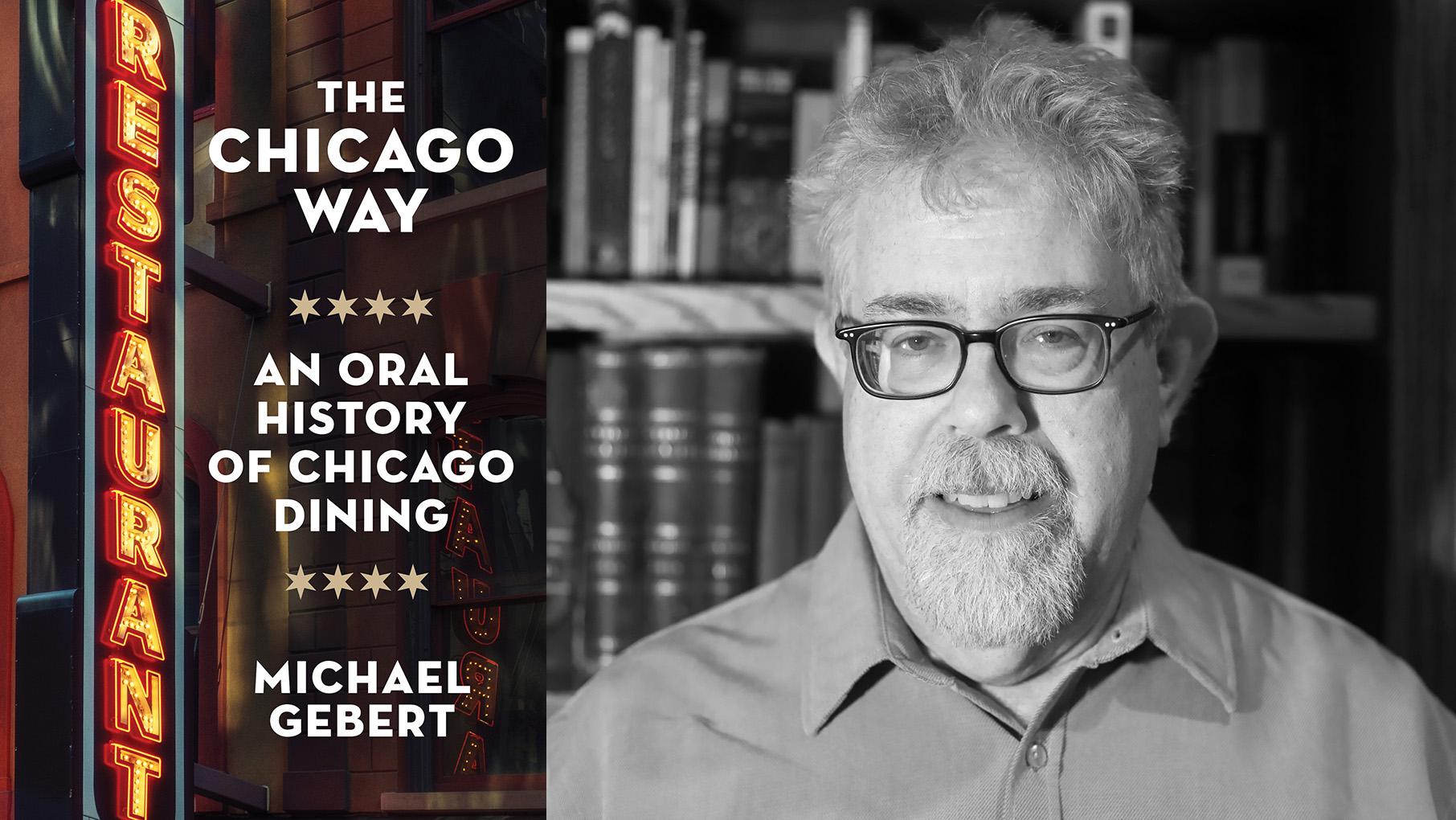
Charlie Trotter’s eponymous Lincoln Park restaurant was one of the most famous and influential in America. But when we first meet Trotter in The Chicago Way: An Oral History of Chicago Dining, a new book by longtime food reporter Michael Gebert, he’s a high schooler dining at The Bakery before his prom. Kevin Boehm is one of the most successful restaurateurs in Chicago, with The Girl & the Goat, Boka, and Momotaro among the many spots he has opened with his partner Rob Katz under the name Boka – but his first appearance in the book is as a young man who has the wine list from Gordon faxed to him in order to precisely plan out a tight budget; he and his girlfriend go to Chicago just to have this one meal.
“I wanted to introduce everybody at their early point and follow them through,” says Gebert.
The West Loop is full of wholesale distributors of ingredients during the day and prostitutes at night before Boka and others make it a hot neighborhood, proving how restaurants helped drive the transformation of the city. We see River North transform from an area with leather bars to one with destination restaurants and then nightclubs. And Chicago pulls itself up with its big shoulders from a town with a meat-and-potatoes reputation to a dining capital of the country, if not the world – the city that serves as the setting for one of the biggest cultural events around chefs and restaurants in the last five years, the acclaimed TV show The Bear, as well as the perennial host of the James Beard Awards, the Oscars of the food world.
For Chicago’s dining scene writ large, he decided to start with The Bakery, opened in the then undesirable neighborhood of Lincoln Park in 1963. Louis Szathmary was an immigrant with a doctorate in psychology who had learned to cook in the Hungarian army; his wife, Sadako Tanino, was a hair salon owner who had been sent by the U.S. government to a Japanese internment camp during World War II. Szathmary had worked as a chef and food scientist for brands like Armour and Stouffer’s, and he and Tanino initially opened The Bakery as a place to prepare snacks for airlines. The growth of a successful restaurant out of a humble wholesaler is not unlike the transformation of various COVID-era pop-ups into full-scale brick and mortar businesses decades later.
And COVID is where Gebert ends his book, with various restaurateurs recalling the dark days of losing loved ones, PPP loans, to-go pivots, and ever-changing rules. He wanted to set down what it felt like to actually navigate such trying times, before “everyone forgets everything about them.”
He started working on the book as the pandemic took hold in the U.S. Evanston-based Agate Publishing had approached him with the idea for an oral history of Chicago dining after the success of its Ensemble: An Oral History of Chicago Theater, by Mark Larson.
The format is effective for the restaurant business, given the colorful characters and wild stories – such as the customer in a gorilla suit who was chased down the street the night before a massive blizzard after causing mischief at the Logan Square gastropub Longman & Eagle. It allows readers to draw their own conclusions about controversial figures like Trotter, who had a reputation for being both a genius and a tyrant, by presenting stories from people who loved him – or hated him.
But oral history also played to Gebert’s strengths, given his experience editing chefs down for a Chicago Reader video series that won him a James Beard Award. He interviewed around 210 people for the book, ranging from busboys to chefs and owners, frequent guests of restaurants to the farmers who supplied those restaurants, journalists and bloggers and sommeliers and a designer and a PR person – all the people who have contributed to make Chicago a great restaurant city over the past five decades.
In that time, the role of chef went from a simple job to that of an admired profession; the center of restaurant prestige moved from the suburbs back to the city; European-born (especially French) chefs were succeeded by homegrown talent; chefs began to use – and support – local farms, helping to set up the Green City Market; and exceptional restaurants no longer had to be French, as Rick Bayless showcased regional Mexican cooking and Tony Mantuano spotlighted the variety of Italian cuisine at Spiaggia.
It’s in that last category where one might quibble with the inevitable absences from The Chicago Way, given the lack of pioneering Asian spots like Arun’s, Yoshi’s Cafe, and Takashi, but Gebert obviously had to make choices – the book is nearly 600 pages. He decided to focus on “the restaurants that changed our world,” as he writes, which often meant ones that received lots of attention and trained a new generation of chefs.
Jean Banchet, the first Chicago-area chef to truly win national acclaim, employed Roland and Mary Beth Liccioni at his Le Francais in Wheeling; they eventually took over and then moved to another icon, Les Nomades. A bevy of chefs came through Trotter’s kitchen, where the infamous chef might suddenly throw away everything you were working on and make you start over. Grant Achatz was one young cook who disliked the environment at Trotter’s and left quickly, eventually returning to Chicago and opening the monumental Alinea just blocks away from Trotter’s. Members of Achatz’s team moved on to their own Michelin-starred restaurants, from John Shields at Smyth to Curtis Duffy at Avenues, Grace, and Ever.
Some chefs keep reappearing. Chris Pandel works at Lettuce Entertain You’s Tru, follows its chefs Rick Tramonto and Gale Gand to their own spots, opens the era-defining gastropub The Bristol, then joins Boka at their steakhouse Swift & Sons. Carrie Nahabedian and Mindy Segal spent time in many of the best kitchens in the city, persevering despite rampant sexism.
“The number of times someone said that a chef said that he wouldn’t hire a woman because it would be too distracting for the men…” Gebert says.
But The Chicago Way isn’t all high-end dining. Gebert chronicles the rise of blogs, forums, and “Cheap Eats” reporters who scoured the neighborhoods for overlooked mom-and-pop spots with “secret” menus that had to be translated from Thai. (Forums were Gebert’s own entry into covering food.) Hot Doug’s and Spacca Napoli represent serious attention to blue-collar street foods like hot dogs and pizza, which Gebert argues provided the foundation for an exceptional dining culture. “It’s not for nothing that when foie gras was temporarily outlawed here, the only restaurant to actually get busted for serving it was a hot dog stand,” he writes of Hot Doug’s.
The foie gras dust-up made international news. Over the decades, plenty of Chicago restaurants and chefs have garnered global reputations; Achatz just brought Alinea to Tokyo on his restaurant’s twentieth anniversary. The mid-2000s, when Achatz opened Alinea to frenzied press anticipation and Blackbird, The Bristol, and Elizabeth were also wowing diners, was the most recent golden age of Chicago dining, in Gebert’s estimation. But the city “seems on its path to the next great era of Chicago dining,” he writes at the end of The Chicago Way. Having surveyed decades of its history, he has a better idea than most.