
'Downton Abbey' Recap: Season 1 Episode 1
Julia Maish
May 17, 2026
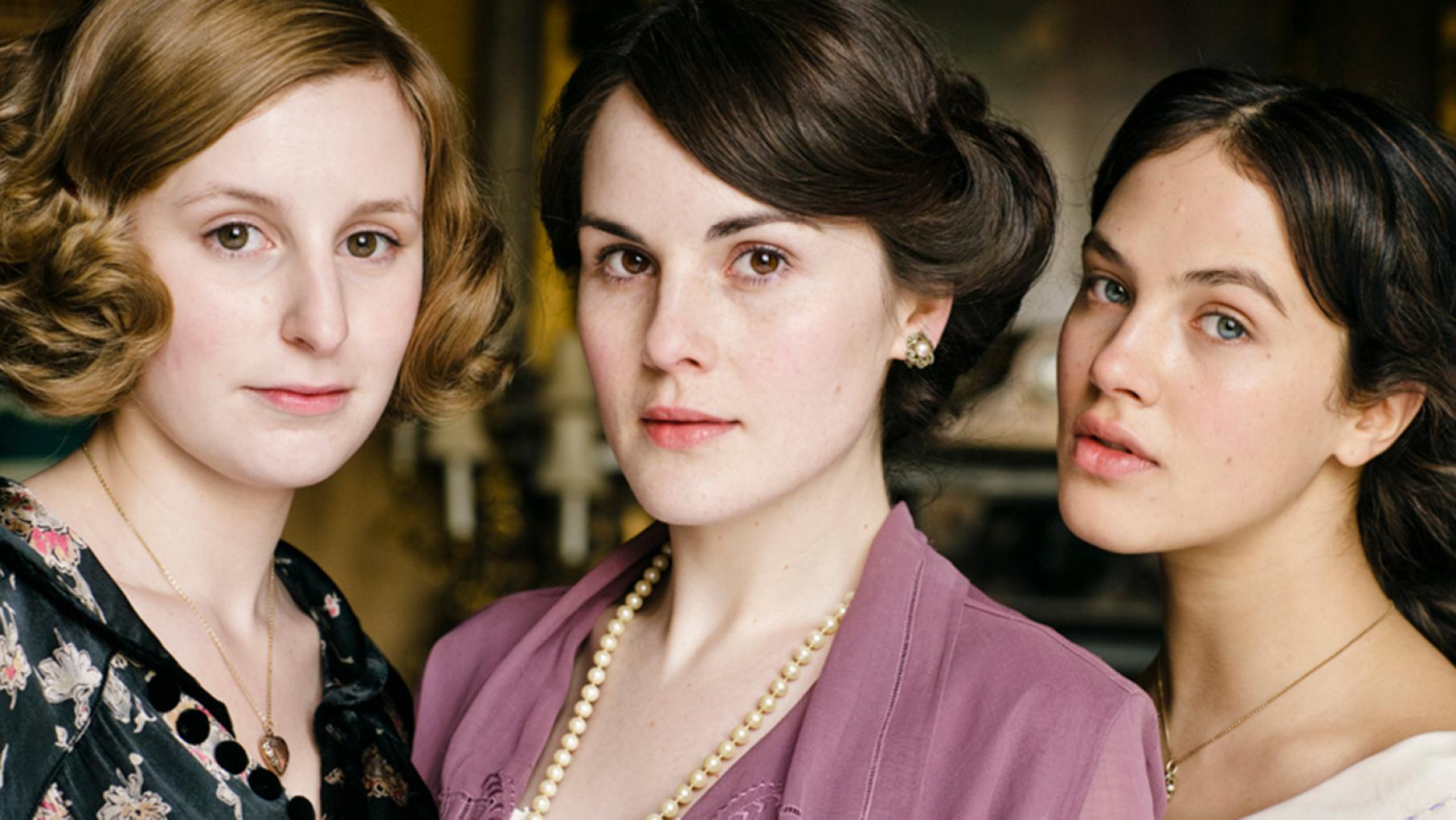
Downton Abbey airs Sundays at 9:00 pm and is available to stream by WTTW Passport members..
Keep up with your favorite dramas and mysteries by signing up for our newsletter, Dramalogue.
Early morning, April 15, 1912. We open on a close-up of a beeping telegraph machine. A woman stares, aghast, at the transmission. Her colleague, equally shocked, tells her grimly, “I’ll take it up there now.”
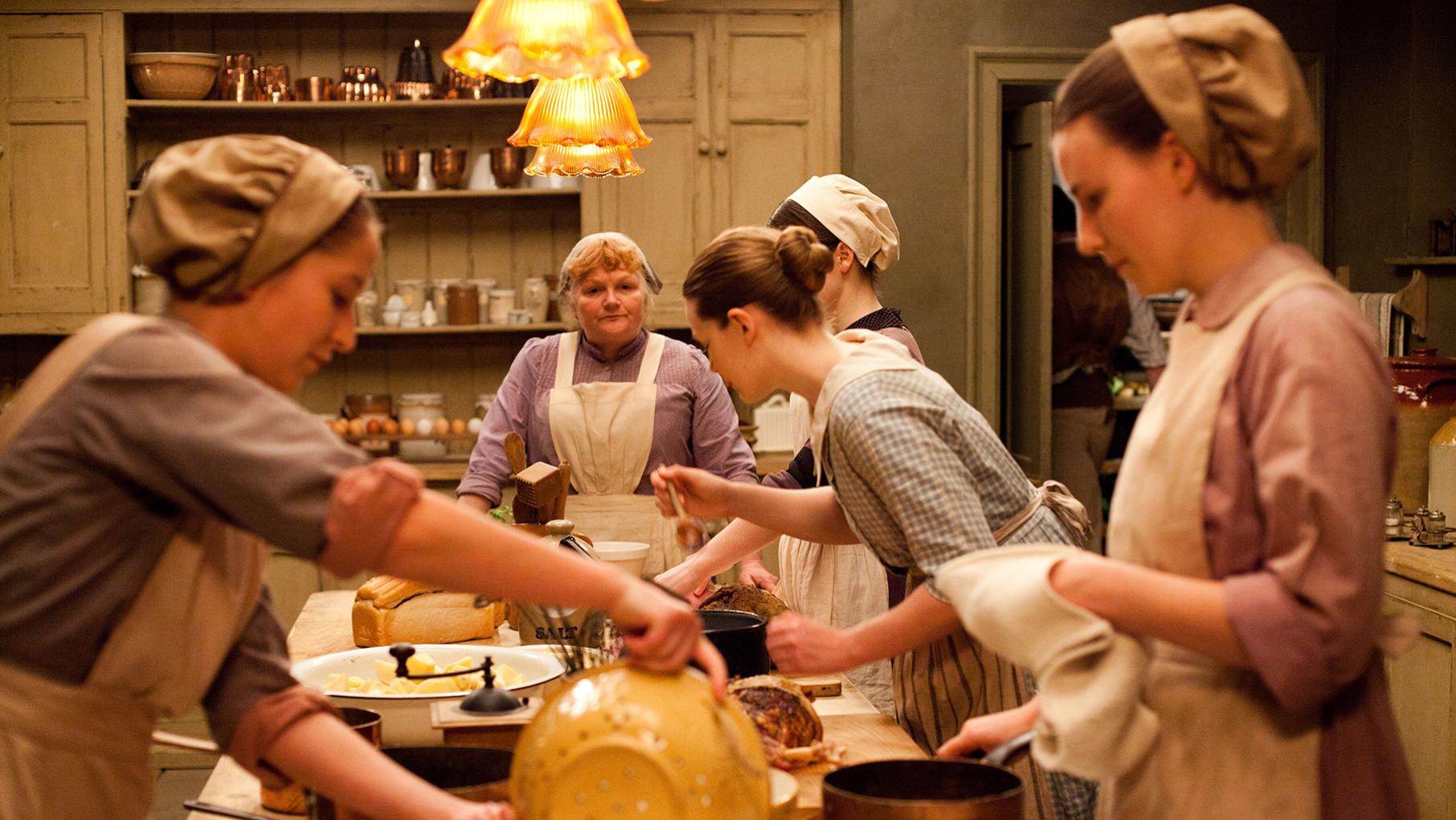
“There” turns out to be Downton Abbey, a sprawling estate in the Yorkshire countryside. Inside, the naïve young kitchen maid Daisy delivers a wake-up call to her fellow servants, housemaids Gwen and Anna. Down in the bustling kitchen, the red-faced cook Mrs. Patmore already has breakfast in progress. The housemaids, under the steely-eyed supervision of housekeeper Mrs. Hughes, scurry about dusting and straightening the rooms as an imperious young footman, Thomas Barrow, collects last night’s dirty wineglasses, annoyed that William Mason, a younger footman whom he frequently bullies, has presumably overslept.
The fateful telegram arrives at the house along with the day’s newspaper, as Lady Mary Crawley, the family’s gorgeous eldest daughter, watches moodily from her bedroom window. William, pressing the folds out of the newspaper, gapes at the front page and shows it to Mr. Carson, Downton’s formidable butler. As the servants are summoned by ringing bells all over the house, they grapple with the news that the “unsinkable” Titanic has sunk.
Cut to the upstairs dining room, where Mary’s father Robert Crawley, Lord Grantham, has already heard. As Lady Mary and her younger sisters – Lady Edith, inexplicably regarded as plain, and the pretty and kindhearted teenager Lady Sybil – sit down to breakfast, Robert receives and reads his telegram. Without a word, he bounds upstairs to his American-born wife Cora, Lady Grantham.
Breakfasting in bed, a gobsmacked Cora is reading about the sinking in a tabloid. Robert reveals that Downton’s “heir and the spare,” his cousins James and his son Patrick, were on board and are presumed lost. Mary had been engaged to marry Patrick, and Cora urges her husband to break it to her before she hears about it from someone else.
A new employee, John Bates, arrives in the servants’ hall: he is Robert’s newly hired valet. Anna and Gwen are welcoming and friendly, but the dour O’Brien, Cora’s maid, pointedly notes his cane and pronounced limp. Mr. Carson and Mrs. Hughes have reservations, too – how will he manage in a house with so many stairs? Bates assures them it won’t be a problem. Still, some of the other servants already resent him – especially Thomas, who had been angling for the job.
Mary is strangely unmoved by her fiancé’s passing – evidently, this was purely an arranged marriage. And now Robert must seek out the next male heir in the family, because by law and to Mary’s bitter disappointment, a woman cannot inherit the estate. When Robert married Cora, her huge dowry became inextricably linked, or entailed, to the Downton estate. Now that Downton’s latest male heirs are dead, Cora urges her husband to break the entail so Mary can inherit her money, but Robert insists that it cannot be done. (Strap in – this issue will come up a lot.)
After Thomas reluctantly shows Bates the ropes of the valet position, it’s clear that he and O’Brien are in cahoots, and they begin to plot against Bates, dropping hints with Cora and Mr. Carson that he’s incompetent. Anna, however, is firmly in his corner.
Robert’s mother, the Dowager Countess Violet Crawley, sweeps in to commiserate with Cora – not about the deaths (pfffft!) but about the fate of the estate. We learn that Robert’s unknown third cousin is next in line as heir, because, as Violet chides Cora, no doubt for the umpteenth time, she didn’t produce a male heir. Therefore, Violet declares, the entail must be smashed so that Mary can inherit. (Good luck with that.)
Down in the servants’ hall, we find out who hired Bates and why when Robert makes a rare appearance downstairs to welcome him: Bates had been his soldier-servant during the Boer War. Oddly, Bates’s limp, the result of a war injury, seems to come as a surprise to Robert.
Enroute from James and Patrick’s memorial service, we learn that the new heir, Matthew Crawley, is an unmarried attorney who lives with his widowed mother Isobel in Manchester. It’s also clear that Edith had been in love with Patrick and deeply resents Mary’s indifference to his loss. As the servants are bustling to serve an elaborate luncheon for the guests, we see that Daisy has a crush on Thomas, and is so flustered that she inadvertently confuses a bowl of cleaning powder for chopped egg whites. Only a frantic last-minute substitution saves them from serving chicken ala poison.
Cut to several months later. The handsome and eligible young Duke of Crowborough is visiting Downton, presumably because he assumes Mary is now the heir. The family and servants assemble on the gravel drive to greet the arriving Duke – when nobody is looking, O’Brien kicks Bates’s cane out from under him, causing him to fall heavily to the ground in front of everyone. That night on Mr. Carson’s recommendation, Robert regretfully fires Bates. Bates is devastated, as he will probably never find another job and will likely end up in a poorhouse (the 1910s equivalent of a homeless shelter). Anna later discovers him weeping in his room and asks him to keep in touch. He will be leaving on the train in the morning.
Having used Thomas’s services as a valet on his previous visit, The Duke asks for him again. He later flirts with Mary, inveigling her into giving him a tour of the male servants’ living quarters. Bates catches them just as the Duke emerges from Thomas’s room. Mary is mortified.
Privately over after-dinner cigars, Robert makes it clear to the Duke that Mary will not be inheriting Downton, and is livid when the Duke callously indicates that he’s no longer interested in her. Watching as the Duke gives Mary the brush-off, Edith is gleeful: “So he slipped the hook.” Despondent, Mary shoots back, “At least I’m not fishing with no bait.”
Cut to the Duke’s bedroom, where we learn the truth: Thomas and the Duke are lovers and he came to Downton purely to nail down a rich heiress. Now that the plan has failed, the Duke has no further use for Thomas. Thomas attempts to blackmail him, claiming he has proof of their relationship (homosexuality was then illegal). “You mean these?” asks the Duke, producing a stack of letters that he earlier stole from Thomas’s room. He flings them into the fire before Thomas can stop him.
The next morning, as the car carrying the Duke and Bates to the train station is about to depart, Robert has a sudden change of heart, telling Bates to return to the house, to Mr. Carson’s (and Thomas’s) intense displeasure. “I didn’t think it was right,” Robert explains.
Cut to the dining room of a modest home in Manchester. Isobel Crawley is at breakfast with her very handsome son Matthew when he receives a letter from their distant cousin Robert. As he scans it, Isobel asks casually, “What on earth does he want?” Matthew looks up at her, thunderstruck, and replies, “He wants to change our lives.”
Fast forward a few months. Matthew and Isobel have arrived at their new home, Crawley House in Downton village. It’s clear that thoroughly middle-class Matthew is deeply uncomfortable with the whole setup. This situation is made worse by Molesley, bowing and scraping as their butler and Matthew’s valet. Matthew is not used to anyone waiting on him. As Molesley fetches tea, Isobel sharply admonishes Matthew to stop complaining – the Crawleys “will think we won’t know how to behave.” “I won’t let them change me,” Matthew retorts. “And before anyone gets any ideas, I will choose my own wife – they’re clearly going to push one of the daughters on me.”
Enter “one of the daughters” – Mary. Cora has sent her to invite Matthew and Isobel to dinner. She overheard him, of course. Matthew has just made a giant fool of himself, and compounds it by gaping at her, dumbfounded by her beauty. Isobel invites her to stay for tea, but Mary demurs, with a parting shot at Matthew: “I wouldn’t want to push in.” Matthew hurries after her, explaining that he was only joking. Mounting her horse, Mary responds derisively, “I agree. The whole thing is a complete joke.” She rides off in a huff, and Matthew stares after her, wondering what just happened. (Ladies and gentlemen, this is your “meet-cute.”)
That evening, the entire household, upstairs and down, has assembled to greet Matthew and Isobel, who approaches Violet eagerly, extending her hand. “What should we call each other?” she asks. Violet haughtily replies, “We could always start with Mrs. Crawley and Lady Grantham.” After that withering putdown, they all head into the drawing room as the servants smirk.
At dinner, everyone is polite on the surface, but Mary and Violet do their best to make Matthew and Isobel feel uncomfortable, especially after Matthew reveals he has taken a job at a local law firm and Isobel, a trained nurse, suggests she could make herself useful at the local hospital. As the family grapples with the foreign concept of working for a living, Robert worries that Matthew won’t have time to learn about the estate, but Matthew blithely assures him that he can be available on weekends. Violet is puzzled, asking, “What is a weekend?”
Downstairs, to Thomas’s satisfaction, Mr. Carson harshly reprimands poor William for a small tear in his uniform. And that night in her and Anna’s room, Gwen is perusing a mysterious letter when Anna arrives to turn in. They speculate that Violet might be contriving to get Mary engaged to Matthew in order to secure the estate. Anna, closer to Mary than anyone else in the house, thinks that Mary probably won’t go for it, but might also be relieved not to be marrying Patrick.
The next day, Matthew arrives home from work to find Violet and Cora at tea with his mother. Molesley does his best to wait on Matthew, but Matthew stubbornly insists on doing everything himself, as the three women look on disapprovingly. Later, Matthew inadvertently denigrates Molesley’s “silly” occupation. Molesley, who takes pride in his work, is despondent.
Dressing for dinner, Edith and Mary bicker about Matthew as Edith surreptitiously reads a letter she stole from Mary’s diary. Cora dismisses everyone except Mary, and broaches the idea of marrying Matthew in order to keep the estate in the family. (The servants are always right.) Mary is appalled by her suggestion, assuming that Violet was as well. “Did she laugh?” she asks her mother. “Why would she?” asks Cora. “It was her idea.”