Liberian and Ivorian Food Come to Chicago at Nimba, Thanks to a Granddaughter Honoring Her Grandmother
Daniel Hautzinger
August 14, 2026
Get more recipes, food news, and stories at wttw.com/food or by signing up for our Deep Dish newsletter.
Comfort Wingba grew up speaking Gio (also known as Dan) in Liberia, but her English gets much more use in her adopted hometown of Chicago, where she came to flee war in her native country. But she has universal languages beyond those: her expressive repertoire of laughs – mirthful belly-shakers, sly chuckles, self-satisfied cackles – and her cooking. She has always devoted hours to the kitchen in order to feed people, often giving away her palm butter or stews of cassava leaf or potato greens for free, not just to her large family but to anyone.
“I offer anybody, any child,” she says; she lost two children in the Liberian civil war. “Because I like people.”
“She has so much love inside of her,” says Lydia London, one of Wingba’s 18 grandchildren.
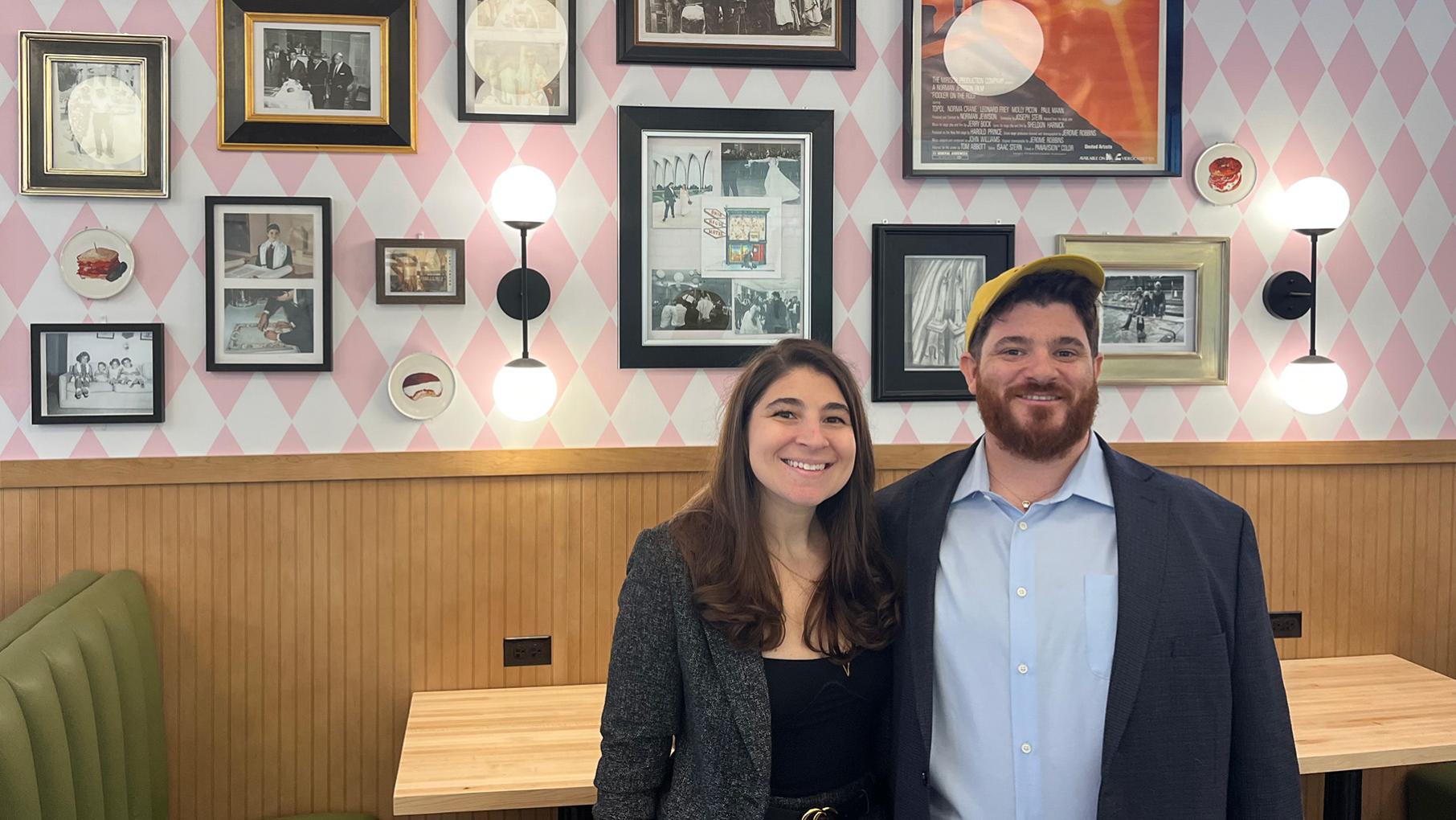
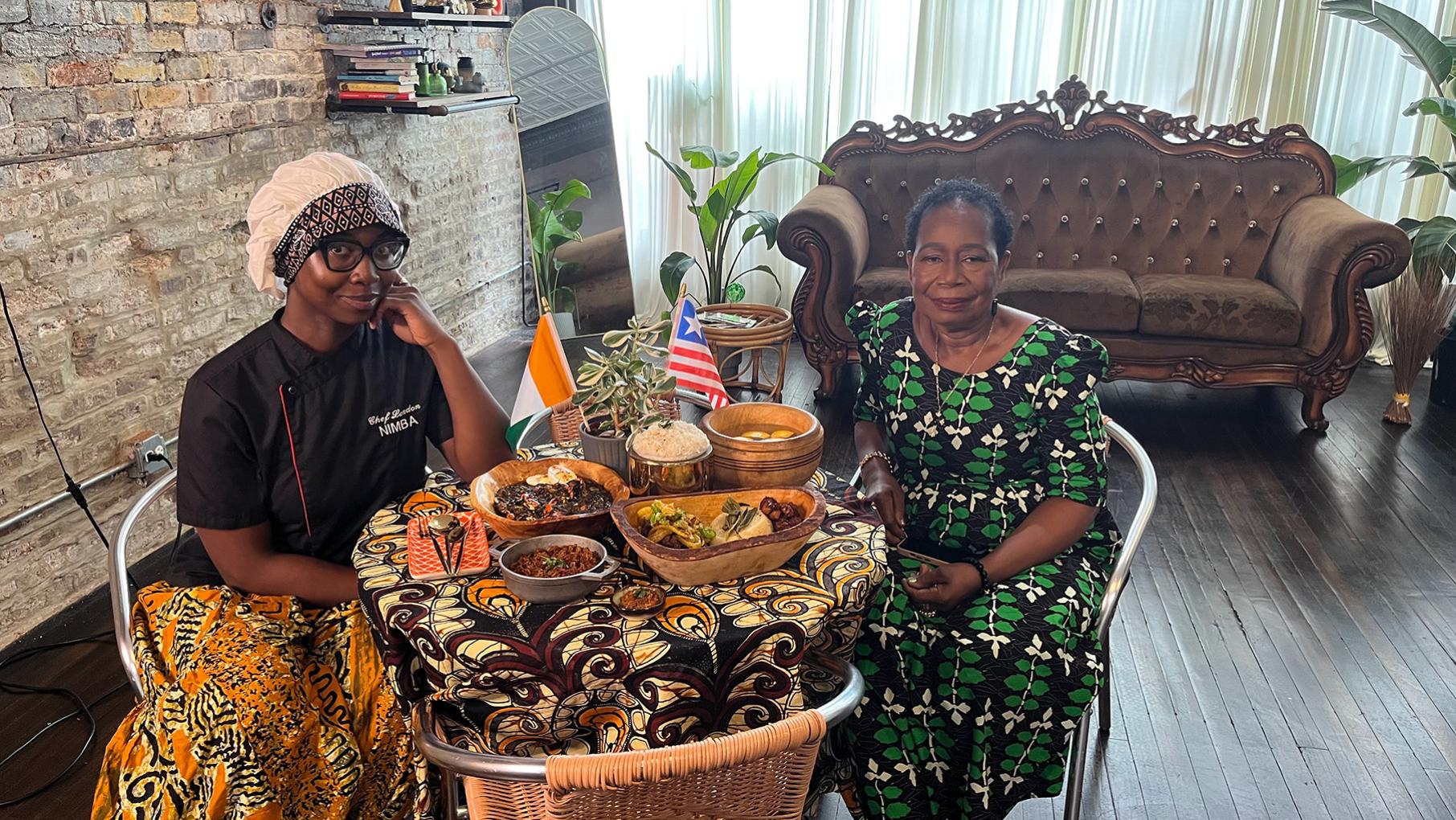
The restaurant Nimba is London’s way to spread that love by offering the dishes she learned from her grandmother and sharing the food of Liberia and neighboring Ivory Coast in Chicago.
“Liberians, we can cook. We can throw down, so why not share it?” London says.
Nimba currently offers takeout from 3252 S. Morgan St. in Bridgeport, and the tenacious London hopes to open to dine-in customers in November. That’s a year after she first launched Nimba as a food truck, catering to revelers leaving clubs at night who craved some sustenance to tide them through the next day.
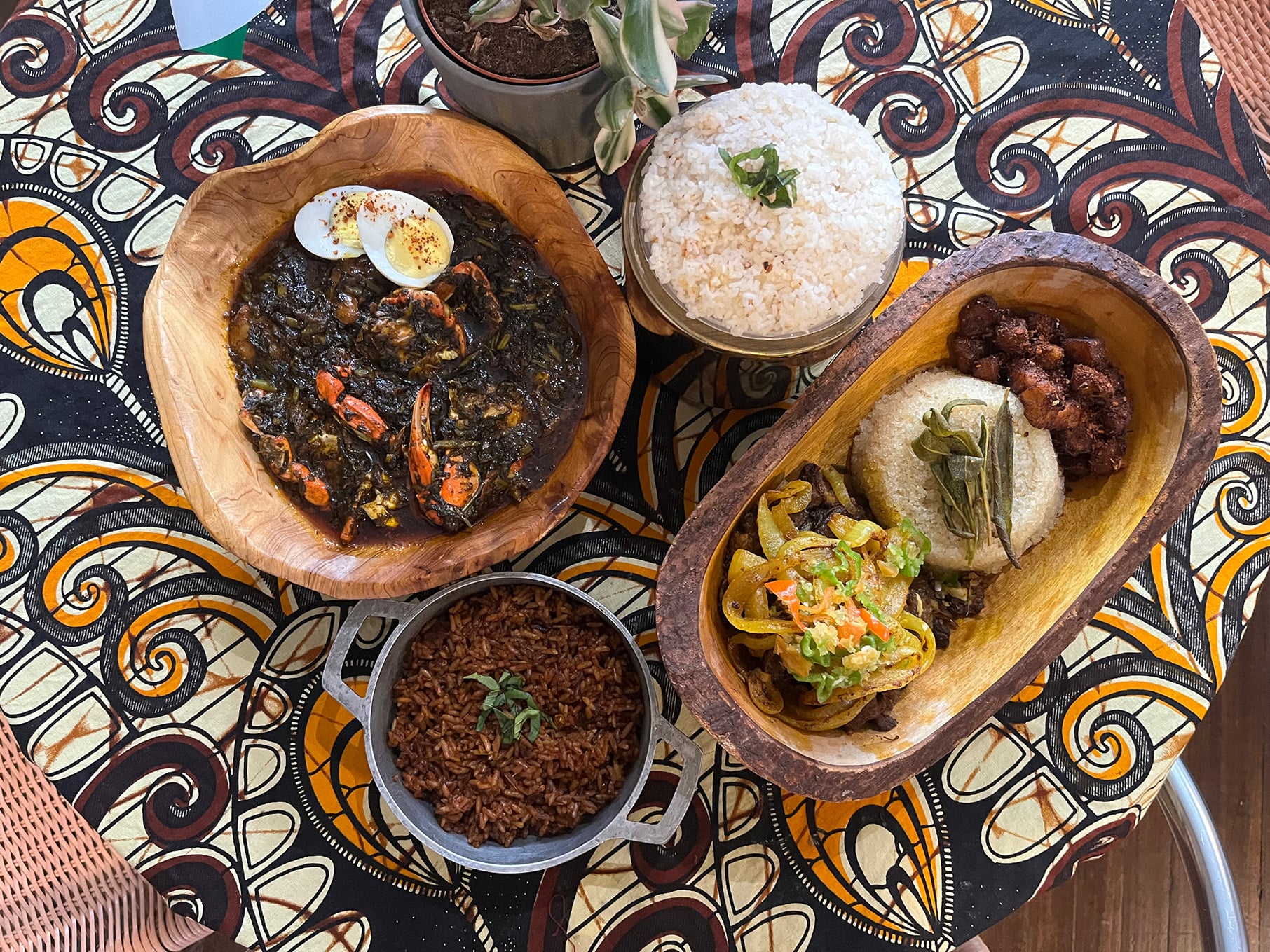
“Pepper soup is a nice hangover cure,” says London of the ubiquitous light West African soup typically served with fufu, a soft dough made from pounded cassava. Pepper soup is not currently on Nimba’s menu, but fufu is – ready to be ripped and eaten with stewed cassava leaves made rich with palm oil, peanut butter, umami-forward meat and fish, and spices.
West African restaurants are rare in Chicago, and Liberian and Ivorian ones nonexistent. London, who came to the U.S. from Liberia when she was very young, spent much of her life in Minnesota’s Twin Cities, which are home to one of the largest communities of Liberians in the country. She drives to Minnesota to purchase many of the ingredients for Nimba that are less common in this country, sourcing others from community gardens and farmers markets. (Her grandmother grew her own ingredients in Liberia.)
Potato greens are one ingredient little seen in other cuisines: At Nimba, they pick up the marine sweetness of the crab and shrimp that accompanies them. Attiéké, like fufu, is a filling starch made from cassava. The tuber is grated into a couscous-like texture and fermented to a faint tang that complements the bold spices of goat, snapper, or turkey tips in the same way that the sourness of the flatbread injera is the perfect contrast to the flavors of Ethiopian food. As in Ethiopia, Liberians eat with their hands, using fufu or attiéké as a vessel.
Attiéké, one of London’s favorite foods, is popular in Ivory Coast, where London’s father is from. Wingba brought it to the restaurant she ran in addition to packing fish in Liberia and found that people, herself included, loved it. When Wingba arrived in Chicago, she worked long hours in the kitchen of a nursing home, even preparing African food when it was requested. “The Americans, they don’t know how to cook it,” she says of not just cassava and potato greens but even rice and cornbread. Her food is enticing.
“Grandma know when I come and visit her she be having this rice ready for me,” says London about a simple dish of broken rice with some toasty pieces from the bottom of the pan. Wingba makes it “when she’s trying to bribe me to come and take her to the store.”
London first started dreaming about Nimba during the pandemic. Her grandma, mom, and aunt were supposed to be the ones in the kitchen, “but, you know, life happens,” she says. “I was only supposed to do administrative work, I was never cooking. If you had asked me six years ago if I would be here right now, I would laugh.”
She had absorbed some recipes from convivial post-church gatherings at her aunt’s house, where the family would enjoy each other’s company. A movie would be on, someone would be getting their hair done, and “the pot is gonna be boiling with some type of food,” London says.
All of the women in the family are stellar cooks, some of London’s cousins say, and they now include London among them. London’s mom and grandma help cook for Nimba sometimes, but it’s London who is the driving force.
She has currently organized the menu along the customizable lines of Chipotle, with build your own bowls based on attiéké, long-grain rice, or jollof rice whose tomatoey depth is enhanced by tingly heat and a hint of perfumed smokiness. Aloco – fried plantain cubes generously coated in spices – and yuca fries are scarfable sides alongside sesame-based slaw. Paste-like pepper sauce can bring heat, while an “Abidjban sauce” contains mustard and dried sage. Standalone dishes include cassava leaf stew, potato greens, palm fruit-based palm butter, and okra with smoked turkey.
Okra is one of Wingba’s favorites – but only if it’s prepared the Liberian way. Other West Africans (and many in New Orleans) cook it for a long time to thicken a stew. But that’s “a bit too slimy” for Wingba. “We don’t cook our okra like that. We fry our okra.”
You can be sure that London makes okra to her grandmother’s specification at Nimba, which is named after the county in Liberia where Wingba lived and now has several houses in which she lets family members and friends live on the cheap.
“I had to make sure that I was able to continue my grandmother’s legacy,” she says.